A Practical Book With an Impractical Problem
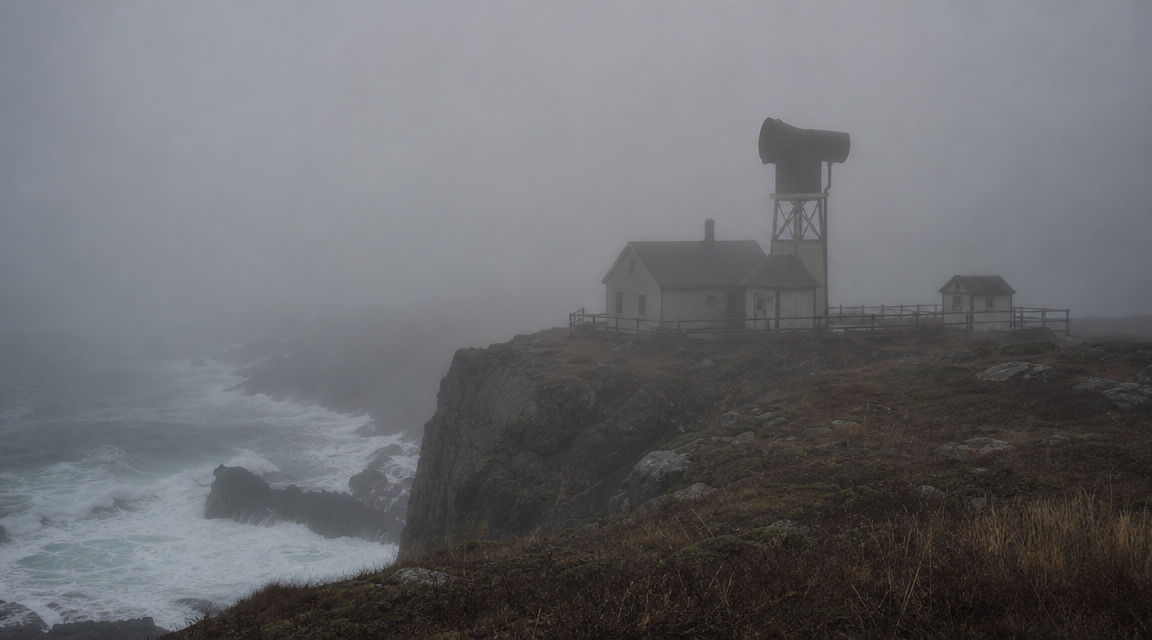
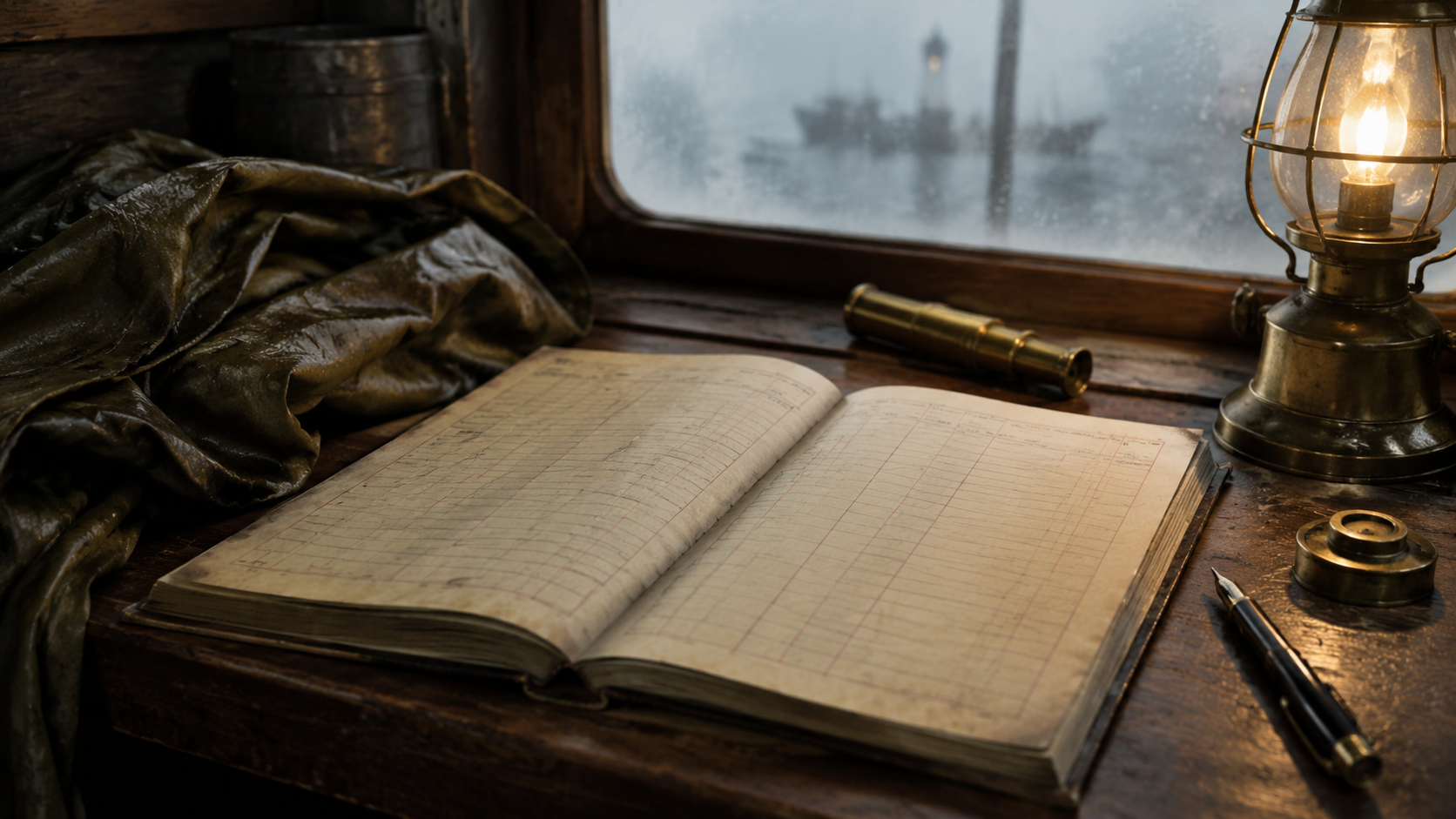
Fog signal station logbooks were not meant to be mysterious. They were working documents, built from habit, ink, weather, and the dull confidence of routine.
A keeper noted when the horn began, when it stopped, the pressure in the boiler, the direction of wind, the state of the sea, and the arrival of coal, oil, or an inspector. These pages were not diaries. They were confirmation that the signal was tended and that the coast had been warned.
That is what makes the 1912 log associated with a small North Atlantic coastal station so difficult to dismiss. The entries are plain until they are not. During a late autumn storm, the book appears to skip a calendar day, then repeat it under slightly different conditions.
Later, in the margins, other hands tried to explain what had happened. Their notes do not settle the matter. They widen it.
The Station at the Edge of Sound
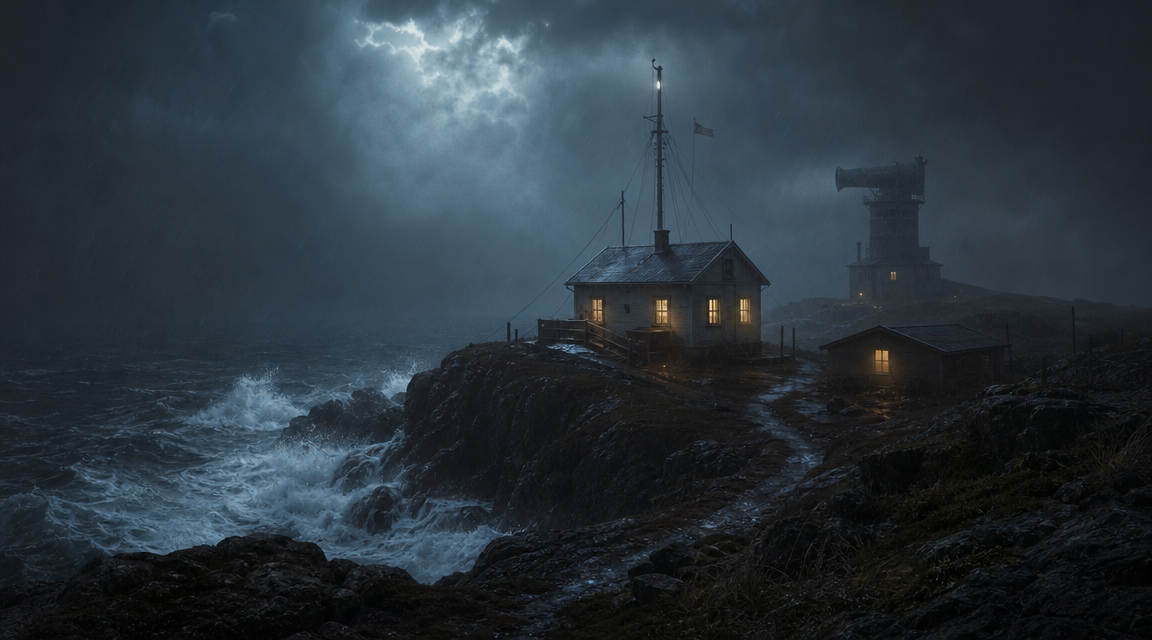
The station was the kind built for a coastline where fog arrived like a second tide. It likely consisted of a horn house, fuel shed, cistern, small store, and keeper’s dwelling set back from the worst of the spray.
By 1912, many such sites used compressed air or steam-powered signals. The machinery had to be watched closely. A horn could not simply be wound and forgotten. It demanded fuel, pressure, timing, and a keeper willing to rise whenever visibility vanished.
The surviving log, as described in later catalog notes and private references, covers ordinary months with little drama. There are repairs to valves. There are complaints about coal quality. There are neat observations of fog banks moving in from the east.
Then comes the storm sequence: several pages where timekeeping, weather, and handwriting seem to fall out of step.
The Missing Tuesday
The disputed section begins cleanly. A Monday entry records dense fog, a falling barometer, and the signal operating for long stretches. The sea is described as “confused,” a common keeper’s word for water that no longer arrives in regular sets.
The next dated entry should be Tuesday.
Instead, the log moves to Wednesday.
At first glance, this might be nothing more than a tired keeper’s mistake. Storm watches were exhausting. Men worked through nights of noise so constant that ordinary thought became difficult. A skipped date in a logbook is not, by itself, supernatural.
But the Wednesday entry behaves strangely. It refers to conditions that appear to continue directly from Monday, not from an intervening day. Fuel totals do not align neatly. The hours of horn operation appear too high for one day, but too low for two.
Most unsettling is the later appearance of Tuesday, entered after the Wednesday page, as if the day had returned once someone noticed it was gone.
The Day Written Twice
The inserted Tuesday is not simply a correction squeezed between lines. It occupies its own space, written with care, but in a hand that some readers have judged different from the surrounding entries.
It describes heavy fog, rain in violent squalls, and a signal that sounded through the night. It also mentions a brief silence “not ordered,” lasting long enough to be noticed but not long enough to explain.
That phrase is the hinge of the story. A foghorn could stop for mechanical reasons. Steam could drop. A valve could clog. A belt could slip. A keeper could step away too long.
Yet “not ordered” has a human stiffness to it. It sounds like someone defending procedure. It suggests that the silence was unexpected, recorded because responsibility might later be assigned.
The problem is that the following Wednesday entry also mentions the same silence, but places it after midnight. The Tuesday entry places it before midnight.
Either one event was logged twice with the boundary of the day confused, or two silences occurred. The book does not say.
Marginal Notes in Other Hands
The marginal notes are what turned a clerical oddity into a lasting archival rumor.
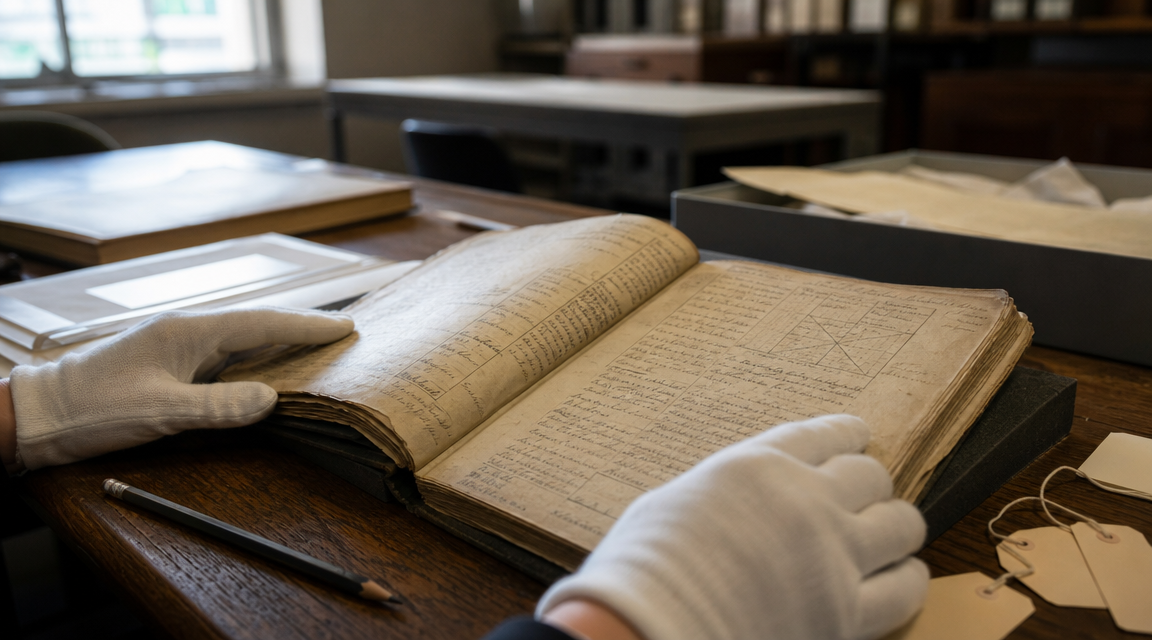
At least three later annotations have been reported. One, in pencil, reads in effect that the “date is wrong.” Another, written more formally, suggests “keeper ill?” A third is harder to interpret and has been described as a short question mark followed by a name or initials.
None of these notes need be contemporary. Archivists, inspectors, family members, collectors, and later researchers all leave marks on vulnerable paper. A pencil comment can be as much a record of confusion in 1950 as of confusion in 1912.
Still, the notes matter because they show that more than one reader noticed the break. Someone tried the simplest solution: the date was wrong. Someone else considered a human explanation: illness. The shortest note, if accurately reported, seems less like explanation than alarm.
The page became a place where certainty failed repeatedly.
Ordinary Explanations That Almost Work
There are several reasonable explanations, and none should be ignored.
First, the keeper may have misdated an entry during a long storm. Fatigue changes numbers. A man listening to a horn for thirty hours may not care much for the calendar until an inspector asks.
Second, the station may have used a watch system that blurred midnight. Marine logs often divide time practically. If a shift began before midnight and ended after it, the keeper might describe one continuous weather event under the wrong date.
Third, the Tuesday entry may have been reconstructed later from memory, fuel use, or a rough slate kept in the horn house. Many stations made temporary notes before copying them into bound books. A lost or soaked memorandum could produce exactly this kind of awkward repair.
Fourth, the marginalia may make the anomaly seem larger than it was. Later readers, seeing a correction, can turn ordinary paperwork into a puzzle by underlining uncertainty.
These explanations are strong. They are also incomplete. The fuel figures, horn hours, and duplicated silence do not settle comfortably into any one of them.
What the Weather May Have Done
Storms are not only background in maritime records. They are active participants.
Heavy fog distorts distance. Wind bends sound. Surf can make a horn seem to stop when it has not, especially if a listener is indoors, exhausted, or moving between buildings. Barometric pressure affects machinery indirectly through weather load, damp fuel, and strained routines.
If the 1912 station was fighting rain, fog, and high seas at once, every small task became harder. Coal had to be moved. Lamps had to be tended. Machinery had to be wiped, warmed, and coaxed. The keeper’s world shrank to pressure gauges, wet thresholds, and the next blast.
In such conditions, time can feel less like a line than a room with no windows.
That does not mean the log records a lost day in any literal sense. It means the log may preserve the texture of a day that became administratively unmanageable. The calendar, like the horn, briefly failed to sound correctly.
Oversight adds another pressure. Logs were reviewed, compared, and sometimes criticized. If the horn failed during fog, the keeper might need to explain why. If a vessel later complained that no signal was heard, the log became evidence.
This may explain the defensive tone of the disputed entries. The signal sounded. The weather was severe. The silence was not ordered. A machine can stop without permission. A man can deny responsibility. A logbook can preserve both facts without resolving them.
A Day Still Sounding in the Fog
The endurance of the 1912 fog signal log does not depend on proving that time slipped on a headland. It depends on something subtler: a bureaucratic object behaving in a way bureaucracy dislikes.
Logbooks promise sequence. One line follows another. One day closes and the next begins. A station exists because sailors cannot see the shore, so the state creates a record saying someone was there, watching, sounding, maintaining order.
Then a storm arrives, and the record loses confidence.
For readers a century later, the appeal is not that the page proves the impossible. It is that the page refuses to become simple. The more practical the setting, the stranger the flaw appears. A ghost story told by a sailor invites suspicion. A fog signal log that misplaces Tuesday invites closer reading.
The marginal notes make us part of that chain. Each hand in the margin asks what we ask: was this a mistake, a cover-up, an illness, a mechanical interruption, or merely the ordinary collapse of order under weather?
What remains is an image rather than a verdict: a keeper at a desk, coat still damp, the horn outside beginning again after an interval no one wanted to own.
He writes the date. Or he writes the wrong date. Or someone else writes it later, trying to mend the gap before inspection. The storm keeps working at the walls. The sea keeps erasing the rocks below.
No responsible reading requires us to claim that Tuesday vanished from the coast in 1912. But it is fair to say that, in one fog signal log, Tuesday became unstable. It was skipped, recovered, questioned, and never fully restored.
For a record built to prove continuity, that is haunting enough.
Reader Context
This Weird Witnessed story is an editorial reconstruction, written as eerie visual storytelling rather than a verified report. For more context, see How to Read Weird Witnessed Stories and How WeirdWitnessed Creates Reconstructed Horror Stories.