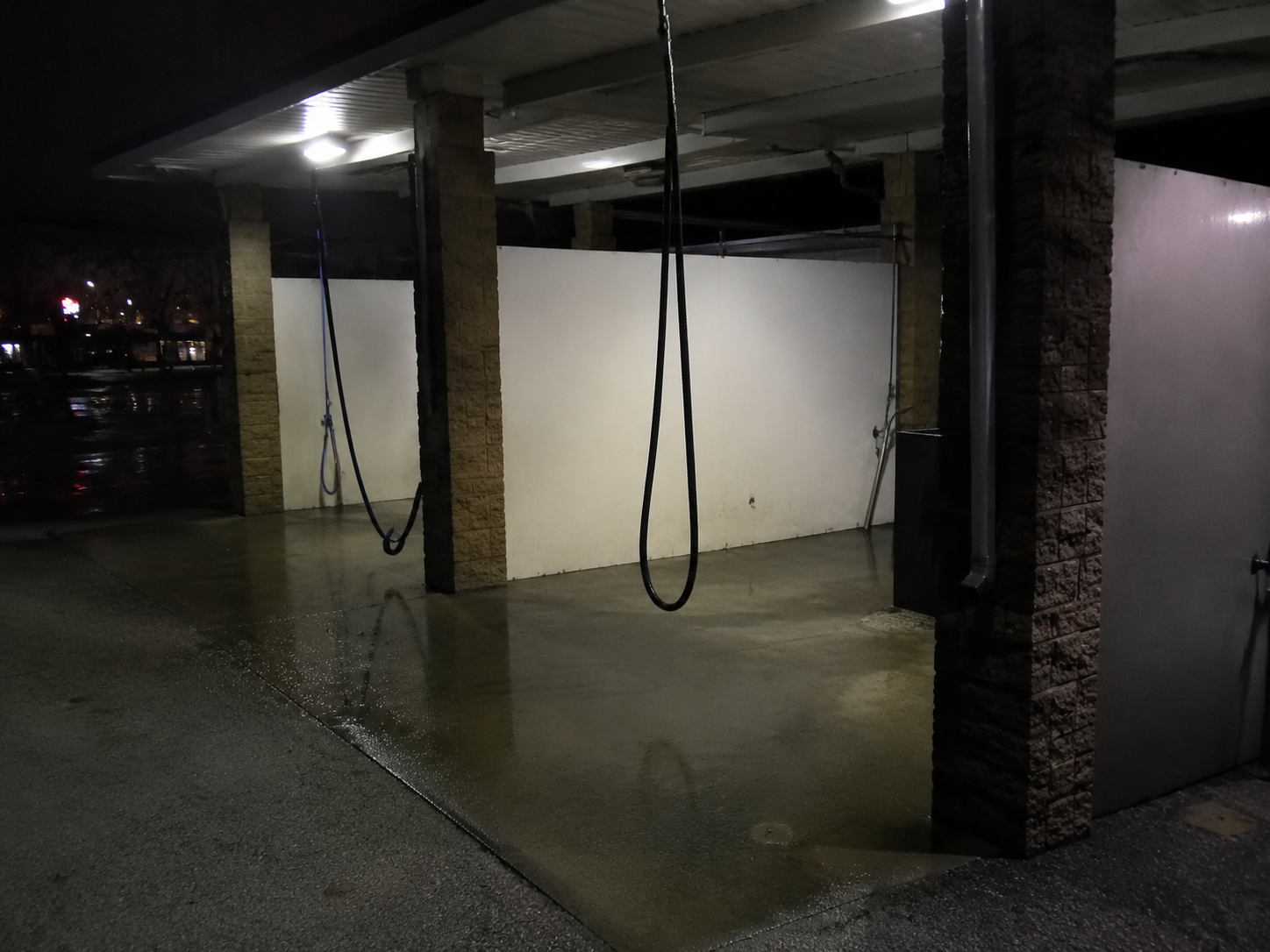
The first odd thing in the car wash camera images is not a figure. It is a hose.
At 1:12 a.m., in the far vacuum bay of a closed self-serve wash outside Harlan, one black hose begins to swing. It moves slowly at first, then arcs wide enough that its nozzle bumps the side of the metal post. The bay is empty. The payment box is dark. The owner says power to the vacuum island had been cut more than two hours earlier because a motor had been whining during the evening rush.
That would be strange by itself, but the camera still has a second moment that pushed it from equipment issue to scary reconstructed moment. After the hose settles, a shadow crosses the wet concrete from right to left. It does not match a car headlight. It does not show a visible person. It is just a darker shape moving over an already dark floor.
Nobody at the car wash has claimed the camera images proves a ghost, a trespasser, or anything supernatural. The owner reportedly described it as “something I do not like watching twice.” That cautious language fits the evidence. The camera file is grainy, the site is outdoors, and wind can make hanging objects move.
Still, five details keep the camera still from feeling simple.
WHAT THE camera images SHOWS:
- One vacuum hose swings after the business is closed.
- The vacuum island power was reportedly shut off.
- The nozzle strikes the post once, then stops moving.
- A second shadow crosses the wet concrete after the hose slows.
- No vehicle is visible entering or leaving during the event window.
1. The Hose Starts Moving After the Power Cut
A vacuum hose can move for ordinary reasons. Wind is the obvious one. So is vibration from a running motor, a passing truck, or a hose that was left twisted and slowly unwound after the last customer.
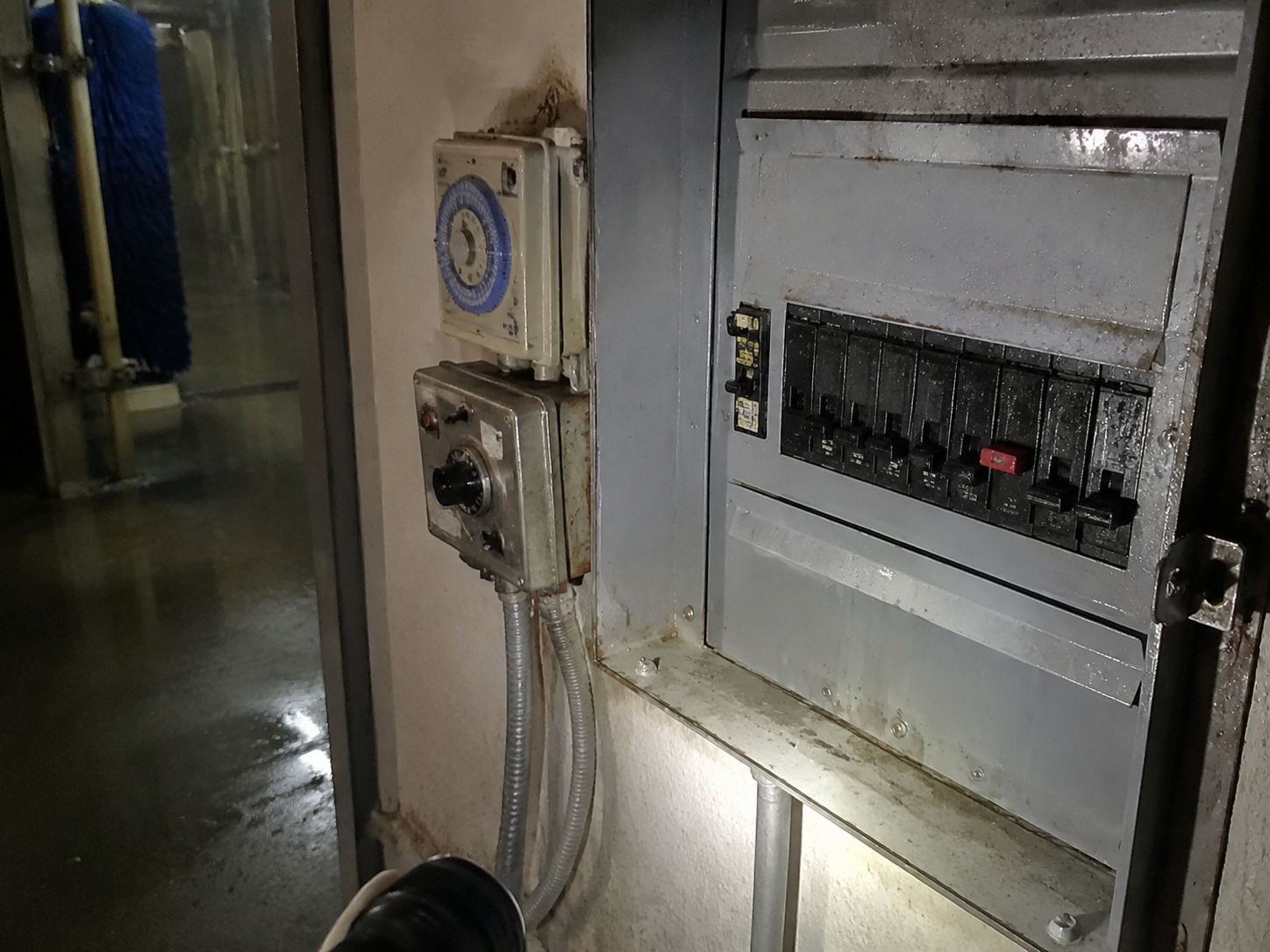
The Harlan camera still becomes interesting because of timing. The owner says he shut down the vacuum island at 10:47 p.m. after noticing a motor sound from bay three. The last paid vacuum cycle ended earlier, according to the coin meter. The hose movement begins at 1:12 a.m.
If the vacuum motor had still been running, suction could have tugged the hose. If a customer had just finished, the hose might have been swinging from normal use. But the recorded gap between closing and movement removes those easy explanations.
The hose does not merely tremble. It swings outward in a wide arc, slows, then swings back as if released from a hand. The nozzle taps the post once. After that, the motion fades quickly.
That pattern could still be wind. A gust funneled through the open bay might grab the hose and let it go. But the other hoses in nearby bays hang still, which is why the owner saved the camera images instead of deleting it with the rest of the overnight clips.
CAPTION: The hose movement stands out because the other vacuum bays remain almost completely still.
2. The Wet Concrete Shows More Than the Camera Does
The night had been damp, and that matters.
The camera itself is mounted high on the office wall, looking across the vacuum island at a shallow angle. It does not show every corner clearly. The wet concrete, however, acts like a weak mirror. When the hose moves, its reflection bends across the floor. When the later shadow crosses, the dark patch is easiest to see in the water.
This is one reason the camera still keeps being debated. On dry concrete, the second shadow might have disappeared into the grain of the camera file. On wet concrete, it seems to glide for about two seconds before fading near the drain.
Skeptics argue that water makes the camera images less reliable, not more. Reflections can stretch and distort. A passing car on the road could send a shape across the puddles without ever entering frame. A cloud crossing the moon could create a soft darkness that looks like motion.
Those are reasonable objections. But the direction of the shadow does not line up neatly with the road beyond the wash. It crosses from the service-room side toward the empty lot, while the headlights on the highway usually sweep in the opposite direction.
The floor does not prove anything. It simply preserves the motion in a way the camera barely can.
3. The Second Shadow Arrives Too Late for a Simple Headlight Sweep
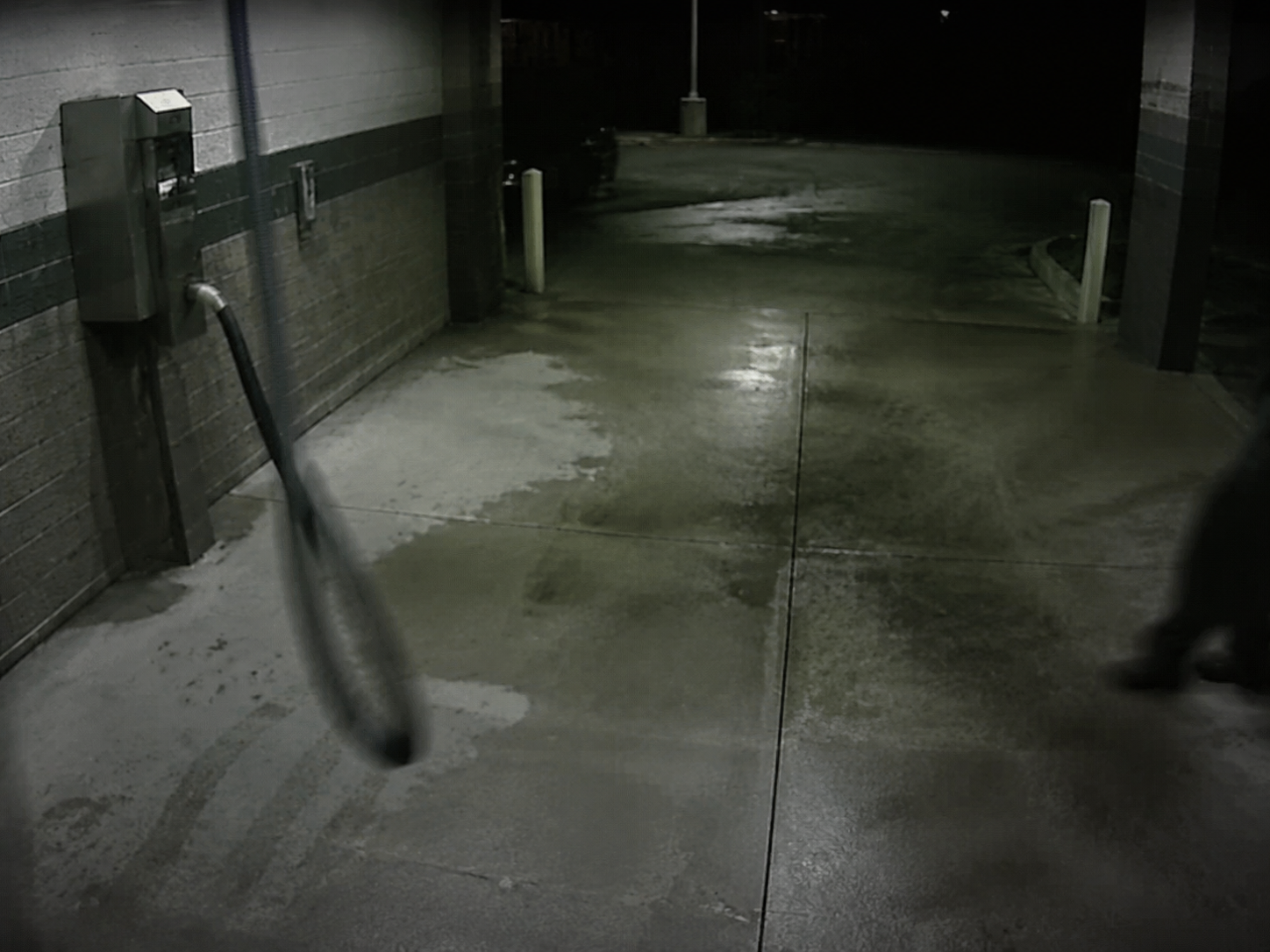
The second shadow appears after the hose has almost stopped.
That delay is what bothers people who have watched the camera still closely. If a passing vehicle caused both events, the light or wind from the vehicle should explain the hose movement and the shadow in the same moment. Instead, the hose swings first. The shadow crosses later, when the hose is nearly still.
A car could have passed out of frame, stirred air through the bay, then created a delayed reflection as it turned. A truck on the access road might have cast a moving shadow from a sign or pole. There are ways to make the timing work.
But the camera images does not show headlights brightening the wall, the coin box, or the metal vacuum posts. The bay remains dim and flat. The only obvious change is the dark shape sliding over the wet floor.
That is why the camera still became a local “caught on camera” story rather than a simple equipment complaint. The second motion seems to belong to something separate from the hose, but the camera never gives viewers a clean source.
CAPTION: The shadow crosses the wet floor after the hose has already begun to settle.
4. The Security System Logged Motion but No Entry
The owner reportedly received a motion alert at 1:13 a.m., about one minute after the hose first moved. The alert thumbnail showed the empty bay with the hose already angled away from its normal resting position.
That means the system did not flag the first tug, or the camera software did not classify it as important enough to send. It caught the aftermath instead.
There was no matching door alarm from the office. The storage room stayed locked. The coin boxes were intact. No one appears in the front camera covering the driveway during the narrow window around the event.
Outdoor cameras miss things all the time. A person could approach from a blind side, touch the hose, and leave without crossing the better-lit lanes. A teenager playing a prank could know where the camera points. Fishing line or a long pole could move a hose from outside the frame.
But no footprints were found in the damp grit around the post the next morning. That is not conclusive; the concrete had enough puddles to blur marks. Still, the absence of a visible entrant keeps the scene unresolved.
The most careful reading is that the camera captured motion without capturing the cause. That is not a detail people read as anything beyond a limitation of the system. Yet it is exactly the kind of limitation that makes people fill the blank with folklore.
5. The Nozzle Ends Facing the Wrong Direction
The final detail came in the morning, when an employee opened the wash.
The hose in bay three was hanging still, but the nozzle was turned inward toward the vacuum post rather than outward toward the stall. Employees said that was not how they normally looped it. The hose also had a fresh wet scrape along the rubber near the nozzle, likely from striking the post during the night.
This could be ordinary. If the hose swung and twisted, it might settle in a new direction. If wind moved it, the final position might mean nothing. A customer could have left it wrong before closing, and nobody noticed.
The owner’s hesitation comes from the combination of small points: power cut, delayed alert, still neighboring hoses, second shadow, and the odd final position. Each point has a possible explanation. Together, they make the camera still feel like a question with several missing words.
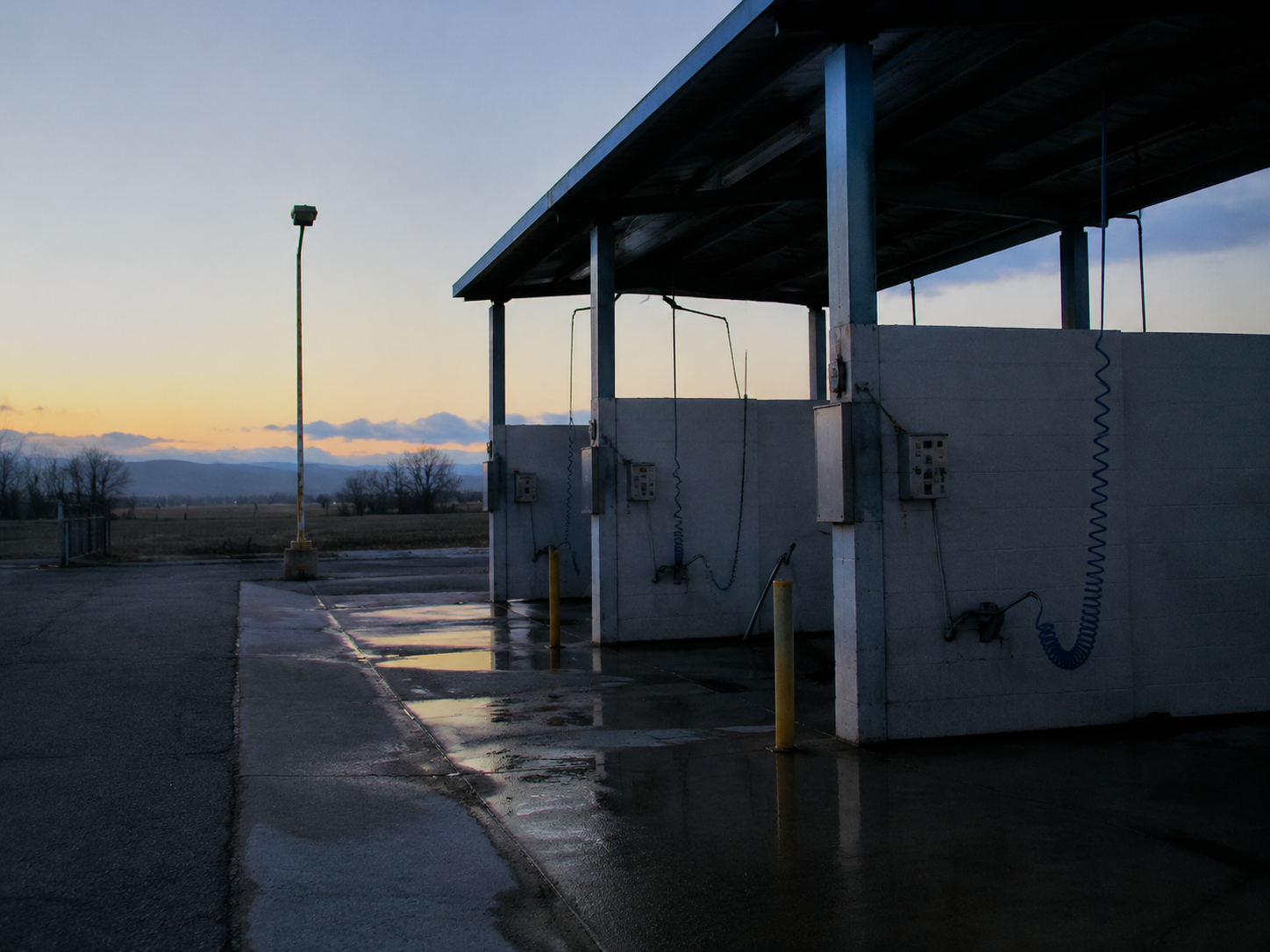
There is no verified apparition in the bay. There is no identified intruder. The car wash did not become a paranormal site; it opened the next morning and took quarters like always.
But among locals, the far vacuum bay gained a reputation. Employees joked about not liking the night shift. Customers asked which hose had moved. Someone taped a phone camera file of the security playback, and the story spread in the familiar way small mysteries do: carefully at first, then with extra details added by people who were not there.
The most reliable version remains modest. A hose moved after power was cut. A shadow crossed wet concrete. The camera did not show why.
That may not be a detail people read as the impossible, but for anyone who has stood alone under those car wash lights after midnight, it is enough to make the empty bay feel occupied.
Reader Context
This Weird Witnessed story is an editorial reconstruction, written as eerie visual storytelling rather than a verified report. For more context, see Camera Anomalies and Strange Images Guide and How WeirdWitnessed Creates Reconstructed Horror Stories.