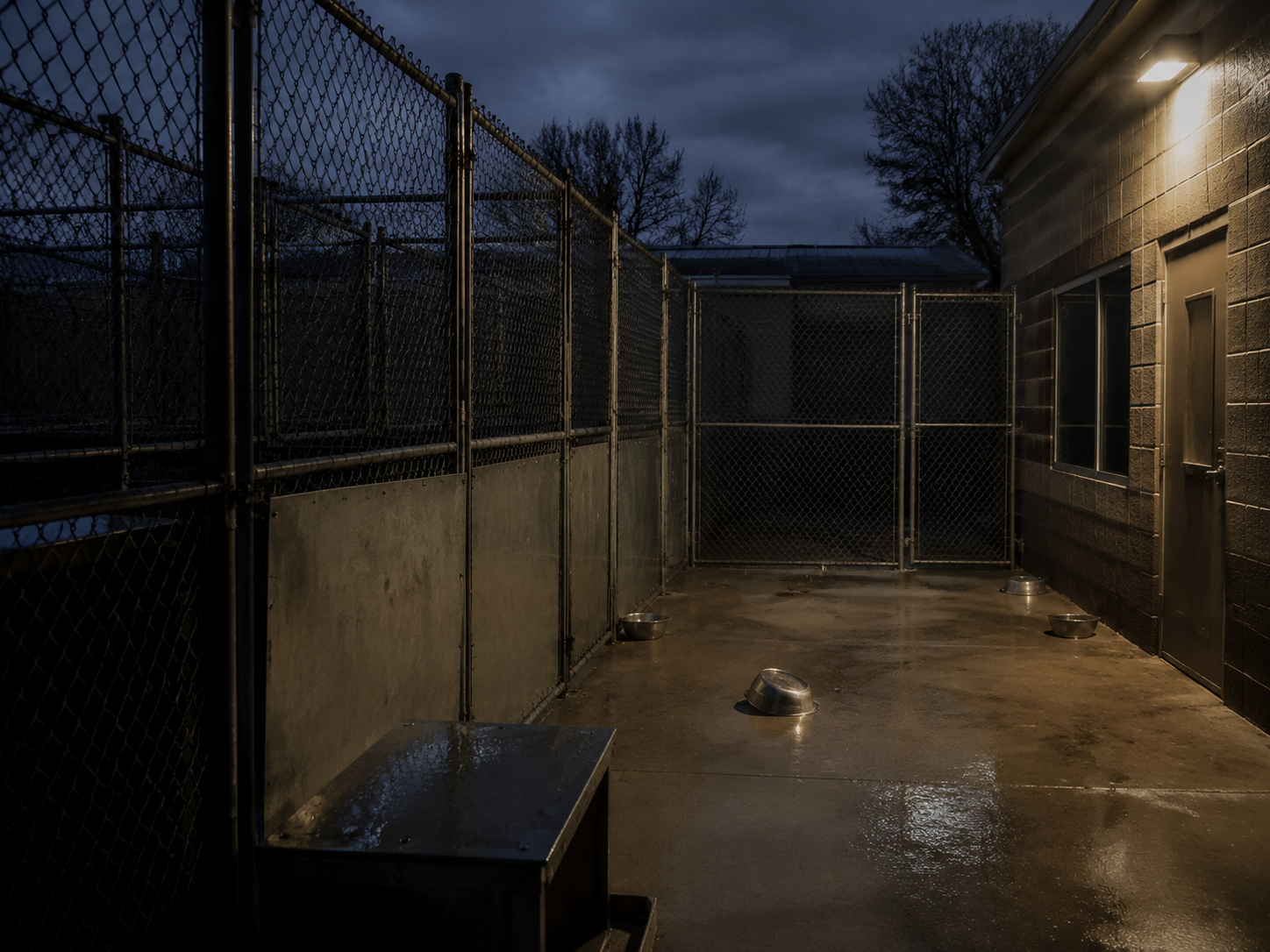
The county animal shelter rumor is uncomfortable because it takes place somewhere people already feel protective. An empty warehouse or abandoned barn can be spooky in a clean, fictional way. A shelter is different. It holds barking dogs, old blankets, concrete runs, stainless bowls, and the uneasy hope that every animal inside will be safe until morning.
That is why the story spread quickly in local gossip. According to the version repeated around town, staff arrived to find several water bowls turned over in the outdoor runs. That alone would not be strange. Dogs flip bowls. Wind pushes lightweight dishes. Raccoons investigate anything that smells like food. A night of barking can leave a kennel looking chaotic by sunrise.
The part that changed the tone was the camera review. Near the fence line, in a grainy after-hours view, people said there was a gaunt hairless thing with bent limbs. It was not clear enough to identify. Some called it a sick coyote. Some said it looked like a mangy dog. Others insisted it did not move like either one.
The careful version of the story begins there, with uncertainty.
WHAT THE CAMERA IS SAID TO SHOW
- A county animal shelter outdoor run after closing.
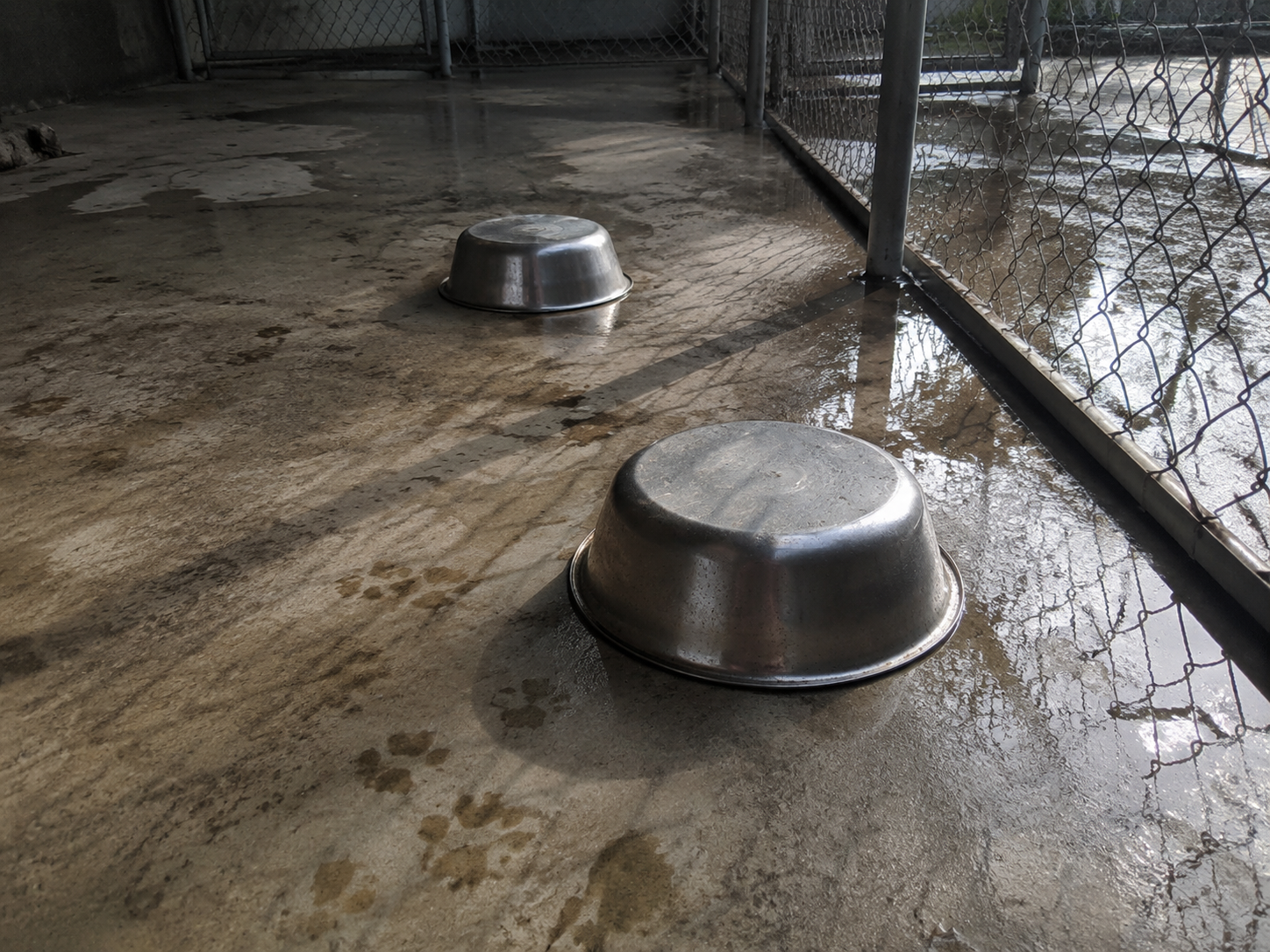
- Multiple metal water bowls turned over or pushed from their usual spots.
- Wet concrete and scattered reflections under security lighting.
- A strange thin shape near the chain-link fence.
- Local gossip describing it as hairless, gaunt, and bent-limbed.
1. Overturned Bowls Are Common but Still Useful
The water bowls are not supernatural evidence. They are a clue about activity.
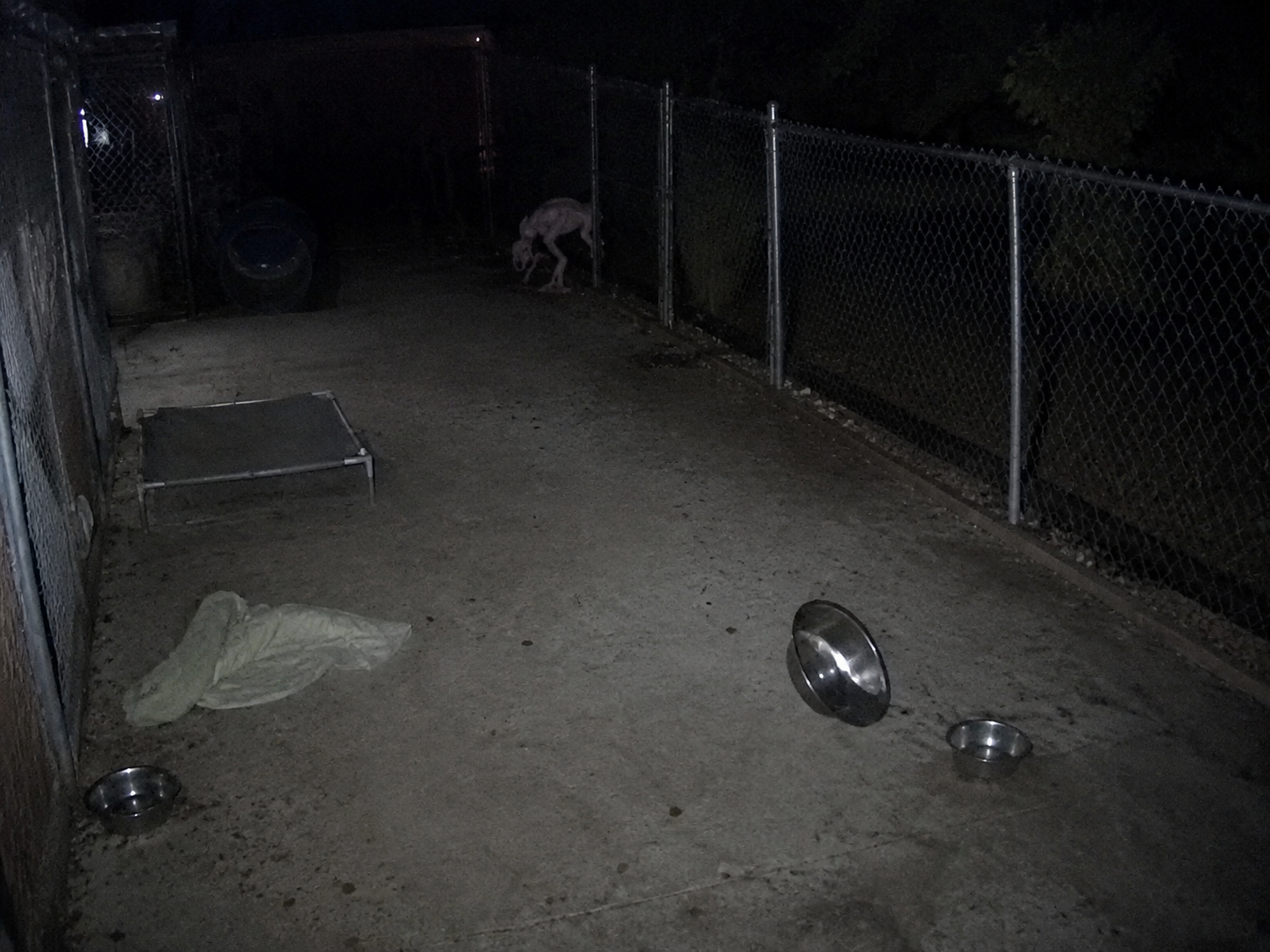
Anyone who has worked around kennels knows bowls end up everywhere. A bored dog can flip one for entertainment. A frightened dog can knock one over while pacing. A loose animal outside the run can push against the fence and startle the dogs inside. Wind, hoses, cleaning routines, and uneven concrete can all change the scene before morning.
So the overturned bowls should not be treated as a detail people read as a creature. They should be treated as the first reason someone checked the camera.
That practical trigger makes the story feel more grounded than a random monster sighting. Staff did not supposedly go looking for an unknown animal. They noticed a mess, then looked for the ordinary cause. The rumor grew because the ordinary cause was not immediately obvious in the camera images.
The bowls also give the camera scene a physical anchor. A vague shape near a fence is easy to dismiss. A row of displaced bowls makes viewers ask what happened in the run while everyone was gone.
2. Animal Shelters Are Full of Bad Camera Angles
Outdoor runs are difficult places for security cameras. Chain-link fencing creates repeated lines. Security lights glare off wet concrete. Stainless bowls throw small highlights. Dogs moving close to the lens can trigger exposure changes that make the background pulse from dark to bright.
A thin animal near the fence can look stranger than it is. The mesh may cut its outline into pieces. A shadow can lengthen a leg. A bent posture can be exaggerated by the camera’s low resolution. If the animal is partly behind weeds or a gate frame, the viewer may see a body assembled from separate shapes.
That is the skeptical foundation. The camera may be making a sick or ordinary animal look unnatural.
But shelters also make people better observers of animal movement. Staff know what dogs, cats, raccoons, and opossums usually look like around the runs. When those people say a shape seemed off, the comment carries emotional weight even if it does not prove anything.
The best approach is to hold both ideas at once: the setting can distort, and experienced local viewers may still notice something that feels wrong.
3. Hairless Does Not Mean Unknown
The word hairless is doing a lot of work in this rumor. A hairless animal immediately feels uncanny because people expect fur to soften outlines. Without it, ribs, joints, shoulders, and hips become more visible. A familiar animal can look like a different category of thing.
Mange can make coyotes, foxes, raccoons, and dogs appear almost creature-like. Wet fur can cling to the body and create the same effect. An underfed stray can look long-legged and folded in a way that seems impossible during a quick camera view. Even a deer with poor lighting behind it can briefly become a pale, angular shape.
For that reason, the hairless description should be treated cautiously. It may indicate illness, wetness, poor resolution, or scary reconstructed momenttelling exaggeration.
Still, the detail explains why the image made people uneasy. A shelter is where sick animals are supposed to be helped, not where an unidentifiable sick-looking shape is supposed to crouch outside the fence after hours. The image carries a sadness that ordinary monster stories often lack.
The humane explanation is also the most important one: if the figure was a real animal in distress, the story is less about a creature and more about a county facility needing to know what was near its runs.
4. Bent Limbs Can Be Movement, Injury, or Illusion
The phrase bent-limb thing is memorable, but it may describe a single awkward frame rather than the animal’s true shape. Cameras often catch animals mid-step. A coyote lowering its head can make its front legs look folded backward. A raccoon climbing a fence can spread its limbs at odd angles. A dog squeezing along a barrier can look hunched and jointed in the wrong places.
There are also medical possibilities. Injured wildlife may move badly. Mange, starvation, or old fractures can change posture. An animal with pain in its hips may crouch low and push forward in a way that seems unnatural from a distance.
None of those explanations are comforting, but they are realistic.
The reason the local version leans into the unknown is that the shape was reportedly seen near the fence rather than clearly inside a run. It seemed to occupy the boundary between the shelter and the outside dark. That boundary is where people’s imagination tends to work hardest.
A fence line is both a barrier and a stage. Anything pressed against it appears to be trying to get in, get out, or be noticed.
5. The Strongest Reading Is a Local Animal Mystery, Not Proof
The shelter story does not need to become a claim about a monster. In fact, it becomes more compelling when it stays smaller.
What can be said cautiously is this: staff reportedly found outdoor run bowls disturbed. A camera apparently showed a thin, hairless-looking shape near the fence. People who saw or heard about the camera images argued over whether it was a sick wild animal, a stray dog, a trick of the camera, or something harder to name.
That is enough for a local mystery.
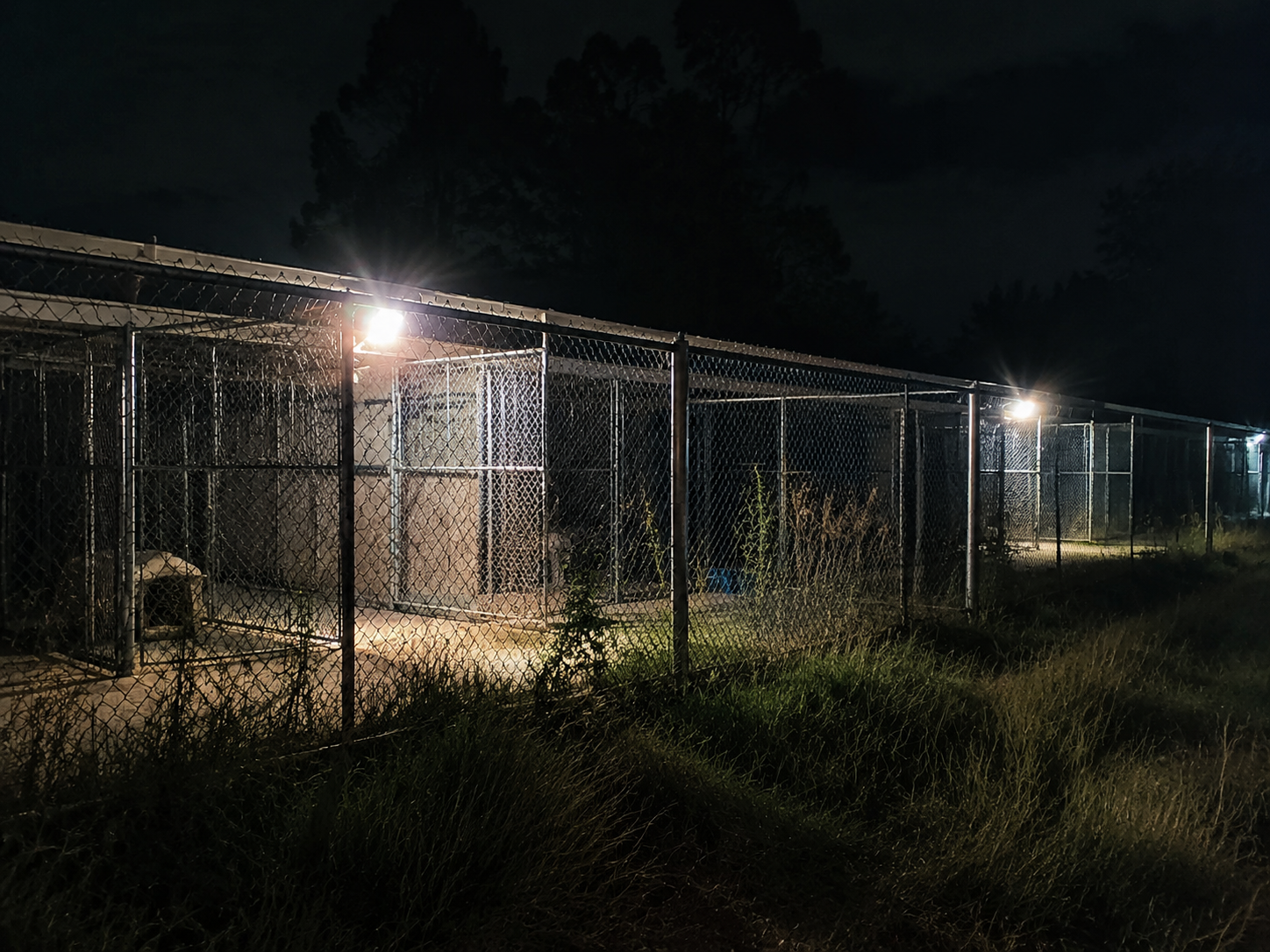
The likely explanations remain ordinary. A mangy coyote could have approached the runs and startled the dogs. A stray could have paced along the fence looking for food or water. A raccoon or opossum could have triggered motion and appeared distorted in glare. The bowls may have been flipped by the shelter dogs themselves before or after the outside animal passed.
But the rumor lingers because the details line up in an emotionally specific way. Overturned water bowls suggest agitation. Wet concrete catches the light. Chain-link turns every background movement into a trapped shape. The words gaunt and hairless add a physical discomfort that is hard to shake.
No proof claim is needed. The scene is unsettling because it asks a practical question in a place built around care: what came close enough to the outdoor runs to leave the staff checking camera images in the first place?
Until there is a clear animal identification, that is where the story belongs: not as evidence of a new creature, but as a cautious shelter-yard rumor about a bad night, a fence line, and something thin in the camera frame that nobody wanted to see twice.
Reader Context
This Weird Witnessed story is an editorial reconstruction, written as eerie visual storytelling rather than a verified report. For more context, see Creatures, Crawlers, and Cryptid Stories Guide and How WeirdWitnessed Creates Reconstructed Horror Stories. For neutral background on how people interpret strange images and stories, readers may also compare general context on cryptid folklore.