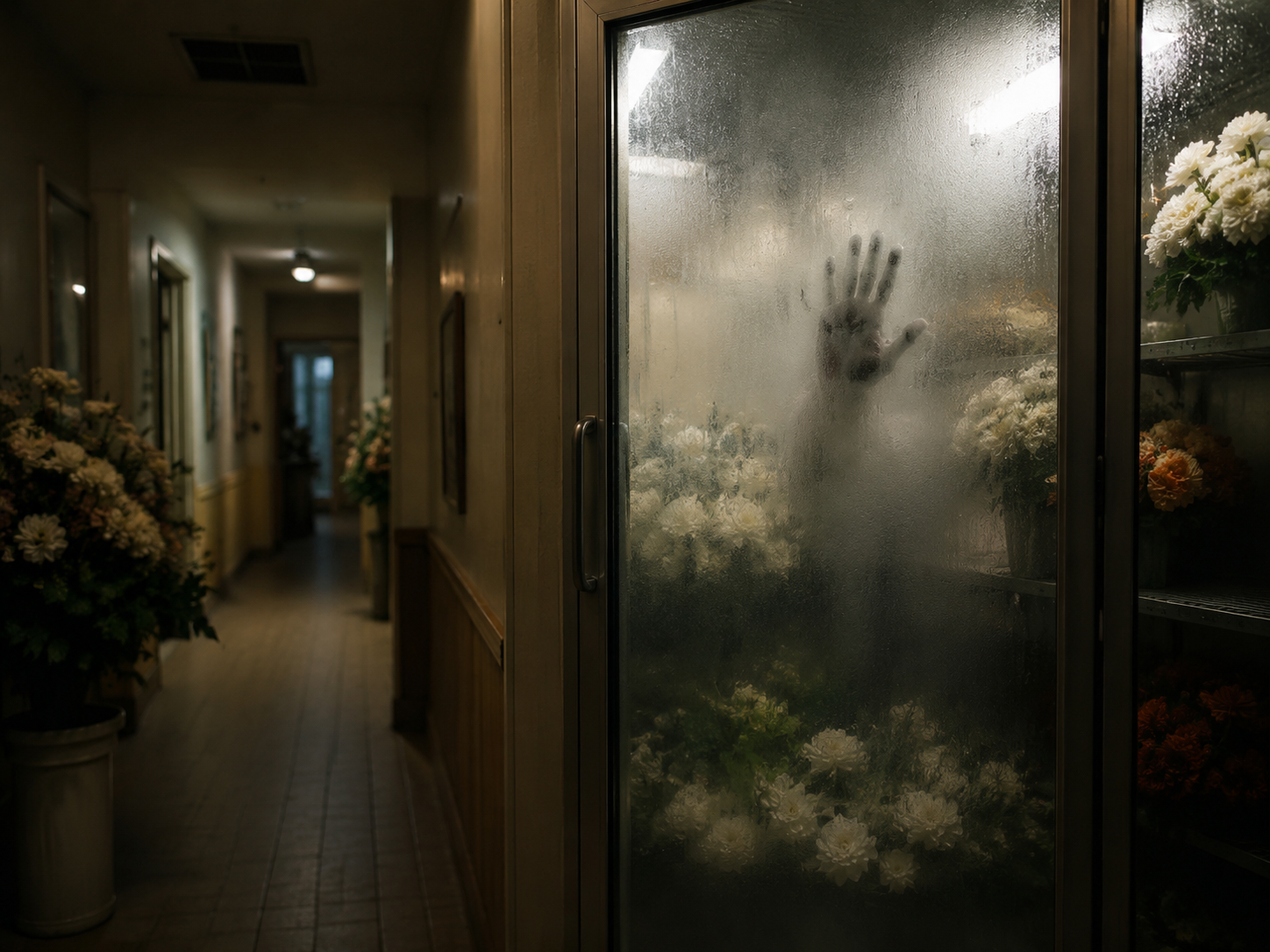
The handprint was found before the first family arrived.
According to staff at a small funeral home in eastern Kentucky, the flower cooler had been cleaned the night before, locked, and left running for the morning’s arrangements. At 7:18 a.m., an assistant opened the back hallway and noticed a single palm print in the condensation on the cooler’s glass door.
That alone would not have created a scary reconstructed moment. Cooler doors fog. People touch glass without thinking. Florists, delivery drivers, and staff move through funeral homes at odd hours. But the print was on the inside surface, and the entry log showed no one in the flower room after closing.
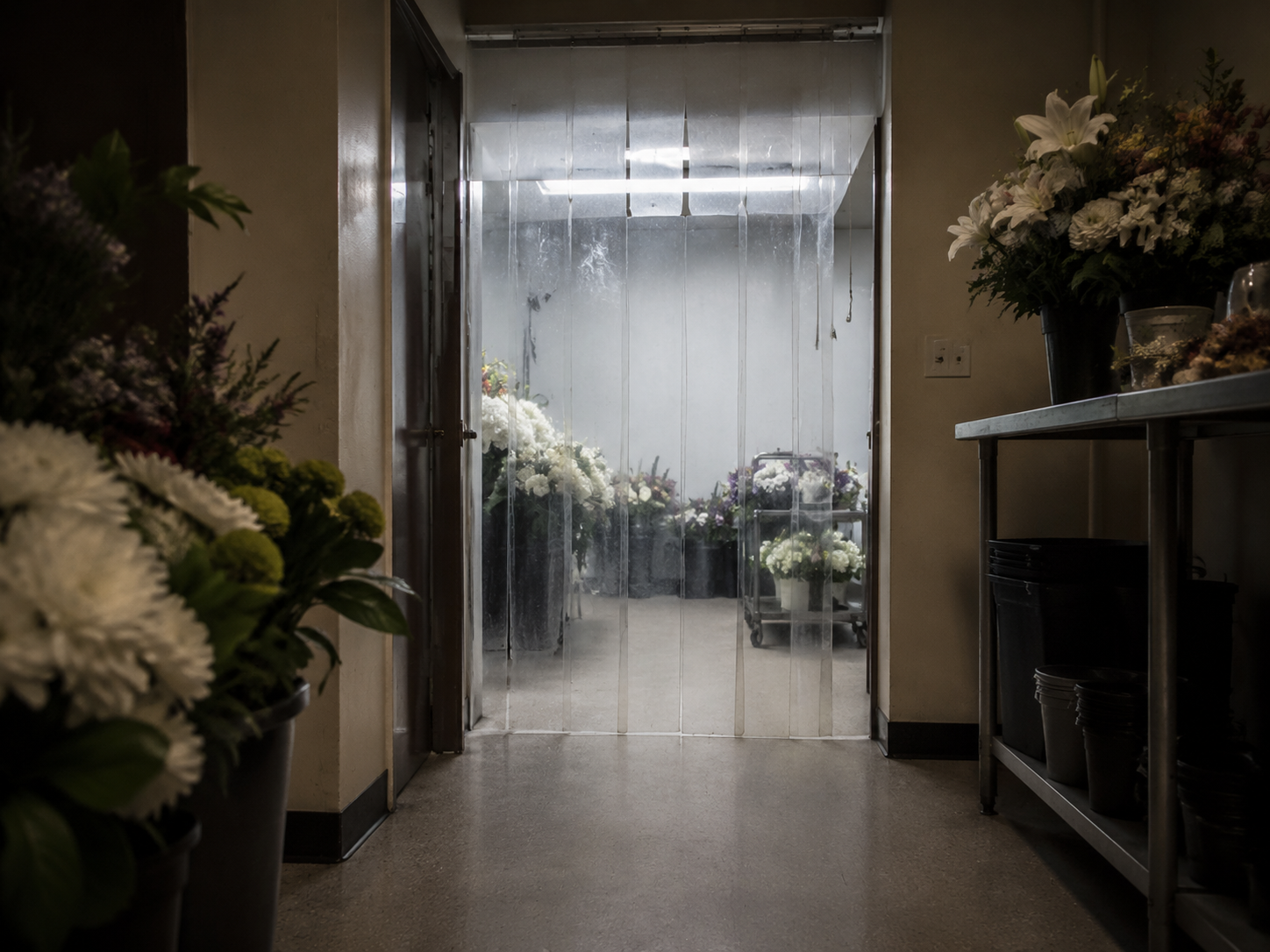
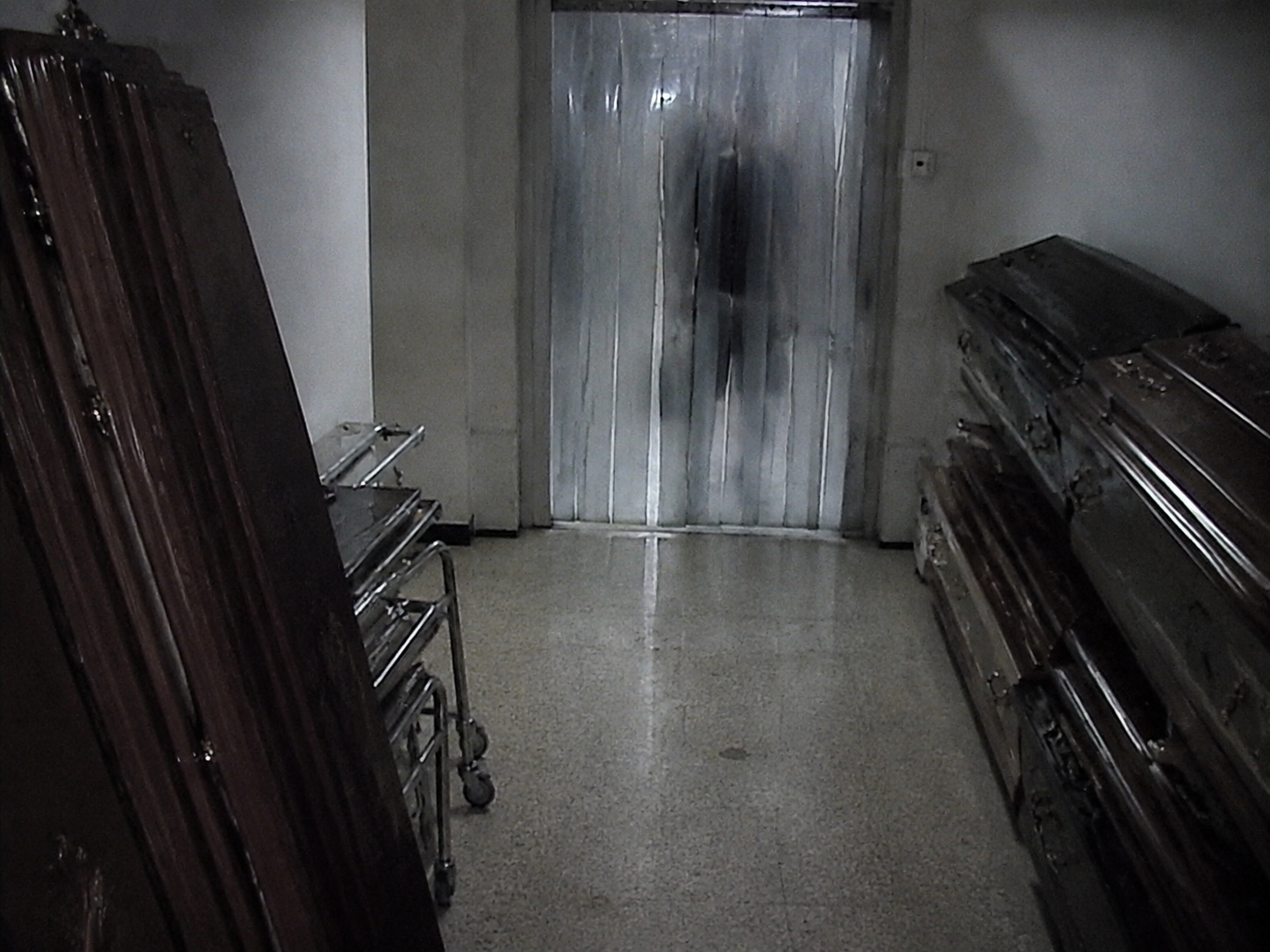
The account became stranger when the owner checked the hallway camera. About twenty minutes before the print was noticed, a dark shape seemed to stand behind the clear plastic strips at the cooler entrance. It did not step out. It did not show a face. It was more a suggestion of a person than a person.
No one involved has claimed the camera images proves an apparition. The funeral home did not advertise the story, and the family names connected to services that week are usually left out when locals retell it. That restraint is important. The setting deserves respect, and the evidence is uncertain.
Still, five details keep the flower cooler handprint from feeling like a normal smudge.
WHAT THE STORY INCLUDES:
- A clear handprint appeared in condensation on the inside of the glass.
- Staff said the cooler door had been wiped at closing.
- The overnight entry log showed no flower room access.
- A camera frame showed a dark shape behind plastic strips.
- The print faded before anyone could preserve it properly.
1. The Print Was Reportedly on the Inside of the Glass
The first point is the one staff repeated most carefully. The handprint was not on the hallway side of the door.
The assistant who found it said she reached to wipe the glass, then realized her cloth did not touch the print. The marks were inside the cooler, pressed into the condensation facing outward. A second employee reportedly opened the door and said the smooth exterior had no matching oil or moisture.
That does not make the print impossible. Someone could have entered the cooler before closing and touched the inside without anyone noticing. A delivery worker could have leaned in while arranging buckets. A staff member could have wiped the outside and missed the inner surface.
But the print looked fresh. The edges were clear enough to show separated fingers and part of a palm. In a cooler, condensation changes quickly as the compressor cycles and the door opens. A print left many hours earlier would normally blur, bead, or fade.
The staff did not call it a ghostly hand. They called it a handprint where a hand should not have been that morning.
CAPTION: The inside placement of the print is the detail that made staff check the camera.
2. The Cooler Had Been Cleaned After the Last Arrangement
Funeral home routines are often strict because small mistakes matter.
The owner reportedly kept a closing checklist for the flower room: remove wilted stems, mop spills, wipe the cooler glass, check the temperature, and lock the rear door. The employee who closed the night before said she wiped both cooler doors after moving two standing sprays into place.
A checklist is not perfect evidence. People forget steps. A wipe can leave streaks. A handprint can appear when moisture forms around oils already on glass. If someone touched the inside earlier in the day, the print might have become visible only when the temperature changed overnight.
That is a strong natural explanation, and it should be considered first.
The uncomfortable detail is that the print did not appear as a greasy outline emerging through fog. It looked like the fog had been cleared by direct pressure from inside. The palm area was clean, while beads of moisture gathered at the edges.
That distinction is based on staff memory and one phone photo, not a lab test. It cannot settle the case. But it explains why the funeral home owner did not dismiss the mark as an old touch immediately.
3. The Entry Log Did Not Show Anyone Going In
The building had an alarm system and a keypad on the staff entrance. The flower room itself was not a vault, but anyone entering after hours should have left a code record at the back door.
The log reportedly showed the owner leaving at 8:42 p.m. and the assistant arriving at 7:11 a.m. Nothing between those times indicated a staff entry. The front doors were locked. The rear delivery door showed no forced entry. The cooler temperature remained in normal range, which suggests the door had not been left open for long.
None of that rules out human activity. A person already inside the building could move without triggering an exterior log. A forgotten code entry could be missing due to a system glitch. The hallway camera had blind spots near the side office and storage closet.
Still, no one had a practical reason to enter the flower cooler overnight. There was no theft, no vandalism, and no disturbance beyond the print.
In local retellings, this is where the story takes on a folklore shape. People connect the handprint to a service scheduled that morning or to old stories about funeral homes being places where farewells linger. Those are interpretations, not evidence. The log simply says the building did not record the obvious person everyone wanted to find.
CAPTION: The entry record did not provide an easy explanation for a fresh print inside the cooler.
4. The Dark Figure Behind the Plastic Strips Is Ambiguous
The camera frame is the most shared part of the story, and also the easiest to overstate.
At 6:56 a.m., the hallway camera shows the plastic strips at the cooler entrance hanging mostly still. Behind them is a dark vertical shape. It is roughly person-sized, but the image is soft. The strips distort whatever is behind them, and the cooler interior is full of flower buckets, shelves, and shadows.
For about three seconds, the shape seems to shift left. Then the camera exposure changes, and it disappears into the darker back wall.
It could be a staff coat hanging near the cooler. It could be shadow from the compressor light. It could be a reflection from a vehicle passing the back window. Funeral homes are full of glossy surfaces, glass doors, and plastic curtains that can turn ordinary shapes into figures.
The reason people pause the frame is timing. The shape appears shortly before the assistant finds the handprint. The strips do not swing open, but one strip near the center curls as if touched by air movement.
Again, that is not a detail people read as an apparition. It is a poor camera looking through a bad surface in dim light. Yet the frame gives the story its visual hook: a possible figure standing exactly where a person would need to be to press a hand against the inside of the glass.
5. The Print Faded Before It Could Be Properly Checked
The most frustrating detail is that the handprint did not last.
By the time the owner had called another employee to look, the cooler had cycled, the door had been opened twice, and the condensation had started to run. The clear palm became streaky. The fingers blurred. Someone took phone photos, but no one dusted the glass, measured the print, or preserved the surface.
That is common in local mysteries. People react as staff members first, investigators second. They had flowers to prepare and a funeral to host. The practical work of the morning mattered more than documenting a strange mark.
Because of that, the story remains unsettled. There is no fingerprint comparison. No definitive timestamp of when the print formed. No clean camera file of someone inside the cooler.
What remains is a set of details that line up uneasily: inside glass, clean door, no logged entry, a dark shape behind plastic strips, and a print that vanished before anyone could test it.
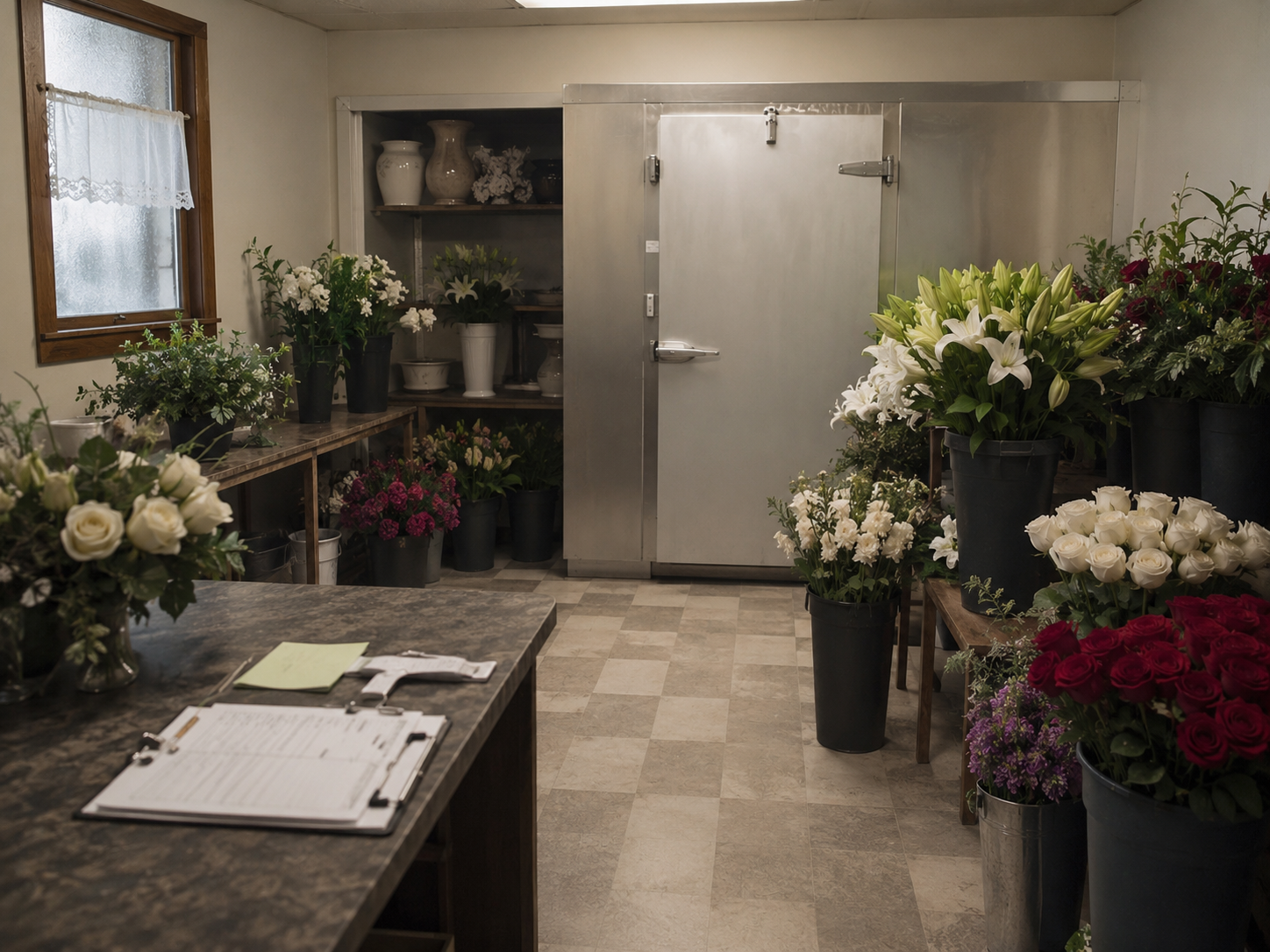
The funeral home reportedly changed one routine afterward. Staff began propping the cooler door open during final wipe-downs and photographing the glass at closing. That is not an admission of haunting. It is the practical response of people who do not want to wonder about the same thing twice.
Among locals, the story is told softly. It is not a thrill-ride legend. It sits closer to a small-town apparition tale, the kind shared with careful phrases like “they say” and “nobody knows.”
That caution is the most honest way to leave it. The flower cooler handprint does not prove a spirit walked through the back hallway. It does suggest that something happened in a locked, quiet room, and the available records did not explain it.
In a building devoted to last visits, that is enough to make one clear palm on cold glass feel heavier than it should.
Reader Context
This Weird Witnessed story is an editorial reconstruction, written as eerie visual storytelling rather than a verified report. For more context, see Apparitions and Hauntings Guide and How WeirdWitnessed Creates Reconstructed Horror Stories.