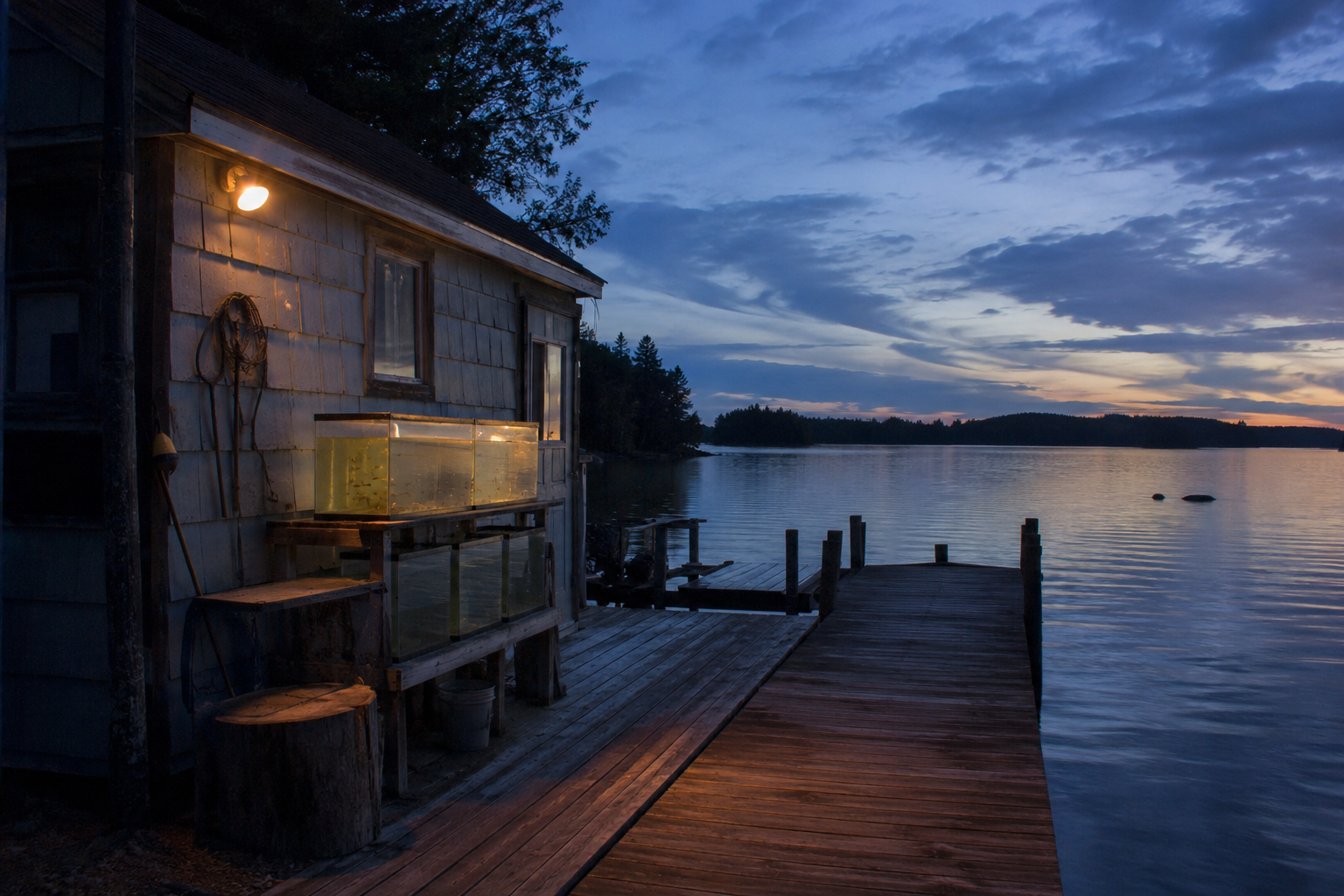
The drain under the minnow tanks had clogged before.
At a bait shop, that is not mysterious. Scales, algae, gravel, leaves, dead shiners, and lake mud can build up anywhere water moves. The owner in the recreated scene expected a practical mess near the dock and maybe a raccoon taking advantage of spilled bait.
What he reportedly saw under the boards was the reason the story traveled.
A pale low shape crouched near the drain outlet, partly under the dock, close enough to the waterline that it looked slick. It moved away before anyone could get a clean photograph. The people who repeated the account were careful about one point: they did not think it was a dog or a coyote.
That does not make it a monster. It makes it an unresolved waterfront sighting with several normal explanations and one image people could not forget.
WHAT THE BAIT SHOP ACCOUNT DESCRIBES
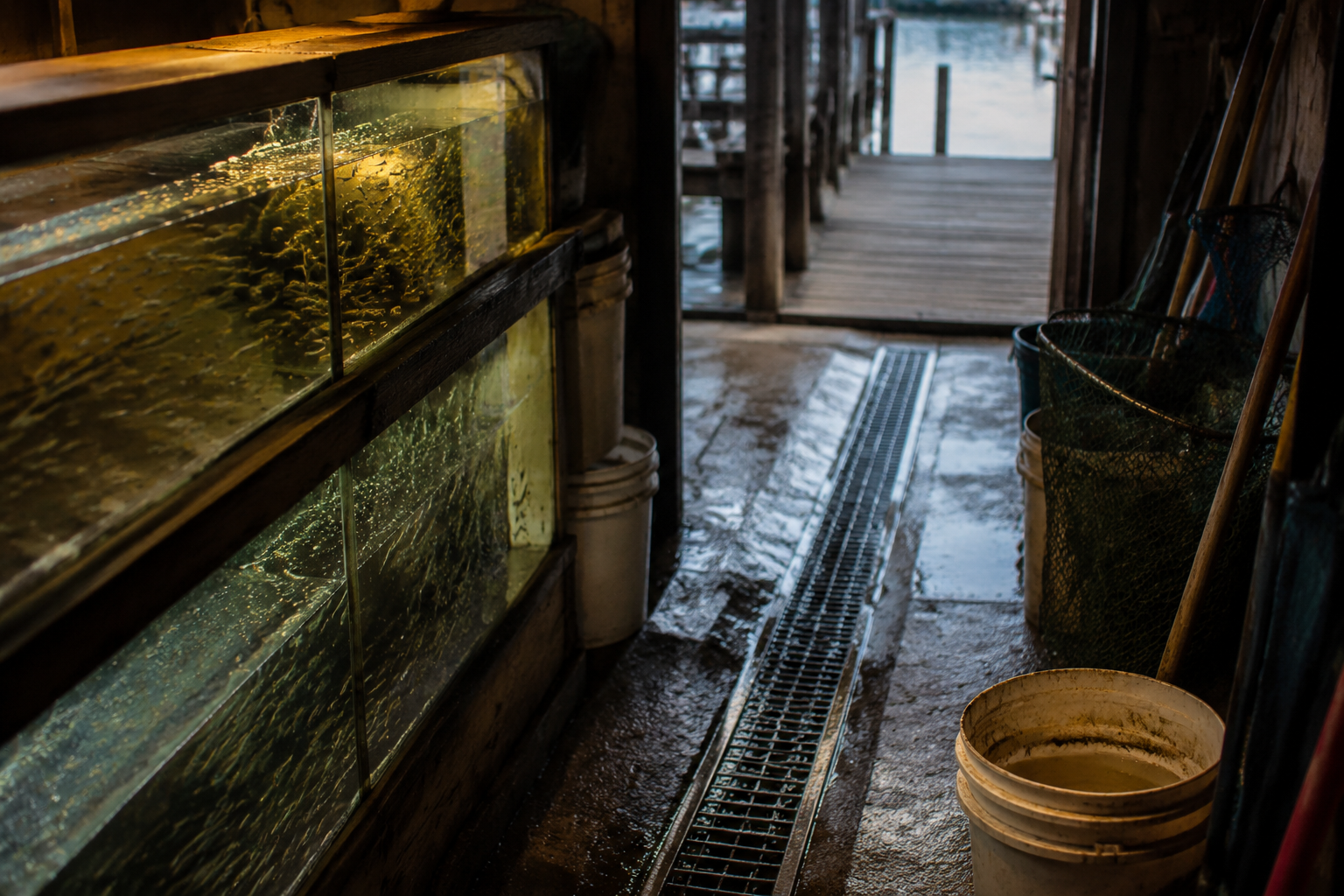
- A small lakeside bait shop with indoor or covered minnow tanks.
- A drain channel carrying tank water toward the dock area.
- A clog or slow drain noticed near closing.
- A pale, low shape seen under or beside the dock posts.
- Movement described as crawling or sliding rather than trotting.
- No clear photo, capture, track cast, or official identification.
The story depends on restraint. No one needs to claim the thing was supernatural. The uncomfortable part is that it appeared in a place where ordinary animals are common, yet did not register as the ordinary animals people expected.
1. Bait Shops Attract Wildlife
The first explanation is wildlife, and it is a strong one.
Bait shops smell like food. Minnows die in tanks. Worm bedding spills. Fish scraps end up in trash cans. Dock lights draw insects, which draw frogs, bats, birds, and small mammals. Raccoons learn routines quickly, and stray cats can become almost invisible around storage sheds.
A pale animal under a dock could be a raccoon with wet fur, a possum, a light-colored cat, a sick fox, or a dog seen from a bad angle.
That is where any careful account should begin.
But the same setting also means witnesses are used to seeing common scavengers. When people who work around docks say something looked wrong, the statement is not proof, but it is worth listening to.
2. The Drain Outlet Gives the Story Its Shape
The minnow-tank drain is the reason this account feels specific.
A vague creature seen by a lake becomes forgettable. A pale thing crouched beside a tank outflow is harder to dismiss because the location suggests behavior. It was near running water, bait smell, and a protected space under boards.
Animals investigate drains for food. That is normal. A raccoon could reach into a wet channel. A cat could drink there. A mink or muskrat could use the dock structure as cover.
The strange part, according to the story, was the posture. The shape was described as low, pale, and flattened near the boards, not upright like a raccoon sitting back and not high-shouldered like a coyote.
Posture can be misleading in low light. A wet animal crouching to squeeze under a dock may look unlike itself.
Still, the drain gives the sighting a practical anchor. Something seemed to be using the outflow.
3. Why People Said Not Dog or Coyote
The account’s repeated denial is important: not dog, not coyote.
That does not mean the witnesses identified every possible animal. It only means the two easiest local answers did not satisfy them.
Dogs and coyotes have familiar silhouettes. They stand higher on their legs. Their heads and shoulders read clearly when they turn. Even in dim light, people usually recognize the rhythm of a trot.
The pale thing in this story was said to move lower, closer to the ground, with a motion more like pulling itself through shadow than walking across open space.
That description could still fit a wounded animal. It could fit a possum. It could fit a raccoon with mange, which can look pale, thin, and disturbingly unlike a raccoon. It could also fit a large fish-eating mammal glimpsed at the wrong second.
The denial narrows the field, but it does not create a new species.
4. Water and Dock Shadows Distort Size
Under-dock sightings are unreliable by nature.
Boards break up the view. Water reflects light upward. Posts divide an animal into pieces. Mud changes color. A pale belly or wet flank can appear larger than the rest of the body. Ripples make still objects seem to move.
If someone looked under the dock with a flashlight or phone light, the beam may have exaggerated whatever it touched first. A curved piece of plastic, a floating bait bag, a pale log, or foam caught near the outlet could briefly become animal-like.
Then, if a real raccoon or cat moved nearby at the same moment, the mind could combine the object and the motion into one creature.
This kind of mistake is common around water.
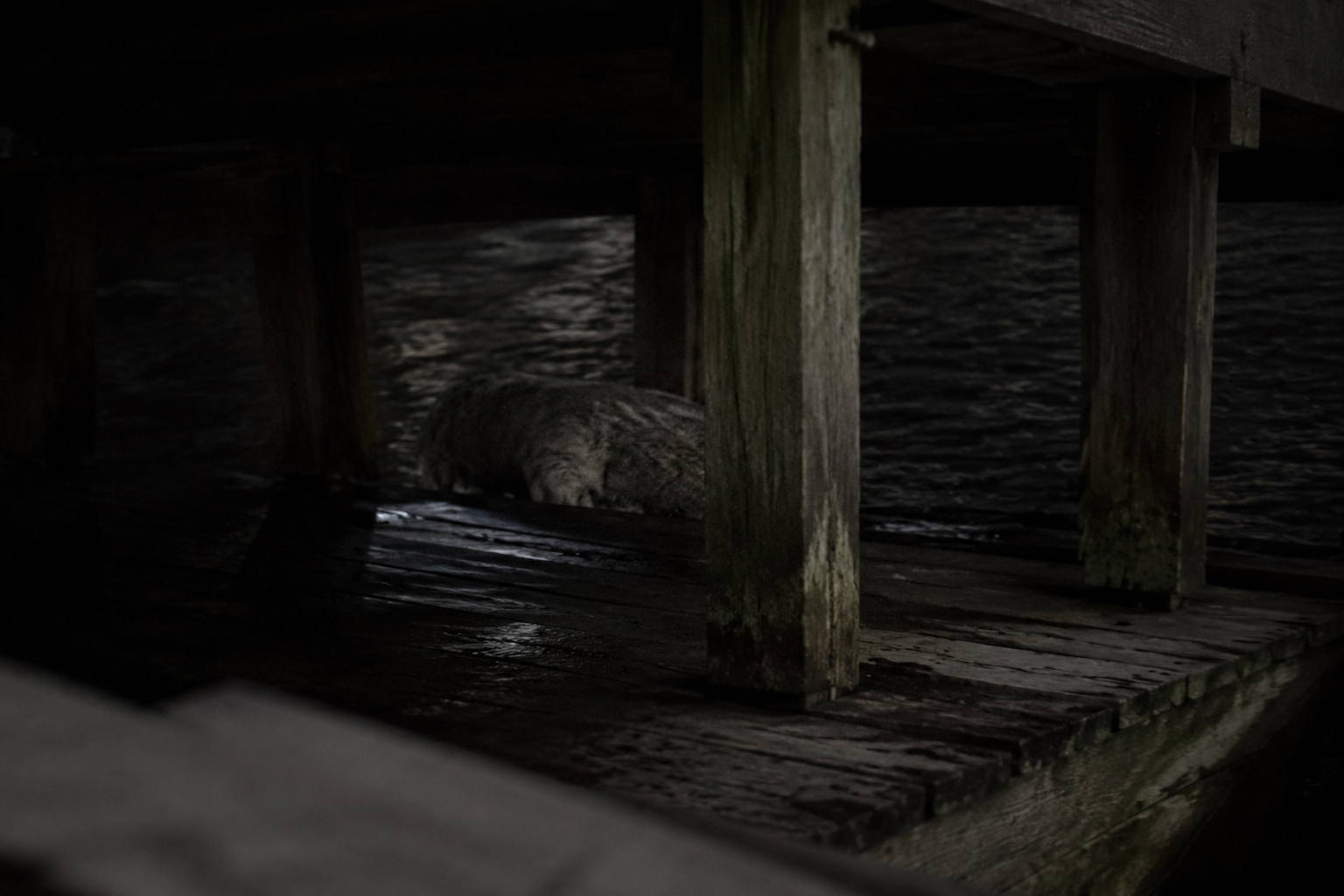
It is also why the lack of a clear photograph matters. Without a stable image, the story remains dependent on a brief, awkward view.
5. The Pale Color Made It Feel Less Familiar
Color changes everything.
A dark shape under a dock becomes a raccoon, dog, or shadow. A pale shape becomes harder to place. Wet fur can lighten under artificial light. Mange can remove dark guard hairs. Albino or leucistic animals exist, though they are uncommon. Mud, fish slime, and reflected dock lights can also bleach a normal animal in memory.
The reported paleness became the feature people repeated.
Not glowing. Not transparent. Pale.
That is more believable than a dramatic description, but it is also more frustrating. Pale is not an identification. It is a condition of seeing: low light, wet surfaces, and surprise.
The account would be stronger if anyone had found hair, prints, scat, or a repeated pattern at the drain. Instead, the story offers one quick look at a light-colored body where a dark scavenger was expected.
6. A Mundane Suspect: Mink, Muskrat, or Sick Raccoon
The most useful animal explanations are not dog or coyote.
A mink can move low and quick around docks, though it is usually dark. A muskrat can look strange out of water and may appear pale if wet highlights catch its side. A nutria, where present, can startle people who are not used to its shape. A sick raccoon with hair loss may look almost impossible to identify at first glance.
A possum is another candidate. Its pale face, low body, and odd gait can seem unsettling in poor light, especially if it is wet or cornered.
These explanations fit the bait shop better than anything exotic. They also fit the drain, because small scavengers and semi-aquatic mammals are exactly the animals likely to investigate spilled bait water.
If the story has an answer, it probably lives in this ordinary list.
7. Why the Workers Still Backed Away
People who work around bait shops are not usually frightened by animals.
They move snapping turtles from parking lots. They chase raccoons from trash cans. They scoop dead bait, clean filters, and deal with night insects on hot docks. That experience is why their reported reaction matters.
According to the account, the people who saw the pale shape did not rush under the dock after it. They backed away, got a brighter light, and found only wet boards and disturbed water when they looked again.
That reaction does not prove the thing was dangerous. It proves it crossed a small boundary in their expectations.
A known animal in a known place can still be disturbing if it moves in a way the viewer cannot categorize. Fear often starts in that half second before the label arrives.
In this case, the label never quite did.
8. What Would Make the Sighting Stronger
A repeat sighting would matter more than a scarier story.
If the same pale animal returned to the drain, a trail camera could settle the question. Tracks in mud could help. Hair snagged on a dock nail could be identified. A daylight inspection might reveal a den opening, fish scraps, or a path used by raccoons and possums.
The best evidence would be ordinary field work.
Measure the gap under the dock. Photograph the drain outlet in the same light. Note local wildlife. Check whether any pale plastic, foam, or discarded bait bag was lodged where the shape appeared.
Without those details, the account stays unresolved.
That does not make it worthless. It makes it local folklore with a practical setting and an honest uncertainty.
9. The Hook Is the Place It Chose
The bait shop story lingers because the creature, whatever it was, appeared where life and waste mixed together.
Minnow water ran out. Lake water pushed in. Small animals hunted. Boards hid movement. The drain made a private little feeding place beneath a public business.
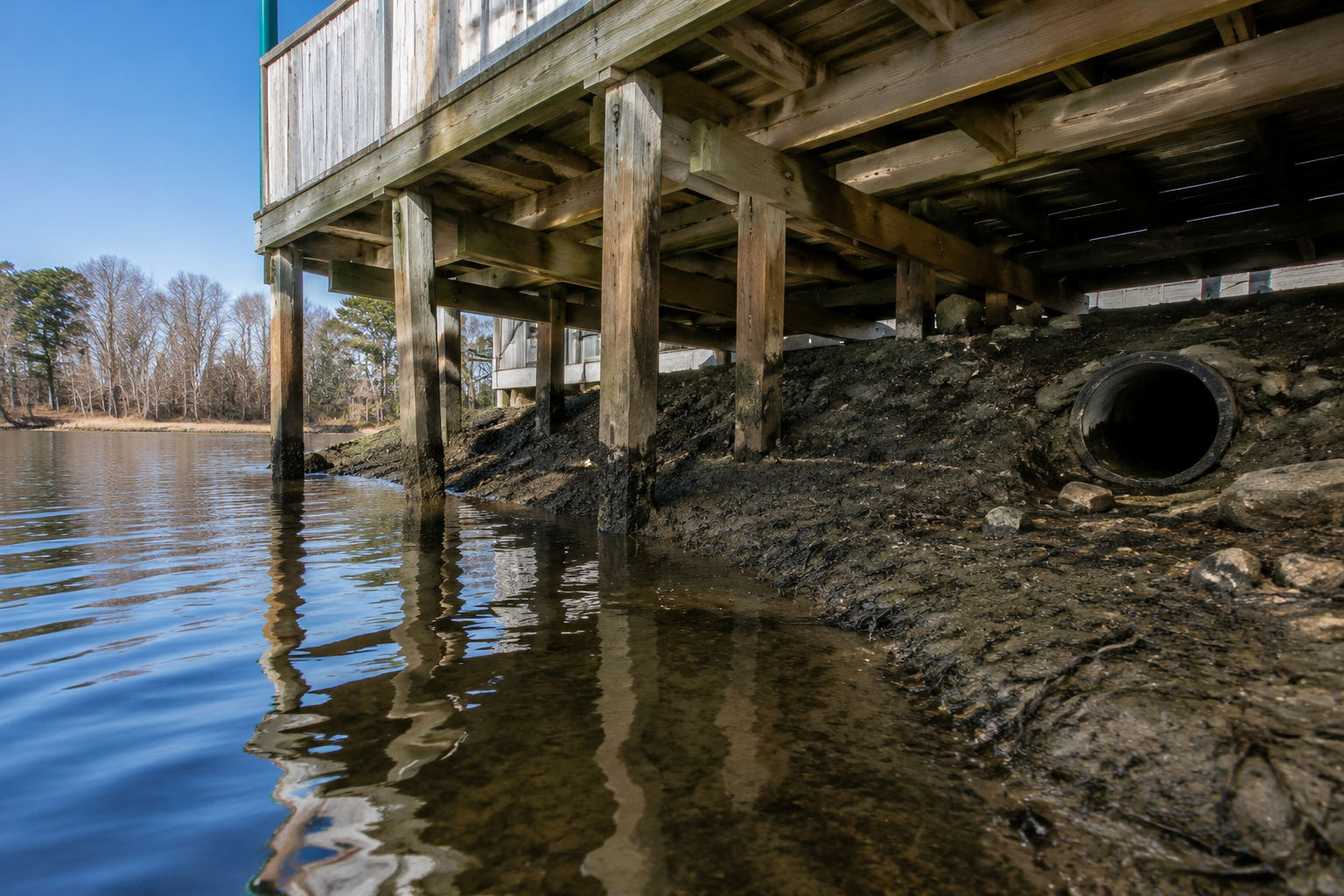
Maybe a possum crouched in the wrong light. Maybe a mangy raccoon looked pale and low. Maybe a mink or muskrat slipped away before anyone got a proper view. Those are the best explanations, and they should come first.
But the image remains effective: a worker following a clogged minnow-tank drain to the dock, expecting mud or a common pest, and finding a pale low shape pressed under the boards as if it had been waiting for the tank water.
Not a dog. Not a coyote, at least according to the people there.
Just something under the dock, close to the drain, gone before the light could make it ordinary.
Reader Context
This Weird Witnessed story is an editorial reconstruction, written as eerie visual storytelling rather than a verified report. For more context, see Creatures, Crawlers, and Cryptid Stories Guide and How WeirdWitnessed Creates Reconstructed Horror Stories.