The station that kept its schedule
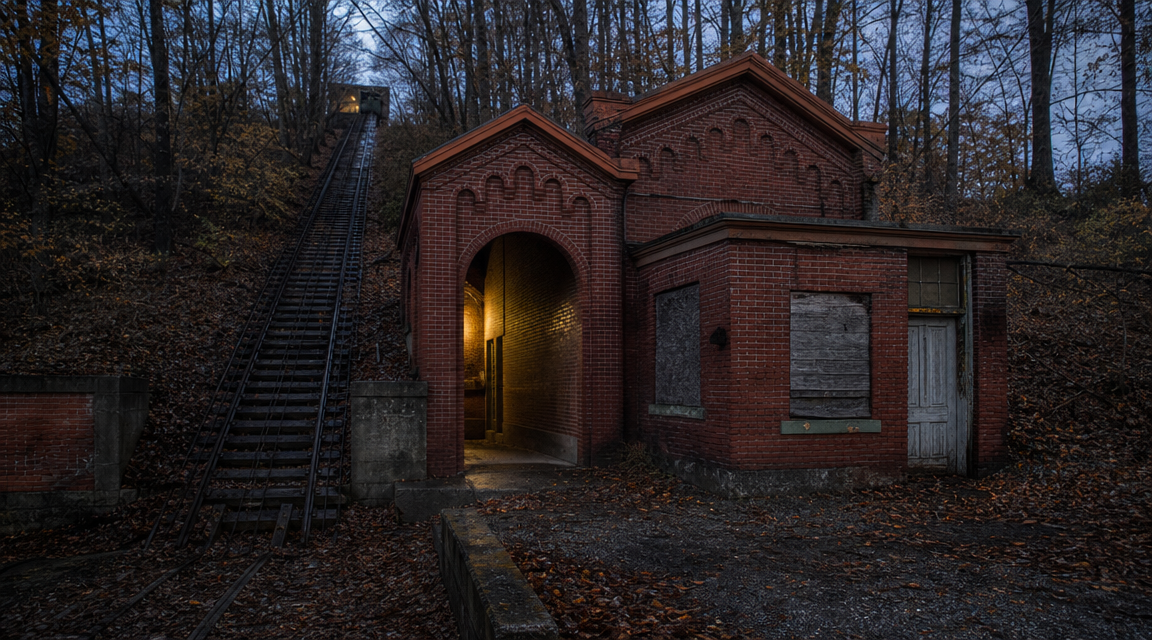
Millbrook Funicular Station should be easy to forget. It sits halfway between a shuttered mill district and a ridge of slate-roofed houses, a red-brick box pressed into a damp hillside.
The rails are still there, though most of the sleepers have softened under moss. From the lower platform, they climb into trees and disappear before the old passing loop.
The line closed in 1978, after the town council decided buses were cheaper than maintaining cable drums, brakes, and winter crews. The upper station became storage. The lower station was locked and left.
Yet people in Millbrook still talk about it in the present tense. Not as a ruin, exactly, but as a place that continues to behave like a station after dark.
They say it sounds occupied.
A small railway built for ordinary lives
The Millbrook funicular was never grand. It did not serve a mountain hotel or a famous viewpoint. It carried workers, schoolchildren, market baskets, coal sacks, and anyone who did not want to climb 312 wet stone steps.
The lower station opened in 1906 beside the weaving sheds. The upper stop met a narrow residential road near Chapel Rise. The trip took ninety seconds when the machinery was kind.
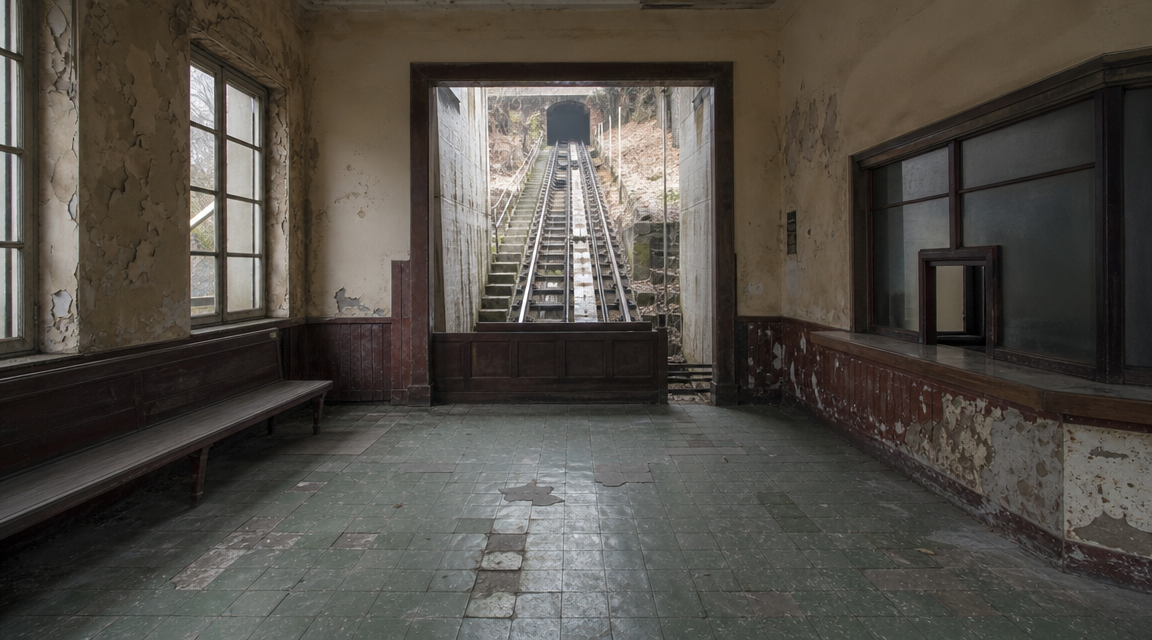
Old photographs show a tidy building with a striped awning, two timber cars, and a stationmaster in a cap standing beside a handbell. There was a ticket hatch, a stove, and a bench polished by generations of damp coats.
For seventy-two years, the place ran on repetition. Bell, brake, door, cable, ascent. Bell, brake, door, cable, descent.
That rhythm matters because nearly every report from the closed station describes the same sequence.
The first sound after closure
The first widely repeated story came from a council electrician in the winter of 1981. He had been sent to check why a security light kept burning through bulbs at the lower station.
He later told a local history volunteer that he heard a bell ring once from behind the locked ticket hatch. Not an alarm bell. A small counter bell, the kind used to summon an attendant.
He assumed someone was inside and called out. No one answered. Then, from the platform side, he heard three slow footfalls and the scrape of what sounded like a sliding car door.
The building had no power to the railway equipment by then. The cars had been removed for scrap. The platform gate was chained from the outside.
He finished the job quickly and declined a second visit. The security light failed again within the week.
What witnesses hear
Millbrook stories are unusually consistent. The station does not produce screams, voices, or theatrical apparitions. It produces work sounds.
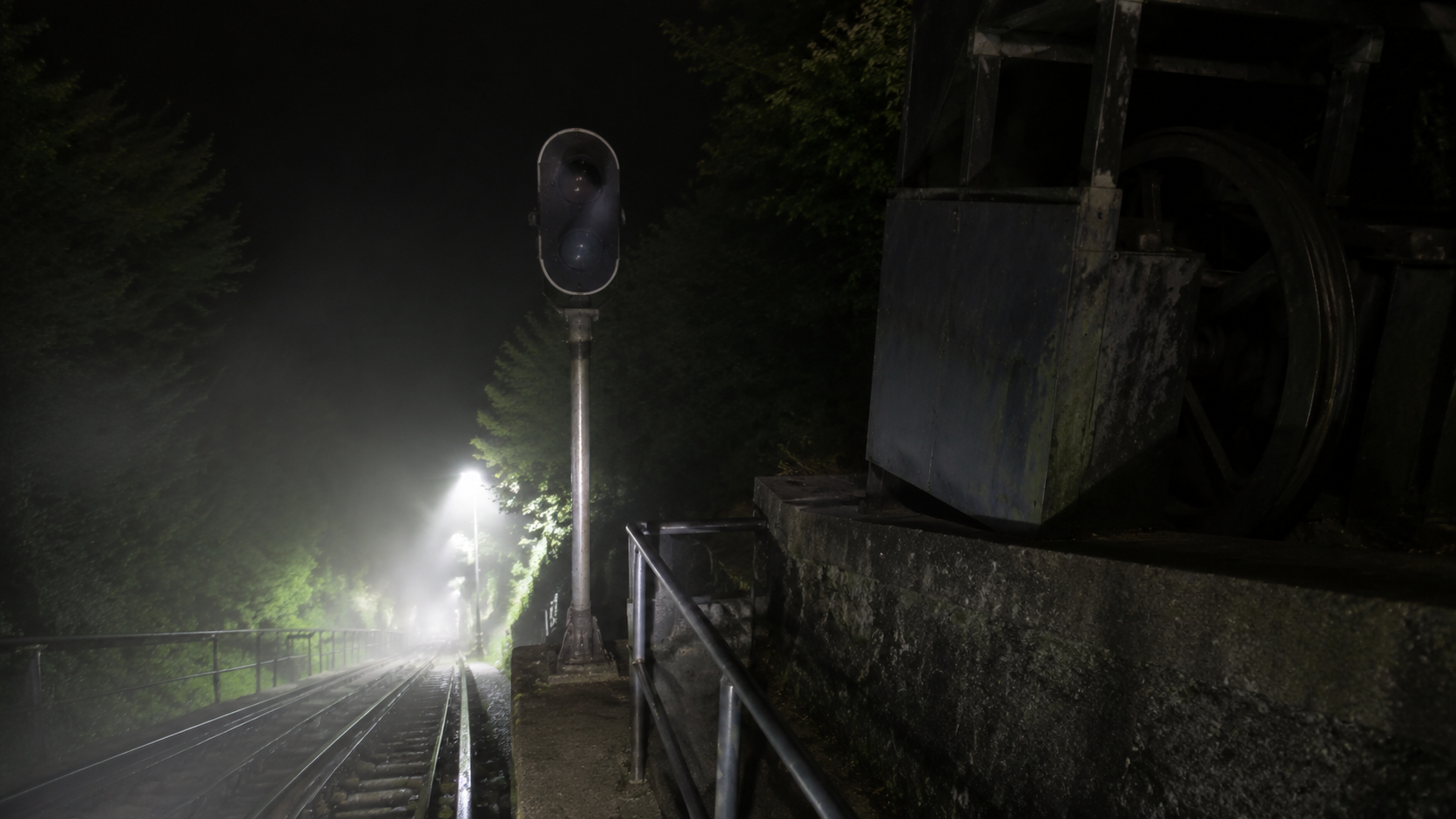
People report a bell at the ticket window. They report shoes crossing the platform boards, although the boards are mostly gone. They report the low, strained groan of cable tension from the machinery room.
Several witnesses mention a final sound: a soft thud, like a car settling against its buffer at the lower stop.
The strange part is timing. The noises are usually heard in the early evening, especially between October and February, when commuters once depended on the line after the factories closed.
Dog walkers on the path below the station have described pausing because they thought restoration work had begun. One woman said she heard a man cough, then the clack of a ticket punch.
When she turned toward the station, every window was dark.
The locked rooms and the machinery smell
The lower station has been inspected many times, officially and unofficially. Trespassers have forced entry. Preservation groups have measured the roof. Surveyors have checked the retaining wall.
Inside, the building offers plenty of ordinary explanations for unease. Water ticks through cracked guttering. Foxes den below the platform. Loose metal expands and contracts in cold weather.
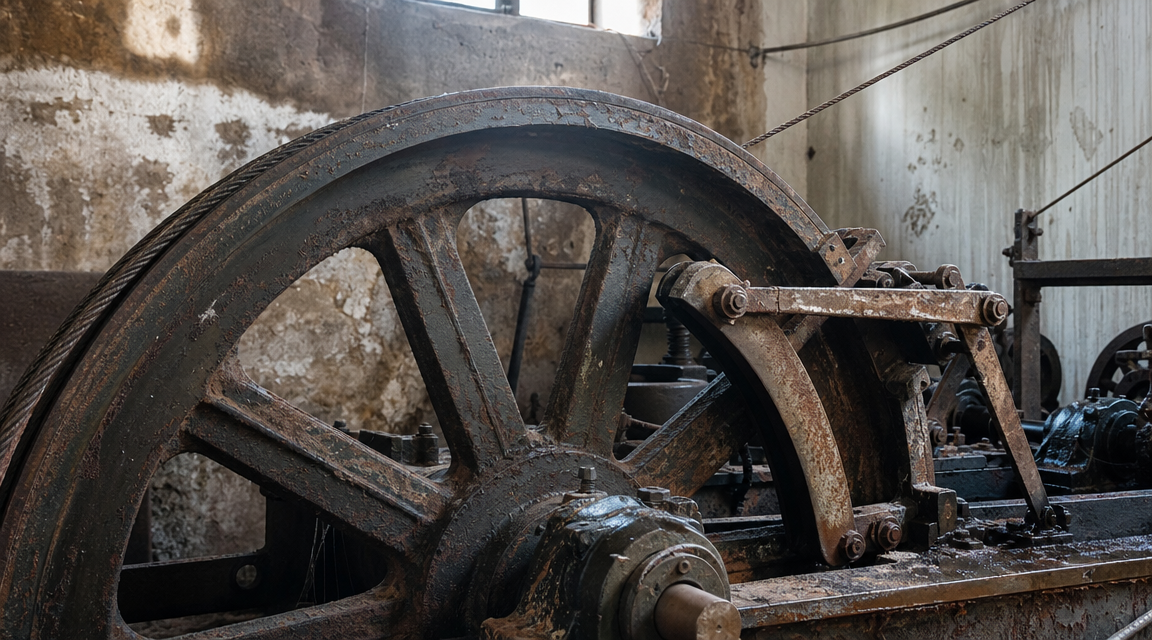
The machinery room is the hardest room to dismiss. It sits behind a fire door swollen by damp, with an old concrete plinth where the winding gear once anchored.
Visitors have reported the smell of hot oil there, even when the room is near freezing. Others describe a faint burnt dust odor, like an electric motor starting after years of rest.
One volunteer archivist said she heard the brake lever knock twice while she was photographing the room. The lever had been cut off at the base decades earlier.
That detail was never printed in the local newspaper, but it appears in three separate accounts collected by the Millbrook Heritage Society.
The accident no one likes to overuse
Every haunted place eventually gets assigned a tragedy, whether it deserves one or not. Millbrook does have an accident in its records, but it is not the melodrama people expect.
In March 1934, an attendant named Leonard Pike was injured during a maintenance check at the upper drum house. A brake block slipped, the car jolted, and Pike was pinned long enough to crush his leg.
He survived for several weeks and died later of infection. The inquest blamed poor maintenance, not malice or mystery.
Some retellings make Pike into a ghostly stationmaster still taking fares. That is convenient, but the evidence is thin. The sounds most often come from the lower station, while Pike worked mostly at the upper end.
The stronger theory, if a haunting can have one, is not a single ghost. It is residue: a building saturated by decades of repeated movement, stress, waiting, and release.
Millbrook was a machine for habits. Perhaps what remains is habitual too.
Why sound carries so strangely here
There are practical reasons the station deceives the ear. The hillside is concave, with stone walls and old mill facades below it. Noise from the road can bounce upward, flatten, and arrive changed.
A delivery truck braking near the old mill can become a distant cable groan. A gate latch can mimic the ticket bell. Footsteps on the Chapel Rise stairs can travel through the retaining wall.
On wet nights, the effect improves. Mist and low cloud soften direction. The empty station becomes a listening chamber, collecting small sounds and returning them with a railway accent.
Skeptics point to this geography, and they are right to do so. Millbrook is built to mislead hearing.
But geography does not explain why so many accounts follow the old operating order. Bell first. Footsteps. Door scrape. Cable strain. Arrival thud.
That sequence is the reason the station’s reputation has lasted longer than most local ghost stories.
The platform at blue hour
People who have visited the lower platform shortly after sunset often mention the same feeling: not fear at first, but the sense of being late.
The place seems arranged for a departure that has not been cancelled. The ticket hatch faces the path. The platform edge still makes sense. The rails still point uphill with purpose.
Even decay has not made it fully useless. Brambles lean across the line like passengers waiting for permission. Rain gathers in the cable trench. The roof drips in slow, patient counts.
Then a sound comes from inside, or seems to. A light metallic tap. A settling board. A breath of cable that should not exist.
Most visitors leave before anything dramatic happens. That may be why the stories feel believable. Millbrook does not chase people away. It simply resumes, and they realize they are standing where they should not be.
A haunted mansion asks you to imagine a past. Millbrook asks you to step aside for it.
Still occupied, but not alive
The most unsettling version of the Millbrook Funicular Station is also the plainest. No pale attendant. No figure in the car. No face at the ticket glass.
Just a building performing the memory of service.
That is what locals mean when they say it still sounds occupied. They do not mean crowded. They mean staffed. Maintained. Ready for the next passenger who knows the fare and the timetable.
The town has discussed restoring the lower station as a small museum, but money comes and goes, and the hillside keeps winning. Each winter adds another stain to the plaster and another twist to the rails.
Still, people stop below the platform when the evening is cold and quiet. They listen longer than they admit. Sometimes there is only water, road noise, and the ordinary creak of an old building.
Sometimes, they say, the bell rings once.
And after that, if they are sensible, they do not wait for the car.
Reader Context
This Weird Witnessed story is an editorial reconstruction, written as eerie visual storytelling rather than a verified report. For more context, see Apparitions and Hauntings Guide and How WeirdWitnessed Creates Reconstructed Horror Stories.