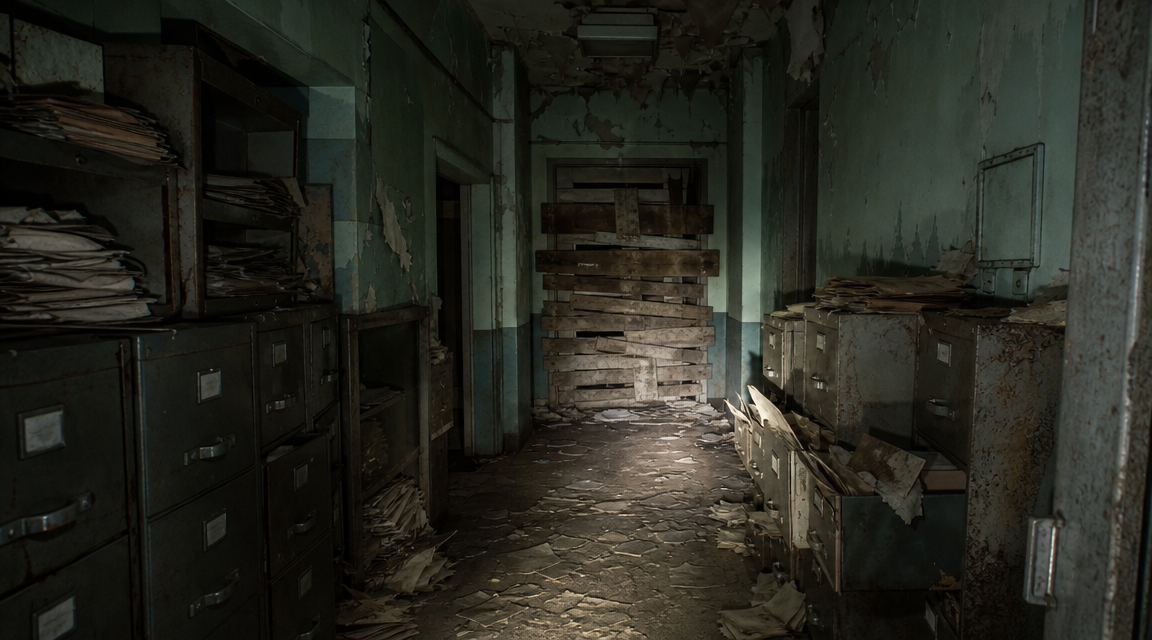
A boarded doorway at the end of the records corridor should have been the least interesting part of the old cliffside sanatorium.
It did not open. It did not lead volunteers anywhere useful. It was simply a sealed rectangle of warped timber, set into a damp wall above rusted baseboards.
Most people who heard the story later assumed the volunteers frightened themselves inside a decaying hospital. That is reasonable. Abandoned medical buildings invite imagination to do too much work.
But the records wing account lingers because the details were small and repetitive: a cold draft where no opening was visible, patient folders found out of sequence, and several night volunteers describing a dark human-shaped figure at the same blocked doorway.
The First Version Was Almost Mundane
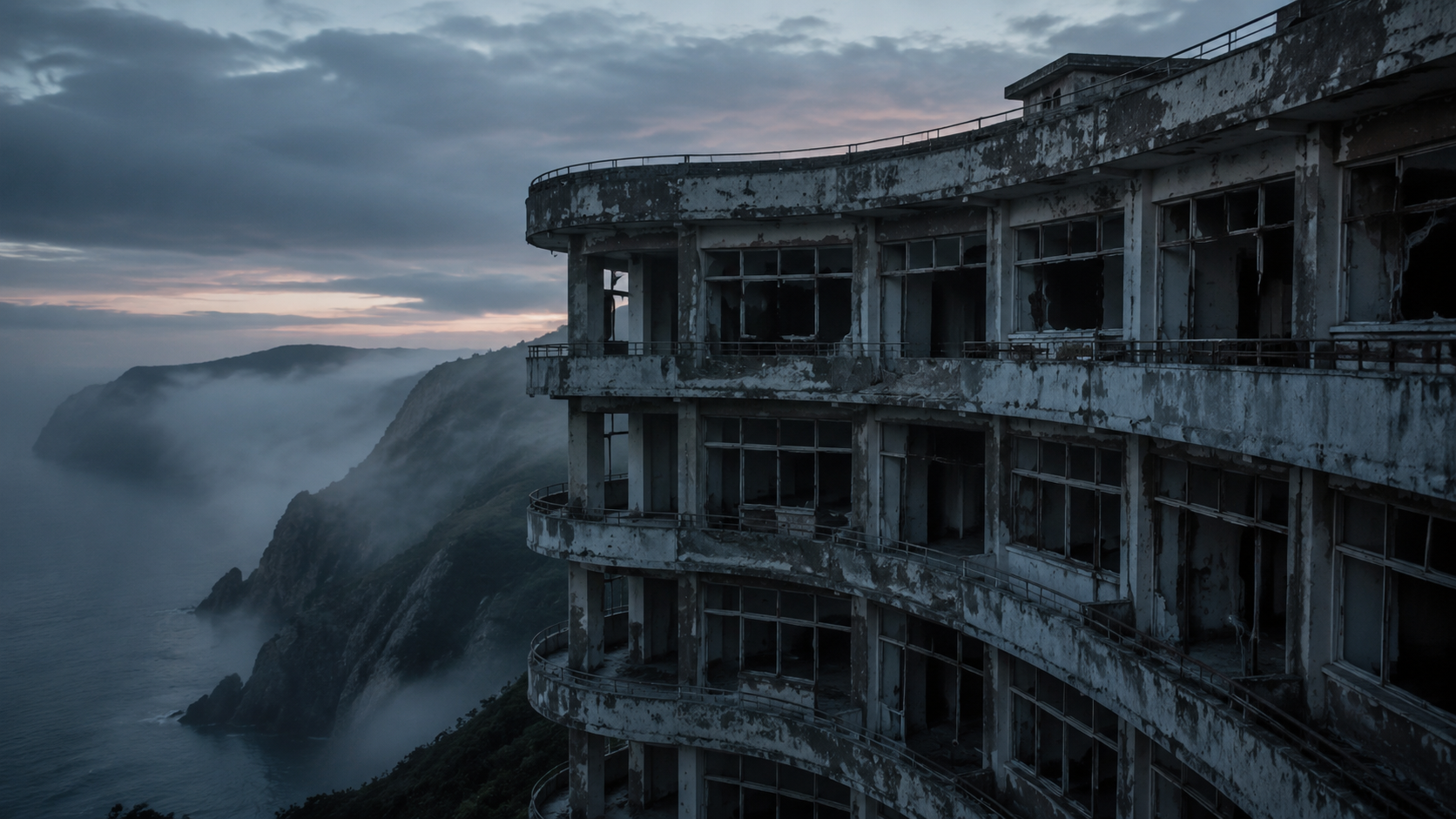
The sanatorium had been closed for decades by the time the volunteer survey began. It stood on a high coastal shelf, where wind pushed salt through broken windows.
A local preservation group wanted to document what remained before winter storms damaged the structure further. Their first goal was not ghost hunting. It was inventory.
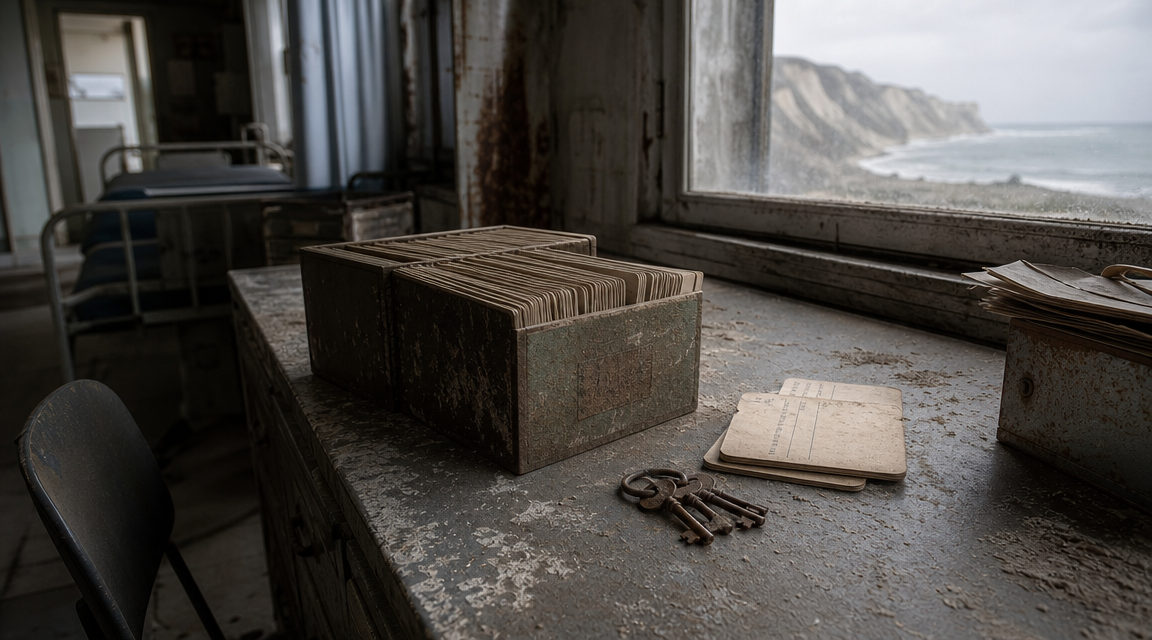
The records wing sat behind the former administration rooms. It contained file shelves, cabinet frames, mold-stained ledgers, and loose paper that had survived because the room stayed colder than the patient wards.
Volunteers worked in pairs after regular jobs, usually between early evening and midnight. They photographed cabinet labels, boxed loose material, and marked unsafe rooms with tape.
The blocked doorway was noted on the first walkthrough as a safety issue. No one knew whether it hid a closet, a collapsed service passage, or a small office.
That should have been the end of it.
A Building Made to Hold Its Breath
Tuberculosis sanatoriums were often built around air, light, and isolation. Patients were sent to places where climate itself was treated as part of the cure.
This one had long balconies, broad windows, sea-facing rooms, and corridors arranged to move people quietly between treatment and rest.
By the time volunteers entered it, those design choices had turned against the place. Open views became exposure. Cross-ventilation became unpredictable drafts. The cliff made every sound feel suspended.
The records wing felt different from the wards because it was less theatrical. No beds, no operating lamps. Just paperwork, shelving, and institutional memory.
That may be why the story attaches so strongly to it. A haunted ward is easy to imagine. A haunted filing corridor is stranger because it suggests the mystery is about something recorded, misplaced, or refused.
What the Volunteers Kept Writing Down
The first unusual entry was practical. A volunteer noted that the air near the blocked doorway was cold enough to fog a camera lens, though the rest of the corridor was damp but still.
Another pair later wrote that several folders from one cabinet had been found stacked on the floor directly in front of the boards. They assumed someone had moved them and forgot to log it.
Then came the sighting that changed how the notes were read.
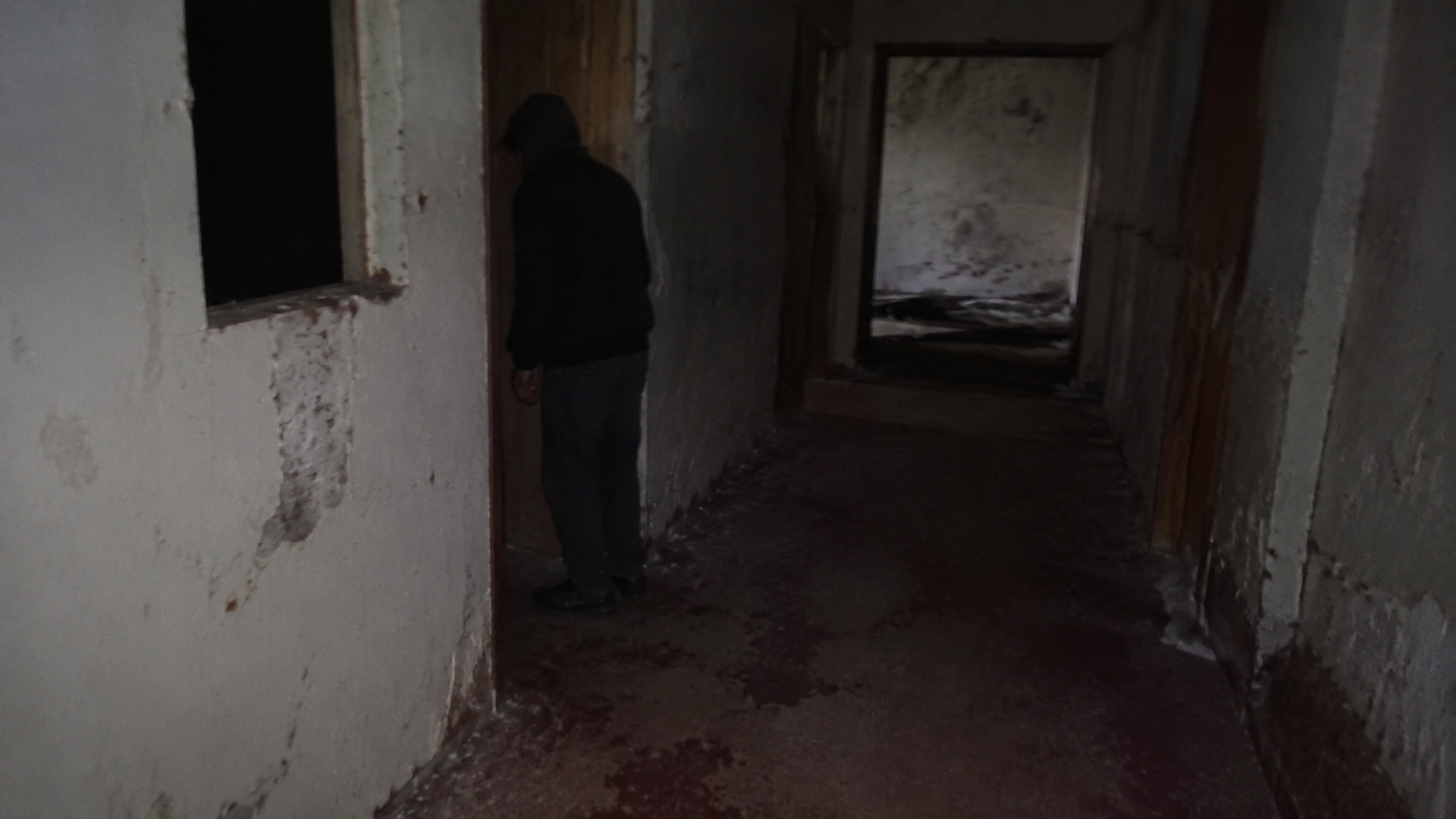
One volunteer said they looked up from a carton of index cards and saw a dark figure standing at the blocked doorway. The description was brief: human-shaped, taller than the boards, with no visible face or clothing detail.
The account does not claim the figure floated, spoke, or vanished in a flash. It says the volunteer turned toward their partner, looked back, and the shape was no longer there.
That restraint is part of why the story traveled. It sounds like something written by a person trying not to sound foolish.
Why the Simple Explanation Still Matters
There are obvious reasons to be careful with the records wing story. Old buildings produce false movement. Flashlights carve human forms out of doorframes and pipes. Damp paper can swell or fall when shelves shift.
Night work also changes perception. Volunteers were tired, cold, and alert to hazards. In that state, a shadow at the end of a corridor can become a person before the mind corrects itself.
The blocked doorway may have contributed most. A sealed door invites attention. It makes people wonder what is behind it, and that expectation can shape what they think they see.
A cautious reading should start there. The account does not give us controlled evidence. It gives us recollections, notes, and a building with many ways to deceive the senses.
Still, explaining each piece separately does not fully explain why the same location kept drawing the same kind of report.
The Doorway Was Not the Only Problem
What complicated the story was the pattern around the door. Volunteers reportedly found paperwork near it on three separate nights, even after they began checking the corridor before leaving.
The files were ordinary patient index cards and administrative sheets, the kind of material that would not interest a trespasser looking for trophies.
One night, a volunteer marked a box as complete, placed it on a table, and returned from another room to find several cards laid in a line leading toward the blocked doorway. No one in the group admitted doing it.
That detail may sound like folklore, and it may have grown in the retelling. But it also fits the strange tone of the case. The records wing was not producing loud scares. It was producing arrangement.
Things seemed to be placed just clearly enough to be noticed, but not clearly enough to prove anything.
The Most Reasonable Theory Is Not a Ghost
The strongest non-paranormal explanation is a mixture of building decay, volunteer fatigue, and social reinforcement. Once the first person mentioned the doorway, everyone noticed it more.
The cold draft could have come from a hidden void behind the boards, a cracked exterior wall, or pressure changes from wind moving through the cliffside structure.
The shifted files could have been caused by unstable shelves, uneven floors, or simple human error during a messy inventory. In an abandoned records room, order can look more intentional in memory than it did in the moment.
The dark figure may have been a shadow cast by a person standing behind the observer, or a vertical stain on the boards that appeared human under flashlight movement.
This explanation is probably the one any responsible historian or investigator should consider first.
But a reasonable theory can reduce a mystery without erasing it. The records wing remains interesting because the volunteers were trying to finish a dull job in a dangerous building, not build a legend.
The Part That Remains Unresolved
The blocked doorway was eventually checked from the opposite side, according to the later version of the account. It did not lead to a dramatic hidden ward.
It appeared to open into a small records annex that had partially collapsed. The room was unsafe, water-damaged, and nearly empty except for broken shelving and paper debris.
That discovery should have weakened the story. Instead, for some listeners, it made the reports more specific. If there was no usable room behind the boards, why did the corridor seem to behave as if something still came from there?
There is no need to answer that with certainty. The better question is why the volunteers focused on the doorway before they knew what was behind it.
The mystery may not be that something supernatural occupied the annex. It may be that the blocked door became a symbol for the sanatorium: records sealed away, lives reduced to cards, and a history cataloged but not closed.
How the Story Changed After It Left the Building
Once the account moved beyond the volunteer group, it became easier to exaggerate. Online versions reportedly turned the dark figure into a named patient, then a nurse, then a guardian of missing records.
Those additions are not supported by the careful version of the story. They may make better campfire material, but they also flatten what makes the case unsettling.
The original account is not powerful because it identifies the figure. It is powerful because it does not.
A nameless dark shape at a blocked records doorway leaves room for doubt. It can be a person-shaped shadow, a tired mind, a draft, a prank, or something less easily sorted.
That uncertainty is the point. The story survives because it never gives the audience enough to close the file.
Why This Haunted Place Still Holds Attention
The cliffside sanatorium records wing is not the loudest haunted-place story. There are no dramatic possessions, no noted photographs, and no official investigation that settles the matter.
What it has is atmosphere joined to repetition. A sealed doorway. A cold spot. Ordinary documents appearing where they should not. A brief, natural apparition report that stayed restrained enough to feel uncomfortable.
That combination gives the story its editorial value. It asks whether some places become haunted not only by death or fear, but by unfinished administration: names, dates, files, and the effort to preserve lives after people are gone.
Maybe the volunteers saw nothing more than shadows in a failing building. Maybe the records moved because tired people misremembered where they had placed them. Maybe the blocked doorway was simply a point where wind and imagination met.
Those are all possible answers.
Yet the image remains difficult to shake: a narrow records corridor above the sea, boards flexing in the damp, a flashlight beam finding the place where a doorway used to work, and for one second, the suggestion of someone standing there.
That is why the records wing still feels wrong. Not because it proves a haunting, but because it turns the most bureaucratic corner of an abandoned hospital into the part people remember most.
Reader Context
This Weird Witnessed story is an editorial reconstruction, written as eerie visual storytelling rather than a verified report. For more context, see Apparitions and Hauntings Guide and How WeirdWitnessed Creates Reconstructed Horror Stories.