The owner checked the dance studio from her phone because she thought she had forgotten the front lamp.
That is how the story is usually told: not as a ghost hunt, but as a tired woman in a parked car, halfway home, opening the security app to see whether the little pool of light over the reception desk was still on.
The lobby looked normal. A counter. A row of coat hooks. The dark interior window that looked into Studio B.
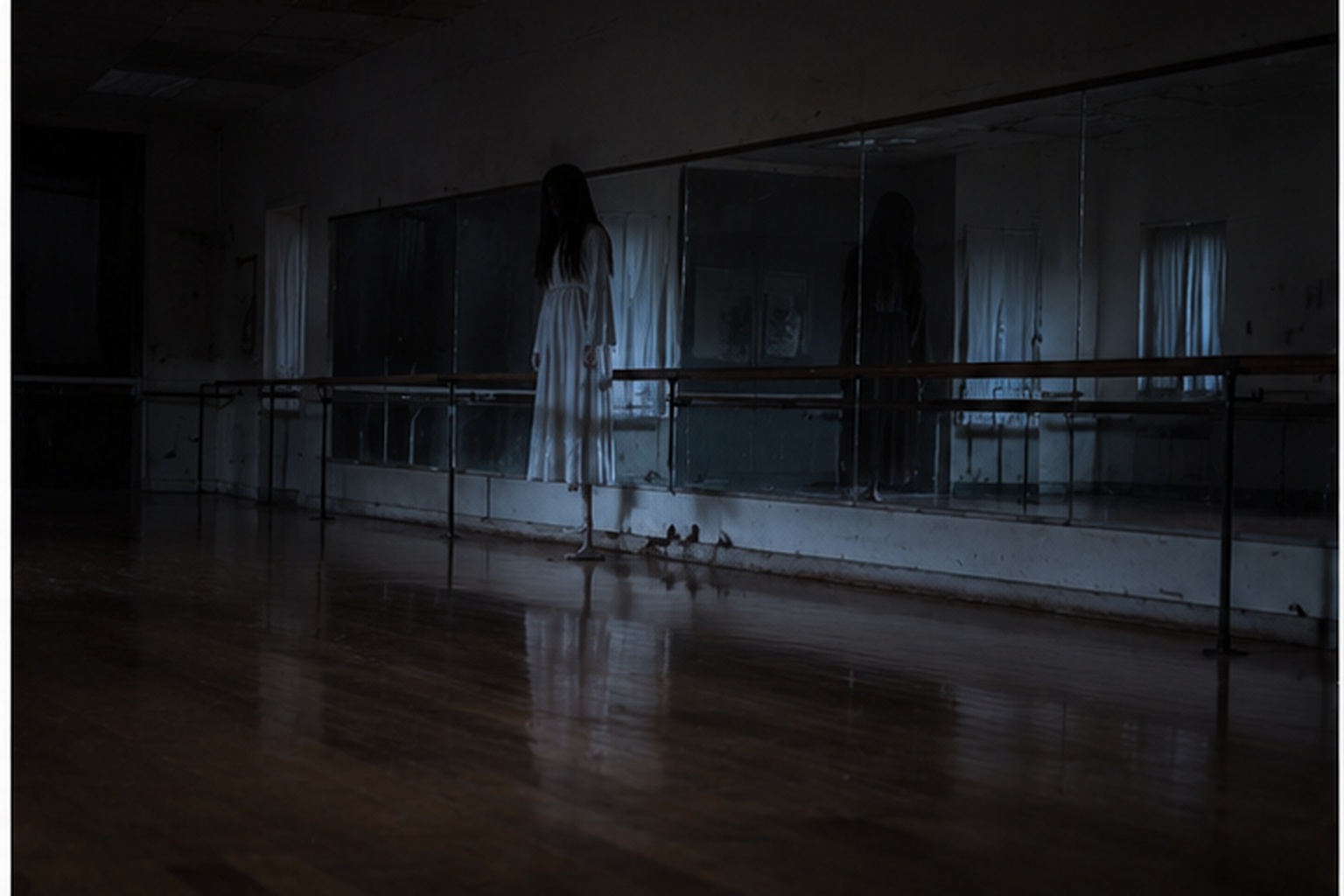
Beyond that window was the long wall mirror, reflecting the wooden floor, the ballet barre, and the weak emergency light near the rear exit. Then she noticed the white shape.
It stood near the barre, narrow and pale, with long dark hair or something like it hanging where the face should have been. It was too far inside the reflected room to be a coat on the lobby hook, and too still to be a student gathering her things.
The owner stared until the phone screen dimmed in her hand.
After The Last Class
Studio B had closed late after an adult beginner class. The final students changed shoes in the lobby, searched for water bottles, and left in pairs under the buzzing sign outside.
The owner did the usual walk-through. She checked the back corner, looked behind the freestanding mats, turned off the main lights, and left only the required emergency glow.
A teenage assistant did the second pass: trash, thermostat, forgotten hair ties, the door between the lobby and the practice rooms.
That door was supposedly locked before the owner ever opened the app.
If the room had been left open, the story would be easy to file away. Someone wandered in. Someone hid as a prank. A parent stepped inside for a lost sweater and froze in the wrong place.
But the local account insists the room had been checked twice, darkened, and sealed.
The Mirror Held More Room Than The Window
The lobby camera did not point straight into Studio B. It watched the counter and entrance, with only a sliver of the practice room visible through the interior window.
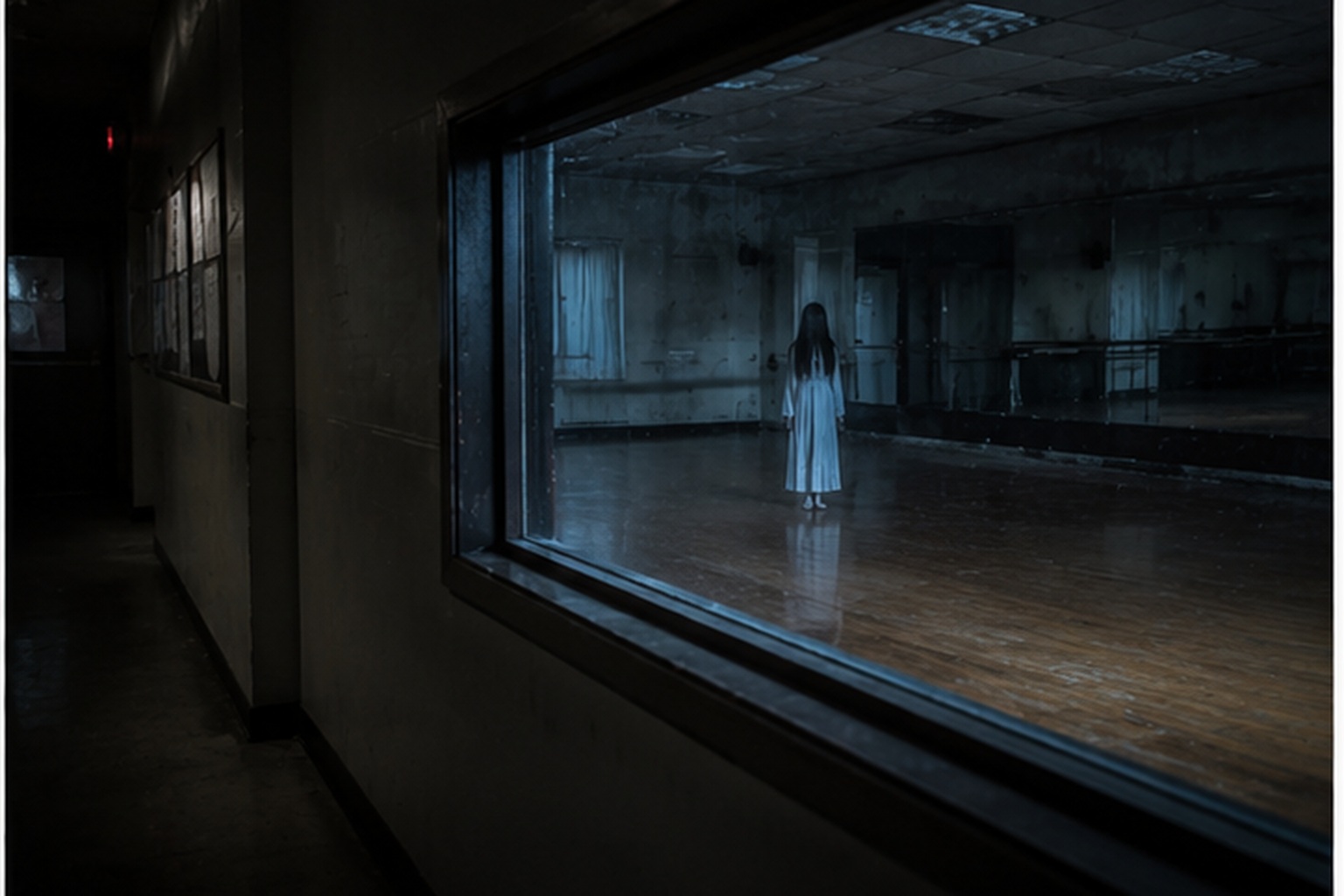
The mirror made the sliver feel enormous.
Because it ran almost the length of the wall, it reflected parts of the room the camera could not see directly. It made the dark studio look deeper, as if another room had been folded behind the glass.
That was where the white-dress figure appeared: not openly in the doorway, not in the clear slice of floor, but in the reflected space near the barre.
From the direct view, there was no obvious person to match it.
That does not make the story impossible. Reflections hide one angle while revealing another. A pale towel, cleaning cloth, or lobby glare can become disturbingly human once a tired mind gives it shoulders.
Still, the wrongness began there. The room looked empty. The mirror did not.
A White Shape Beside The Barre
In daylight, Studio B was practical and unromantic: scuffed wood, black speakers, mats stacked in the corner, a shelf of disinfectant bottles, and the barre running along the mirrored wall.
The figure appeared close to that barre, but not draped over it. The owner tried to explain it before she let herself feel afraid. Maybe a cleaning cloth had been left hanging. Maybe a recital dress had slipped from a garment bag. Maybe the assistant had moved a mannequin and forgotten to mention it.
Each explanation almost worked, then failed in one small way.
A cloth would sag. A costume would show a hanger. A mannequin would belong near the costume corner, not beside the practice line, leaning toward the mirror with its face hidden.
The pale dress or nightgown did not look theatrical. It looked loose, plain, and old-fashioned, the way sleepwear looks in childhood nightmares.
The Face Stayed Dark
The head was the hardest part to dismiss.
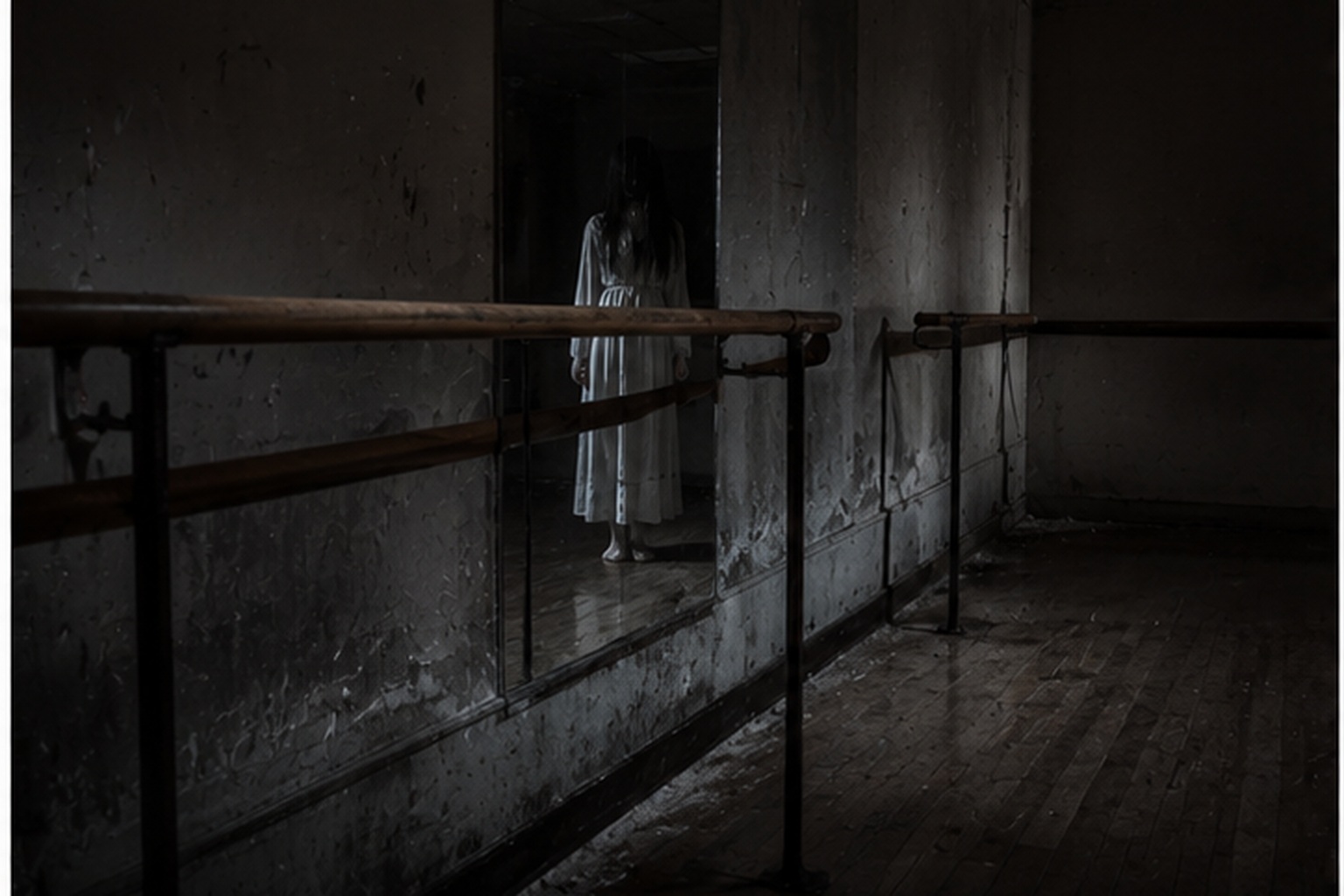
There were no eyes, no mouth, no expression that could turn the shape into a person with a reason for being there. Only the suggestion of long dark hair hanging forward, making a black hollow where the face should have caught light. That absence may be why the account feels so familiar. A pale woman with hidden features belongs to a whole language of haunted rooms and late-night hallway stories.
The owner knew fear could fill in blanks.
She told herself the darkness could be a mirror seam, a curtain edge, or a patch of shadow crushed flat by the camera. But the rest of the scene still had detail: the thin line of the barre, the dull shine of the floor, the weak glow near the rear exit.
Where a face should have been, the figure gave back nothing.
It was not looking at the owner. That might have been easier. It seemed to be looking at itself, or at whatever stood on the other side of the mirror.
The Owner Went Back
The part that makes the story feel cruel is that she did not drive away.
After several minutes, she called the assistant, then sat listening to the empty parking lot. She was close enough to return. The studio sign was still visible from the road.
So she went back inside.
The front door opened normally. The alarm had not tripped. The lobby smelled like floor cleaner and old coffee. The front lamp was off, which was why she had checked in the first place.
At the interior window, Studio B was a dark rectangle with a faint shine along the floor. The barre was visible. The mirror reflected the same dim room. No woman. No white dress. No hanging cloth.
She unlocked the studio door and turned on the lights. Brightness made the room look almost embarrassing: mats in the corner, tape marks on the floor, a missed water bottle under a bench.
There was nothing near the barre.
The Ordinary Answers Were Waiting
There is a sensible version of this story, and it should be allowed to stand beside the frightening one.
Security cameras misread darkness. Phone screens sharpen fear. Mirrors double every angle, and interior windows add another layer of glass. A reflection from the lobby could have landed in the studio mirror at exactly the wrong point.
The owner was tired. She expected an empty room. When the image did not match that expectation, her mind may have assembled a person out of fabric, glare, and shadow.
The mannequin theory lingered too. Studios sometimes keep dress forms for costume fittings, and during busy seasons objects migrate to strange places.
There is nothing impossible about a bad angle becoming a ghost.
What bothered people was that the answers had to stack. A cloth explained the white dress, but not the human height. Glare explained the pale body, but not why it settled by the barre. A mannequin explained the stillness, but not why no one found it when the lights came on.
Nothing Was Found By Morning
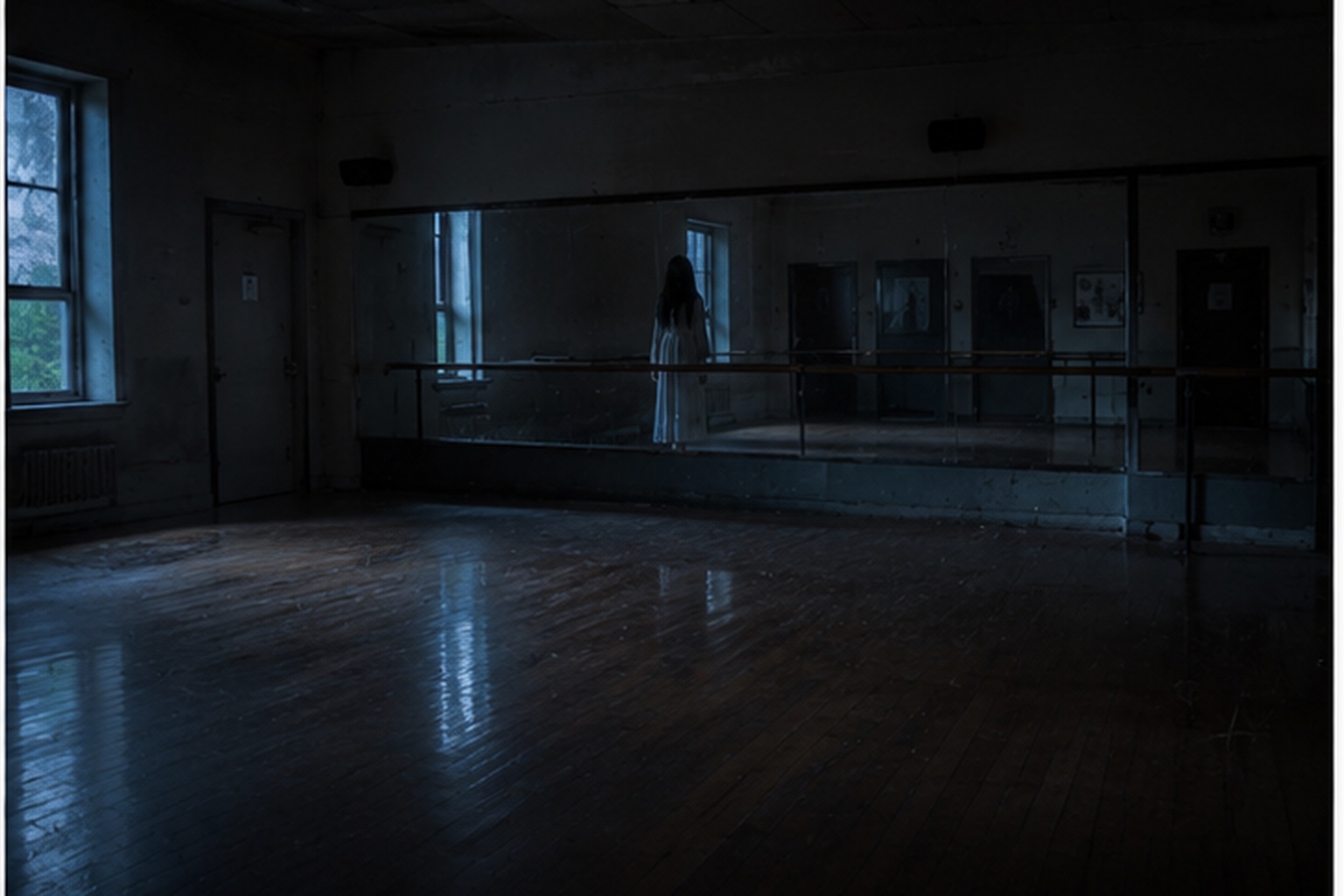
The next morning, the owner and assistant checked again in daylight. They pulled mats away from the wall, opened the storage closet, looked behind curtains, and studied the mirror seam. The barre was clean. The mirror had student fingerprints, but no crack or stain that resembled a person.
No white cloth was found in that corner. No dress was reported missing from the costume rack. No one from the final class said they had returned.
The studio went on with its schedule. Children arrived in leotards. Parents waited in the lobby. Music started again.
That may have made the memory worse. Once you have imagined a silent figure practicing alone after midnight, every normal movement in the mirror feels like it might leave something behind.
Why The Story Lingers
The most unsettling part is how little the figure did.
It did not run across the floor or press its hands against the glass. It simply stood where a dancer would stand, close to the barre, dressed in white, hair forward, patient in the dark.
A studio mirror is meant to return the truth of the body: posture, balance, mistakes, correction. It is a tool for seeing what you are doing wrong.
In this account, the mirror returned something no one remembered placing there.
Maybe it was only a folded reflection, a trick of glass and distance that briefly arranged the room into a woman-shaped shadow. Maybe a mundane object sat in exactly the wrong light and vanished as soon as the owner entered from a new angle.
That is the most reasonable answer.
But the story remains unsettling because, for one dim moment, the mirror seemed to know the room better than the people who had locked it. It showed a pale long-haired figure by the barre, as if the studio had kept one last student after closing.
And when the lights came back on, she was gone.