The First Morning After the Drain
Halden Rec Center was supposed to be quiet for two weeks.
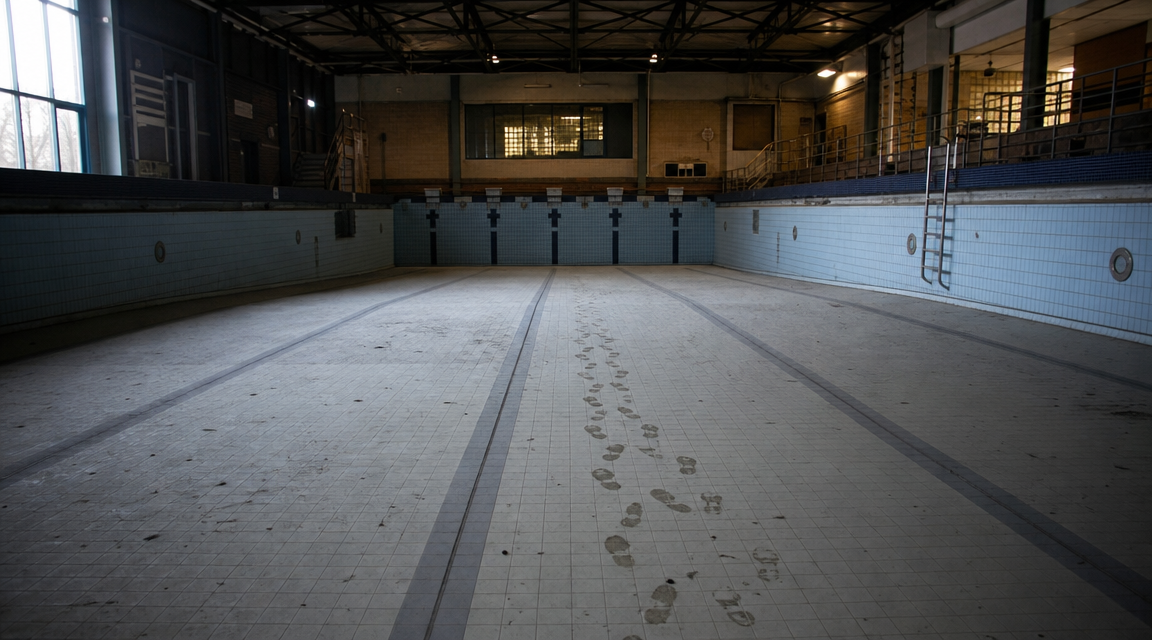
The community pool had been closed for repairs: cracked tiles, a loose depth marker, and a suspected leak under the deep-end return line. By Monday evening, the water was gone. The blue basin looked too large, too hollow, and loud enough that one dropped wrench rang across the whole building.
At 6:12 on Tuesday morning, maintenance supervisor Len Voss unlocked the pool hall and stopped at the railing.
A line of wet bare footprints crossed the dry pool.
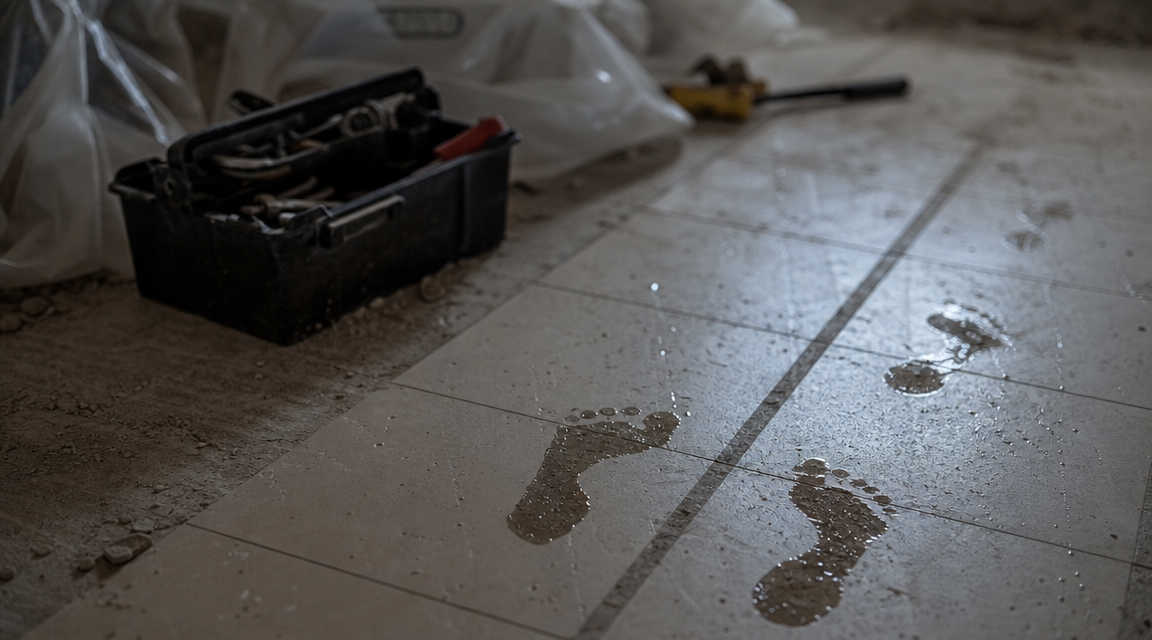
They began near the shallow-end steps, angled through the center lane, and continued to the deep end. At the round metal drain cover, they stopped. The prints were dark, distinct, and fresh enough to reflect the overhead lights.
There was no water in the pool.
A Locked Building With Few Places to Hide
Halden was not a maze of forgotten corridors. It was a plain municipal recreation center: lobby, locker rooms, offices, gym, and one indoor pool hall.
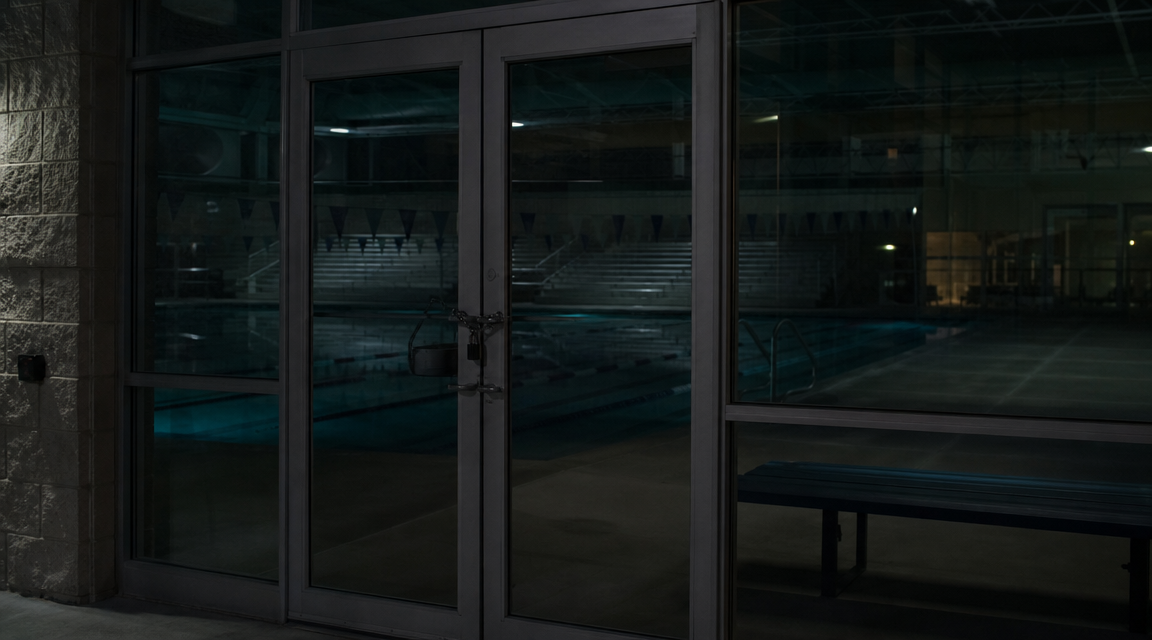
The pool doors had been locked after Monday’s workday. The alarm panel showed no overnight entry. Exterior doors used electronic fobs, and the log showed only the evening custodian leaving at 8:47 p.m. and Voss arriving the next morning.
Contractors had pumped the pool down, then used squeegees and shop vacs to clear the last puddles. By closing time, the basin was dusty enough to show shoe prints from workers.
That made the bare footprints impossible to miss.
They did not trail in from a doorway. They did not smear through standing water. They looked as if someone with wet feet had walked across a floor that had no source for wet feet.
Voss photographed them before anyone climbed down. Then he checked the locker rooms, the mechanical room, and the roof hatch.
All were locked.
What the Prints Showed
The first descriptions were ordinary in the most troubling way.
The prints looked human.
Not oversized. Not clawed. Not backward. Just adult bare feet, with toes visible in several impressions. The stride was steady. The left foot turned outward slightly. The right heel seemed lighter, as if the walker favored that side.
There were thirty-four visible prints.
They began on the third step into the shallow end. The first two were faint. By the pool floor they became darker, as if the feet were getting wetter instead of drier.
That detail bothered Voss most.
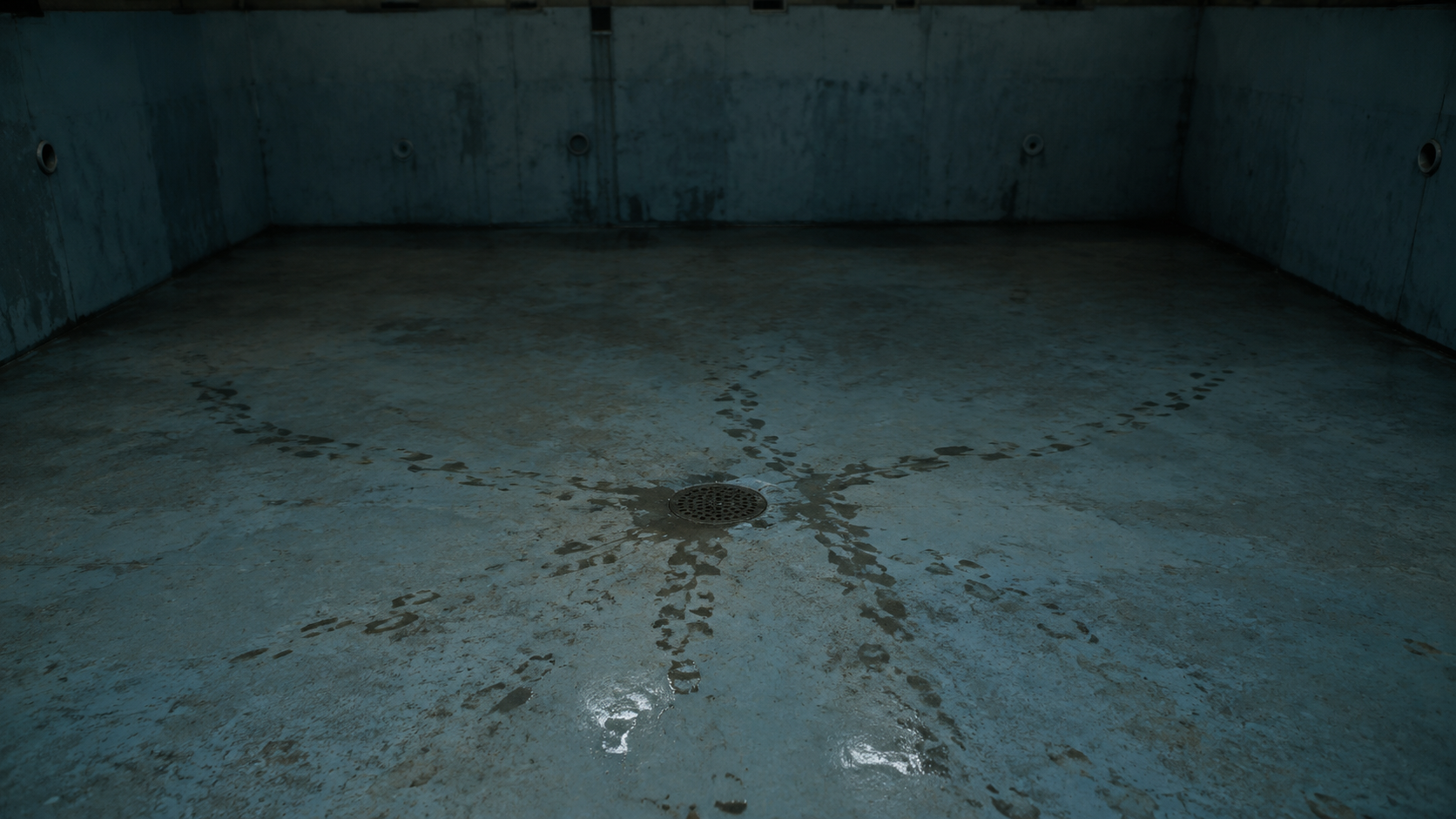
A prankster entering with wet feet should leave the strongest prints first. These gathered clarity as they crossed the basin, ending in a damp crescent around the deep-end drain. The drain cover itself was dry on top, but moisture ringed its edge.
When a worker touched one print with a gloved finger, it came away wet. Not oily. Not strongly chlorinated. Just cold water, already evaporating.
The Explanations That Did Not Hold
By noon, everyone had a theory.
Condensation came first. Indoor pools are humid, and an empty basin can collect odd moisture patterns as the air changes. But condensation does not usually form alternating bare feet with toe marks.
A roof leak came next. It had rained briefly around 3 a.m. Maybe water dripped from a skylight. The ceiling inspection found no wet beams, no stains, and no droplet pattern along the route.
Then came the trespasser theory. A teenager could have hidden inside before closing, waited, walked through the pool, and left by an emergency door. But the exits were alarmed. None had opened. No clothing, towels, ladder marks, or trash appeared nearby.
Someone suggested a worker had staged it. That was possible, but the morning crew had no reason to create extra paperwork during an already delayed repair. The prints were discovered before the tile contractor arrived.
Staff mopped them away and placed absorbent pads at every doorway into the pool hall.
The next morning, the footprints were back.
The Second Set Was Worse
Wednesday’s prints followed almost the same route.
Again they started at the shallow steps. Again they crossed the exposed basin. Again they ended at the deep-end drain. The absorbent pads at the doors were untouched. Dust on the deck railing was undisturbed. A strip of painter’s tape across the ladder socket remained sealed.
The basin floor, however, showed the wet trail plainly.
This time there was one new feature. Near the middle of the pool, the footprints paused. Two prints stood side by side, pointed toward the observation windows above the deck, as if the walker had stopped and looked up.
That was when the story left maintenance and became a staff rumor.
The city treated it as a security problem. That night, Voss and a community service officer checked every access point, locked the pool hall, taped the doors, and left a portable camera facing the shallow end.
The camera recorded hours of empty pool.
At 4:18 a.m., the image blurred with digital static. At 4:19, the pool was still empty. At 5:03, after an automatic exposure adjustment, the footprints were visible.
No figure appeared.
The Drain Everyone Kept Watching
Every route ended at the same place: the deep-end drain.
In a swimming pool, the main drain is plumbing, not a mystery. It connects to lines, valves, filters, and pumps. It is designed to pull water away.
Still, people focused on it because the footprints did.
The cover at Halden was about eighteen inches wide and secured with screws. No adult could pass through it. When contractors removed it, they found the expected pipe opening below, dark and narrow, with mineral scale around the rim.
They also found moisture.
That should not have been shocking. Plumbing retains water. Low points stay damp. But the dampness had wicked upward around the drain in a way the contractor called unusual, not impossible. The surrounding tile was several degrees cooler than the rest of the basin floor.
A plumber ran a camera into the line and found residue, an old rubber gasket, and a bend where standing water had collected. The line did not connect to a tunnel or hidden maintenance space.
The practical answer was that the drain was wet because drains are wet.
That did not explain why the footprints stopped there like someone had reached a destination.
The Night Watch
On Thursday night, two staff members stayed in the building.
They were not ghost hunters. One was Voss. The other was assistant manager Mara Keene, who later said she agreed because she did not want the story growing without her. They sat in the dark observation office above the pool hall with coffee, a radio, and a clear view of the basin.
For hours, nothing happened.
The empty pool looked staged under the dim safety lights. Plastic sheeting fluttered when the ventilation cycled. Somewhere in the locker rooms, a pipe ticked as it cooled.
At 3:56 a.m., Keene noticed a darker mark on the shallow steps.
She thought it was a shadow until another appeared below it.
According to both staff members, they never saw a person. They saw prints forming, one after another, as if invisible wet feet were pressing onto the tile. The marks did not splash or steam. They simply darkened into shape.
The sequence moved slowly down the steps and across the basin.
Voss radioed the officer parked outside, but by the time the officer entered, the track had nearly reached the deep end. All three watched the final pair appear beside the drain.
Then nothing.
No sound. No opening cover. No ripple of air. Just a wet trail in an empty pool.
The Part That Still Feels Wrong
Halden’s incident stayed small because the center handled it like an operational embarrassment.
The portable camera never captured a clear figure. The officer’s short report described “unexplained wet impressions” but did not endorse anything stranger. The city did not want a closed pool becoming a destination for dares, so repairs were accelerated.
Contractors replaced the cracked tiles, resealed the drain assembly, pressure-tested the line, and dried the basin with industrial fans. The pool was refilled the following week. Once water covered the floor again, there was nowhere for footprints to appear.
The official explanation became a blend of condensation, residual plumbing moisture, and staff misperception under unusual lighting.
It was serviceable. It was also incomplete.
Condensation might account for dampness. Residual water might account for the drain. Stress and rumor might sharpen a memory. But none of those explain alternating left-right prints appearing from the shallow steps to the drain inside a locked, dry pool.
That gap is where the story survived.
It never became grand enough to dismiss as folklore. It stayed small, procedural, and stubborn. A dry basin. A locked building. Wet footprints. A drain.
Pools are designed to erase bodies into motion. Water breaks outlines. Chlorine covers scents. Noise covers small sounds. When the water is gone, a pool should become honest: every mark visible, every access point obvious, every explanation easier.
At Halden, draining the pool did the opposite.
It revealed a path that only appeared when there was no water left to walk through.
And each morning, the path ended exactly where the pool itself disappeared.
Reader Context
This Weird Witnessed story is an editorial reconstruction, written as eerie visual storytelling rather than a verified report. For more context, see Camera Anomalies and Strange Images Guide and How WeirdWitnessed Creates Reconstructed Horror Stories.