
The Detail That Started the File
The map was found in the kind of folder archivists open without expecting surprise.
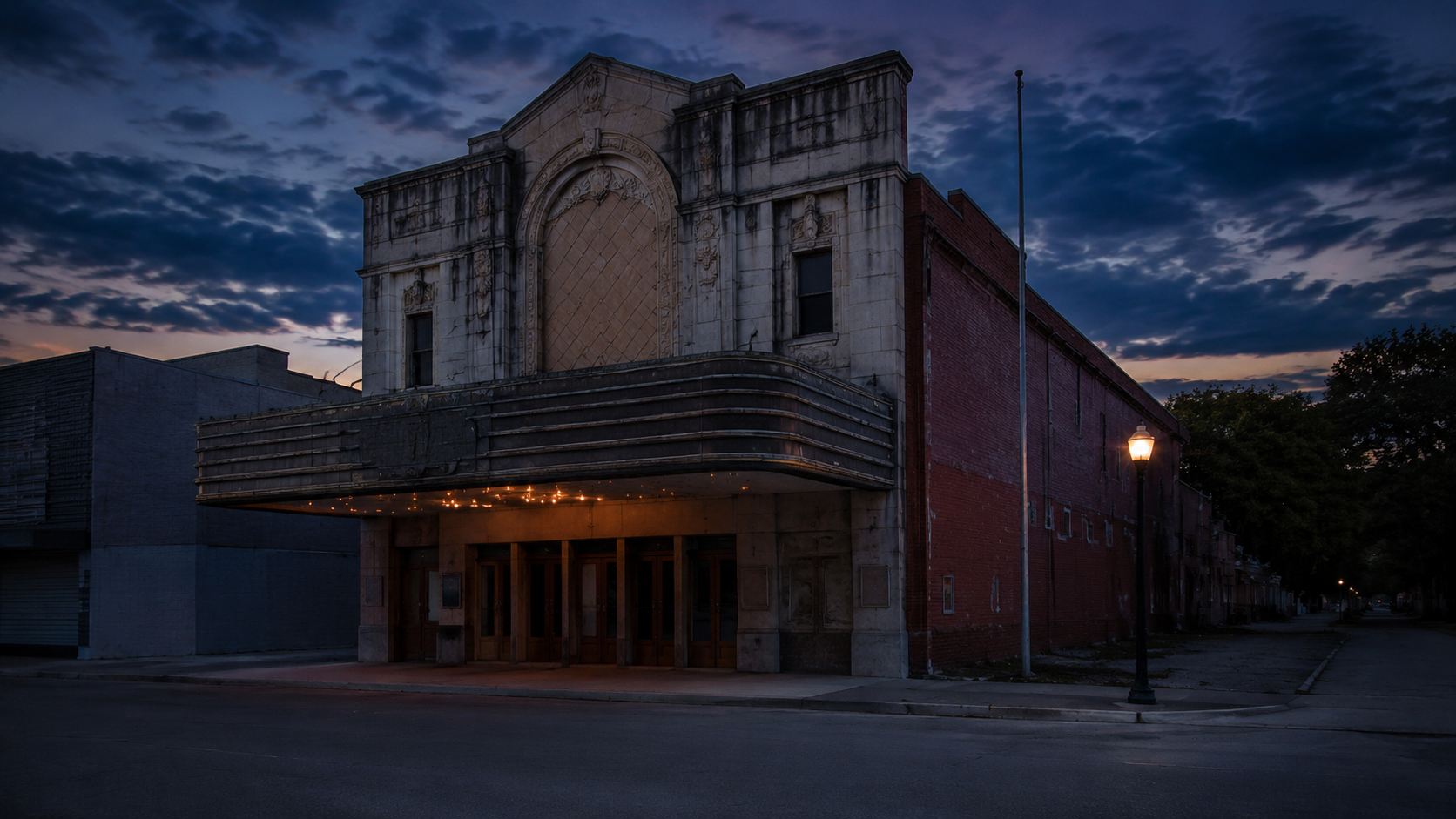
It was filed with municipal inspection papers, folded into quarters, and labeled as a fire-escape diagram for a small downtown theater.
Nothing about that sounds unusual. Old theaters required inspections. Cities kept plans.
Paper survives in the wrong box all the time.
The problem was the date written on the archive sleeve.
It placed the map several years before the theater was built.
At first, everyone assumed the sleeve was wrong. That is the easiest answer, and often the correct one.
Why the Simple Version Was Not Enough
Archives are full of copied dates, reused folders, and clerks doing their best with tired hands.
Then the map was compared with later theater plans.
The match was not perfect, but it was close enough to turn a clerical mistake into a lingering historical question.
The theater opened as a modest neighborhood venue, not a grand palace.
It hosted traveling acts, newsreels, community meetings, and eventually second-run films.
Its building history seemed straightforward. A permit was requested. A lot was cleared. Plans were submitted. Construction followed.
The fire-escape map should have belonged near the end of that process.
The Setting People Remember
Instead, the archive sleeve placed it before the permit, before the final design, and before the old building on the lot had been demolished.
A skeptic does not need anything supernatural to explain this. The sleeve could be mislabeled.
The map could have been copied later onto older paper. The date could refer to a code revision rather than the drawing itself.
Those explanations remain possible.
What keeps the story alive are the details. The map shows a balcony exit in nearly the same position as the finished theater.
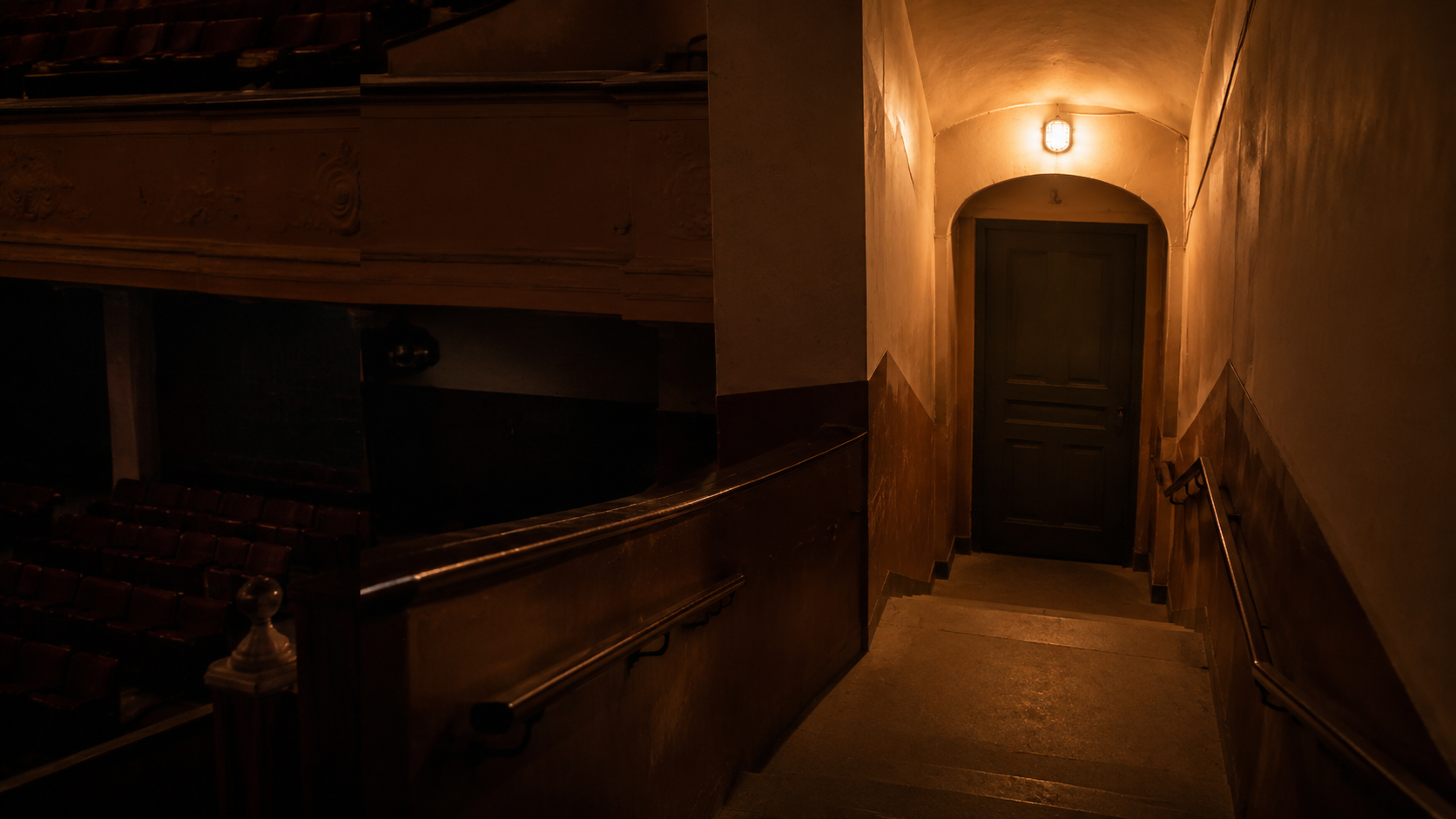
It shows a rear stair that later inspectors complained was too narrow.
It also shows a side passage that was not included in early public descriptions of the project.
The First Account That Changed the Mood
Any one of those matches could be coincidence. Together, they make the document feel oddly informed.
The map is not a beautiful drawing. It is practical, cramped, and concerned with movement.
It cares about how people leave a building in a hurry.
That function matters. Fire-escape maps are usually made after architecture becomes specific.
They respond to walls already planned or built.
If this map truly predates the theater, then someone drew exits for a building that did not yet officially exist.
The most reasonable possibility is that an earlier private proposal existed.
Why the Obvious Explanation Struggles
A developer may have planned a theater before the public permit trail began. The fire-escape map could belong to that vanished phase.
Cities often preserve the official story better than the informal one.
Meetings happen before applications. Drafts circulate before plans are stamped.
That theory explains much. It makes the map early, not impossible.
But the archive does not contain the expected supporting papers. No proposal folder has been found.
No early architect’s packet matches it. No land record clearly explains why a fire-escape diagram would exist that soon.
Later plans also changed several features. The lobby moved. The projection room shifted. A decorative stair disappeared.
The Most Reasonable Theory
Yet the escape routes remained strangely close to the old map.
That is the unsettling part. The decorative parts changed, while the emergency paths seemed already decided.
One archivist reportedly described the map as a memory of the building rather than a plan for it.
That phrase is not evidence, but it captures why the file feels unusual.
The date itself may still be the weakest link. Dates on sleeves are not sacred.
A single mistake can create an entire mystery.
But when staff checked related folders, they found the same early year repeated on an intake list.
The Part That Stayed Unresolved
That does not prove the date is correct. It only shows the mistake, if it is a mistake, was copied more than once.
The theater’s later history gives the map an added weight. The building had evacuation complaints, blocked exits, and inspection disputes.
No major disaster occurred there, which is important. This is not a story that needs tragedy to matter.
Its unease comes from anticipation, not aftermath.
The map seems concerned with escape before there was officially a place to escape from.
That may be the whole explanation. A cautious planner imagined danger early, and the paperwork survived in a confusing order.
Still, the case asks a larger question about history.

How the Story Was Retold
We often treat records as a straight line: idea, plan, building, inspection, use.
Real archives are messier. Sometimes a document appears too soon.
Sometimes a building leaves a shadow in the paperwork before it rises on the street.
The fire-escape map remains unresolved because every practical answer leaves a small gap.
A mislabeled sleeve does not explain the repeated date. A lost proposal does not explain the missing packet.
Coincidence does not explain why the exit routes match best.
Why It Still Feels Worth Noticing
None of that proves anything impossible happened. It only shows how a plain municipal drawing can disturb the order of a timeline.
Today the theater is remembered for ordinary things: matinees, cold seats, and a marquee that flickered in rain.
The archive remembers something stranger.
It remembers the exits first.
That is why the map still matters. It is not a prophecy, not proof, and not a ghost story in the usual sense.
It is a piece of paper that appears to know the way out before the walls are built around it.
The most tempting version of the story is also the least useful one. It would be easy to imagine the map as a warning from the future, a document arriving early because the building would someday need it.
The archive does not require that explanation. It asks for something quieter and more realistic: how often the record of a place begins before anyone agrees the place exists.
Plans circulate. Owners change their minds. Architects reuse sheets. Inspectors comment on drawings that never become official. A theater can have a paper life long before it has brick walls.
That may be what happened here. The map may be a survivor from a planning stage that left no other obvious trace.
But if that is true, the missing context becomes the mystery. Why did the escape routes survive while the rest of the proposal disappeared? Why was the early date copied more than once? Why did later plans drift in decoration but not in the paths people would use to flee?
Those questions are not a detail people read as anything impossible. They are confirmation that history is built from uneven scraps.
The fire-escape map unsettles people because it reverses the expected order. It shows concern before construction, movement before walls, exit before entrance.
For a building meant to gather people in the dark, that is an oddly powerful beginning.
A later building survey added one more complication. The surveyor noted that the rear stair shown on the old map would have been awkward to design after the foundation was poured. In other words, the escape route seems to have belonged to the building’s earliest thinking, not a late safety correction.
That does not make the map impossible. It strengthens the lost-proposal theory. But it also means the missing proposal mattered. Whoever drew the early version understood the future theater well enough to place the one stair everyone later had to keep.
For archivists, that is the uncomfortable kind of mystery: not supernatural evidence, but a gap in the ordinary chain of decisions.
That missing decision is what keeps the map alive: a public safety drawing with a private history no archive has fully recovered.
Reader Context
This Weird Witnessed story is an editorial reconstruction, written as eerie visual storytelling rather than a verified report. For more context, see How to Read Weird Witnessed Stories and How WeirdWitnessed Creates Reconstructed Horror Stories.