The Lunchbox Under Platform Three
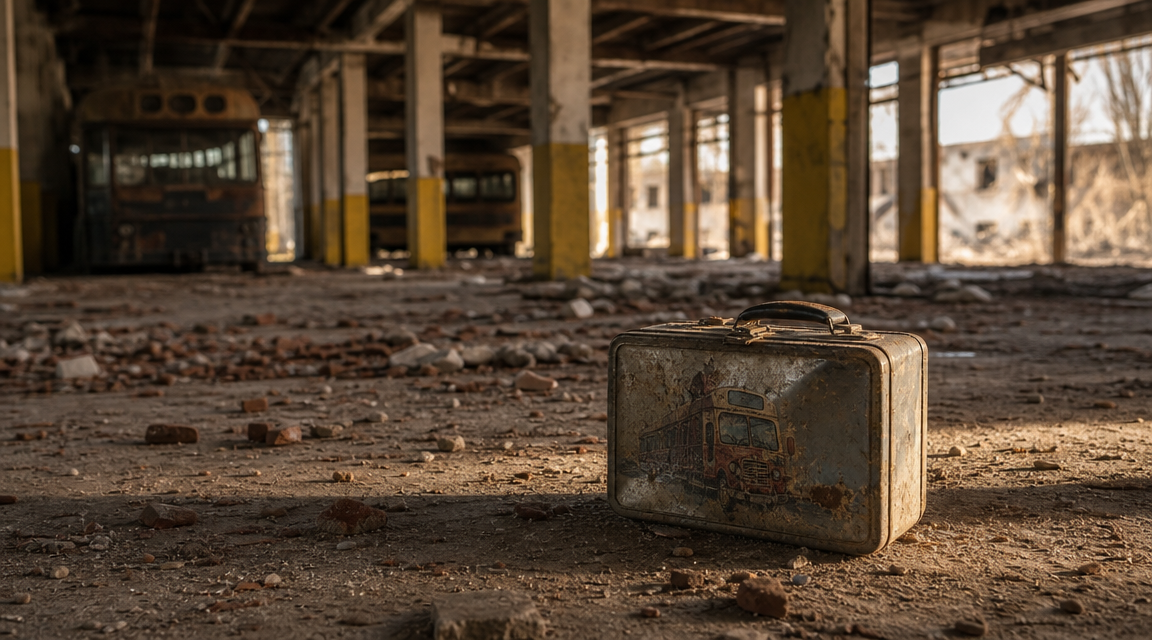
The demolition crew expected coins, bolts, and old ticket stubs beneath the broken curb of East Marrow bus depot. They did not expect a lunchbox.
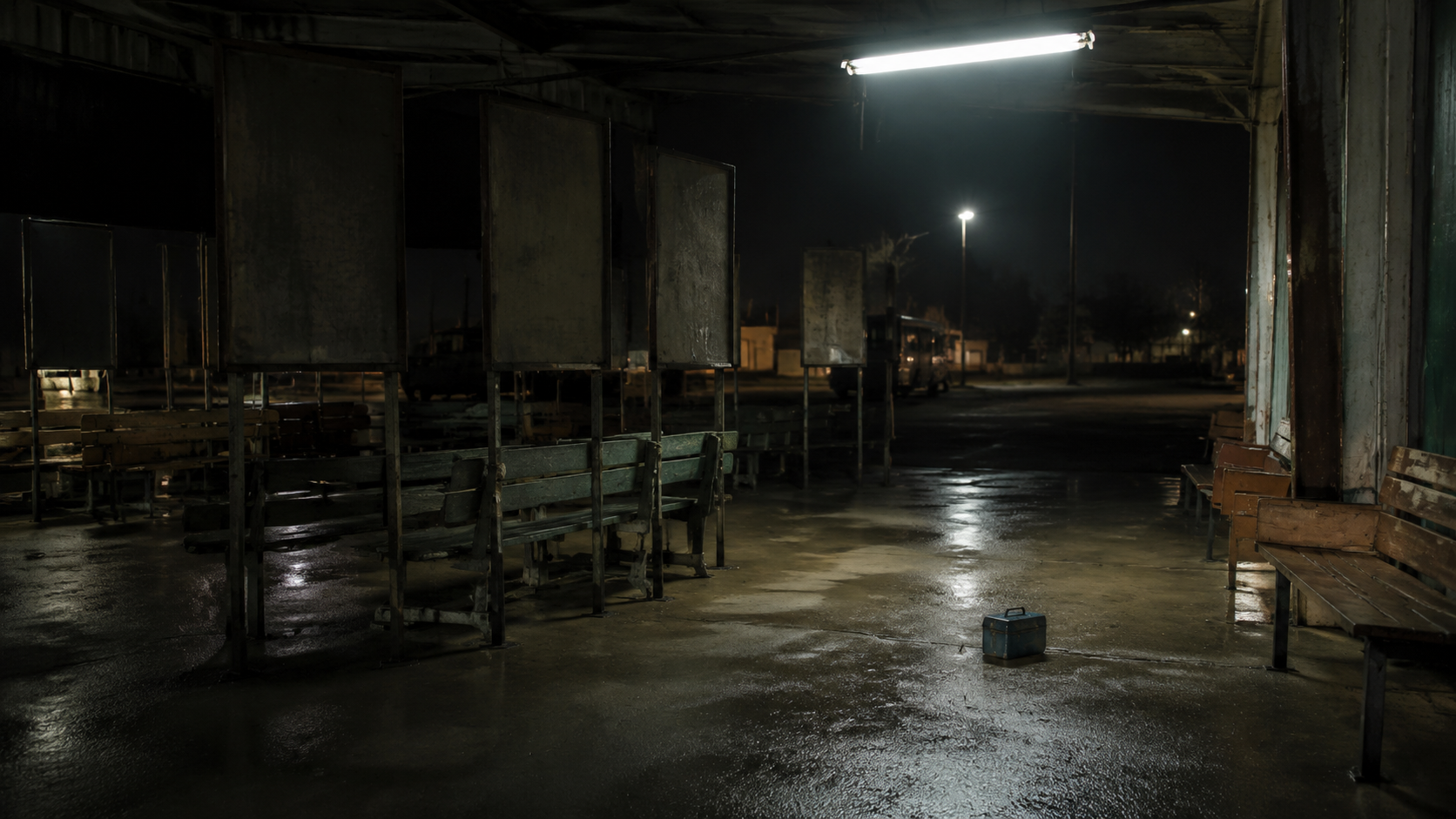
It was found under Platform Three, wedged in a narrow cavity where buses once pulled in for the evening routes. The depot had been closed for eighteen years. Its roof leaked, its benches were warped, and most of its route boards had already been stripped for scrap.
The lunchbox was small, dented, and made of tin. Most of its paint had worn away to a dull gray-green. One corner was crushed inward, as if a wheel had clipped it long ago.
The foreman picked it up on a warm morning and nearly dropped it.
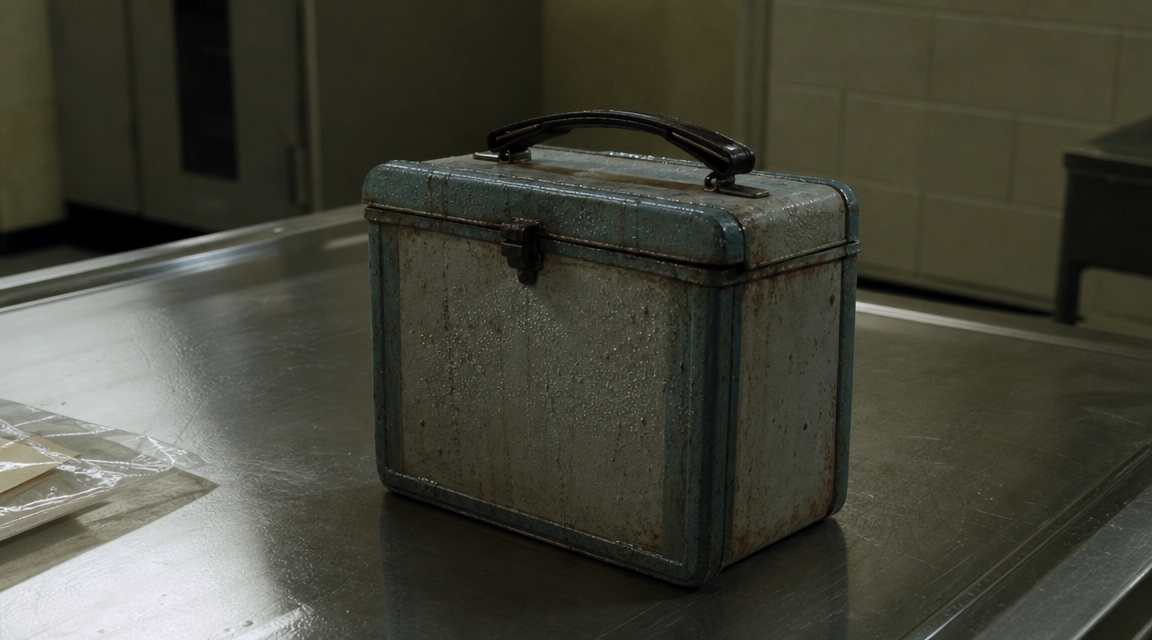
He said the metal felt freezer-cold through his glove. By noon, the pavement around Platform Three was hot enough to soften tar. The lunchbox remained cold.
Warm Room, Cold Object
Because the depot had been public property, recovered objects were sent to a municipal storage room. Most items were ordinary: cracked signs, farebox pieces, broken bench slats, and boxes of rusted fasteners.
The lunchbox was placed on a steel shelf.
The room was not climate controlled. In summer, labels curled off cardboard. A thermometer near the clerk's desk often read above eighty degrees. Yet the lunchbox kept forming a pale ring beneath itself.
Condensation gathered along the bottom seam. Blotting paper wrinkled under it. Nothing else in the room sweated.
Stranger still, the inside stayed dry. There was no puddle, frost, chemical smell, or leaking packet. The object seemed to chill the air near it without thawing or warming itself.
Staff tried simple explanations first. Dry ice. Refrigerant. Some industrial residue from the depot floor. None matched what they found when the latch was opened.
Nine Dry Receipts
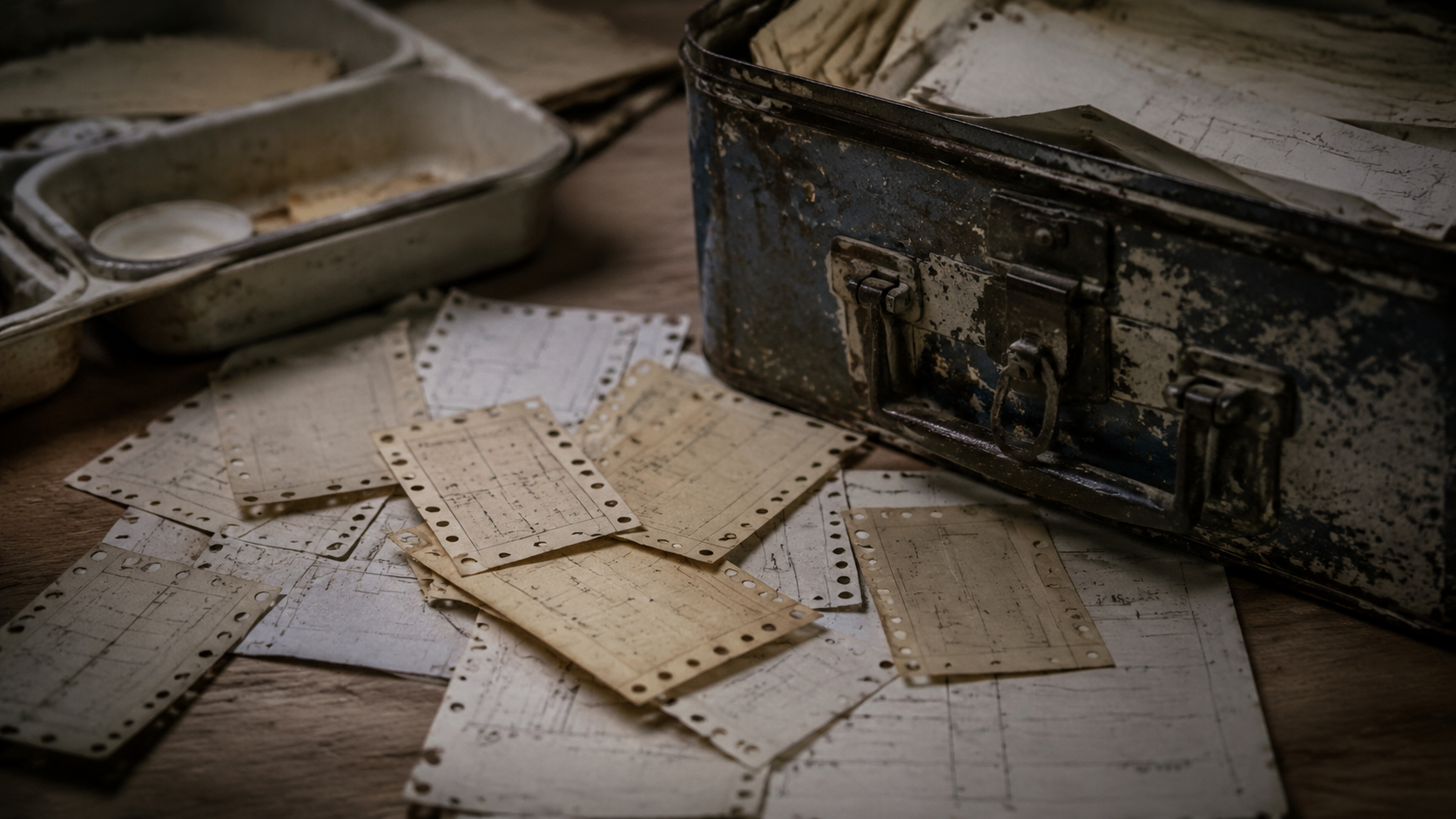
There was no food inside the lunchbox. There was only paper.
Nine narrow lunch receipts lay folded once and stacked neatly. They were cream-colored slips from the depot canteen, the kind issued for soup, bread, tea, pie, or stew. The ink was faded but still legible.
None carried a name.
All carried the same route code: 41B.
That was the first problem. Route 41B had been cancelled thirty-six years before the depot was demolished. It had served the east factories, canal housing blocks, and a hospital spur later buried under a ring road.
The second problem was the date sequence. The receipts covered nine weekdays in late February, all from the final year Route 41B operated. They stopped on a Thursday.
The route was officially cancelled the following Monday.
There was no weekend receipt. No final-day receipt. No note explaining why nine dry canteen slips had been sealed in a freezing tin box beneath a platform rebuilt after the route vanished.
The Route Nobody Wanted
Most cancelled routes leave dull paperwork. Route 41B left that too, but older depot employees remembered a reputation attached to it.
Drivers disliked the winter runs. The route crossed low ground beside the canal, passed under two railway arches, and reached the hospital spur after dark. Some claimed the windows frosted from the inside near the last outbound stop.
Those stories sounded like depot folklore until the archive was checked.
During the same week printed on the lunch receipts, Route 41B filed three delay notices for an unexplained cold fault. The buses were not mechanically frozen. Engines started. Doors worked. But drivers reported sudden temperature drops between the canal stop and the depot return.
One supervisor wrote that a bus arrived with frost on the interior handrails. Another note mentioned a paper cup of tea found iced over in the cab.
Officially, Route 41B ended because ridership was low and roads were changing. Unofficially, the paperwork suggested haste. Replacement timetables were printed before the public notice period had properly ended.
Someone wanted the route gone quickly.
The Scratched Warning
The lunchbox might have remained a strange salvage item if a conservator had not cleaned dust from its underside.
Scratched into the tin, partly lost beneath the crushed corner, were crude letters made with a hard point. The message appeared to read: DO NOT TAKE THE LAST MEAL.
After that, the staff stopped treating the lunchbox like a curiosity.
A warning changes an object. It gives the strangeness direction. It suggests someone expected the box to be found, or feared what would happen if it was used wrongly.
The receipts were all for lunches. The dates stopped just before the route ended. The canteen had apparently issued meals for the same code day after day, then nothing.
Was the missing final receipt never printed? Was it removed? Or was the box waiting for someone to complete the sequence?
One clerk joked that she was not hungry enough to find out. Nobody laughed for long.
Within a week, the lunchbox was moved into a locked storage cage. The reason listed was preservation. The real reason, according to one employee, was that people kept touching it to see if it was still cold.
It always was.
Tests Without Answers
A local materials lab examined the lunchbox as an unpaid favor. Its report made the municipal office quieter, not calmer.
The tin was ordinary plated steel. The hinge, latch, and handle showed expected corrosion. No refrigerant residue was detected. No hidden lining or compartment was found. The receipts showed age, dirt, and traces of cooking grease, but no unusual chemical treatment.
Temperature readings were harder to explain.
In a seventy-nine-degree room, the lunchbox exterior stayed between thirty-five and thirty-eight degrees Fahrenheit for six hours. The interior measured slightly warmer when opened, then cooled again when shut. Receipts removed from the box warmed to room temperature. When returned, they cooled with it.
The cold field was strongest near the crushed corner.
The lab used cautious wording: persistent localized thermal anomaly without identified energy source.
The storage clerk used plainer language. She said it felt like a warning sign left in the wrong place.
The Canteen Memory
Two retired depot employees were contacted after the receipts were copied. Only one remembered the lunchbox story clearly.
Albert Venn had worked maintenance at East Marrow when Route 41B was cancelled. He said late-run drivers began bringing their own food because the canteen woman refused to serve boxed meals for that bus.
It was not official policy, he said. It was superstition.
According to Venn, a driver once took a canteen meal onto the last 41B run and returned without eating it. The next morning, a tin lunchbox was found under a seat, cold enough to sting fingers. The driver quit before payday.
After that, canteen staff supposedly marked late-run meal slips separately. Venn could not prove it, but he remembered a phrase passed from driver to driver: don't take the last meal east.
When shown the scratched underside of the recovered lunchbox, he became quiet.
He said the wording was wrong but close. It had never meant theft or greed. It meant not accepting food meant for a journey that should not be completed.
Then he asked where the box was stored.
When told it sat in a warm municipal room, he advised keeping it somewhere nobody worked alone.
Why It Was Treated Like a Warning
The city never announced the lunchbox. There was no exhibit, press release, or official paranormal file. In inventory, it became a metal food container with paper receipts.
Privately, people handled it differently.
They stopped leaving it on desks overnight. They stopped placing it near doors. One clerk insisted the storage cage be checked by two people after she heard metal shifting inside at closing time.
The most troubling incident involved the receipts.
After lab testing, the nine slips were sealed in archival sleeves. The lunchbox was closed empty for transport back to storage. When staff opened it to confirm the interior condition, one receipt was inside.
It was dry. It matched the others. It listed soup, bread, and tea. Its date was the Friday after the previous nine receipts.
The transport archive had no canteen record for that day.
Perhaps it had been miscounted. Perhaps it slipped from a sleeve. That is the reasonable answer. It is also the answer nobody who handled the box seemed willing to trust.
From then on, the lunchbox carried a red inventory tag and an instruction: do not open without two staff present.
That is not how cities usually write about scrap metal.
It is how they write when an object appears to be waiting.
The depot is gone now. Platform Three was broken apart and paved into a service yard. Route 41B survives only in timetable scans and elderly memories.
The lunchbox remains in storage, still cold, still dented, still holding its dull little warning.
Do not take the last meal.
Reader Context
This Weird Witnessed story is an editorial reconstruction, written as eerie visual storytelling rather than a verified report. For more context, see How to Read Weird Witnessed Stories and How WeirdWitnessed Creates Reconstructed Horror Stories.