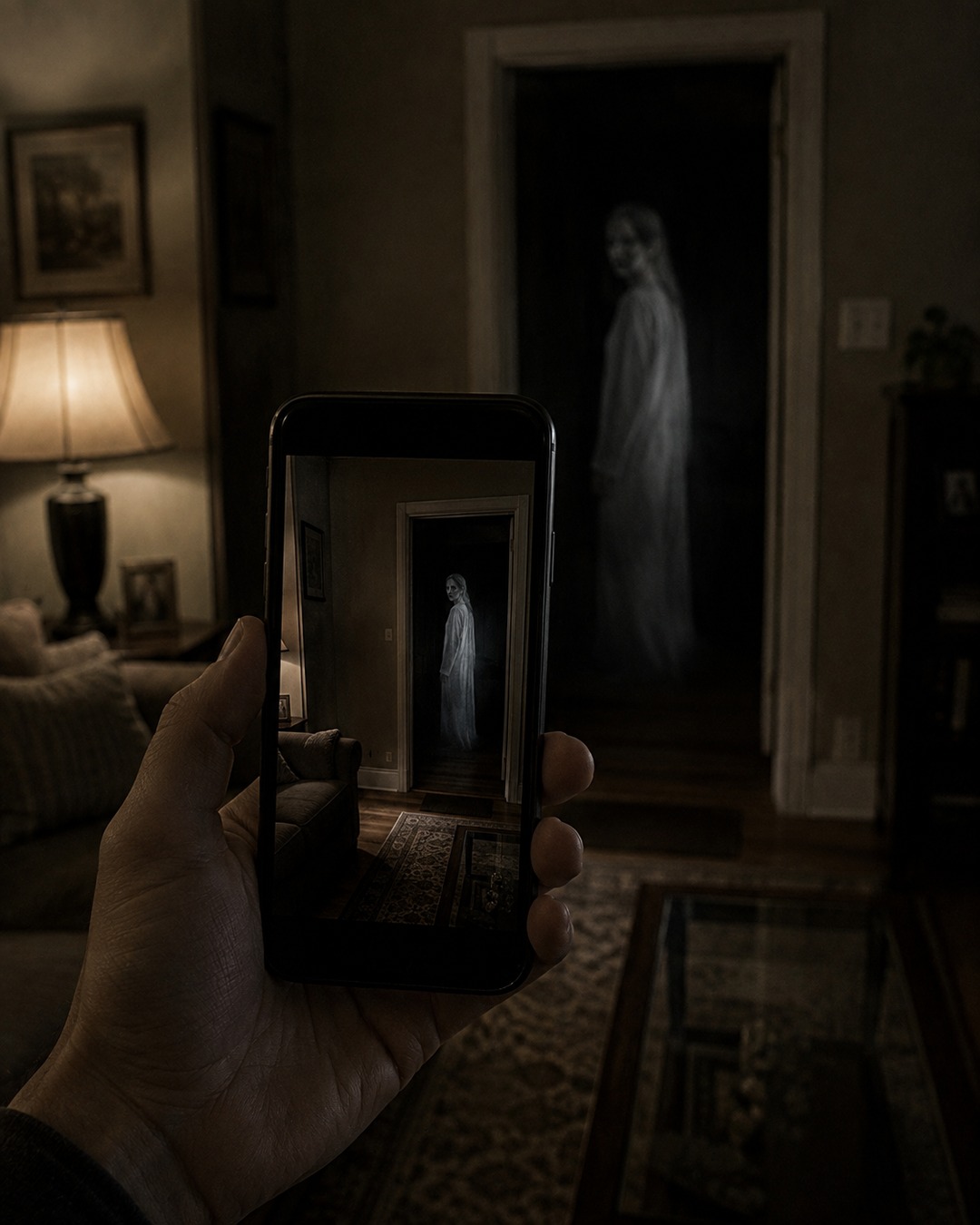
Illustrative reconstruction
The photograph looked ordinary until it was opened on a larger screen. A white smear near the doorway became a face. A bright circle in the corner became an orb. A dark shape in the mirror became a person who, according to everyone in the room, had not been standing there. The unsettling part was not that the image was perfect. It was that the flaws seemed to arrange themselves into something meaningful.
Short answer
Most alleged ghost photographs are better understood as camera artifacts, lighting problems, environmental particles, reflections, motion blur, compression, phone processing, or human pattern recognition. That does not mean every witness is lying or foolish. It means a photograph is not a simple window into reality. It is a technical record produced by a lens, sensor, software pipeline, exposure settings, lighting conditions, and the viewer’s own interpretation.
Why strange photos feel persuasive
A paranormal photo often carries more emotional force than a spoken story because it seems independent. The camera was there. The image exists. But cameras make choices and compromises. Low light raises noise. Flash lights up dust, insects and moisture near the lens. Glass adds reflections. Security cameras compress details and sharpen edges. Phones combine multiple frames and adjust contrast automatically. By the time a viewer sees the image, it may already have passed through several layers of interpretation.
Common camera artifacts mistaken for ghosts
Dust and orbs: small particles close to a flash or infrared source can appear as bright circular spots because they are near the lens and out of focus. Moisture droplets, pollen and insects can do the same thing.
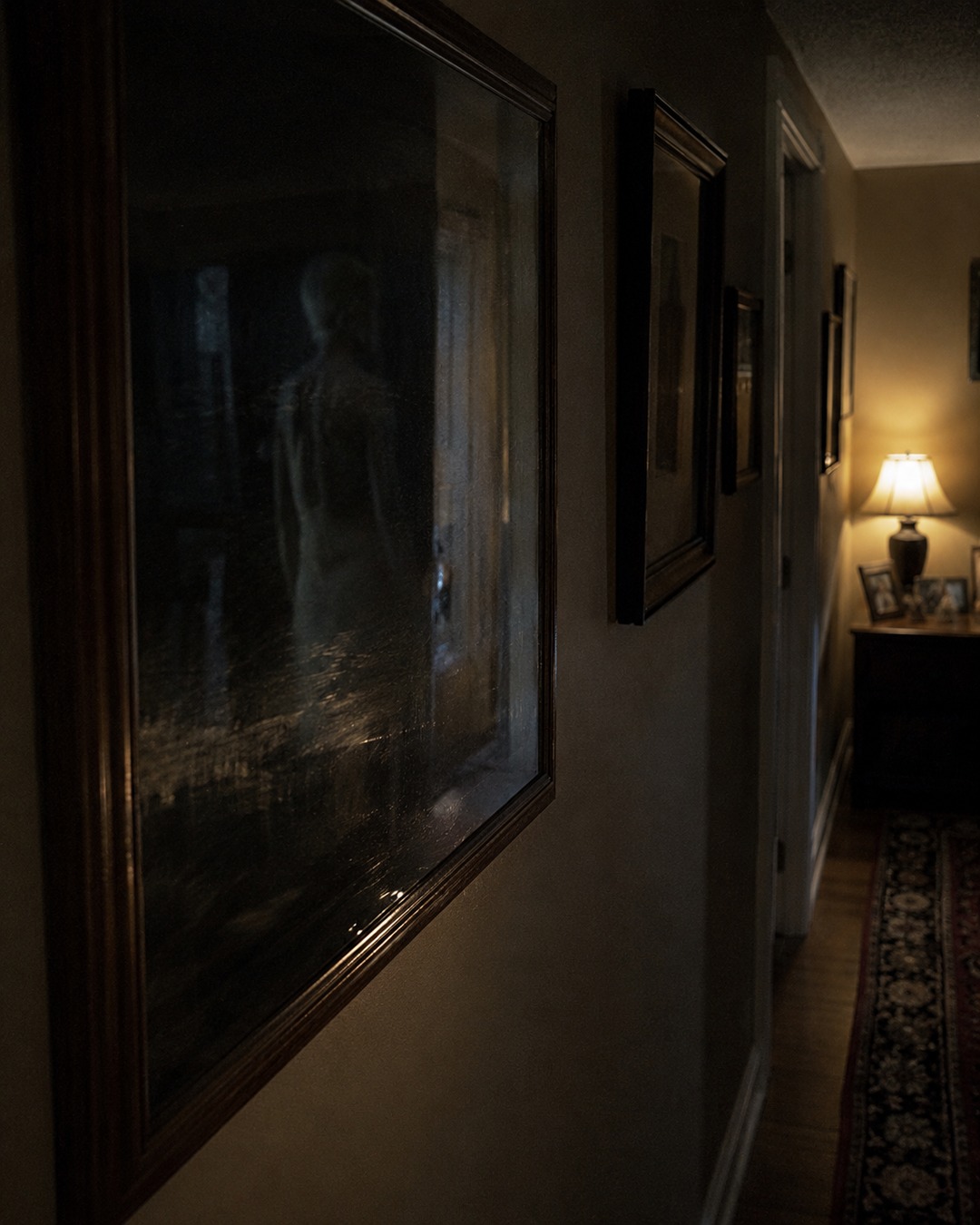
Lens flare and reflections: bright lamps, windows, polished metal, mirrors and glass doors can produce duplicated lights or ghost-like shapes. A reflection can appear offset from its source, especially in layered glass.
Motion blur and long exposure: a person moving through a dim room can become a pale streak. A door, hand, pet or curtain can lose its ordinary outline and look more human-shaped than it was.
Low-light noise and compression: dark images are full of grain, blocks and smoothed areas. Security systems and social-media uploads compress that detail further, sometimes turning random texture into eyes, faces or robes.
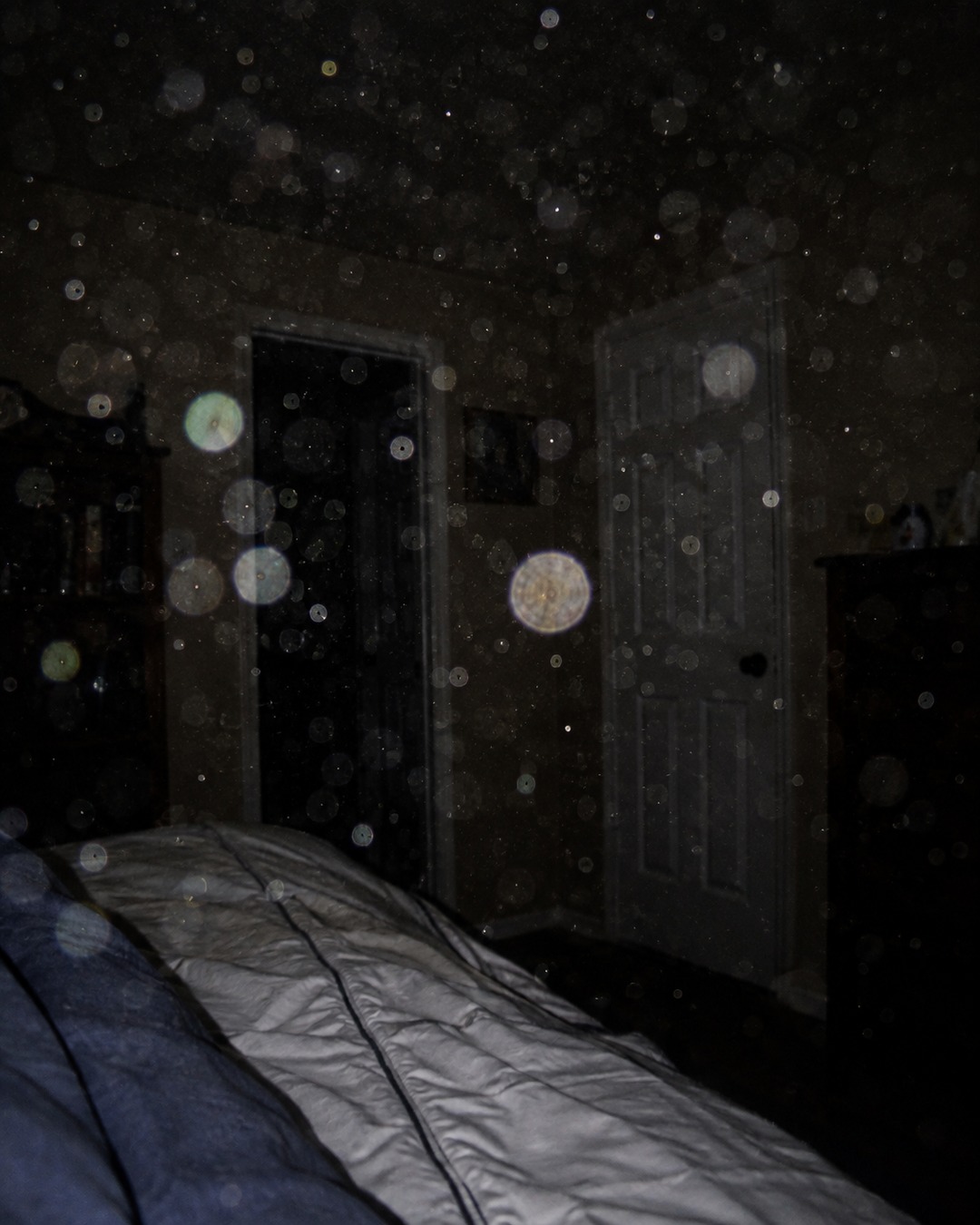
Autofocus and phone processing: phones brighten shadows, merge frames, sharpen edges and reduce noise. Those tools are useful, but they can also make uncertain shapes look cleaner than the original scene was.
Camera artifact, interpretation, unresolved observation
A better review separates three questions. First, what did the camera probably record technically? Second, what did people think it looked like? Third, what remains unknown after checking the obvious causes? A reflection can be real and still be misinterpreted. A witness can be sincere and still be wrong about distance, angle or lighting. An image can remain unresolved without becoming proof of a haunting.
How to examine an alleged paranormal photograph
Start with the original file, not a screenshot. Preserve metadata when possible. Compare images taken before and after. Look for glass, mirrors, lights, vents, insects, dust and moisture. Ask whether the image was taken with flash, infrared, night mode or heavy digital zoom. Check whether the same shape appears in nearby frames. Photograph the same location from the same angle under similar lighting. If a security camera is involved, learn its frame rate, compression settings, infrared behavior and field of view.
What would make photographic evidence more interesting?
A single cropped image is weak. A case becomes more interesting when it includes the original file, multiple angles, continuous frames, independent witnesses, known camera settings, a documented location, controlled re-creation attempts and a clear reason ordinary explanations fail. Even then, the strongest conclusion may be “unresolved image,” not “ghost.”
Ordinary explanations to check first
Start near the lens. Many “orbs” and pale streaks begin with something very close to the camera: dust, mist, rain, pollen, a strand of hair, a small insect, cigarette smoke, breath in cold air, or lint catching flash. Because the particle is out of focus and close to the light source, it can appear much larger and brighter than it was.
Then check the light path. A lamp, window, polished appliance, framed picture, car headlight, mirror, glass cabinet, wet floor or phone screen can bounce light into places the viewer does not expect. The strangest reflection is often not the brightest one; it is the faint secondary reflection that appears behind a person or in a dark corner.
Finally check the file. Was the image cropped? Was it sent through a messaging app? Was it a screenshot of a screenshot? Was night mode active? Was HDR combining frames? Was digital zoom used? Each step can remove context and add confidence to a shape that was less clear in the original.
Security cameras are not neutral witnesses
Security systems are designed to recognize activity, not to create museum-quality evidence. They often use small sensors, wide lenses, aggressive compression, low frame rates and infrared illumination. At night they may brighten dark regions, smear motion, exaggerate reflective eyes, or drop frames at the exact moment a person wants clarity.
A figure in a hallway may look solid because the camera has sharpened a few edges and crushed the surrounding dark tones. A pale face may appear because compression blocks land where a viewer expects eyes and a mouth. A moving insect near the lens may look like a luminous rod crossing the room. These are not excuses invented after the fact; they are normal limits of systems built for surveillance coverage rather than forensic certainty.
Phone-camera processing can make ambiguity cleaner
Modern phones often improve a photograph before the viewer sees it. They may combine exposures, reduce noise, brighten shadows, sharpen edges and balance highlights. That can turn a dark room into a usable image, but it can also make a vague shape seem more deliberate. The processed result may be a better-looking picture and a worse record of uncertainty.
This matters because many paranormal images circulate as phone screenshots. The object has moved from lens to sensor to software to social-media compression to a viewer’s enlarged screen. Every step can make the story feel more confident while making the original observation harder to reconstruct.
Why pareidolia matters without insulting anyone
Seeing faces and bodies in noise is not a character flaw. It is part of how human perception works. People are highly tuned to notice social shapes quickly because missing a person in the dark can matter. That sensitivity is useful. It also means mirrors, tree shadows, folds of cloth, smoke and compression blocks can become “someone standing there” before the slower analytical part of the mind catches up.
The respectful question is not “how could anyone believe that?” The respectful question is “what visual features made this interpretation feel natural, and can those features be reproduced by ordinary conditions?”
Preserving a strange image responsibly
If an image seems genuinely interesting, save the original file immediately. Do not crop it first. Record where the camera was, what lights were on, whether glass or mirrors were present, and whether anyone entered the area. Keep frames from before and after. If possible, photograph the same room again with flash, without flash, with lights on, with lights off, and from the original angle. The more context survives, the less the case depends on imagination.
A Simple Review Ladder
For Weird Witnessed, the useful contribution is a review ladder readers can remember: lens first, light second, file third, interpretation last. Lens-first means ask what was physically near the camera. Light-second means trace the strongest light source and every reflective surface. File-third means look for cropping, compression, screenshots and processing. Interpretation-last means only after those checks should anyone argue about apparitions, presences or paranormal meaning.
This order prevents the most common mistake in ghost photography: starting with the most exciting story and then treating every technical flaw as supporting evidence. A serious guide works the other way around. It lets the image become stranger only after the ordinary image-making chain has been tested.
Artifact types by setting
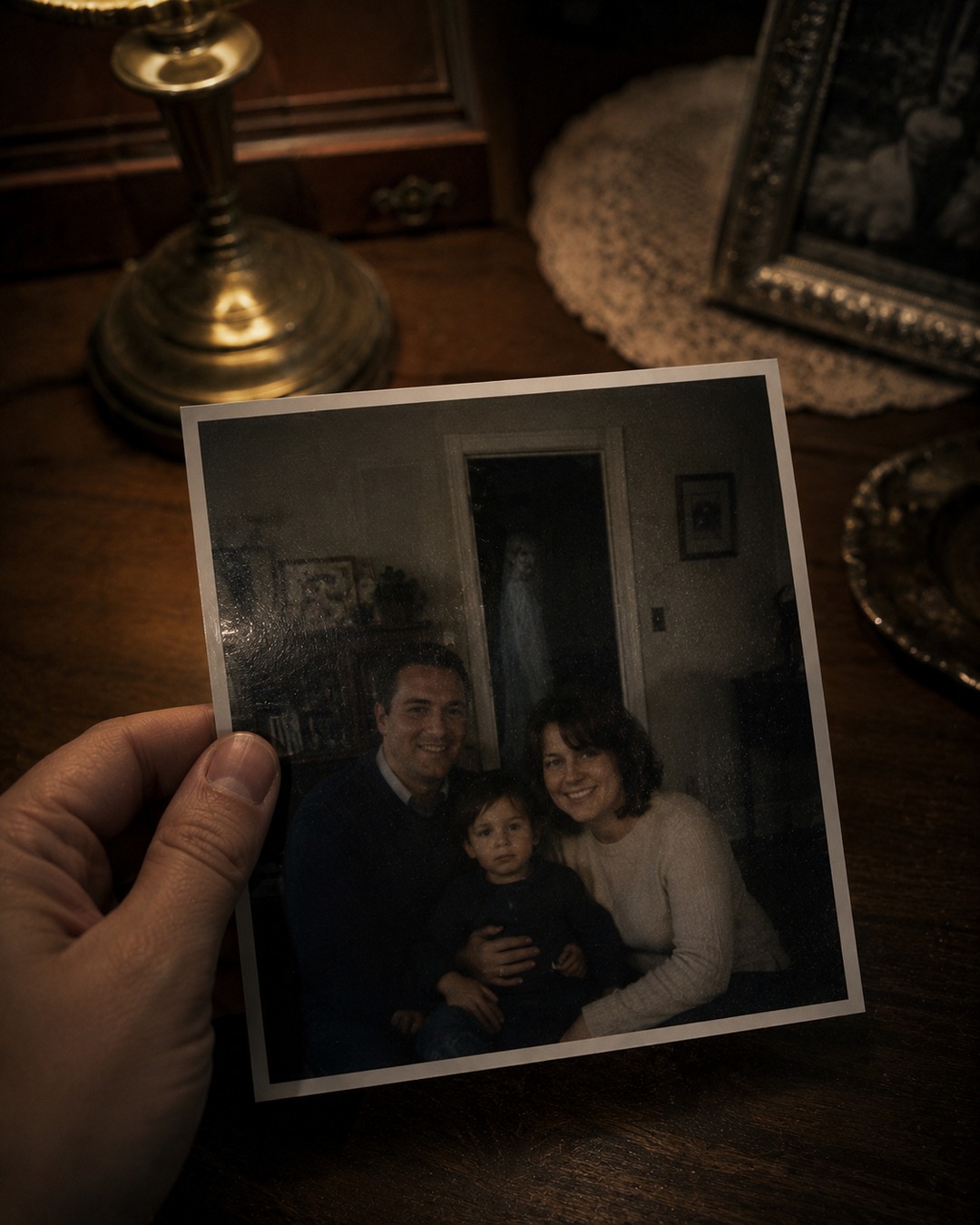
Funeral homes, churches and event halls often combine dark clothing, polished wood, glass frames, candles, floral coolers and emotional attention. A pale reflection near a grieving family can feel significant because the setting already carries meaning. The technical review is the same: locate reflective surfaces, compare frames and check whether the shape aligns with a light source.
Laundromats, clinics and stores often produce strange security-camera images because stainless steel, tile, glass, fluorescent light and wide-angle lenses create hard highlights. A dryer door, freezer case or display window may produce a secondary figure-like reflection. The fact that the room was closed makes the image more compelling emotionally, but not technically stronger by itself.
Outdoor night photos add insects, moisture, fog, rain, pollen and distant lights. A bright speck close to the lens can appear larger than a person far away. A moth crossing an infrared camera may look like a rod, streak or pale body. Weather records and nearby light sources matter as much as the shape itself.
What not to do with ghost photos
Do not sharpen a copy and call the result evidence. Do not circle a shape so tightly that the room disappears. Do not ask viewers to judge a screenshot without the original file. Do not treat emotional timing as technical proof. If a shape appeared near a funeral, in a locked room or after a death, that context may explain why people care about the photo. It does not by itself explain what the camera recorded.
What would make a paranormal photograph stronger than the usual viral image?
The strongest version would not be the scariest crop. It would be boringly complete: original file, unedited sequence, known camera model, known exposure mode, multiple frames before and after, diagram or photo of the room, list of light sources, weather if outdoors, and a recreation attempt. The more a case allows a skeptical reader to test it, the more interesting it becomes.
A strong image would also survive reduction. If removing the red circle, caption and emotional backstory makes the apparition disappear, the photograph was mostly interpretation. If the shape remains visible in the original file, from multiple frames, with ordinary reflections and particles checked, the case has more weight even if it still falls short of proof.
Security Cameras, Water And Motion Interpretation
Not every strange camera report is a still photograph. Security cameras and low-light video can make ordinary movement look intentional, especially in pools, gyms, hallways and other large public rooms after closing. A fixed camera may flatten depth, exaggerate reflections and make a small movement seem to come from a different part of the scene.
Water adds another layer. Lane ropes, reflections, pump circulation, drains, ventilation, humidity, vibration, cleaning equipment and delayed surface movement can all create motion after a room appears empty. If a dark shape appears near water, the first checks should include camera angle, reflection alignment, lighting, compression, frame rate, whether pumps or returns were fully off, and whether the movement begins in the object, the water or the image itself.
What we can and cannot say
We can say that many paranormal-looking images have ordinary photographic explanations. We can say that witnesses often respond to the image honestly. We cannot say that a blurry shape, orb, reflection or security-camera figure proves a spirit is present. The responsible position is to examine the image carefully before assigning a supernatural meaning.
Related: For video, CCTV and security-camera footage, see Security Camera Ghost Videos And Strange Footage Explained.
Sources & Further Reading
- Apple Support — iPhone HDR camera settings
- Canon Support — camera/lens flare reference
- Axis Communications — image usability in surveillance