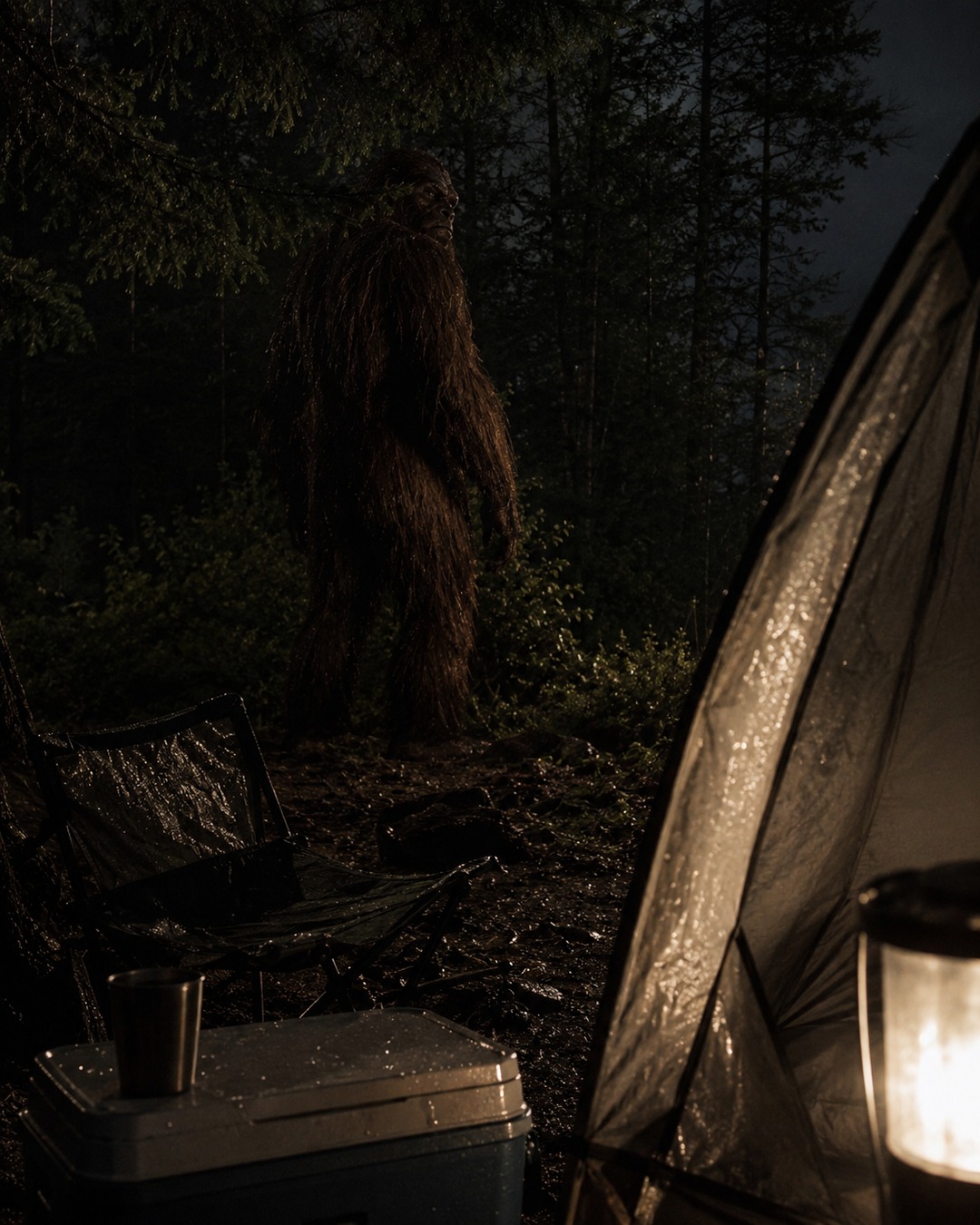
Illustrative reconstruction
Imagine a campsite after dark. The fire is low, the insects have gone quiet, and something knocks once from the treeline. A second knock answers from farther away. Nobody sees an animal. Nobody sees a person. By morning, the sound is remembered not as a branch breaking, but as communication.
This is an illustrative reconstruction, not a documented Bigfoot case. It shows why sound reports are so important in Sasquatch folklore: sound can suggest a large hidden presence without showing the body that would need to be proven.
Short answer
Bigfoot sound reports include wood knocks, howls, whistles, screams, heavy breathing, footsteps and sudden silence. Enthusiasts often interpret these sounds as possible communication or movement by an unknown primate. There is no established scientific evidence proving that wood knocks or howls come from Bigfoot.
Many ordinary sources can create strange forest sounds: owls, coyotes, foxes, elk, bears, trees, falling branches, other people, echo, terrain, wind, water, equipment and expectation. The useful question is not “could this sound be spooky?” but “what known sources match the sound, timing, location and recording?”
What people report
Reported Bigfoot sounds often fall into categories:
| Reported sound | Common interpretation | Ordinary possibilities |
|---|---|---|
| Wood knocks | Communication or warning | Branches, people, tree movement, falling limbs |
| Howls/screams | Vocalization | Coyotes, foxes, owls, elk, livestock, human voices |
| Whistles | Signaling | Birds, people, wind through objects |
| Heavy breathing | Large animal nearby | Bears, deer, livestock, human breathing, fear response |
| Footsteps | Large biped movement | Humans, bears, deer, echo, loose ground |
| Sudden silence | Predator/large presence | Normal soundscape variation, weather, observer attention |
Forest sound is complicated
The National Park Service treats natural soundscapes as important parts of an environment. Forests are not silent systems. Insects, birds, mammals, wind, water and human activity overlap. At night, when visibility is low, sound becomes the main evidence available to a witness.
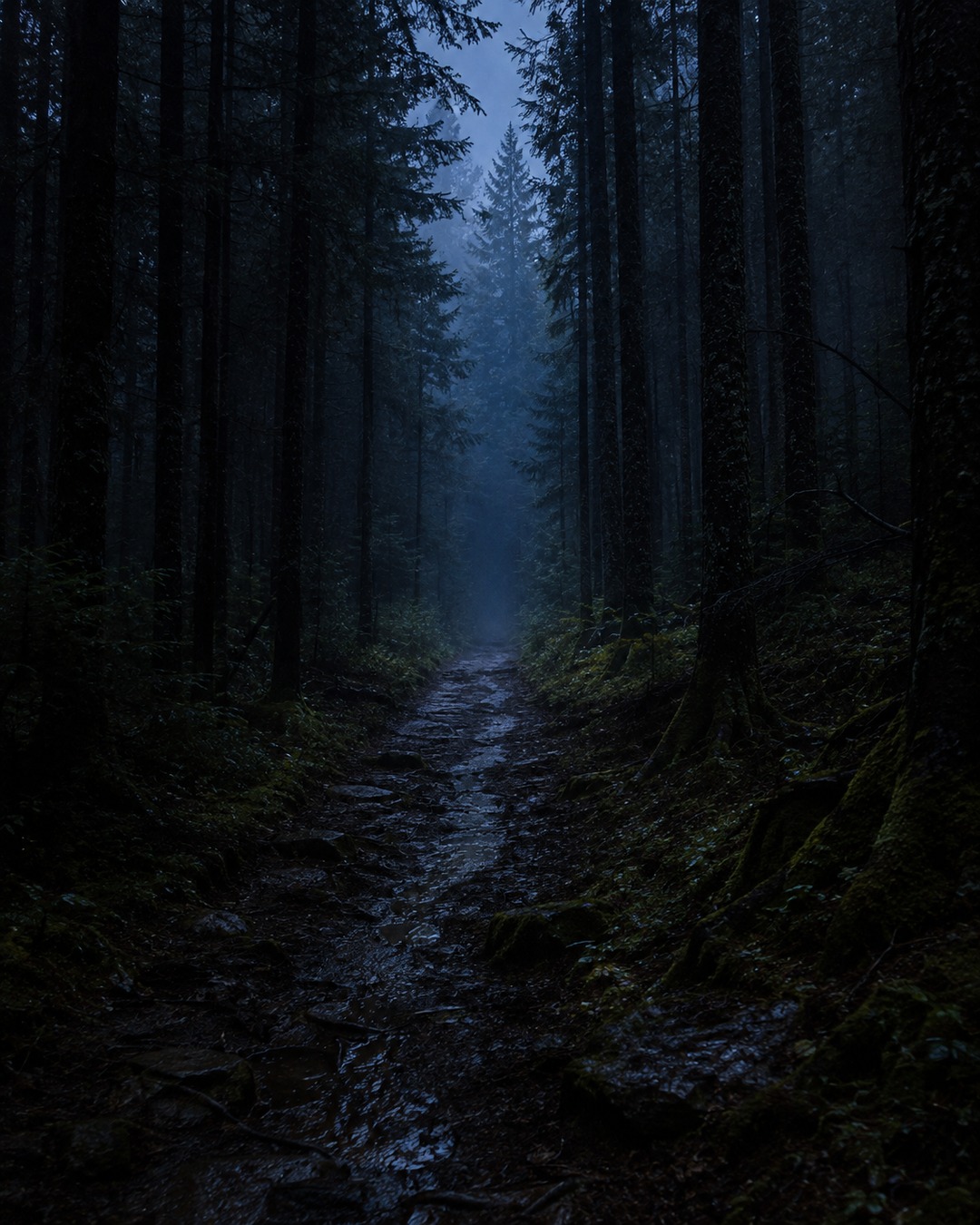
Terrain can distort sound. A call from one direction may reflect from hills or trees and seem to come from another. Distance is difficult to estimate in the dark. A small animal close by can sound larger than it is; a large animal far away can sound impossible to place.
Why wood knocks became part of Bigfoot culture
Wood knocks are commonly discussed in Bigfoot enthusiast circles as possible signals. The idea is compelling because it implies intelligence: one knock, an answer, movement, then silence. But a knock is also one of the easiest sounds for a forest to produce accidentally and one of the easiest for people to reproduce.
A trustworthy article should phrase this carefully: wood knocks are interpreted by some Bigfoot enthusiasts as possible communication. They are not established scientific evidence of an unknown primate.
Ordinary explanations to check first
Reported Bigfoot sounds should first be compared with known animals, people, weather, terrain, echoes and ordinary forest movement. Coyotes, foxes, owls, elk, bears, tree movement, falling limbs, water, distant machinery and human activity can all change after dark and become harder to place by ear. A careful article should let the Bigfoot interpretation appear as folklore and witness interpretation while still showing readers the most practical explanations to examine first.
Wildlife and misidentification
Known animals can create startling sounds. Coyotes can sound like many animals at once. Fox calls can resemble screams. Owls can produce calls that feel human or uncanny. Bears and other large animals can break branches, breathe loudly, move through brush and stand partially upright.
National Park Service bear-identification material is useful because it reminds readers that known large animals vary in size, shape and movement. The Forest Service’s bear-safety guidance also matters because readers should treat large animal encounters as real safety situations, not just spooky content.
The “sudden silence” problem
Many witnesses report that a forest “went quiet” before or during a Bigfoot-like event. That can feel meaningful. But silence is hard to evaluate without measurement. A person who becomes afraid may stop noticing background sound. Wind changes, temperature, predator movement, time of night and insect cycles can all change the soundscape.
The silence may be real. The interpretation is the uncertain part.
How to evaluate a strange sound report
A strong field note should include:
- exact time and date;
- GPS or location description;
- weather and wind;
- nearby roads, campsites or houses;
- known wildlife in the area;
- audio recording if possible;
- number of witnesses;
- whether witnesses discussed the sound before writing notes;
- repeated pattern or one-time event;
- tracks, broken branches or other physical context.
What would make a sound case more interesting?
A sound case becomes more useful when it includes clear audio, independent witnesses, known wildlife comparison, environmental notes, and physical context that can be checked. A story that only says “we heard something impossible” may be sincere, but it is hard to study.
Why recordings matter more than memory alone
Sound reports become more useful when there is audio to compare. A recording can preserve timing, rhythm, distance, background noise and the reaction of witnesses. Memory alone often keeps the emotional shape of the sound but loses the smaller details needed to identify it. That is why a howl remembered as impossible may later need comparison with known animals, weather, terrain and nearby human activity.
A good Bigfoot sound article should not shame witnesses for being uncertain. It should give them a better way to preserve the uncertainty: record before interpreting, write notes before group discussion, and compare the sound with known wildlife before deciding what remains unexplained.
How readers can compare strange sounds
Readers who hear a strange sound outdoors should try to preserve the context before deciding what it was. Note the distance, direction, weather, terrain, time of night, nearby roads, water, farms and wildlife. A second recording from a different spot can be more useful than one dramatic clip because it helps show whether the sound moved, echoed or repeated from the same place.
Bigfoot folklore often gives these sounds their emotional meaning, but comparison is what gives an article value. Coyotes, foxes, owls, elk, bears, branches, people and echo can all make sounds that seem impossible in the moment.
Snapping Trees And Sound Before Sightings
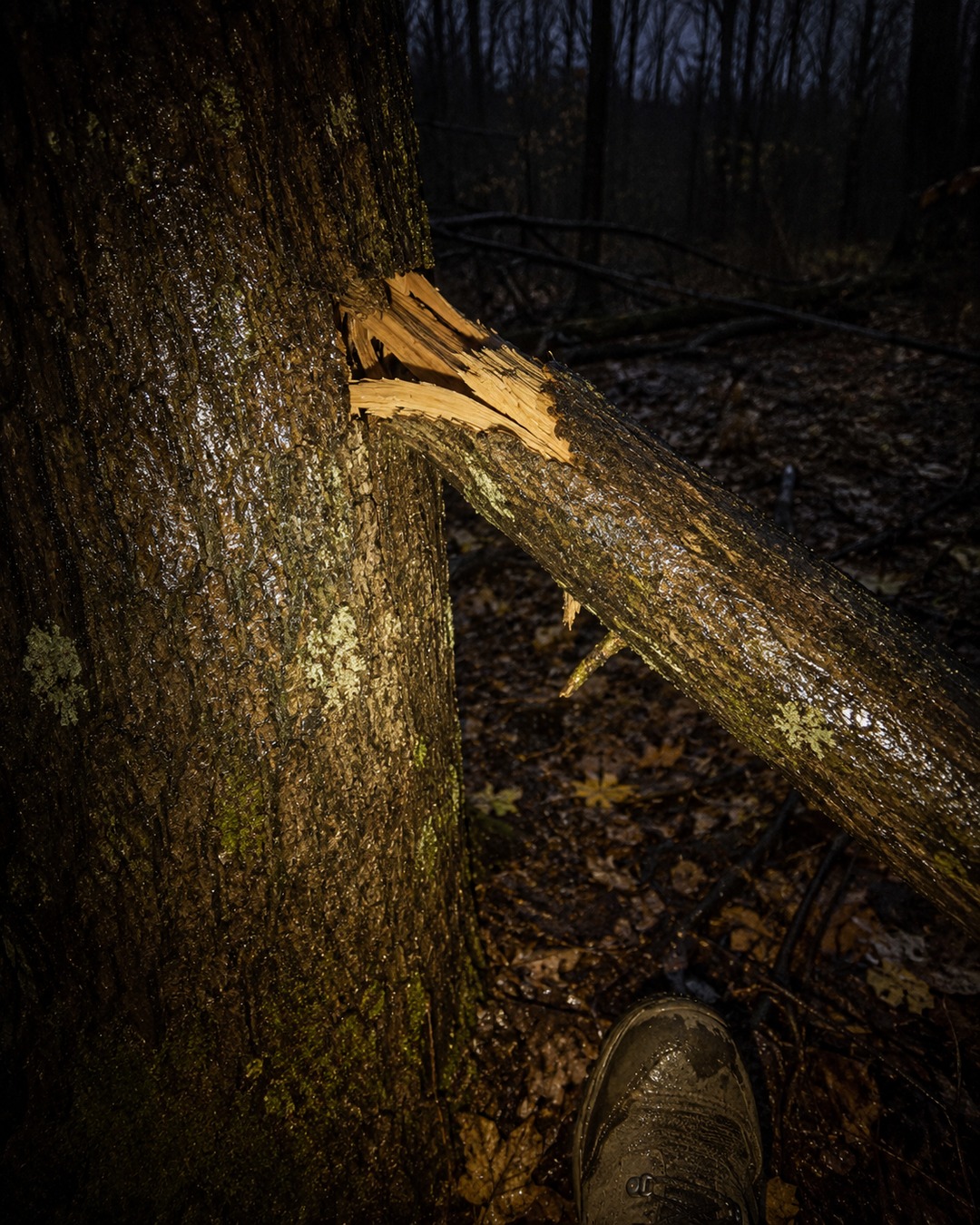
Some Bigfoot reports begin with a sound rather than a footprint or a clear figure: a heavy branch crack, a young tree snapping, or wood breaking somewhere just out of view. Those sounds can feel more deliberate than ordinary forest noise because they seem to happen in sequence or stop when the witness stops moving.
Tree-snapping claims should be reviewed the same way as wood knocks or howls: by separating the sound from the interpretation. Wind, falling limbs, snow load, animals, hikers, hunters, logging debris, dead trees and echo can all create sharp cracks in the woods. More useful details include weather, slope, recent storms, distance, direction, whether fresh damage was found, whether the sound moved, and whether it was followed by visual evidence.
What we can and cannot say
We can say that wood knocks, howls and sudden silence are common themes in Bigfoot reports. We can say known wildlife and forest acoustics can explain many frightening sounds. We cannot say Bigfoot produced a sound without evidence that excludes known animals, people and environmental causes.
What this page adds that a generic result usually does not
A Bigfoot sound report becomes more useful when the recording, location, distance, weather, animal activity and witness position are preserved. A strange howl or knock is not enough by itself; the surrounding forest context is part of the evidence.
Sudden Silence, Campfires And Sound Direction
Witnesses often remember the woods going quiet before or after a knock, howl, thrown stone or brief sighting. Sudden silence can feel like a signal, but wildlife may stop calling because of weather shifts, predators, people, vehicles, nearby dogs, changing wind or the observer’s own movement. Campfire settings add another problem: trees, tents, vehicles, slopes and water can reflect sound and make a knock or thrown object seem to come from the wrong direction.
A stronger sound report records time, wind, terrain, distance, number of knocks or impacts, whether anyone else heard the same direction, and whether common sources such as falling branches, other campers, livestock, owls, coyotes or loose objects were checked. Memory alone is weaker than original audio, multiple listening positions and repeat observations.
Related: For visual glimpses, road crossings and treeline sightings, see Bigfoot Sightings Explained.
Sources & Further Reading
- National Park Service — Natural Sounds
- National Park Service — Bear Identification
- National Park Service — Staying Safe Around Bears
- US Forest Service — Be Bear Aware
Related Weird Witnessed guides