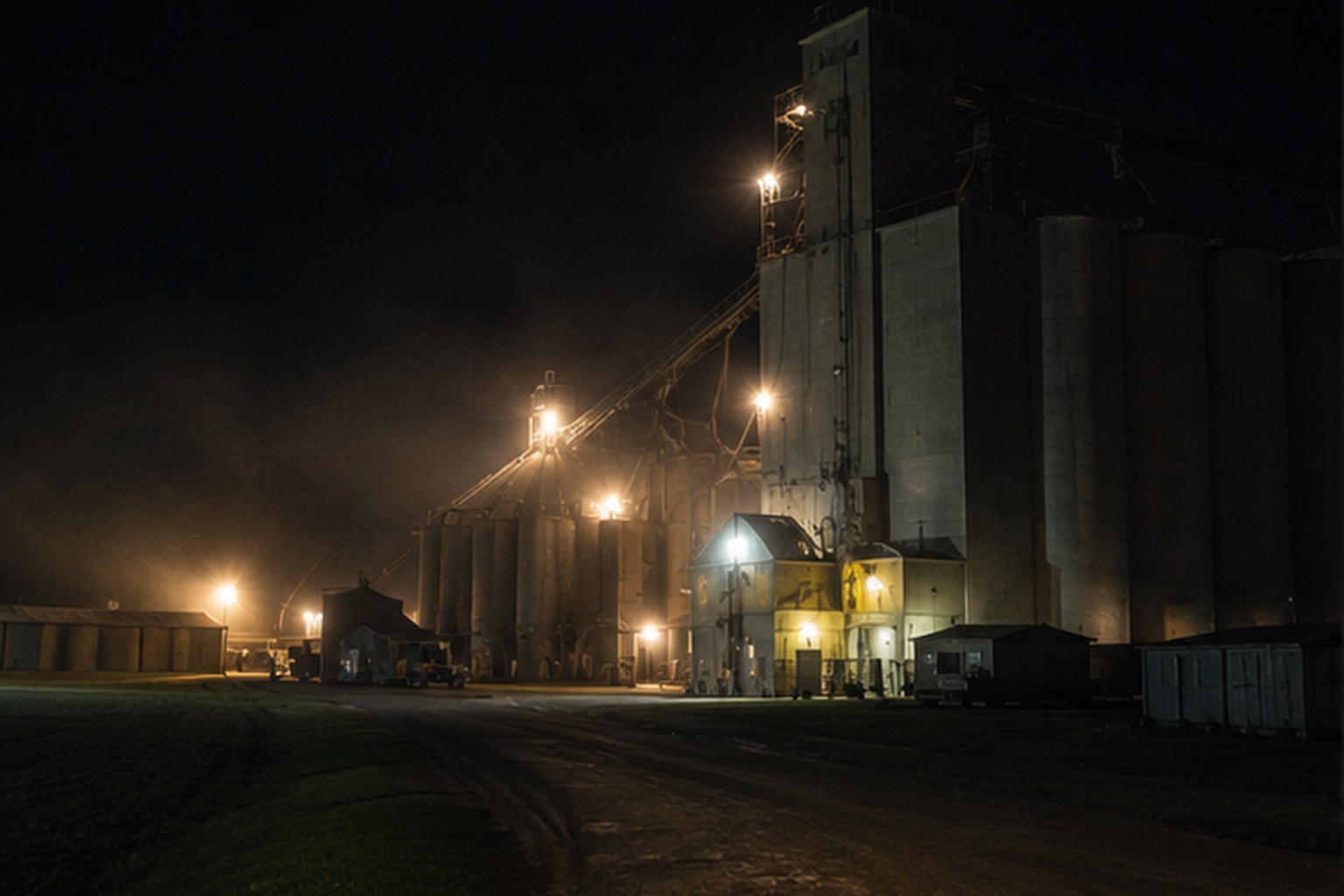
The grain elevator camera was aimed at metal, belts, and weather.
Not the sky.
That is why the story feels different from the usual strange-light account. No one was standing outside with a phone trying to film something dramatic. The roof camera was there for maintenance, watching vents, access rails, and the exposed machinery that always seemed to need attention after hard wind.
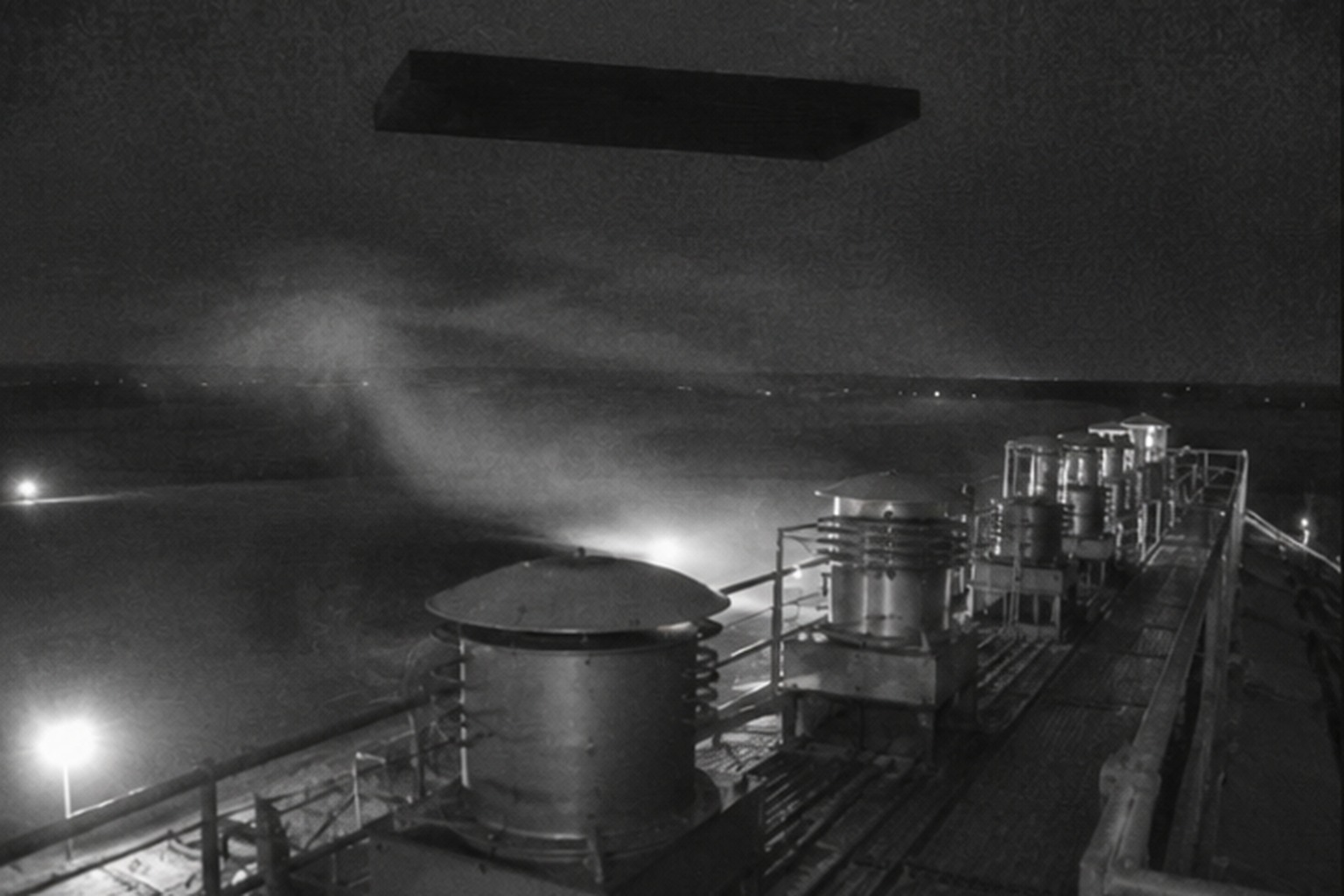
Then the night recording showed a black rectangle hanging above the silo vents.
The local version of the story usually comes down to five details:
- the camera was fixed and normally ignored the sky
- the object appeared as a flat black rectangle
- no engine, lights, or rotor blur were visible
- dust below the vents moved against the wind report
- the object vanished before dawn without a recorded descent
None of that proves anything extraordinary. It does explain why workers kept replaying a few ugly seconds of roof-camera footage long after the maintenance issue was solved.
1. The Camera Was Not Looking For A UFO
The camera had a boring job.
It watched the roof line of a rural grain elevator where weather could loosen flashing, belt housings could rattle, and birds sometimes built nests near vents. On windy nights, dust would streak across the lens and make the whole image look worse than it already was.
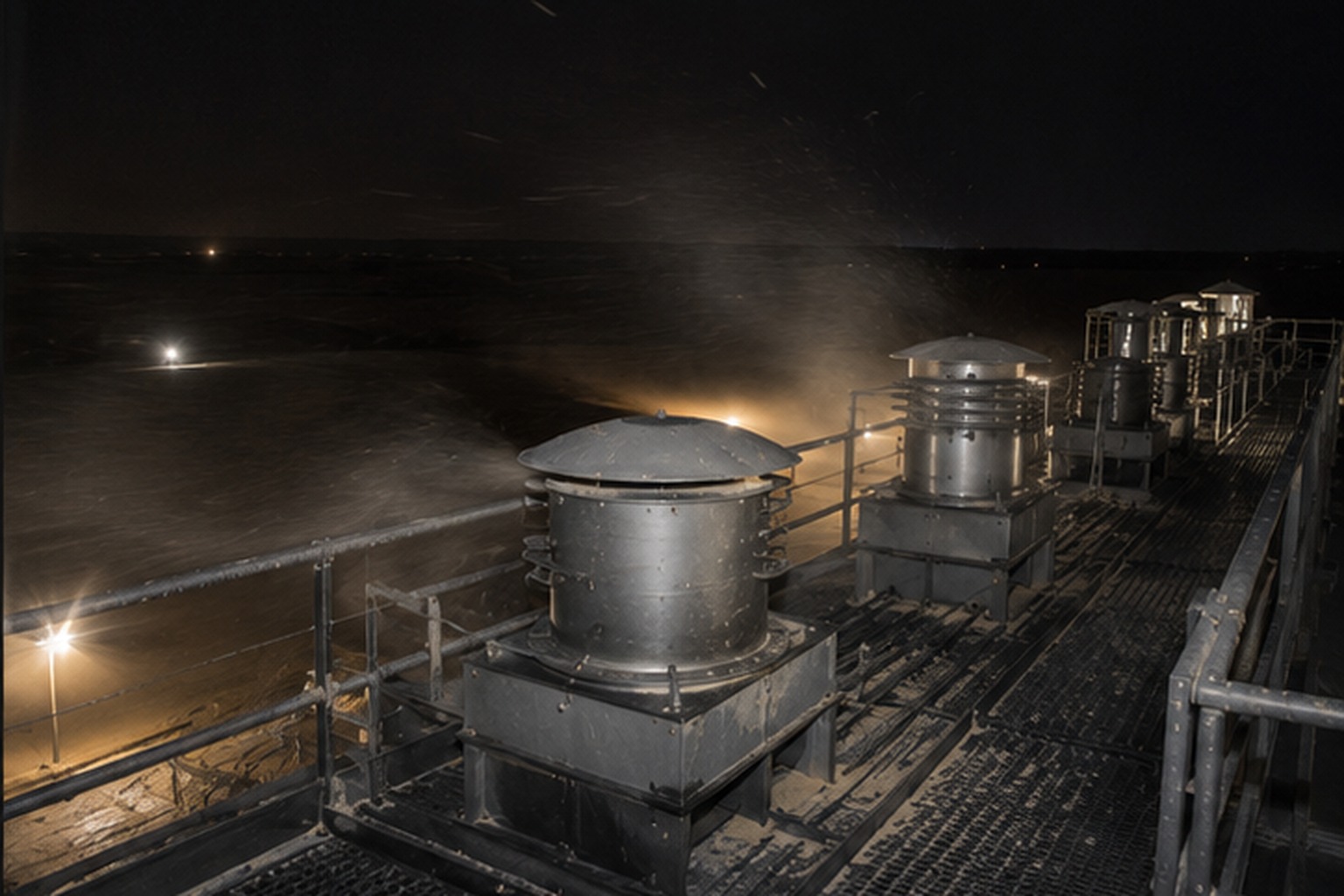
That mattered because the angle was not dramatic.
A staged UFO image usually wants open sky, clean framing, and a centered object. This camera showed pipes, railings, vents, roof panels, and a slice of dark air above the silos. The object was not presented like a showpiece. It appeared in a bad industrial corner of the frame.
That is one reason the story stuck.
It looked accidental.
2. The Shape Was Too Plain
Many UFO stories grow around lights.
This one grew around the absence of them.
The object was described as a dark rectangle, almost like a missing piece cut from the sky. It did not glow. It did not blink. It did not trail sparks or leave a visible beam. In the clearest frame, the lower edge looked unnaturally straight compared with the silo vents and the soft dust haze around it.
Plainness can be more unsettling than spectacle.
A bright orb invites easy explanations: drone, plane, tower light, lens flare, reflection. A flat black form over a working grain elevator feels harder to place because it gives viewers so little to work with.
It becomes less an object than a refusal to behave like one.
3. The Dust Moved The Wrong Way
The dust is the detail people came back to.
That night, the elevator’s weather station reportedly logged wind from one direction. Most of the roof footage matched that: loose dust moved across the roof in predictable streaks, thin and restless, pushed along the same general path.
During the black-rectangle moment, dust below the vents appeared to rise and drift sideways in a different direction.
That could still be ordinary.
Air around tall silos is messy. Structures bend wind. Vents push and pull. A warm pocket of air can move differently from the general wind, especially around machinery. Camera compression can make small shifting dust clouds look like one coherent motion.
But in the local retelling, that dust became the part that made the object feel physically present.
Something seemed to disturb the air beneath it.
4. No One Heard Anything
A grain elevator is not quiet.
Even after hours, there are hums, clicks, metal ticks, distant trucks, and the low animal sound of a big facility cooling in the dark. Workers know those noises. They know when a belt is wrong, when a panel is loose, when the building has taken wind in a way it does not like.
No one remembered hearing a helicopter.
No one reported a drone buzz.
No one logged a maintenance alarm that fit the shape’s timing.
Silence is not evidence by itself. A camera may catch something too far away to hear. Audio may be useless. A small aircraft at distance might pass unnoticed.
Still, the silence paired strangely with the rectangle’s stillness. It did not drift like a bag. It did not wobble like a drone. It seemed to hang.
5. The Object Did Not Cross The Frame
The strangest motion was the lack of motion.
In the available reconstruction, the rectangle does not streak across the shot. It does not enter like a plane or leave like a bird. It is simply absent, then present, then gone after a change in exposure and dust.
That is exactly the kind of thing skeptics point to.
A camera glitch can create a dark block. A compression artifact can flatten shadows. An insect near the lens, a bird passing close, or a dirty patch catching a changing light can fool a cheap security camera for several frames.
Those are reasonable explanations.
The problem is that the roof details around the object remained stable enough that people did not dismiss it immediately. The vents stayed where they were. The railings did not smear the same way. The rectangle had an edge that felt separate from the machinery below it.
It looked like something occupying space.
Why The Elevator Setting Matters
A grain elevator is an old kind of strange place.
During the day, it is practical: trucks, dust, weight tickets, bins, radios, tarps, augers, and people in work boots watching the sky for weather. At night, it becomes a vertical landmark over empty roads and fields.
Stories cling to places like that because they already feel half mechanical and half rural.
The silos stand above everything. The roof cameras watch weather more than people. A shape over the vents would be seen by a machine before a witness ever looked up.
That makes the account feel colder.
The first witness was not a person. It was a fixed camera doing a dull job.
That changes the emotional shape of the story. A person can exaggerate, misremember, or frame a sighting around fear. A maintenance camera has no imagination. It simply records whatever passes through its narrow view, including things the operators never thought to ask it about. When a strange image appears there, the setting feels less like a show and more like an accident found later by someone doing ordinary work.
The Best Normal Explanation
The best ordinary explanation is probably a camera artifact combined with wind behavior.
Security cameras struggle at night. They compress dark shapes, flatten moving objects, and turn dust into streaks. A bird, tarp, loose panel shadow, or insect near the lens could become a black rectangular form for a few frames. Airflow around the silos could easily make dust move in ways that contradict a simple weather-station reading.
That explanation deserves respect.
It also does not erase why the clip felt wrong to the people who saw it.
The object looked too geometric. The dust looked too connected. The camera angle was too boring to feel theatrical. Instead of a dramatic sky sighting, it was a maintenance problem with one impossible-looking detail above it.
What Was Left By Morning
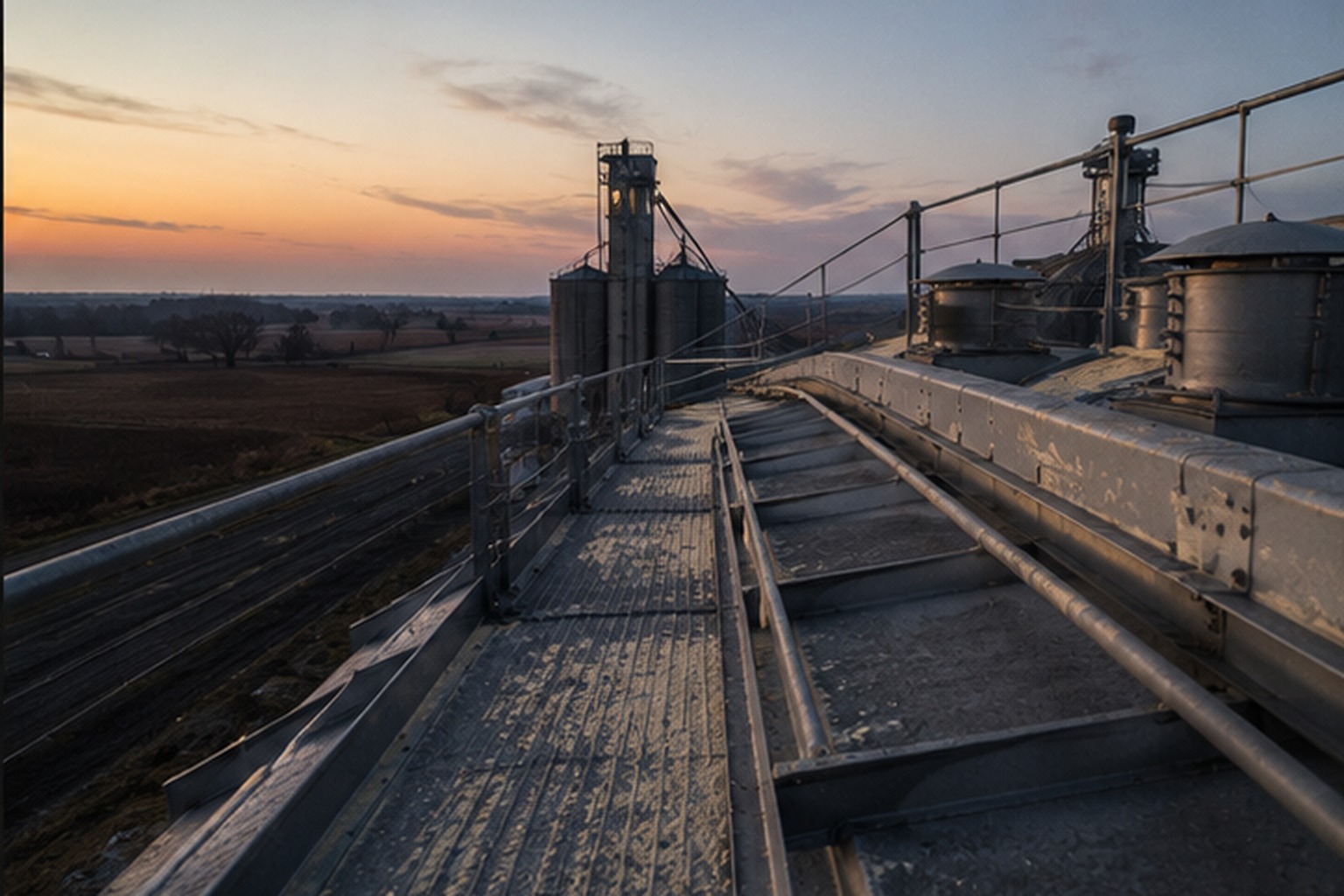
By morning, the roof was normal again.
No scorch marks. No broken vents. No dramatic damage. Just dust streaks along the rail, a camera file people kept saving, and a few workers who found themselves looking up more often than usual.
That is often how the best WeirdWitnessed stories end.
Not with proof.
With a place that has returned to normal while one image refuses to settle into an ordinary explanation.
The grain elevator kept working. Trucks came in. Grain moved. Dust blew over the roof. The camera kept watching the vents as if nothing had happened.
But in the story people passed around, there was one frame where the sky above the silo vents looked cut open by a black rectangle, and the dust below it seemed to answer to something other than the wind.