The bell was not supposed to move.
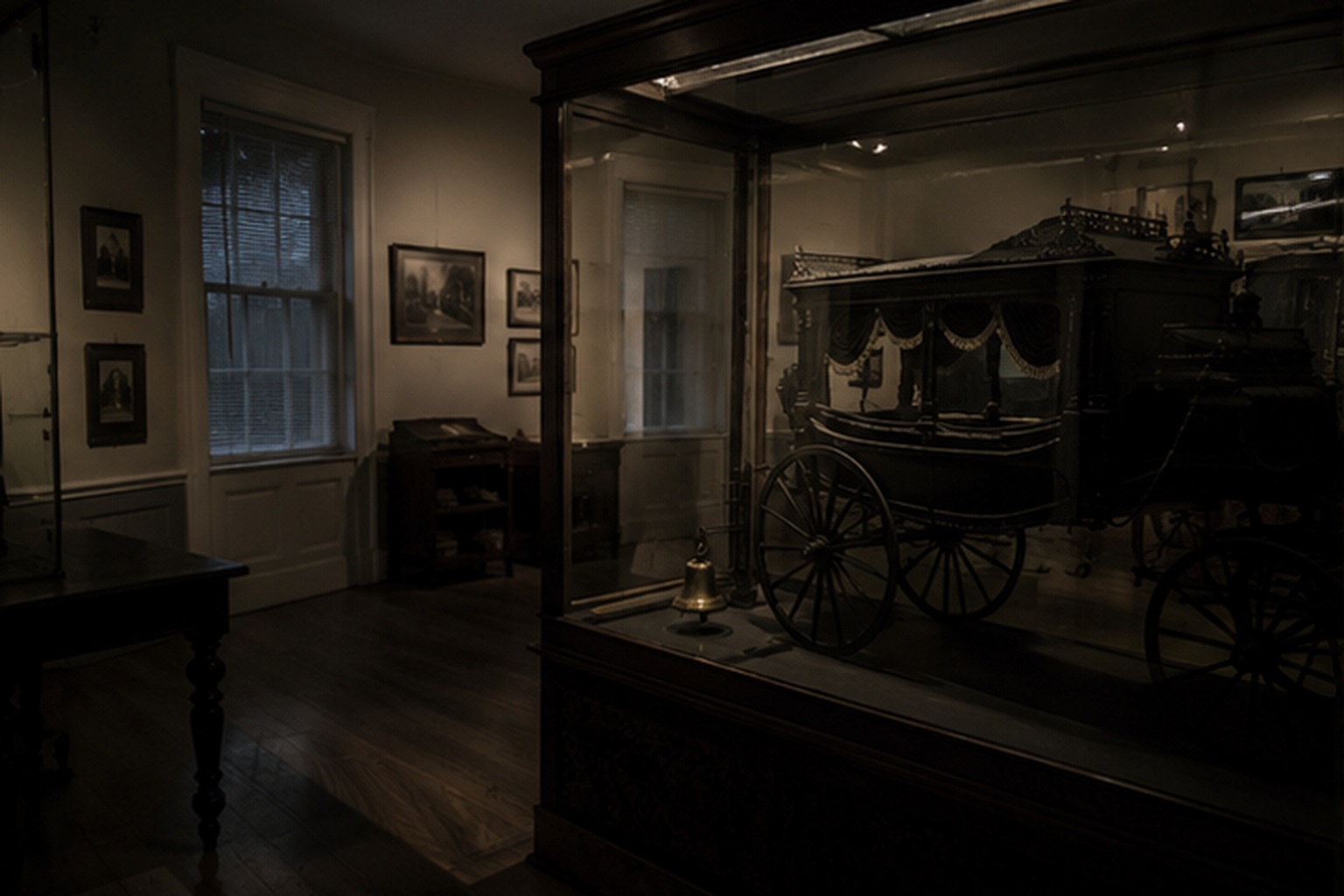
It was too small to be impressive and too old to be handled. A brass carriage bell, dull with age, hung from a little black hook inside a locked glass case at the county historical society. It was part of a funeral exhibit most visitors passed after a polite glance.
There were photographs of mourning clothes, a folded black veil, an undertaker’s ledger faded to brown lines, and a model of a horse-drawn funeral carriage. Above the model hung the bell that once warned people a procession was coming.
For years, it stayed where it was placed.
Then one morning, the bell was turned on its hook.
Not fallen. Not broken. Not swinging wildly in some impossible way. Just turned. The mouth faced the glass instead of the carriage model, as if someone inside the case had reached up and gently rotated it during the night.
At first, staff treated it like a minor maintenance issue. Old buildings settle. Hooks loosen. Cases get bumped by visitors. But the room had been closed, the case was locked, and no one could find a reason for the bell to shift.
Then the fogged hand mark appeared on the inside of the glass.
The short version is simple: the funeral carriage bell moved without visitors, the case was locked, the security camera showed no person opening it, and a hand-shaped fog mark formed inside the pane.
This is not proof of a haunting. Museums are full of old materials, changing temperatures, bad seals, vibrations, and human memory errors. But sometimes the ordinary explanation has to work harder than expected.
The Room Was Easy To Ignore
The county historical society occupied an old municipal building with high windows, clicking radiators, and floors that complained under careful footsteps. The funeral case sat in the back room because that was where it fit.
It was not designed to scare anyone. The label explained that funeral carriages often used bells or small chimes to announce a procession on narrow roads. In bad weather or at dusk, the sound told other travelers to slow down and make way.
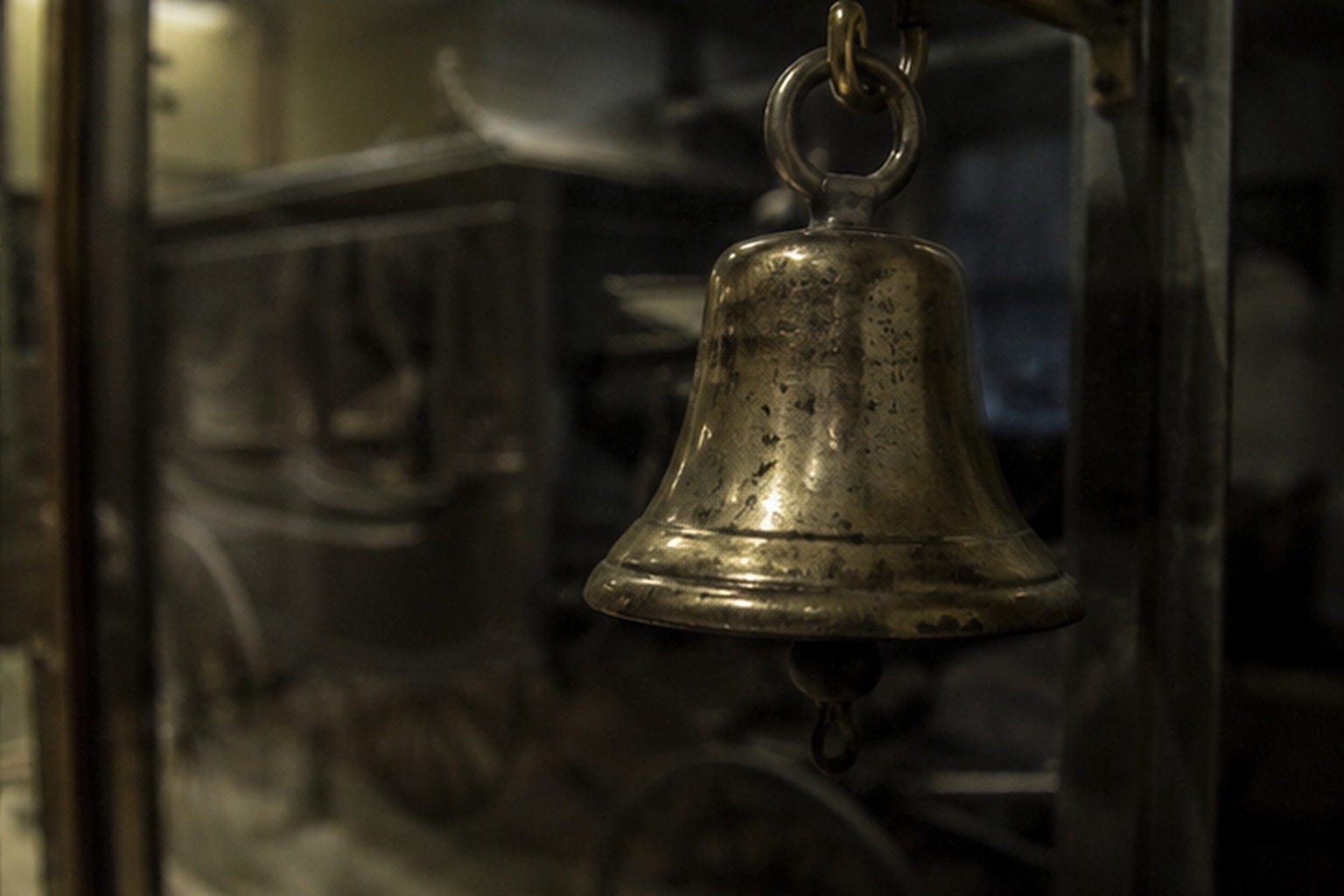
The bell itself was plain: a darkened lip, a small crack near the rim, and a clapper wired still so children could not ring it through the glass. Visitors rarely lingered there. Children liked the old toys in the next case better. Adults stopped for war photos or town maps.
That may be why staff knew the bell’s normal position so well. No one was constantly adjusting it. It had become part of the room’s background, which is another way of saying people noticed when it changed.
The First Shift Was Small
The first movement was not dramatic.
A volunteer opening the room noticed the bell looked wrong. Its mouth faced forward, toward the glass, instead of slightly downward toward the carriage model. The wire on the clapper still held. The hook was still in place. Nothing else in the case seemed disturbed.
She reportedly called another staff member over before unlocking anything.
That was a good instinct. In small museums, objects can be moved for harmless reasons and nobody writes it down. Someone dusts. Someone straightens a label. Someone takes an inventory photo and forgets to put things back exactly.
But the funeral case had not been opened the previous day. The key was in its usual cabinet. The sign-in sheet showed no maintenance visit. The room camera showed nobody lingering near the case after the front lights were dimmed.
The bell’s new angle was easy to dismiss, but hard to explain. They unlocked the case, turned it back, checked the hook, and closed everything again.
The hook did not feel loose. That made the second movement worse.
The Camera Saw An Empty Room
The second time, the bell moved overnight.
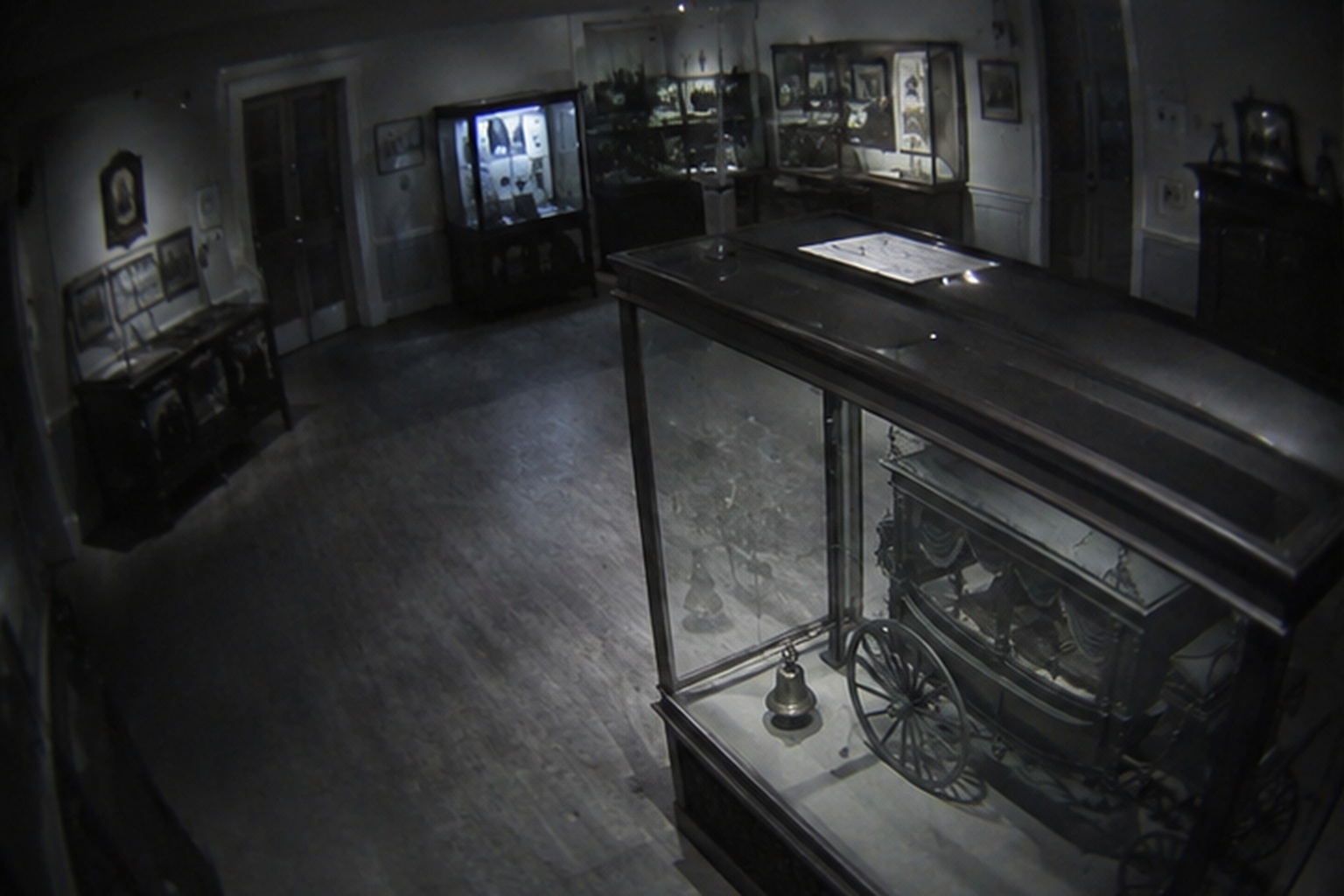
The staff reviewed the camera mostly out of caution. The back room camera covered the exhibit doorway, center aisle, and a partial view of the funeral case. It was good enough to see visitors, not to solve small mysteries behind glass.
For hours, it showed what old buildings show after dark. The room breathed in slow changes of light. The radiator clicked. Headlight reflections crawled across the glass. Dust or insects made tiny pale streaks near the lens. Nothing opened the door. No person crossed the floor.
At some point between two motion-triggered clips, the bell was no longer in the same position.
That limitation matters. The camera did not capture the bell turning. It did not show a transparent hand. It did not show the case lid lifting.
It showed an empty room before, and an empty room after.
In the later clip, the bell hung slightly crooked, angled again toward the front pane.
Skeptics had plenty to work with. Motion-triggered footage skips time. The camera view was partial. A change in reflection can make an object appear differently angled. Old hooks can settle. Trucks sometimes rattled the windows.
Those explanations remained on the table.
Then came the mark.
The Fog Was On The Wrong Side
The hand mark appeared the following morning.
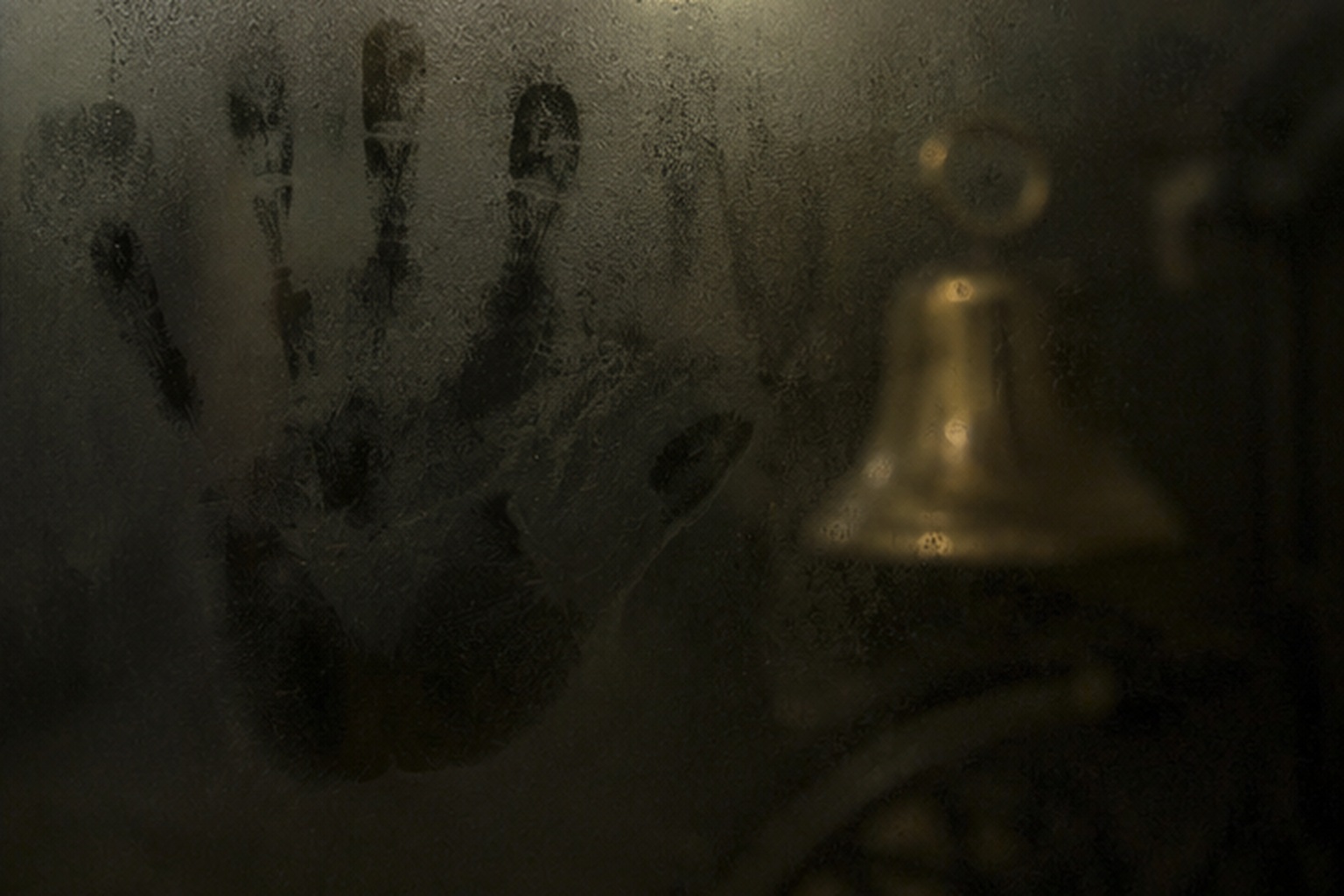
It was not a greasy fingerprint. It was not a dusty palm print left by a visitor leaning too close. It looked like breath fog, the temporary pale shape that appears when warm moisture touches cool glass.
Five fingers. A palm. Slightly uneven edges. Placed near the bell.
The staff member who found it reportedly did the sensible thing first: she tried to wipe the outside of the glass.
Nothing changed.
The mark was not on the visitor side.
It was inside the case.
That turns a maintenance question into something harder to file away unless the case had been opened, the glass had trapped condensation in a peculiar shape, or someone had marked it from within.
The key log did not show the case being opened after the bell was reset. The camera did not show anyone in the room. The lock was not damaged. The seal was not perfect, but the inside did not normally fog.
The mark faded as the room warmed. Before it vanished, someone took photos: a glass pane, ceiling light reflections, vague fingers, and the blurred brass bell behind them. The photo was less convincing than standing there and realizing which side of the glass the moisture was on.
The Bell Had A Local Story
Every object in a historical society comes with a chain of people attached.
The funeral carriage bell had belonged to a local undertaker’s rig before motor hearses became common, when death traveled slowly enough that neighbors heard it coming. The bell was not decoration. It had a job. It announced grief.
That history made the object feel heavier once it began attracting attention. Still, the staff avoided making claims. They did not advertise a haunted display or sell tickets for ghost nights. They simply kept notes.
Those notes made the pattern harder to ignore. The bell shifted more than once over several weeks. The hand mark did not appear every time. Because it appeared only occasionally, it stayed in the category of things that could not be recreated when someone was watching.
Attempts To Explain It
The practical theories were reasonable.
Temperature changes could have caused condensation inside the case. The old heating system created warm and cool pockets, especially in the morning. Vibration could have moved the bell; trucks passed outside, the floor flexed, and the hook might have had a slight tilt. Human error was possible too. Someone could have opened the case without writing it down, adjusted the bell, and forgotten.
None of those ideas are foolish. The difficulty was combining them.
A vibration strong enough to rotate the bell should have affected other light objects, but labels and paper items appeared unchanged. Condensation can form blotches, but a hand-shaped mark with separated fingers on the inside of one pane was harder to reproduce. Human error can explain almost anything once, but not repeated locked-room changes without any corresponding sign-in, camera view, or disturbed items.
That does not eliminate ordinary causes. It only explains why the staff stopped joking about it.
What Remains Unsettling
The story does not need exaggeration.
No one has to claim the bell rang by itself. No one has to invent a woman in black beside the carriage photograph. No one has to say a procession passed the windows at midnight.
The real account is small and specific enough.
A funeral bell moved inside a locked display case. An empty room camera did not show a visitor. A fogged hand mark appeared on the inside of the glass near the object. Staff tried ordinary explanations, but no clean answer satisfied every detail.
That is the kind of museum story that survives because it happens in a place devoted to keeping things still. Historical societies label objects, stabilize them, lock them under glass, and tell visitors what they used to mean.
The funeral carriage bell resisted that stillness.
Maybe it was vibration. Maybe it was condensation. Maybe someone forgot what they touched. Maybe the old case had a flaw that only showed itself under the right weather.
Or maybe an object made to announce the arrival of the dead did not like being displayed in silence.
The most cautious version is enough: in a locked county exhibit room, with no visitors present, the bell turned toward the glass.
By morning, something shaped like a hand had fogged the inside of the case, as if someone on the wrong side had pressed close to look out.