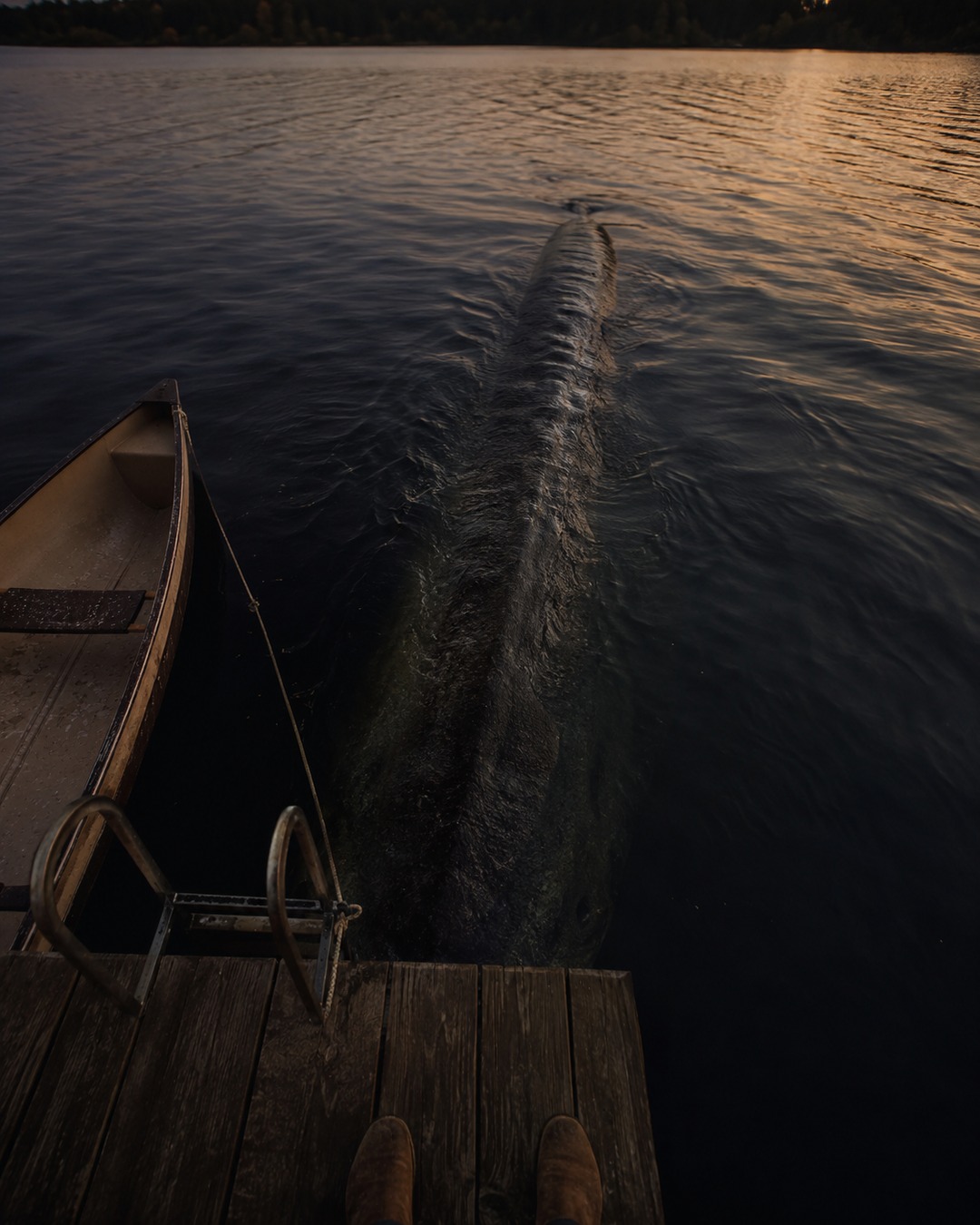
Illustrative reconstruction
The shape appeared just beyond the line where the lake turned silver. At first it looked like a log. Then it rose into two dark humps, dipped, and left a narrow wake that kept moving after the object disappeared. From the shore, nobody could tell how far away it was. The phone camera made the water look flat. The binoculars made the shape look closer than it felt. By sunset, the story had already become a creature moving under the surface.
Lake-monster sightings are powerful because water hides scale. A dark shape can appear long, then vanish. A wake can move without an obvious source. A group of animals can briefly look like one body. Local folklore gives the moment a name before the evidence is strong enough to identify it.
Short answer
Lake-monster sightings are difficult to evaluate because water distorts distance, scale, motion and shape. Low viewing angles, waves, crossing wakes, logs, swimming mammals, birds, fish, boat traffic, mist, reflected light, telephoto compression and camera limitations can all make ordinary things look like humps, long bodies or wakes from an unseen animal. A report becomes more useful when witnesses record location, distance, weather, direction of travel, scale references, original photos or video, and whether local conditions could explain the movement.
What people actually report
Reports often describe long dark shapes, repeated humps, a wake without a visible source, a head-like object above the surface, a dark line moving against the wind, or a photograph that seems to show something too large for the lake. Some sightings happen from boats, but many happen from shore, where distance is hard to judge and the viewing angle is low.
These reports do not all have the same meaning. A wake, a hump, a shadow, a head-like shape and a sonar contact are different kinds of claims. Each needs a different kind of review.
Distance, scale and low viewing angles
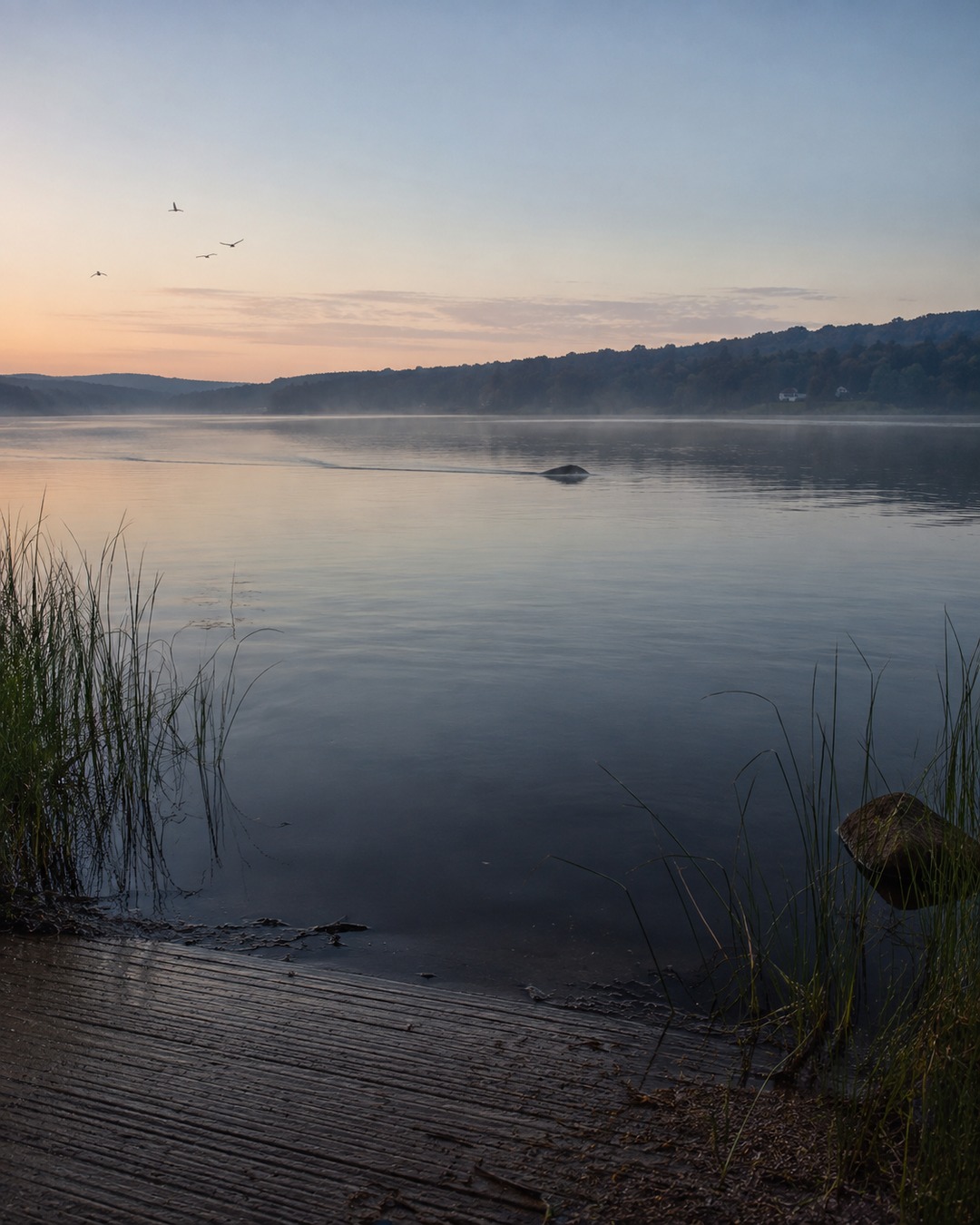
Across water, distance can be deceptive. There may be few fixed reference points between the witness and the object. A bird, log or otter can seem larger when the viewer has no reliable scale. Low viewing angles also hide the body beneath the surface, so several small shapes may appear as one longer form.
Photographs can make the problem worse. Telephoto lenses compress distance and make background objects appear closer together. Phone cameras may blur or sharpen water texture in ways that create edges. A cropped image removes the shoreline, boat, dock or buoy that might provide scale.
Waves, wakes and water movement
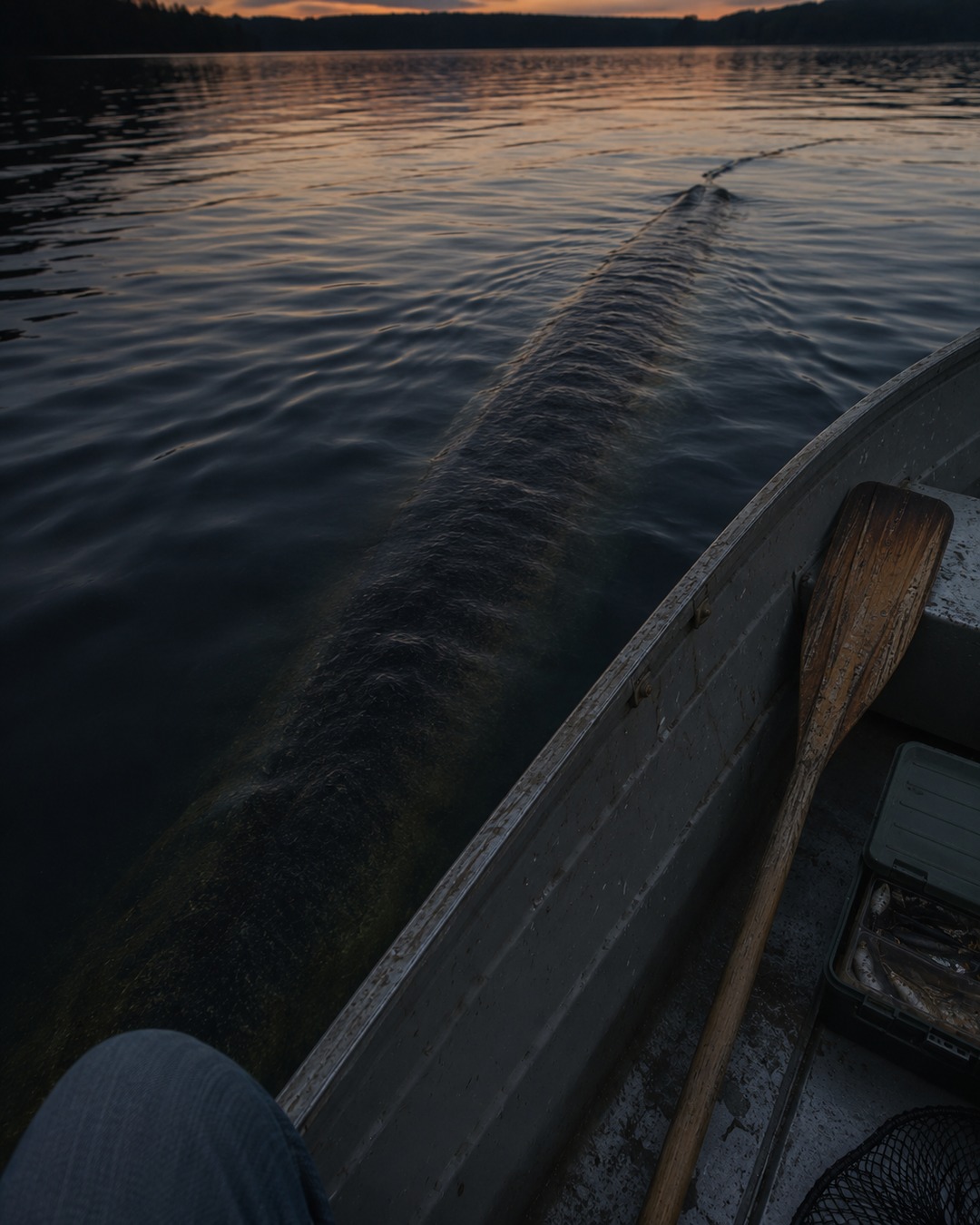
Water rarely behaves like a flat surface. Wind can make waves that travel at angles to each other. Boat wakes can cross and continue after the boat is out of sight. Reflections can break into dark moving lines. Submerged objects can disturb the surface. A wake without a visible source may be interesting, but it is not automatically an animal.
Useful details include wind direction, boat traffic, current, nearby channels, shoreline shape, whether the wake moved with or against the wind, and whether the object created its own movement or merely appeared within existing waves.
Animals and objects mistaken for monsters
Swimming mammals can create convincing shapes. Otters, deer, beavers, seals in coastal water, swimming dogs and groups of birds can all produce humps, heads or wakes. A line of animals moving together may briefly look like one long body. Large fish can disturb the surface without showing a clear outline.
Logs, branches, floating vegetation, buoys, nets and debris can also look alive when moved by waves. A partly submerged log may rise and fall like a back. A branch can look like a neck. Mist and reflected light can make the outline appear and disappear.
Photos, video and sonar claims
Images over water need provenance. The original file is more useful than a cropped social-media upload. Investigators would want the uncropped frame, lens information, timestamp, location, weather, distance estimate and other photographs taken before and after. Video should be reviewed at normal speed before zooming into frames.
Sonar can be useful, but it is not magic. It can show objects, depth changes, fish, vegetation, thermoclines or artifacts depending on equipment and settings. A sonar shape becomes more interesting when the raw data, location, depth, speed, operator notes and repeat passes are available.
Folklore and repeat sightings
Local folklore matters because it shapes interpretation. A lake with a long monster tradition gives witnesses a ready story for ambiguous movement. That does not make every witness dishonest. It means the cultural context becomes part of the evidence review.
Repeat sightings at the same location can be meaningful if they include consistent conditions, independent witnesses, useful measurements and ordinary explanations checked over time. Repeated vague sightings without location detail may show a strong legend more than a strong animal case.
Docks, Boat Ramps And Near-Shore Sightings
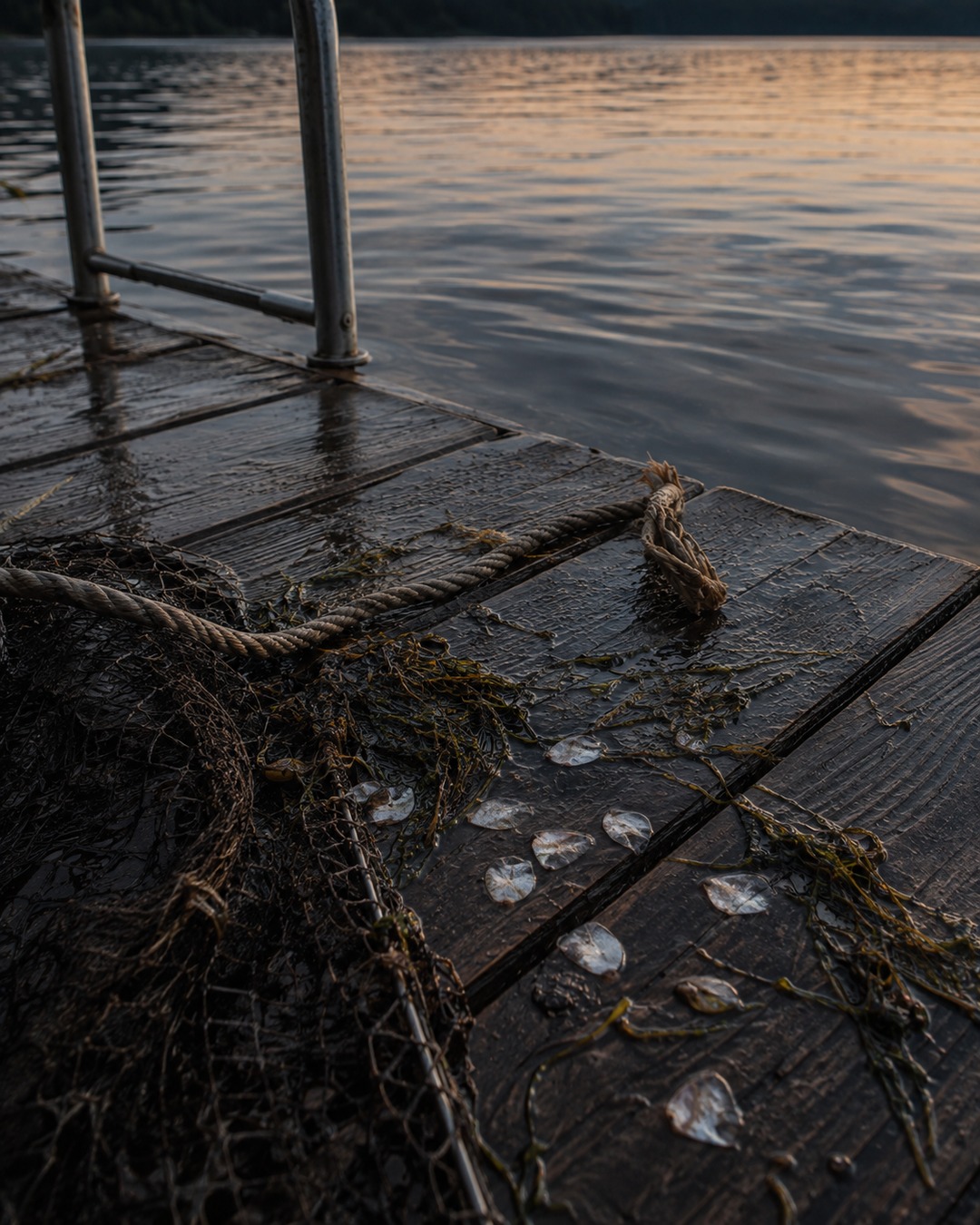
Many lake-creature reports begin from fixed shoreline structures rather than open water. Boat ramps and docks are useful because they give witnesses a place to stand, a known edge, posts, boards, rails, boats or lights that can become scale references. They are also deceptive. A concrete ramp drops into deeper water, dock pilings create shade, and the space under boards can hide logs, fish, mammals, ropes, weeds or floating debris until they move.
A bump against a dock or boat can feel deliberate at night, but fixed structures collect ordinary causes. Small waves can strike supports. A passing boat’s wake can arrive after the boat is gone. Floating branches can hit pilings once and drift away. Fish, turtles, otters, beavers or other swimming animals can move under a dock without showing a full body. Reflections and shadows below decking can make an object appear larger or farther away than it is.
Near-shore water can look easy to understand because land is close, but object size and depth may still be hidden. A witness looking down from a dock has a low, awkward angle through glare, darkness or ripples. Someone at a boat ramp may be watching a trailer, rope, motor, mirror or footing while also trying to interpret movement in the water. Useful reports record the dock height, water depth if known, distance from shore, direction of movement, recent boat traffic, wind, light angle, fixed scale references and whether the object touched, pushed, surfaced or simply passed below the structure.
What witnesses should record
- Exact location, direction faced and estimated distance.
- Weather, wind direction, waves, boat traffic and light conditions.
- Duration of sighting and direction of movement.
- Nearby scale references: boats, buoys, docks, shoreline features or birds.
- Original photos/video, not only cropped or enhanced versions.
- Whether the object surfaced, submerged, changed direction or simply drifted.
- Known local animals, recent storms, floating debris and current conditions.
How this differs from lake-monster folklore
For the broader history of why similar lake-monster stories appear around the world, see Lake Monsters: Why Similar Stories Appear Around The World. This page focuses on practical sighting evaluation: water, distance, animals, images, sonar and evidence limits.
What we can and cannot say
We can say that people report strange shapes and wakes on lakes and rivers, and that water creates conditions where ordinary objects can look extraordinary. We can also say that folklore gives those sightings a powerful frame.
We cannot say that a distant hump, wake or blurred image proves an unknown creature. Better cases require original records, scale, location, repeatable observation and careful comparison with known animals, boats, debris, weather and camera limitations.
Why humps are hard to interpret
Humps are one of the most repeated lake-monster details, but they are also one of the hardest to interpret. A single animal moving at the surface can create more than one visible rise. Several birds or mammals swimming in a line can briefly look connected. Waves crossing around a log can create the impression of a back lifting and sinking. From shore, the witness may not be able to tell whether the humps belong to one object, many objects or no solid object at all.
That does not make the sighting worthless. It means the description should stay precise: number of visible humps, spacing, direction, speed, whether the humps changed spacing, and whether a head, tail or body was ever continuously visible.
Why boats and weather should be checked first
Boat wakes can outlast the boat that made them, especially when they reflect from shorelines, docks or other wakes. Wind shifts can make surface movement change direction. Rain, mist and glare can hide the source of motion. A witness who arrives after the wake has formed may see only the strange aftermath.
Weather and boat context are not boring details. They are the difference between a mystery that can be evaluated and a story that can only be retold. The strongest reports include wind direction, recent boat traffic, distance from shore, water depth, time of day and whether anyone else saw the same movement from another angle.
How folklore affects later certainty
A lake with a monster tradition gives ambiguous movement a ready identity. That tradition can make a witness more attentive to the water and more likely to remember the event. It can also make later interpretation feel obvious. The same dark shape on a lake with no legend might be called a log; on a famous monster lake it may become a creature before the physical details are examined.
Folklore is part of the story, not a reason to dismiss every witness. It explains why similar shapes acquire names, why repeat locations matter culturally, and why practical evidence standards are still needed.
Sources & Further Reading
- NOAA Ocean Service — What is a current?
- NOAA Ocean Service — Refraction and light in water
- NOAA Ocean Service — What causes ocean waves?
- NOAA Ocean Service — Sun glare and water visibility