The camera still That Started With an Empty Aisle
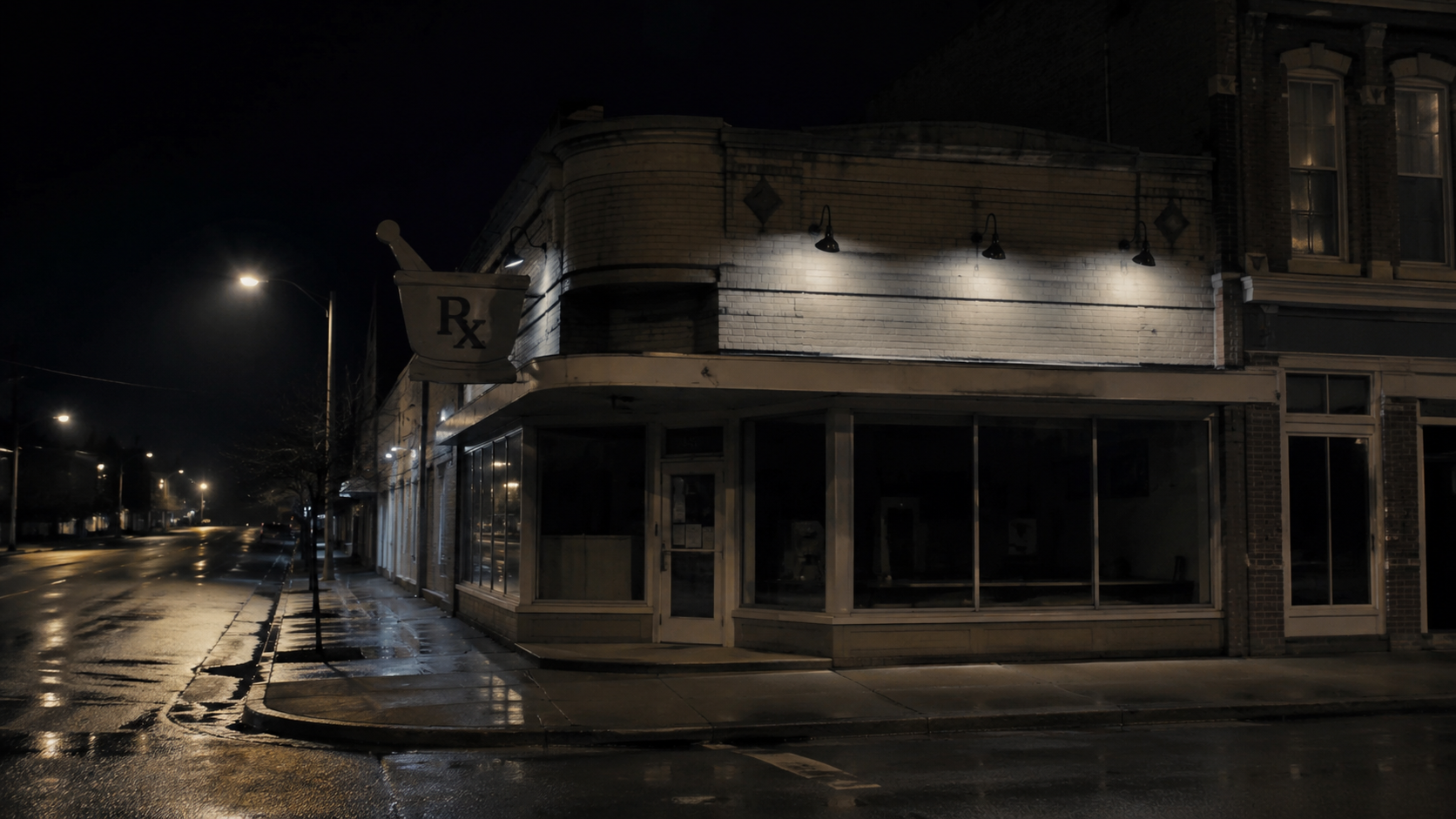
Marlow Pharmacy was not the kind of place people expected to see in a strange camera file thread. It was a small-town shop with a bell on the door, a narrow greeting-card rack, and a vitamin aisle that faced the back counter at a slight angle. Most nights, the security camera images was boring in the way store owners prefer: lights dimmed, shelves still, no movement except the timestamp changing in the corner.
That is why the short after-hours camera still stood out.
According to the account shared with WeirdWitnessed, the camera faced the middle of the store from above the seasonal shelf. It had a clear view down the vitamin aisle and across the endcap where cold medicine and supplements met. At 9:47 p.m., more than an hour after closing, a red handbasket slid out from beneath the lowest shelf.
It did not tip over. It did not bounce as if kicked. It came forward slowly, stopped, shifted once more, and rested in the aisle.
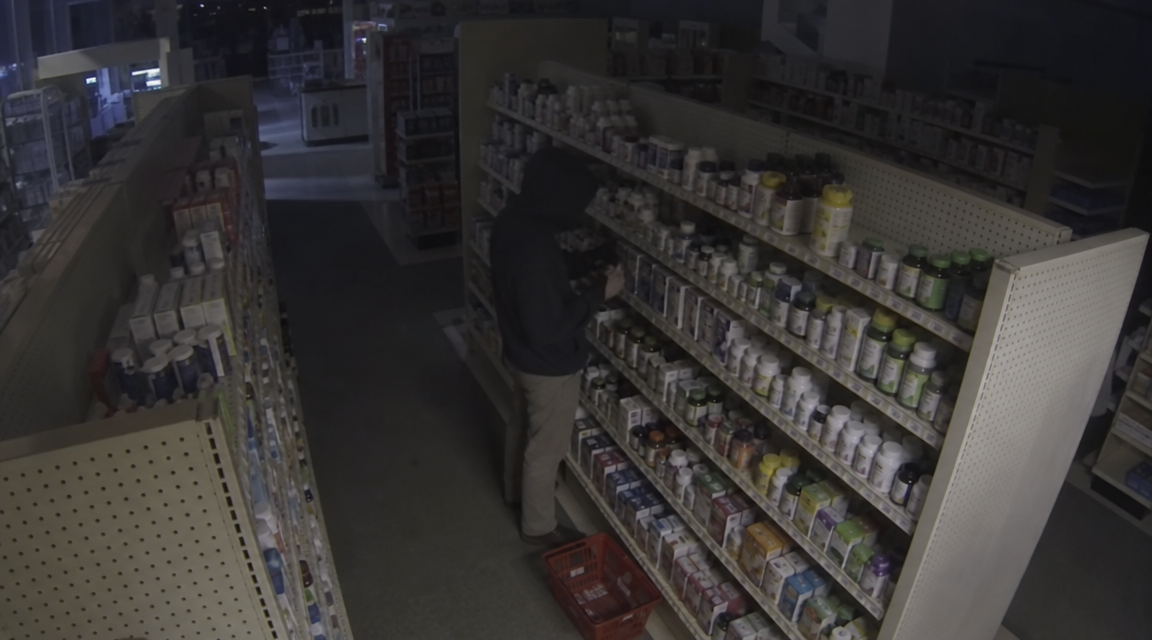
The strangest part was not only the basket. The motion event was reportedly logged as employee access.
Closing Had Already Been Finished
The pharmacy closed at 8:30 p.m. that night. The last customer left shortly before then, and the closing employee straightened the front aisle, counted the drawer, and locked the door. The alarm was armed at 8:41 p.m., according to the log described to us.
Small pharmacies often have layered systems that are practical rather than cinematic: a point-of-sale closeout, door contact sensors, a motion system, and a camera app that records short clips when something changes in frame. None of those tools is perfect. Together, they usually answer one basic question: who was in the building?
In this case, the answer seemed to be nobody.
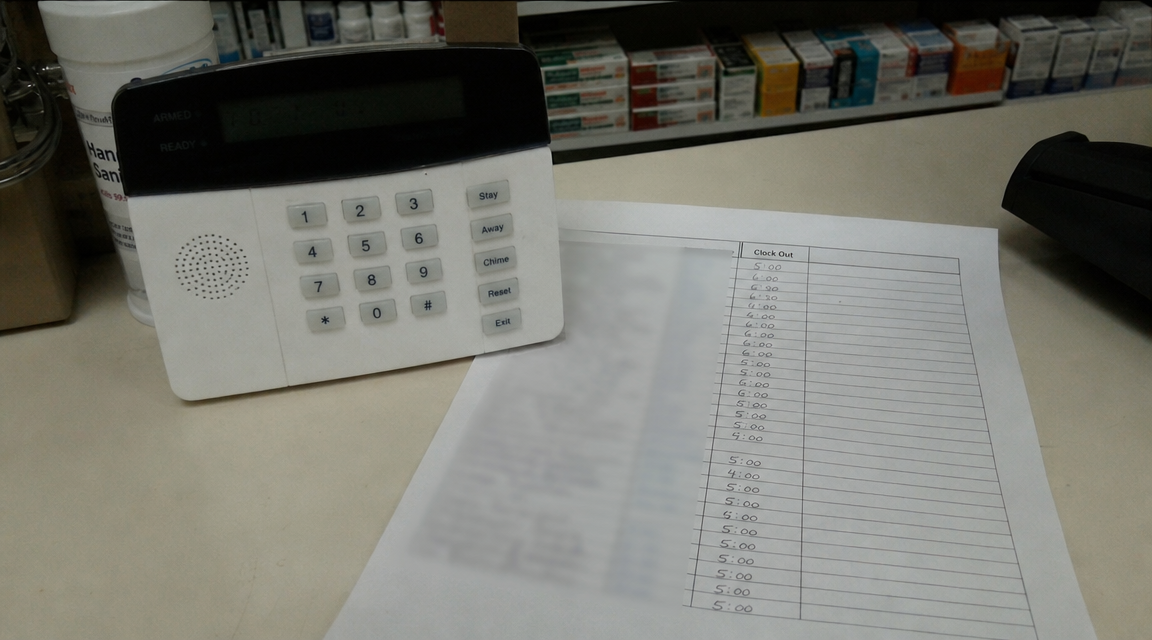
The owner reportedly checked timecards first. Everyone had clocked out. The pharmacist had left through the rear door. The cashier had left through the front. Nothing in the evening notes mentioned a fallen display, a broken shelf, or a basket left somewhere unusual.
The red baskets were usually stacked near the entrance. One being tucked under a shelf in the vitamin aisle was already odd. Watching it move after closing made it harder to dismiss.
What the Camera Shows
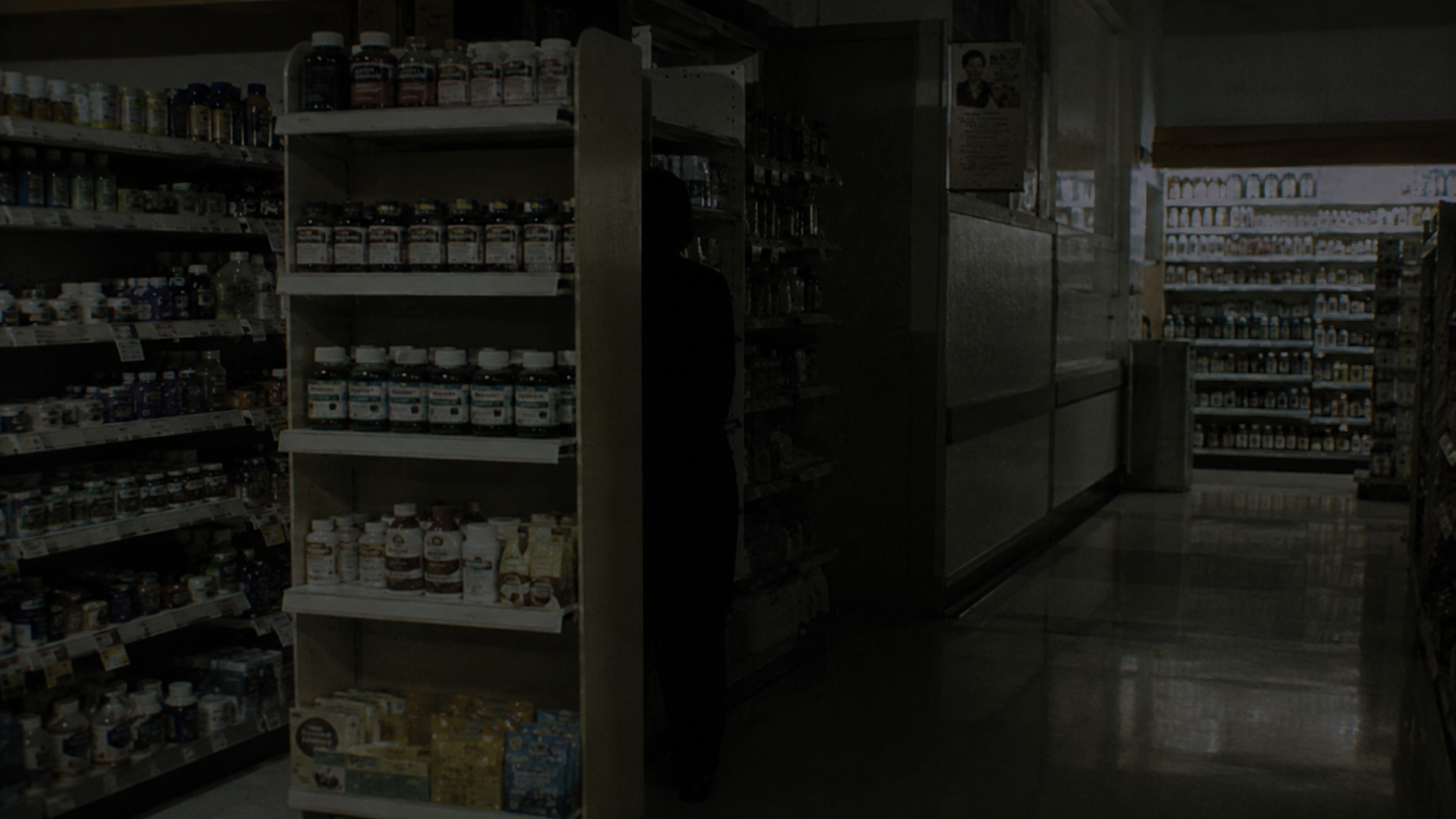
The camera still is said to begin with the aisle still and empty. The store lights are in their after-hours setting, so the image is not fully dark. It has that flat surveillance look where edges are visible but details lose warmth.
For several seconds, nothing happens.
Then the front lip of the basket appears from the shadow below the bottom shelf. It is low to the floor, angled slightly toward the center of the aisle. The basket moves just enough for the handle to become visible. After a pause, it slides a few more inches.
There is no visible foot, hand, string, animal, or rolling object pushing it.
The movement is not fast. It is also not the dramatic leap that many fake clips lean on. It looks more like an object being dragged by a careful, hidden force. That restraint is one reason the camera file unsettled the people who saw it.
Near the end of the camera still, one frame appears to show something else: a dark human-shaped figure partly obscured behind the vitamin aisle endcap. It is not clear enough to identify. It is only a vertical, shoulder-like shape in a place where the earlier frames appear empty.
That detail should be treated cautiously. Low light, compression, and shelf edges can easily create a person-like form. Still, the frame became the one employees kept returning to.
The Employee Access Problem
If the camera images ended with a moving basket, the explanation might have stayed in the usual range: unstable stacking, a vibration from outside, air pressure from the heating system, or a basket that had been left balanced against packaging.
The access log complicated it.
The motion event was reportedly tagged by the system as employee access. That does not necessarily mean an employee opened the door. Security software can apply labels in confusing ways, especially when cameras are grouped by zones or when a motion camera still is attached to the last known user action.
But the pharmacy owner said the tag was unusual for that camera.
The rear entrance had its own sensor. The front door had another. Neither showed an opening at the time of the basket movement. The alarm had not been disarmed. No one’s code had been entered after closing.
So why did the camera still appear under employee access instead of a generic motion event?
Searching the Aisle the Next Morning
The next morning, the opening employee reportedly found the red basket sitting in the aisle close to where the camera still showed it stopping. It was not upside down. It was not crushed. There were no obvious scrape marks on the floor.
The bottom shelf was checked. The gap beneath it was large enough for part of a handbasket to fit, especially if the basket had been pushed in sideways. Dust under the shelf showed disturbance, but not in a neat line that explained the movement. Staff also looked for fishing line, tape, magnets, or anything that suggested a prank.
Nothing obvious was found.
They reviewed earlier camera images from the day. Customers had used baskets. Employees had collected and stacked them. At least one basket appeared near the vitamin aisle during business hours, but the available clips did not clearly show how it ended up under the shelf.
The mystery is not simply where the basket came from. It is why it moved after the store had been closed and quiet for more than an hour.
Ordinary Explanations Worth Considering
The most practical explanation is that the basket was already under tension. If the handle or rim was caught against a product tray, shelf bracket, or flexible price strip, it might have slowly worked loose. Plastic baskets are light. A tiny release can look deliberate on camera.
Vibration is also possible. A delivery truck, nearby train, heavy door, or compressor kicking on can make shelving tremble. If the basket was barely balanced, that might have been enough.
Then there is the camera itself. Surveillance camera images compresses time and movement. A camera still triggered late may miss the actual start. A low frame rate can make gradual motion seem oddly smooth or sudden. Shadows from emergency lighting can change shape as sensors adjust exposure.
None of those explanations requires a ghost. None is fully satisfying without a physical test in the same aisle under the same conditions.
Why the Figure Frame Became the Hook
People are drawn to the human shape. That is understandable. A moving object is strange, but a possible person hiding behind a vitamin display after closing changes the emotional temperature of the camera still.
Still, the figure is the easiest part to overread.
Endcaps are visually messy. They have vertical product columns, hanging strips, curved signs, dark gaps, and reflective packaging. In low light, those elements can combine into a shape that looks like a head and shoulders. The brain is tuned to find bodies in clutter, especially when a story already suggests someone may be present.
The reported frame does not show a face. It does not show movement independent from the basket. It does not show someone stepping into or out of view. It is a brief, dark form in a crowded part of the image.
For that reason, WeirdWitnessed would not treat the figure as a detail people read as an intruder or apparition. It is a detail, not a conclusion.
The basket remains the stronger part of the case because its position changes in a way multiple viewers can compare across frames.
What Makes This One Linger
The Marlow Pharmacy basket camera still sits in the uncomfortable middle where many good Caught on Camera cases live. It is not spectacular enough to prove anything. It is not messy enough to dismiss instantly.
A red handbasket moved after the alarm was set. The motion record carried an employee-access label even though staff had clocked out. The doors did not show an opening. One ambiguous frame near the vitamin endcap seemed to hold a dark figure-like shape, though that may be nothing more than compression and shelving.
The best next step would be reconstruction. Place the same basket under the same shelf. Run the HVAC. Check for floor slope. Review whether the alarm software attaches employee labels to clips after arming. Test whether the camera exposure creates false human shapes at the endcap.
Without that, the case remains unresolved.
But unresolved does not mean supernatural by default. It means the available pieces do not yet line up cleanly. And sometimes that is enough to make an otherwise ordinary aisle feel different the next morning.
The red basket was returned to the stack by the entrance. The vitamins stayed where they were. The camera kept camera record.
For most nights after that, nothing moved.
Reader Context
This Weird Witnessed story is an editorial reconstruction, written as eerie visual storytelling rather than a verified report. For more context, see Camera Anomalies and Strange Images Guide and How WeirdWitnessed Creates Reconstructed Horror Stories.