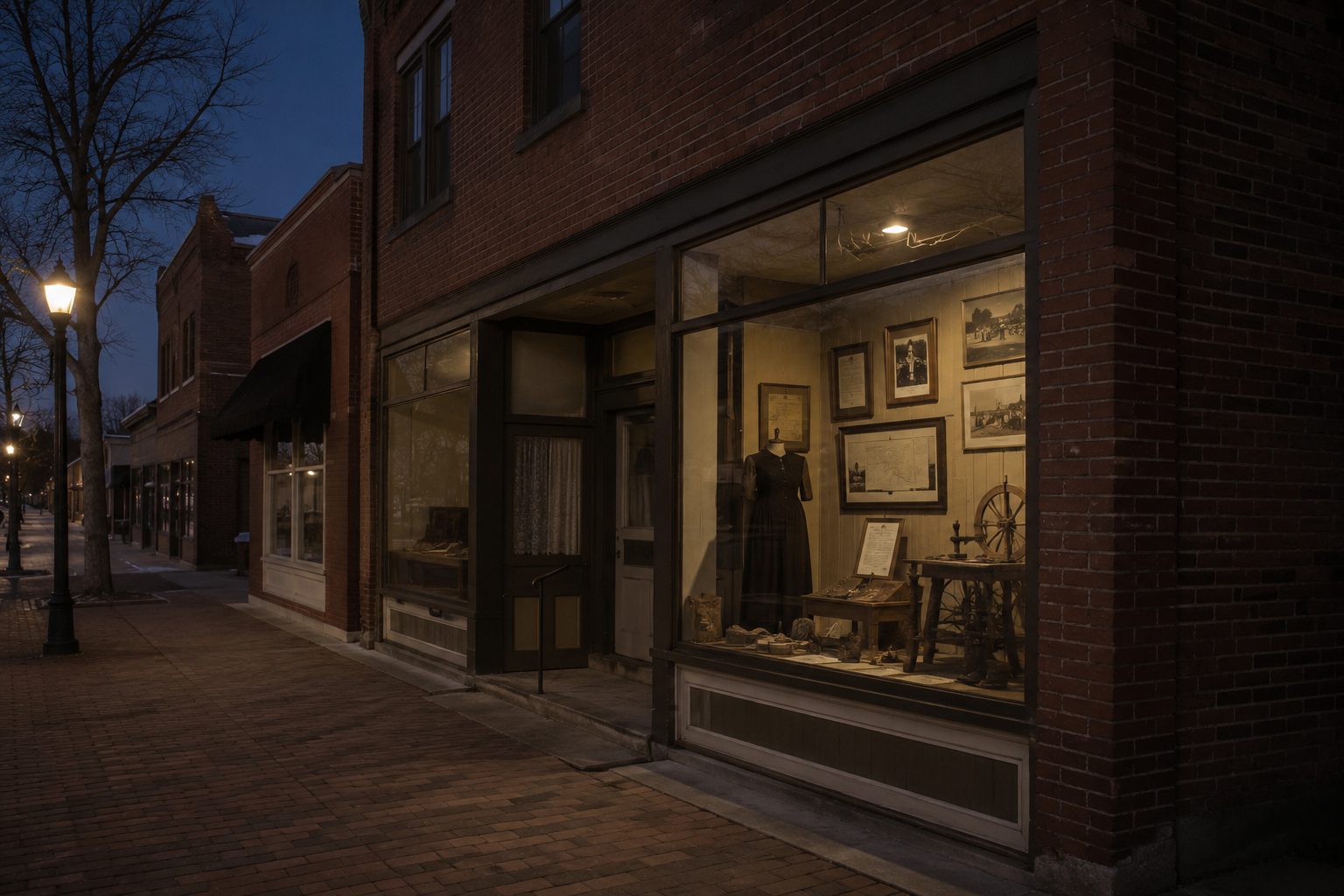
The railroad lanterns were not supposed to do anything anymore.
They sat behind glass in a small town museum, arranged by line, decade, and donor family. Their work had ended long ago. They no longer warned engineers, marked cabooses, or swung from the hands of brakemen walking ballast in the dark.
That is why the reported photo bothered people.
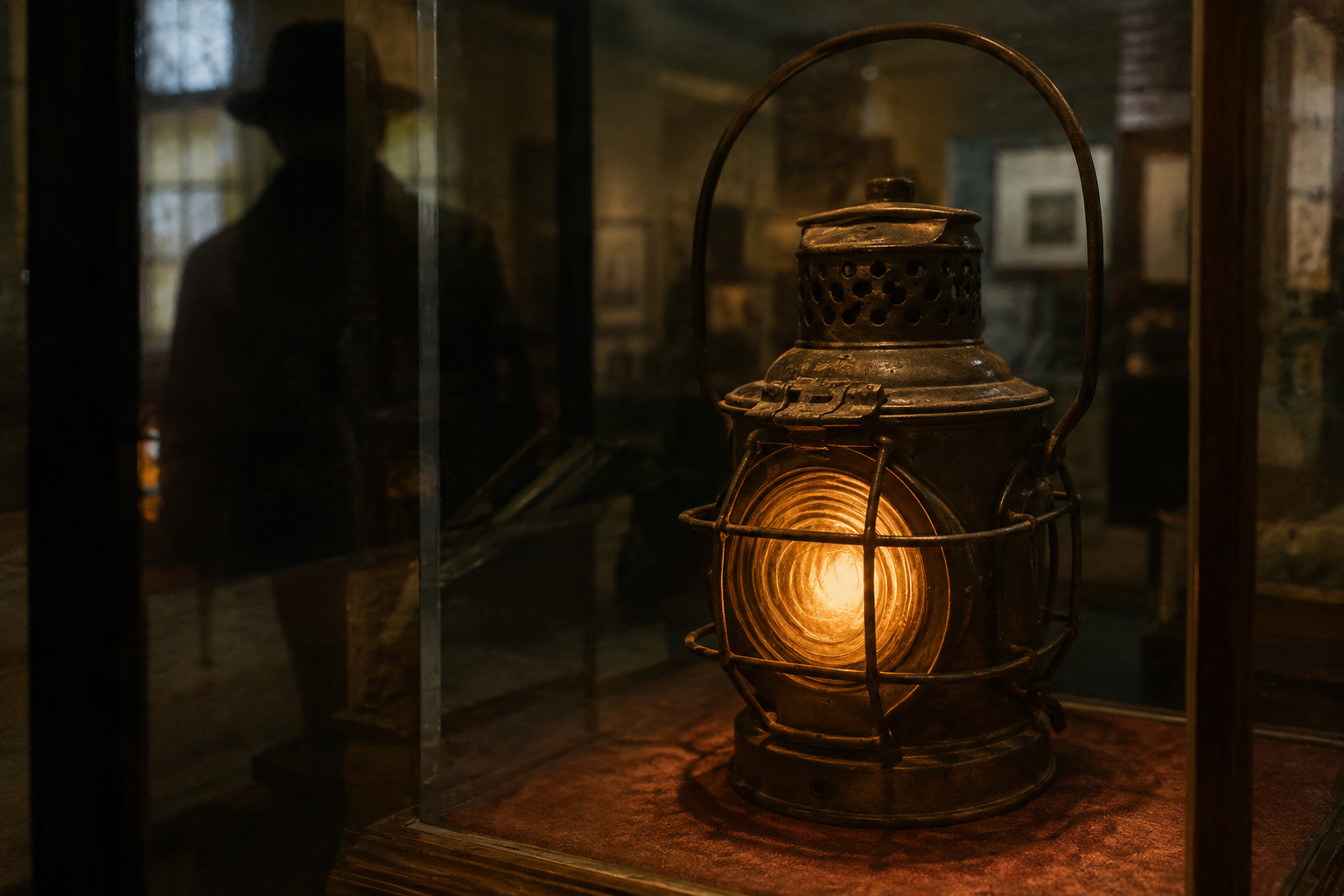
In it, one lantern appeared to glow faintly amber inside a display case that staff said had no power. The rest of the case was dark. Behind the glass, near the edge of the frame, there seemed to be a darker reflection shaped almost like someone standing behind the person taking the picture.
WHAT THE REPORTED PHOTO INCLUDED
- A small town museum railroad lantern display after a community event.
- Several antique lanterns behind a locked glass case.
- One lantern globe that appeared softly lit while the others stayed dark.
- Staff statements that the case had no internal wiring or battery feature.
- A dark reflection in the glass that did not match anyone remembered nearby.
This is an editorial reconstruction of a local museum account, not evidence that a historical object came back to life. Glass cases are reflection traps. Cameras misread warm light. Old exhibits are full of visual confusion. Still, the story persists because the object in question was designed to signal in darkness.
1. The Lantern Display Was a Point of Local Pride
Small museums often keep history behind glass.
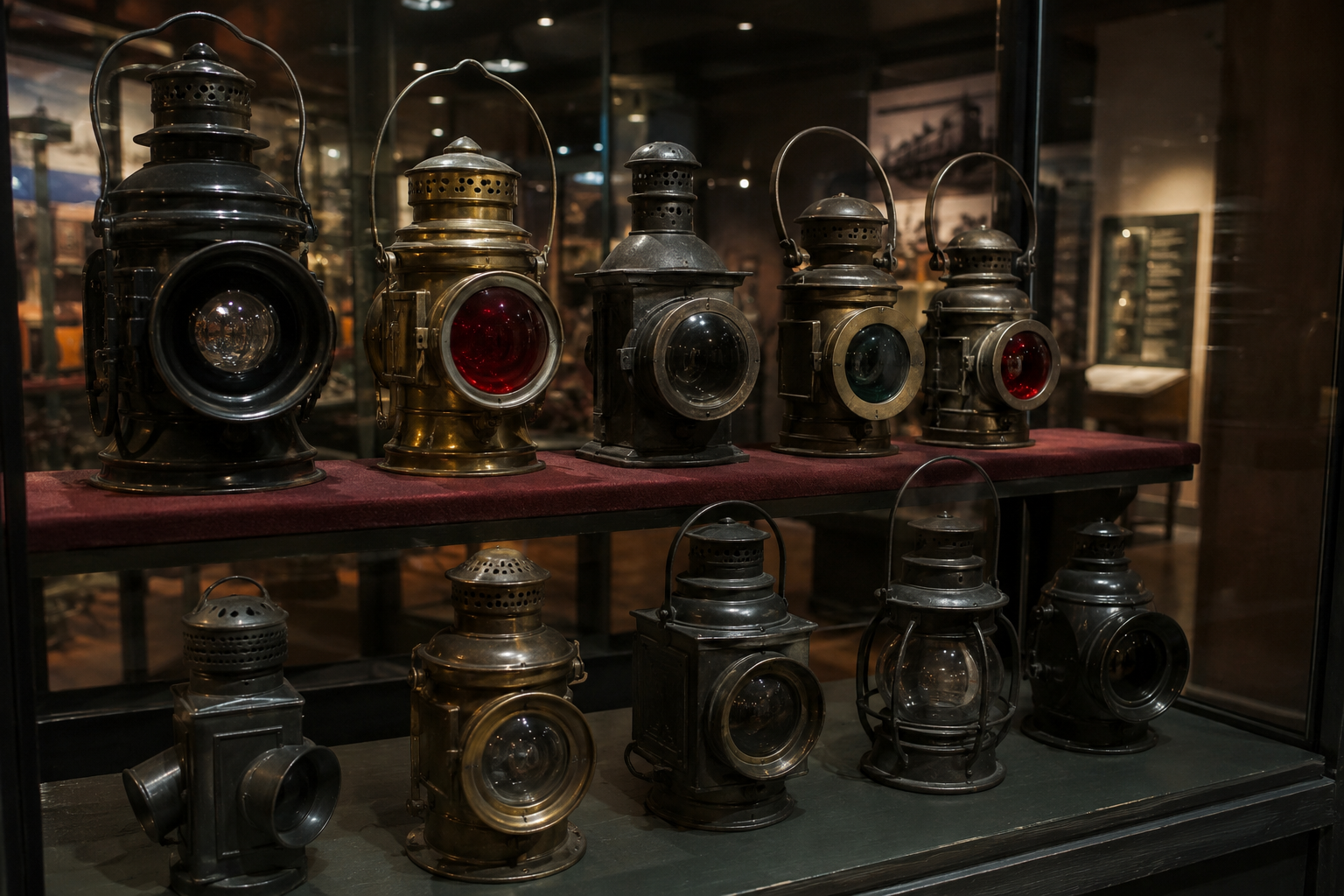
The railroad case reportedly stood in a side gallery near depot maps, uniform buttons, a conductor’s punch, and photographs of men posed beside freight cars. Visitors liked the lanterns because they were easy to understand. Even children could imagine someone lifting one beside a track.
The display was not flashy. There were no moving parts, no digital screens, and, according to the staff version, no powered lighting inside the case.
That ordinary setup matters.
If the case had been wired for dramatic effect, the photo would be a maintenance question. If the lantern contained a hidden bulb for school tours, the answer would be simple.
The account became interesting because the staff reportedly insisted the lanterns were inert objects in an unpowered case.
A dead signal seemed to signal anyway.
2. The Glow Was Small, Not Theatrical
The photo, as described by those who saw it, did not show a blazing lantern.
That restraint is part of why the story feels credible. The globe was not throwing light across the wall. It appeared as a soft amber presence inside one lantern, like the last memory of flame rather than an active lamp.
A dramatic glow would invite hoax suspicion immediately. A small glow invites argument.
Was it a reflection from an exit sign? A warm ceiling bulb? A phone screen? The polished brass of another object catching light? Any of those could create the effect, especially through old glass and curved lantern globes.
The human eye reads amber inside a lantern differently than amber on any other object. The shape supplies context before reason catches up.
A yellow spot on a shelf is glare. A yellow spot centered in a railroad lantern is a lamp.
That is the first trick the case may have played.
3. Glass Made the Room Bigger Than It Was
Display glass is never just transparent.
It doubles hallways, steals ceiling lights, and places visitors where they are not standing. A person can photograph an object and accidentally capture a reflection from a doorway twenty feet behind them. A dark coat in the lobby can appear to hover inside the case.
The reported dark reflection should be treated this way first.
A museum after an event can contain volunteers, late visitors, security shadows, and half-lit rooms beyond the gallery. Any one of those could become a human-like shape when reflected at an angle.
The unsettling part is that the reflection was said to appear behind the glass near the glowing lantern, not as an obvious photographer silhouette. It looked less like a face and more like a dark vertical presence with shoulders suggested by the case edge.
That description is not proof. It is exactly the sort of ambiguous shape glass produces.
But paired with the lit-looking lantern, the reflection gave the photo a narrative: a signal and someone near it.
4. The No-Power Detail Is Important, But Not Final
The phrase no-power case can sound more decisive than it is.
Staff may mean there was no exhibit lighting built into the cabinet. They may not mean that no electrical source existed anywhere near it. Museums have outlets behind cases, emergency lights above doors, dehumidifiers, battery candles used during events, and temporary cords that come and go.
A visitor hearing no power might imagine laboratory certainty. A volunteer might simply mean, We do not have a switch for that case.
That gap leaves room for mundane answers.
A reflection from a nearby lamp could align with the lantern globe. A small battery tea light from another display could be reflected into it. A camera’s night setting could brighten a warm dot invisible to the eye.
The cautious approach is to preserve the staff detail without overstating it. The case was reportedly not designed to light the lanterns. That makes the glow odd. It does not make it impossible.
Historical objects sit in modern rooms, and modern rooms leak light everywhere.
5. Why This Lantern, Not the Others?
One reason people lingered on the image is that only one lantern appeared lit.
If overhead glare were the explanation, why did it not brighten every glass globe? The answer may be geometry. Curved glass reflects from very specific angles. One lantern globe can catch a warm source while the next lantern, only inches away, reflects darkness.
The selected quality still feels meaningful to viewers.
The glowing lantern was reportedly associated with a local rail line that once ran night freight through the town. A donor card connected it to a family whose older relatives worked the yard. Once people knew that, the photo felt less random.
This is how history deepens an image.
An unexplained light in a hardware store might be a fault. An unexplained light in an old railroad lantern becomes a return of purpose. The object seems to be doing the one thing it was made to do.
That does not mean the story is paranormal. It means symbolism is powerful.
A lantern that looks lit will always feel less accidental than a spoon that looks lit.
6. The Dark Reflection May Be the Real Hook
Some viewers cared more about the shape behind the glass than the glow.
The reflection was not described as detailed. No face, hat, uniform, or dramatic figure was visible. It was a dark interruption in the case surface, the kind of form that could be a person, a doorway, or a coat rack outside the frame.
That lack of clarity helps the image spread.
A clear figure would demand identification. An unclear one allows the museum itself to participate. People can imagine a brakeman, a visitor, a volunteer, or simply the building watching its own collection.
The most reasonable explanation remains reflection. A person at an angle, a dark doorway, or even the photographer’s own body could account for it.
Still, the reflection’s position matters emotionally. It appears near the lantern, as if attending the glow. The eye connects the two features and makes a small scene: the lamp is lit, and someone has come to see it.
That invented relationship is where the unease lives.
7. Museums Turn Objects Into Witnesses
A railroad lantern in a shed is equipment. A railroad lantern in a museum is testimony.
The case asks visitors to treat it as a survivor. It has outlasted the line, the workers, the depot routine, and often the families who donated it. Even when nothing unusual happens, the object already feels like it carries memory.
That is why small museum anomalies can feel personal.
People do not ask whether a new flashlight has a spirit. They ask what an old lantern has seen. The artifact invites a human story because it once served human danger: fog, night, speed, distance, and warning.
A faint amber glow inside such an object does not have to be supernatural to be moving. It activates the object’s original role.
For one moment, the display seemed less like storage and more like service.
That may be the real reason the account endures. It briefly returned function to a retired thing.
8. The Most Likely Answer Still Leaves a Good Story
The safest reading is also the simplest.
A warm light source reflected through curved glass and camera exposure made one lantern appear lit. A second reflection, probably from a person or dark doorway, registered in the case. The staff’s no-power statement described the display accurately but did not eliminate every possible light path in the room.
That explanation is enough.
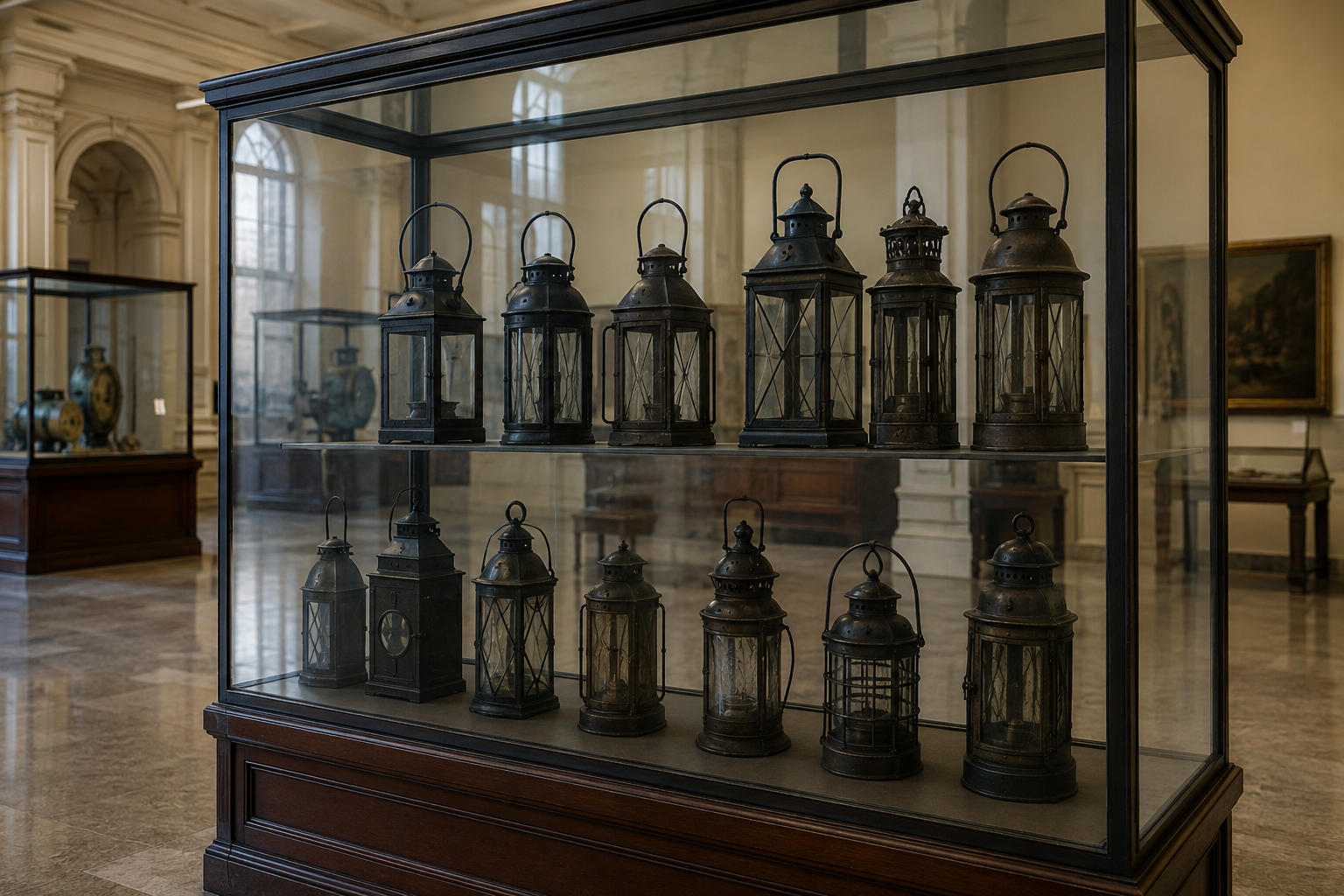
But it does not make the account worthless. Weird local history is often about the moment an object seems to remember its job. A lantern that once signaled in darkness appeared to signal again, in a locked case, after the practical world had moved on.
Maybe the photo caught nothing but glare.
Maybe the dark reflection was a volunteer stepping out of frame.
Even then, the image people describe remains hard to shake: a row of dead railroad lanterns, one small amber glow where no bulb was supposed to be, and a dark shape in the glass like someone waiting for the signal to mean go.
Reader Context
This Weird Witnessed story is an editorial reconstruction, written as eerie visual storytelling rather than a verified report. For more context, see How to Read Weird Witnessed Stories and How WeirdWitnessed Creates Reconstructed Horror Stories.