The Feed That Started The Talk
The orchard drain creature story did not begin as a monster story. It began as a practical complaint about missing feed.
That matters because rural people usually reach for ordinary explanations first. Torn bags suggest raccoons. Missing grain suggests rats, possums, deer, or a loose dog. A broken latch is more likely than a mystery.
In this case, feed bags near a small orchard shed had been disturbed more than once. Some were dragged off the pallet. Some were split low on the side. A trail of spilled grain led away from the shed toward the wetter part of the property.
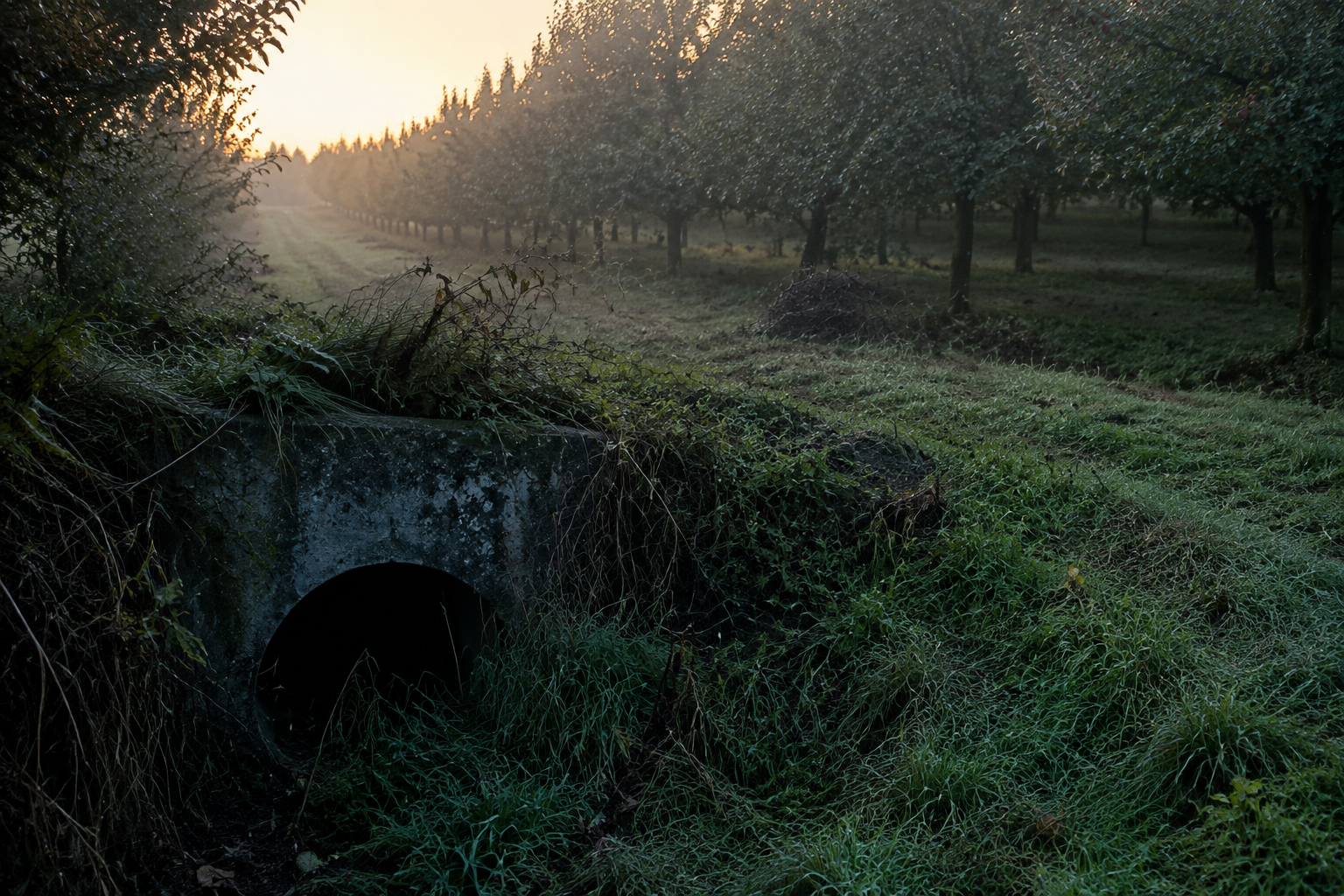
The old drain sat there, half-hidden by grass and roots, where runoff passed under a narrow lane between rows.
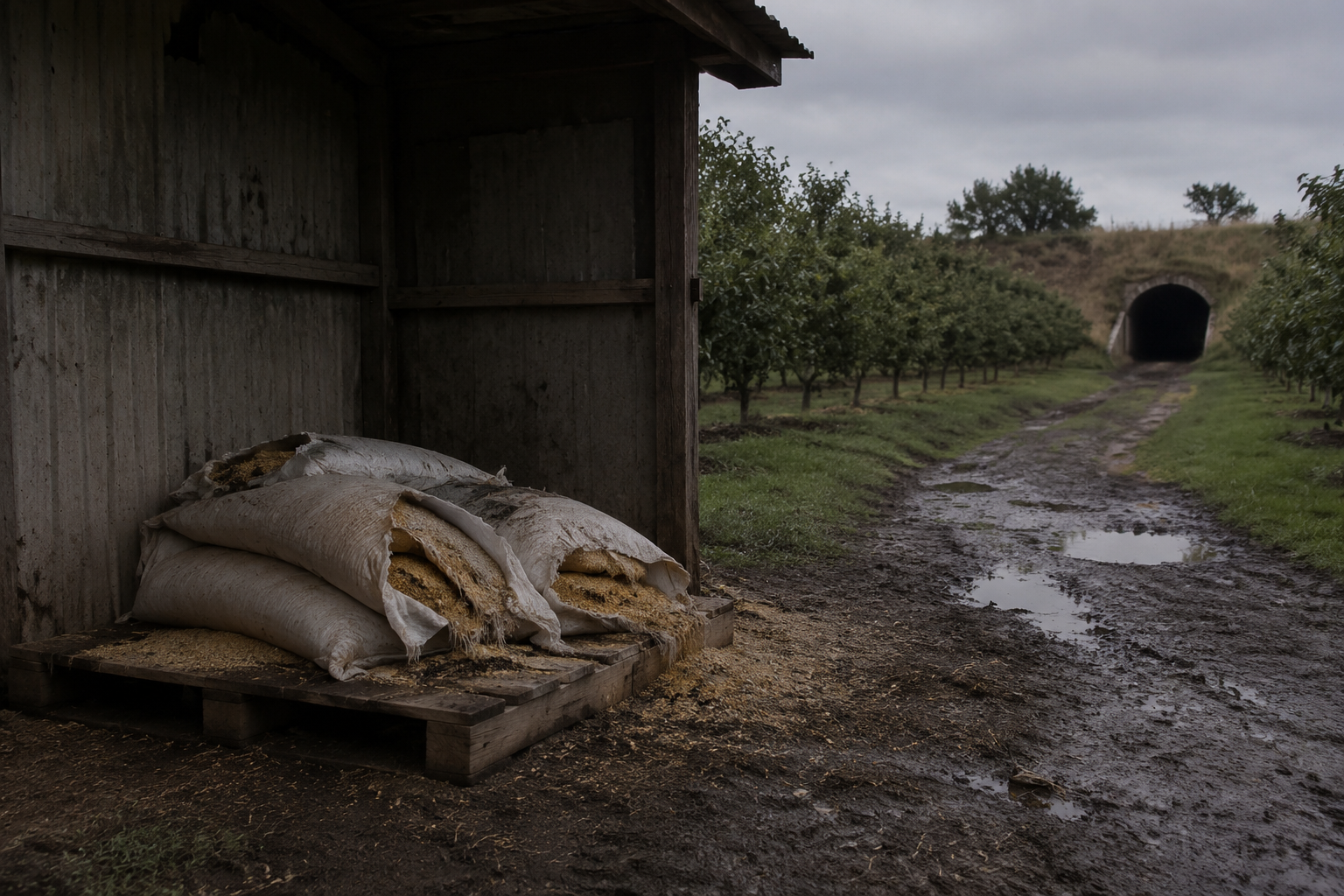
At first, it was just the place where the mess seemed to point.
Only later did it become the center of the story.
Why Missing Feed Was Not Strange
A farm or orchard with feed on site will always attract animals. That is not mysterious. A closed bag is not much protection against teeth, claws, and patience.
Raccoons are clever. Possums are opportunistic. Coyotes will investigate a strong smell. Feral cats and stray dogs can make a surprising mess.
So the orchard owner reportedly did what most people would do. They cleaned up, checked the shed, tried to secure the bags, and watched for obvious tracks.
For a while, the explanation held. Something was taking feed. Something was probably passing through near the drain. There was no need to turn it into anything larger.
The story changed because the pattern kept repeating after the easy fixes.
The bags were moved again. The spilled trail returned. The ground near the culvert was marked in ways that did not match the clean prints people expected.
That is when neighbors started hearing about the orchard drain.
The Old Culvert Under The Rows
The drain was not a dramatic cave or a huge storm tunnel. It was an ordinary concrete culvert, low enough to make a person crouch and narrow enough to feel unpleasant even in daylight.
In dry weather, it was mostly empty. After rain, water moved through it with leaves, silt, and orchard debris. The weeds around the opening grew thick because the soil stayed damp.
Animals use places like that constantly. A culvert offers shade, cover, and a path under obstacles. It can become a wildlife route without anyone noticing until something nearby goes missing.
That should make the story less strange, not more.
But the witnesses described a feeling that the drain was being used regularly. Grass at the mouth of it was flattened. Bits of feed appeared close to the opening. Mud was smeared on the concrete lip.
None of this confirms an unknown animal. Together, it made the drain feel like more than a background detail.
The Marks In The Mud
Tracks are less reliable than people want them to be. Mud collapses. Rain stretches edges. One animal stepping over another can create a shape that looks new.
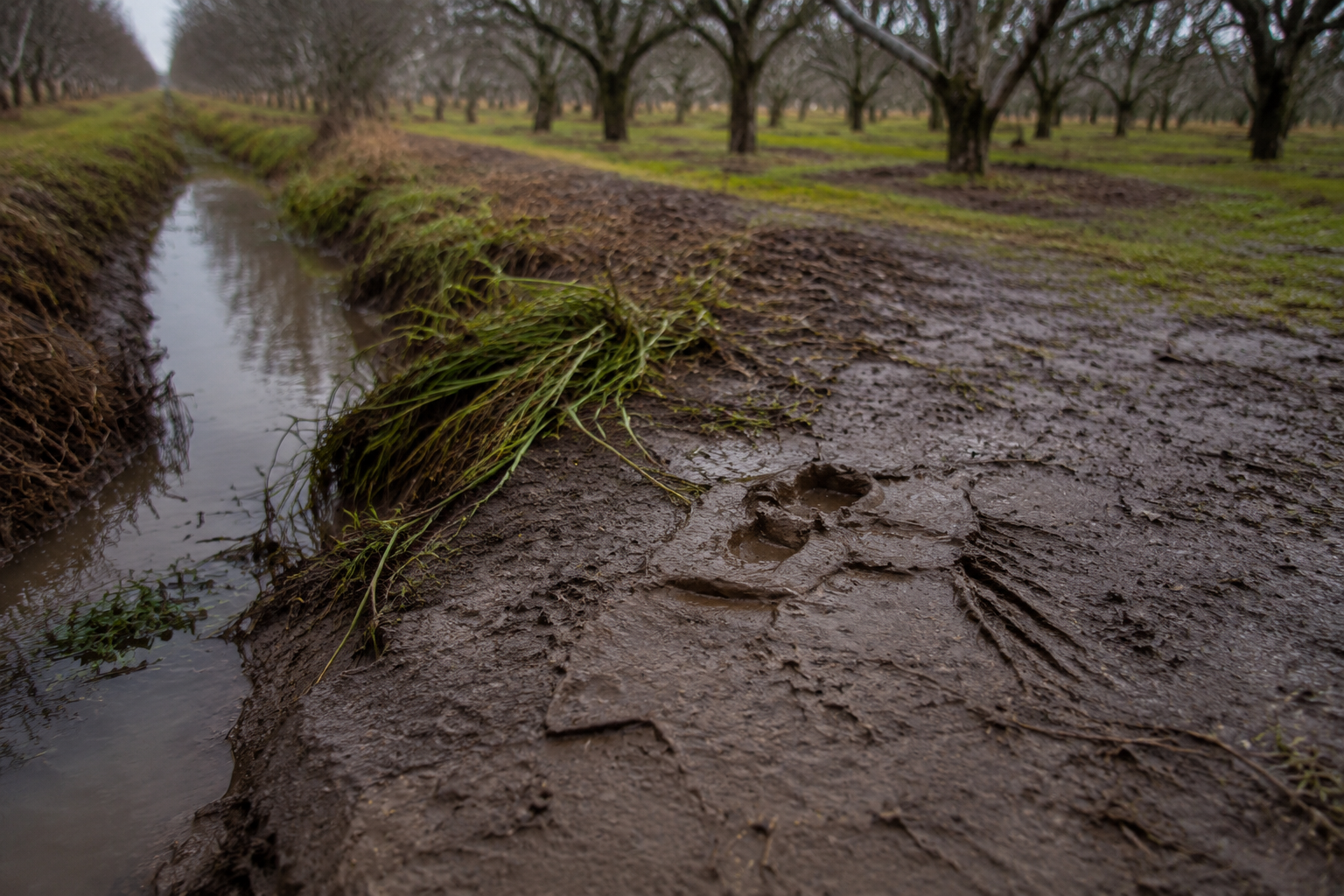
That caution is necessary here. The marks by the orchard drain were not clear, perfect prints. They were partial impressions in damp ground, mixed with scuffs and drag lines.
Still, the people who saw them reportedly felt they were not looking at the usual raccoon or dog pattern. Some impressions seemed longer than expected. Some pressed deep at the front. There were scratch marks where the animal appeared to have turned or pushed off.
The strangest detail was not one footprint. It was the movement pattern.
The trail did not look like a neat four-footed walk from shed to ditch. It looked interrupted, as if something had moved low, paused, dragged or carried feed, and then slipped into cover.
A raccoon hauling torn packaging could do that. A possum dragging a bag corner could do it too. More than one animal feeding in the same place could confuse everything.
But confusing marks are exactly what keep scary reconstructed moments alive.
The Brief Glimpse Near The Drain
The account’s most unsettling moment came early one morning, when someone checking the shed saw movement near the culvert.
The description was cautious. The witness did not claim a giant beast or glowing eyes. They described a low shape near the drain, pale or gray in the dawn light, moving quickly enough that it was gone before they could identify it.
That could be many things. A possum can look pale. A wet dog can look wrong in half-light. A raccoon seen from an odd angle can seem larger or flatter than expected.
Fog, sleepiness, and the narrow view between orchard rows can distort size.
But the witness reportedly insisted on one point: it did not move the way they expected the usual orchard animals to move.
It was low, fast, and close to the ground, but not bounding in the familiar raccoon way. It slipped more than it ran.
Then it was at the drain, and then it was gone.
That is not proof. It is a glimpse. But a glimpse in the right place can change how people read every sign that came before it.
Why The Creature Story Took Hold
The story spread because it balanced between nuisance and unknown.
If only feed had gone missing, it would have stayed a pest problem. If only someone had seen a strange shape once, it could have been dismissed as bad light.
Instead, the account joined three things: repeated missing feed, unusual activity around the drain, and one brief look at something no one could comfortably name.
That combination lets people argue both sides. The skeptical neighbor can point to raccoons and mud. The uneasy witness can point to the drain and say the raccoon explanation does not cover everything.
This is why the story fits a cautious WeirdWitnessed frame. It does not need to declare a new species under the trees. It only needs to preserve the uncertainty people on the property felt.
They were not trying to turn a feed bill into folklore. They were trying to explain why a familiar problem suddenly felt unfamiliar.
Ordinary Animals Still Matter
A fair reading should give ordinary animals plenty of room.
Raccoons remain one of the strongest possibilities. They are smart, active at night, comfortable around human structures, and strong for their size. They can drag feed, tear bags, use culverts, and leave messy tracks.
Possums are another possibility, especially if the pale glimpse was accurate. In poor light, a large possum can look strangely low and unfinished, almost like a moving bundle of gray cloth.
A fox with mange, a stray dog, or a coyote could also create an unsettling impression.
Even a combination of animals could explain the evidence better than one creature. Raccoons might tear the bags, and rodents might scatter grain.
None of those explanations should be ignored.
The reason the story remains interesting is not that normal animals are impossible. It is that the witnesses knew the normal animals well enough to feel dissatisfied.
The Drain As A Hiding Place
Culverts make good mystery engines because they hide endings.
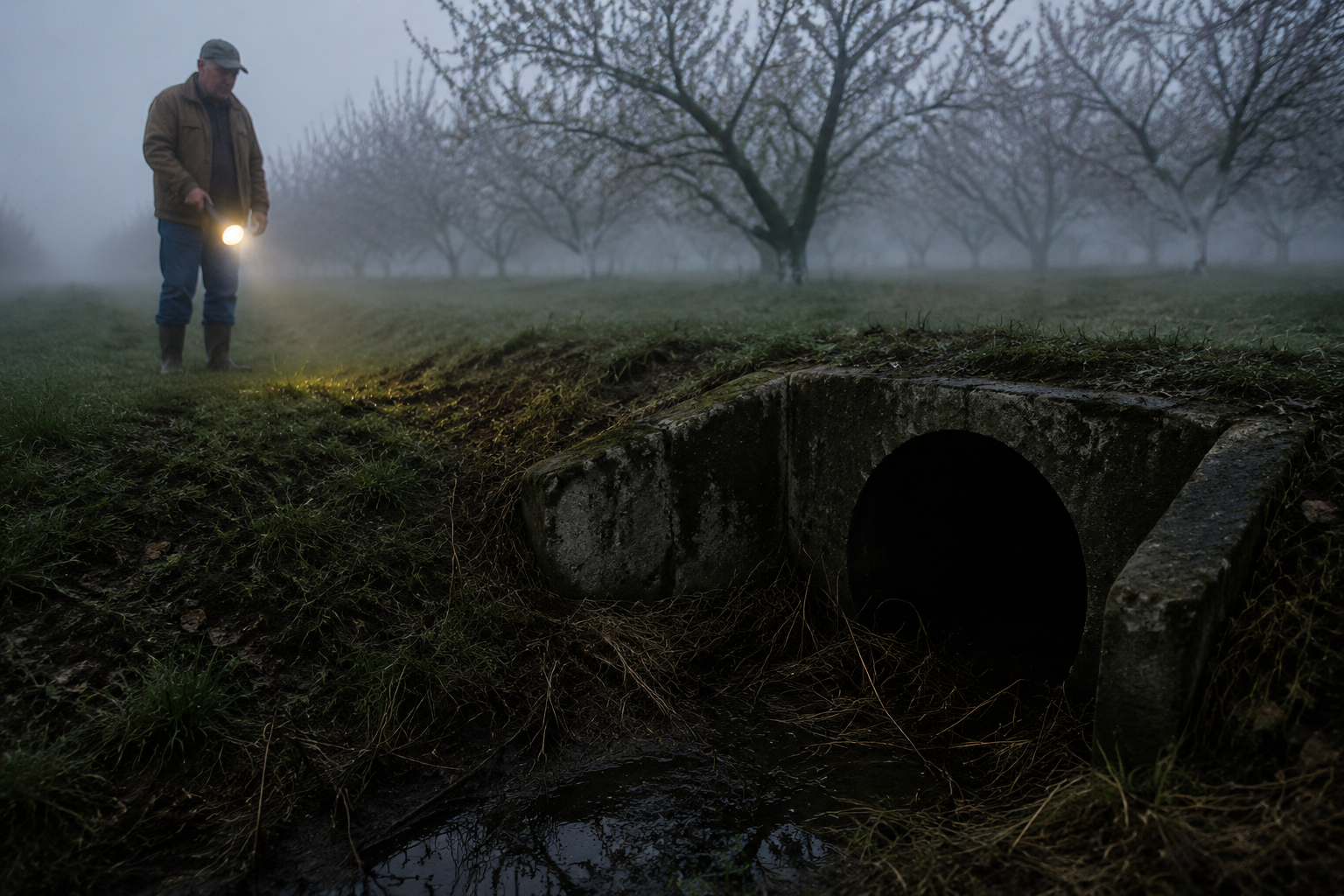
When an animal disappears into brush, a person can imagine where it went. When it slips into a dark concrete opening, the story stops at a black rectangle.
The orchard drain also connected parts of the property. It was a route under the lane and into low ground beyond the rows. Something using it could avoid open areas and appear near the shed without crossing the most visible paths.
That practical detail helps the ordinary explanation and the strange one at the same time.
A raccoon would use the drain because it is useful. An unknown animal would use it for the same reason. The setting does not choose between them.
What it does provide is a strong visual center: torn feed at one end, wet ground in the middle, dark culvert at the other.
Anyone hearing the account can picture the path.
What Makes The Story Worth Keeping
The orchard drain creature account does not prove a hidden animal was living under the trees. It does not prove anything that large.
It is worth keeping because it captures the moment when people who know a place well admit that one explanation is not quite enough.
The missing feed was real enough to be annoying. The marks were real enough to make people look twice. The glimpse was brief enough to remain uncertain, but sharp enough to change the tone of the problem.
That is where many rural unknown creature stories live. They begin with chores, weather, feed sacks, and a place on the property everyone has passed a hundred times.
Then one morning, the drain looks different.
Maybe the visitor was a raccoon with perfect timing. Maybe it was a pale possum in bad light. Maybe several ordinary animals accidentally built a strange story together.
Or maybe something less familiar found a useful path through the old culvert and left just enough behind to make people wonder.
The careful answer is that no one can say for certain from the account alone. The honest reason the story is still being told is simpler: after the feed was replaced and the mud dried, the orchard drain no longer felt empty.
Reader Context
This Weird Witnessed story is an editorial reconstruction, written as eerie visual storytelling rather than a verified report. For more context, see Creatures, Crawlers, and Cryptid Stories Guide and How WeirdWitnessed Creates Reconstructed Horror Stories.