The Room Below the Stage
The Orpheum’s public ghost stories usually stay upstairs, where velvet seats face the dark stage and the balcony feels too alert after the house lights go down. Those stories are easier to tell because people can picture them. They know what a theater looks like when empty.
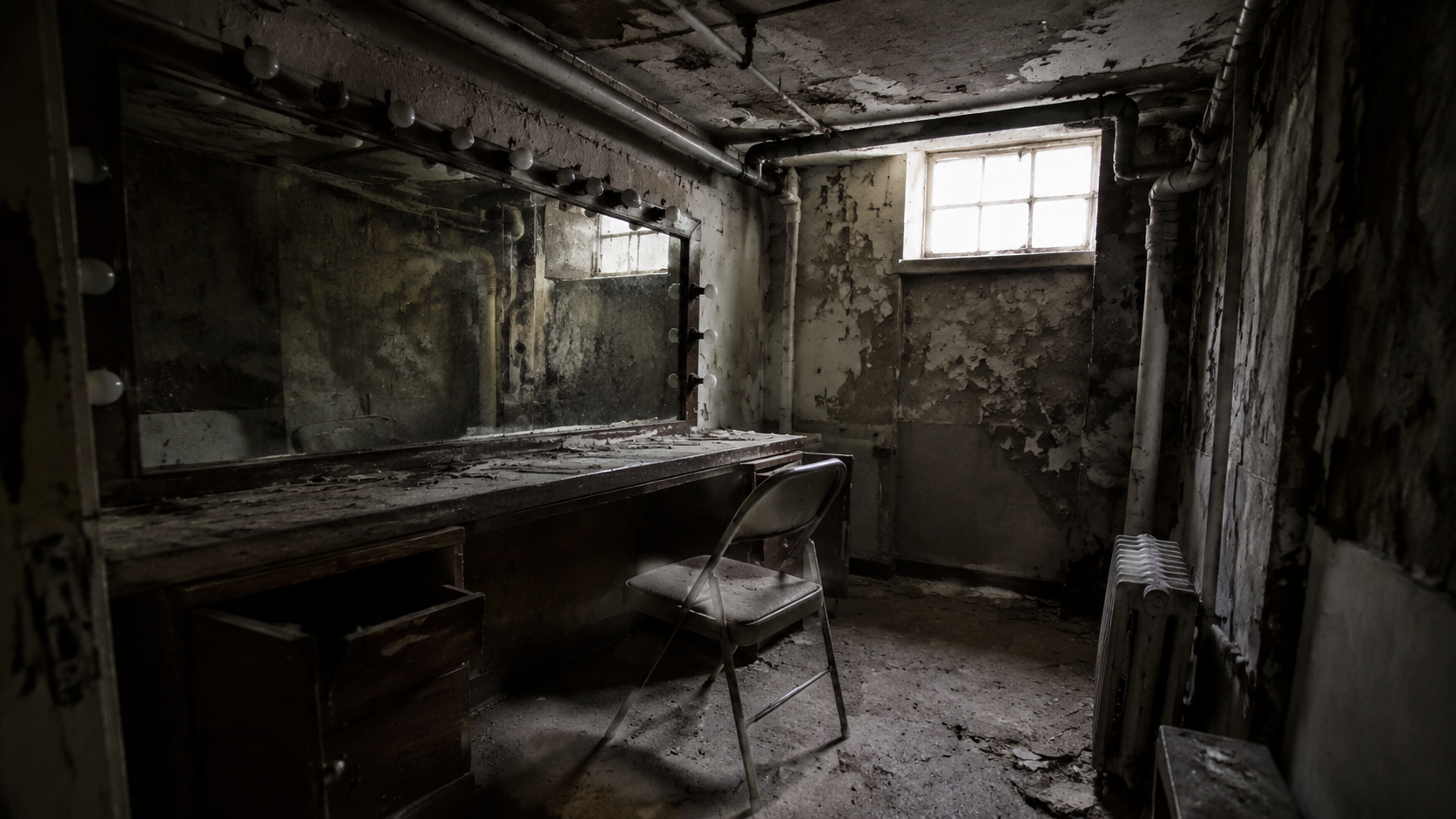
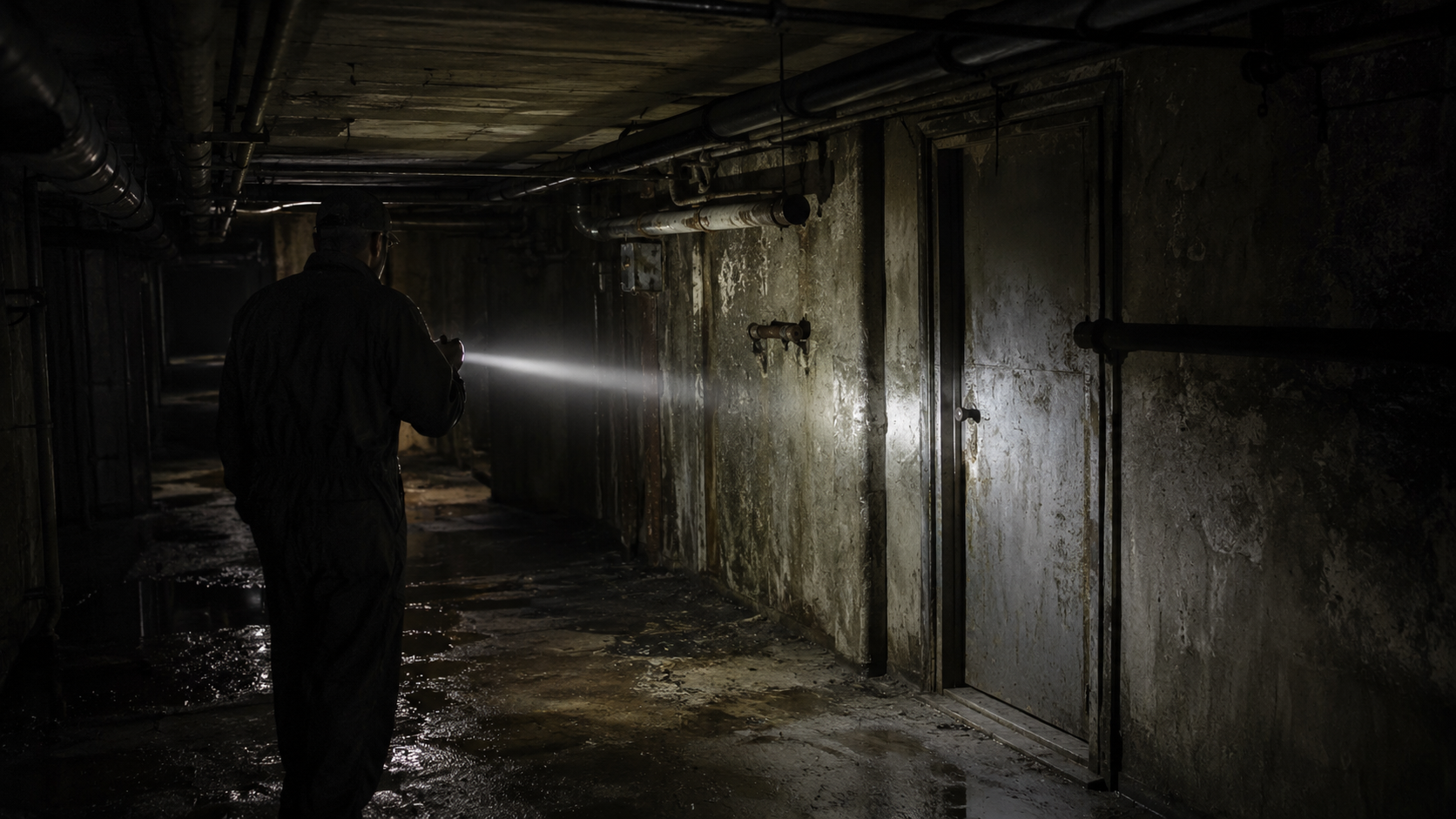
The sub-basement dressing room is harder to place. It sits below the level most visitors ever reached, past service doors and utility runs, under the clean geometry of the auditorium. It was meant for quick changes, storage, waiting, and the private fatigue between appearances.
That may be why the room’s reputation has lasted. It is not a grand haunted chamber. It is a low, practical space with a mirror, a narrow counter, exposed pipework, and a ceiling that makes tall people lower their heads. Yet workers have described it with the same careful phrase for years: it feels occupied.
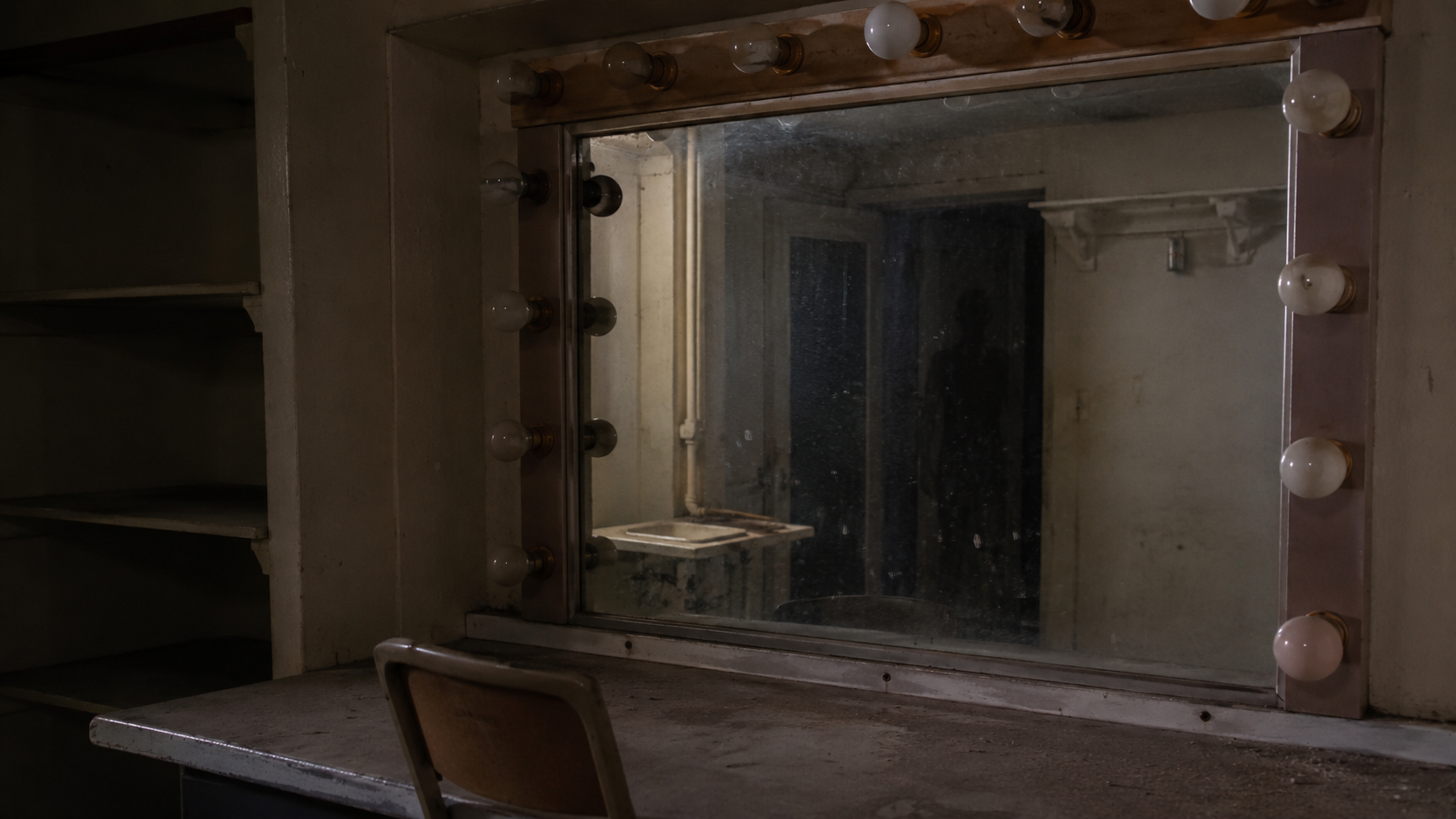
The claim would be easy to file away as theater folklore if not for two details. The mirror bulbs have reportedly glowed on a circuit listed as dead. And in one maintenance photograph, a dark human-shaped figure appears at the edge of the mirror, where no one remembers standing.
A Dressing Room With No Audience
The Orpheum closed in stages: shorter seasons, private events, then long quiet periods broken only by inspections and repair estimates. By the time the sub-basement dressing room began circulating in local conversation, the room had lost its ordinary purpose.
No one was applying makeup there. No one was hanging costumes on the bent hooks fixed to the wall. The chair under the vanity had become less like furniture and more like evidence that the room had stopped mid-sentence.
Basement rooms in theaters collect odd impressions even without a ghost attached. They hold heat strangely, amplify plumbing knocks, and smell of dust, damp concrete, old cosmetics, and electrical insulation.
Still, people who have entered this room describe something more specific than unease. They mention the sense of interrupting a private routine. Not being watched from a corner, exactly. More like arriving a moment after someone has turned away from the mirror.
The Dead Circuit Problem
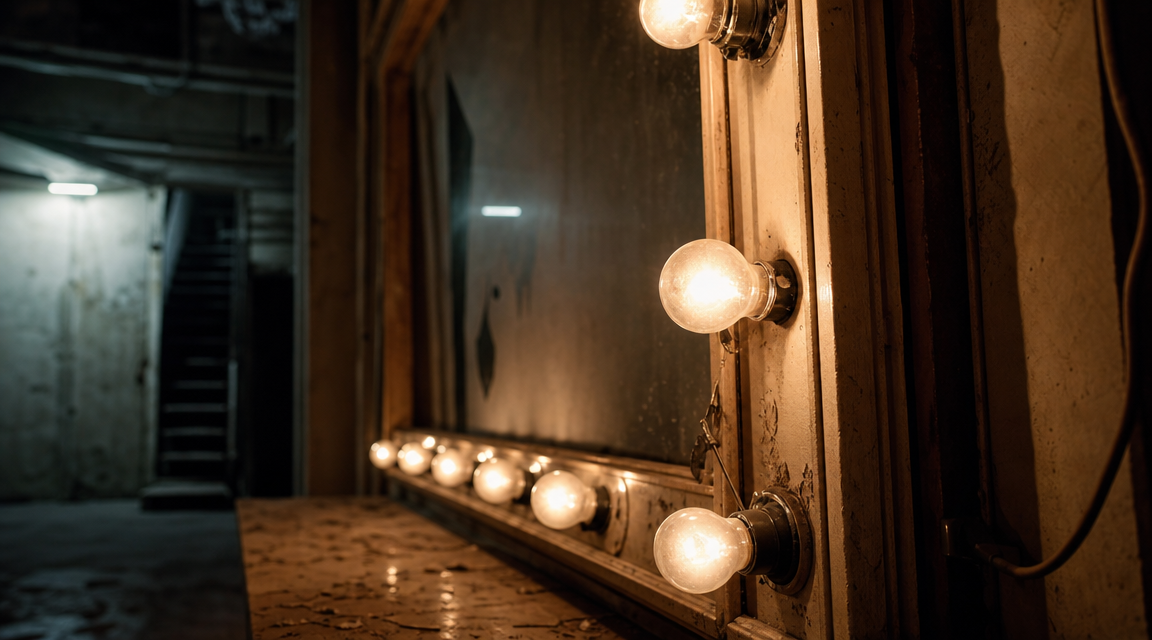
The mirror is the central object because it is the only part of the room that seems to behave with intention. It is bordered by round bulbs meant to throw clean light across a performer’s face. Most are dusty. Some are missing. A few sit loose in their sockets.
According to accounts tied to maintenance work, that vanity circuit was checked and marked inactive during an electrical survey. The breaker feeding it was not simply switched off. It was treated as dead, part of a set of abandoned runs left in place because removal would require opening more wall than the budget allowed.
Then, during a later walkthrough, several bulbs were said to glow.
Not flare. Not flicker like a short caught at the exact right moment. Glow is the word that keeps appearing. A weak amber light, enough to outline the mirror and catch the dust on the counter, but not enough to fill the room.
There are possible explanations. Old buildings are full of mislabeled circuits, borrowed neutrals, backfeed, emergency lighting modifications, and undocumented repairs. In a century-old performance venue, a panel schedule can be more suggestion than map.
But the reports remain uncomfortable because the glow was not easily repeated. When the circuit was tested again, the bulbs did not respond in a normal, reliable way. The room returned to darkness, and the documentation returned to saying what it had said before: no active feed.
The Maintenance Photo
The photograph did not begin as ghost evidence. That matters. It was reportedly taken for maintenance reasons: to document the vanity wall, mirror, and wiring around the bulbs. It shows the dressing room from a practical angle, the sort of image taken quickly before moving on.
In the photo, the mirror catches more of the room than intended. Along the edge of the reflection is a dark vertical shape with the rough proportions of a person. It has no face, no raised arm, none of the theater common to alleged apparitions.
That restraint is part of what makes the image difficult to dismiss for those who have seen it. The figure is not centered. It is not posed. It seems almost incidental, as if the camera only barely caught someone standing near the margin.
Skeptics have reasonable options. It could be the photographer’s body distorted by the mirror. It could be a coat, a pipe shadow, or materials reflected from an angle that flattens them into a human outline. Basement photographs often confuse depth and shape.
Even so, the photo changed the way people talked about the room. Before it, the dressing room was a place with a bad feeling and a strange electrical note. After it, the room had an implied occupant.
Why Mirrors Make It Worse
Mirrors in abandoned dressing rooms carry a particular charge because they preserve the idea of performance without the performer. They were built for scrutiny, asking a person to study a face before stepping into public light.
In a dead theater, that function turns inward. The mirror no longer prepares anyone for an audience. It reflects pipes, dust, a low ceiling, and the person who should probably not be standing there alone.
This may explain why the Orpheum room feels more intimate than other haunted places in the building. A stage ghost belongs to spectacle. A dressing room presence feels private, almost embarrassed by attention.
People who enter often mention the mirror before the air, smell, or darkness. They describe avoiding their own reflection while checking the counter. They describe the glass as holding a second version of the room, fractionally behind the real one.
None of that proves anything supernatural. It does show how a simple object can organize fear. Once the mirror bulbs are said to glow, and once the photo is said to show a figure, the mirror stops being background. It becomes the place where the story waits.
The Sound of Someone Getting Ready
There are also quieter claims, less dramatic than the glowing bulbs but persistent. Workers have reported small sounds from inside or near the dressing room: a chair leg dragging, a tap against glass, the soft tick of a bulb cooling. These are not the booming footsteps common in theater ghost stories.
They are preparation sounds.
That distinction has shaped the local version of the haunting. The presence is rarely described as aggressive. It does not chase people up the corridor or slam the door in the better-known accounts. Instead, it gives the impression of someone continuing a routine with no show attached.
Old buildings can manufacture these details convincingly. Pipes expand. Moisture shifts wood. Rodents disturb objects. Loose fixtures settle after a door closes elsewhere in the structure. A rational investigator can build a long list before reaching for the paranormal.
But witnesses often return to timing. The noises seem to occur when someone is about to enter, or just after they have stepped away, as if the room resumes itself when attention moves elsewhere.
A Place That Resists Being Empty
The Orpheum’s sub-basement dressing room is compelling because it does not rely on a named tragedy. Many haunted places are organized around a specific death, a final performance, or an actor who never left the stage. Those stories provide a neat anchor.
This room has a looser kind of haunting. It is built from use. Hours of waiting. Repeated gestures. Makeup opened and closed. Bulbs warming the face. A performer listening for a cue through walls and pipes. The same chair, the same mirror, the same breath before going upstairs.
Places can be altered by repetition even in ordinary ways. A kitchen feels different from a storage closet because people return to it with purpose. A dressing room below a theater is a purpose-built threshold. It is neither public nor fully private, neither onstage nor away from the show.
If any kind of room would resist being empty, it might be one designed for transformation.
That does not mean the Orpheum mirror contains a spirit. It means the setting gives the reports a shape that is difficult to shake. The room seems to remember being needed.
What Can Be Said Carefully
The strongest cautious statement is this: multiple accounts point to an anomalous experience centered on the sub-basement dressing room mirror, including reported bulb activity on a dead circuit and an ambiguous figure in a maintenance photograph. Neither detail, by itself, proves a haunting.
The electrical issue deserves technical scrutiny before supernatural conclusions. The photograph deserves examination in its original resolution, with information about lighting, camera position, and every object in the room. Without that, certainty would be dishonest.
But haunted places often begin in exactly this gap between explanation and atmosphere. Something ordinary fails to behave. A picture includes more than expected. A room that should feel abandoned instead feels paused.
The Orpheum dressing room remains unsettling because it offers so little drama and so much implication. No grand apparition on the stage. No message in dust. Just a mirror below the audience, bulbs that should not glow, and the possibility that someone still stands at the edge, noticed only by accident.
Reader Context
This Weird Witnessed story is an editorial reconstruction, written as eerie visual storytelling rather than a verified report. For more context, see Apparitions and Hauntings Guide and How WeirdWitnessed Creates Reconstructed Horror Stories.