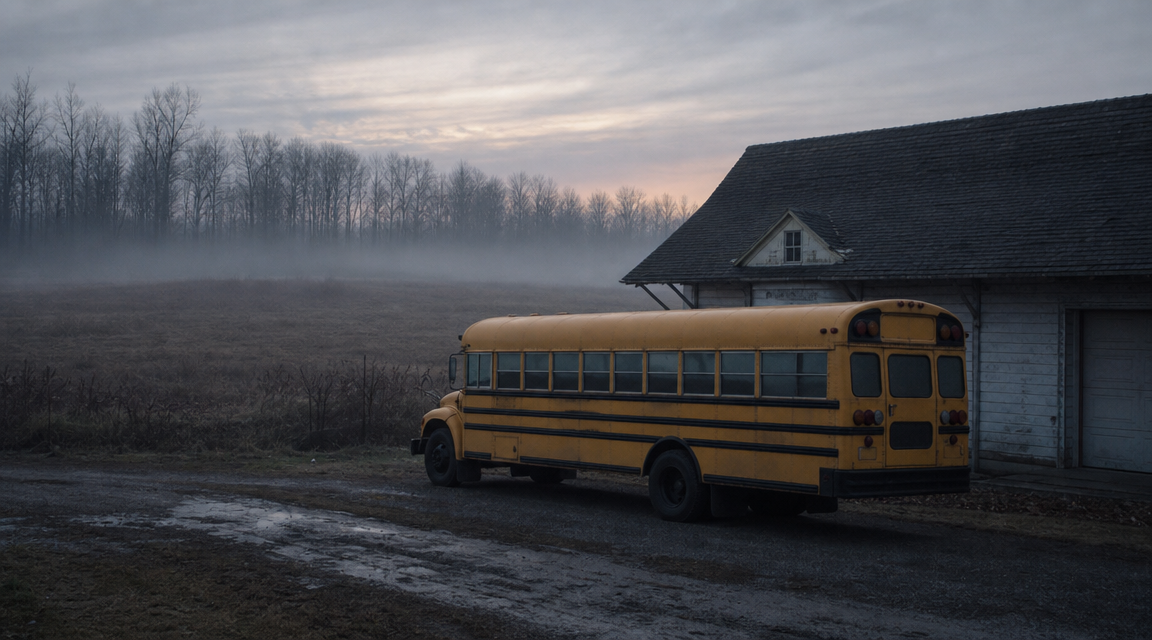
The Morning Silverton Could Not File Away
Silverton’s school bus story survived because it was not dramatic in the usual way. No one was declared missing. No search teams combed the woods. By lunch, every child who belonged at school was said to be in class.
That ordinary safety is part of what made the record stubborn. The bus came back empty. Its driver said he had only been gone a little while. The depot clock and the school office did not quite agree.
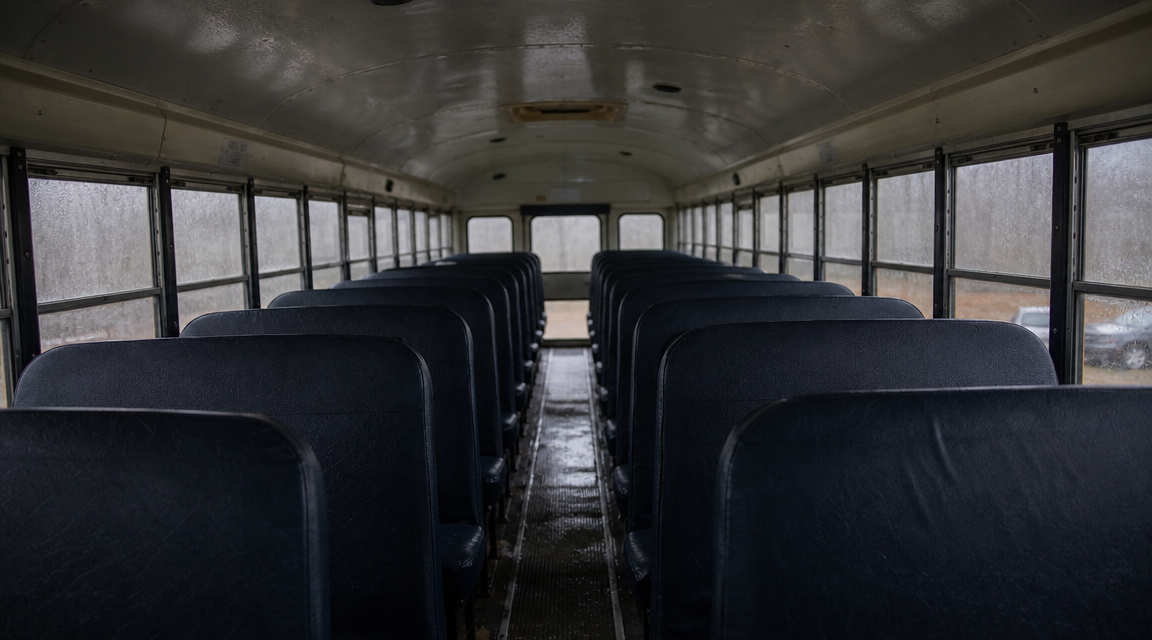
Then there was the water. It was not spilled milk, not rain tracked in on boots, and not the usual damp breath on cold windows. The seats were wet enough for a mechanic to notice water in the seams.
People in Silverton learned to tell the story carefully. It was never a ghost story, exactly. It was a transportation incident, remembered by adults who disliked how their own memories sounded aloud.
A Short Route With No River Crossing
The route served the western edge of the district, a loop of farms, rented houses, and two gravel lanes that met the county road near the old feed store. On a clear morning, it took less than thirty minutes.
More importantly, it never crossed the river.
The Silverton River curved south of town, close enough to appear on district maps but not close enough to matter for that bus. The western route passed a ditch, two culverts, and a pond behind a dairy barn. None of them could soak a bus interior with moving water.
That detail limited the normal explanations. A roof vent could leak. A child could carry in a wet coat. But damp middle rows and a river smell in the aisle suggested something larger than bad weather.
The morning was cool and gray, but not stormy. Rain had fallen overnight. Still, the driver’s note listed good visibility.
The Driver’s Return
The driver, usually called Mr. Hanley in later accounts, was not known as an excitable man. He was a veteran route driver, a church usher, and the sort of person parents trusted because he complained mostly about potholes.
According to a former depot clerk, Hanley pulled out just after seven. He expected eight stops and an ordinary arrival before first bell. Instead, he returned before anyone expected to see him again.
The bus rolled in slowly, lights off, and stopped crookedly near the wash bay. Hanley sat behind the wheel for several seconds before opening the door.
Asked what was wrong, he reportedly said, “They’re not on the bus.”
The clerk thought he meant the children had not been picked up. Hanley’s answer did not settle it. He remembered the first mailbox. He remembered waving at a woman with a feed bucket. After that, his account thinned. There was fog in a low place, though no one else remembered fog there that morning. Then he was approaching the depot again.
The odometer showed some travel, but not enough to prove the whole loop.

The Seats Were Wet
The first physical fact anyone agreed on was the wetness.
A school bus after rain can be a damp place. Children drag water on shoes, lean umbrellas against seat legs, and press sleeves to windows. But Silverton’s bus had not delivered its passengers, at least according to the driver. If the children never boarded, the wet seats should not have been there. If they boarded, the empty bus made less sense.
The wettest areas were reportedly in the middle rows and toward the rear, where children usually sat by habit. The vinyl looked darkened. The floor grooves held thin lines of water. One seat frame showed muddy droplets, as if spray had risen from below.
No surviving document proves the water came from the Silverton River. Later tellings sometimes claim it was tested, but that appears to be embellishment. Older witnesses said only that it smelled like river water, with the mineral and leaf-rot odor locals recognized.
That was enough to trouble people who knew the map.
Attendance Said the Children Were Present
While the depot tried to understand the empty bus, the school office was collecting attendance slips.
By midmorning, every child assigned to Hanley’s route was marked present. Not late. Not absent and corrected later. Present. A few teachers remembered the children entering with the morning crowd, although none could say they watched them step off Hanley’s bus.
This is where the story resists a single mistake. If another vehicle brought the children, parents should have known. If Hanley completed the route, he should have remembered it, and the depot should not have logged his early return. If the attendance sheets were wrong, at least one classroom should have noticed.
Instead, the children behaved as if nothing unusual had happened. Some later said they remembered the ride. Others seemed to remember being at school without a clear ride at all. Those answers are impossible to separate from suggestion and the soft unreliability of childhood memory.
No child described danger. No child described water entering the bus. That absence remains the most merciful part of the account.
The Bus No One Remembered
The phrase that followed the incident was not “the missing children.” It was “the bus no one remembered.”
Parents remembered sending children out the door. Some recalled hearing an engine. A few insisted they saw yellow paint through kitchen curtains at the expected time. But when pressed, they could not agree on whether it was Hanley’s bus, another district bus, or simply the memory of every school morning filling the gap.
The children were less useful as witnesses than adults wanted. They knew they had gone to school. They knew their coats were on hooks. They knew lunch boxes had arrived. The specific vehicle blurred.
One girl was said to have told her mother the bus was “quieter than usual.” A boy complained of damp socks, though he lived near a muddy lane. Another child said the windows were “white,” a phrase later retold as fog, steam, or river mist.
None of those fragments proves much. Together, they formed the kind of local unease that does not need proof to survive.
Clocks, Mileage, and the Impossible Interval
The impossible interval is often exaggerated, so it deserves caution.
Hanley did not return five minutes after leaving, as some versions claim. The best reconstruction suggests fifteen to twenty minutes, though even that depends on whose clock is trusted. Rural offices were not synchronized with precision. A wall clock could lose time all winter and nobody cared until payroll.
Still, several people noticed the mismatch. The depot thought the bus came back too soon to have completed the route. The school believed the children arrived in the normal window. The mileage suggested movement, but not the expected movement.
Enough road had passed under the tires for the bus to have gone somewhere. Not enough had passed for it to have gone everywhere it needed to go.
Mechanical error or misreading could explain that. But the odometer was not alone. It was one imperfect fact among several, none conclusive by itself, all uncomfortable together.
Explanations That Almost Work
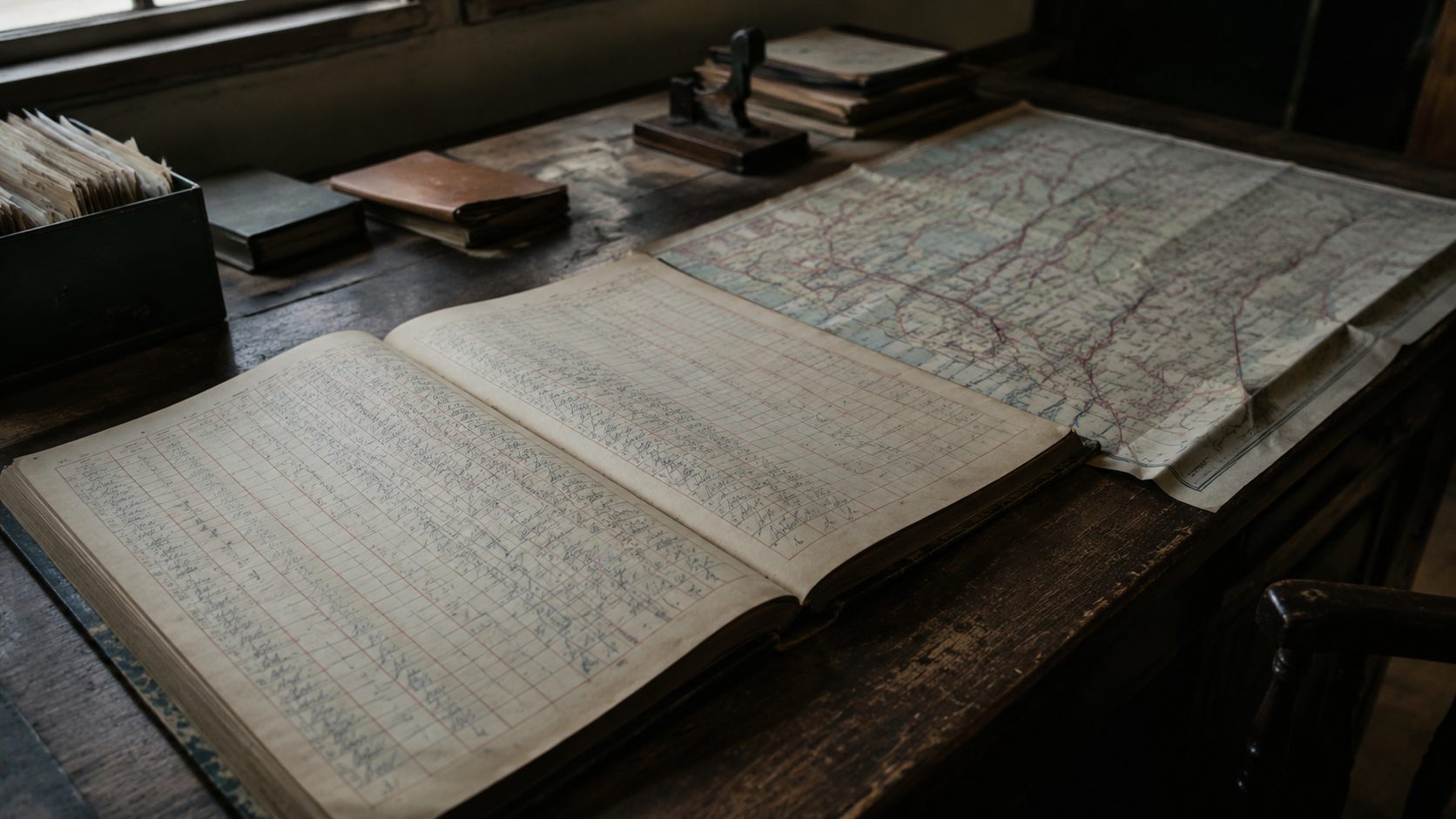
The simplest explanation is administrative confusion. Perhaps another bus picked up the children after a dispatch mistake, while Hanley experienced a brief medical episode or moment of disorientation. The wet seats might have come from a leak, a cleaning bucket, or rain blown in through a rear door.
That theory is possible. It also requires several mistakes to happen neatly at once, then leave behind no corrective paperwork anyone remembered.
Another explanation is that Hanley completed the route and forgot it. Brief amnesia, stress, or a small seizure could account for his gap. If the children tracked in enough water, the bus might have looked stranger than it was. Attendance would be normal because the morning was normal.
But people who saw the bus said the wetness was too heavy, and the timing too compressed. Memory may have inflated both. That is always a risk with stories kept in kitchens, garages, and school offices after hours.
A third possibility is that the mystery formed later. A wet bus, a confused driver, and ordinary attendance may have joined together in local memory. Silverton may have built an impossible morning out of badly kept records and the human need for shape.
That explanation is sensible. It is also not quite satisfying.
Why Silverton Kept the Story
Communities keep certain stories because they mark a boundary. The Silverton bus story marked the boundary between routine and the thing underneath routine. Parents trusted the bus because they had to. Drivers trusted route sheets. Teachers trusted attendance marks. That morning, every system produced the desired result, yet the path between them looked wrong.
No tragedy forced an investigation. No official mystery demanded a solution. The children were safe, the school day continued, and the bus was eventually dried out and returned to service. That may be why the event remained hard to explain. Nothing catastrophic happened to justify the unease.
Instead, Silverton was left with mismatched facts: a driver with a gap in his morning, an empty bus at the depot, wet seats that smelled faintly of river water, and classrooms full of children who had somehow arrived.
The story endures because it does not ask us to imagine a monster or a miracle. It asks us to imagine a familiar route bending for a short time, then straightening again before anyone was harmed.
The bus did not vanish. The children did not vanish. Only the explanation did, and it never quite came back.
Reader Context
This Weird Witnessed story is an editorial reconstruction, written as eerie visual storytelling rather than a verified report. For more context, see Camera Anomalies and Strange Images Guide and How WeirdWitnessed Creates Reconstructed Horror Stories.