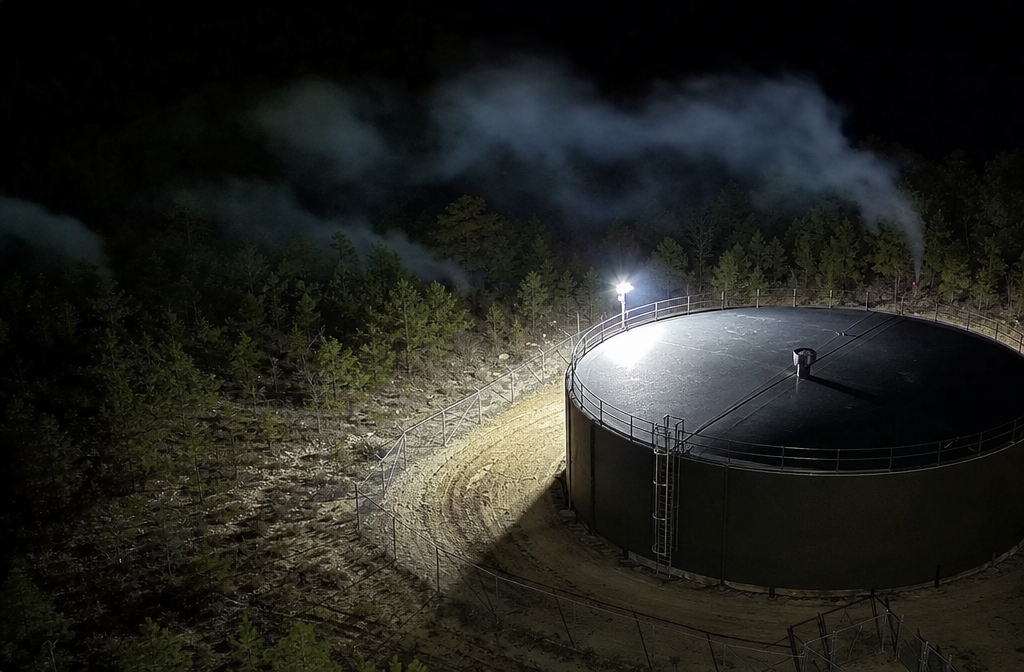
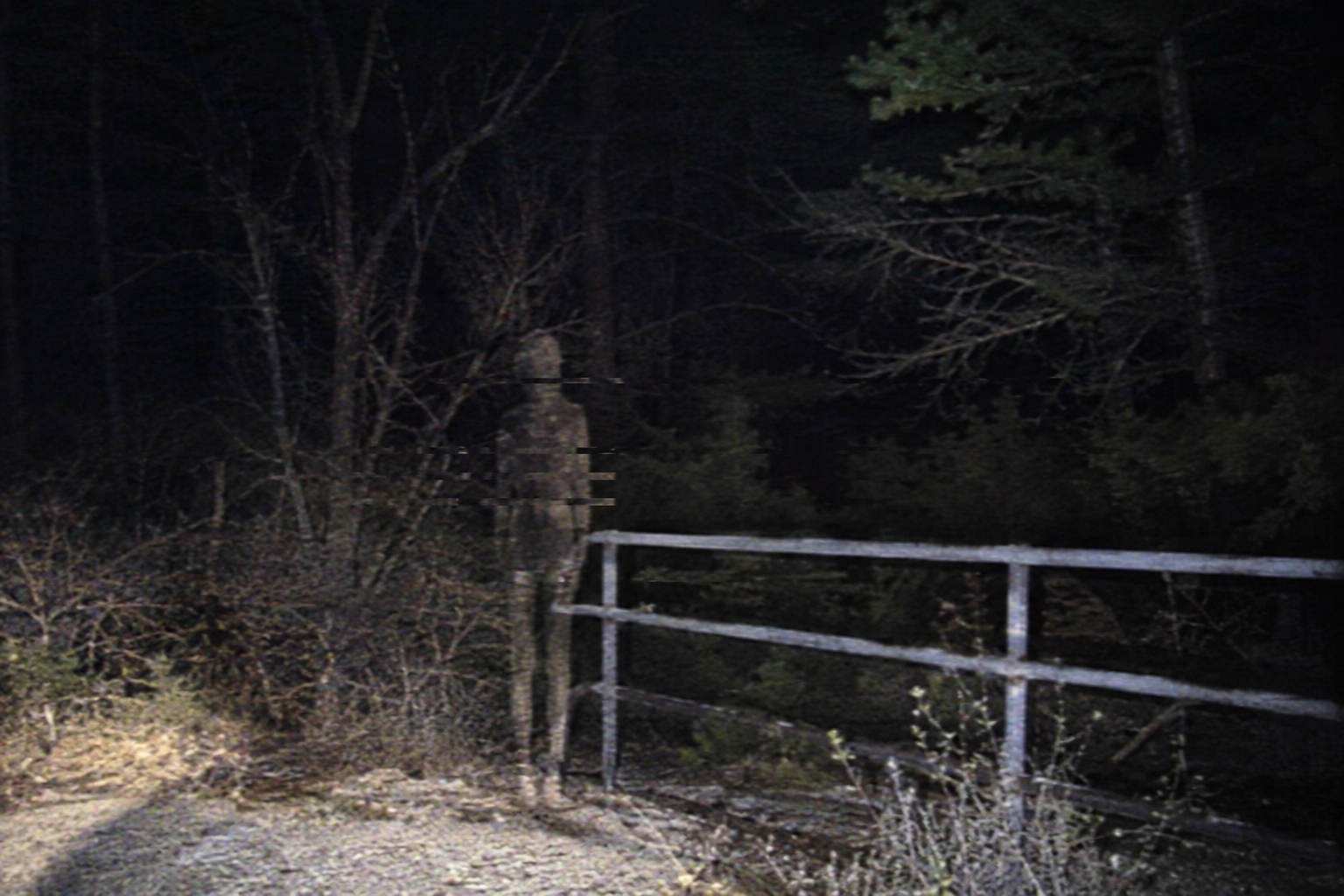
A thin figure appears beside Tank 4 at 12:37 a.m., six hours after a controlled burn in the Pine Barrens was declared contained.
That is the reason the camera images keeps getting passed around. The camera still is not cinematic. It does not show a craft, a chase through the pines, or a witness yelling into a phone. It shows a practical fire camera watching a water tank on a sandy service spur. Then the image glitches, returns, and a narrow shape is standing by the rail where no one should be.
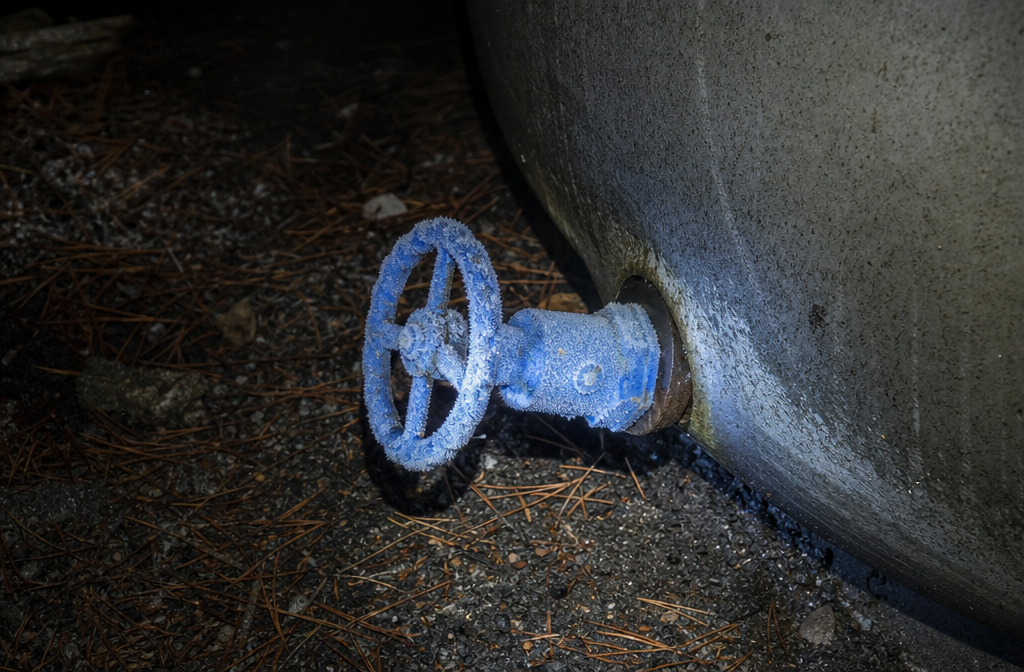
The harder part is what appears with it: one valve coated in blue-white frost, no matching vehicle on the road camera, and no human heat signature in the thermal log.
WHAT THE CAMERA SHOWS:
- Tank 4 had been left online after a prescribed burn west of Chatsworth.
- The last brush truck reportedly left the spur at 9:02 p.m.
- At 12:37 a.m., the camera file tore into pale horizontal bands for eleven seconds.
- When the frame stabilized, a thin visitor-like shape stood beside the east rail.
- One lower valve showed bright frost while nearby metal stayed only damp.
- Thermal and access-road systems recorded no matching person or vehicle.
1. The Figure Appears Only After the Glitch
The most important sequence is simple. Before 12:37, the camera shows a water tank, blackened pines, low smoke, and the dull orange points of buried embers.
At 12:37:18, the picture breaks. The tank rail doubles. The tree line leans. Three pale bands cut through the frame as if the sensor has been dragged sideways through light.
When the camera returns, the thin figure is already present.
It does not walk in from the access road. It does not cross the open sand. It is just there, slightly behind the east valve assembly, angled toward the tank like it is studying the fittings.
2. The Frost Is on One Valve Only
The blue-white frost is the detail that keeps the case from being dismissed as just a bad camera file frame.
In the clearest still, the lower east valve looks colder than anything else in the scene. The handle, stem, and cap show a bright granular crust. The rail beside it is not frosted. The ladder rungs are not frosted. The hose coupling is not frosted.
That matters because a camera artifact should not choose one physical fitting and leave the metal around it looking ordinary.
The weather was not freezing. Nearby readings put the air around 47 degrees with damp, post-burn humidity. The tank water was warmer than that. Fire crews expected condensation, ash, and wet sand, not a small ring of hard cold on one valve.
3. The Thermal Log Records No Body
A fire camera can lie. Thermal monitoring is harder to ignore, especially when it was aimed at the same approach corridor.
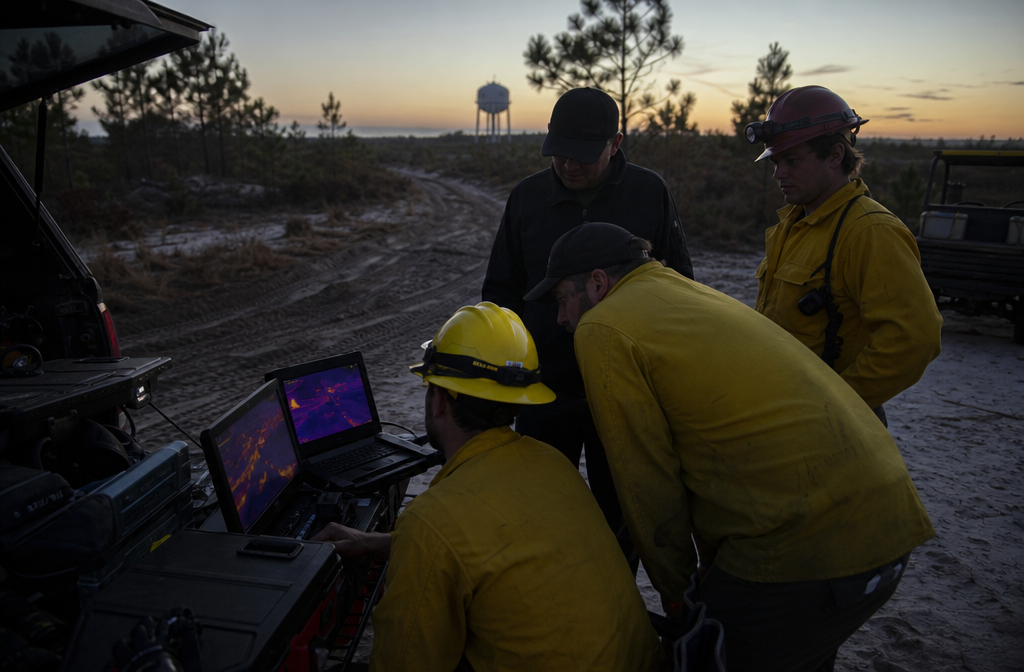
The perimeter unit was there to catch flare-ups, trespassers, and hot spots in stump holes. It did its normal job most of the night. It marked residual heat in the burn scar. It registered small animals moving through the brush.
It did not register a person walking to Tank 4.
But the system did show a brief noise spike during the camera glitch. It happened in the same window when the camera file tore and the figure appeared. The log then returned to normal, as if something had interfered without leaving a warm body behind.
For skeptics, that is a coincidence. For believers, it is the whole case in one timestamp.
4. No Vehicle Reaches the Tank Road
The access-road camera gives the story another problem.
If a firefighter, local trespasser, or curious observer reached Tank 4 after midnight, the easiest route was the sandy spur used by brush trucks. That road was narrow, open, and watched by a separate camera left in place after the burn.
The log shows raccoons. It shows drifting smoke. It shows a loose sheet of ash lifting and sliding across the road in the wind.
It does not show headlights, an ATV lamp, a bicycle light, or a person with a flashlight.
The ground around the tank was soft enough to hold tracks. By morning, firefighters found old boot prints from the evening crew and small animal marks near a drip pan. They did not find a clean trail leading to or from the rail.
5. The Shape Does Not Match an Easy Animal Explanation
Deer, smoke, and branch shadows are the first normal explanations people reach for.
They should be considered. A deer standing behind a rail can look strange in low light. Smoke can draw a human outline for a frame or two. A leaning pine trunk can become a body if the camera glitches at the wrong moment.
The Tank 4 shape is awkward because it seems too vertical and too narrow for those answers.
Its top tapers like a small head. The shoulders slope down instead of spreading like a jacket. One possible arm hangs below the rail and appears longer than expected. The legs, if they are legs, are partly lost in the distortion near the tank base.
The height estimate is uncertain, because the shape might be closer to the camera, farther behind the rail, or partly made of digital smear. Still, it is close enough to a body to bother people and wrong enough to resist a clean identification.
The Three Oval Marks Under the Valve
The morning inspection did not produce footprints, but it did produce one small oddity beneath the east valve.
A firefighter described three clean ovals in the ash, each roughly saucer-sized, arranged in a shallow arc facing the tank. They were not boot prints. They did not show toes, tread, claws, or a heel.
The marks looked more like ash had been lifted away from the sand.
Fire scenes are messy. Water drips, falling bark, hose movement, and cooling debris can make shapes that look intentional later. Still, the ovals were under the same valve that appeared frosted in the camera images, which makes them hard to ignore.
What the Pressure Sensor Did at 12:37
Tank 4 had a pressure transducer attached because the crew wanted to monitor water availability after the burn.
The pressure log does not show a valve opening. It does not show a leak or a meaningful draw from the tank. What it shows is stranger and less useful: a tiny oscillation lasting only a few seconds during the same 12:37 window.
The weather puck mounted on the rail also briefly reported a temperature reading that made no environmental sense, then corrected itself.
Technicians can explain both as interference. That may be the right answer. But three systems stuttered together: the camera file feed, the pressure sensor, and the temperature puck. The camera images returned with the figure visible and the valve looking frozen.
The Most Reasonable Explanation Still Has Gaps
The careful explanation is camera artifact plus environmental confusion.
A glitch could create a tall smear. Smoke could add depth. A wet valve could catch moonlight or reflected infrared and look icy. Thermal monitoring could miss a person who approached from a bad angle. Footprints could be erased by firefighters walking the site after dawn.
None of that is impossible.
The issue is that every ordinary answer has to carry more than one detail. The glitch has to explain the figure without explaining the valve. The trespasser theory has to explain no heat, no road image, and no track line. That does not prove an alien visitor, but it explains why people saved the camera still.
Why This Quiet camera still Keeps Circulating
The Pine Barrens already carry a reputation for strange stories, but this one works because it is not built like a campfire legend.
There is no monster sprinting across the road. No dramatic saucer above the trees. No single witness asking to be believed.
Instead, the case depends on dull infrastructure: a burn tank, a rail, a valve, a camera, a thermal unit, and a pressure graph. The strange part happens inside a practical record that was never meant to entertain anyone.
That is why the camera still feels stubborn. It asks a small question and then refuses to answer it cleanly. What stood beside the tank? Why did the valve look frozen? Why did the systems stutter at the same moment?
The burn scar has already started to green over, and Tank 4 was later moved back to a staging yard. The east valve was reportedly removed for equipment review, a routine-sounding detail that has only made people more interested.
Maybe the answer is a camera fault, a wet fitting, and a shape made from smoke. Or maybe the fire camera caught a thin visitor pausing at the edge of a controlled burn, exactly where the logs say no one should have been; what do you think Tank 4 recorded that night?
Reader Context
This Weird Witnessed story is an editorial reconstruction, written as eerie visual storytelling rather than a verified report. For more context, see UFOs and Unknown Visitors Guide and How WeirdWitnessed Creates Reconstructed Horror Stories.