The Object Too Ordinary To Matter
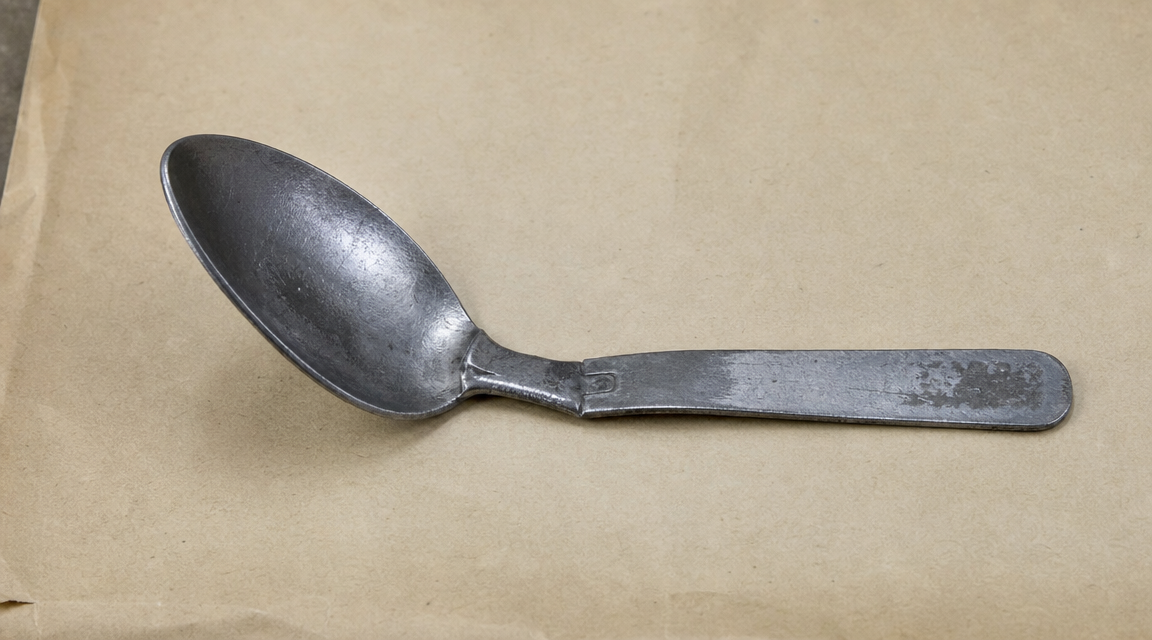
The spoon was not silver. It was not engraved with a famous name, not connected to a crime, and not attractive enough to be mistaken for a keepsake.
By every practical measure, it was a bent stainless steel canteen spoon, the kind once bought by the gross and lost by the dozen. Its bowl had been flattened slightly to one side. The handle had a shallow crease near the neck.
And yet the spoon was copied, listed, re-listed, initialed, boxed, and referred to in railway lost-property inventories long after the canteen where it supposedly belonged had closed and been demolished.
That is the part that interests us. Not the spoon as an object of mystery, but the spoon as a piece of administrative grit: too small to justify attention, too persistent to ignore.
In the surviving references, staff did not write about it as a marvel. They wrote about it as a nuisance with a tag number.
The Canteen That Stopped Serving
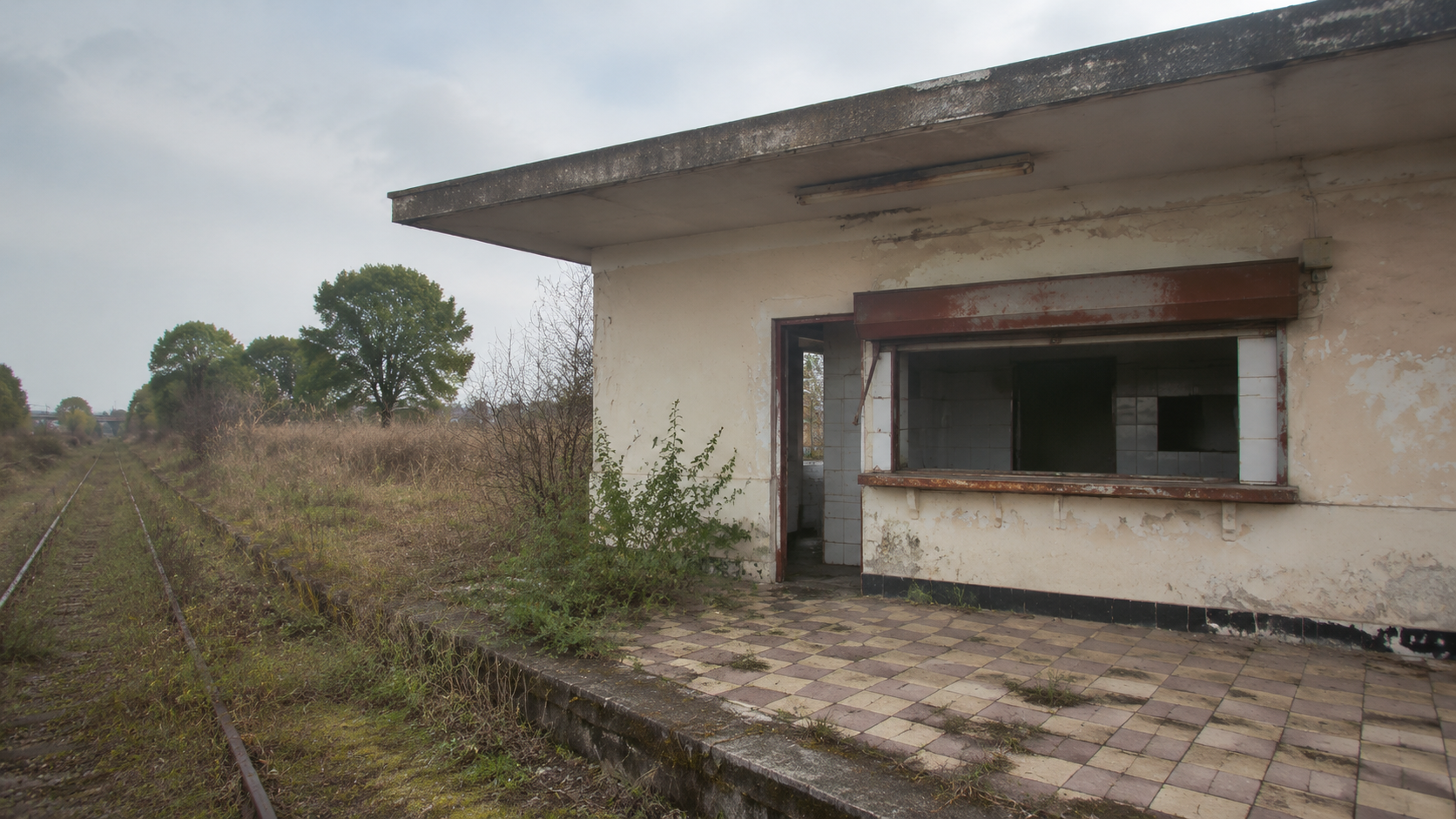
The railway canteen appears in local memory as one of those station-side rooms that existed more for routine than romance. Tea before early shifts. Cigarettes outside the service door. A hatch, a few tables, and a notice asking patrons not to remove cutlery.
It closed during a round of reductions, when small station facilities were being consolidated or leased away. The room had stopped serving before the demolition crew arrived.
By then, most contents had already been stripped. Fixtures were sold, skipped, or transferred. Crockery went into crates. Anything with an inventory number was meant to be checked off against departmental lists.
Loose cutlery rarely received such ceremony. Spoons migrated into coat pockets, lunch pails, signal boxes, staff rooms, and sometimes the ballast beside the track. Nobody expected a single canteen spoon to generate a file. Yet after demolition, a spoon matching the same description began appearing in lost-property paperwork associated with different years.
The First Entry
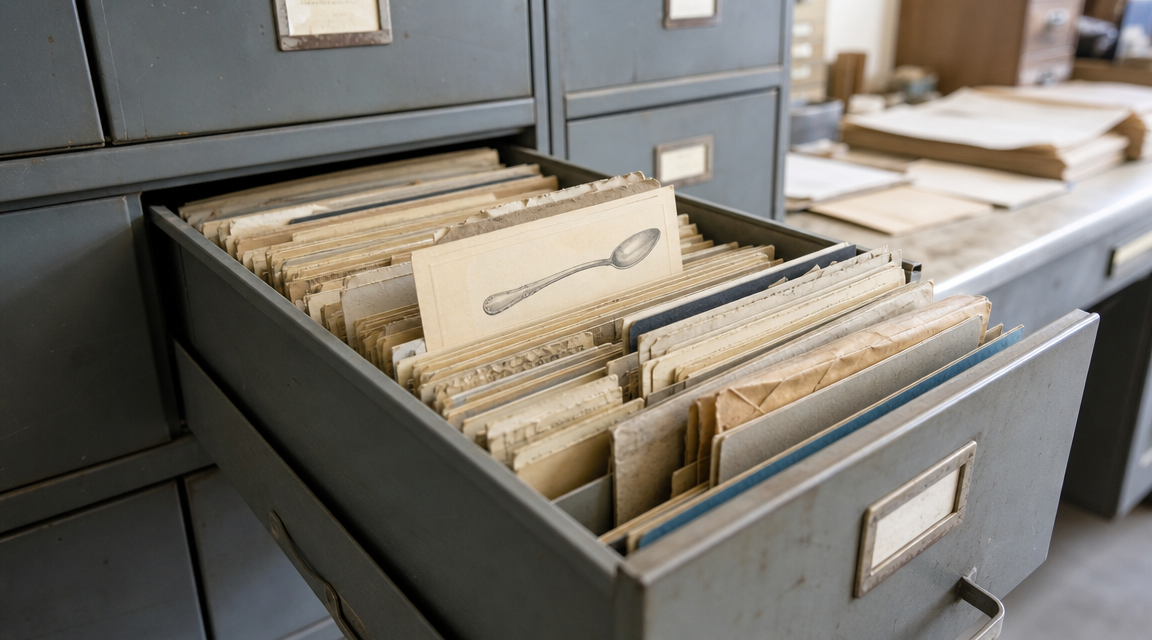
The earliest entry is plain enough to be disappointing. It describes “1 bent stainless spoon, canteen type,” with a location note that appears to refer to a station office or stores counter rather than the canteen itself.
There is no dramatic annotation. No warning. No suggestion that the item had been found in an impossible place. It was simply received, recorded, and placed somewhere awaiting disposal or return.
The wording matters because it is not the language of folklore. It is the language of a clerk trying to finish a list.
The spoon was probably put into a drawer, envelope, or small bin with other insignificant items: gloves, ticket wallets, penknives, tobacco tins, and accidental pocket contents.
Had the paperwork ended there, the spoon would have no story. It would be one more piece of institutional debris, briefly visible before being scrapped or forgotten. But later inventories contain entries that seem to describe the same object again.
The Reappearances On Paper
The oddity is not that spoons were found at railway stations. Spoons are common, durable, and easily misplaced. The oddity is the repeated phrasing across years.
Several entries use near-identical wording: bent stainless spoon, canteen type. Some add a note about the handle. One describes a “creased stem.” Another says “canteen spoon, distorted.”
None of these phrases proves it was the same spoon. A cautious reading has to allow for duplication, shorthand, and clerical habit. If a staff member had once typed a description and later copied the category, similar words might have followed similar objects.
Still, the accumulated pattern is unusual. The canteen was gone. Its crockery had supposedly been dispersed. Yet the spoon, or a description that behaved like the spoon, continued to surface as though attached to the lost-property system itself.
The object’s value was not material. Its value was procedural. Every time it reappeared, someone had to decide whether to treat it as new, old, transferred, found, or merely already listed. That uncertainty is what made it look less like cutlery and more like evidence.
Why Staff Kept It
One possible explanation is embarrassingly simple: nobody wanted to throw away something that had already been recorded.
In many offices, paperwork can protect an object more effectively than price. A cheap spoon with no note may go into scrap. A cheap spoon with a tag, date, and initials becomes harder to discard, because discarding it requires another entry.
The canteen spoon may have survived because it was boring in an official way. It was not worth stealing, selling, or displaying. It was just accountable enough to be retained.
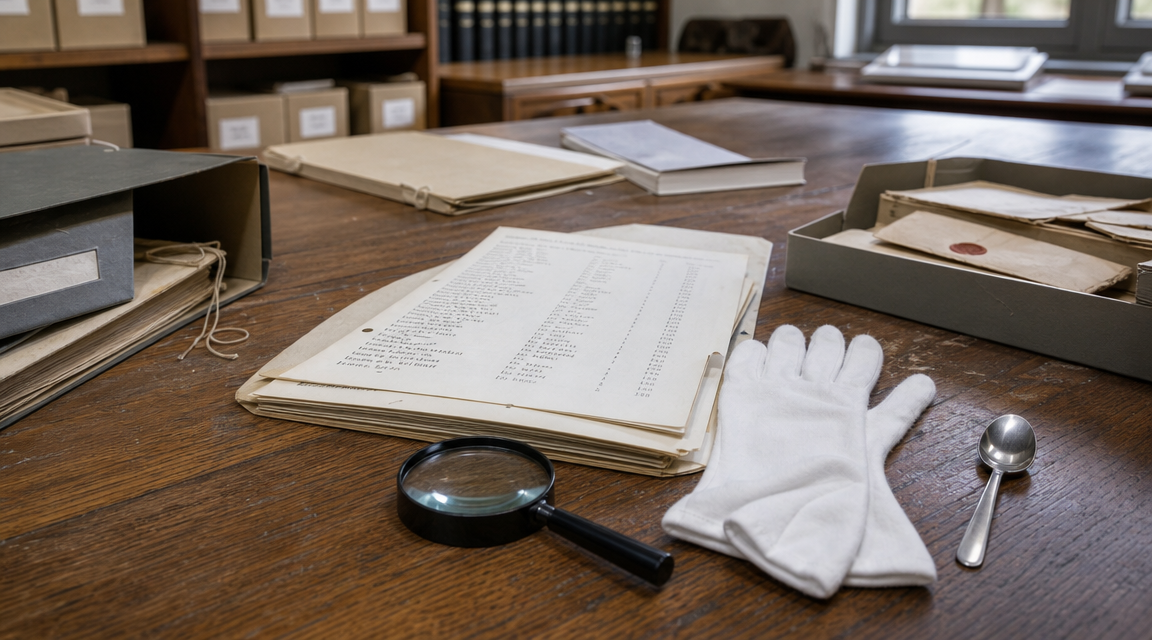
There is also the question of internal audits. Lost-property systems often depend on chains of custody. Items are received, logged, stored, and disposed of according to rules. Even absurd items may be kept until a retention period expires.
If the spoon missed its disposal window, or if it was moved during an office clearance without its original tag, a later clerk could easily have entered it again.
That would make the repeated inventories not paranormal, but bureaucratic: a small loop created by cautious employees trying not to make a mistake.
The Demolition Problem
If the spoon had kept appearing while the canteen was still open, nobody would blink. Canteens produce spoons the way trees produce leaves. But once the building was gone, references to a canteen-type spoon began to sound out of time.
Demolition is supposed to provide a clean ending. A structure is surveyed, emptied, knocked down, and cleared. After that, remaining objects are expected to be archaeological, not administrative.
The spoon did not behave that way in the record. It did not emerge from rubble with a dramatic tale attached. It appeared in lists, drawers, and transfer notes, as if the demolished room still had a faint accounting presence inside the station bureaucracy.
This is a common feature of strange objects: they do not need to move impossibly through space. They only need to keep arriving in systems built to say where things are.
A lost-property ledger is not a ghost story, but it can produce the same uneasy question: why is this still here?
Evidence Without A Case
Calling the spoon “evidence” is not to imply a hidden crime. It is to describe the way people handled it.
Evidence is an object whose meaning depends on context, labeling, and continuity. Without the tag, the spoon was almost nothing. With the tag, it became a question about where it had been, who had seen it, and why its description kept recurring.
The paperwork created a little courtroom around it. Each entry testified without explaining. Each drawer clearance added another witness. Each copied phrase blurred whether the clerk was seeing a physical spoon or inheriting an earlier description.
A sensational version would insist that the same spoon returned after disposal, or that it was found in sealed rooms, or that former canteen workers recognized it by touch. The record does not support that certainty. What it supports is stranger in a quieter way: an ordinary object became durable because the institution could not comfortably decide it was finished.
That is a different kind of haunting, and a more believable one.
The Most Likely Explanations
The first explanation is duplicate cutlery. Railway canteens bought standardized spoons. More than one could have been bent and casually described in similar terms.
The second is copied language. Clerks often reuse practical descriptions. Once “bent stainless spoon, canteen type” existed in a file, the phrase may have become a convenient label for any similar utensil.
The third is a misplaced tagged item. The same spoon may have been logged, moved, forgotten, found again, and logged again by someone unaware of the earlier entry.
The fourth is a clearance artifact. When offices were reorganized, old lost-property bins and drawers may have been emptied into new inventories. In that process, old objects can look newly found. None of these explanations removes the interest. They move it from the supernatural to the administrative, which is where the best version of this story belongs.
The spoon’s weirdness is not that it defied physics. It exposed how hard it can be for an organization to lose something properly.
What The Spoon Shows Us
Most strange objects become strange because someone insists they are special. This spoon seems to have become strange because everyone treated it as unspecial, but nobody quite made it disappear.
It sat at the lowest level of attention, below sentiment and above rubbish. That is a narrow shelf, but institutions have many such shelves.
The closed canteen gives the object a vanished home. The inventories give it a stubborn afterlife. The bend in the handle gives clerks something to recognize, or something to think they recognized. Whether there was one spoon or several similar spoons, the result is the same: a small stainless object became a carrier for uncertainty.
In WeirdWitnessed terms, the case is valuable because it refuses the usual climax. There is no glowing utensil, no warning dream, no final witness in an empty room.
There is only the repeated administrative fact of it: a spoon that should have been too ordinary to record, surviving because it had been recorded. That may be the most convincing reason it was treated like evidence. Not because it proved anything, but because it kept asking to be proved ordinary.
Reader Context
This Weird Witnessed story is an editorial reconstruction, written as eerie visual storytelling rather than a verified report. For more context, see How to Read Weird Witnessed Stories and How WeirdWitnessed Creates Reconstructed Horror Stories.