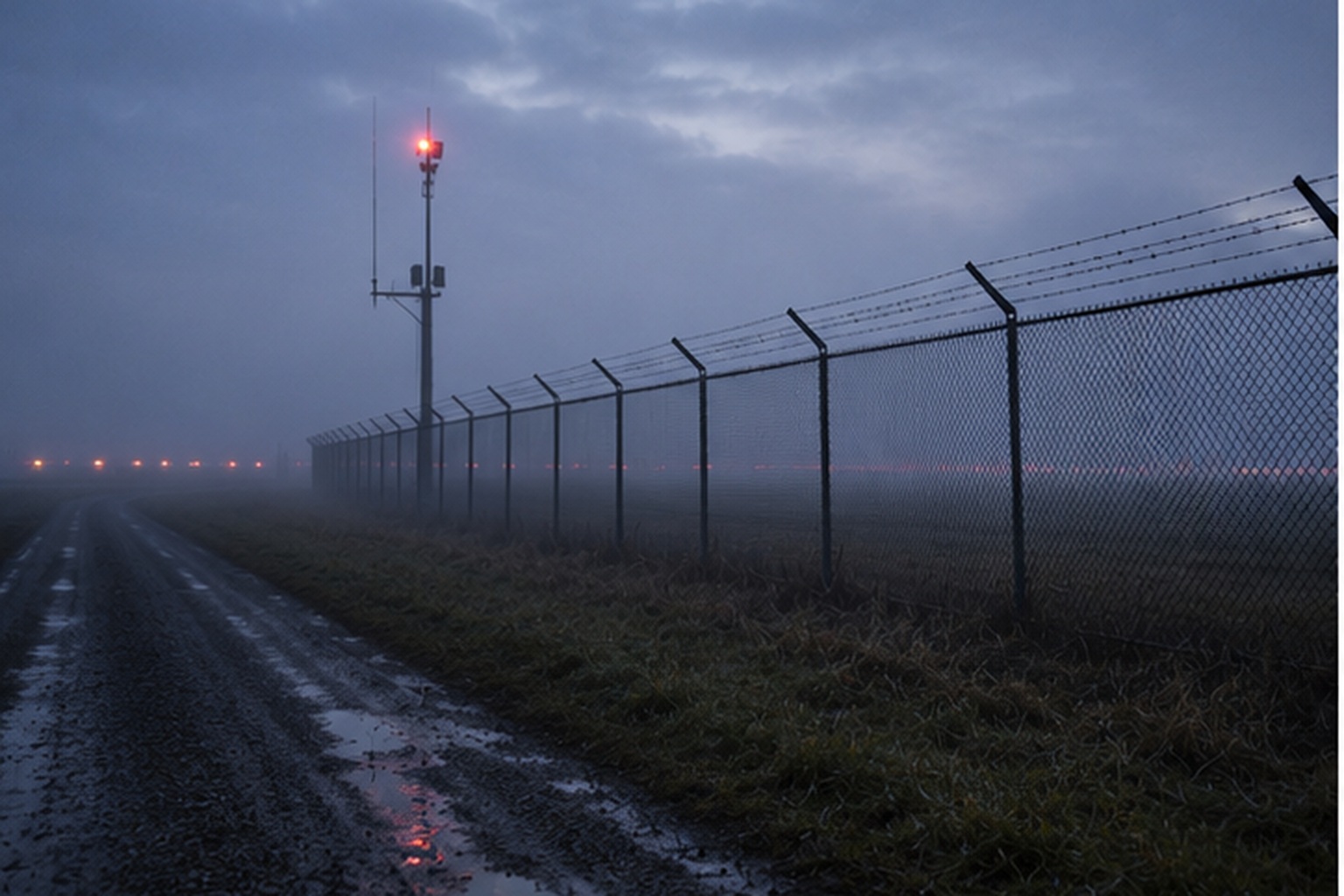
The camera was there because deer kept crossing the runway.
Most nights, it recorded nothing useful. Fog. Insects. A fox under the gate. The blinking red reflection from a tower light. Sometimes a deer paused by the fence and stared into the lens as if caught doing something embarrassing.
Then, on a morning with fog so thick the runway lights looked buried underwater, the camera caught a broad shoulder moving through the white.
Not a face. Not a clear body. Not the clean, convenient image people always wish for afterward.
Just a dark, solid, opaque mass beyond the chain-link fence, taller than the brush line, with a shoulder so wide it briefly blocked two runway lights at once.
The frame did not settle anything. It made the whole place feel watched.
The Airport Before Sunrise
The airport was small enough that locals still called it by the family name on the old hangar, even though the county technically owned it. Crop dusters used it in season. A few private planes rented tie-downs. Medical flights landed there when roads were bad. Most nights, after the last truck left, the place belonged to wind, field mice, and the hum of runway lights.
The north fence bordered a stretch of low pasture and scrub woods. Beyond that were drainage ditches, old stone rows, and a tree line that looked close in daylight and impossibly far away in fog.
Fog was common there. Cold air settled over the fields, and moisture rose from the drainage cuts until the runway seemed to float in a gray bowl. Pilots complained about it. Maintenance hated it. Security cameras turned it into a wall of moving static.
That morning, the camera began recording motion at 4:17.
The clip opened with the usual airport emptiness: fence in the foreground, service road pale with dew, two runway lights glowing weakly in the background. The fog shifted in slow sheets. Nothing moved fast.
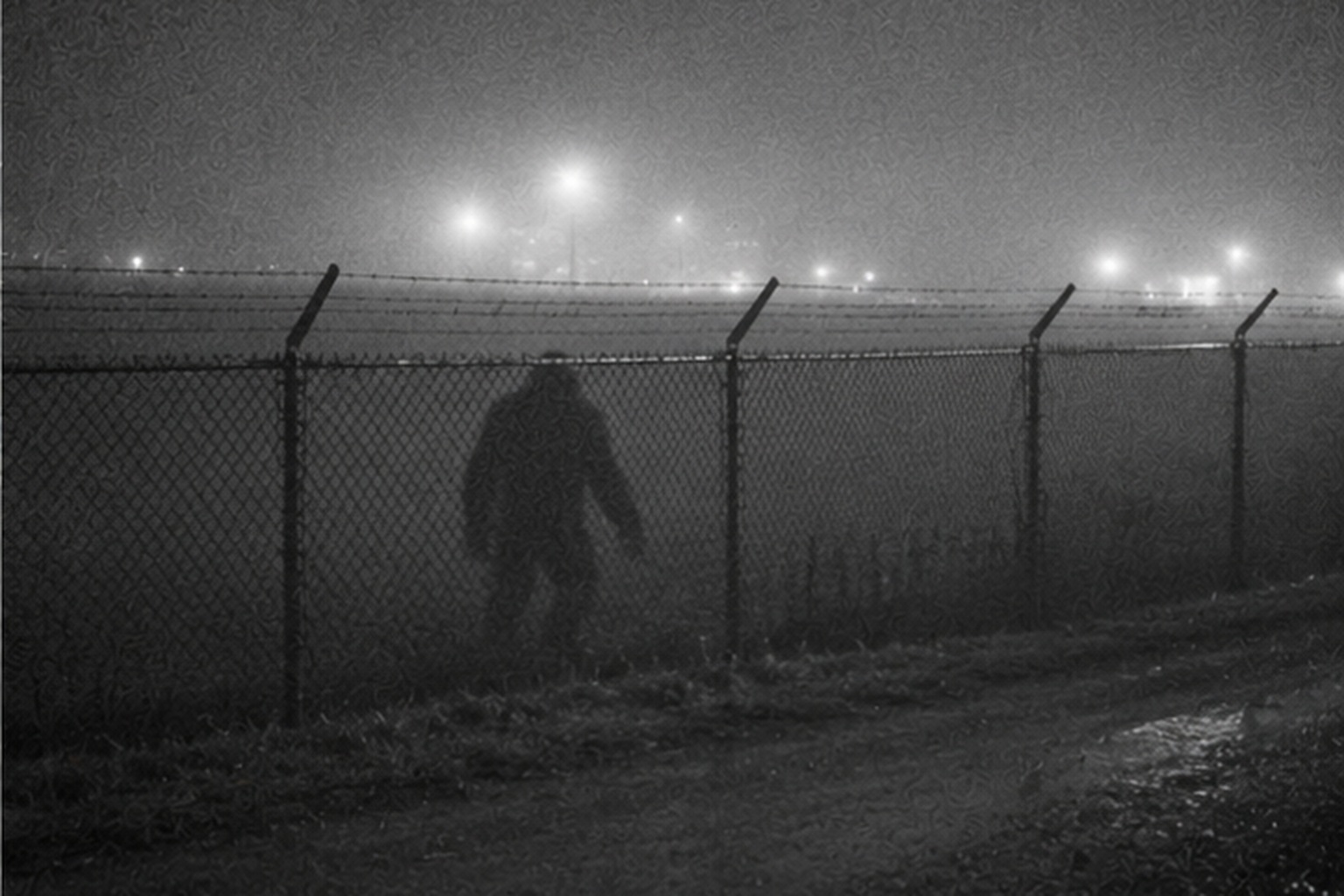
Then the lights on the far side of the frame disappeared.
A Shape Too Solid For Fog
At first, the maintenance worker who reviewed the alert thought a truck had passed somewhere beyond the fence.
That explanation failed quickly. No headlights cut through the fog. No engine noise was noted by the night lineman in the fuel office. The service gate log showed no entry. The shape did not move like a vehicle anyway. It passed behind the fence posts with a slow, rolling motion, high at one end and slightly lower at the other, as though the camera had caught only the upper body of something walking along the outside edge of the airport property.
The part everyone noticed was the shoulder.
It came into view as a dark bulge in the fog, broad and rounded, with a vertical drop beneath it. For two seconds, the shape filled the mist between the fence and the nearest runway light. It was not transparent. The light behind it vanished cleanly, then returned when the thing moved on.
But the worker kept replaying the part where the shoulder crossed the light. Whatever it was, it blocked the glow like something with thickness.
The Fence Stayed Locked
The obvious question was whether someone had been on airport property.
By daylight, two employees checked the north gate. The lock was closed. The chain was in place. The gravel beneath it showed no fresh tire tracks. Along the service road inside the fence, there were patches of wet grass bent toward the ditch, though that could have been wind or runoff from the fog-heavy night.
Outside the fence was harder to read. The pasture did not belong to the airport, and the ground there was uneven. Wet grass held marks badly. In one low spot near the fence, the vegetation was pressed down in a wide patch, not a neat footprint and not enough to prove a path.
Deer were suggested, because deer explained most perimeter alarms. But the shape in the clip did not show a head lowering or antlers catching the light. It did not dart. It did not bunch like a herd. It moved slowly, upright enough that several people in the office began avoiding the word animal.
Someone said bear. That made more sense for mass, less sense for location and posture. A bear on two legs can look enormous for a moment, especially in fog, but the clip did not show the rise and drop people expected.
Then someone said Bigfoot, and the room got quiet in the way rooms do when a joke lands too close to what everyone is thinking.
The Broad Shoulder Frame
The still image spread farther than the airport manager wanted.
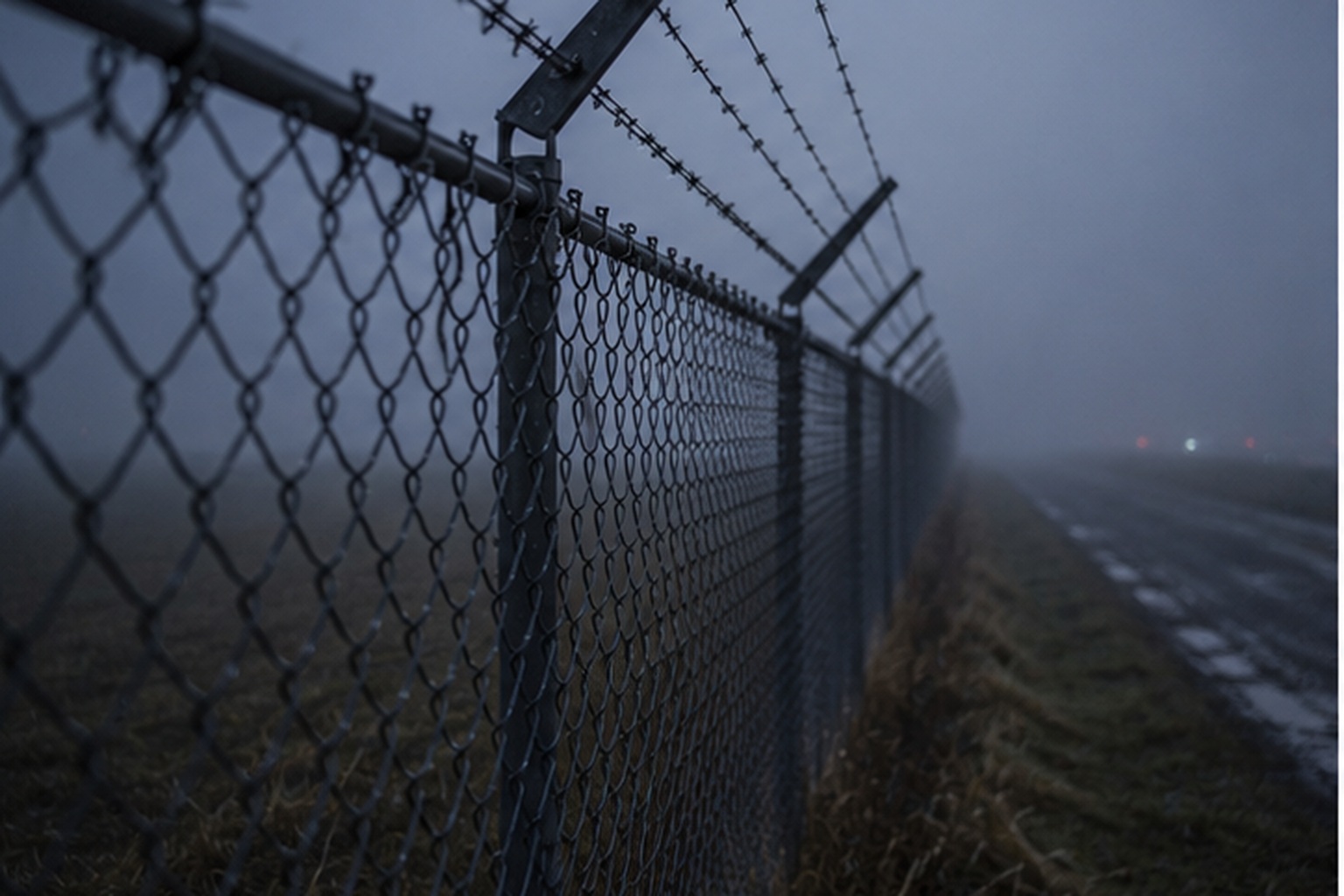
In the frozen frame, the fence cut across the foreground as a black grid. Behind it, the fog turned the runway into a pale smear. Near the right third of the image stood the dark shape. It was distant, partly hidden, and blurred by moisture in the air. Still, it looked solid.
The top was not round like a helmet. It sloped forward slightly. The shoulder line looked heavy, almost hunched, extending wider than a normal person in a coat should appear at that distance. The lower half disappeared into fog and grass, which made the size difficult to judge and the unease worse.
Nobody could honestly say, from that image alone, what the camera had captured.
But nobody who saw it wanted to be the one sent to check the fence alone the next foggy morning.
That is how these stories survive. Not because every detail is airtight, and not because a blurry frame can carry more certainty than it deserves. They survive because the people closest to the ordinary explanation still hesitate.
This looked like a broad shoulder moving through the mist beyond the lights.
What The Camera Did Not Show
It did not show a face pressed to the fence.
It did not show hands on the wire, glowing eyes, or a creature stepping cleanly into view. The camera did not capture a footprint being made. It did not capture the shape entering the property or leaving it. Anyone claiming certainty would be adding more than the clip gives.
What it did show, according to the people who discussed it afterward, was a dark, opaque figure moving behind the perimeter fence at a time when no one was scheduled to be there.
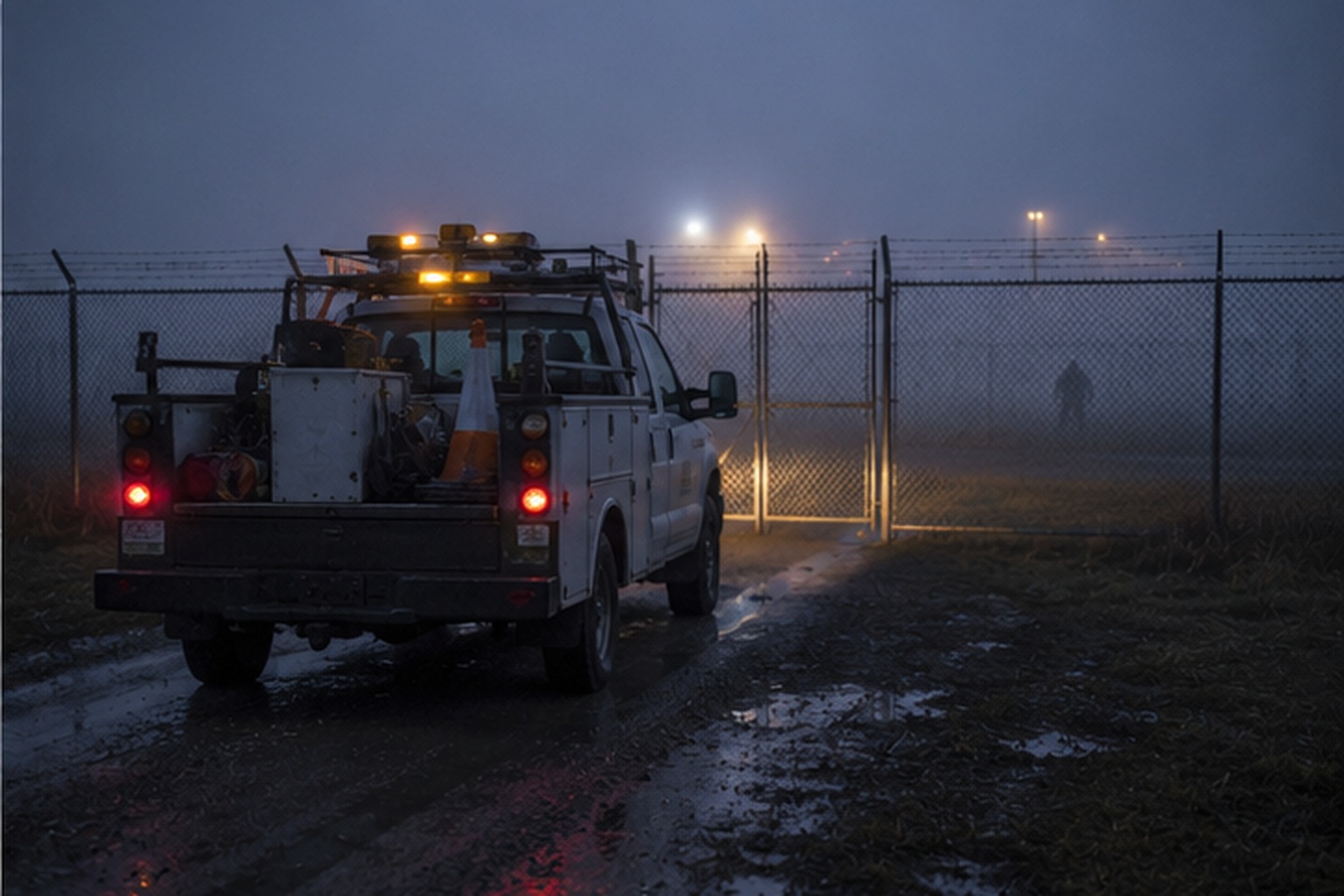
The movement lasted less than ten seconds.
That was enough.
The airport manager kept the clip in a folder with other perimeter alerts. Deer, fox, loose tarp, raccoon, fog. This one was labeled only north fence motion.
For a while, employees made jokes about it. They called the area the shoulder line. They told new hires not to whistle near the north gate before sunrise. The jokes helped until fog rolled in again and the runway lights began disappearing one by one into the gray.
Then people watched the fence differently.
They watched the spaces between posts. They watched the pasture beyond the wire. They watched for the moment when a light went out and did not come back as quickly as it should.
Nothing like that clip was captured again, at least not in a way anyone admitted.
But on damp mornings, when the airport was empty and the fog sat heavy over the fields, the north perimeter camera still sent motion alerts.
Most were deer.
Most were easy to explain.
And every time, before opening the file, someone in the maintenance office wondered whether the first thing they would see was another broad shoulder moving through the fog.