Every mountain has a season when it seems to fall asleep. Chairlifts stop humming. Ticket windows stay dark. Snow guns rust beneath drifting leaves. Wind becomes the only thing left climbing the slopes where thousands of people once laughed through winter afternoons.
Locals often say abandoned ski resorts feel different from empty campgrounds or forgotten roads. There are too many things left waiting. Steel towers still stretch toward the summit. Lift cables hang under silent tension. Snowmaking pipes snake through the woods like giant frozen veins even after the snow disappears.
The mountain never seems completely empty. That was why a local maintenance volunteer decided to leave a trail camera near one of the old service paths leading beneath the abandoned lift. The camera wasn't watching wildlife. It was pointed toward a narrow corridor where aging snowmaking pipes disappeared into thick spruce trees before climbing uphill toward the forgotten ski runs.
Nobody expected anything unusual. But after several nights, one image became impossible to stop thinking about. A Corridor Built For Winter The abandoned resort had closed years earlier after several poor snow seasons.
Most buildings remained standing. The lodge windows were boarded. Rental racks still leaned against dusty walls. Lift chairs hung frozen in place high above the mountain, rocking whenever storms rolled across the ridge. Nature had slowly begun taking everything back. Small birch trees pushed through cracked asphalt.
Foxes wandered parking lots. Moss climbed electrical boxes once used to power snowmaking compressors. Only the snowmaking system still dominated the landscape. Large steel pipes stretched through the forest, supported every few yards by weathered brackets.
What The First Photo Seemed To Show
During winter they had blasted enormous clouds of artificial snow across the slopes. Now they simply disappeared into shadow. Walking beside them always felt strange. The pipes guided your eyes farther into the trees than you intended to look.
Something That Didn't Match The Trees The trail camera overlooked one of these pipe corridors. Its infrared sensor usually captured deer crossing after sunset. Occasionally a curious fox stopped long enough to stare directly toward the lens.
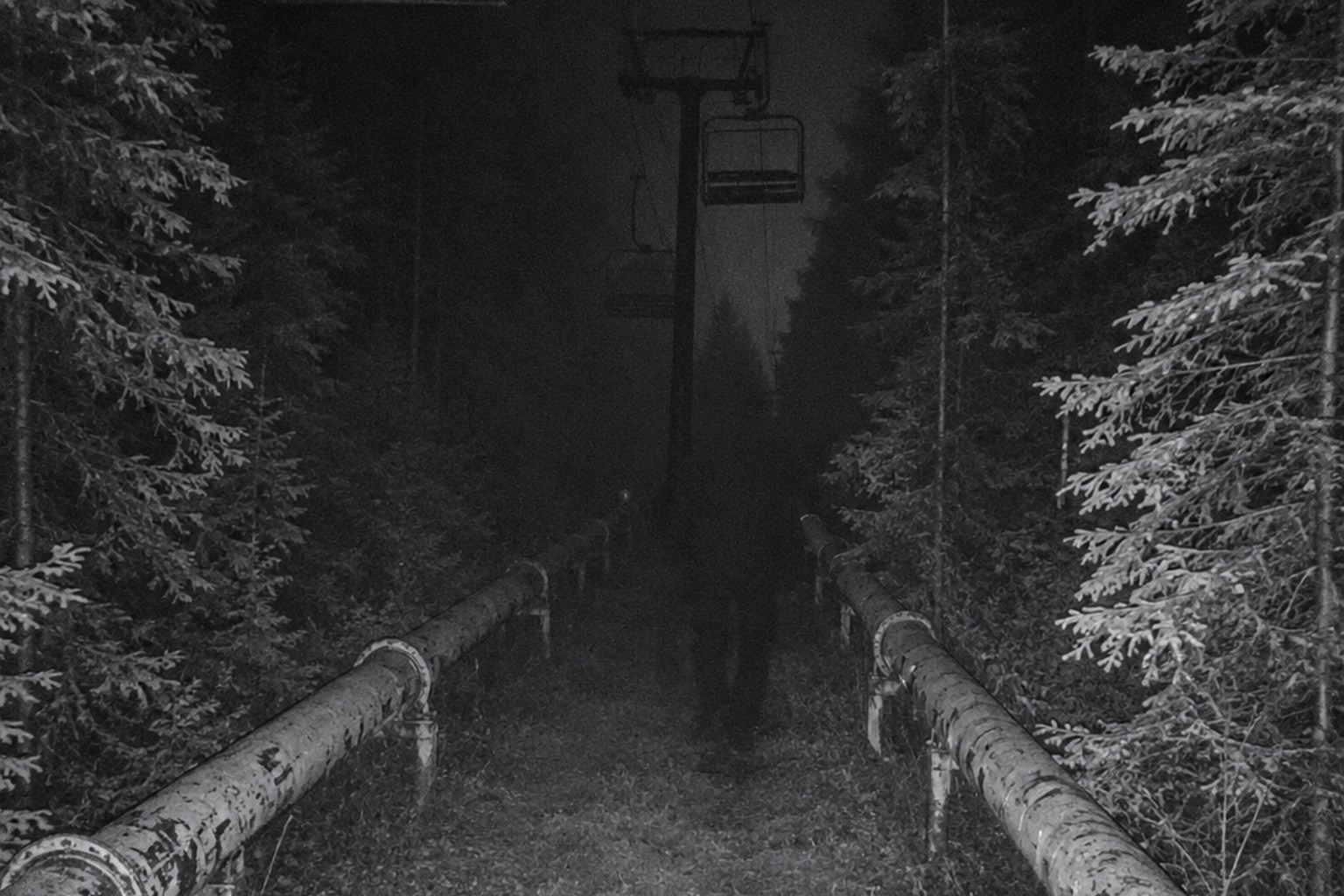
Once, a black bear wandered through before disappearing uphill. Everything seemed ordinary. Then one cold autumn morning, while checking the memory card, a single nighttime image appeared between dozens of familiar wildlife photos. Nothing dramatic happened inside the frame.
The forest remained perfectly still. The pipes followed their usual path uphill. Mist drifted low across damp ground. Only after staring for several seconds did something begin separating itself from the darkness.
Between two parallel snowmaking pipes stood what first resembled another cluster of spruce trunks. Except the spacing felt wrong. Trees taper naturally. This silhouette remained broad from the ground almost to the height of the lower pipe.
Its outline seemed to absorb what little moonlight reached the clearing. No clear face. No visible eyes. Only a towering vertical mass that seemed much wider than any person standing between the equipment.
Why The Location Felt Wrong After Closing
The unsettling part wasn't what appeared there. It was how naturally it blended into a place people had stopped truly looking at years before.
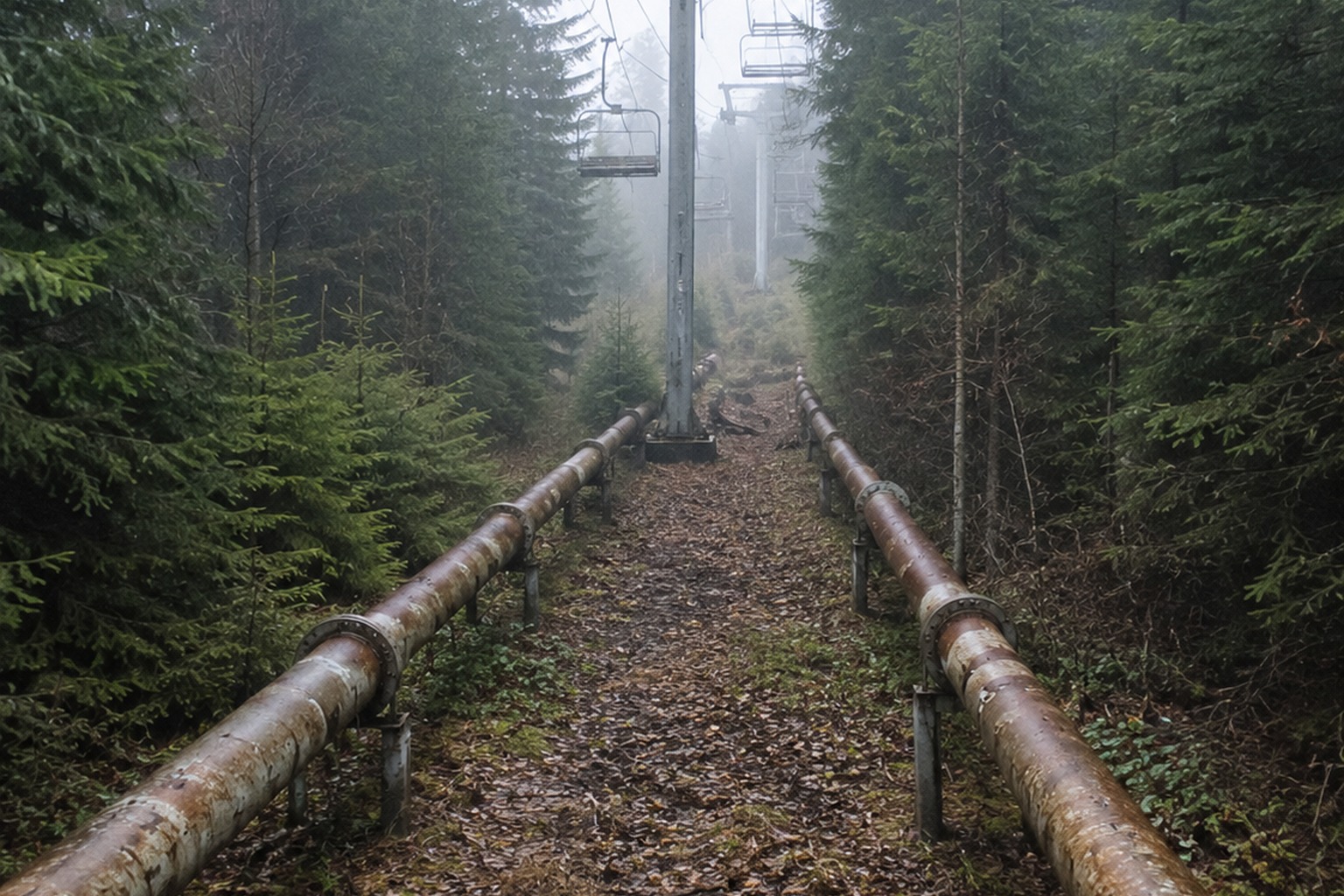
The Pipes Made Everything Feel Smaller Returning during daylight answered almost nothing.
The maintenance path measured barely six feet across. The snowmaking pipes stood chest-high on heavy brackets. Looking toward the exact location from the image, volunteers expected to find a stump or oddly shaped tree. Instead they found surprisingly open ground.
The nearest spruce trunks stood several feet farther uphill. Nothing occupied the narrow gap between the pipes. Nothing wide enough to explain the shape. One volunteer stood where the silhouette had appeared while another walked back toward the trail camera.
The comparison felt immediately wrong. Even wearing a bulky winter jacket, the person occupied barely half the apparent width visible in the mysterious image. The surrounding pipes made the difference even more unsettling. Steel pipes are wonderfully consistent.
They provide an accidental measuring stick. Whatever occupied that corridor seemed disproportionately broad. Far too broad for someone simply standing still. Yet there were no broken branches.
The Detail People Noticed Later
No disturbed moss. No deep impressions beneath fallen needles. Only damp earth covered with years of decaying leaves.
The Lift Above Never Moved
Curiosity eventually drew several hikers farther uphill. The service trail continued beneath the abandoned chairlift. Rust colored towers disappeared into low clouds while empty chairs hung perfectly spaced overhead. Everything remained silent except the wind.
The higher they climbed, the more often the snowmaking pipes crossed beneath lift structures before disappearing around bends. Visibility constantly changed. Sometimes you could see fifty yards. Then the forest narrowed until only the pipes remained visible ahead.
Several hikers admitted they repeatedly mistook ordinary shadows for someone standing farther uphill. Each time they walked closer, the figure became another tree. Then another shadow. Then nothing.
The strange image lingered in everyone's memory. It quietly changed the way they interpreted every dark opening between the trunks. Near one lift tower they found something odd. The forest floor beneath the pipes remained almost untouched by fallen branches despite weeks of windy weather.
What They Found When They Went Back
Needles covered everything. Twigs covered everything. Except for one narrow corridor running uphill beside the pipes. It looked less like a trail and more like something impossibly heavy had passed through often enough that debris never seemed to stay there for long.
Nobody could explain it. Nobody particularly wanted to. As evening approached, even casual conversation became quieter. The mountain seemed to absorb sound unusually well once the wind stopped.
The
Shape Returned Without Returning Weeks later the trail camera collected another series of ordinary wildlife images. Foxes. A lone coyote.
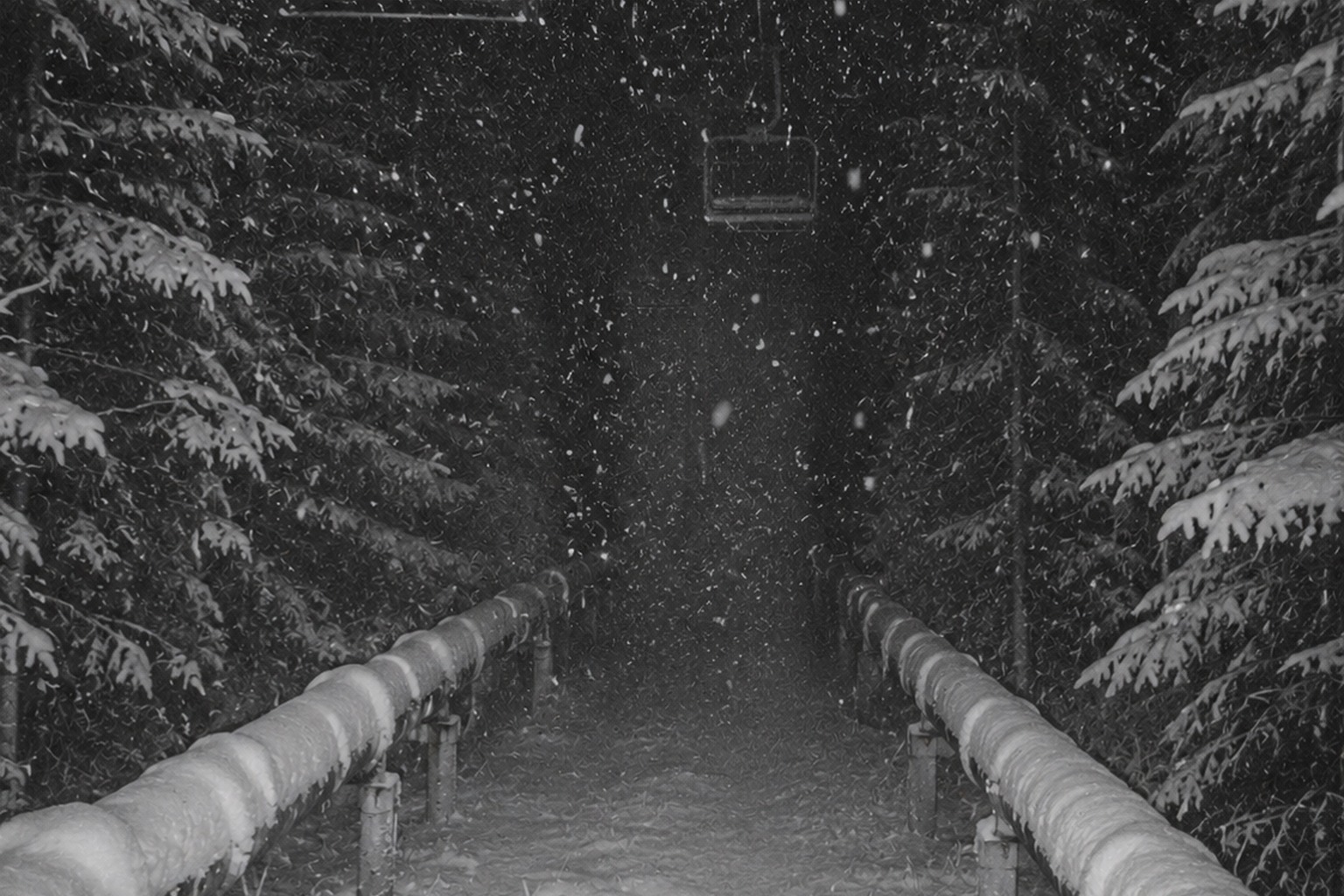
Heavy snowfall arriving earlier than expected. Then another frame drew attention. At first glance nothing occupied the corridor. The pipes stretched uphill exactly as before.
The Part That Did Not Fit A Simple Explanation
Fresh snow reflected pale moonlight. Yet something about the snowfall looked unusual. Large flakes covered every visible branch. Every pipe.
Every stump. Except for one tall section between the snowmaking lines. Snow appeared thinner there. Not absent.
Simply interrupted. Almost as though countless flakes had drifted around something too dark to fully separate from the surrounding night. The effect lasted only within that single frame. The next image showed uninterrupted snowfall across the entire corridor.
No outline remained. Only clean white accumulation beneath silent trees. The strange absence became harder to dismiss than any visible figure might have been. People naturally search for objects.
But empty spaces shaped like objects are much harder to forget. Especially when they appear exactly where another unexplained silhouette once seemed to stand.
Winter Closed In Again By early December the mountain transformed.
How The Story Changed Around The Place
Fresh snow buried forgotten service roads. Chairlift towers disappeared inside blowing clouds. Snowmaking pipes emerged only where drifts exposed sections of rusted steel. The abandoned resort looked almost alive again beneath fresh white slopes.
From a distance it could easily be mistaken for a ski area waiting to reopen. Closer inspection erased that illusion. Lift motors remained silent. Ticket booths stayed boarded.
No fresh tracks led toward the upper maintenance roads. The trail camera continued watching its quiet corridor. Its batteries weakened in the cold. Images became fewer.
Sometimes entire nights passed with nothing except drifting snow illuminated by infrared light. Then came one final image before the batteries finally failed. The corridor appeared empty. No towering silhouette.
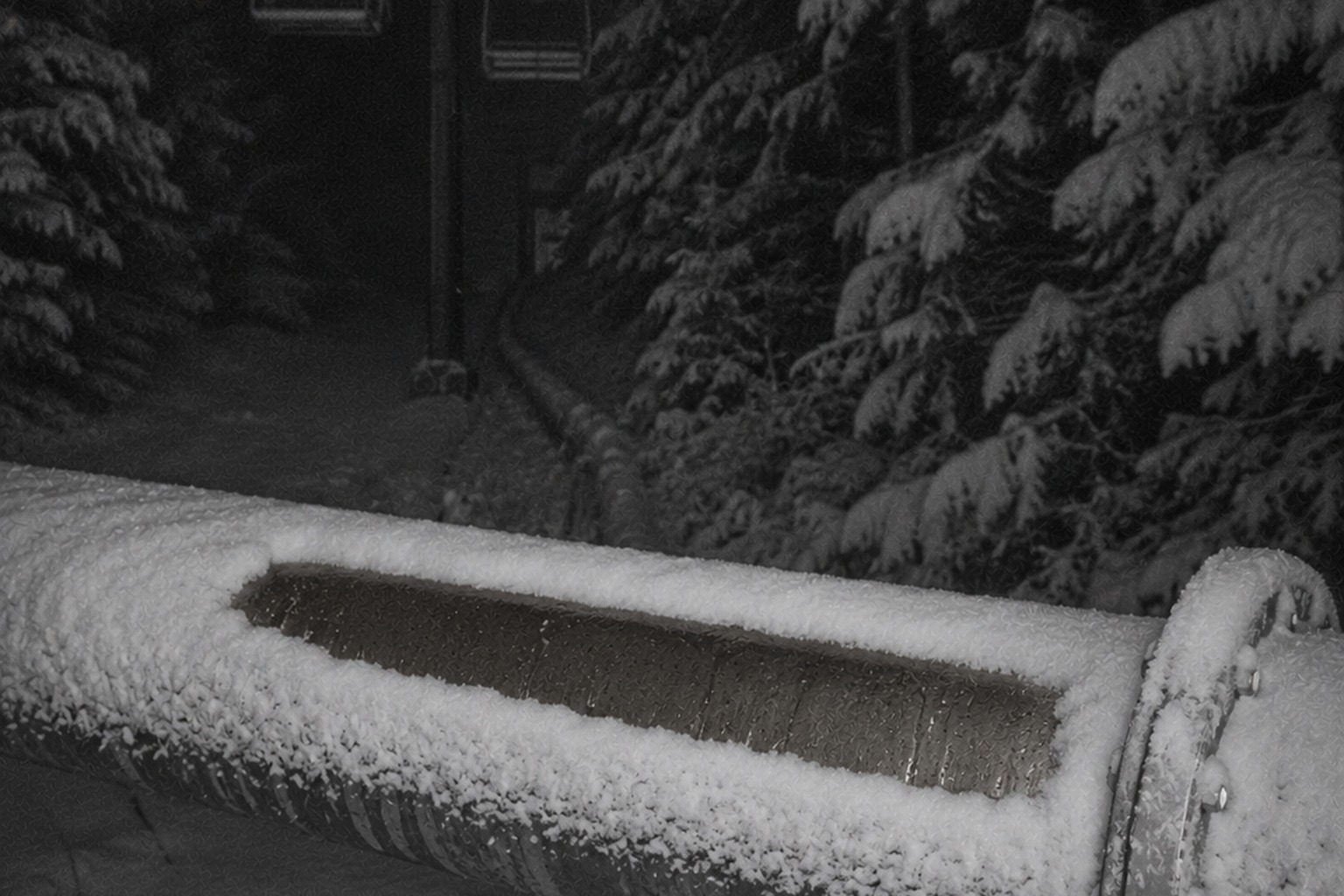
No interruption in snowfall. Nothing unusual at all. Except the nearest snowmaking pipe. Fresh powder covered every exposed section.
Every bracket. Every valve. For nearly fifty feet. Until reaching one place midway through the frame.
Why This Image Still Gets Shared
There, a clean strip of bare metal crossed the top of the pipe. Not scratched. Not bent. Simply cleared.
As though something extraordinarily large had rested a hand there only moments before the snow settled everywhere else. No matching marks appeared on the ground. No footprints surrounded the pipe. Nothing connected the cleared section to any nearby tree.
Only that single bare stretch of steel catching pale moonlight. When spring eventually melted the remaining snow, hikers returned once more. The pipe had weathered naturally. No marks remained.
No broken fittings. Nothing to explain why one section alone had escaped fresh snowfall months earlier. Today the abandoned lift still overlooks silent slopes reclaimed by forest. The snowmaking pipes continue winding uphill through spruce and fog exactly as they always have.
Visitors sometimes pause beside the narrow corridor where the old trail camera once stood. Most notice nothing unusual. Just aging steel disappearing between dark trees. Yet after a few quiet minutes, many realize they have stopped watching the forest itself.
Instead, they keep staring into the empty space between the pipes. Waiting to see whether that empty space is truly empty at all.