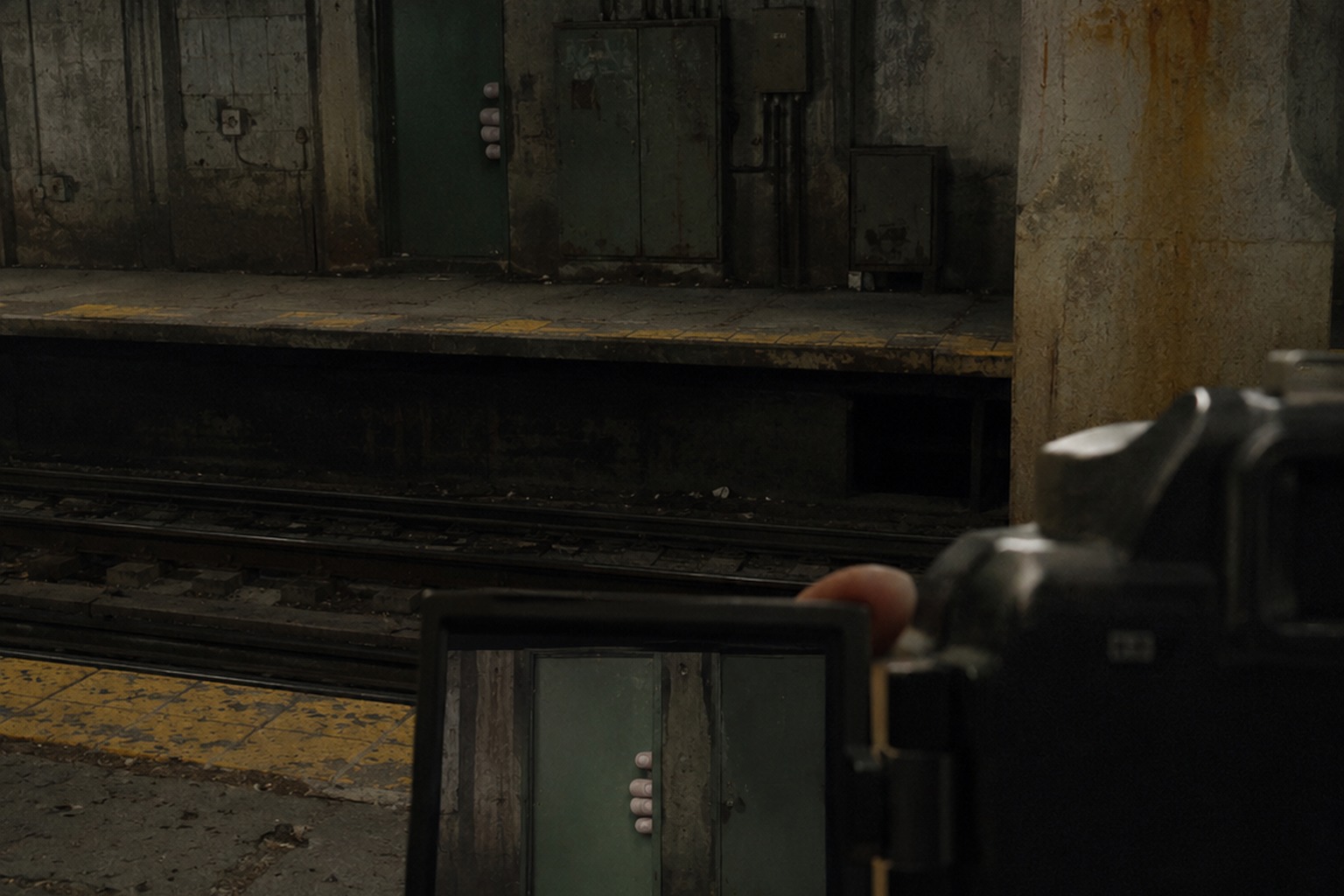
A forgotten station beneath the city had spent decades swallowing echoes. The trains no longer stopped there. The lights no longer stayed on. Dust settled over faded warning stripes, rust climbed every bolt, and water dripped with patient rhythm from cracked concrete overhead. Most people only remembered that the platform had existed because an abandoned service tunnel occasionally appeared in urban exploration forums.
One visitor arrived carrying nothing more unusual than a flashlight and an old camera with a folding mirror screen. He expected peeling paint. He expected silence. He did not expect the reflection.
The Platform Nobody Waited On
The entrance sat behind a maintenance fence hidden beneath an overpass. Its locks had long since disappeared, leaving only a bent chain swinging against rusted steel whenever underground drafts drifted through the passage. The stairway spiraled downward into stale air that smelled of wet stone, machine oil, and old electricity.
Every landing looked identical. Concrete walls carried faded route numbers almost erased beneath decades of grime. When he finally reached the platform, it seemed frozen somewhere between demolition and memory. Old benches remained bolted to the floor.
Advertising frames hung empty. An analog station clock had stopped just before midnight, its cracked face coated with gray dust. Across the tracks stood a narrow maintenance corridor lined with electrical cabinets and heavy signal doors painted industrial green many decades earlier. Nothing moved.
What The First Photo Seemed To Show
Nothing should have moved. He spent nearly twenty minutes photographing forgotten details before noticing the mirror.
The Fold-Out Screen
The camera featured a small flip-out display that allowed awkward angles without lying on the dirty platform.
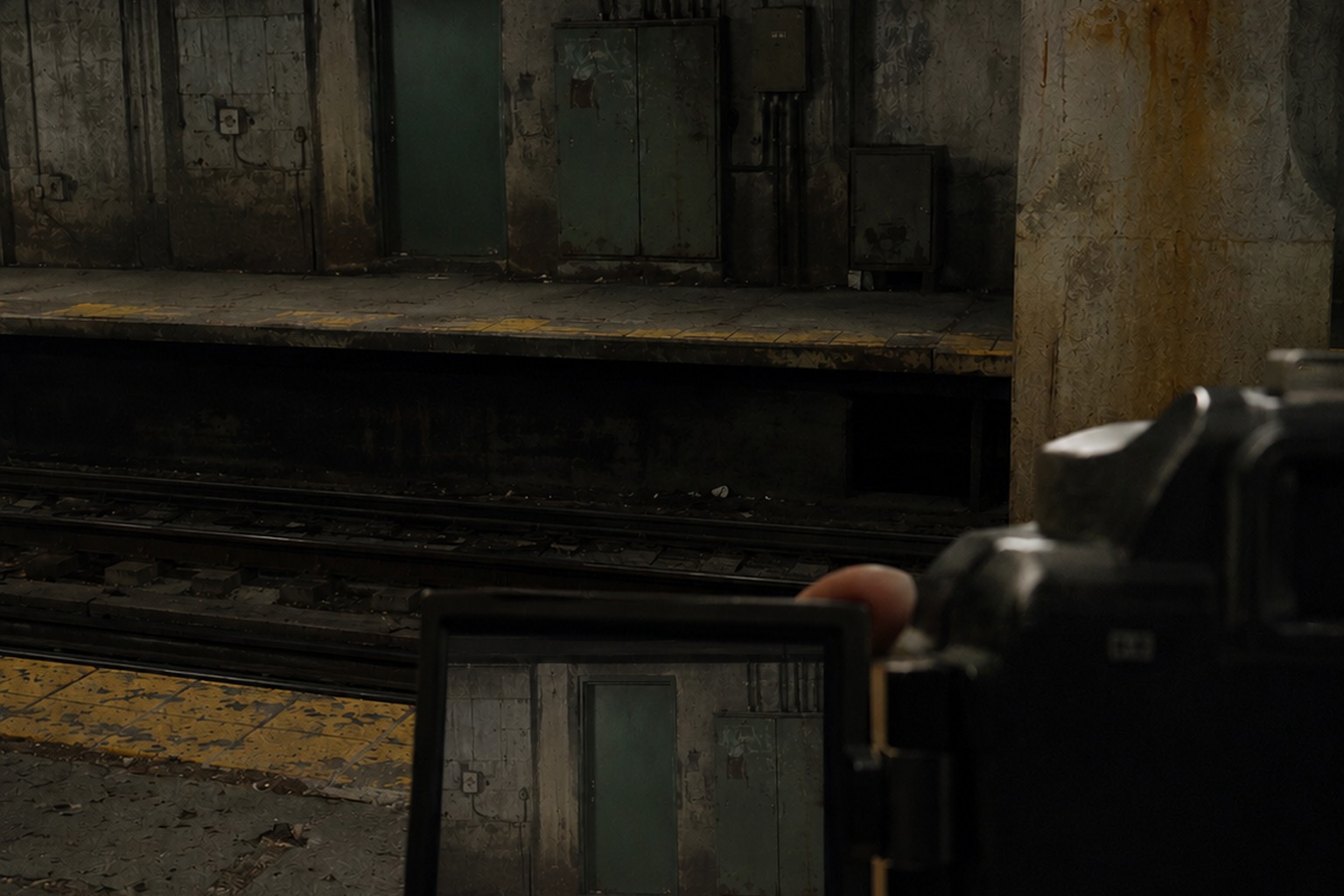
He crouched near one of the old warning lines. Instead of aiming directly toward the opposite wall, he tilted the screen upward so he could frame the abandoned signal corridor behind him. The live view looked ordinary. Concrete.
Rust. Darkness. One green steel signal door with chipped paint. He pressed the shutter.
Then another. Then another while changing exposure. Only afterward did he rotate the mirror screen toward himself to review the images. Everything appeared normal until the fourth frame.
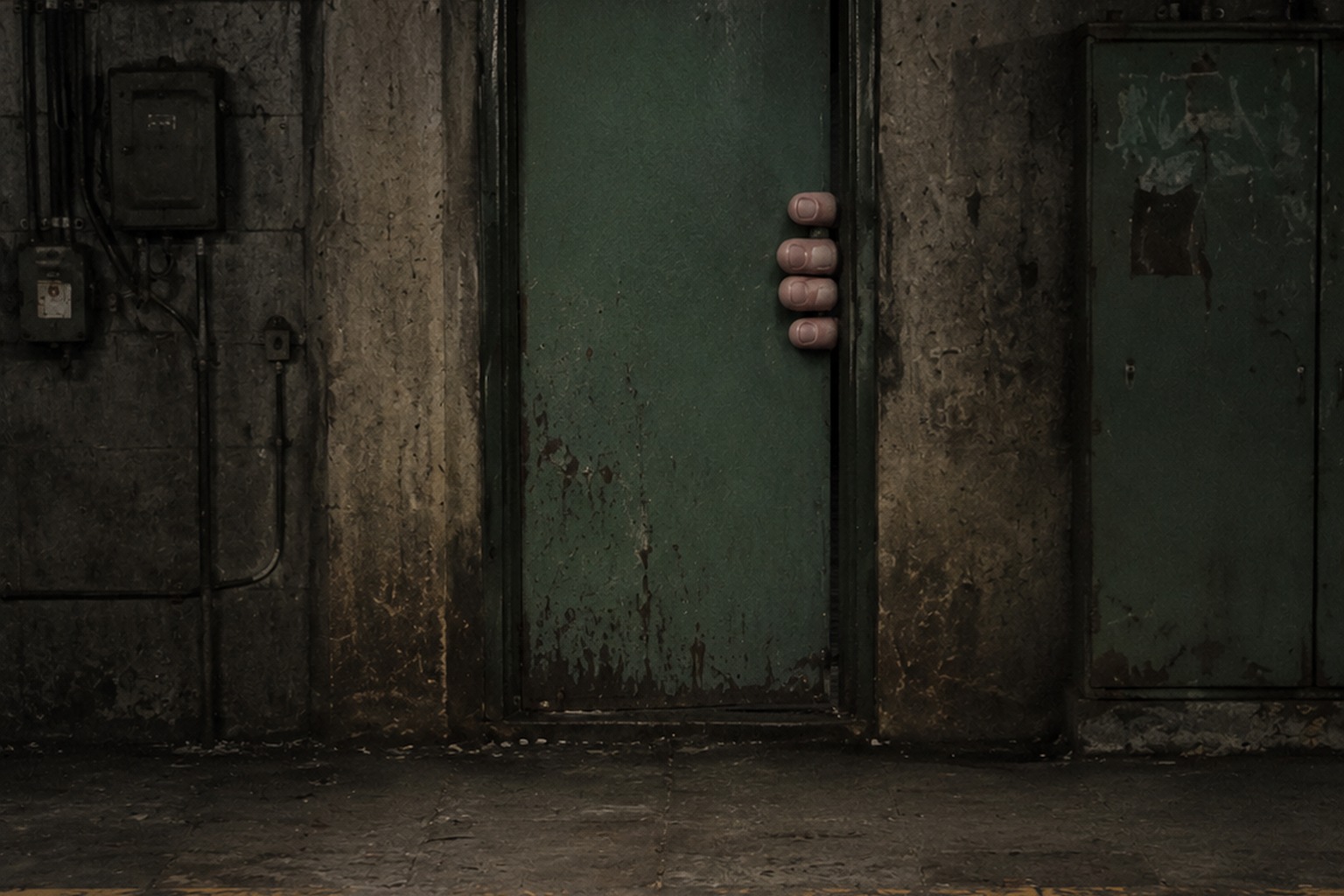
Near the edge of the tiny reflection, something pale curved around the side of the distant signal door. Not a whole hand. Only fingertips. Five of them.
Bent tightly around the metal edge as though someone hidden behind the door was quietly watching the empty platform. The angle should not have revealed anyone standing there. Yet those fingers remained visible only inside the reflected framing.
The Door Across The Rails
Why The Location Felt Wrong After Closing
Curiosity replaced caution. He looked directly toward the opposite platform. Nothing. The door remained shut.
No movement. No figure. No pale skin anywhere along the wall. He zoomed into the photograph.
The fingertips looked strangely smooth. No dirt beneath the nails. No visible knuckles. Only long pale curves gripping painted steel with unnatural stillness.
The more he enlarged the image, the less human they seemed. The fingers appeared slightly too long. The joints looked subtly misplaced. As though they bent in directions hands should not.
He convinced himself it was chipped paint. Perhaps peeling rubber insulation. Perhaps broken conduit emerging beside the frame. So he raised the camera again.
This time he looked directly instead of using the mirrored screen. Nothing. He lowered it back to the reflected view. The fingers had returned.
The Detail People Noticed Later
Still wrapped around the same edge. Still perfectly motionless.
Crossing The Silent Tracks
The nearest maintenance crossing lay farther down the tunnel.
He followed it carefully, stepping over cracked sleepers and rails coated with reddish corrosion. Every sound bounced back delayed by empty darkness. Boots. Water.
Breathing. Nothing else. The opposite platform felt colder. Not dramatically.
Just enough to notice. The signal door stood exactly where it had appeared through the reflection. Its paint had blistered into curled islands exposing layers of rust beneath. No fingerprints marked the surface.
No recent scratches interrupted the dust. He reached for the handle. Locked. Solid.
The frame refused to move even slightly. He crouched beside the narrow gap between the door and its concrete housing. Only darkness waited inside. The flashlight reached perhaps a meter before disappearing into black.
What They Found When They Went Back
He listened. Silence. Then came a quiet metallic click somewhere beyond the wall. Not loud.
Not violent. Merely the sound of something settling after being touched. He backed away. Nothing followed.
Yet the uncomfortable feeling remained that whatever had hidden behind the steel had not gone anywhere.
Looking Through Reflections Again
He returned to his original position across the tracks. Instead of photographing directly, he experimented with reflections.
The mirror screen. A polished emergency sign. The cracked glass protecting an old route map. Each reflective surface showed tiny differences from the platform itself.
Most revealed nothing unusual. One did. The mirror screen once again displayed pale fingers around the signal door. This time there were only four.
The Part That Did Not Fit A Simple Explanation
One had disappeared. He lowered the camera immediately. The opposite wall looked empty. He lifted it again.
Now only three fingertips remained. Not because they withdrew. Because the unseen grip seemed to be slowly sliding farther behind the steel edge. He snapped several photographs in quick succession.
Every frame captured a slightly different position. Each one looked less like someone peeking around the corner. More like something retreating after realizing it had been noticed. The final image showed only one fingertip.
Long. White. Curled almost lovingly around chipped green paint. Then nothing.
The next photograph contained only an empty door.
The Corridor Beyond
Leaving should have been the sensible decision. Instead, he searched for another entrance into the maintenance corridor.
Near the far end of the station he discovered a partially collapsed service hallway blocked by fallen concrete panels. A narrow opening remained. Just enough room to squeeze through sideways. Beyond it stretched a cramped passage carrying electrical conduits toward the back of the signal room.
How The Story Changed Around The Place
The air grew strangely warmer. Fresh moisture coated the walls despite years without operating machinery. His flashlight revealed maintenance labels so faded they had become unreadable. Then he reached the rear side of the signal door.
It stood slightly ajar. Only a few centimeters. Impossible. Minutes earlier it had refused to move.
The opening revealed complete darkness beyond. He aimed his flashlight inside. Dust floated through the beam. Old relay cabinets leaned crooked against the walls.
Disconnected cables coiled across the floor like sleeping snakes. Nobody stood there. No footprints crossed the dust. No obvious hiding place explained the fingers.
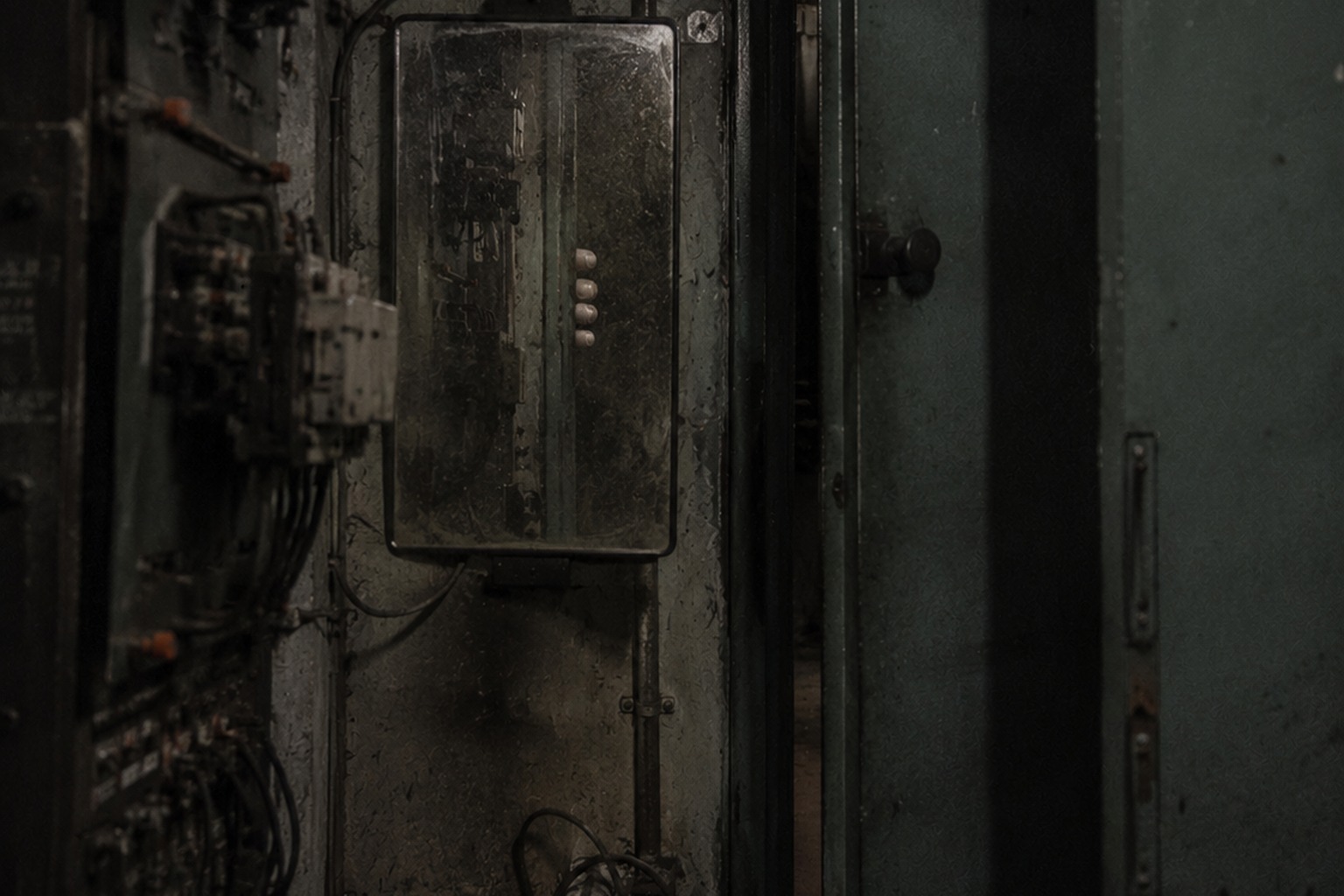
Then his flashlight reflected from something small mounted near shoulder height on the inside of the door. A mirror. Not decorative. Not large.
Only a scratched rectangular inspection mirror fixed beside old electrical equipment so workers could once see around machinery without stepping into dangerous spaces. Its surface had blackened with age. He accidentally shined the beam directly into it. For one brief instant, reflected within that cloudy rectangle, pale fingers curled around the opposite side.
The side where he was standing. He spun immediately. The corridor behind him remained empty. When he looked back, the mirror reflected nothing except cracked concrete.
Why This Image Still Gets Shared
The Last Photograph
He left without taking another step deeper. The climb back toward daylight felt longer than the descent. Every staircase landing seemed quieter than before.
Outside, afternoon traffic erased the underground silence almost instantly. Only later, reviewing the photographs on a larger monitor, did another detail emerge. Every image showing the fingers shared one subtle characteristic. The steel signal door cast its shadow in opposite directions.
Not dramatically. Just enough to suggest the reflected version of the platform obeyed slightly different light than the abandoned station itself. He enlarged the final sequence repeatedly. The fingers never appeared blurred.
They never seemed to move between exposures. Instead, the entire world around them shifted by tiny amounts while they remained perfectly fixed. As though they belonged somewhere else entirely. The old station has since attracted plenty of curious visitors.
Some report only dust and rust. Others mention the inspection mirror still hanging inside the maintenance room, too clouded now to reflect much of anything. A few claim that if a camera with a fold-out mirror screen is pointed toward the signal door from exactly the right place, the reflection occasionally shows pale fingers wrapped patiently around chipped green steel.
Not reaching. Not waving. Simply waiting for someone else to notice them looking back.