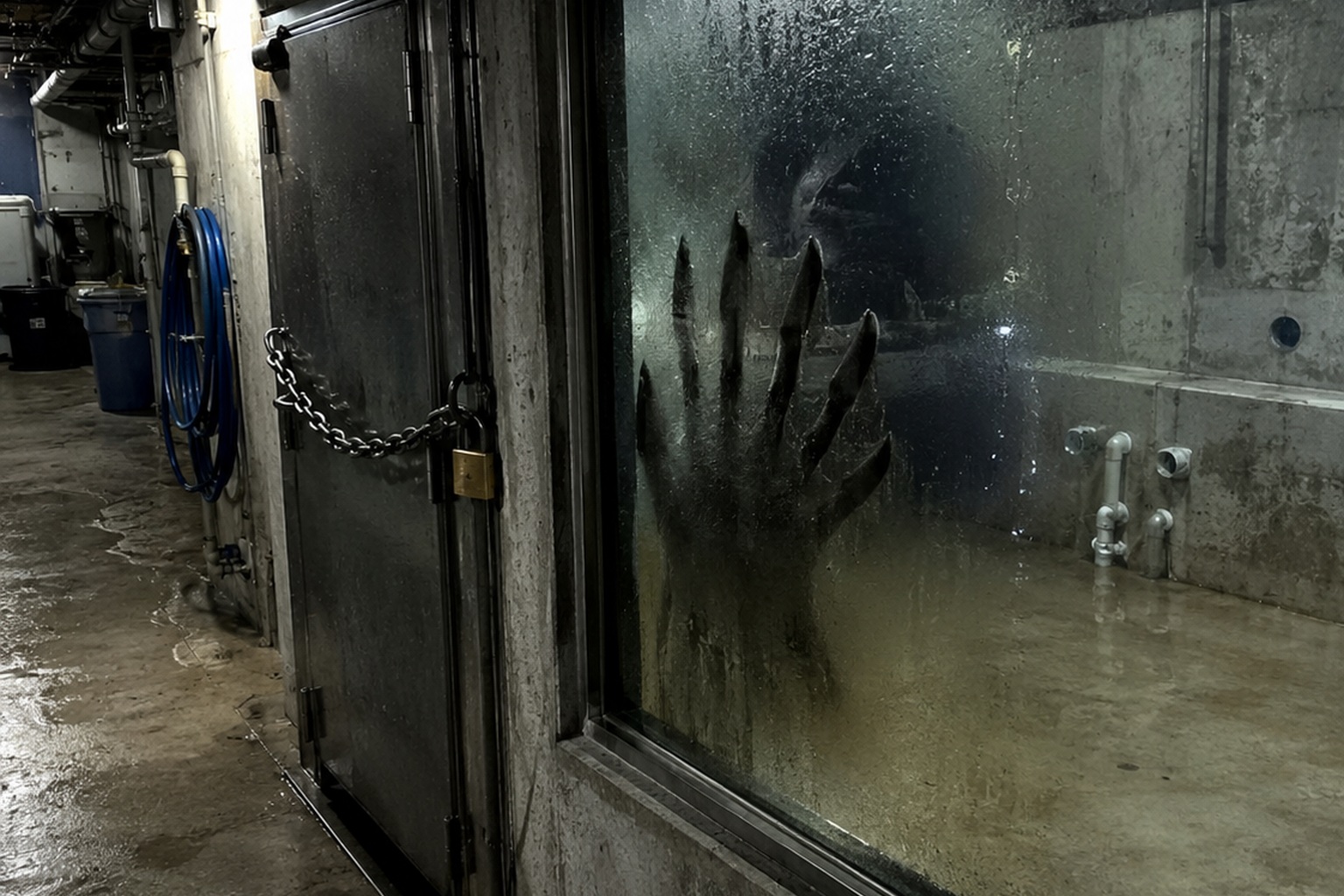
Most visitors never imagine what an aquarium becomes after closing. The bright tunnels fall dark. Pumps continue humming beneath the floors. Lights over public exhibits fade one section at a time until only maintenance corridors remain awake.
Beyond the decorative glass sits another world. Concrete service halls stretch behind every exhibit, lined with pipes wrapped in insulation, rolling filtration carts, saltwater hoses, buckets, and metal access doors marked only with maintenance numbers. One corridor serves a retired turtle habitat. The exhibit had been drained for renovations weeks earlier.
Its water had been moved elsewhere. The turtles had already been relocated. The viewing windows faced an empty concrete basin waiting for resurfacing. Nothing alive remained inside. Or at least, that was the comfortable version of the story.
The Hall Nobody Needed To Visit
The service hallway wasn’t abandoned. Technicians still crossed it every morning to inspect filtration valves that supplied neighboring exhibits. The turtle tank itself stayed isolated. Its steel access hatch remained locked with a thick maintenance chain because fresh sealant coated sections of the interior walls.
Nobody had reason to enter. The concrete floor inside had dried completely. Workers joked it was the quietest place in the building because nothing ever splashed anymore. Even the smell had changed.
Instead of algae and damp stone, the empty habitat carried only drying concrete, fresh epoxy, and old salt. The hallway camera overlooked the service door rather than the public viewing glass. It existed to watch equipment deliveries and monitor expensive filtration controls. For months it showed exactly the same routine.
What The Camera Seemed To Show
Rolling carts. Technicians. Replacement pumps. Nothing memorable.
Until one rainy Tuesday before sunrise.
Water Where None Should Remain The first person through the corridor noticed puddles. Not many.
Just scattered patches leading toward the chained service hatch. Maintenance assumed someone had tracked rainwater inside while unloading equipment. The puddles stopped several feet from the door. There were no footprints continuing away.
Only shallow pools that reflected the fluorescent lights overhead. When one technician bent down, he expected muddy water. Instead it smelled faintly like stagnant seawater. Not strong.
Just enough to seem wrong inside a completely drained habitat. The hatch remained chained exactly as it had been the previous evening. Its numbered seal still hung untouched. Nobody opened it.
Why The Setting Made It Hard To Dismiss
There seemed little reason to. The puddles slowly dried by themselves during the morning. By lunch they were gone. The incident became another strange maintenance story destined to disappear.
Then the hallway camera was reviewed while checking delivery times.
Something Waiting Behind Dry Glass Hours before anyone arrived, the corridor sat silent beneath buzzing fluorescent lights. Nothing moved.
Then moisture appeared. Not dripping from the ceiling. Not leaking beneath pipes. Tiny beads gathered across the outside of the empty turtle tank viewing glass.
Condensation. On the wrong side. The basin behind that glass contained no water. No humidity source remained.
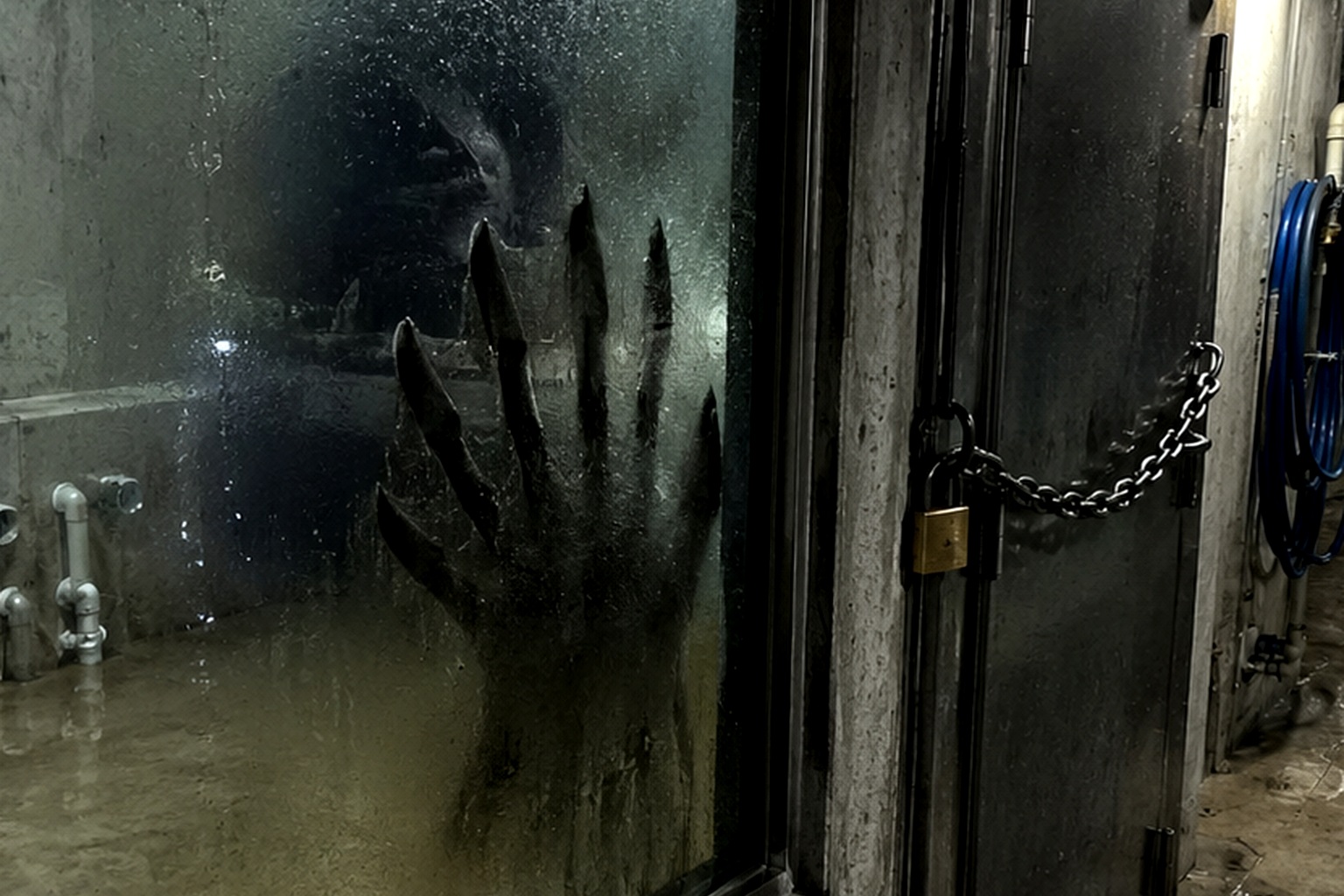
Yet the window slowly fogged from inside. The clouding spread outward until nearly the entire viewing panel shimmered with moisture. Then five long shapes touched the glass. They weren’t fingerprints.
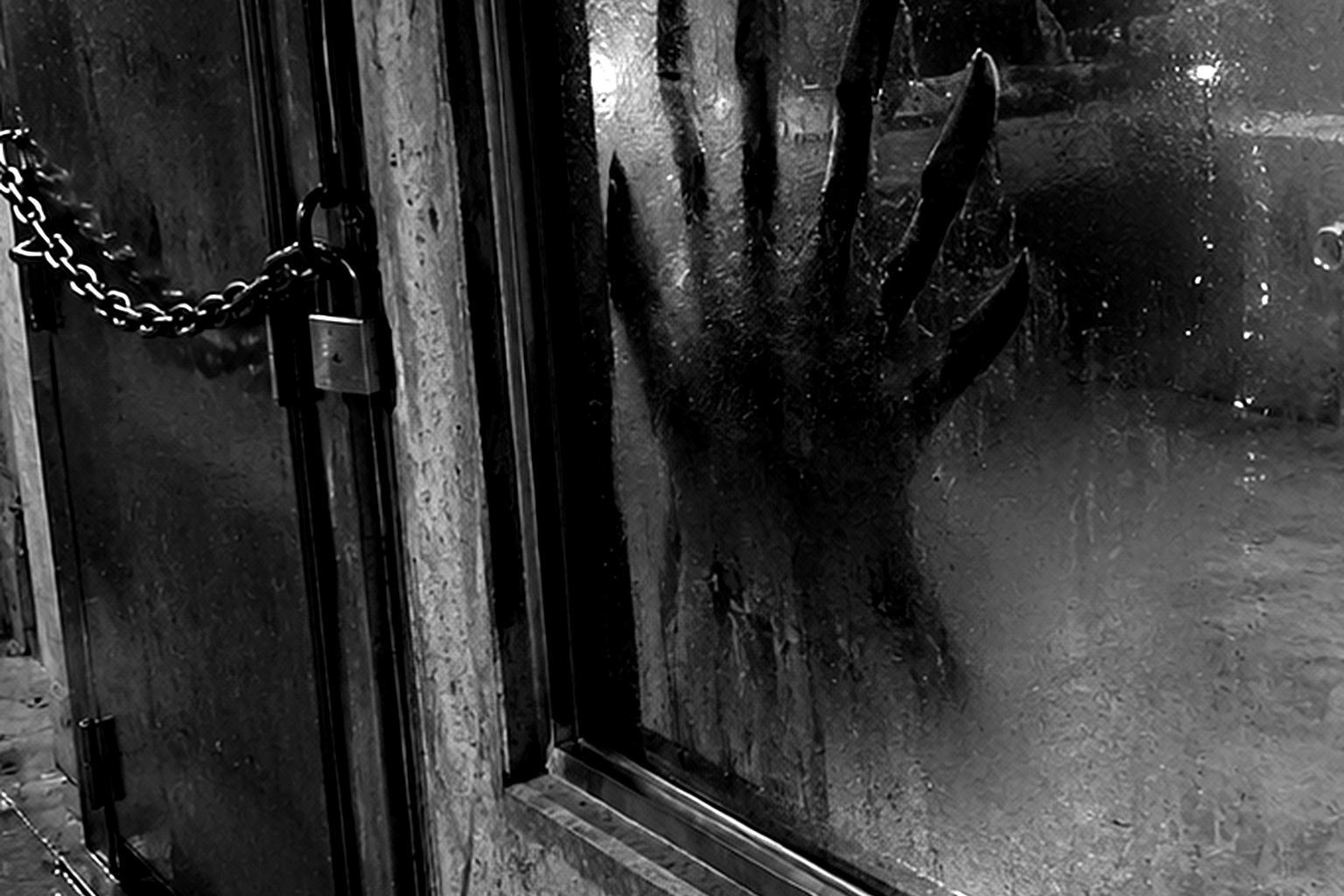
They resembled narrow claws pressing flat against wet glass from inside the drained enclosure. Each left clean streaks through the condensation. The marks stayed perfectly still. Slowly, something larger leaned forward behind them.
The Concrete Detail That Did Not Fit
Its outline wasn’t hidden in darkness. It looked slick. Its surface reflected the hallway lights like soaked skin. Its head never became fully visible.
Instead the claws flattened harder, spreading unnaturally wide as though testing the barrier. No impact. No scratching. Only steady pressure.
The chains on the service hatch never moved. No door opened. Nothing entered. Nothing left.
The hallway remained locked from both directions.
The Empty Tank That Didn’t Stay Empty Workers eventually unlocked the service hatch later that afternoon. Not because of the strange image.
Because resurfacing needed to continue. Everything inside appeared ordinary. Dry concrete. Empty filtration ports.
What People Checked Afterward
Scaffolding. Plastic sheeting. No standing water. No footprints.
No animal. No damaged sealant. The viewing glass looked spotless from the interior. Whatever moisture had covered it earlier had disappeared completely.
One worker laughed and blamed temperature differences. Another pointed toward the untouched dust beneath the scaffolding. Nothing large had crossed that floor. The basin remained exactly as it should.
Except for one detail. Near the viewing panel, several discarded turtle shells used for educational demonstrations had been stacked neatly on a shelf the previous evening. Now every shell faced the glass. Not scattered.
Not fallen. Turned together. Their empty openings pointed directly toward the window where the wet claws had rested. Nobody remembered arranging them that way.
The
Second Morning Changed Everything The following dawn arrived clear and dry. No rain. No storms.
The Small Detail That Changed The Story
The service hallway should have remained spotless. Instead another technician stopped halfway down the corridor. Water covered the floor again. This time it formed a single narrow trail.
It began at the viewing glass. Not the ceiling. Not nearby pipes. The water stretched across the concrete before ending beneath the chained hatch.
The chain itself stayed dry. So did the padlock. Only the floor beneath shimmered. Nearby stood a rolling maintenance ladder.
Its rubber wheels were soaked. Its upper platform remained dry. Someone joked that whatever left the water never climbed. Nobody laughed for long.
Fresh condensation slowly appeared on the viewing glass while they watched. Not quickly. Patiently. Tiny droplets gathered from nothing.
Every worker stepped backward together. Nobody suggested opening the hatch. The corridor emptied within minutes. Later inspections found nothing unusual again.
Only drying concrete. Only silence. Only clean glass.
How The Place Felt Different Later
Looking Closer Than Anyone Wanted
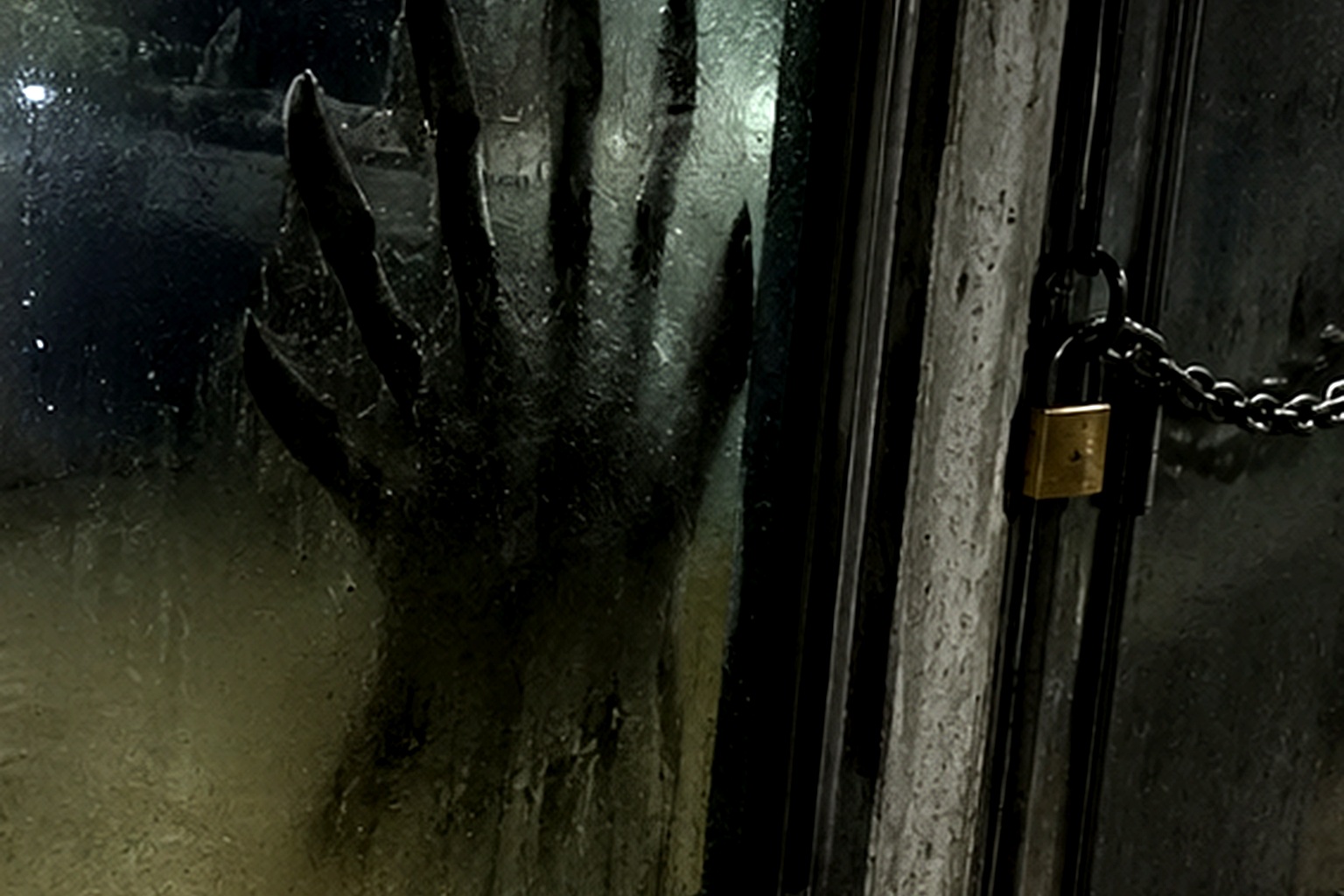
Curiosity has a way of surviving discomfort. The hallway images circulated quietly among staff during breaks. People enlarged individual frames searching for reflections or equipment that might explain the strange shape. Instead they noticed details nobody had seen at normal size.
The claws weren’t spread evenly. The middle pair bent backward slightly, almost like joints that folded in the opposite direction from human fingers. Thin streams of water appeared to trickle upward rather than downward. Tiny bubbles clung to the moisture coating the glass.
As if the condensation belonged underwater instead of open air. One technician pointed toward the corner nearest the floor. There, barely visible, sat what looked like the rounded edge of an old turtle feeding rock. Except that rock had been removed during demolition two weeks before.
Inventory records showed it stored across the building. Yet something with the same shape appeared behind the glass beside the wet figure. The image refused to become clearer. The more it was enlarged, the more attention drifted back toward the claws.
Long. Flat. Patient. Not striking.
Why This Image Still Gets Shared
Waiting.
The Hallway Everyone Walks Past Faster Renovations eventually finished. Fresh water returned.
Young turtles moved into their redesigned habitat. Families once again crowded the public viewing windows without suspecting anything unusual had ever happened behind them. Children laughed whenever turtles swam toward the glass. The service hallway remained off-limits as always.
Its camera continued watching pipes and equipment. Nothing dramatic appeared afterward. No soaked figure. No impossible condensation.
No waiting claws. Even so, technicians developed quiet habits. Nobody lingered near the empty maintenance side of the turtle exhibit before sunrise. Cleaning carts never stayed parked beside that viewing window overnight.
And if someone noticed unexplained damp patches leading toward the chained hatch, they quietly found another route through the building instead of following them. Because every aquarium depends on glass. Glass separates visitors from water. Workers from machinery.
People from the lives moving silently beneath the surface. But every now and then, a forgotten maintenance corridor suggests the barrier may work both ways. And in one hallway hidden behind concrete walls and humming pumps, there was a single morning when something wet, clawed, and remarkably patient seemed perfectly willing to wait until the tank became empty before pressing gently against the only window left between itself and everyone outside.