The Detail That Made The Story Hard To Ignore
The greenhouse had been closed for nearly six weeks before anyone noticed the footprints. It stood behind an old family-owned garden center just outside a quiet farming town where spring normally meant crowded parking lots and rows of flowering baskets waiting beneath warm panes of glass. But that year, a burst water pipe in the irrigation system forced the owners to shut down the largest greenhouse until repairs could be completed.
The heating remained on just enough to protect the remaining tropical plants. Automatic misting systems cycled every few hours. Security lights illuminated the glass structure after sunset. Motion cameras covered every entrance. No one was supposed to be inside. During the first few weeks, nothing unusual happened.
Employees occasionally reviewed the cameras after receiving routine motion alerts triggered by drifting condensation, moths, or shifting leaves beneath circulating fans. Every alert ended the same way: empty aisles, rows of hanging ferns, damp concrete floors disappearing into dense tropical foliage. Then came the Tuesday morning camera capture.
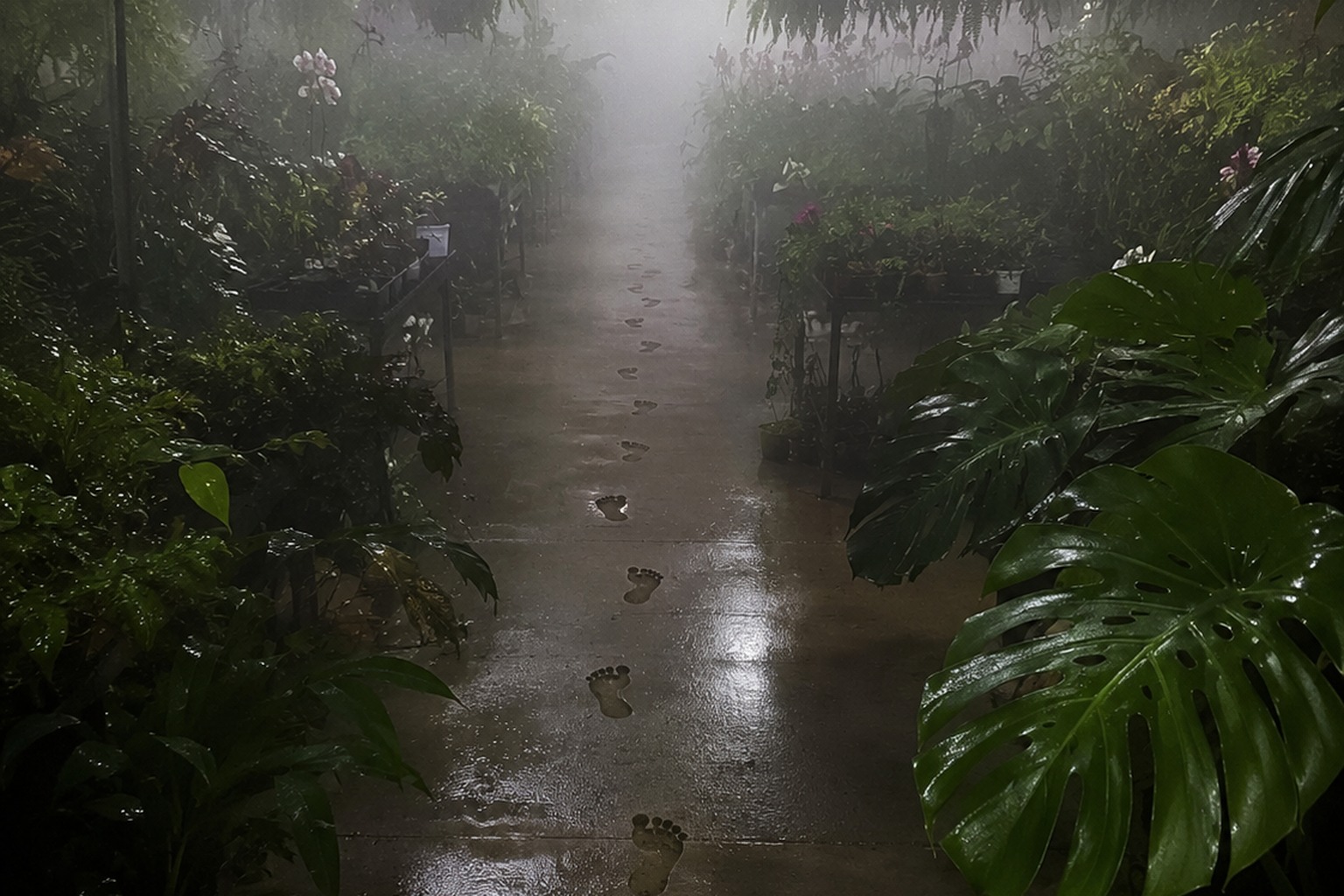
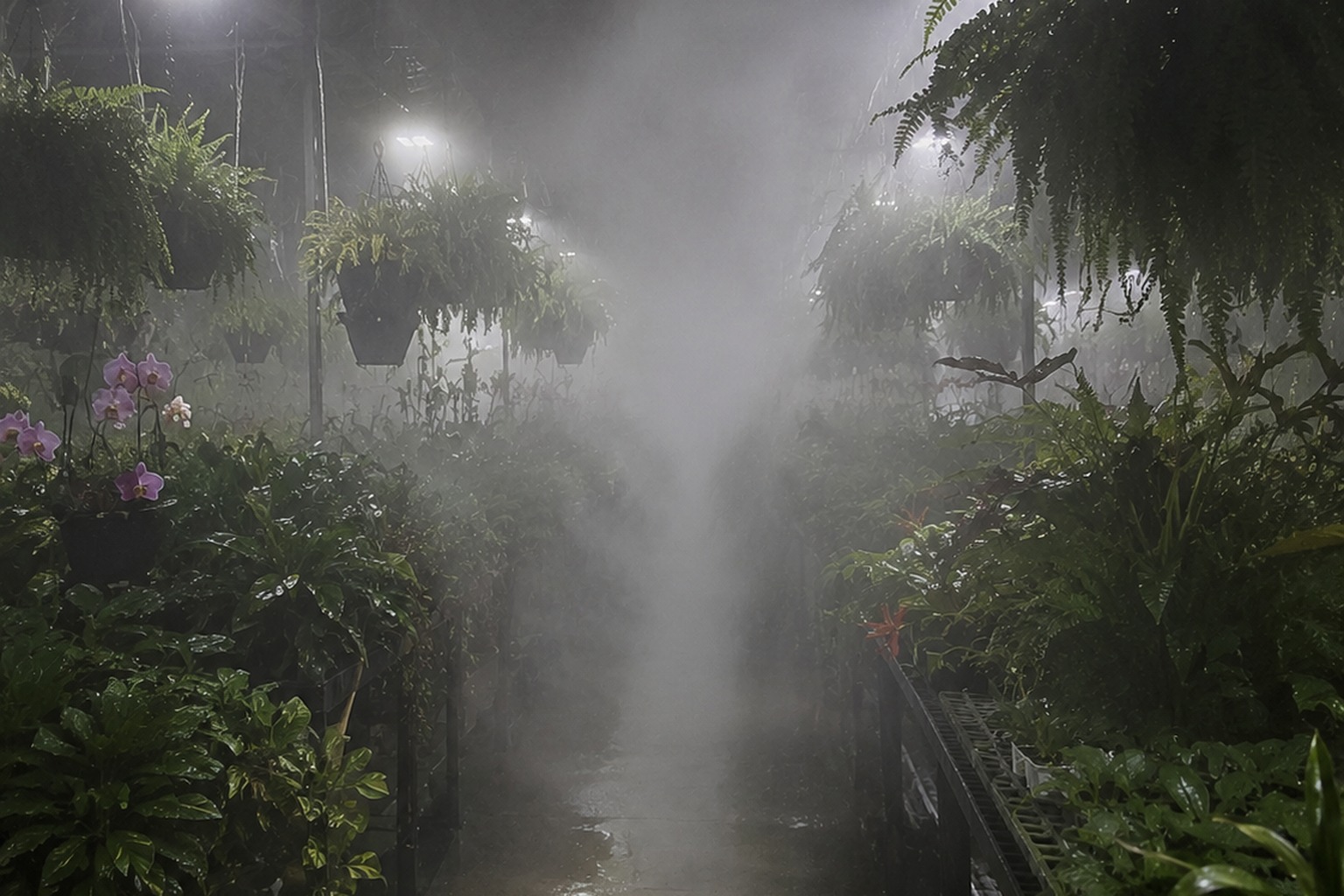
The camera stills itself looked ordinary. Dense mist drifted from overhead nozzles as the automated watering system activated shortly after 2:40 a.m. Tiny droplets coated every pane of glass until the greenhouse seemed wrapped in pale white fog. Visibility dropped to only thirty or forty feet.
The security camera facing the central walkway continued camera capture. Nothing entered. Nothing moved. For nearly three minutes, the mist slowly settled toward the floor.
Then something impossible appeared. A single wet footprint. It wasn't forming because someone stepped into view. It simply appeared.
What The Photo Seemed To Show
Dark against the pale concrete. Perfectly shaped. Five toes. Bare human foot.
Several seconds later another footprint appeared farther ahead. Then another. And another. Each one emerged from empty air, spaced exactly as though someone invisible was calmly walking through the greenhouse.
No body. No shadow. Only fresh footprints darkening the wet concrete one after another. By the time the sequence finished, nearly thirty footprints crossed the main aisle before disappearing near the rear propagation benches.
The camera never captured anyone making them. The family assumed there had to be an explanation. Perhaps moisture collected differently across the concrete. Perhaps condensation dripped from overhead supports.
Perhaps a maintenance worker had somehow entered unnoticed. The owner reviewed every other camera. All exterior doors remained closed. The loading dock stayed empty.
Emergency exits never opened. No motion occurred anywhere outside. Only that single interior camera recorded the strange trail. The following afternoon, curiosity won.
Why The Setting Made It Stranger
Three employees entered together while the greenhouse remained officially closed. The concrete had already dried, leaving no trace of the mysterious prints. They followed the path shown on the camera capture anyway. It crossed directly through several densely packed tables filled with orchids.
The footprints should have required stepping over irrigation pipes, rolling benches, and trays stacked waist-high with seedlings. Instead, the trail moved in perfectly straight lines as though none of those obstacles existed. One employee laughed nervously. "Maybe the camera warped the perspective."
Everyone wanted that explanation. None of them believed it. That evening they placed small plastic markers where each footprint had appeared in the camera stills. They left.
The greenhouse lights dimmed. The mist cycles continued overnight. The next morning every marker remained untouched. Nothing had disturbed them.
For several days the cameras showed nothing unusual. Life settled back toward normal. The family nearly dismissed the entire incident. Then Friday arrived.
Heavy rain pounded the greenhouse roof from sunset until after midnight. Wind pushed sheets of water across the glass walls while automatic vents remained sealed against the storm. At 1:17 a.m., another mist cycle began. This time the camera recorded something different.
The Detail People Usually Miss
Instead of footprints appearing immediately, the fog itself behaved strangely. Most of the greenhouse filled evenly with drifting moisture. Except for one narrow corridor. The mist divided around an invisible shape moving slowly through the center aisle.
Imagine someone walking underwater while currents split around their body. The vapor flowed exactly that way. A human-sized absence advanced through the greenhouse. Nothing visible occupied the empty space.
Only the fog acknowledged it. Leaves closest to the invisible corridor trembled. Large monstera leaves dipped downward. Vines hanging from overhead baskets swung gently after it passed.
Seconds later, fresh footprints once again appeared across the wet floor. One. Two. Three.
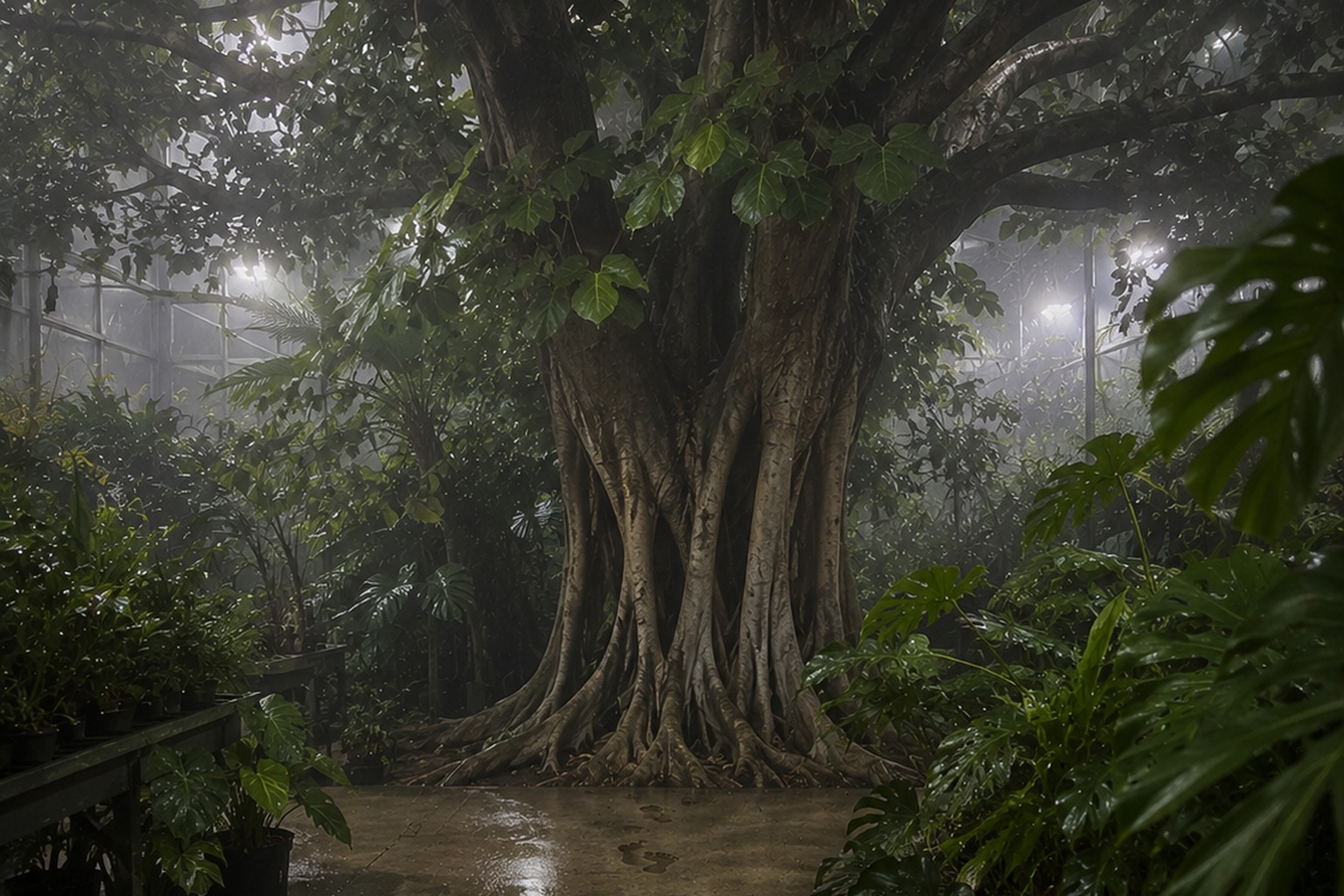
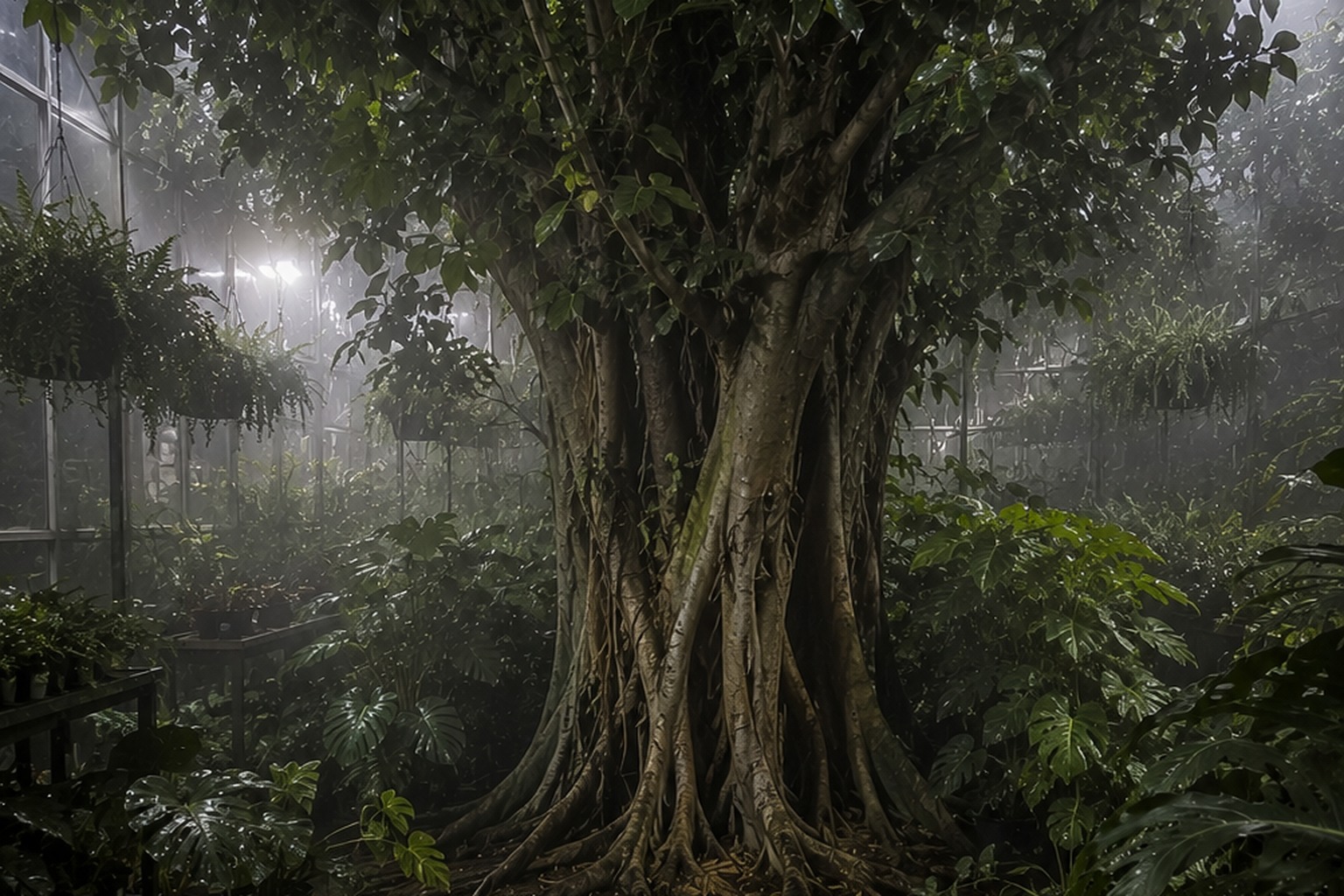
Perfectly timed with unseen footsteps. This time the trail stopped beside an enormous century-old fig tree kept inside the greenhouse since the business first opened decades earlier. The invisible walker seemed to remain there. For nearly two minutes.
Nothing happened. Then every broad leaf on the ancient tree began trembling. Not violently. Almost gently.
The Most Ordinary Explanation
Like dozens of unseen fingertips brushing across them. The camera capture ended before sunrise. By now the family stopped joking. Repair crews refused to work alone inside.
Employees volunteered for outdoor tasks instead. Even longtime gardeners admitted the greenhouse somehow felt different. Not dangerous. Occupied.
Visitors often describe certain buildings as having silence. This greenhouse had the opposite. Standing inside, people noticed constant tiny sounds. Soft leaf movements.
Gentle tapping. Occasional drips. Yet no matter where someone turned, those sounds always seemed to come from just beyond the next row of plants. Never close enough to locate.
One retired employee eventually shared something she had never mentioned before. Decades earlier, before the greenhouse expanded, the property belonged to an elderly horticulturist who specialized in cultivating extremely rare tropical species. He supposedly spent nearly every waking hour inside the original glasshouse. Neighbors often joked he spoke to the plants more than people.
When he died unexpectedly, local volunteers reportedly continued watering the collection until ownership transferred years later. Whether that story held any truth hardly mattered. It spread quickly through the staff. Suddenly every unexplained sound gained a possible owner.
Why That Explanation Still Feels Incomplete
The cameras kept camera capture. Weeks passed. Patterns slowly emerged. The invisible footprints always appeared during mist cycles.
Never during dry periods. They always followed nearly identical routes. Always barefoot. Always walking rather than running.
Always stopping beside mature plants. Never seedlings. Never empty benches. One technician suggested installing thermal cameras.
The owners agreed. The new equipment arrived the following Monday. Unlike ordinary security cameras, thermal imaging should have revealed any person hidden by darkness. The results solved nothing.
At 2:41 a.m., the familiar mist cycle began. The thermal camera displayed rows of cool benches, warm irrigation pipes, and heated soil beneath grow lights. Everything appeared normal. Then temperatures shifted.
Not because something became warmer. Because something became colder. A long vertical silhouette, several degrees below surrounding air, moved steadily through the greenhouse. Its outline wasn't sharply human.
The Part That Keeps The Story Alive
The upper portion appeared unusually narrow. The arms seemed longer than expected. Yet it walked with unmistakably human rhythm. Each step coincided perfectly with fresh footprints appearing on the ordinary security camera stills.
The thermal camera capture lasted only forty seconds before freezing. Technicians later blamed moisture interfering with electronics. The explanation satisfied no one. After replacing the equipment, they tried again.
The replacement never malfunctioned. Because it never captured the figure again. Only the regular camera continued camera capture footprints. Eventually business resumed.
Customers returned. Plants filled every aisle. The strange camera captures became quiet conversation among longtime employees but rarely reached visitors. Until the delivery driver.
He had never heard the stories. One humid afternoon he unloaded fertilizer pallets near the rear greenhouse entrance while workers organized inventory farther inside. A few minutes later he casually asked who had walked barefoot across the wet floor. Everyone stopped.
"What barefoot person?" "The one that just crossed toward the orchids." He pointed toward the center aisle. The employees looked.
Nothing stood there. Only damp concrete. No fresh footprints. The driver frowned.
"I thought maybe someone worked without shoes." He shrugged and continued unloading. Later that evening he declined future deliveries to the greenhouse. He never explained why.
The owners eventually stopped reviewing every motion alert. Business demanded attention elsewhere. The cameras still operate. Automatic mist still fills the greenhouse several nights each week.
Employees occasionally receive routine alerts around two or three in the morning. Most delete them without watching. The few who still look usually regret it. Sometimes the greenhouse appears completely empty.
Sometimes condensation drifts quietly beneath the roof. And every now and then, if the concrete is wet enough and the mist hangs low enough, dark footprints begin appearing one by one across the floor, crossing the silent greenhouse toward rows of thriving plants that seem to lean ever so slightly as something unseen passes between them.
No one has ever captured whoever leaves them. Only the path remains. As though the greenhouse itself remembers every step, even when the walker cannot be seen.