The Ordinary Detail That Started It
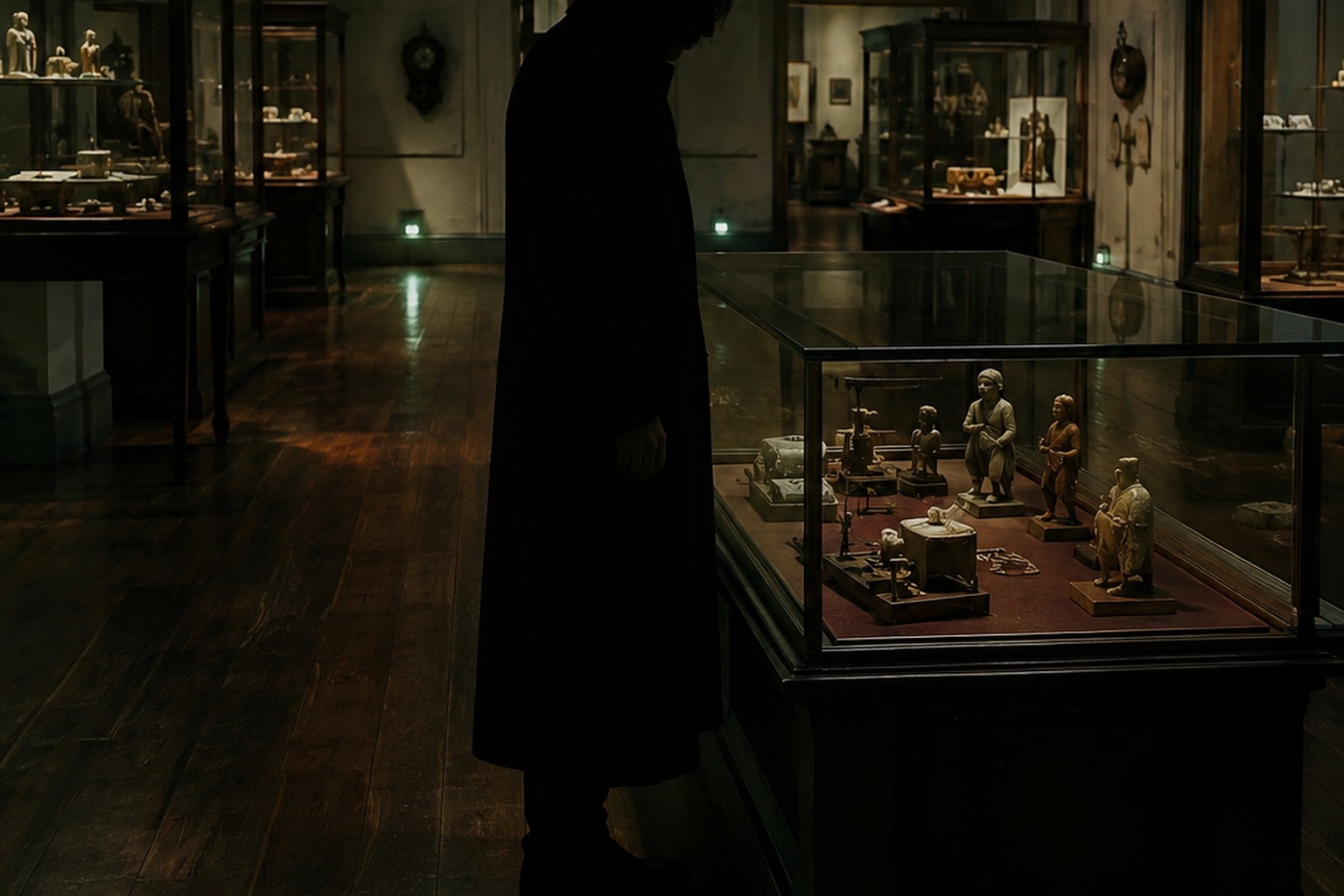
The museum had been closed for nearly four hours when the movement first appeared. Not movement in the usual sense. Nothing rushed across the room. No doors opened. No alarms sounded. The cameras simply showed a person standing in Gallery Three, beside a waist-high glass display case that contained a collection of carved ivory figures from the late nineteenth century.
The problem was that no one had entered the building. The camera still would later be replayed dozens of times by staff members who couldn't agree on what they were seeing. Some believed it was an optical illusion caused by reflections from emergency lighting. Others insisted it looked exactly like a visitor who had wandered in after hours.
Only one detail refused to fit either explanation. Whoever—or whatever—stood beside the glass case never appeared on any camera leading into the gallery. The museum occupied an aging stone courthouse built more than a century earlier. Its thick walls kept the galleries cool year-round, and after sunset the building settled into an almost complete silence. The heating system shut down automatically. Motion sensors dimmed the lights until only narrow strips of emergency illumination remained along the floors.
Every room was watched. Hallways, staircases, entrances, storage rooms, conservation labs, loading docks—over eighty cameras recorded continuously. Security guards rarely encountered anything more exciting than a raccoon investigating the rear dumpster or a maintenance contractor arriving before sunrise. Gallery Three was one of the quieter rooms.
It displayed domestic artifacts collected from abandoned farmhouses across the county. Wooden clocks. Hand-sewn quilts. Antique dolls. Worn leather journals. Silver tea sets. Small carved figurines displayed beneath crystal-clear museum glass. Visitors often lingered there longer than expected. The room carried an unusual stillness that seemed heavier than the rest of the building. Even during busy weekends, conversations tended to become quieter inside those walls.
No one ever questioned why. One Thursday evening, the final guests left shortly after six. Employees followed their usual closing routine. They checked display locks.
Verified humidity controls. Secured storage doors. Activated motion alarms. The last curator left through the front entrance at 6:47 p.m.
Electronic logs suggested it. Every exterior door remained locked afterward. At 10:18 p.m., Camera G3 quietly recorded someone standing beside Display Case Four. The timestamp changed one second at a time. 10:18:01.
Why People Looked Twice
10:18:02. 10:18:03. Nothing moved. The figure simply stood there.
Whoever it was wore what appeared to be a long dark coat that reached below the knees. The head leaned slightly toward the glass as though studying the objects inside. Hands rested at the sides. There was no visible face. Not because it was hidden.
Because the camera never captured enough detail. Security camera still often blurred distant features, but this was different. The body appeared unusually clear while the head remained strangely featureless, like a blank patch where details should have existed. He frowned. Gallery Three showed someone inside.
He immediately looked toward the neighboring camera feeds. Gallery Two. Empty. Hallway East.
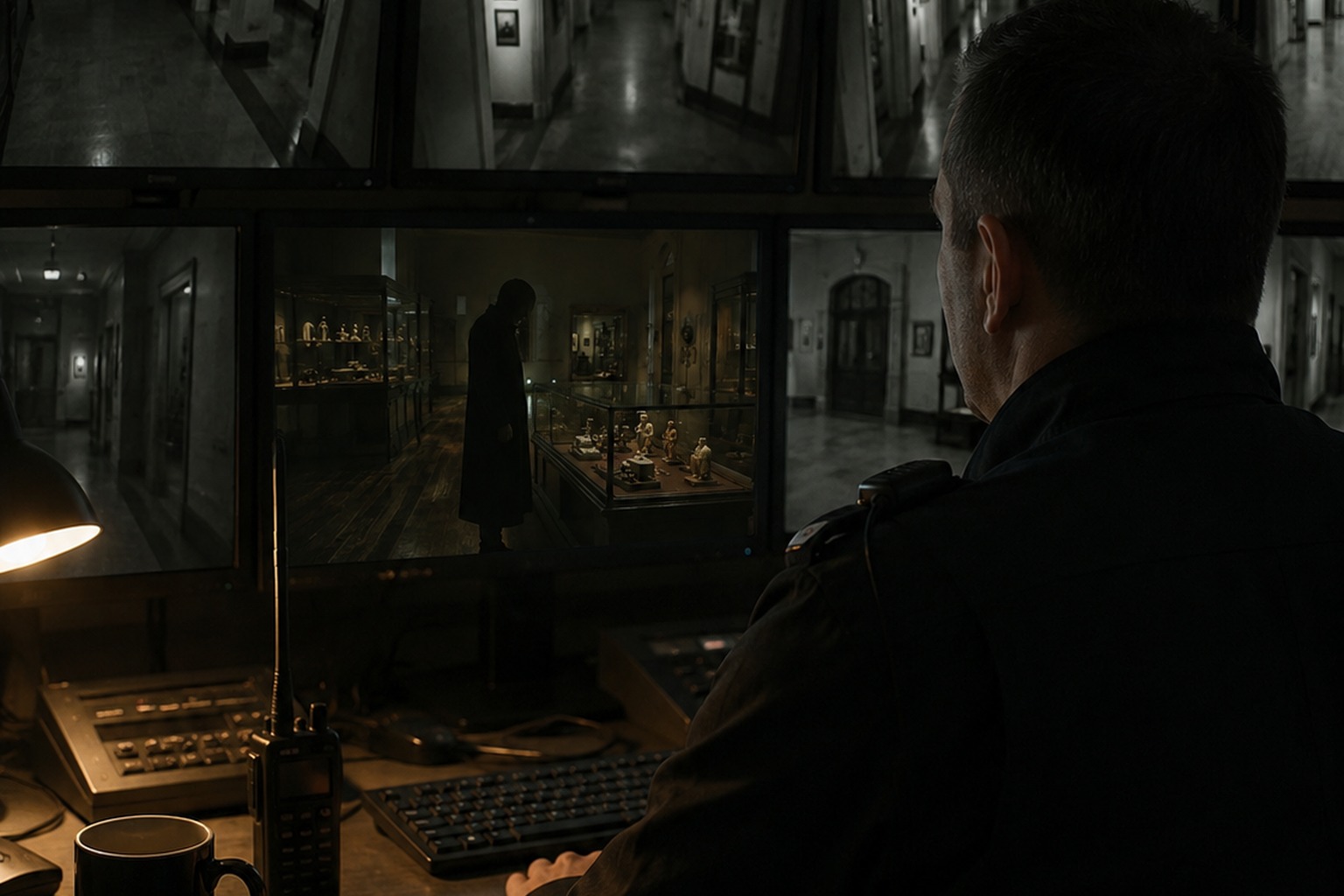
Empty. South Entrance. Locked. Gallery Four.
Empty. No person walking. No opening door. Nothing. Only Camera G3 displayed the silent visitor. It took less than ninety seconds to reach the gallery.
The Part That Did Not Fit
When he unlocked the heavy fire door, cool air drifted into the hallway. Gallery Three was empty. Every display case remained locked. Dust on the polished wooden floor showed only his own footprints from entering.
He checked behind partitions. Storage closets. Emergency exits. Nothing.
Returning to the security office, he expected to find the camera corrected. Instead, the figure was still there. Standing in exactly the same place. Looking into the same display case.
The guard later described a feeling he couldn't explain. He knew the room was empty because he had just searched it. Yet the monitor insisted someone remained inside. He radioed another employee who lived nearby.
Together they reviewed additional camera angles. Gallery Three had three cameras. Only one showed the figure. The second camera overlooked the same display from the opposite corner.
Nothing. The third camera pointed toward the entrance. Nothing. Not even a shadow. Only Camera G3 contained the motionless silhouette. The two employees replayed the previous ten minutes. Then thirty.
What A Simple Explanation Could Be
Then an hour. Frame by frame. The figure never walked into view. One frame showed an empty gallery.
The next frame showed someone already standing beside the glass. There was no transition. No blur. No partial movement.
Simply…empty. Then occupied. Even stranger, timestamps remained perfectly continuous. No camera record interruption.
No dropped frames. No camera reset. Just an impossible appearance. Curiosity gradually spread among museum staff over the following week.
Most dismissed the camera record after seeing it once. Others watched repeatedly. A volunteer archivist noticed something no one else had mentioned. The glass display case reflected the emergency lighting throughout the room.
Cabinets. Walls. Benches. Display labels. Everything produced faint reflections. Everything except the figure. The person standing inches from the glass produced no visible reflection whatsoever.
Why That Answer Still Felt Incomplete
At first everyone assumed compression artifacts explained it. Security cameras weren't designed for perfect image quality. But enlarging the camera still only deepened the mystery. Nearby objects reflected normally.
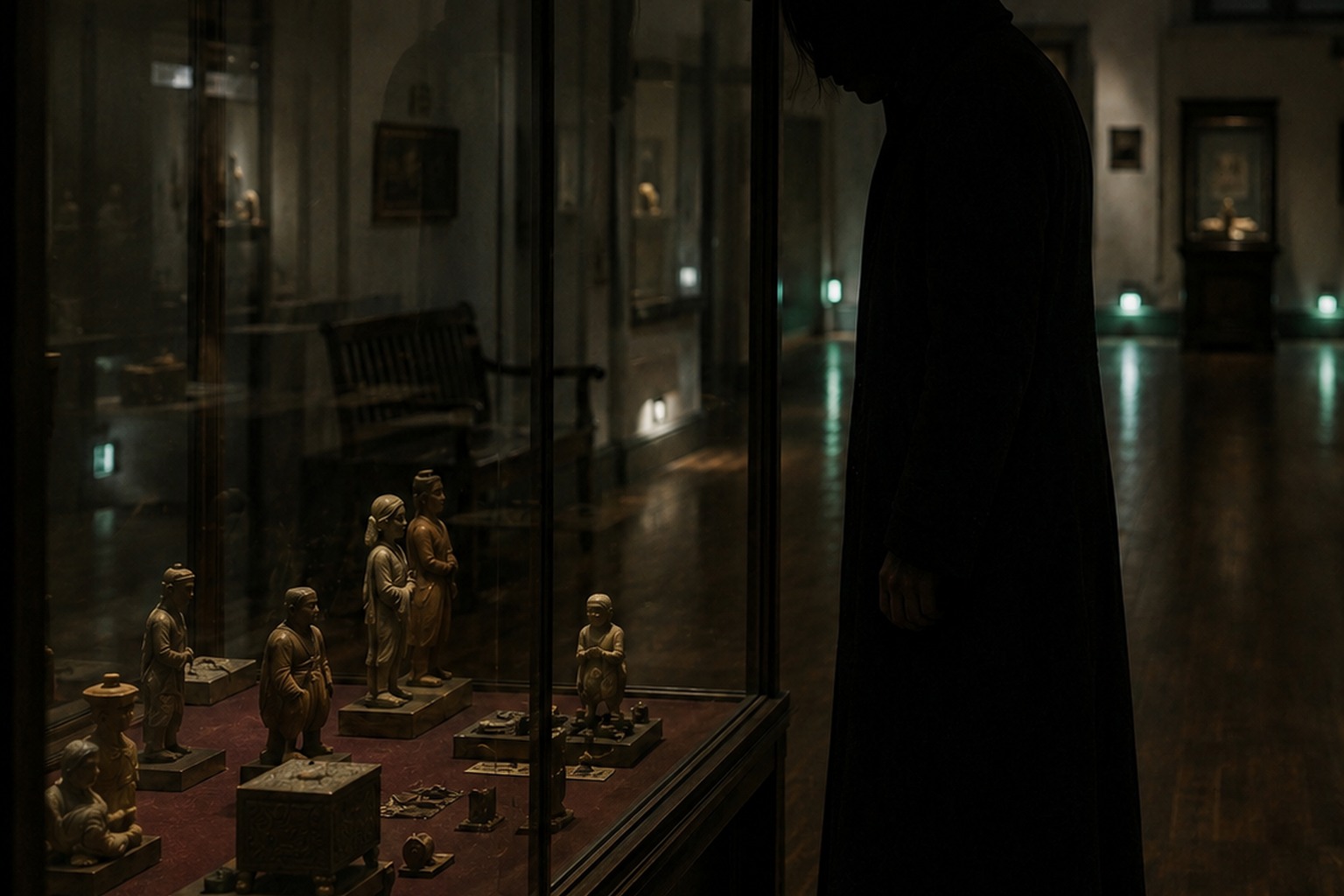
Even tiny brass hinges appeared in the glass. The figure did not. Months passed. The camera still became one more strange museum story told quietly among employees after evening events.
Eventually it might have faded completely. Then Camera G3 recorded the gallery again. This time the figure wasn't standing beside the case. It was kneeling.
The timestamp read 9:56 p.m. The building had been closed for over three hours. Again, no entry appeared on surrounding cameras. Again, alarms remained silent.
Again, only one camera showed anything unusual. The figure knelt close to the display, its head lowered almost level with the glass. One arm slowly lifted. Not quickly.
Not unnaturally. Simply with deliberate patience. The hand stopped just above the surface without touching it. For nearly six minutes, nothing changed. Then the arm lowered. The figure remained perfectly still another two minutes before disappearing between consecutive frames. No walking.
The Detail People Kept Returning To
No fading. Present. Then absent. Staff examined the display itself.
Nothing had been disturbed. Inside rested several carved figurines depicting rural families gathered around a fireplace. One artifact drew particular attention. A small wooden carving represented a museum donor's great-grandmother, created by her husband shortly before both died during the influenza pandemic over a century ago.
Records indicated it had always remained in private family ownership until donated decades later. An elderly volunteer quietly admitted something she had never mentioned before. She assumed it had been another employee. She greeted them.
No reply came. Looking away for only a second while placing cleaning supplies on the floor, she turned back. The gallery was empty. She never reported it because she felt embarrassed.
Museum management eventually replaced the surveillance system with higher-resolution digital equipment. Every camera throughout the building was upgraded. Cabling was replaced. Software modernized.
Storage servers expanded. Gallery Three received two additional cameras specifically covering Display Case Four from multiple directions. Employees joked that if the mysterious visitor returned, they would finally solve the mystery. For nearly eight months, nothing happened. The upgraded system recorded thousands of uneventful hours.
How The Story Changed Afterward
Then one rainy autumn evening, an automated motion alert appeared from Gallery Three. Security immediately opened the live feed. Camera One showed an empty gallery. Camera Two showed an empty gallery.
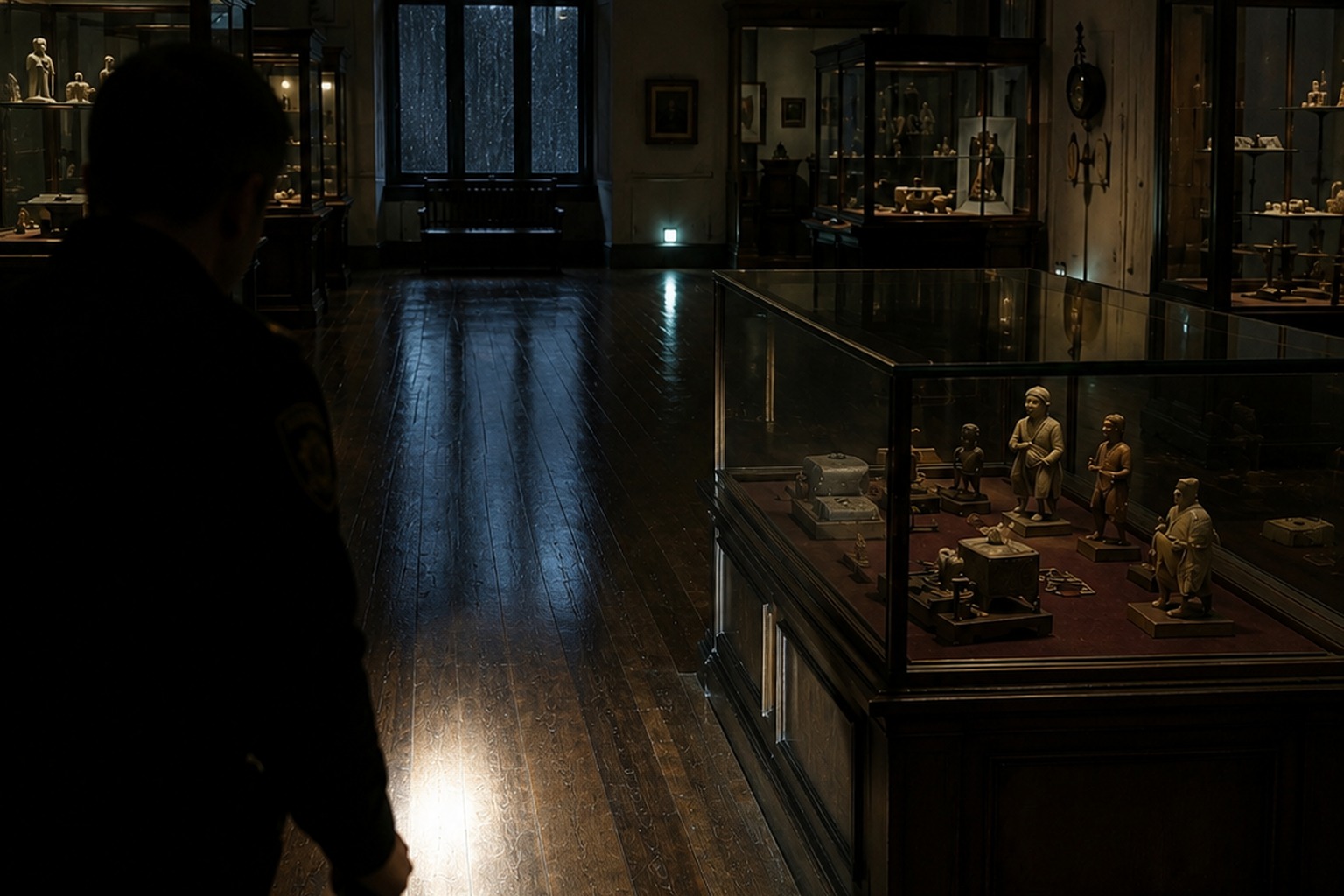
Camera Three showed an empty gallery. Camera Four… Displayed someone standing beside the glass case. Again.
Only one camera. The person appeared clearer than before. The long coat seemed textured. Shoulders slightly hunched.
Head angled downward. Security rushed upstairs immediately. The gallery was empty before they arrived. No alarms.
No forced entry. No footprints tracked across freshly mopped floors. Reviewing the camera record revealed the same impossible sequence. One frame.
Nobody. Next frame. Someone. No approach. No departure. Only existence.
Why It Still Feels Unsettled
Word of the incident quietly circulated among former employees. Retired volunteers asked whether the old figure had returned. Some laughed. Others became noticeably uncomfortable.
One former curator shared a detail rarely discussed outside staff circles. Visitors occasionally asked about "the person by the glass." Not because they had seen an employee. Because they believed a museum guide was already standing inside the gallery waiting for them.
When they entered, no one was there. Those comments appeared years before the first security camera record. Always Gallery Three. Always the same display case.
Always someone standing quietly beside the glass. Glitches flicker. Compression shifts. Reflections move with changing light.
This figure never behaved that way. It stood with patient stillness. It appeared only on one camera at a time. It reflected nothing.
It entered nowhere. It left nowhere. And if you pause the final camera record just before the figure disappears, one unsettling detail becomes impossible to ignore. For the first time, the head isn't angled toward the artifacts beneath the glass. It's turned directly toward the camera. As though it had finally realized something else was watching.