County courthouses always seem older than the towns surrounding them. Even when newer buildings rise nearby, the courthouse keeps its polished stone steps, heavy wooden doors, and basement rooms that have quietly accumulated paperwork for generations.
Most visitors never think about where yesterday's files go. They sign a document, receive a stamped copy, and leave. The records disappear into places built to remember everything. Deep beneath the public counters, long aisles of steel shelving stretch through climate-controlled rooms where property deeds, marriage licenses, wills, court filings, and forgotten maps wait inside gray archival boxes.
Nothing dramatic ever happens there. The work is quiet. Folders move from one shelf to another. Humidity stays carefully controlled.
The lights switch themselves off every evening. That was exactly why one maintenance worker never forgot the night he opened the monitoring software before locking the building.
The Last Floor Still Awake Closing the courthouse followed almost the same schedule every weekday.
The public left first. Law offices emptied afterward. Judges departed through a private hallway. Cleaning crews arrived shortly before sunset.
What The Camera Seemed To Show
The records department usually finished earliest. Employees returned every file before leaving because nothing could remain on the sorting carts overnight. The archive room itself required two separate keys. One unlocked the hallway door.
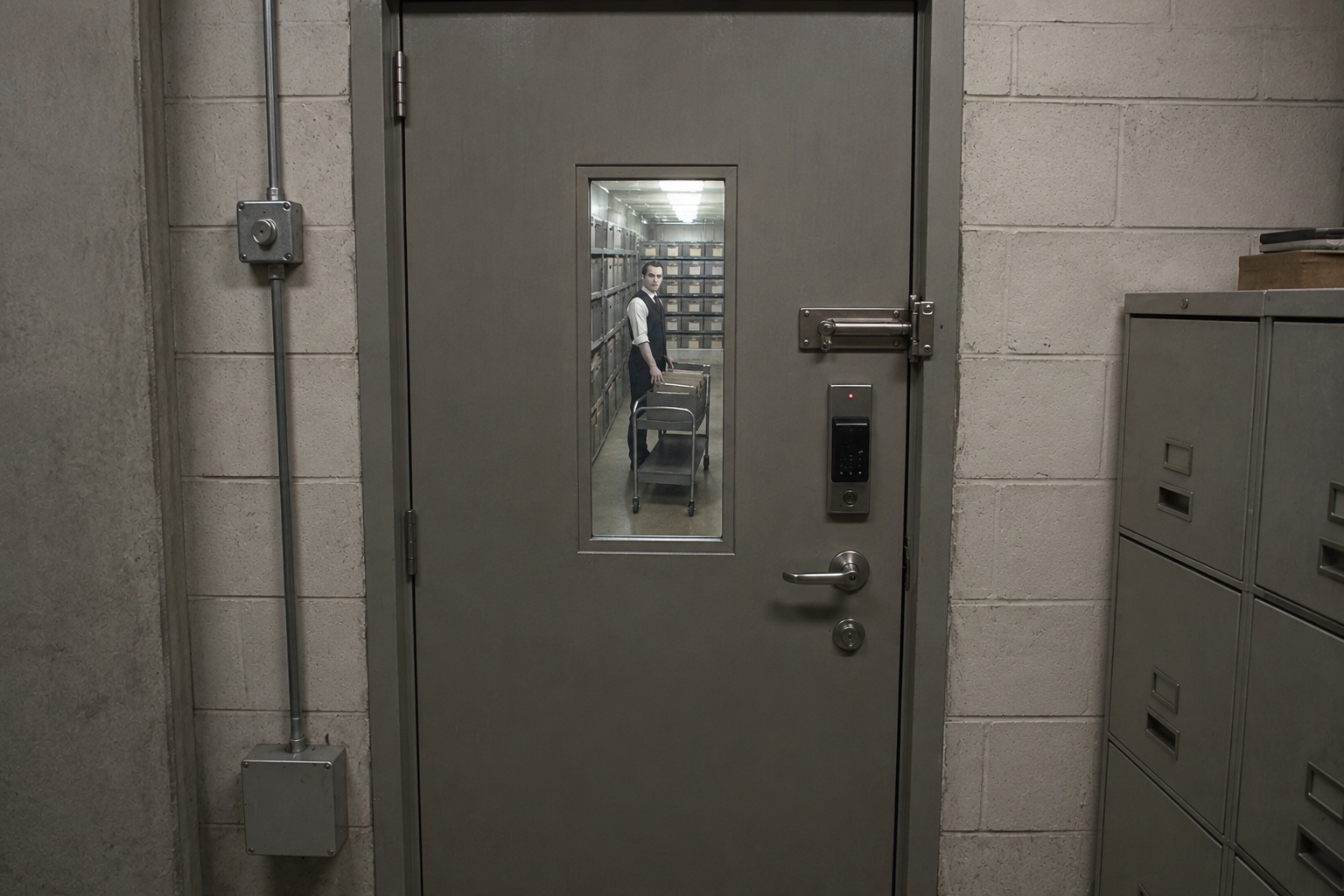
The second opened the heavy steel records entrance beyond it. After both doors closed, the building alarm recorded the area as secured until morning. The maintenance office overlooked a bank of security monitors. Most showed empty corridors.
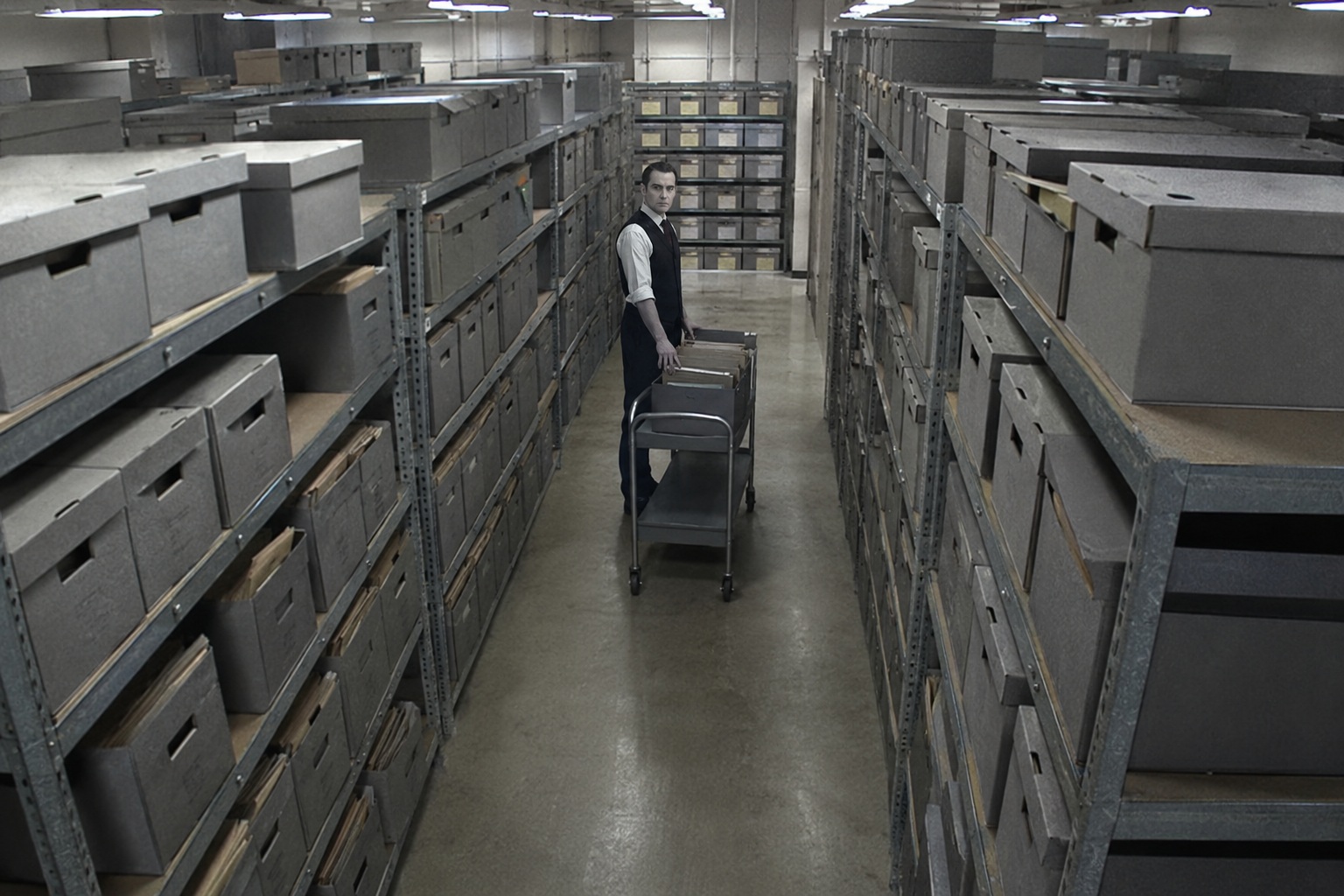
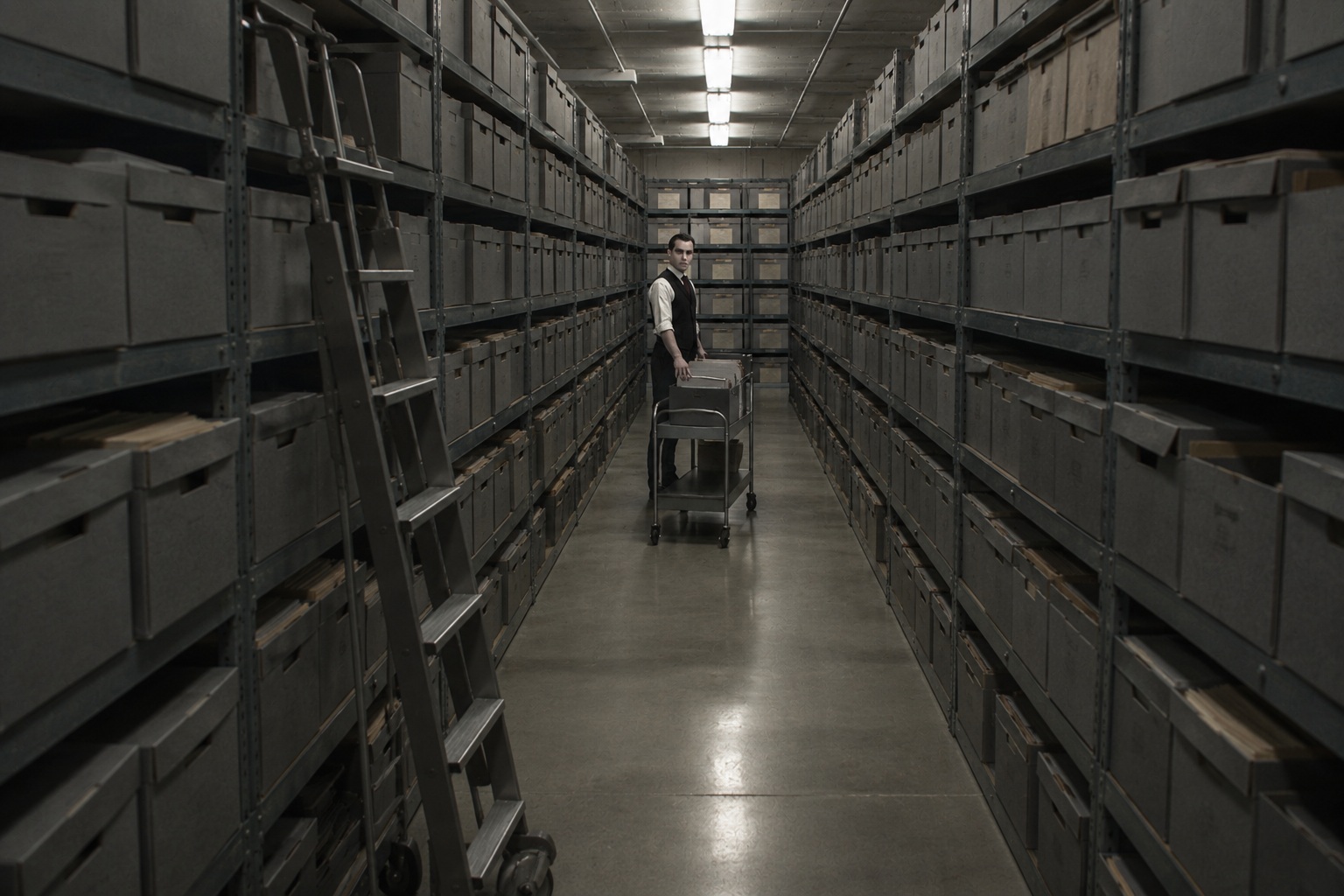
The courtroom cameras rarely changed. The archive camera almost never attracted attention. Its view covered three long rows of compact shelving separated by narrow walking aisles. Gray document boxes filled every shelf from floor to ceiling.
A rolling ladder rested against the far wall. Nothing moved except the ventilation system. That evening looked exactly the same. Until someone noticed a person standing halfway down the center aisle.
Someone Wearing Yesterday At first nobody reacted. Courthouse employees often worked late. Someone had probably forgotten to sign out.
The figure stood motionless between the shelves. It appeared to be wearing an old-fashioned white shirt beneath a dark vest. Its sleeves looked rolled neatly to the elbows. One arm hung at its side.
The other rested against a document cart. From the camera angle, the person's face seemed unusually pale. Not bright. Simply drained of warmth.
Why The Setting Made It Hard To Dismiss
The maintenance worker reached for the intercom button connected to the archive hallway. No reply came back. He tried again. Silence.
He zoomed the camera slightly. The shelves sharpened. The document boxes became clearer. The brass handle of the cart reflected ceiling lights.
The person remained perfectly still. Something about the clothing seemed strangely misplaced. Nobody in the courthouse dressed like that anymore. The outfit resembled photographs hanging in the hallway outside the county clerk's office, where employees from nearly a century ago stood proudly beside overflowing record books.
The Locked Hallway Thinking someone might have become ill, two employees walked downstairs together. The alarm panel still displayed the archive section as secure. Neither lock had registered an opening since staff left.
That should have been impossible if someone remained inside. They unlocked the first hallway door. The corridor beyond stood empty. Old framed county maps lined one wall.
The steel records door remained shut. Its seal looked untouched. One employee watched the monitor while the other unlocked the second door. The center aisle came into view exactly as it appeared on the screen.
The Concrete Detail That Did Not Fit
Gray boxes. Metal shelves. Document cart. Rolling ladder.
No person. They searched every aisle anyway. The room offered nowhere to hide. Shelf spacing barely allowed two people to pass one another.
Every ladder reached an open upper shelf. Every storage cabinet stood unlocked. No fresh paperwork sat on the tables. No recently moved boxes interrupted decades of careful organization.
When they returned upstairs, the monitor still displayed the empty room. The pale clerk had disappeared between shelves that had never been disturbed. A File
That Should Not Exist The story might have ended there.
Instead, something happened the following week. An archivist searched for a nineteenth-century property dispute requested by a local historian. The catalog pointed toward a box stored near the exact location where the motionless figure had stood. Inside rested neatly labeled folders.
Most matched the index. One did not. Its paper looked much older. Its handwriting flowed in faded black ink unlike the typed labels surrounding it.
What People Checked Afterward
The folder carried only a surname. No case number. No filing code. No official stamp.
Curious, the archivist opened it. The pages contained copied land descriptions written in careful script. Every sheet ended abruptly halfway through a sentence. None were signed.
Several dates appeared impossible. One page referred to courthouse renovations that would not happen for another twenty years according to county history. Assuming the folder had been misplaced from another collection, the archivist searched the digital catalog. Nothing matched.
The surname appeared nowhere. When the folder was set aside for further review, another employee called from across the aisle. She had found an empty gap on the shelf where no catalog entry existed. The strange folder fit the opening perfectly.
As though it had always belonged there.
The Photograph On The Wall Curiosity spread quietly through the courthouse. Nobody wanted to become the center of office gossip.
The Small Detail That Changed The Story
Still, more than one employee compared the pale figure on the monitor with framed historical photographs displayed upstairs. Most images showed groups of clerks standing beside towering stacks of bound volumes. One portrait attracted particular attention. It depicted the records office sometime during the early twentieth century.
Men and women faced the camera with solemn expressions expected of formal photographs from that era. Near the center stood a clerk wearing a white shirt beneath a dark vest. His sleeves were rolled neatly to the elbows. One arm rested against a document cart.
His posture looked strangely familiar. Someone enlarged the archive monitor image beside the old portrait. The clothing matched surprisingly well. Even the angle of the shoulders appeared similar.
Only one difference stood out. In the old photograph, the clerk looked healthy. In the monitor image, his skin seemed almost colorless. The comparison circulated quietly among a handful of employees before everyone agreed to stop discussing it during work hours.
The courthouse already carried enough local legends without adding another.
Morning Light Changes Everything Daily routines continued. Boxes arrived.
How The Place Felt Different Later
Boxes left. Researchers requested forgotten records. Nothing unusual happened for nearly a month. Then one Monday morning, the archive supervisor unlocked the records room before sunrise.
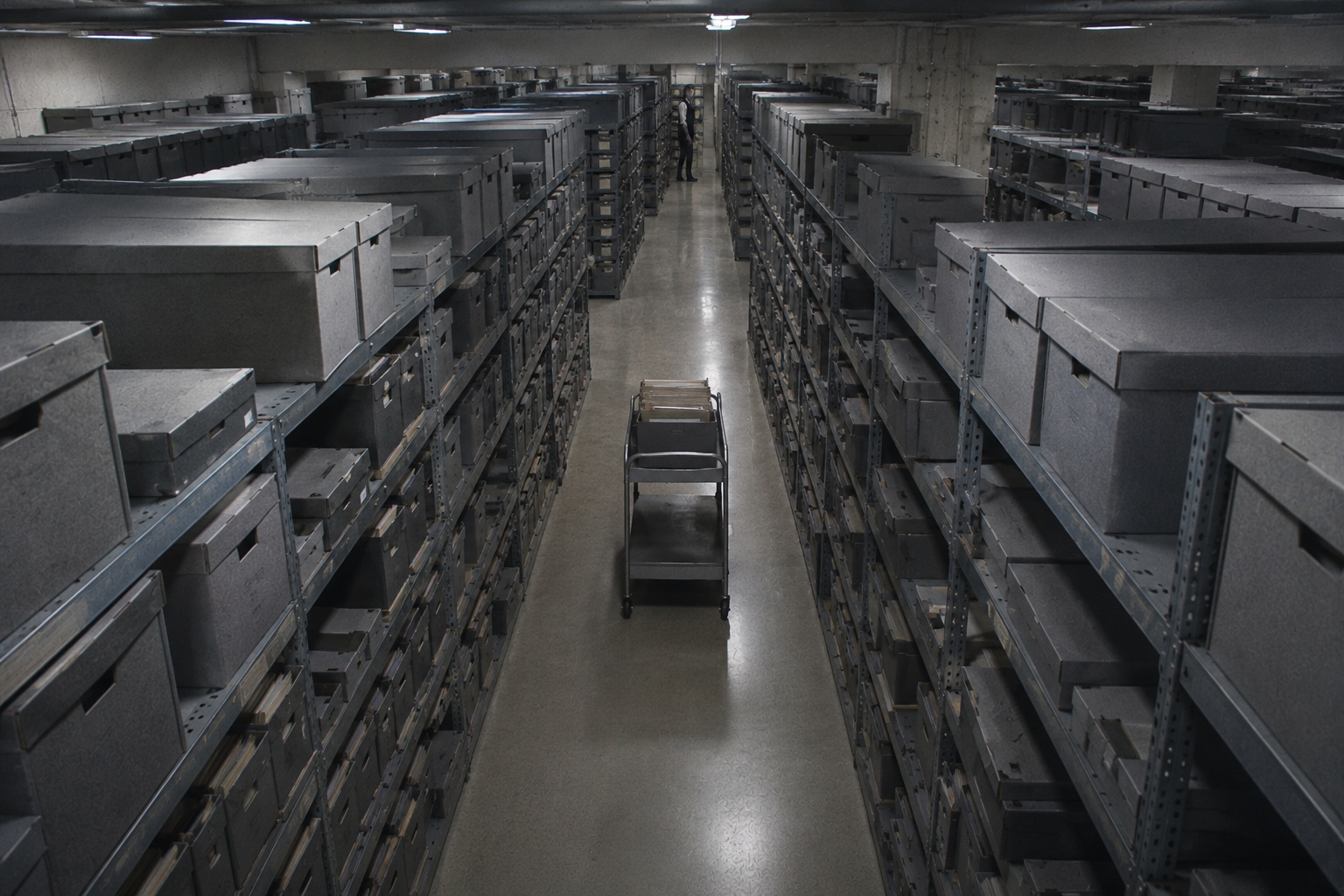
The hallway lights remained dim. The climate system hummed softly. Everything appeared normal. Until she noticed a document cart standing in the center aisle.
It had been stored against the far wall on Friday evening. Nobody admitted moving it. The alarm log listed no overnight entry. Attached to the cart rested a single folded inventory sheet.
It listed shelf locations in elegant handwriting unlike any modern office form. Every listed location corresponded to archive boxes needing conservation work during the coming year. The paper itself looked newly printed. The handwriting looked decades old.
Later that afternoon, staff checked each shelf. Every location truly contained aging folders requiring immediate preservation. Several might have been damaged within another season if nobody had noticed. The inventory sheet disappeared before anyone could file it.
Searches found nothing. It simply ceased to exist. Only photocopies remained in a supervisor's desk.
The Quiet Between The Shelves
Why This Image Still Gets Shared
The records room still closes every evening. Climate controls continue humming through the night. The shelves continue carrying generations of ordinary paperwork. Visitors walking through the courthouse upstairs never imagine how much history rests beneath their feet.
Marriage records. Boundary maps. Adoption papers. Forgotten lawsuits.
Entire lives reduced to labeled boxes arranged in perfect order. Employees still avoid lingering alone after hours. Not because they expect danger. Because silence feels different there once the building empties.
Some describe hearing slow footsteps that never reach the end of an aisle. Others mention catching sight of someone standing motionless between shelves until they look again. The figure never seems threatening. It never approaches.
It simply appears to be waiting beside the document cart, as though another day's filing remains unfinished. Perhaps every courthouse collects more than paper. Perhaps years of careful routine leave behind habits that refuse to disappear. Or perhaps somewhere among countless archived names rests one clerk who never accepted that the workday had finally ended.
Long after the last employee locks the steel door, the shelves remain full. The lights eventually dim. The ventilation continues its endless whisper. And somewhere beyond rows of gray boxes, a pale clerk may still be standing patiently where yesterday was carefully filed away.