The Silent Shoe Counter
The old bowling alley had the kind of silence that never feels natural. Not because bowling alleys are supposed to be loud, but because every inch of the building still looked ready for another busy Friday night. Neon stripes remained painted along the walls. Trophy shelves collected decades of dust. The overhead scoring monitors had gone black years earlier, yet they still hung above each lane as though someone might switch them back on tomorrow.
Only the sounds were missing. The photograph that started the story wasn't taken by a ghost hunter or an urban explorer looking for attention. It came from a maintenance worker documenting parts of the building before renovation crews stripped the interior. His assignment was simple: photograph every room, every counter, every damaged fixture.
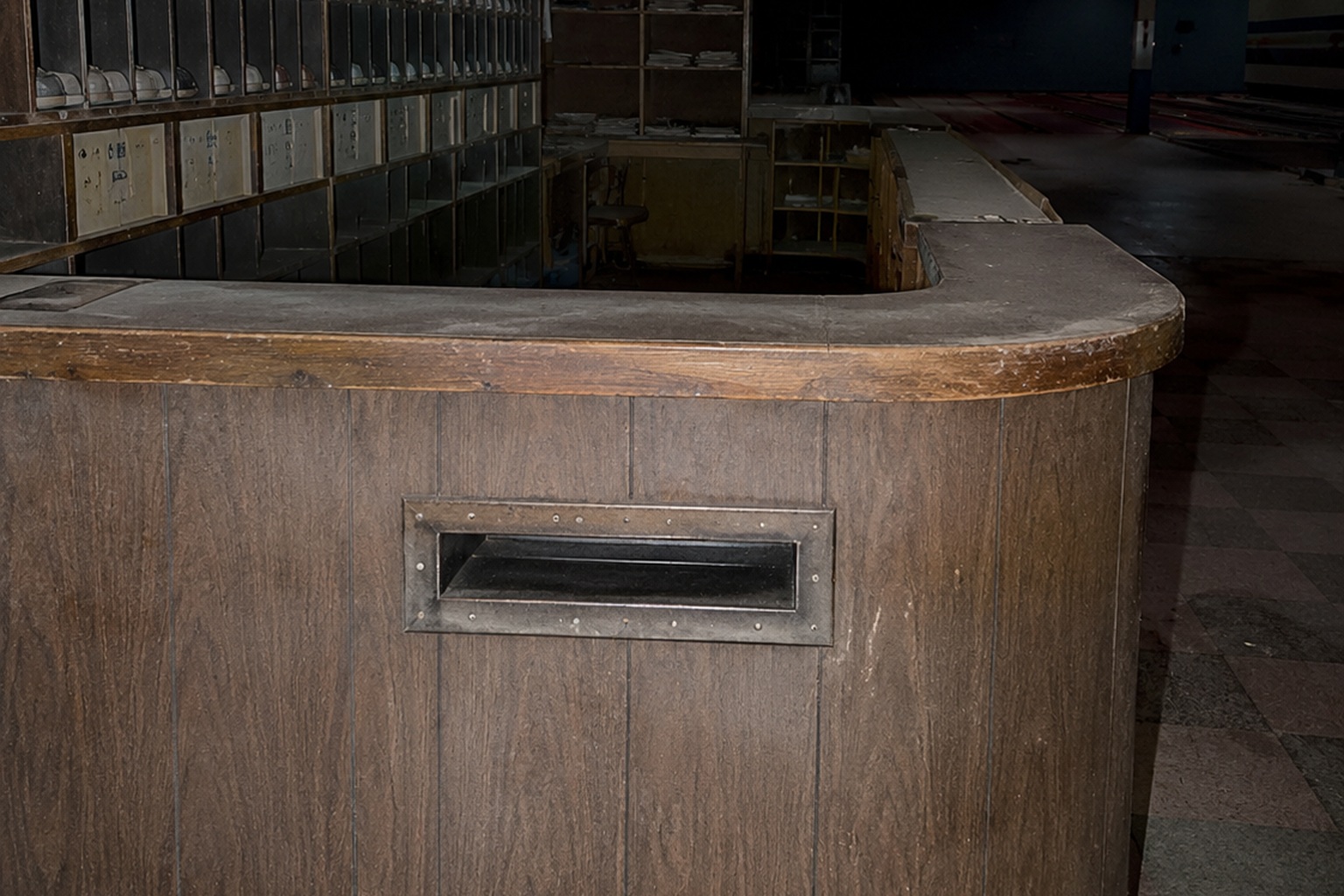
Nothing more. Near the front entrance sat the old shoe rental counter. The wooden countertop curved around a narrow work area where generations of employees had exchanged thousands upon thousands of pairs of rented shoes. Behind the counter were faded cubbies, stacks of abandoned score sheets, and shelves labeled with shoe sizes that hadn't been updated since sometime in the early 2000s.
Built into the front of the counter was the return slot. Customers would slide their used bowling shoes through the narrow opening instead of handing them directly to staff. It was little more than a rectangular gap, barely tall enough for a pair of shoes to pass through.
When the building closed, that slot was secured from inside with a steel locking plate. Once locked, nothing could move through it. At least, that was the design. The worker remembered kneeling to photograph scratches on the lower cabinets.
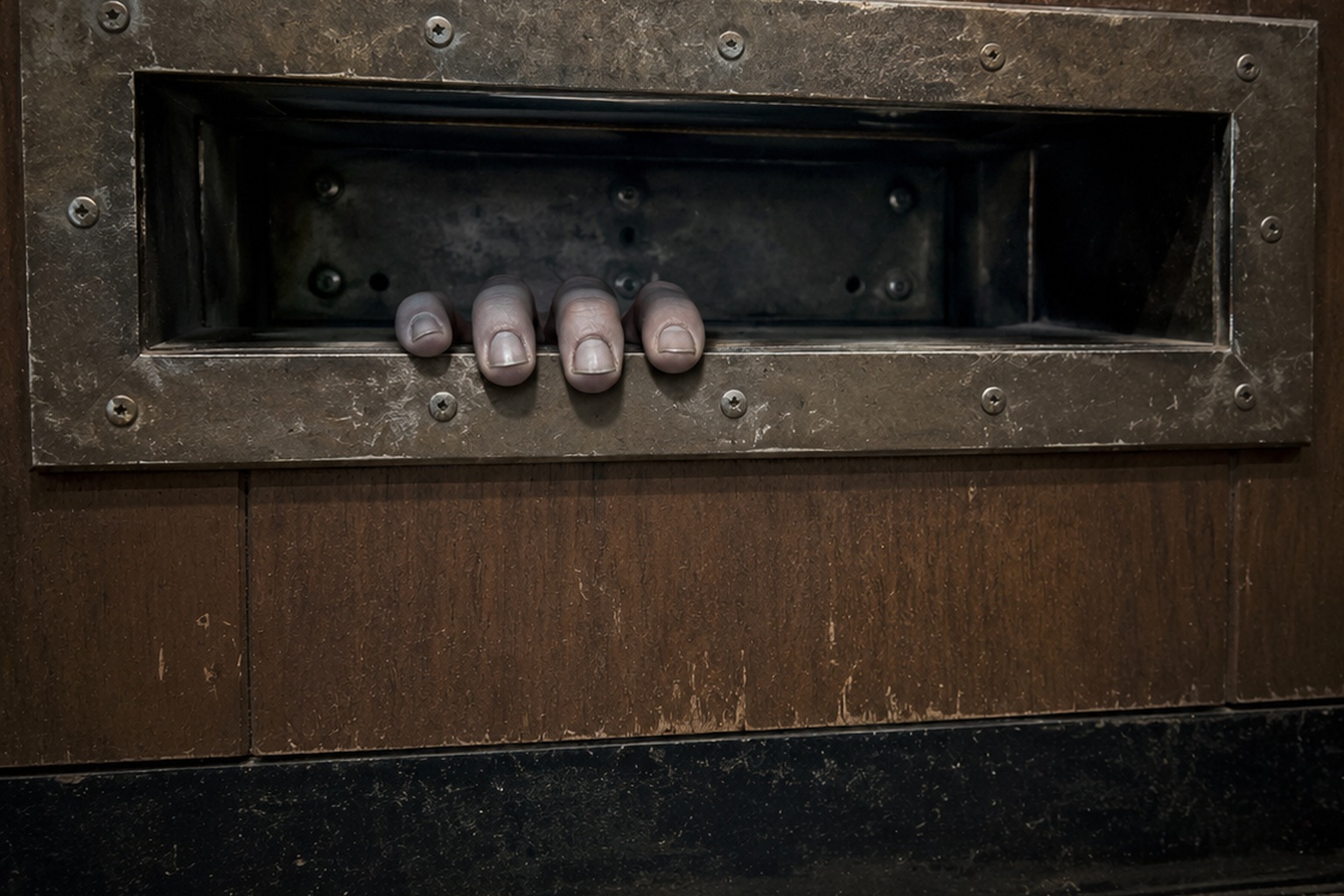
He took several pictures without looking carefully. Later that evening, while sorting photographs at home, one image stopped him cold. Inside the darkness beyond the locked return slot were fingers. Not reaching out.
The Sealed Return Slot
Not waving. Just resting quietly against the inside edge of the opening. Five pale fingertips curled over the metal lip exactly where customers once pushed returned shoes. The steel locking plate remained bolted across the slot behind them.
There should have been solid metal there. Instead, something appeared to be occupying the impossible space between the slot opening and the locked barrier. He enlarged the image. The fingers weren't blurry.
Dust clung beneath the fingernails. Wrinkles crossed the joints. The skin looked slightly dry, almost gray under the camera flash. Most unsettling of all, they looked relaxed.
As though whoever they belonged to had been waiting comfortably for someone to slide another pair of shoes through. The worker assumed he had photographed some loose wiring or damaged insulation that resembled a hand. The following morning he returned to the alley. The counter looked exactly as he'd left it.
He unlocked the employee gate and stepped behind the rental station. The return slot was sealed. The steel plate was still firmly bolted in place from the employee side. He removed the plate.
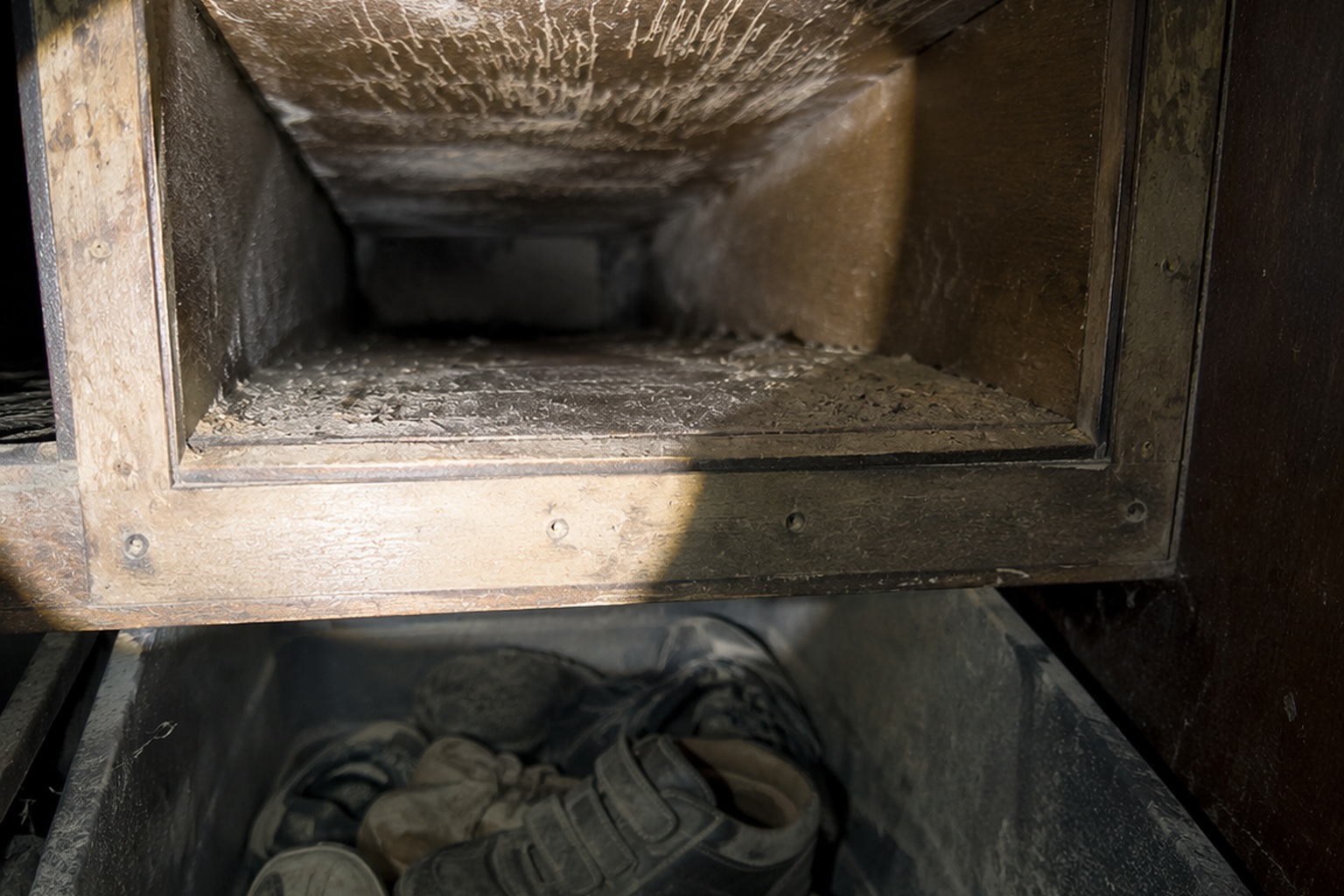
Behind it was only a short wooden chute leading directly into a plastic collection bin. The chute measured barely eighteen inches from front to back. There was nowhere a hand could have hidden. No side compartment.
No false panel. Nothing. He inspected every inch with a flashlight. Cobwebs stretched from one corner to another without disturbance.
What Appeared In The Photograph
The collection bin still contained several dusty children's bowling shoes left behind years before. No one had touched them in ages. Satisfied he'd simply misinterpreted the image, he replaced everything and continued his inspection. But over the next hour something kept drawing him back toward the front counter.
Not a sound. Not movement. Just the persistent feeling that someone stood patiently on the customer side waiting to rent shoes. Whenever he glanced up, no one was there.
The automatic entrance doors remained chained shut. The parking lot outside was empty beneath an overcast afternoon sky. He laughed at himself more than once. Large abandoned buildings always played tricks on people.
Long hallways. Echoes. Peripheral movement. Every old structure seemed capable of manufacturing imaginary company.
Still, before leaving, he decided to recreate the photograph. Same camera. Same angle. Same flash.
He crouched exactly where he remembered standing. The picture looked ordinary. No fingers. No strange shapes.
Only darkness behind the slot. Relieved, he locked the building and drove home. That night curiosity won again. He placed both photographs beside one another.
Why The Fingers Made No Sense
The first clearly showed fingertips. The second showed nothing. He zoomed further into the original. Something new became visible.
Just beyond the fingertips appeared another row. A second hand. Farther back inside the chute. Then another.
Not reaching. Waiting. Layered one behind another as though multiple hands occupied a space physically incapable of containing even one. The next week demolition preparations began.
Electricians disconnected power. Contractors removed ceiling tiles. Carpet crews stripped away decades of patterned flooring. Several workers commented independently that the shoe counter felt strangely unpleasant compared to every other part of the building.
Nobody could explain why. One installer refused to crawl beneath the counter after claiming he heard someone slowly sliding bowling shoes across wood directly above him. Another insisted he heard quiet tapping from inside the return slot despite standing alone in the building. The sounds always stopped the instant anyone walked around to inspect them.
One carpenter joked that customers must still be returning late rentals. Nobody laughed very hard. As more fixtures disappeared, the shoe counter became increasingly isolated within an otherwise empty lobby. Without racks, arcade machines, benches, or vending machines nearby, it looked oddly theatrical.
The Scratches Inside The Chute
A lone island waiting for people who would never arrive. The maintenance worker admitted he deliberately avoided looking directly into the return slot whenever he passed. Not because he expected to see fingers again. Because he had begun expecting not to.
The darkness inside looked too complete. Too solid. Almost like a curtain rather than an empty chute. One afternoon another employee asked him where the old return mechanism emptied.
Together they removed the steel plate again. Flashlights illuminated every surface. Fresh sawdust from nearby construction coated the interior. Nothing unusual appeared.
As they prepared to reinstall the plate, the other worker suddenly froze. "What size shoes fit through this?" The opening measured perhaps four inches high. "Kids and adults," came the answer.
"No." He pointed carefully. "If shoes went through here…" His finger traced the smooth interior wood.
"…why are there fingernail scratches on the ceiling?" Everyone leaned closer. Hundreds of tiny parallel scratches covered the upper inside surface. Not random damage.
Long, repeated marks beginning near the opening and continuing deeper into the chute. Each groove curved slightly, matching the shape fingers might leave while dragging themselves forward. Except the tunnel was far too small for anyone to crawl through. They assumed rodents.
What Renovation Changed
Maybe raccoons. Yet no animal tracks appeared. No nests. No droppings.
Only scratch marks polished smooth through repetition. Work continued. The counter remained scheduled for removal. On demolition day a forklift pulled against the heavy built-in cabinets while workers loosened anchors from the concrete floor.
With a sharp crack the entire shoe counter shifted several inches. The return slot tilted sideways. Something soft landed inside the empty plastic collection bin. Everyone looked.
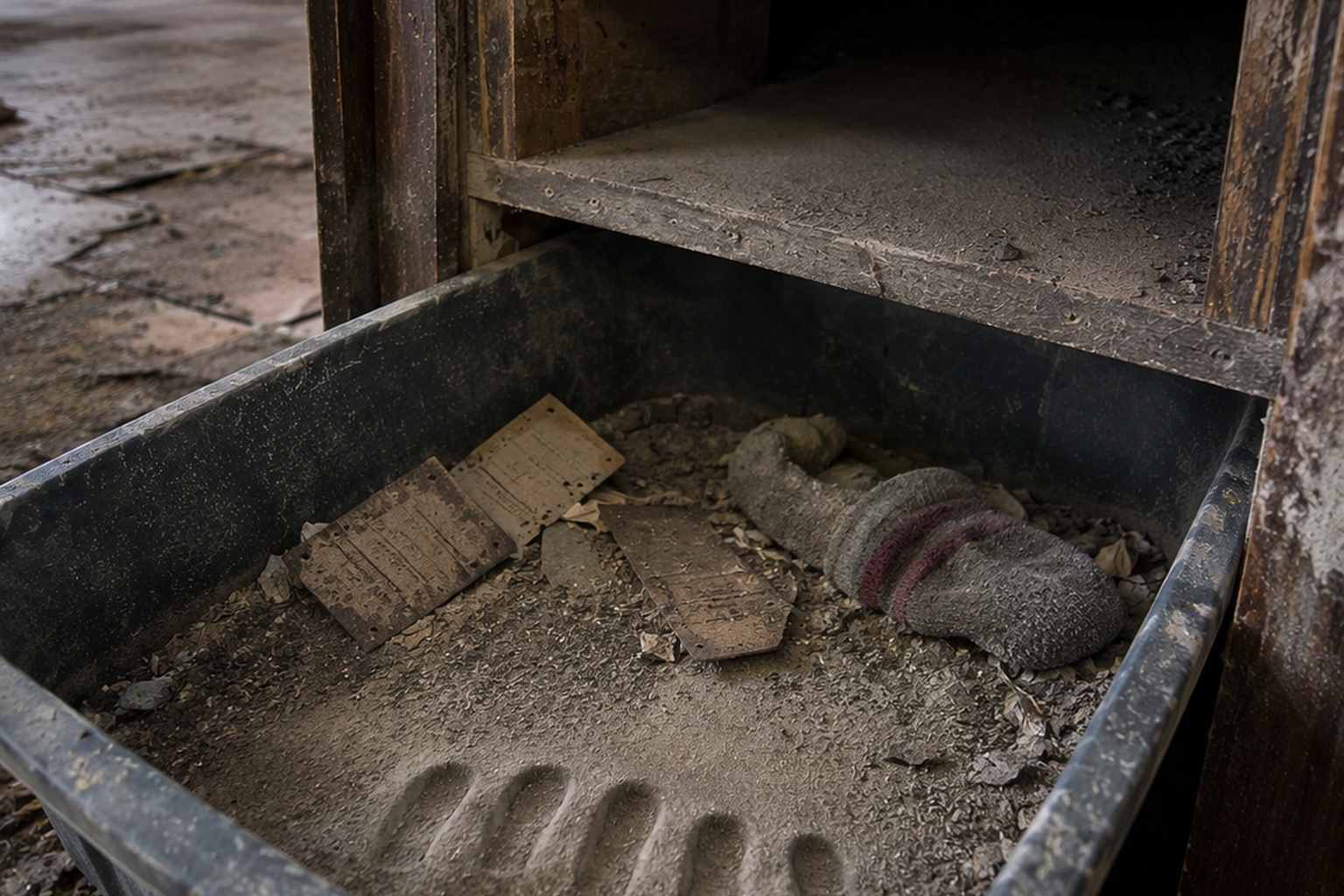
There wasn't much. Only a handful of old rental tickets. Dust. A faded child's sock.
And resting on top of everything else— Five perfectly preserved fingerprints pressed into decades-old dust. Not prints left by touching the dust. Impressions.
As though invisible fingertips had been resting there for years before lifting away moments earlier. Nobody volunteered to clean the bin. Once the counter was removed, workers discovered the concrete beneath showed no hidden compartments, crawl spaces, or forgotten storage cavities. Just foundation.
Solid. Ordinary. By the end of the week the entire front lobby had become an empty shell awaiting renovation. Without the shoe counter the building somehow felt less oppressive.
Why The Slot Stayed In Memory
Even workers who knew nothing about the photographs admitted the entrance seemed lighter. More open. Easier to breathe in. The maintenance worker kept only one souvenir from the project.
Not a bowling pin. Not a scorecard. Only the first photograph. Friends asked whether he had edited it.
Created it with software. Played a prank before renovations. He always answered the same way. "No."
Then he would enlarge one tiny section near the bottom corner. Most people never noticed it initially. Beyond the fingertips. Past the locked steel plate.
Deep inside the impossible darkness. Two faint reflections stared back. Not eyes. Not exactly.
Just enough shine to suggest that whatever owned the waiting hands had been quietly watching through the slot the entire time. Patiently expecting the next pair of shoes. Or perhaps the next curious person willing to kneel close enough to look inside. Because if the old bowling alley taught anyone anything, it was this:
Sometimes the scariest part of an abandoned building isn't what walks its halls. It's what never needed room to fit there in the first place.