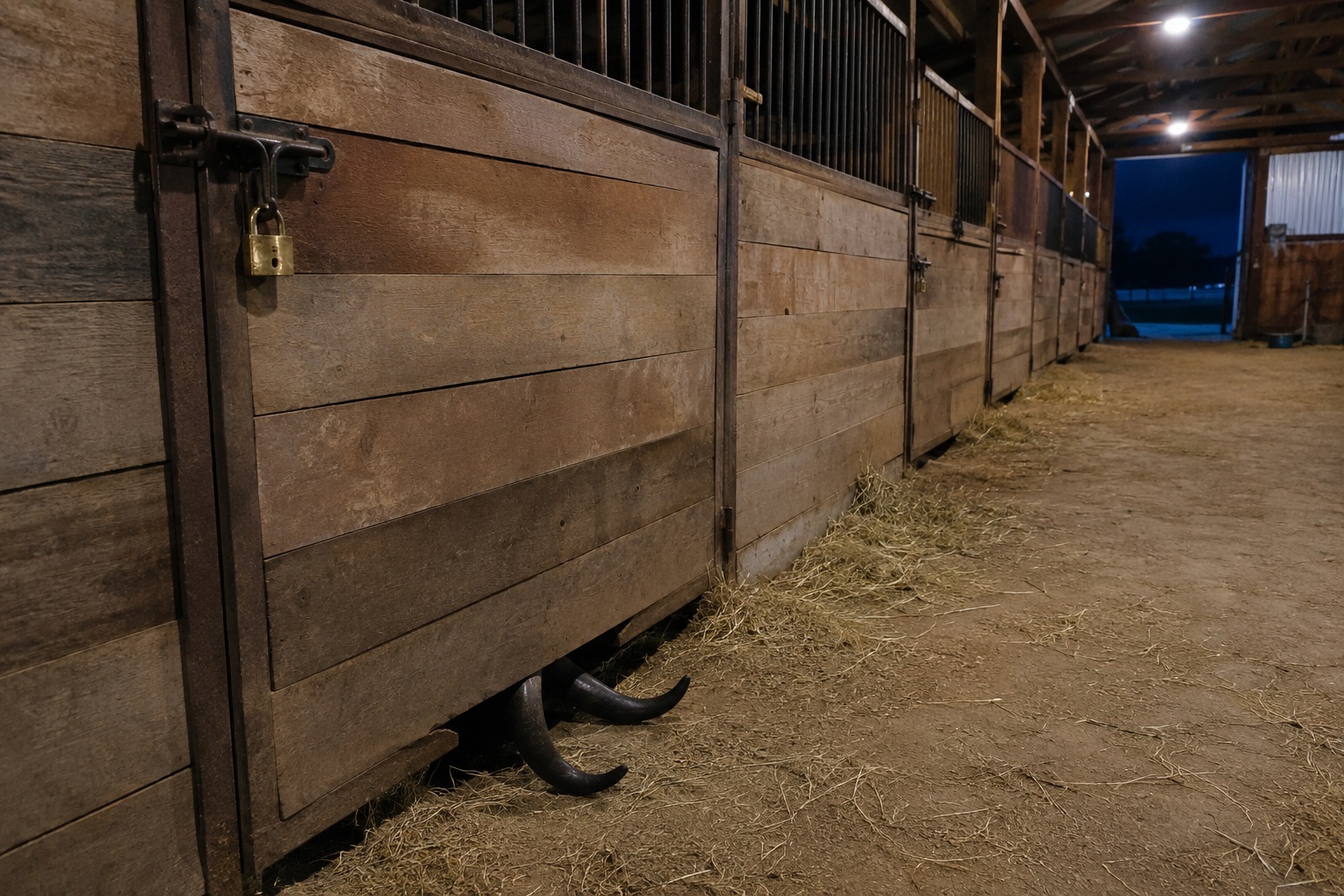
The first thing I noticed wasn’t the sound. It was the pair of curved black horns sticking out from the gap under an empty stall door like something was lying flat on the floor inside.
Look closely at the brass padlock hanging from the stall latch. It never moved, and nobody opened that door the whole night. The strange part is that the stall had been empty for almost three weeks. Our county fair had ended, the trailers were gone, and every horse had already been taken home. I was only there because the committee hired me to help clean the barns before the buildings were locked up for the season.
I wish I had stayed home.
The Last Night At The Barn
Most people think fairgrounds become completely empty after the rides leave. They don’t.
There are always a few workers picking up fencing, hauling away feed bags, or stacking equipment that didn’t fit into the first trucks. The horse barn was my last job. It was a long wooden building with two rows of stalls, dusty windows, and old fans hanging from the rafters. Every sound echoed inside it.
The stalls had all been checked earlier that afternoon. Fresh bedding had been removed. Buckets were stacked outside. Every latch had been closed.
The only locked stall was number fourteen. The manager kept old veterinary supplies inside until someone could collect them the following week, so he secured it with a heavy brass padlock. I remember checking it because I had to sweep around the doorway. Nothing was underneath.
Nothing was inside except shelves and boxes. At least, that’s what I thought. Then I came back after dark.
The First Time It Happened
Something Was Waiting Under The Door
The lights near stall fourteen flickered whenever the ventilation fans started. I figured the old wiring was acting up. I pushed my broom toward the doorway. That’s when I froze.
Two black horns were sticking out beneath the bottom edge of the closed stall door. Not huge. Maybe eight inches long. They curved slightly backward like goat horns.
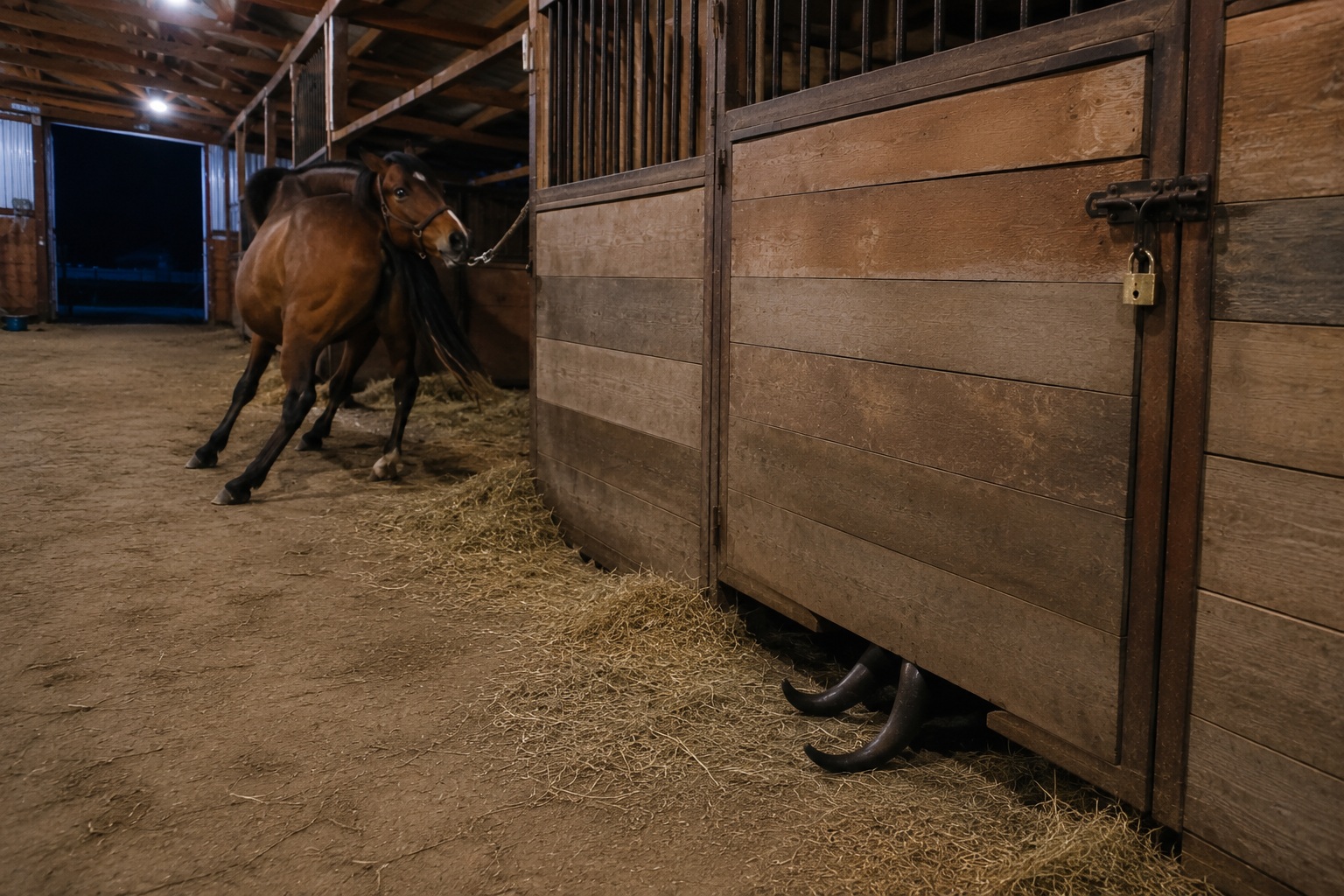
For a second I honestly thought somebody had shoved a Halloween decoration underneath as a joke. I stepped closer. The horns slowly slid back. Not quickly.
Just enough to disappear into the darkness beneath the door. No scraping. No sound. I waited.
Nothing happened. The padlock was still hanging exactly where it had been all afternoon. I even reached out and grabbed it. Cold.
Heavy. Still locked. I remember telling myself there had to be another explanation. Then I noticed something that made even less sense.
Why The Place Felt Wrong
There wasn’t enough space beneath the door for horns that thick to fit without whatever they belonged to pressing flat against the floor. That thought stayed with me all the way to the office. Nobody Believed Me The grounds manager laughed.
He said I was tired. Someone else guessed a loose piece of black hose had shifted in the draft. Another worker volunteered to walk back with me. I almost said no.
Instead, the three of us returned together carrying flashlights. The stall looked completely normal. The lock hadn’t moved. No horns.
No sound. The manager unlocked the door. Inside were shelves, boxes, folded blankets, and several old saddles waiting to be collected. There wasn’t enough open floor space for any large animal to hide.
We checked every corner. Nothing. He smiled and locked the stall again. “See?” he said.
I felt embarrassed enough to apologize. Then one of the horses in the neighboring aisle began kicking its stall wall. That horse hadn’t made a sound all evening. It suddenly refused to look toward stall fourteen.
Instead, it leaned as far away from that wall as the lead rope allowed. The manager noticed too. He frowned. Before anyone said another word, something bumped once from inside the locked stall.
The Detail Nobody Could Explain
Not loudly. Just one heavy knock. Nobody unlocked it again. The manager said old wood expands at night.
I nodded even though none of us believed it. The next morning gave us another problem.
The Marks Nobody Could Explain
When daylight came, I returned with coffee.
The barn looked ordinary again. I expected to laugh at myself. Instead I found four deep grooves in the packed dirt directly outside stall fourteen. Not hoofprints.
Not boot marks. They looked like something hard had been dragged straight out from beneath the door before stopping halfway across the aisle. Then they simply ended. No tracks leading away.
No prints. Nothing. I crouched beside them. The dirt around them was untouched.
One of the older volunteers wandered over. He asked what I was looking at. I pointed. He stared for a while.
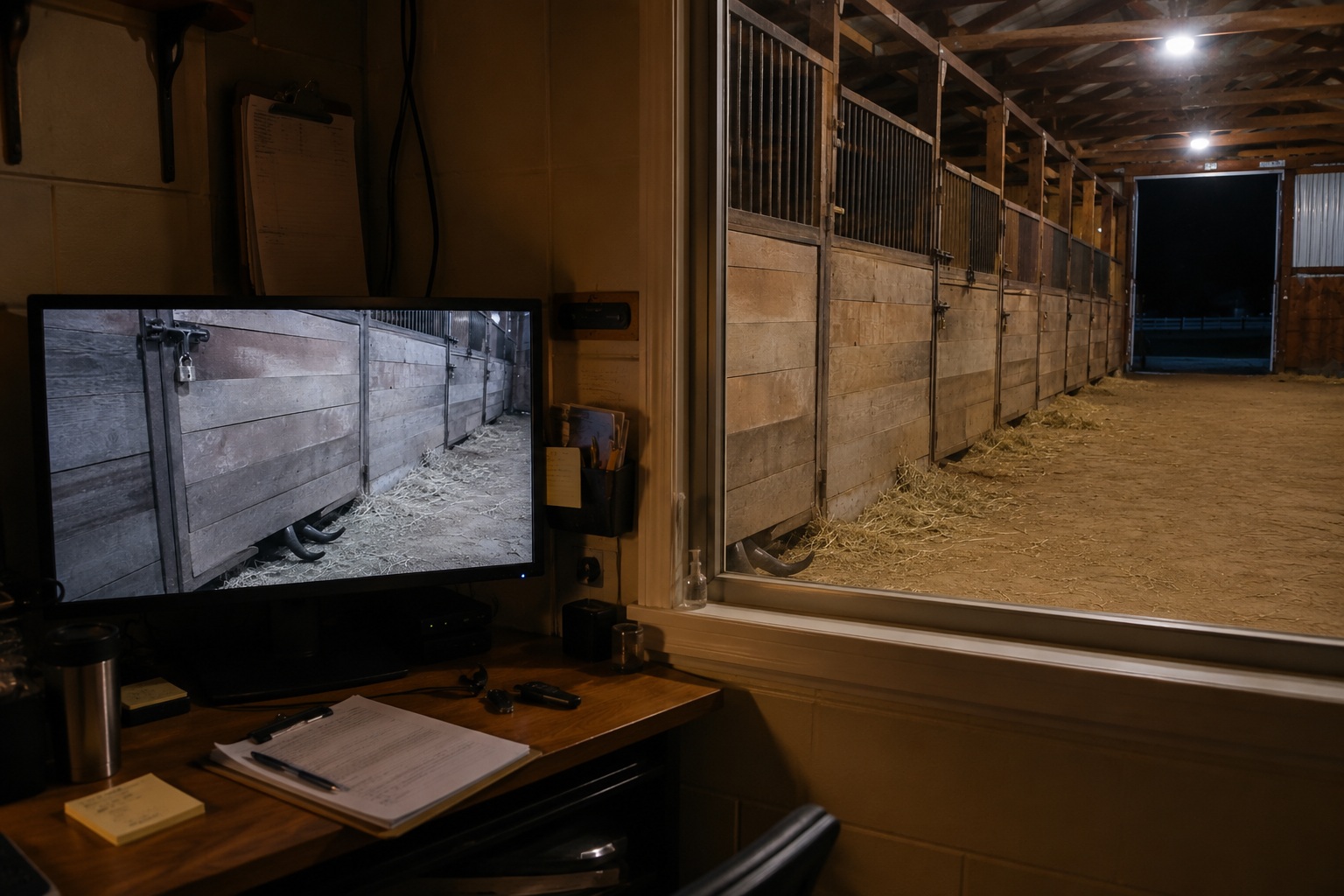
Then he quietly admitted he didn’t remember those grooves being there the day before. He fetched the manager. The manager blamed the tractor tires. Except tractors had never entered that aisle.
What They Checked Afterward
It was too narrow. We swept the floor anyway. The grooves disappeared under fresh dust. By lunchtime everyone had gone back to work.
I kept thinking about how those marks stopped in the middle of nowhere. Later that afternoon another worker mentioned something I hadn’t told anyone. He asked if I had noticed “those black curved things” near the locked stall the previous evening. I never told him what I saw first.
The Picture From The Barn Office
A week later I had almost convinced myself the whole thing was stress. Then my phone rang. It was the manager.
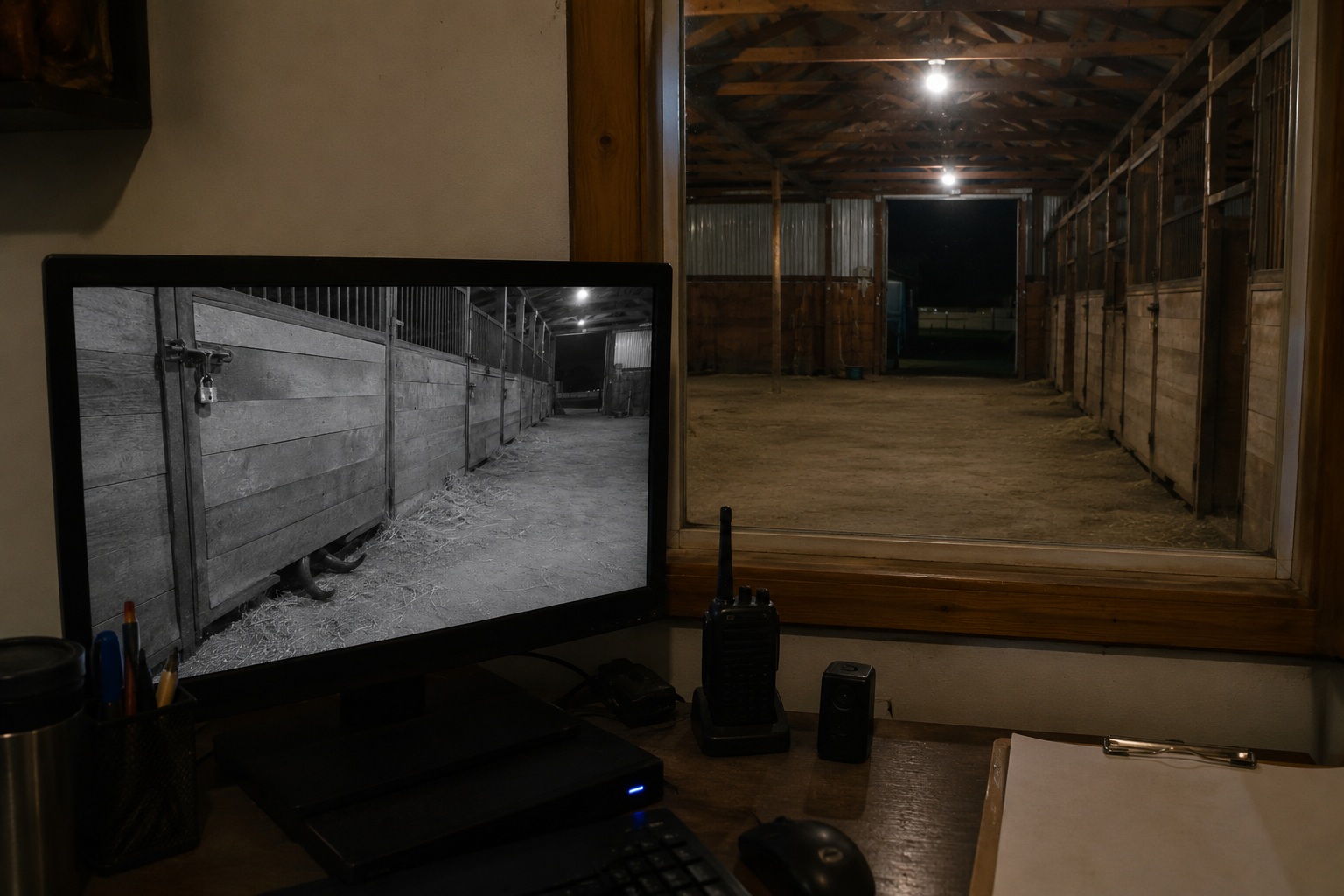
He asked if I could stop by. He didn’t explain why. When I arrived, he was sitting in the office staring at the barn security monitor. The system only saved still images every few seconds unless motion triggered it.
He had printed one. At first glance it looked ordinary. Empty aisle. Closed doors.
Quiet barn. Then he pointed toward stall fourteen. Under the bottom edge of the locked door were the same two curved horns. Only this time they were farther out.
Enough that you could clearly see both tips pointing toward the aisle. The brass padlock above them was easy to see too. Still hanging through the latch. Still locked.
The Moment It Became Harder To Ignore
The timestamp bothered him. It had been taken almost twenty minutes after every worker had left. Nobody had entered the building. The motion sensor never activated.
The image simply appeared during the regular timed snapshots. He zoomed in. The horns weren’t casting shadows the same way the rest of the barn was. I couldn’t explain that.
Neither could he. Then we noticed something neither of us had seen before. There appeared to be strands of pale horse hair lying beside the horns. The stall hadn’t held a horse for weeks.
We Opened The Stall One Last Time
The committee agreed to empty the storage room early. Three of us unlocked the stall together. Broad daylight.
Every window open. Nothing hidden. Nothing alive. The shelves looked exactly as before.
Boxes. Blankets. Feed tubs. Old tack.
Why People Avoided That Spot Later
One volunteer crawled across the floor looking for holes. There weren’t any. Another checked the walls. Solid.
Then I looked down. Right in the center of the floor was a patch of clean concrete. Everything else carried a layer of dust. That one oval space looked freshly wiped.
Almost polished. It wasn’t large. Maybe three feet across. No footprints crossed into it.
No drag marks reached it. Just clean concrete surrounded by dusty floor. The manager quietly closed the door again. He didn’t say why.
He simply locked it. The stall stayed that way until the supplies were collected. Afterward the committee decided not to use number fourteen during the next fair. Officially they said the floor needed repairs.
Unofficially nobody wanted to stable a horse there. One family actually requested it because it was close to the wash area. The request was denied without explanation. I only learned why months later.
Why The Story Still Gets Shared
I never walk that barn alone. The following summer I worked another fair. Different jobs. Different buildings.
I avoided the horse barn whenever I could. One evening I saw a teenage volunteer leading a mare through the aisle. The horse stopped before reaching stall fourteen. It planted all four feet.
Nothing the girl did could convince it to move forward. Eventually they turned around and used another aisle. She laughed about stubborn horses. The older workers didn’t laugh.
One of them noticed me watching. He walked over and quietly asked if I still had the printed picture. I told him I never wanted a copy. He nodded.
Then he told me he’d seen something similar years before. Not horns. Just something dark pressed flat beneath that same door after closing time. He said he had convinced himself it was his imagination.
Until the manager mentioned my story. The barn still hosts horses every fair season. Families walk through it every day. Kids pet ponies.
People buy ribbons. Most never notice one stall looks newer than the others because its door was replaced a few years ago. The brass padlock is different now too. But every time I think about going back, I remember those horns slowly sliding underneath a locked door that should have opened onto nothing but empty shelves.
And I still wonder why the horses refused to face it long before any of us noticed what was waiting underneath.