The Ordinary Detail That Started It
The laundromat sat between a shuttered florist and a tax office that looked abandoned even during business hours. During the day it was forgettable—a narrow storefront with faded blue trim, humming rows of industrial washers, and a change machine mounted beside the entrance beneath a flickering fluorescent light.
At night, though, the building seemed to shrink into itself. The glass reflected more darkness than light, and the steady rumble of dryers gave way to a silence that made every metallic sound feel strangely deliberate.
For nearly twenty years, Raymond closed the laundromat every evening at exactly ten. The routine never changed. He wiped detergent from folding tables, emptied lint traps, counted the register, checked every washer door, and switched off the overhead lights one row at a time until only the security lighting remained.
The final step was always the same. Before locking the front door, he would empty the change machine's collection box into a heavy canvas bank bag.
Customers fed twenty-dollar bills into the machine all day. By closing time it should have been empty of business. That was why the first sound unsettled him so much.
Why People Looked Twice
Click. Clink. Whirrrrr… Then a cascade of quarters dropping into the metal tray. He heard it just after locking the front entrance. The machine had dispensed coins. There was nobody inside. Raymond unlocked the door again, assuming someone had been trapped in the restroom or wandered behind the machines unnoticed. Every aisle was empty.
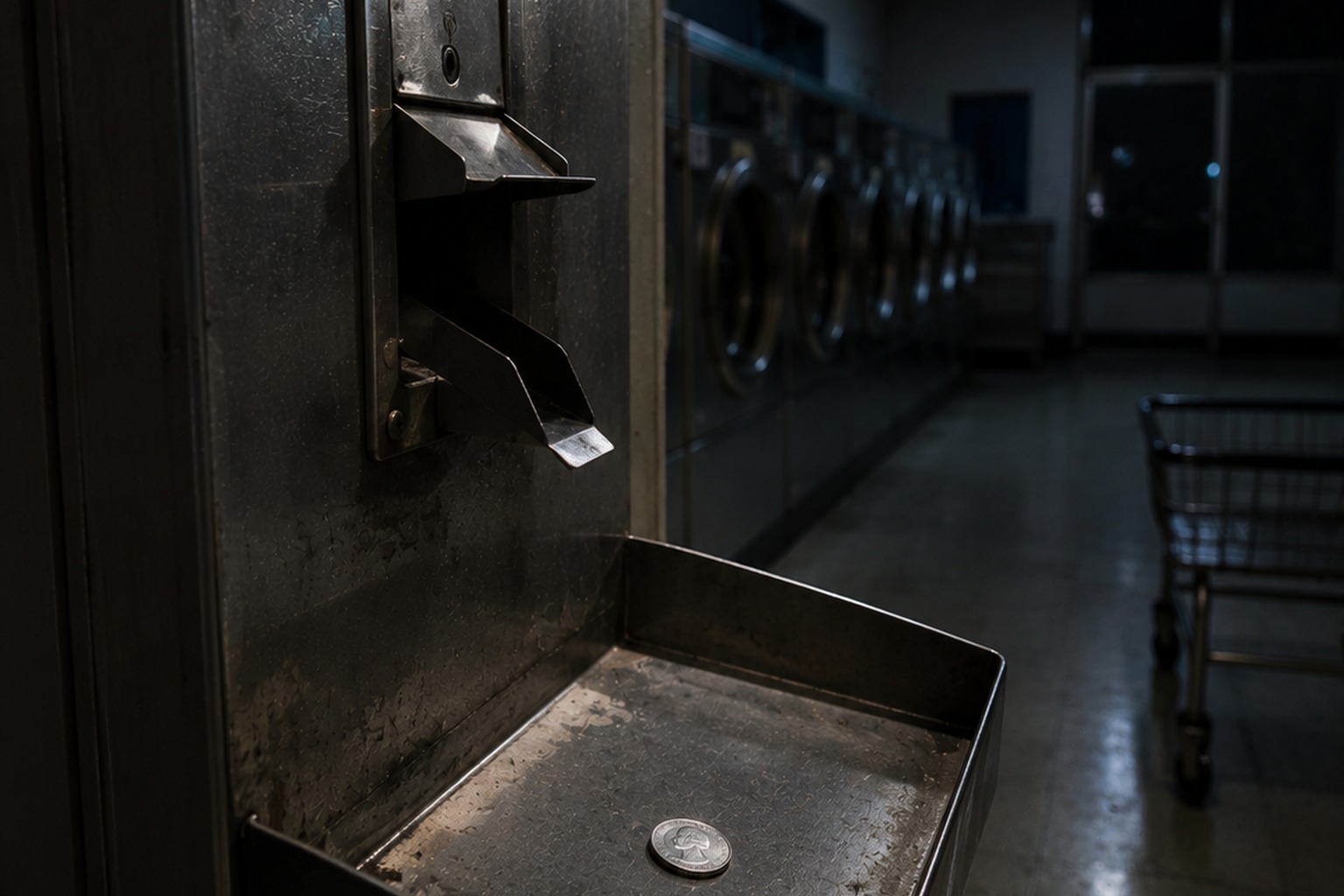
The fluorescent security lights cast long reflections across spotless washer doors. The change tray held exactly eight quarters. Two dollars. No bill protruded from the machine's acceptor. No rejected receipt.
Nothing. He dumped the quarters back into the hopper, reset the tray, checked the surveillance monitors one last time, and went home convinced the aging mechanism had simply misfired. The following evening it happened again. Only this time he was still inside. The register had already been balanced.
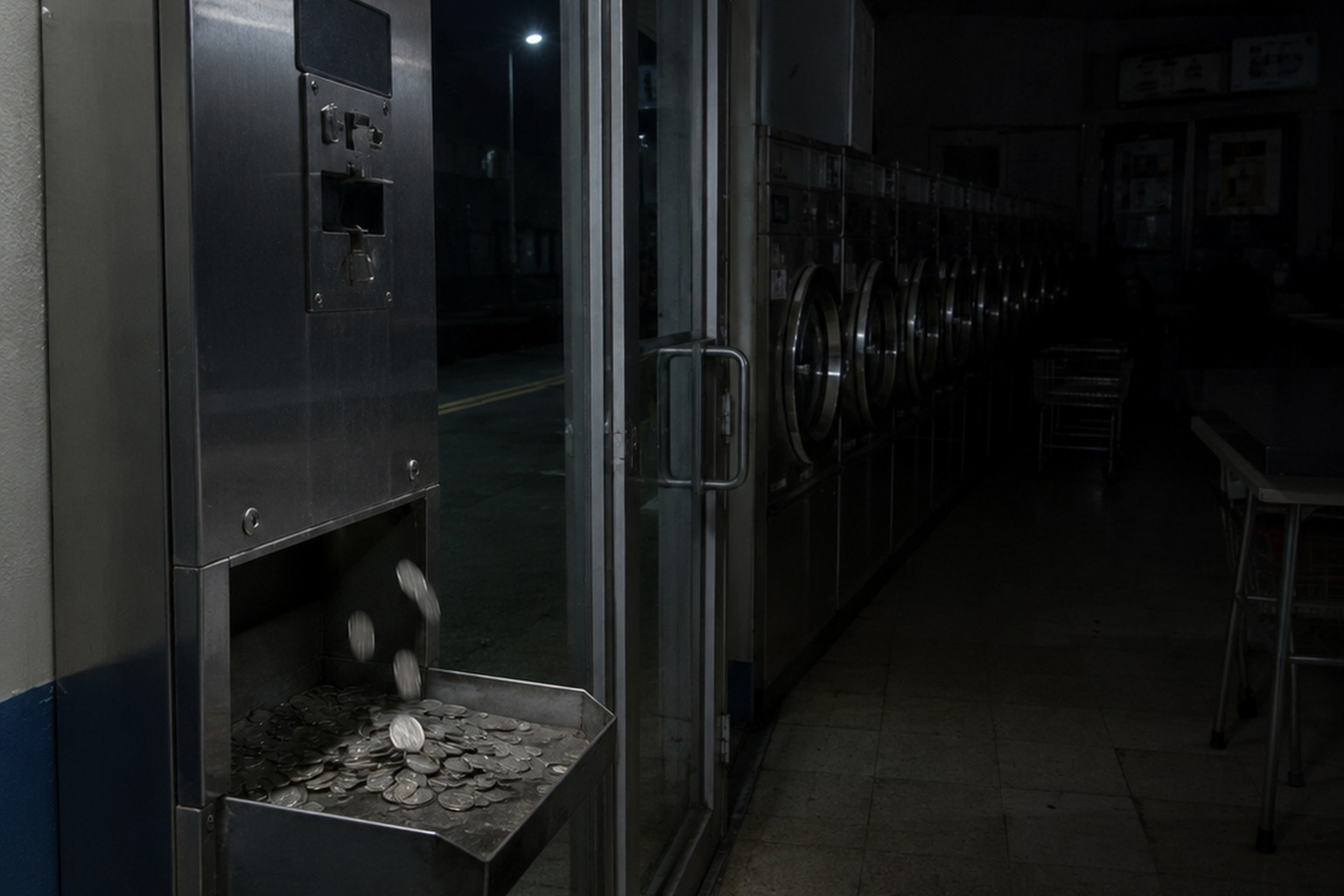
The front door was locked. He was halfway across the room carrying the bank bag when the machine suddenly came alive. The bill acceptor motor whined. The counting wheels spun. The unmistakable metallic rain of quarters echoed across the empty laundromat. He walked toward it slowly. Twenty-four quarters.
Six dollars. Freshly dispensed. The display remained blank. The machine insisted no transaction had occurred. He removed the front panel with his service key. The bill stacker was empty. The machine had somehow created a payout without receiving any money. It should have been impossible.
The Part That Did Not Fit
He called the maintenance company the next morning. The technician replaced sensors, cleaned optical readers, recalibrated payout wheels, and tested the electronics for nearly two hours. Everything passed. "No fault," the report read. For almost a week the problem disappeared.
Then Raymond stayed late to wait for a plumbing repair. The laundromat closed at ten. The plumber left shortly after eleven. At 11:27 PM the building became completely still. Outside, rain tapped softly against the windows. Inside, every washer sat silent with their doors hanging open. Then— Click. Whirrrrr.
Clink. Clink. Clink. The machine began dispensing quarters. Not all at once. One. Every. Three. Seconds. Each coin landed with enough force to ring against the tray before another followed. Raymond watched from behind the folding tables. He waited for someone to step through the door.
Nobody did. Twenty-three coins. Then silence. He walked over. The tray held twenty-three quarters. Exactly five dollars and seventy-five cents. No more. No less. He picked them up. They were strangely cold. Not refrigerator cold. Winter-metal cold.
What A Simple Explanation Could Be
The kind that seemed to linger in your fingertips. He locked up faster than usual that night. The next morning he reviewed the security camera still. The timestamp showed 11:27 PM. The camera facing the entrance displayed exactly what he remembered. Empty laundromat. Empty aisles.
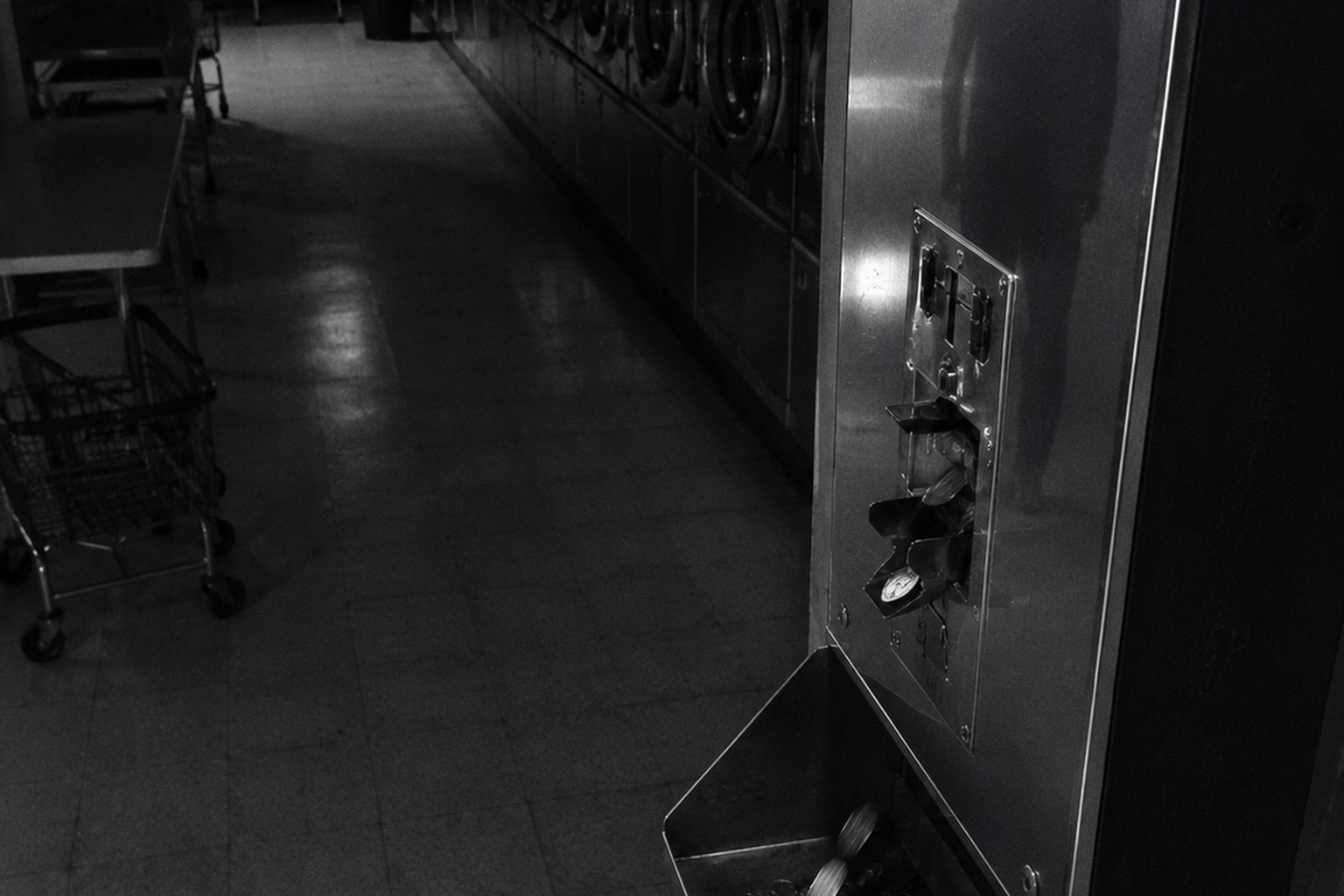
Then the change machine activated by itself. The tray filled one coin at a time. No movement anywhere else. Until he noticed something reflected in the machine's brushed stainless-steel front. Not a person. Not exactly. A shape. Tall.
Standing several feet behind where Raymond himself appeared on camera. It wasn't visible in the room. Only in the polished metal reflection. The figure seemed darker than the surrounding shadows. Its outline remained perfectly still throughout the entire payout.
When Raymond finally walked toward the machine, the reflection was gone. He convinced himself it had to be compression artifacts from the security cameras. Cheap systems created strange distortions all the time. He deleted nothing. But he never watched that still again. Weeks passed.
Customers occasionally joked about hearing coins rattle after closing while walking dogs past the storefront. Raymond laughed it off. Then a college student mentioned something odd. "I thought somebody was inside after midnight." "There wasn't." "I saw someone standing by the change machine." Raymond smiled politely.
Why That Answer Still Felt Incomplete
He stopped mentioning the machine to anyone. Eventually curiosity overcame fear. He borrowed a portable audio recorder from a friend who investigated electrical noise inside old buildings. One Friday night he placed the recorder directly beneath the change machine before locking the doors. Nothing else changed. He returned the next morning.
The recorder contained nearly eight hours of silence. Until 1:14 AM. Even. Each separated by the same amount of time. The counting stopped immediately after the last quarter dropped. Raymond never listened to the camera record twice. Instead, he erased it. Some things felt safer forgotten.
Autumn arrived. Business slowed. One particularly cold evening an elderly woman entered carrying a single canvas laundry bag. She studied the change machine before inserting a ten-dollar bill. The machine accepted it. Paused. Dispensed exactly forty quarters. Then continued dispensing. Forty-one.
The Detail People Kept Returning To
Forty-two. Forty-three. It finally stopped at forty-eight. Eight dollars too many. Raymond hurried over. "I'm sorry, ma'am. Machine error." The woman stared into the tray without touching the coins. Then she quietly asked, "Did it finally start again?"
Raymond froze. "What do you mean?" She looked toward the back windows instead of answering. "My husband used to close this place." Raymond had never heard that. The laundromat changed ownership years before he purchased it. "He always complained about hearing quarters after midnight." She smiled sadly.
"He thought someone needed bus fare." Raymond felt the room grow strangely quiet. "What happened to him?" She didn't answer immediately. "He died here." "Heart attack." "After closing." "He was found beside the change machine before sunrise." She gathered her laundry.
She refused the extra quarters. As she reached the door she turned back. "He told me something the week before." "What?" "He said the machine never gave money to the same person twice." Then she left. Raymond stood motionless for several minutes. He searched old newspaper archives later that evening.
How The Story Changed Afterward
The previous owner's husband had indeed died inside the laundromat. The article mentioned nothing unusual. Just a sudden collapse while preparing to close. Winter settled over the neighborhood. The strange payouts became less frequent. Sometimes weeks passed without a single unexplained coin.
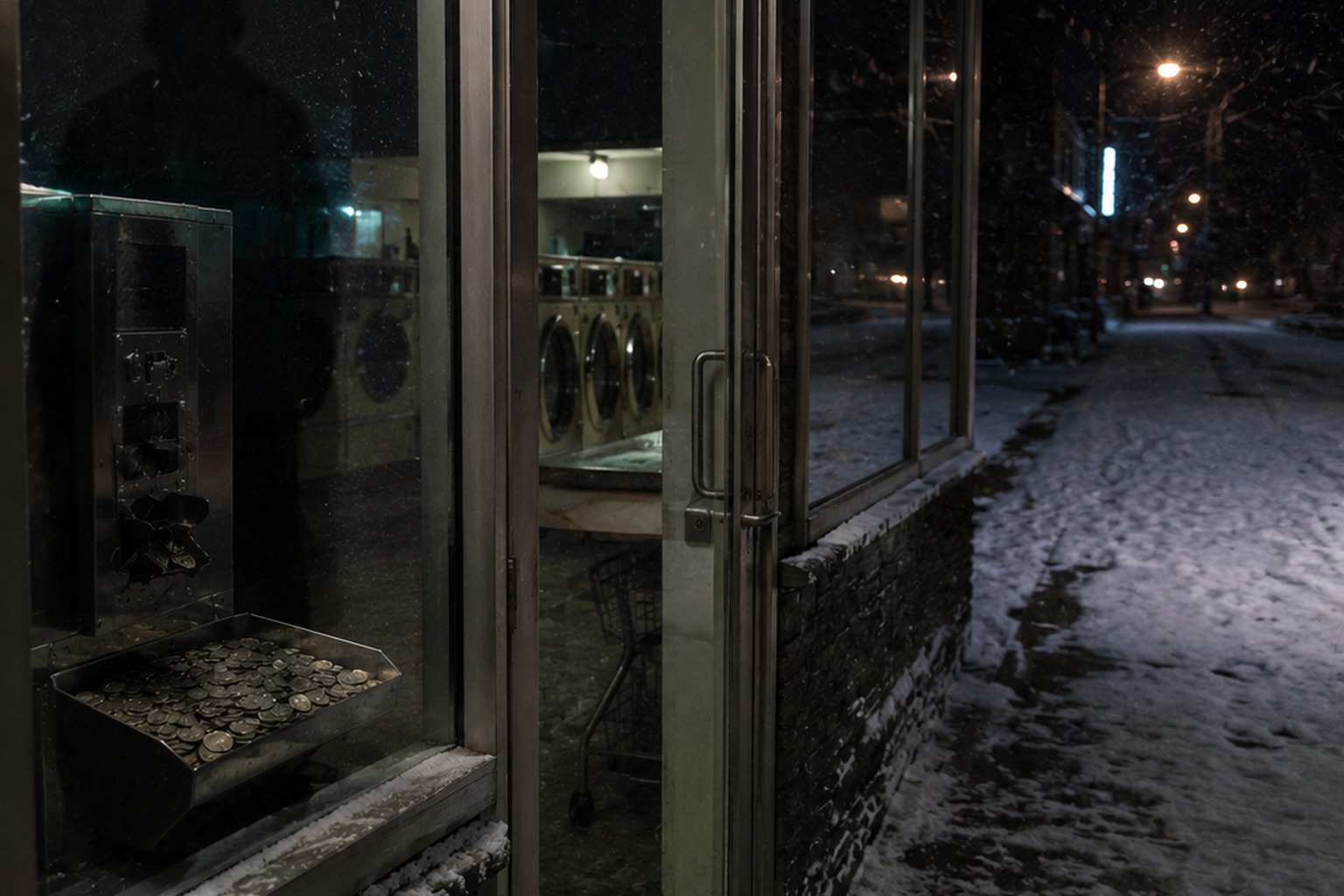
Raymond almost convinced himself everything had been coincidence. Until Christmas Eve. Heavy snow kept customers away. He closed early. At exactly ten fifteen, while standing outside with keys in hand, every light inside the laundromat remained dark. Then the change machine activated. The sound carried clearly through the locked glass. Whirrrrr.
Click. Clink. Coins poured into the tray. Far more than before. The metallic cascade continued for nearly thirty seconds. Long enough that Raymond instinctively reached for the door. Before unlocking it, he noticed movement in the reflection. Not inside. In the glass.
Someone appeared to be standing directly beside him. Close enough that their shoulder should have touched his own. He turned. The sidewalk was empty. Snow drifted through the streetlights. No footprints approached from either direction. Heart racing, Raymond looked back through the glass. The machine had stopped.
The tray overflowed with quarters. Behind it, reflected faintly in the dark storefront window, stood the outline of a man facing the machine with his head slightly lowered. Still. Waiting. Raymond unlocked the door immediately. The reflection vanished before he crossed the threshold. The tray contained one hundred quarters. Exactly twenty-five dollars.
Why It Still Feels Unsettled
No transaction had been recorded. No bills were missing. No mechanical fault could be found. He locked the money in the safe without counting it again. The following morning he arrived before sunrise. The bank bag he had sealed the night before sat exactly where he had left it.
Everything appeared normal. Everything except the change machine. Resting neatly in its empty dispensing tray was a single quarter. Bright. Untarnished. Unlike every other coin in the building. On one side was the familiar eagle. On the other, scratched carefully into the metal as though by a fingernail, were four tiny words.
NOT. ENOUGH. YET. WAIT. Raymond never showed the coin to anyone. Some nights, after locking the doors and walking halfway across the parking lot, he still hears the machine begin counting again behind the darkened windows. He never turns around anymore.
Because he has started to wonder whether the machine is counting money… Or waiting until it has counted enough people.