Long before every phone carried a camera, there were places where photographs seemed to emerge out of darkness itself. The old photo lab sat behind a narrow storefront that had once processed wedding portraits, school pictures, newspaper negatives, and vacation film for nearly four decades.
Customers remembered the front counter. Employees remembered the back. Behind a heavy light-sealed door waited the darkroom, where trays of chemicals, enlargers, drying racks, and stainless steel sinks turned blank paper into familiar faces. The room had remained almost untouched after the business closed.
Most equipment had simply been left where it was. A local historical society eventually rented the building to catalog thousands of forgotten negatives discovered inside old filing cabinets. Nobody planned to reopen the lab. They only wanted to preserve what remained.
That meant spending weeks inside rooms that had not seen regular use in years. The strangest room was always the darkroom. A Room
Built To Hide The Light Unlike the rest of the building, the darkroom felt disconnected from time.
The walls were painted flat black beneath faded red safety lamps. The entrance had two doors separated by a narrow light lock so outside brightness could never reach the chemicals. The stainless developing sink stretched nearly twelve feet along one wall. Rows of empty bottles still wore handwritten masking tape labels.
What The Camera Seemed To Show
Developer. Stop bath. Fixer. Everything had dried into harmless residue decades earlier, but the faint chemical smell never completely disappeared.
Across from the sink stood an aging enlarger beneath a flexible inspection lamp. Beside it rested stacks of yellowed paper boxes no one had opened yet. The preservation volunteers worked only during daylight. Most disliked entering the darkroom alone.
Not because of ghost stories. Because the room absorbed sound. Even footsteps seemed quieter once both doors closed behind you. One volunteer joked that conversations always sounded like whispers no matter how loudly anyone spoke.
Everyone laughed. Then they noticed they had all been whispering anyway.
The Locked Chemical Room The darkroom included one feature newer buildings rarely had.
At the far end sat a tiny chemical storage room secured by a steel security gate. The gate protected shelves that once held concentrated solutions. Even though the shelves were now empty, the gate remained locked with its old brass padlock. Nobody had the key.
The historical society simply left it alone. During catalog work, someone installed a simple monitoring camera near the ceiling. It wasn’t intended for security. The camera helped volunteers check whether humidity or leaks appeared overnight without entering the sealed room unnecessarily.
Why The Setting Made It Hard To Dismiss
It captured nearly the entire darkroom. The sink. The enlarger. The drying rack.
The locked chemical gate. Everything remained perfectly still for days. Then one morning a volunteer reviewing routine images stopped on a single frame. A figure stood beside the developing sink.
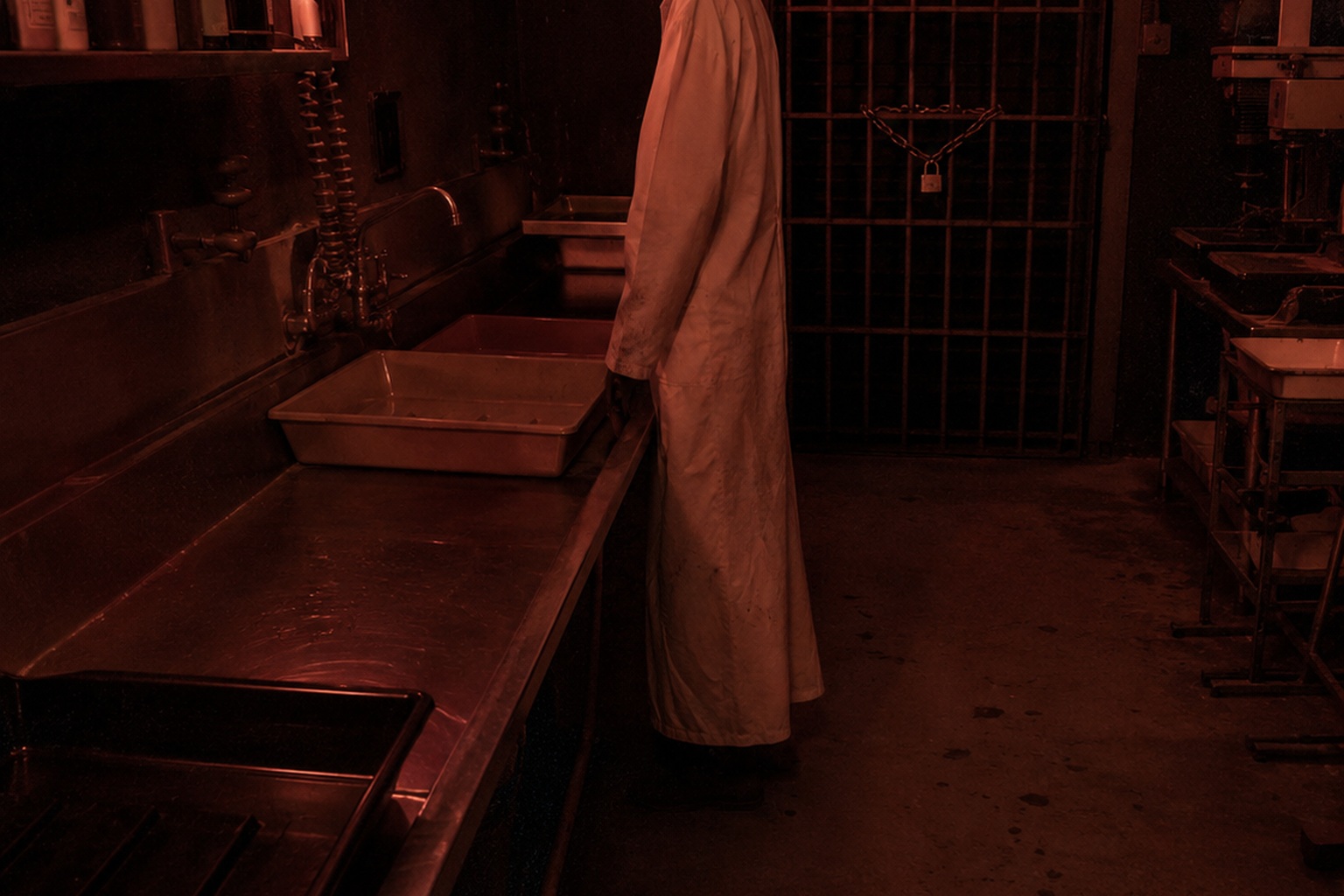
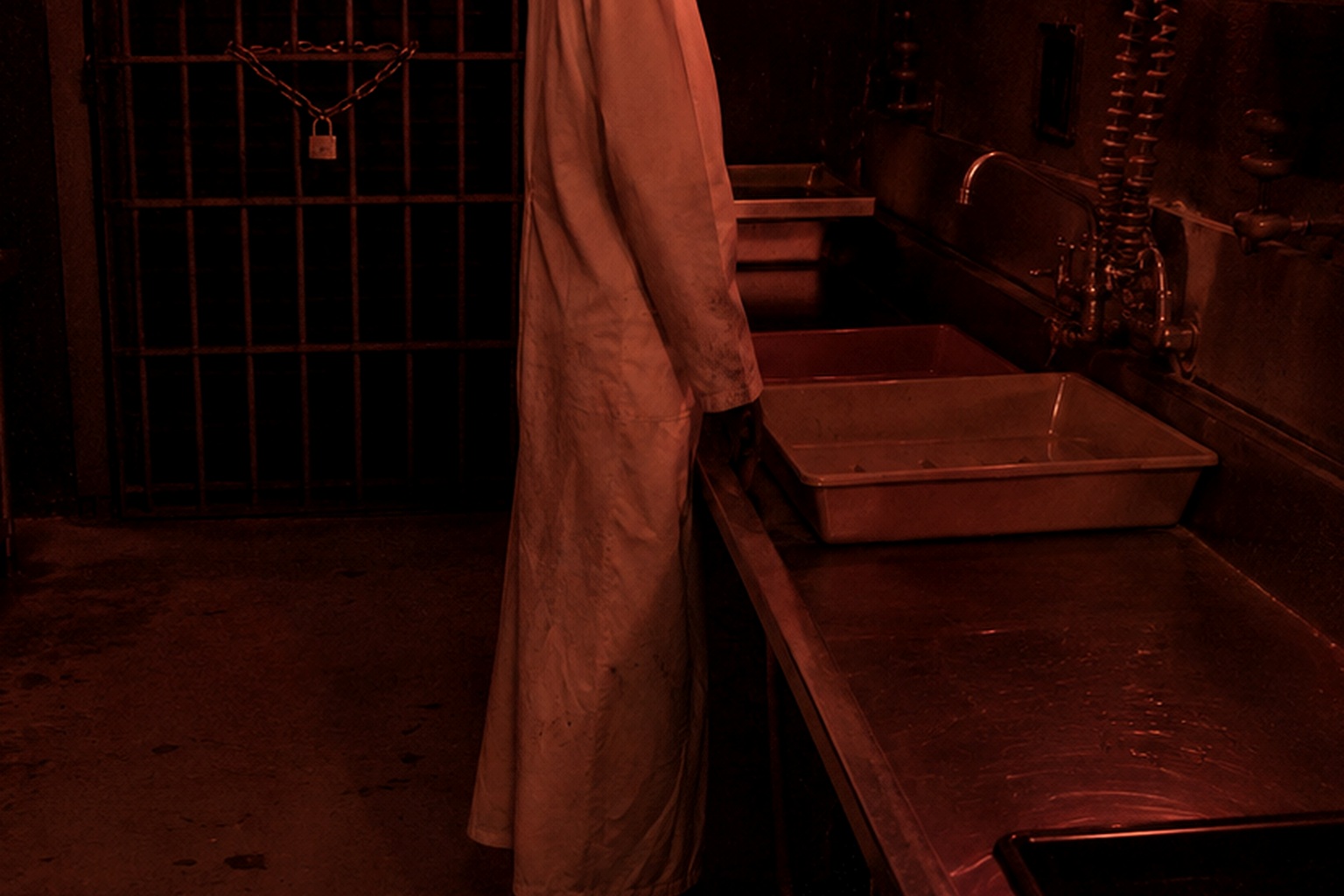
Not translucent. Not blurred. Someone wearing what looked like a spotless white laboratory apron. The apron reached below the knees.
Its sleeves hung neatly over thin arms. One hand rested beside a metal developing tray. The head turned slightly toward the sink as though studying prints floating in liquid that no longer existed. Oddly, nothing else appeared disturbed.
The chemical gate behind the figure remained visibly chained and locked. The padlock caught the light. The steel bars had never moved.
The Sink Was Wet Again
The Concrete Detail That Did Not Fit
The image unsettled everyone enough that two volunteers entered together later that afternoon. Nothing stood beside the sink. Everything appeared exactly as they remembered. Until they reached the stainless counter.
Tiny droplets covered one section of the metal. Fresh droplets. Not condensation. The rest of the room remained perfectly dry.
One volunteer wiped the surface with a paper towel. Another photographed the sink simply to document its condition before cleaning continued. They assumed moisture had somehow collected overnight. Except there were no leaking pipes.
Water service to the building had been disconnected months earlier. The faucet handles no longer even turned. A maintenance worker checked every visible connection beneath the sink. Dust coated every pipe.
No fresh moisture appeared anywhere except on the top surface where someone would normally stand while developing photographs. The paper towel dried everything completely. The next morning the droplets had returned. Always in nearly the same place.
Never anywhere else.
Faces Waiting In The Trays The volunteers continued cataloging negatives despite growing discomfort. Most work happened in the brighter archive rooms.
What People Checked Afterward
Few people entered the darkroom unless necessary. One afternoon an elderly photographer visited after hearing the collection would eventually become a local exhibit. He had worked inside the lab during the late 1980s. Without prompting, he walked directly to the sink.
He smiled sadly. “I spent half my life standing here.” He described long nights developing newspaper photographs before deadlines. Wedding portraits.
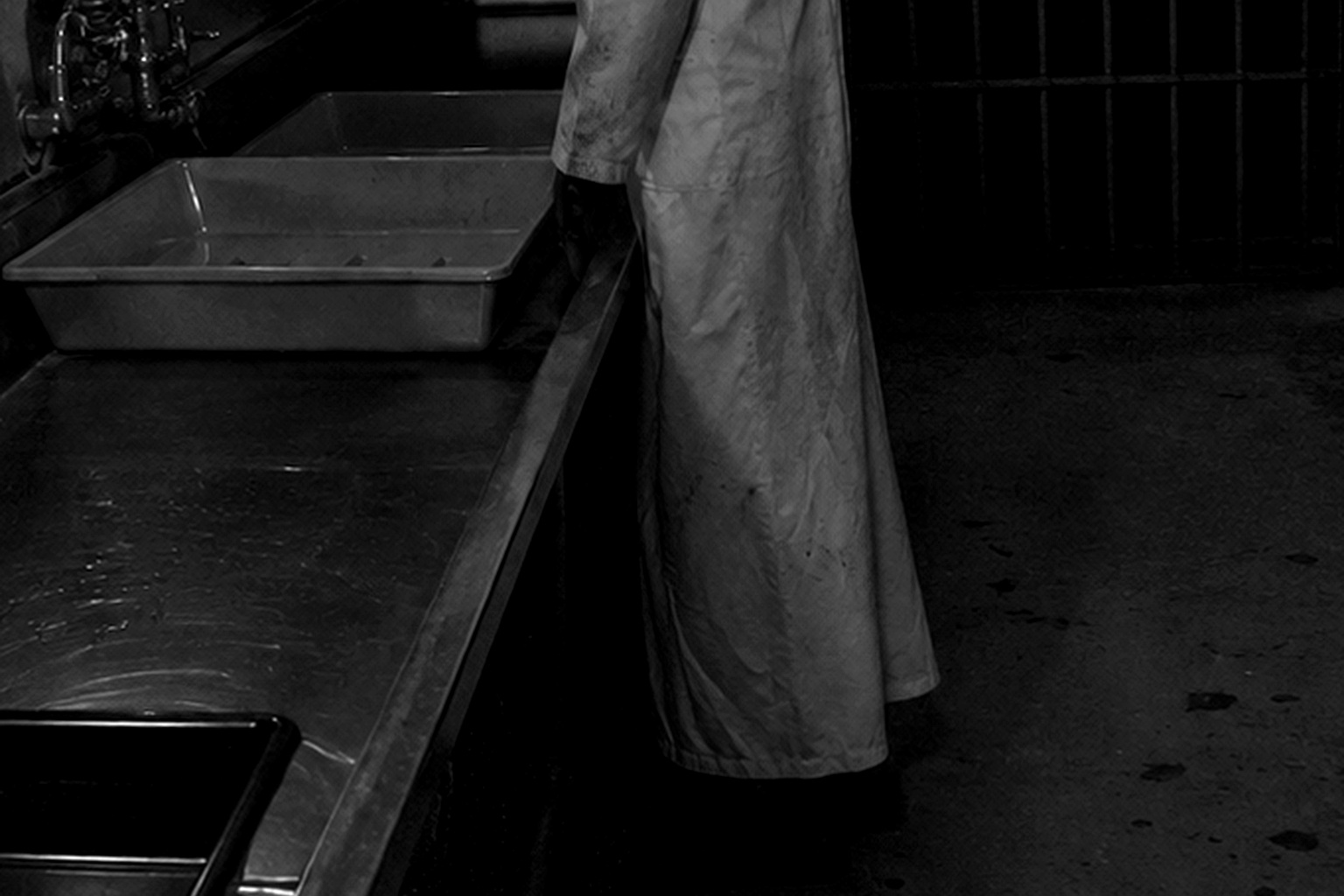
School sports. Family reunions. Sometimes emergency jobs continued until sunrise. He pointed toward the exact position where the white apron figure had appeared.
“That’s where George always worked.” Nobody recognized the name. The photographer explained George had preferred traditional white protective aprons even after everyone else switched to darker rubber ones. “They teased him because every chemical stain showed.”
He laughed softly. Then stopped. “I don’t remember what happened to his apron.” No one mentioned the mysterious image.
The conversation shifted toward forgotten cameras and film brands. Before leaving, the retired photographer paused beside the sink once more. He frowned. “It sounds like running water.”
The Small Detail That Changed The Story
Everyone listened. The room remained silent. The visitor shook his head. “Never mind.”
Yet two volunteers later admitted they thought they had heard something faint as well. Not splashing. Just the slow trickle of liquid moving through a drain.
The Prints That Should Have Stayed Blank
Days later another unusual detail appeared. A volunteer sorted boxes containing unused photographic paper. Most sheets had long expired. They opened one sealed package only to find several pages carrying faint gray impressions.
No photographs. Just partial outlines. Almost as if someone had begun developing images before stopping halfway. The shapes looked meaningless until one sheet was rotated sideways.
Then the sink became recognizable. Metal edges. Chemical trays. A hanging towel.
How The Place Felt Different Later
Standing beside them… A pale apron. No face. No eyes.
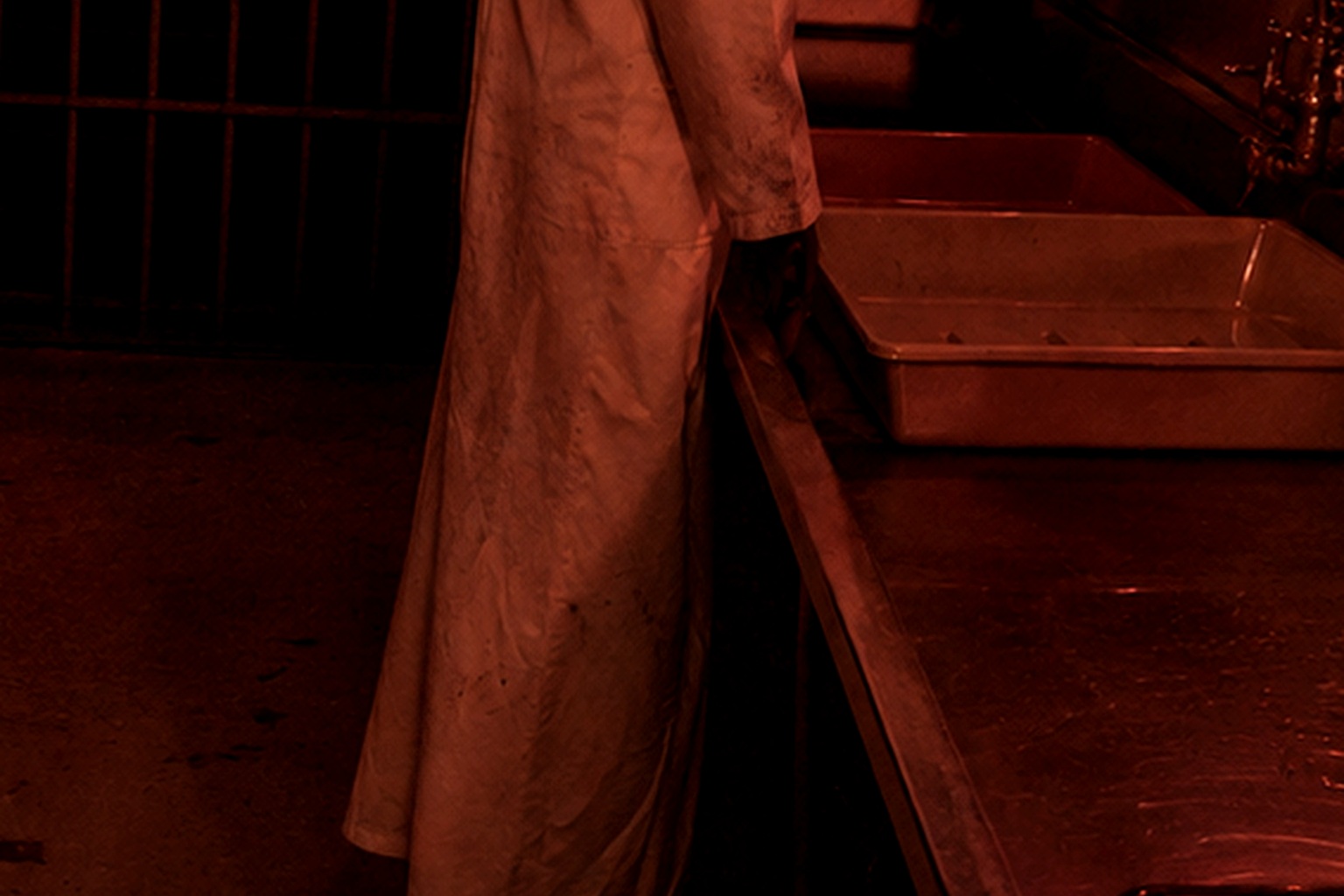
Only empty whiteness where the head should have reflected light. The volunteer immediately checked every remaining sheet. Only one contained the strange outline. The others remained completely blank.
The image wasn’t sharp enough to identify anyone. Yet its position matched where the earlier figure had appeared. Nobody could explain how an undeveloped sheet inside a sealed package carried such an impression. The paper was placed inside an archival sleeve with the rest of the historical collection.
Curiously, every photograph taken of that sheet afterward appeared slightly darker than expected. Not ruined. Simply dimmer around the apron.
The Last Visit Before Renovation
Eventually the building owners announced plans to renovate the property. The historical society removed every cabinet, negative sleeve, enlarger, and surviving camera. The darkroom emptied for the first time in decades. Only the sink remained because it had been permanently welded into the plumbing.
Workers disconnected electrical wiring. Removed shelves. Scraped paint. Still the heavy chemical gate stayed locked.
Why This Image Still Gets Shared
Nobody bothered cutting it open since nothing remained behind it. On the final evening before demolition crews arrived, two volunteers walked through the empty building one last time. The front rooms echoed. Dust floated through fading sunlight.
The darkroom felt larger without equipment. Only the long stainless sink reflected the dim emergency lights. One volunteer noticed something resting neatly on the metal surface. A folded white apron.
Clean. Bright. Perfectly dry. No one remembered packing it.
Neither volunteer touched it. They simply stood quietly, unsure why seeing an ordinary piece of cloth felt more unsettling than anything else discovered inside the building. The next morning they returned with another staff member. The apron had disappeared.
The sink was empty again. The surface held only a scatter of tiny water droplets catching the early light. Outside, demolition crews waited for clearance to begin. Inside, the old brass padlock still secured the chemical room exactly as it always had.
Dust covered every inch of the steel gate except one narrow section at waist height. There, someone—or something—had recently wiped the bars clean with a sleeve of spotless white fabric.