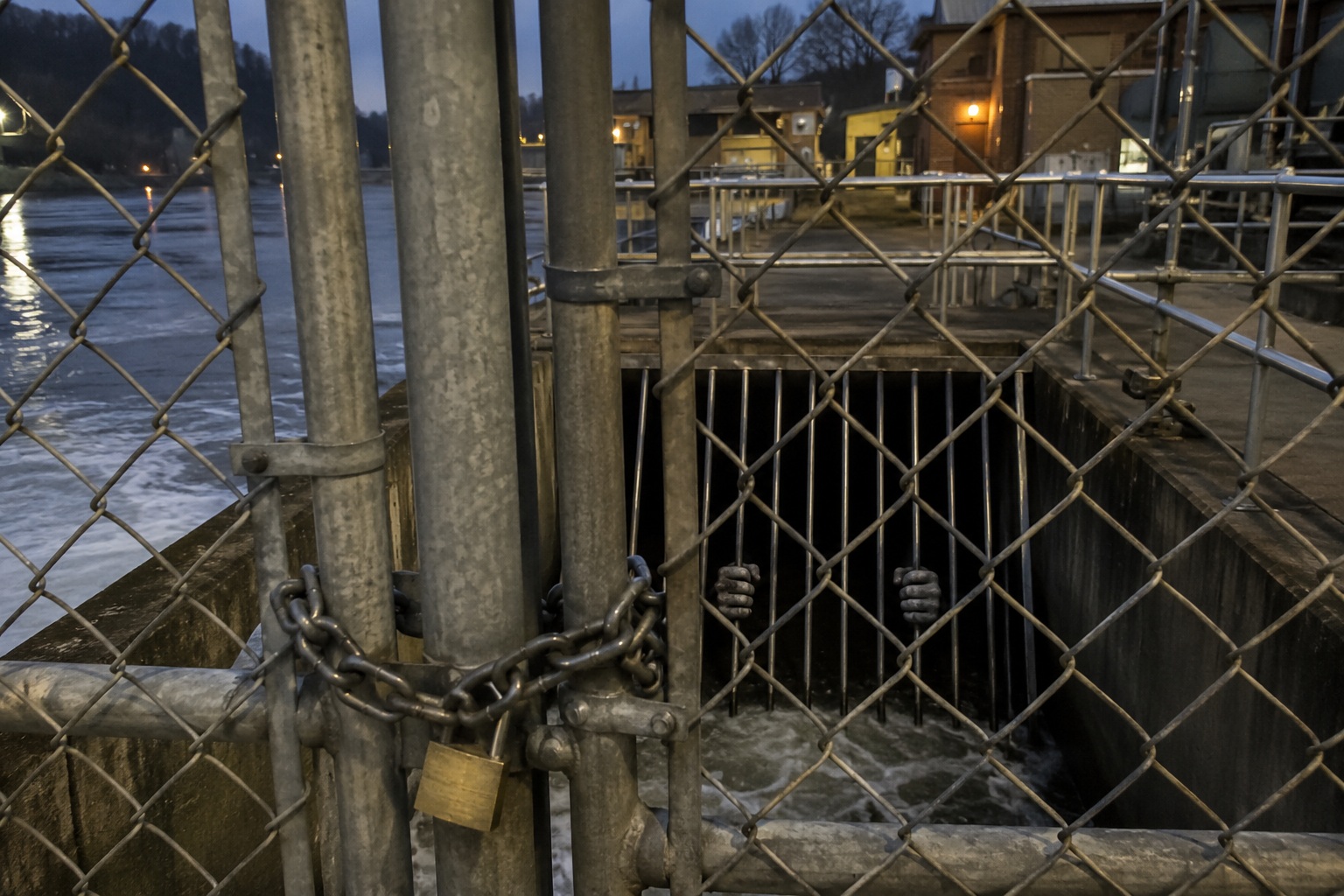
The first thing that made my stomach drop wasn’t the water. It was the pair of gray webbed hands wrapped around the inside of a steel intake gate that nobody could have reached without standing in fast-moving water. If you ever look at the picture, don’t stare at the hands first. Look at the heavy chain and padlock across the service gate in front of the intake. Nothing had been opened.
I worked evening maintenance at our town’s water treatment plant for almost six years. Most nights were boring. Pumps hummed, warning lights blinked, and I walked the same concrete paths until I knew every crack by heart. That’s probably why I noticed something so wrong the moment it happened.
My Last Evening Check
The intake channel sat below the main building where river water entered before the treatment process began. It wasn’t a place people visited. The concrete walls were slick with algae, the water rushed through faster than it looked, and steel bars blocked anything large from entering the system.
A locked chain-link service gate stood above the channel. Only maintenance workers had keys. That evening I finished checking the chemical room and walked outside just before sunset. The air smelled like wet stone after an afternoon storm.
Everything looked normal until I heard Duke. Duke belonged to Carl, the night operator. The old yellow Labrador usually ignored the intake area. This time he stopped so suddenly that his leash snapped tight.
He wouldn’t take another step. His ears stayed flat while he stared between the steel bars below. Carl laughed at first. “Probably another turtle.”
But Duke wasn’t barking. He was shaking. I leaned over the railing expecting driftwood or debris. Instead I noticed something that made me freeze.
The First Time It Happened
There were fresh wet streaks running across the concrete walkway. They didn’t come from the river. They started beside the locked gate. And they ended right at the edge above the intake.
The strange part came a few minutes later.
Something Was Holding The Bars
I walked down to the fenced service entrance. The chain was still wrapped through the gate exactly as we always left it.
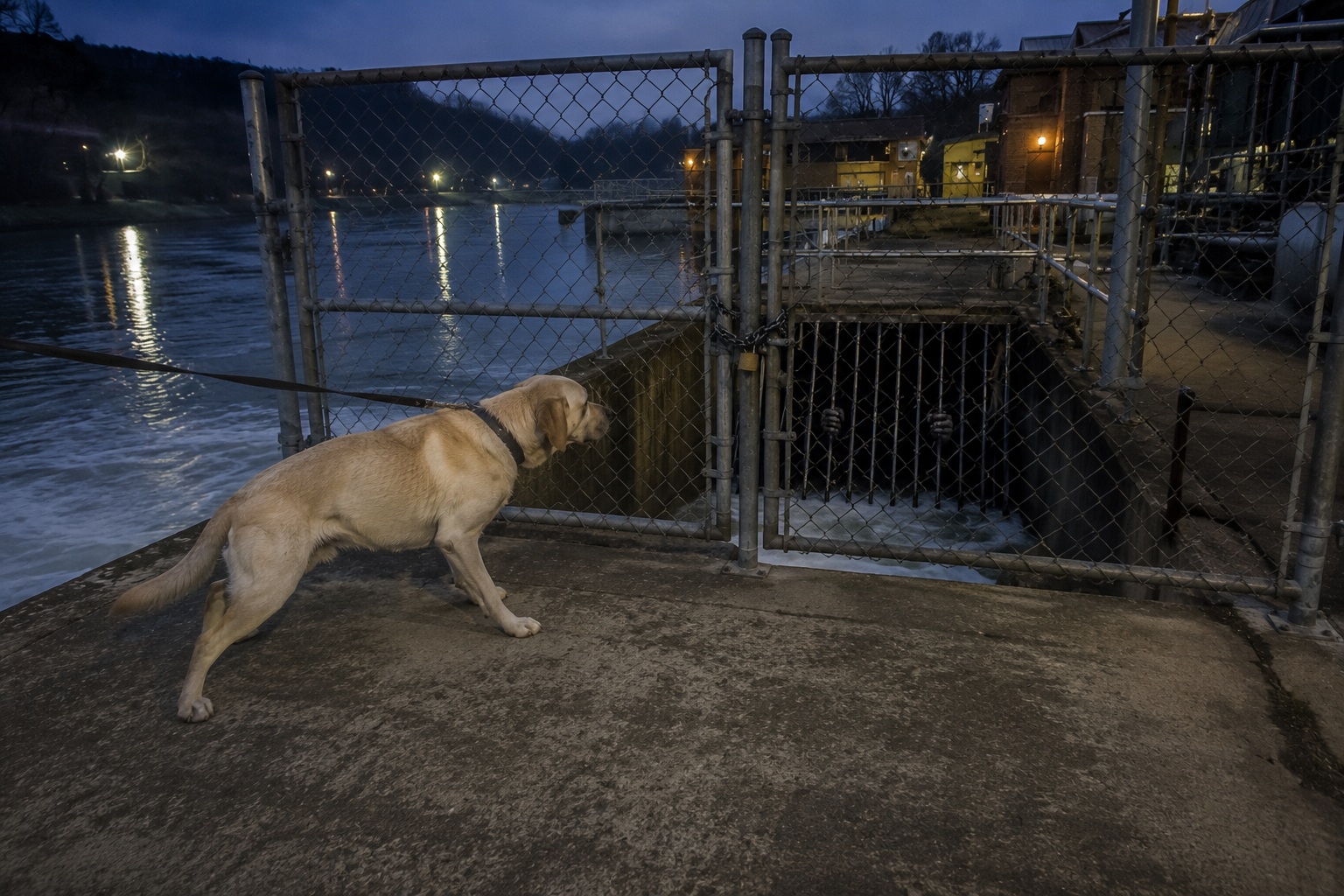
The brass padlock faced outward. Nobody had opened it. I remember touching the lock just to make sure. It was cold from the rain.
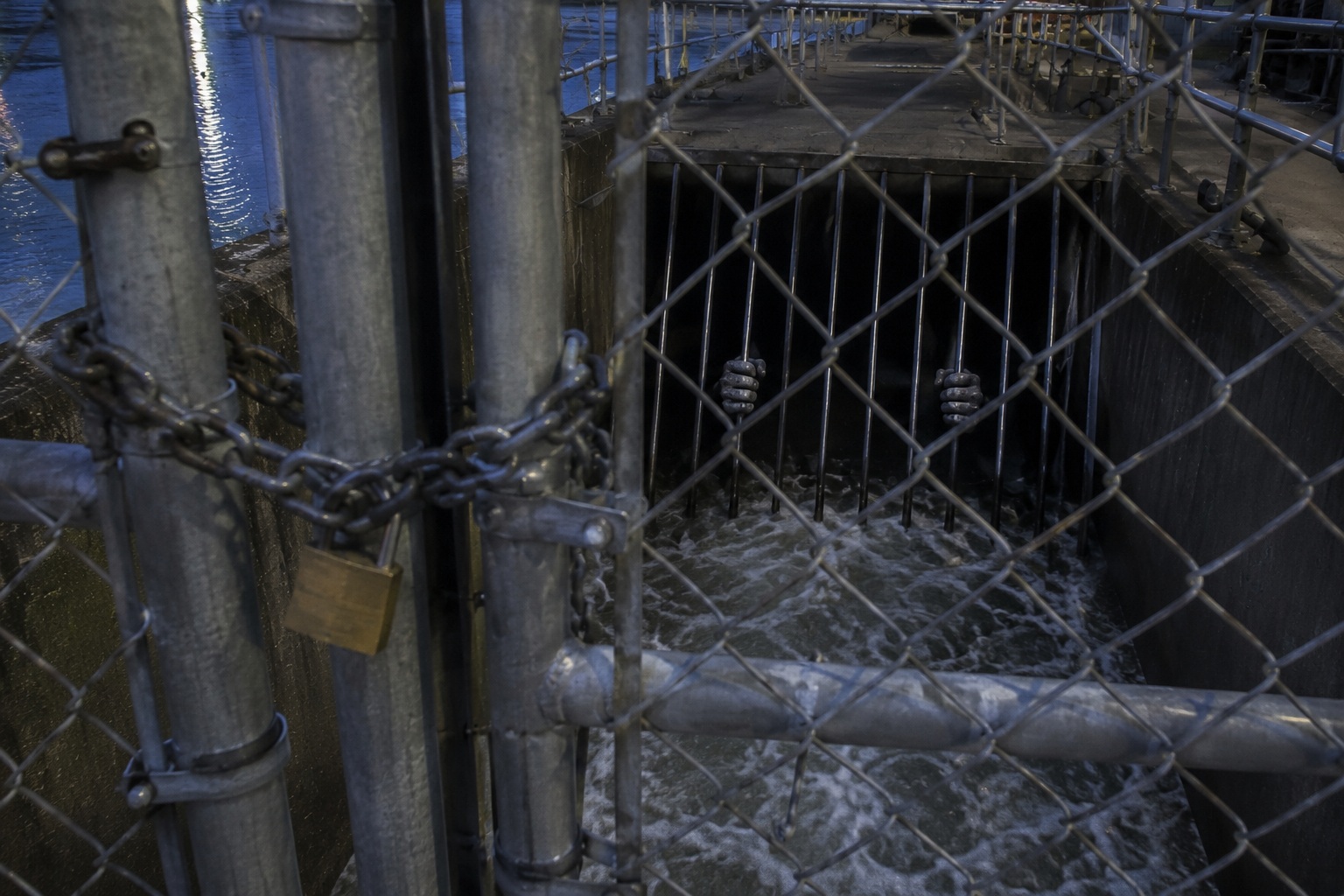
Behind the fence, the steel intake bars disappeared into the rushing water. At first they looked empty. Then two gray hands slowly appeared from below. Not floating.
Not drifting. Holding the bars. They looked almost human except for the skin stretched between every finger. The fingers were much longer than they should have been.
Water poured over the knuckles while they never slipped. I stepped backward so fast I nearly tripped over the curb. Carl asked what I’d seen. By the time he reached the fence, the hands were gone.
Why The Place Felt Wrong
Only the water remained. He thought I’d mistaken branches or weeds. I wanted to believe that too. Until we checked the inspection pictures from later that night.
The Picture Nobody Could Explain
The intake is photographed automatically every evening for maintenance records. Nobody pays much attention to those images unless something blocks the bars. Carl opened the newest one while we finished paperwork.
The picture looked ordinary. Concrete walls. Dark river water. Steel bars.
Then he zoomed in. The hands were there. Both of them. They were gripping the inside of the intake bars several feet below the walkway.
Every finger curved around solid steel. The webbing between them was easy to see after enlarging the image. Carl stopped talking. Neither of us could think of any animal shaped like that.
Fish couldn’t grip steel. Frogs weren’t that large. Beavers didn’t have hands. The stranger detail wasn’t the shape.
The Detail Nobody Could Explain
It was where they were. Those bars sat behind the locked service gate. No one could reach them without unlocking the fence first. The lock never moved.
That bothered me more than the hands themselves. The next morning we decided to inspect the area in daylight. That’s when another problem appeared.
Nothing Should Have Been There
Sunlight made everything seem less frightening. The river looked ordinary again. Birds landed nearby. Workers joked while unloading supplies.
For a while I felt embarrassed about the whole thing. Then we reached the intake. The wet streaks from the night before had dried. But something else hadn’t.
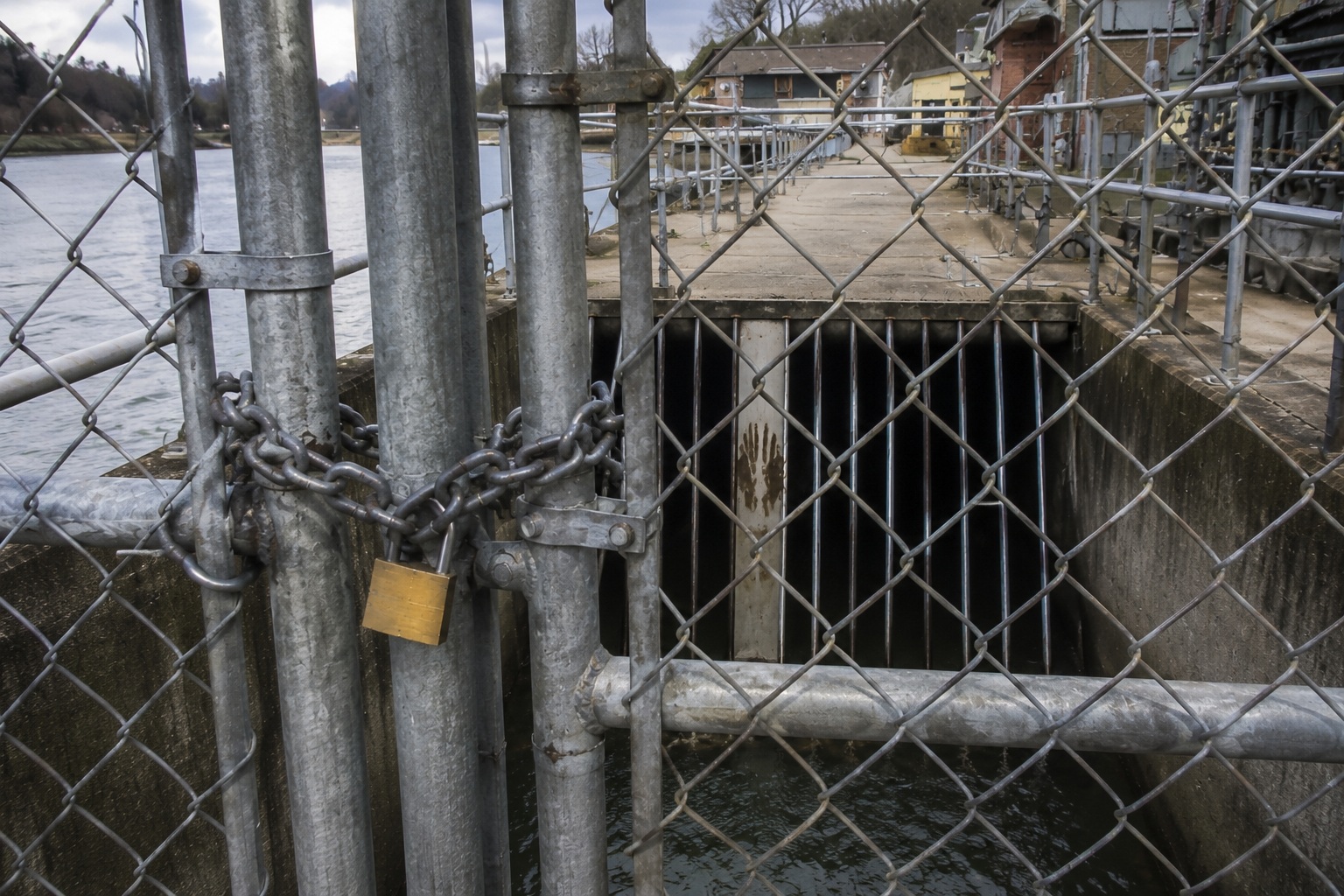
Five muddy marks covered one vertical steel bar. They weren’t fingerprints. Each mark was long and narrow. Between them were thin lines where muddy water had dried inside webbing.
Nobody wanted to touch them. Carl finally sprayed the bar with a hose. The marks disappeared instantly. Underneath was clean steel.
What They Checked Afterward
No scratches. No algae. No sign anything had climbed there. We checked the chain.
Still locked. The padlock hadn’t been opened since the previous inspection according to the maintenance tag. One of the supervisors blamed floating weeds. Another suggested a prank.
Neither explanation made sense. Pranks don’t leave marks inside locked fences. That afternoon the plant manager asked us not to discuss it outside work. I agreed.
At least until my next shift. Because something happened that made the picture seem much less important.
The Sound From Below
Two nights later I was alone during my inspection round.
Carl had gone inside to answer a radio call. The intake walkway felt unusually quiet. Even the river sounded different. Instead of rushing, it almost seemed to breathe.
Slow in. Slow out. I stopped beside the locked fence. Nothing moved below.
I told myself the whole thing was finished. Then I heard fingers. Not splashing. Tapping.
The Moment It Became Harder To Ignore
Soft taps against hollow steel. One. Then another. Then all five together.
The sound came from inside the intake bars. I looked over the railing. Nothing. The tapping stopped.
As I turned away, Duke started barking from the parking lot. Not loud. Short warning barks. He was staring past me.
Toward the bars. I looked back. One gray hand had risen halfway above the water. Only one.
It held the steel so tightly that the fingertips bent around it. Water streamed from the webbing. The wrist never appeared. I couldn’t move.
Then the hand slowly slipped beneath the current without making a splash. That was the part I still can’t explain. Anything dropping into moving water should disturb the surface. This didn’t.
The river stayed perfectly smooth except for its normal flow. When Carl returned, all he found was me standing several feet away from the fence. I never finished that inspection. But there was still one thing left to discover.
Why People Avoided That Spot Later
The Older Maintenance Files
A week later curiosity got the better of me. I searched through old maintenance photos going back several years. Most were exactly what you’d expect.
Leaves. Branches. Ice during winter. Then I found one taken almost four years earlier.
The intake looked almost identical. Same bars. Same water level. Same concrete wall.
I almost closed it. Then I noticed something near the bottom corner. Two gray shapes wrapped around the inside of the bars. Barely visible.
Small enough that nobody had marked the image for review. Once I knew what I was looking at, I couldn’t unsee them. They weren’t debris. They curved around the steel exactly like the hands we’d seen.
I asked one retired worker if anything strange had ever happened around the intake. He got quiet. After a long pause he asked me one question. “Did the dog refuse to go near the fence?”
I nodded. He looked toward the river through the break room window. “They always do.” He wouldn’t say another word.
Why The Story Still Gets Shared
I never asked again. Sometimes I wish I had. Because after finding that older picture, I realized the hands hadn’t appeared for the first time. They had simply waited until someone finally noticed.
I Still Avoid That Place
I transferred to another facility not long after. Officially it was for a better schedule. The truth is simpler.
I couldn’t walk that intake path anymore. Every evening I expected to hear soft tapping beneath the rushing water. Sometimes former coworkers still send me pictures from the plant during storms. Most show nothing unusual.
Just concrete, steel, and muddy river water. Once in a while someone mentions Duke refusing to cross the intake walkway again. He’s old now. Almost too old to work.
Apparently he still stops at the exact same spot. He stares through the locked fence toward the bars below. Then he quietly backs away. I’ve never asked anyone to zoom into the latest maintenance pictures.
I don’t want to know whether the hands are still there. Part of me believes they never left. They’re simply waiting below the water where nobody thinks to look. Holding onto those cold steel bars inside a place no one can reach without opening a lock that has never been touched.
And every time I remember that picture, I find myself wondering about one detail I didn’t notice until much later. There wasn’t just one pair of webbed hands on the bars. There was enough empty space between them for something much larger that never came into view.