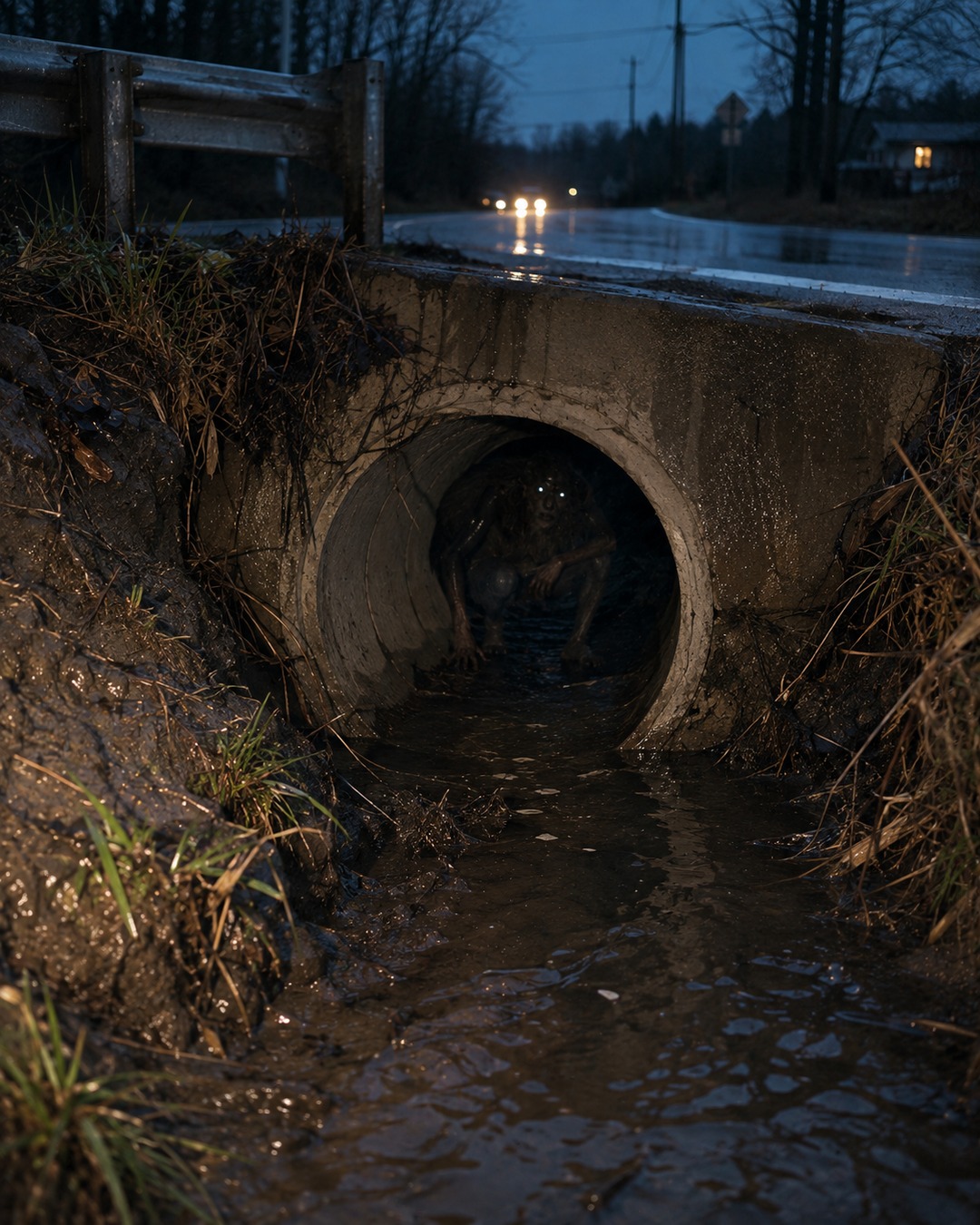
Short answer: Culverts, storm drains, bridges, drainage ditches, retention ponds, and creek crossings produce a lot of strange creature reports because they combine wildlife movement, darkness, reflected eyeshine, water distortion, echoing acoustics, restricted sightlines, and local folklore. That does not prove a cryptid is present. It means the location itself can make ordinary animals and ambiguous evidence look stranger than they are.
Why creature reports cluster around infrastructure
Water and cover attract animals. Roads, bridges, culverts, ditches, and stormwater corridors can create hidden travel routes through towns, farms, and suburbs. A witness may see only part of an animal at the edge of a beam of light, hear sounds amplified by concrete, or find tracks after water has blurred them.
What animals use culverts and drains
Wildlife can use culverts and underpasses to cross roads and move along waterways. Depending on region, likely animals may include raccoons, foxes, coyotes, dogs, cats, deer, opossums, beavers, otters, muskrats, snakes, frogs, birds, and livestock near rural crossings. A report should start with the known local species before assuming an unknown creature.
Darkness, size and shape perception
At night, distance and scale are easy to misjudge. A crouched animal partly hidden behind concrete can look larger, lower, or more humanlike than it is. Wet fur, mud, shadow, and a flashlight beam can erase ordinary details.
Eyeshine and reflected light
Many animals produce eyeshine under flashlights, headlights, or trail cameras. Color is affected by angle, camera sensor, distance, exposure, and the animal’s eye structure. Red, yellow, white, or green eyes in a culvert are not enough by themselves to identify an unknown animal.
Tunnel and bridge acoustics
Concrete spaces echo. Scratches, drips, wingbeats, water flow, vehicles, voices, and animal movement can sound louder or closer than they are. A sound from one end of a drain may seem to come from another opening.
Tracks, scat and waterline evidence
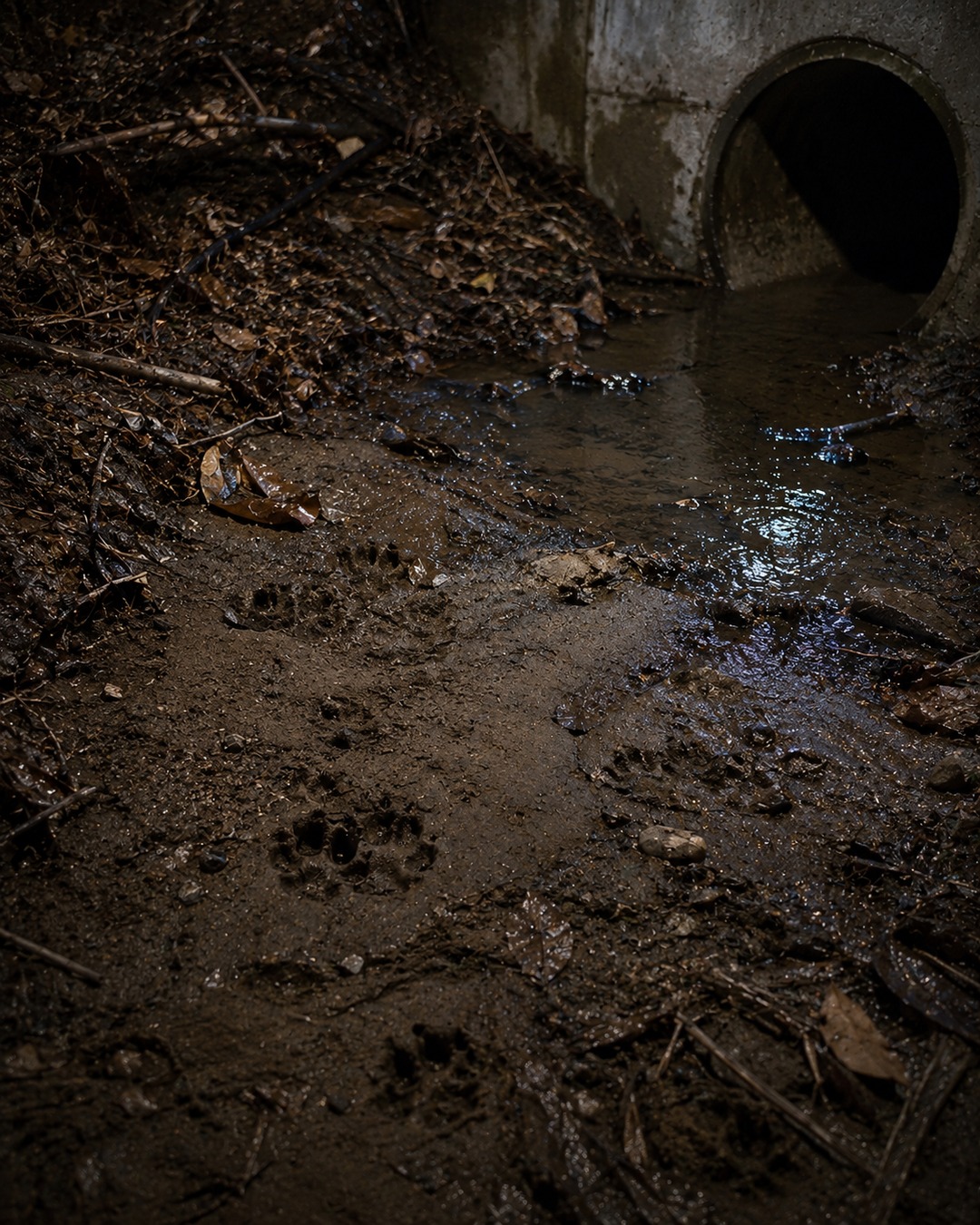
Useful reports document scale, substrate, direction of travel, water level, weather, and nearby access routes. Muddy tracks near drains can smear or collapse after rain. Scat, hair, fish scales, feathers, and claw marks should be photographed with scale and compared against local wildlife.
Stormwater and high-water effects
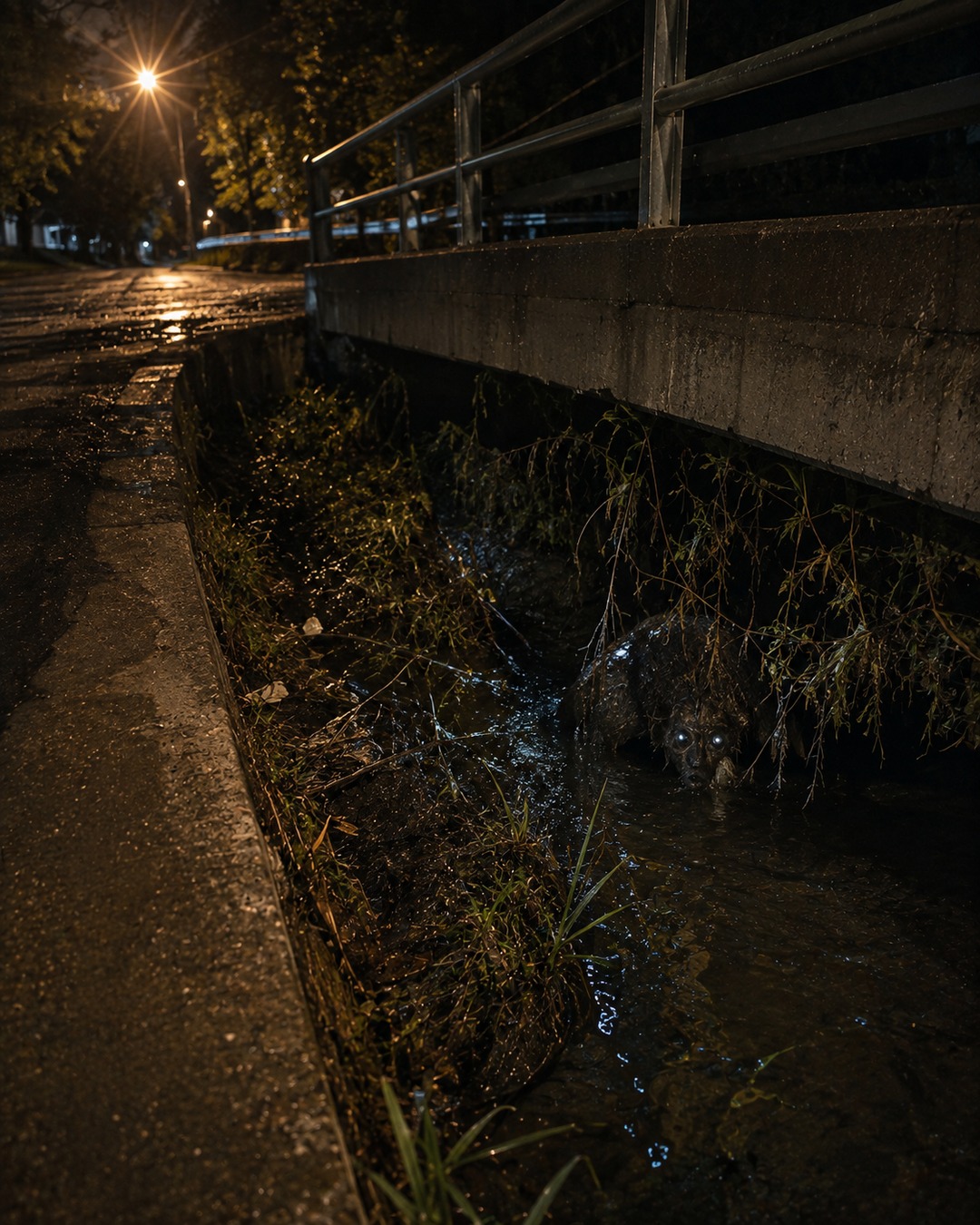
After heavy rain, stormwater moves debris, fish remains, leaves, trash, bones, bait, and mud to unexpected places. That can create “placed” evidence on branches, grates, banks, or ledges. Waterline height and recent rainfall are essential context.
Folklore and expectation
Bridges, drains, and ditches already carry strong folklore associations: things under bridges, things in sewers, creatures near water, and eyes seen from dark openings. Expectation can shape how a brief sighting is remembered and retold.
How to evaluate a report safely
- Do not enter storm drains, culverts, or flood-control channels.
- Photograph from a safe public location.
- Include scale, distance, weather, recent rainfall, and local species.
- Record audio/video without narrating what others should hear or see.
- Check for domestic animals, wildlife corridors, drainage routes, and reflections.
What would count as unusually strong evidence?
Strong evidence would need more than a scary opening or a brief glow of eyes. It would include clear, scaled images or video, track sequences, biological material handled properly, repeat observations, location context, and ordinary animal explanations ruled out by someone qualified to assess the local wildlife.
Sources & Further Reading
- National Park Service: Urban Wildlife
- Federal Highway Administration: Culverts, drainage and aquatic organism passage
- EPA: Stormwater discharges from municipal sources
- U.S. Forest Service: Wildlife crossings
Related Weird Witnessed research: trace evidence on fences, fish scales on creek branches, and the creature reports hub.