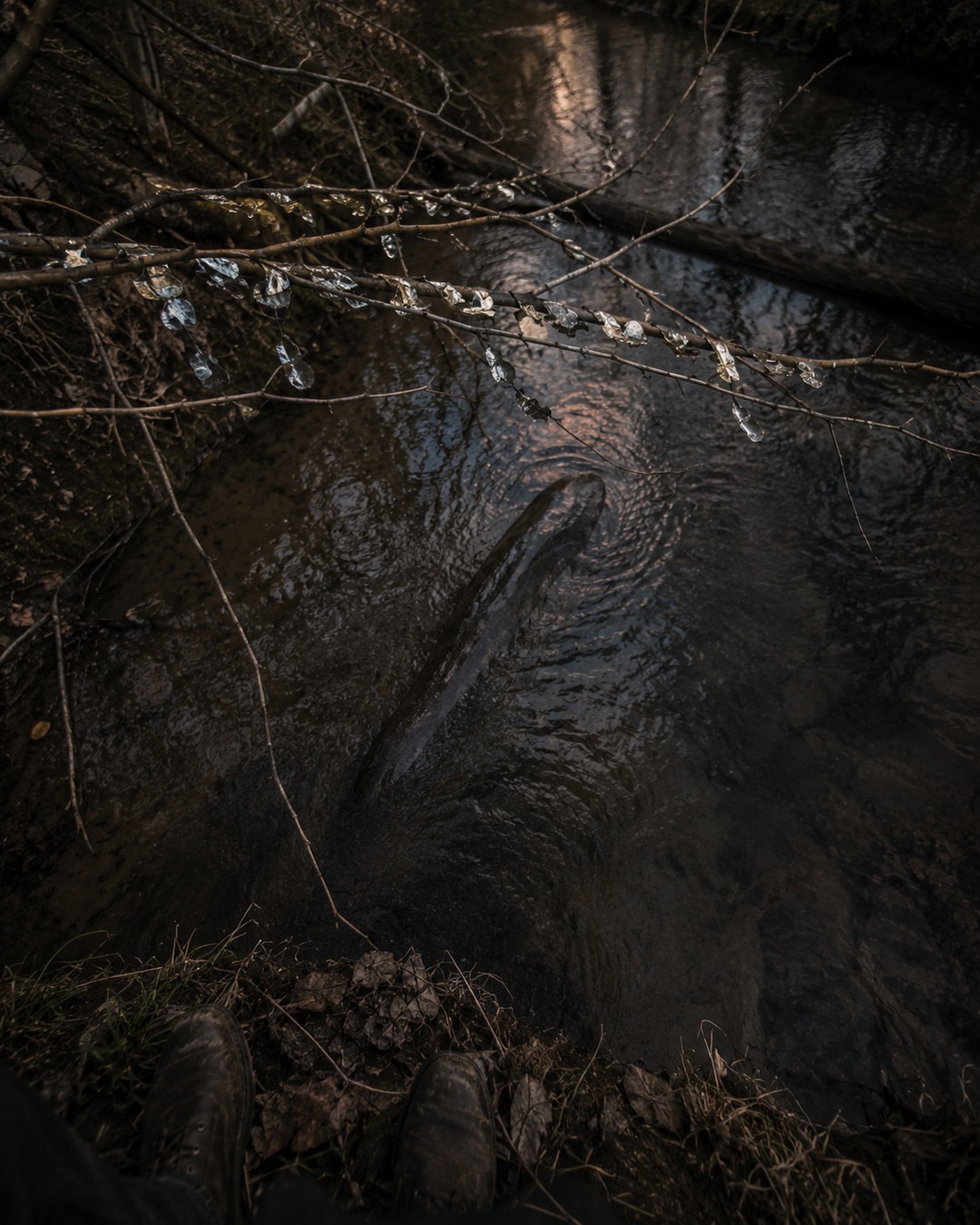
The first scale was stuck to a branch almost six feet above the water. It was silver, wet, and large enough to catch the beam of a flashlight. Below it, the creek moved slowly between muddy banks. Nothing unusual there. Then another scale appeared farther along the same branch. A third clung to a thin twig over the opposite bank. The strange part was what wasn't underneath them. There was no fish on the ground. No pile of bones. No blood on the rocks. No fishing line caught in the brush. The mud beneath the branch looked mostly untouched except for a few smeared marks near the water. Then something splashed downstream. Not the quick slap of a jumping fish.
What Would Make This Report Stronger?
This account is kept live because it has a distinct scenario, but it should not be read as proof by itself. Stronger evidence would include exact timing, repeated observations, photographs from more than one angle, ordinary causes checked at the location, and clear separation between what was witnessed, what was inferred, and what was later remembered.
Possible ordinary explanations depend on the setting, but can include lighting changes, wiring or plumbing, pressure differences, reflections, vibration, building movement, animals, people nearby, camera artifacts, sleep or expectation. The reconstruction keeps the eerie premise while making the uncertainty clear.
It sounded heavier, as though something had stepped into the creek and displaced a large amount of water. The flashlight swept across the bend just in time to catch two pale reflections close to the surface. They disappeared together. Stories about fish scales found on branches, logs, fences, and plants above creeks sometimes become much stranger than they initially sound. Usually, there are perfectly ordinary animals capable of putting fish remains in surprising places. But height, repetition, fresh marks, and the absence of an obvious predator can turn a few scales into a much creepier question: What carried the fish up there? Why fish scales above water feel so wrong: a fish scale on a riverbank isn't frightening. A fish scale stuck to a branch at eye level can be.
Our brains automatically connect fish with water. We expect scales beside a cleaning table, near a fishing spot, on rocks where an animal has eaten, or along the muddy edge of a creek. Finding them well above that zone breaks the expected picture. Height is especially important.
The Moment It Became Harder To Ignore
A branch three feet above the current might have been underwater during recent flooding. A branch seven feet above the current on a steep bank creates a different problem. The same is true when scales appear repeatedly. One scale could have been carried by almost anything. Wind, a bird, a fisherman's clothing, or rising water could explain it. Ten fresh scales spread across several branches start to look like a trail. That is usually the moment when an ordinary creek begins to feel watched. People also tend to notice the scales only after something else has made them uneasy: splashing after dark, missing bait, a strange smell, flattened grass, tracks at the waterline, or an animal reacting toward the creek. The scales become memorable because they seem to connect those separate details.
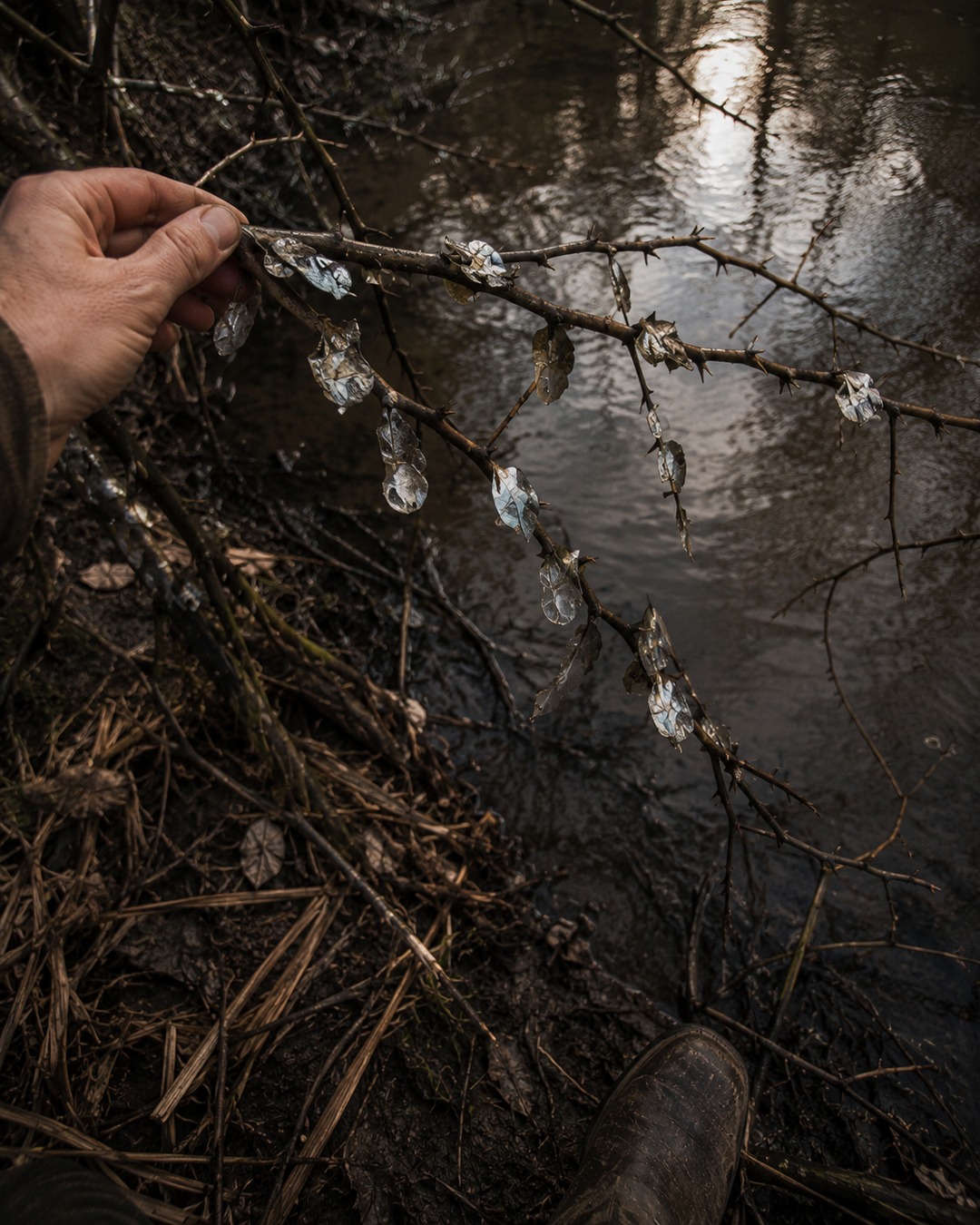
Birds are one of the strongest normal explanations. Herons, kingfishers, eagles, ospreys, and other fish-eating birds routinely move fish away from the exact place where they caught them. Depending on the species and situation, a bird may carry a fish to a perch, struggle with it on a branch, tear into it somewhere above the water, or drop part of its meal. That can leave surprisingly dramatic traces. Loose scales may stick to wet bark. Pieces of skin can hang from twigs. A partly eaten fish can fall while scales remain above.
Why The Story Still Gets Shared
A person arriving later sees the leftovers but not the predator. The creek looks empty. There is another reason birds can make the scene confusing: the branch holding the scales does not necessarily need to look strong enough to support a large animal now. A bird might have landed briefly, shifted position, or used a larger branch nearby. Scales can also be transferred onto smaller twigs as the fish swings or struggles. Look upward before looking for monsters. White droppings, feathers, scratched bark, a suitable perch, or more remains caught higher in the tree can make a bird explanation much stronger. But birds aren't the only animals that move fish vertically. Raccoons, Otters, And Other Creek Hunters Move Meals Around Creeks are busy after humans leave. Raccoons work the shallows. Otters travel banks and waterways.
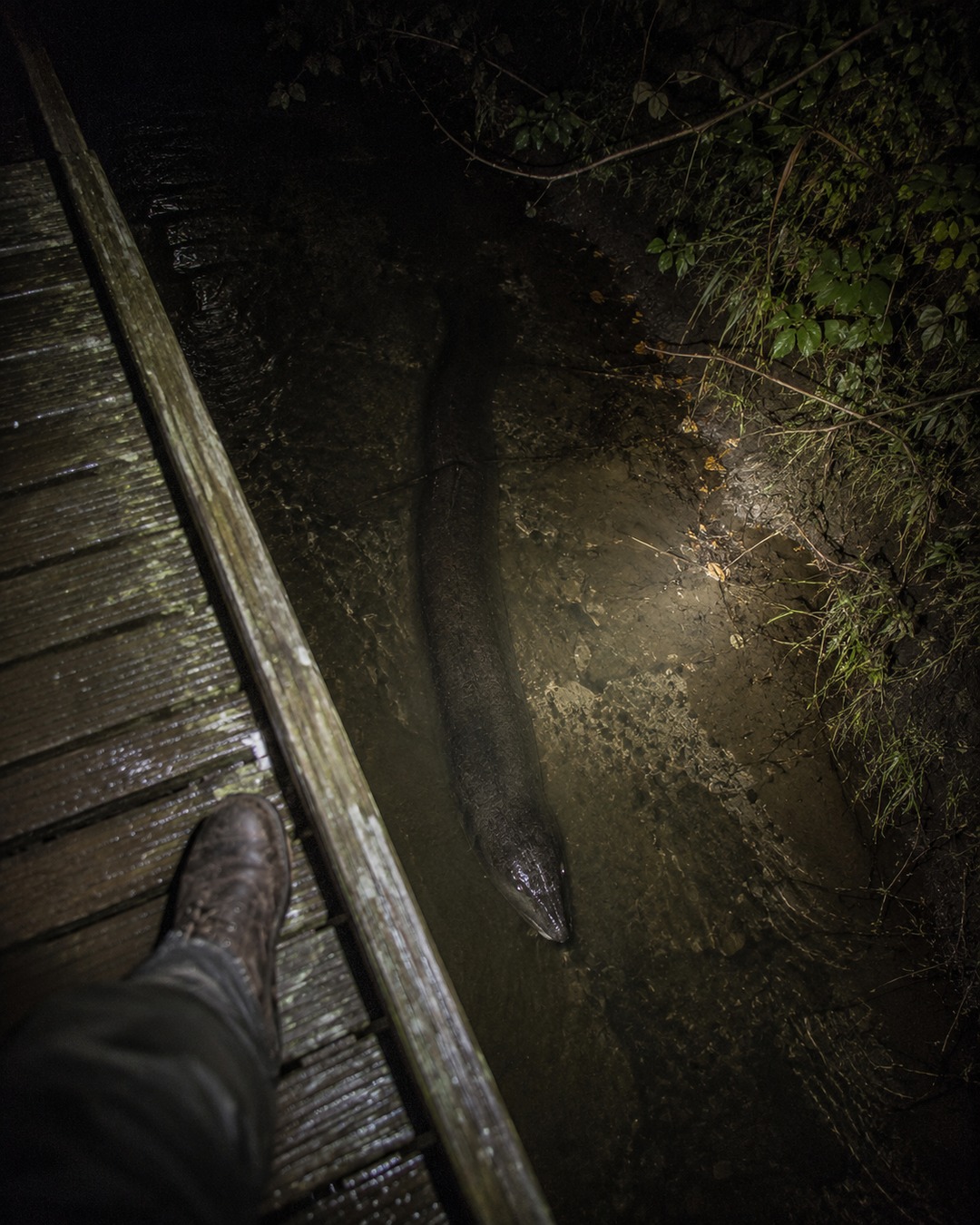
Mink hunt close to water. Foxes and other mammals may take fish when the opportunity appears. Some of these animals are excellent climbers. A raccoon can take food onto a fallen trunk, root mass, leaning tree, or low branch. An animal moving through tangled creek vegetation may brush fish remains against plants without deliberately placing anything there. Otters can create another kind of confusing scene. They move quickly between water and land, use repeated paths, leave fish remains behind, and can make surprisingly heavy splashes. In darkness, hearing one without seeing it can make the animal seem much larger. A half-seen otter surfacing in flashlight glare can look strange too. Its head appears low. Its body remains hidden. Wet fur changes its outline. Its eyes may reflect light for a moment before it dives.
Add scales on nearby vegetation, and an ordinary predator can suddenly feel like a creature story. The useful question isn't simply, "Could an animal eat a fish here?" It is, "Could that animal create this exact arrangement?" Height, distance from water, branch thickness, nearby tracks, and how the scales are spread all matter. Floodwater can put fish signs surprisingly high. Creeks do not stay at one level.
The First Time It Happened
This is easy to forget when visiting during calm weather. A branch hanging six feet above today's water may have been touching brown floodwater several days earlier. Fast-moving water carries fish, carcasses, weeds, plastic, branches, fishing gear, and other debris into places that later look impossible. Scales can remain after the water falls. So can fish skin, bones, weeds, and mud. The strongest clue is usually not the scale itself but everything around it. If floodwater reached the branch, there may be a horizontal line of debris through the vegetation. Leaves can be packed against the upstream sides of trunks. Grass may be bent in the same direction. Mud can coat bark far above the current creek.
A single shiny scale can survive among all of that and attract attention precisely because it looks out of place. Flooding becomes less convincing when the scales look extremely fresh while surrounding branches show no mud, debris, flattened vegetation, or signs that water recently reached them. It also becomes harder to use flooding as a catch-all explanation when scales appear at very different heights in a pattern leading away from the creek. Then something may actually have carried the fish. That still doesn't tell you what. The pattern gets stranger when something seems to have climbed. Imagine finding scales on a fallen log beside a creek. Then you notice several more on the trunk. They continue upward. At four feet, there is a smear on the bark. At six feet, another scale is pressed against a broken branch. Beyond it, wet marks continue toward dense vegetation on the higher bank.
What They Checked Afterward
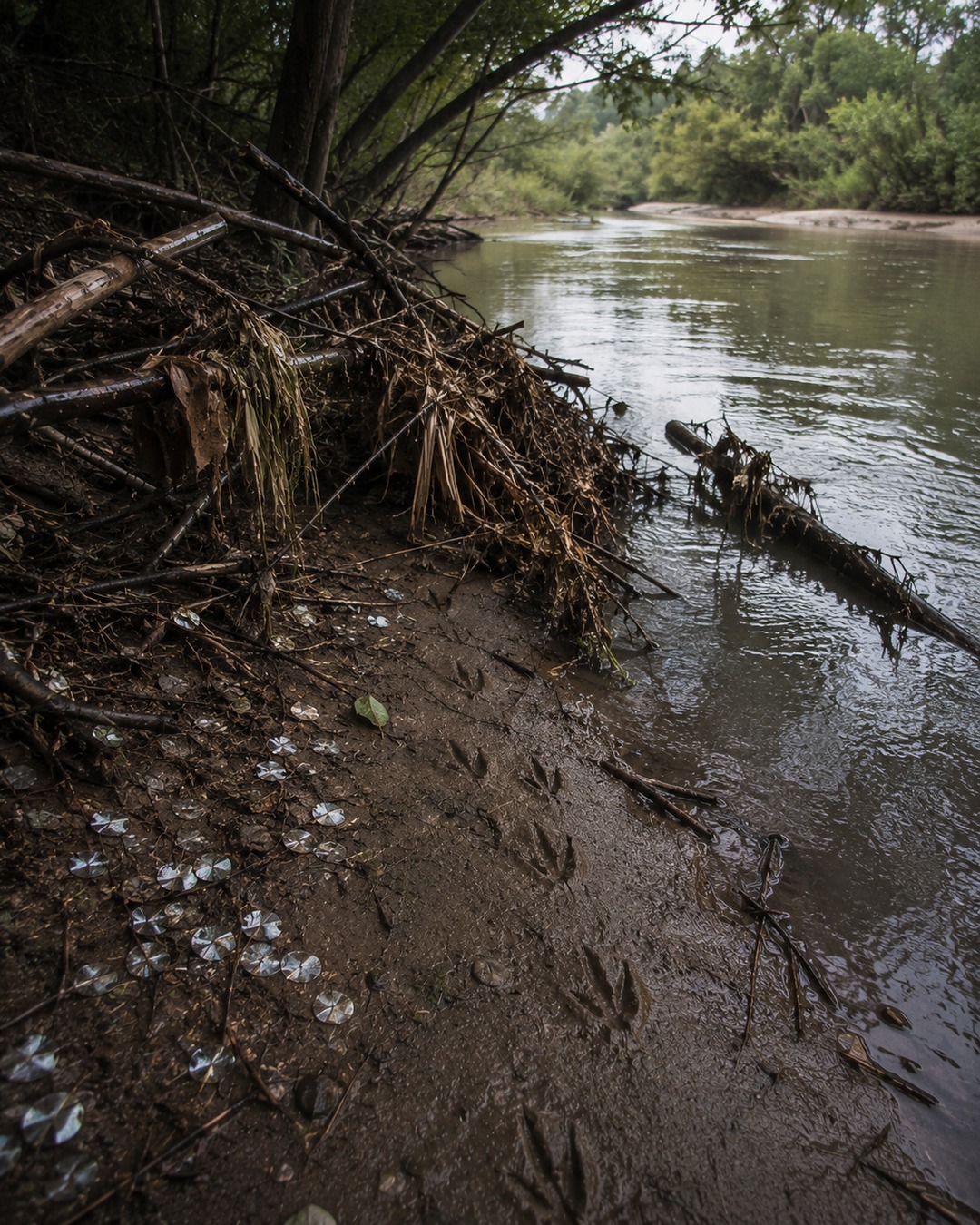
That changes the question. You're no longer wondering how a fish reached one branch. You're wondering what moved while carrying it. This is where tracks become useful, although creek banks are terrible places for clean footprints. Water collapses edges. Mud fills impressions. Leaves overlap. Roots create shapes that resemble toes. A normal animal trail can look bizarre under a flashlight. Still, direction matters. If marks clearly begin at the creek and continue toward the branches, the idea of a land animal carrying prey becomes stronger. The more interesting cases are the ones where the physical details don't fit neatly. Someone might describe a wide drag mark leaving the water, only for it to disappear on hard ground. Others describe scales above head height but no obvious climbing scratches.
In creature stories, people sometimes add another detail: a handlike mark in mud, long impressions on the bank, or webbed-looking toes. Those descriptions should be treated carefully. Partial tracks are easy to misread. But they explain why fish scales sometimes become part of stories about something larger living around a creek. The scales suggest feeding. The strange marks suggest movement. Together, they create a picture in the witness's mind. No single fish scale should carry much weight. Patterns matter more. Suppose fresh scales are found eight feet above a creek that has not recently flooded. The branch is under thick cover with no obvious open approach for a large bird. More scales appear on vegetation several yards uphill. Nearby, something has flattened the reeds. Then there is a fresh fish head beside a muddy impression too damaged to identify. None of those details individually requires a strange creature. Even together, they don't automatically point to one.
The Detail Nobody Could Explain
But this is the point where simple explanations need to become specific. Saying "probably an animal" isn't very useful. Which animal? Could it reach that branch? Does it commonly carry fish? Would it leave the remains that way? Do its tracks match the marks nearby? The same standard should apply to the stranger possibility. A frightening splash isn't enough. Neither are glowing eyes. Many ordinary animals create both. The pattern becomes genuinely harder to dismiss only when several physical details agree with each other. For example, something large is seen leaving the creek, fresh scales appear along the same route, matching wet marks continue up the bank, and a witness gets a clear look at an unusual body feature such as a broad flattened head, webbed forelimb, or strangely long arm.
That's much more interesting than finding mysterious scales alone. It is also much rarer. Why creek creature stories often focus on feeding. Signs A glimpse lasts seconds. A physical trace can sit there until morning. That difference helps explain why scales, fish remains, empty bait containers, damaged traps, and stripped hooks become such important parts of creek creature stories. People want something they can return to. The splash is gone. The eyes have disappeared. The dark shape slipped underwater. But the branch is still there. And so are the scales. Feeding signs also make a creature feel physical rather than ghostlike. Whatever someone thinks they encountered wasn't simply watching from the trees. It seemed to be hunting, eating, or carrying something. That makes the story more disturbing. There is also a basic survival instinct involved.
Why The Place Felt Wrong
Finding signs that a predator has been feeding makes people pay attention. Humans have always watched for carcasses, tracks, droppings, disturbed vegetation, and other clues that tell us what animals are nearby. A shiny scale above your head is essentially a broken piece of that ancient puzzle. Your mind immediately asks where the eater went. At night, beside dark water, the answer can feel uncomfortably close. What to look for before calling it unexplained. Start with the height of the creek. Look for flood debris above the current waterline. Check weather from the previous several days rather than assuming today's calm level is normal. Then study the branch itself. Are the scales scattered randomly, or concentrated around a perch? Is there bird waste underneath? Are there claw scratches? Feathers? Fish bones?
Look at the route between the branch and the water. Raccoon tracks have recognizable fingerlike toes. Otter movement can leave slides and repeated paths along muddy banks. Other mammals may leave hair, prints, droppings, or obvious trails through vegetation. Also consider people. Someone cleaning fish, moving bait, fishing from the bank, or throwing scraps can produce a scene that looks bizarre later. Even fishing line can move remains. A hooked fish may swing into vegetation, shed scales during a struggle, and then fall back into the creek or be removed. Freshness matters too. A bright wet scale may have arrived recently. A dry translucent scale stuck beneath old debris may have been there far longer than it appears at first glance.
Why People Avoided That Spot Later
Finally, look for repetition. One strange object is easy to misread. A continuous trail tells you much more. Sometimes the creek keeps one detail to itself. Most fish scales found above a creek probably have an ordinary journey behind them. A bird carried dinner to a perch. A raccoon climbed with food. Floodwater rose higher than expected. A hooked fish thrashed against brush. Someone cleaned a catch nearby. Those explanations aren't disappointing. In darkness, many of them can create scenes frightening enough on their own. But occasionally the arrangement is what keeps a story alive. The scales are too high for the recent water. They continue away from the creek instead of toward a likely perch. Fresh wet marks appear beside them. Then something moves in the water.
Maybe there is still a normal animal somewhere in the reeds. Maybe several ordinary details happened to overlap. And if someone claims they saw something stranger, the scales alone cannot tell us whether they were right. They can only answer the smaller question. Something had a fish. Something carried it out of the water. And when the last silver scale is stuck to a branch above your head while the creek behind you suddenly splashes, that smaller answer can be unsettling enough.
Fish Scales Above Water Need A Flood And Predator Check
Fish scales on branches above a creek can feel like a creature clue because the object appears out of place. The first checks are ordinary: high water, flood debris, birds of prey, raccoons, mink, otters, cats, anglers cleaning fish, bait waste, and branches that were lower when the water level was higher. A scale location only matters when the branch height, recent waterline and access path are documented.
Useful details include the species if identifiable, whether skin or bones were present, how fresh the scales looked, whether multiple branches held debris at the same height, and whether tracks or droppings appeared nearby. Without those details, the finding may support a strange story, but it does not identify a lake or creek monster.
Sources and practical context: NOAA ocean life education resources; National Park Service animal signs.
Related researched guide: Lake Monster Sightings Waves Animals Distance And Water Evidence.
Research-first evidence checklist for fish scales above a creek
Fish scales on low branches are usually worth treating as a field-sign question before treating them as a monster report. The useful evidence is not the scale by itself; it is the height of the branch above normal water level, recent high-water marks, nearby predator sign, fish-cleaning activity, and whether the scales appear fresh, dried, scattered, or concentrated in one feeding spot.
Ordinary explanations should be checked first. Floodwater can lift fish remains and debris into brush along a bank. Herons, gulls, raccoons, mink, otters, foxes, bears, and domestic animals can move fish or fish scraps away from the water. Anglers and bait disposal can also leave scales above a creek. A useful report records the branch height, waterline, weather, tracks, scat, feathers, fur, camera angle, and whether the same location has repeated signs over several days.
- Preserve: measured branch height, normal water level, recent rain or flood data, tracks, feathers, fur, bite marks, and repeat observations.
- Treat cautiously: isolated scales without scale reference, photos with no wider scene, and claims that ignore scavengers or high-water debris.
- Useful comparison: creek-bank evidence differs from lake-monster wake reports because it can often be checked against water level, predator access, and shoreline debris patterns.
Helpful background sources include wildlife-agency material on riparian predators and scavengers, local flood-stage/weather records, and field guides for mammal/bird tracks near water. The strongest paranormal discussion begins only after those ordinary checks are documented.