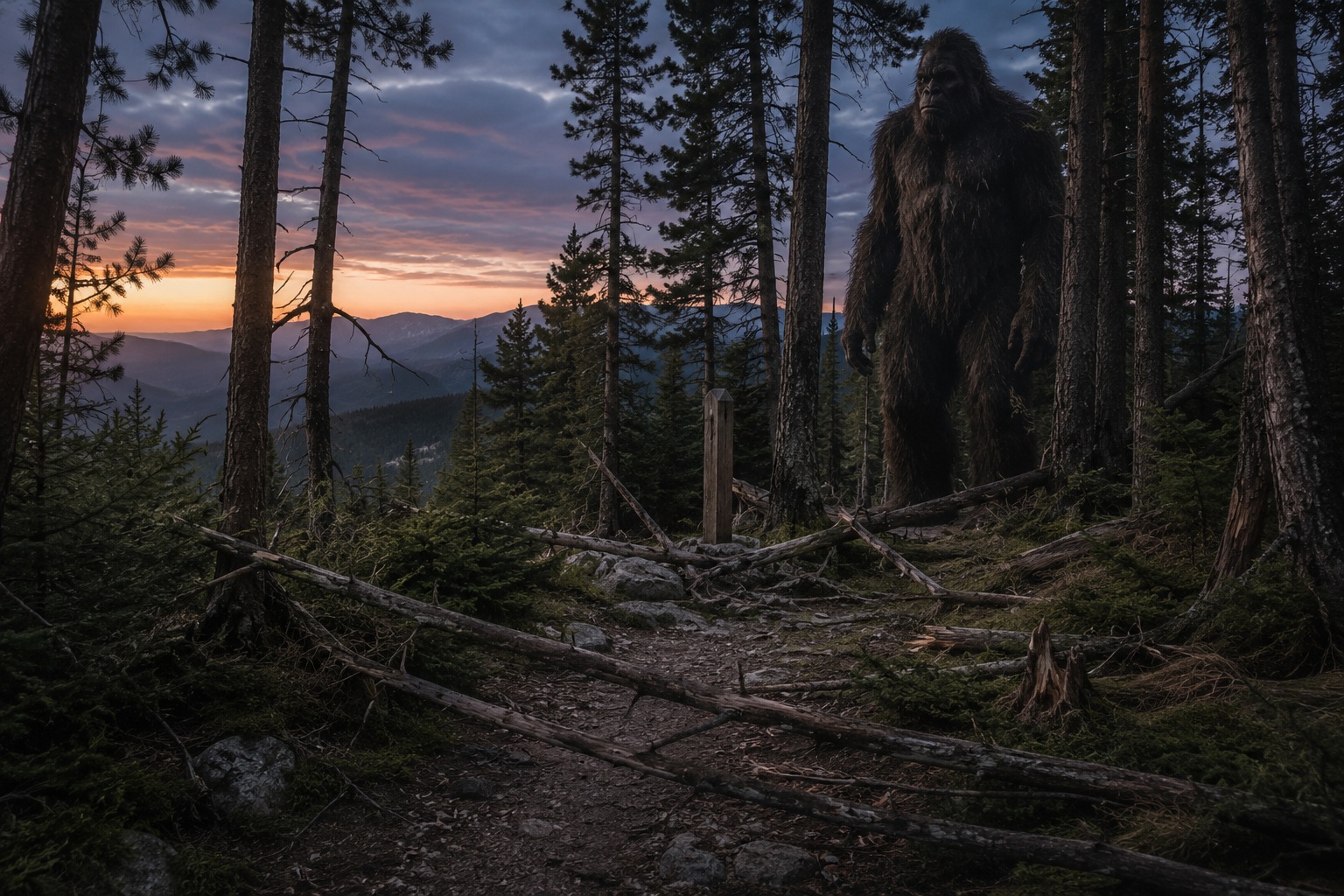
A man hiking alone reached a narrow ridge just before sunset. The trail was familiar. He had walked it dozens of times, and he knew every bend where the pines leaned over the path. About half a mile ahead, he noticed something strange.
A thick branch, almost as wide as his arm, had been snapped clean from a living tree. It was not lying on the ground where gravity would have dropped it. Instead, it rested across two bushes nearly five feet off the forest floor, as if someone had deliberately placed it there.
He stopped for a moment, wondering if a storm had done it. There had been no storms. As he stepped closer, he noticed another branch farther uphill. Then another. Each one looked freshly broken. Bright wood showed where the bark had split. None of them matched the random mess left by wind.
He called out, thinking another hiker might be nearby. The forest stayed quiet. Then, somewhere deeper among the trees, something large pushed through the brush. It did not run. It did not growl. It simply moved with slow, heavy steps that stopped the instant he stopped walking.
The First Time It Happened
Many Bigfoot stories begin with details just like these. People often remember snapped branches long before they describe seeing a huge hairy figure. That raises an interesting question. Why do broken branches appear so often in these stories, and why do they make ordinary hikers feel like they are no longer alone?
Why broken branches stand out in the first place Forests are full of fallen trees and broken limbs. Most of them have ordinary explanations. Wind, snow, age, insects, and lightning damage trees every year. Animals also break smaller branches while moving through thick brush.
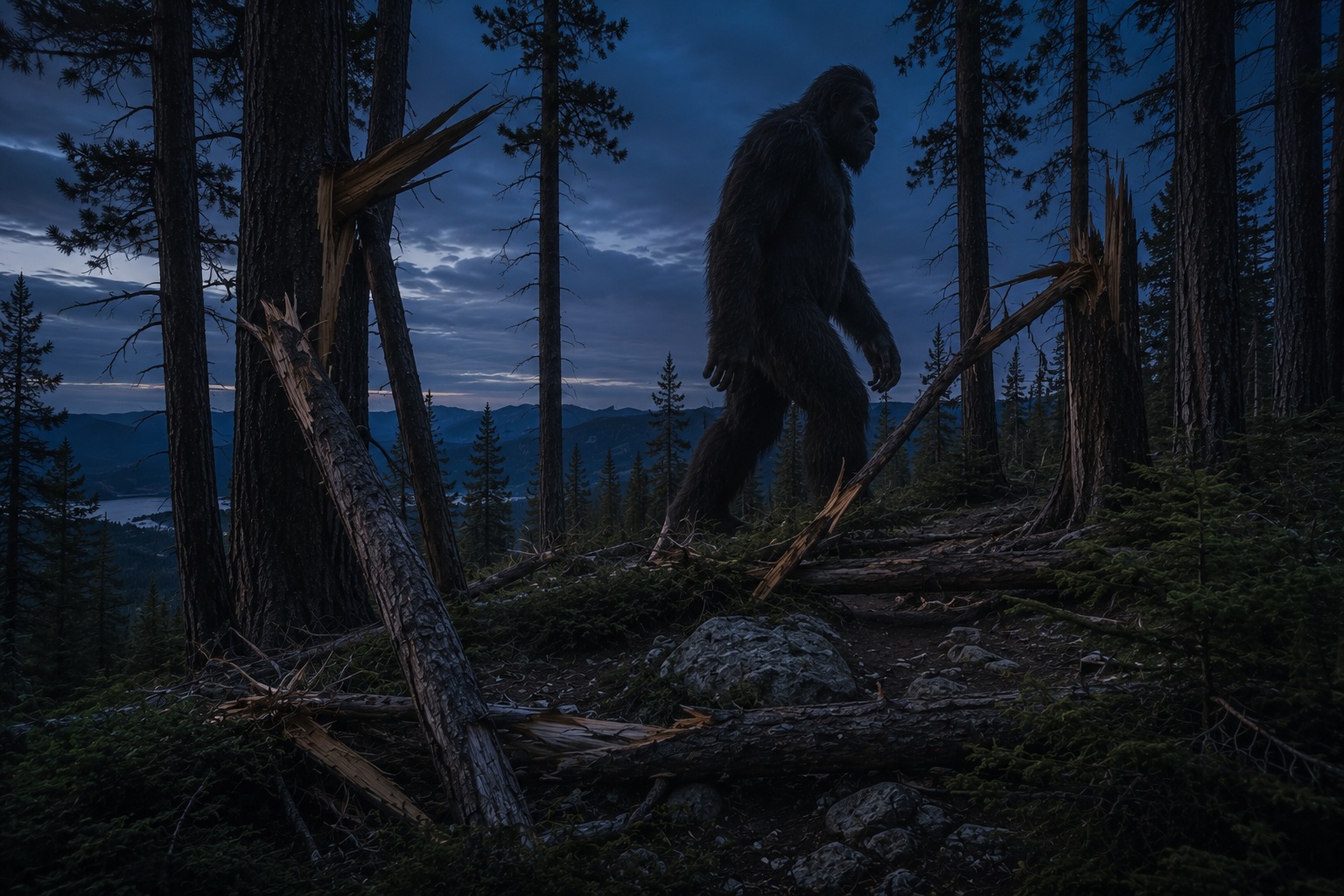
What makes some witness stories different is not simply that a branch is broken. It is the way people describe it. Many say the branch looked freshly snapped rather than weathered. Others describe large limbs that seemed too thick to break easily without significant force.
Some mention several broken branches appearing together instead of one isolated piece of damage. The detail becomes memorable because it interrupts what people expect to see during an ordinary walk. A familiar trail suddenly feels unfamiliar. That small change often becomes the first moment when people begin paying much closer attention to everything around them.
Why This Pattern Feels So Specific
Why witnesses connect broken branches with Bigfoot Across many stories, witnesses describe broken branches before hearing strange sounds or seeing something unusually large moving through the trees. The branches themselves are rarely presented as frightening. Instead, they create the feeling that something powerful has recently passed through the area.
Many witnesses describe finding snapped saplings, twisted limbs, or branches bent over trails. Sometimes they believe the breaks formed markers. Others think they may simply be signs left behind by something large forcing its way through dense forest. Whether those ideas are correct or not, the pattern has become part of modern Bigfoot folklore.
Once someone notices several unusual breaks close together, every sound afterward seems more important. A squirrel rustling through leaves suddenly feels larger. A woodpecker knocking on a distant tree becomes harder to identify. Even complete silence starts feeling unusual.
That growing tension explains why broken branches often become one of the first details remembered after an unsettling experience. What people usually check first Most hikers do not immediately jump to unusual conclusions. They look for ordinary answers first.
The Detail That Makes People Stop
Was there a recent storm? Did heavy snow break the trees during winter? Could another hiker have snapped branches while clearing part of the trail? Did logging equipment work nearby?
Some people also check whether deer trails, elk paths, or bear activity explain the damage. Large animals can certainly break branches. Falling trees often pull neighboring limbs down with them. Hunters and forestry workers sometimes trim branches for visibility.
Only after these possibilities seem less convincing do some witnesses begin wondering whether the pattern feels unusual. Even then, most stories stop well short of claiming certainty. Instead, witnesses often describe an uncomfortable feeling that they cannot fully explain. They simply remember that the forest looked wrong.
Why these scenes become so unsettling Broken branches by themselves are not scary. Context changes everything. Imagine walking through a busy city park.
Ordinary Explanations People Check First
A snapped limb would barely attract attention. Now imagine standing alone on a mountain trail as daylight fades. The same branch suddenly feels different. The forest becomes extremely quiet.
You realize you have not heard birds for several minutes. You notice footprints in soft dirt that seem larger than expected, although they are too unclear to identify. Then another freshly broken limb appears farther ahead. None of these details necessarily point toward anything unusual.
Together, however, they create uncertainty. Human brains naturally try to connect separate clues into one possible story. That is one reason Bigfoot stories often build slowly. Instead of beginning with a huge creature standing in the open, they begin with small changes.
A broken branch. Heavy footsteps. Something large moving behind trees. Then, if witnesses report seeing a figure at all, they usually describe only a brief moment.
A massive hairy shape crosses an opening. It disappears behind thick trunks. The sight lasts only seconds before the forest looks ordinary again. The earlier details suddenly seem much more important than they did at the time.
The Moment It Became Harder To Ignore
Where this pattern appears most often Stories involving broken branches are usually set in places where large forests stretch for miles. Mountain trails. National forests.
Logging roads. Old fire roads. Remote campsites. Creeks surrounded by dense trees.
These locations naturally contain fallen wood and storm damage. That makes unusual-looking breaks difficult to judge without seeing the area over time. People who know a trail especially well sometimes say they noticed changes because they remembered exactly how the area looked during previous visits.
Someone walking the same path every weekend may immediately notice when several living branches have been freshly snapped. A first-time visitor would probably never notice. That difference explains why experienced hikers often describe these details more clearly than casual visitors. The stories also frequently include another recurring element.
Why People Avoided That Spot Later
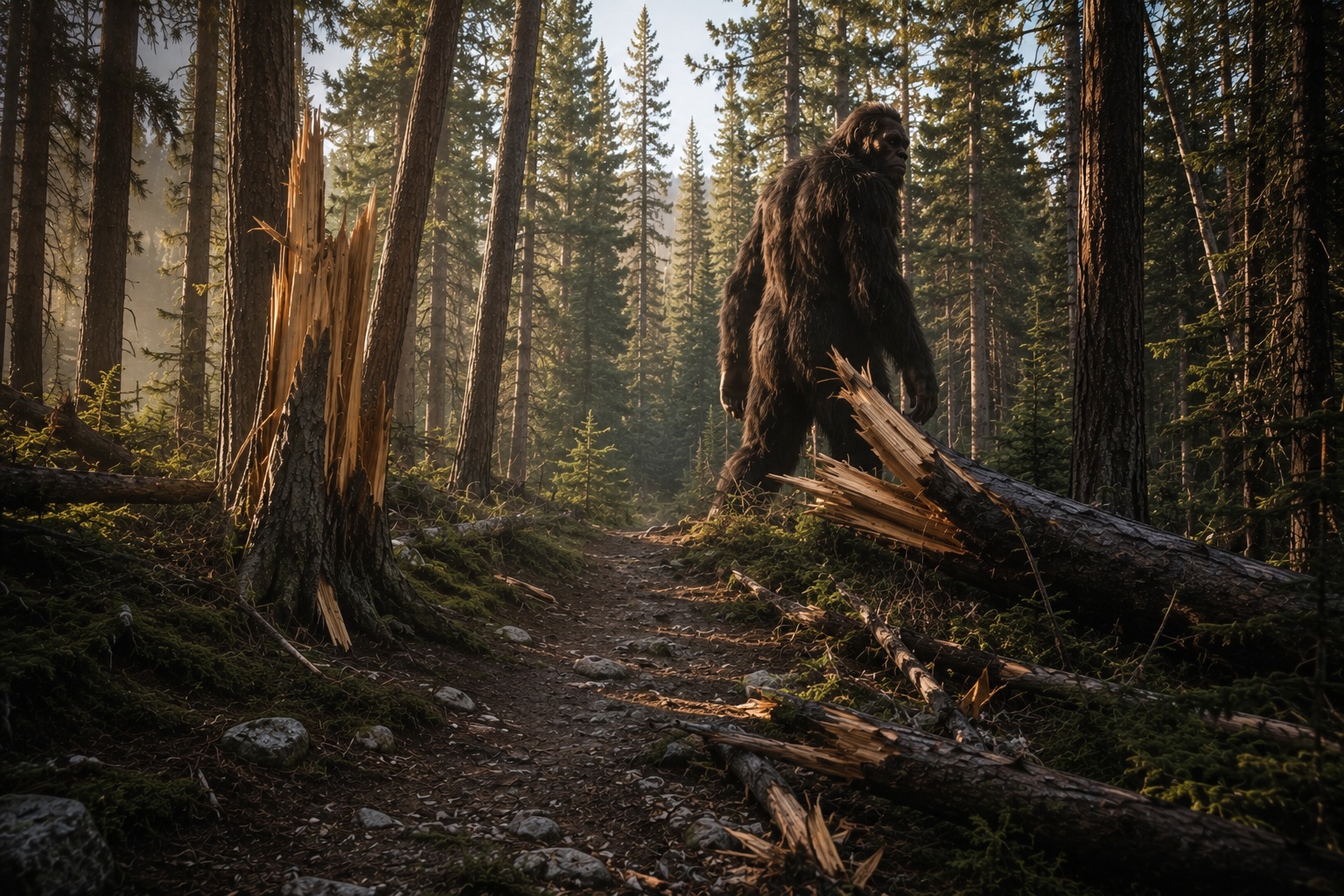
Witnesses describe scale. Instead of saying they saw "something dark," they compare it with nearby trees, trail signs, parked vehicles, or large boulders. Those comparisons make the reported figure feel enormous. The broken branches fit that same idea.
If witnesses believe something exceptionally large moved through the forest, unusually high or thick breaks seem to support that impression in their memory. Other patterns often reported alongside broken branches Broken branches rarely appear alone in Bigfoot folklore. Many stories include several familiar details happening within a short period.
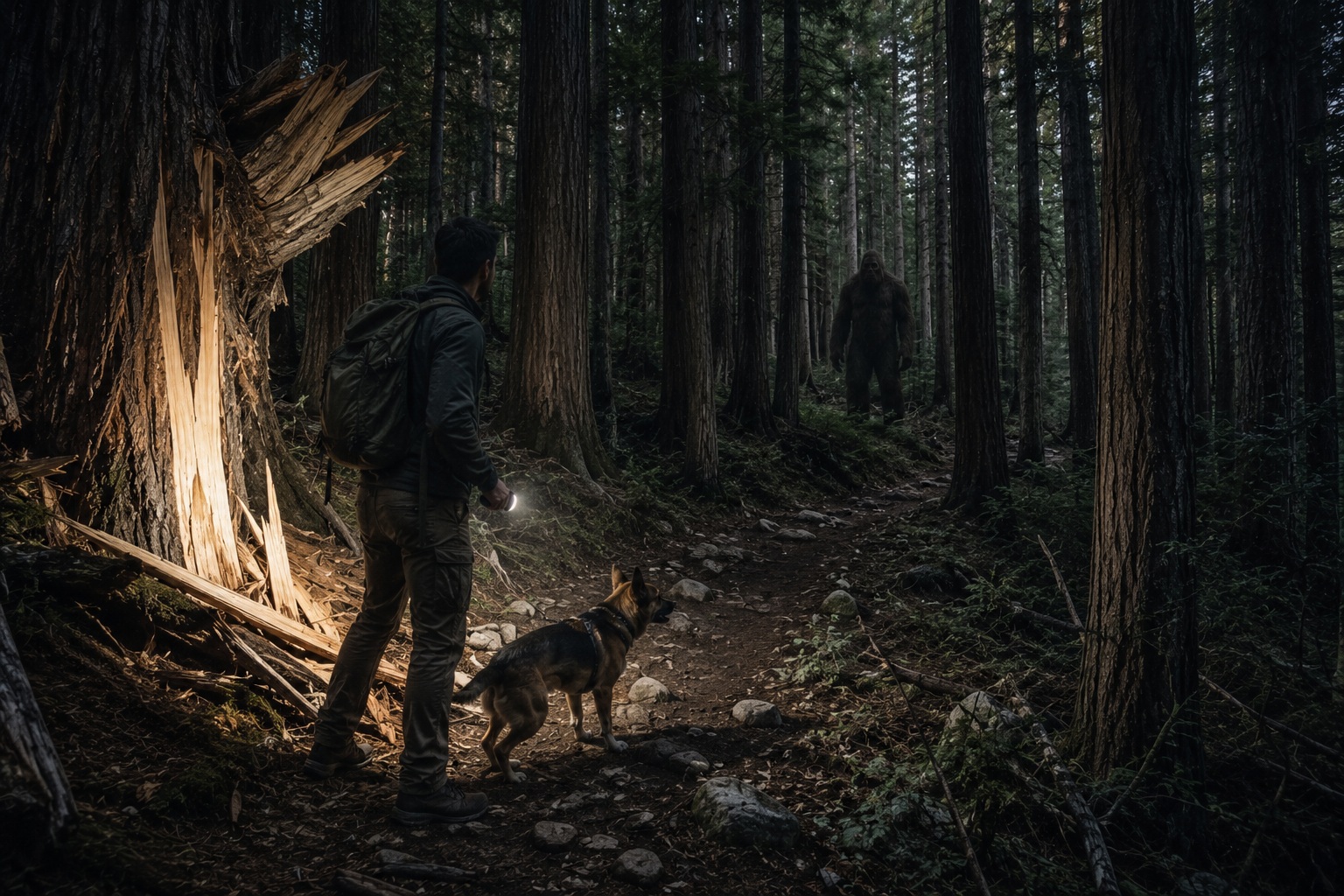
People report hearing loud wood knocks echo through valleys. Some describe heavy footsteps that stop whenever they stop walking. Others notice strong earthy smells appearing without an obvious source. Dogs sometimes refuse to continue down a trail, staring into the trees with ears raised while pulling backward on the leash.
Some witnesses describe complete silence replacing normal forest sounds. Others report rocks landing nearby without seeing who threw them. Not every story includes all these details. Usually only two or three appear together.
Why This Pattern Keeps Coming Back
That combination is what people remember years later. Even someone who never claims to have seen a creature may vividly remember the snapped branches, the silence, and the feeling that something very large was watching from deeper inside the woods. Those moments continue to circulate because they leave readers asking the same question.
Could each detail have an ordinary explanation? Quite possibly. Could several unusual details happening together simply stay in someone's memory longer? That also seems likely.
Either way, broken branches have become one of the most recognizable parts of modern Bigfoot storytelling. They are simple. They are believable enough to notice during any ordinary hike. And unlike dramatic monster sightings, they invite readers to imagine discovering the same thing themselves.
Perhaps that is why they remain so effective. Anyone can picture walking around the next bend and finding a freshly snapped branch resting in an impossible place. Most people would probably keep walking. But they would almost certainly start listening much more carefully to every sound coming from the trees ahead.