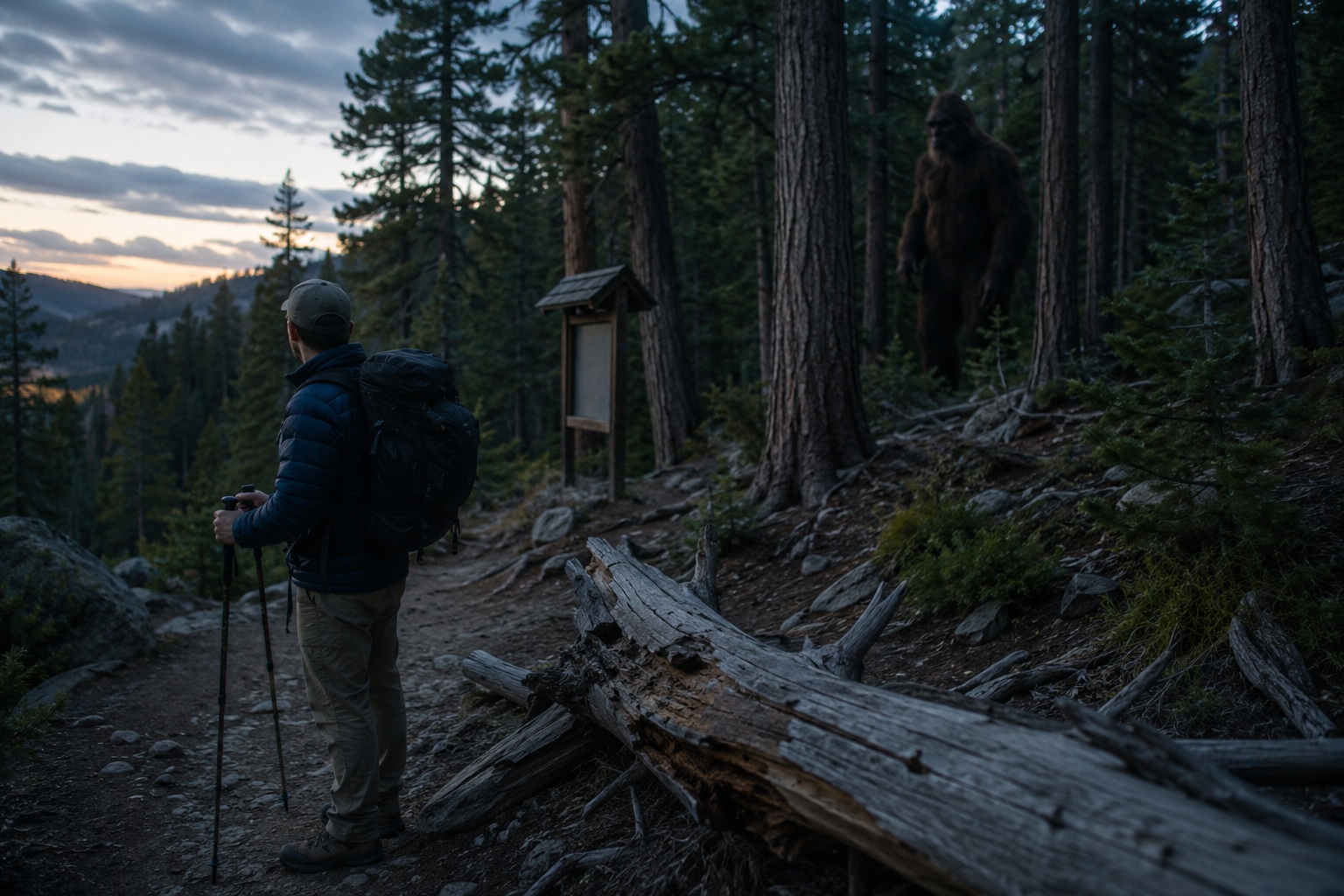
A man hiking alone reached a quiet ridge just before sunset. The trail had been empty for hours. His map showed another mile before the old fire road, so he stopped beside a fallen log to drink some water.
A sharp KNOCK echoed through the trees. It sounded like someone had struck a thick trunk with a heavy branch. The sound carried farther than any woodpecker. He waited, expecting another hiker to appear, but the forest stayed still. About twenty seconds later came another knock.
This one sounded farther uphill. He called out, thinking maybe someone was trying to get his attention after getting lost. Nobody answered. Instead, another loud crack rang through the woods behind him. It was as if something had moved without making footsteps. He packed his bottle and started walking again. Every few minutes another heavy knock echoed somewhere ahead, then somewhere off to the side. The distance kept changing, but the rhythm felt deliberate. When he finally reached the fire road, the sounds stopped completely.
Stories like this appear again and again whenever people talk about Bigfoot. Long before anyone describes giant footprints or a huge hairy figure between the trees, they often mention hearing loud knocks on wood. Why does that detail show up so often? Is it simply the forest making ordinary sounds, or has the idea become part of the Bigfoot legend itself?
What People Mean By A Tree Knock In Bigfoot stories, a tree knock usually means a single loud impact against a trunk or large piece of wood. Witnesses often describe it as much deeper than a woodpecker. Instead of rapid tapping, they hear one solid crack that echoes through the forest.
The First Time It Happened
Sometimes there are two knocks separated by several seconds. Sometimes another knock answers from a different direction. That back-and-forth pattern is one reason the sound stands out in people's memories. Many people say the forest feels unusually quiet immediately before the first knock.
Birdsong fades. Wind seems to disappear. The silence makes the impact sound much larger than it really may be. Even people who never see anything unusual often remember the strange feeling created by those isolated sounds.
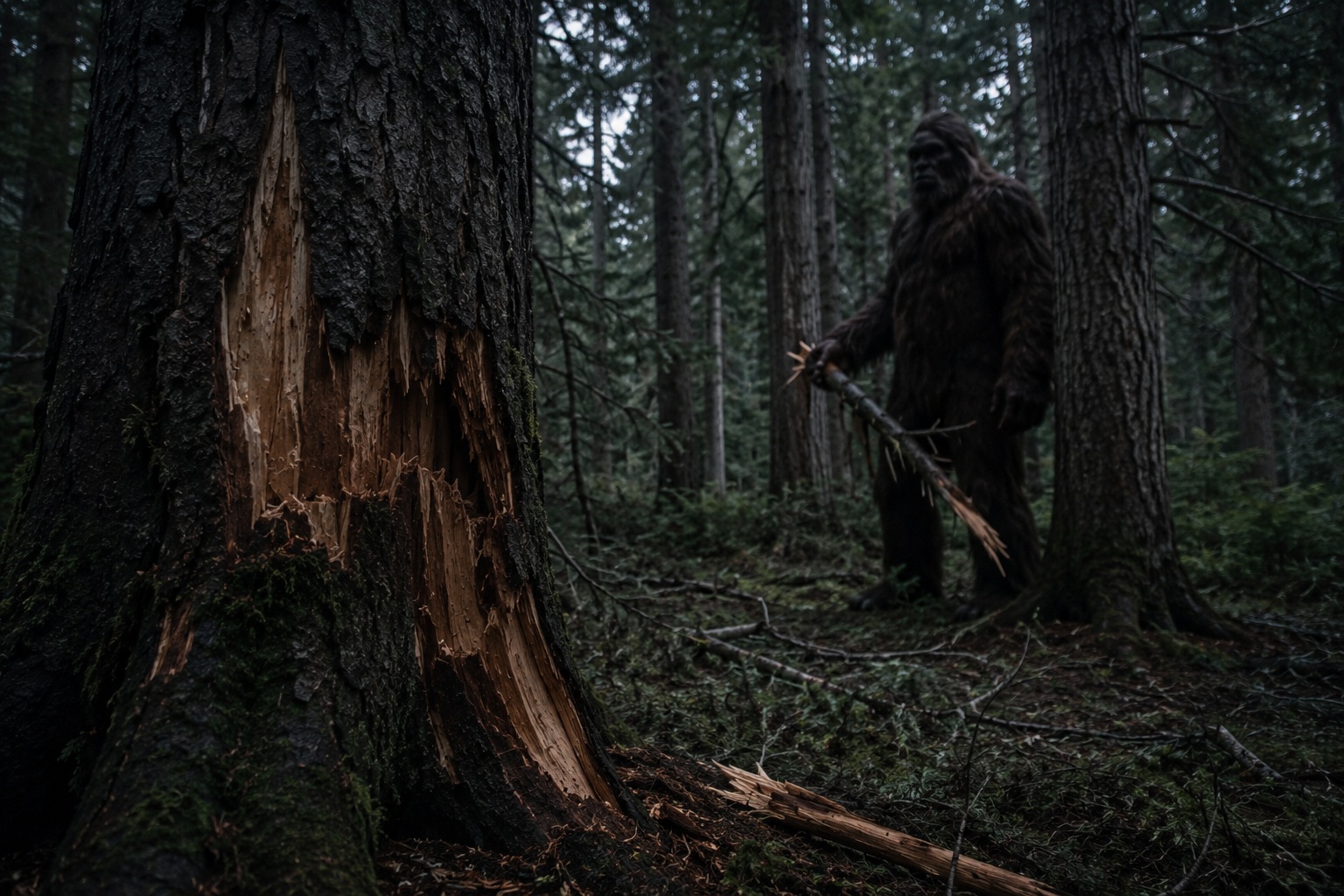
Whether someone believes the knocks came from wildlife, another person, or something unknown, the experience often becomes the detail they talk about most.
Why The Sound Feels So Unsettling Humans are good at noticing patterns. One random noise rarely feels frightening.
Why This Pattern Feels So Specific
Several noises with timing that seems intentional are much harder to ignore. If a knock comes after you stop walking… Then another happens after you speak… Then another seems to move closer…
Your brain naturally starts wondering whether something is reacting to you. Forests also make it difficult to judge distance. A sound may bounce between hillsides or travel through valleys in surprising ways. Something that feels only fifty yards away could be much farther.
Something that seems uphill may actually come from another direction entirely. That uncertainty creates tension. You know you heard something. You simply cannot tell where it came from.
Many witness stories describe spending several minutes turning in circles, trying to find the source without seeing any movement at all. That mismatch between hearing and seeing is one reason tree knocks stay memorable.
Why Bigfoot Stories Keep Including Them The idea of tree knocks has become part of Bigfoot folklore for decades.
The Detail That Makes People Stop
Older stories, newer witness reports, podcasts, books, and online discussions all mention them. Because of that, people who later experience unusual forest sounds sometimes connect them with Bigfoot even if they never see a large figure. That does not automatically make every story false. It simply means expectations can influence how people remember unusual experiences.
At the same time, there are reports from people who say they had never heard of tree knocks before experiencing something similar. In those stories, the sound itself becomes the mystery rather than the creature. Some witnesses describe hearing several knocks before finally spotting an enormous hairy shape crossing between trees.
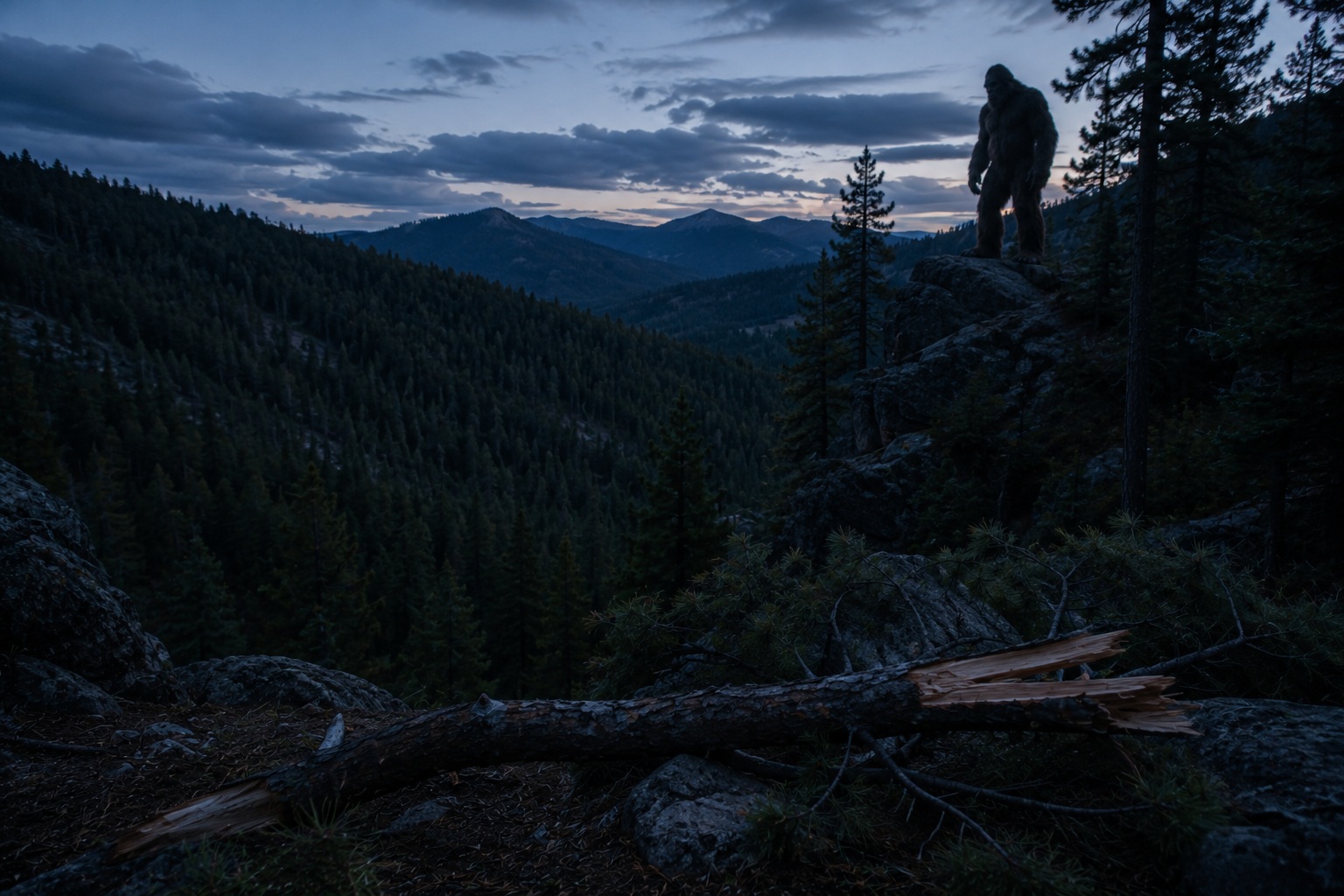
Others never see anything at all. A few report finding large broken branches afterward, although there is usually no clear way to know when those branches broke or what caused them. The knocks become part of the story because they happen before anything visual appears.
That creates suspense. Readers remember the warning before they remember the creature.
Ordinary Explanations People Check First
What People Usually Check First When someone hears repeated knocks in the woods, they usually look for ordinary explanations before jumping to unusual ones.
They listen for woodpeckers. They watch for other hikers. They check whether someone might be chopping wood nearby. They notice wind direction.
They look for falling branches after storms. Many forests produce surprising sounds. Large trees rubbing together can create sharp cracks. Dead limbs breaking under their own weight can echo over long distances.
Hunters, campers, and forestry workers may also create sounds that travel much farther than expected. Even so, some witness stories continue because those explanations do not seem to fit what the person remembers. They describe perfectly calm weather. No nearby campsites.
No chainsaws. No repeated bird calls. Just isolated heavy knocks that seemed spaced almost like replies. Whether those memories are completely accurate is impossible to know later.
The Moment It Became Harder To Ignore
But they explain why the stories continue to spread. The experience feels personal because the sound appears to react to someone's presence rather than happening randomly.
The Moments That Stay With Witnesses Interestingly, many Bigfoot stories are not centered on seeing the creature itself.
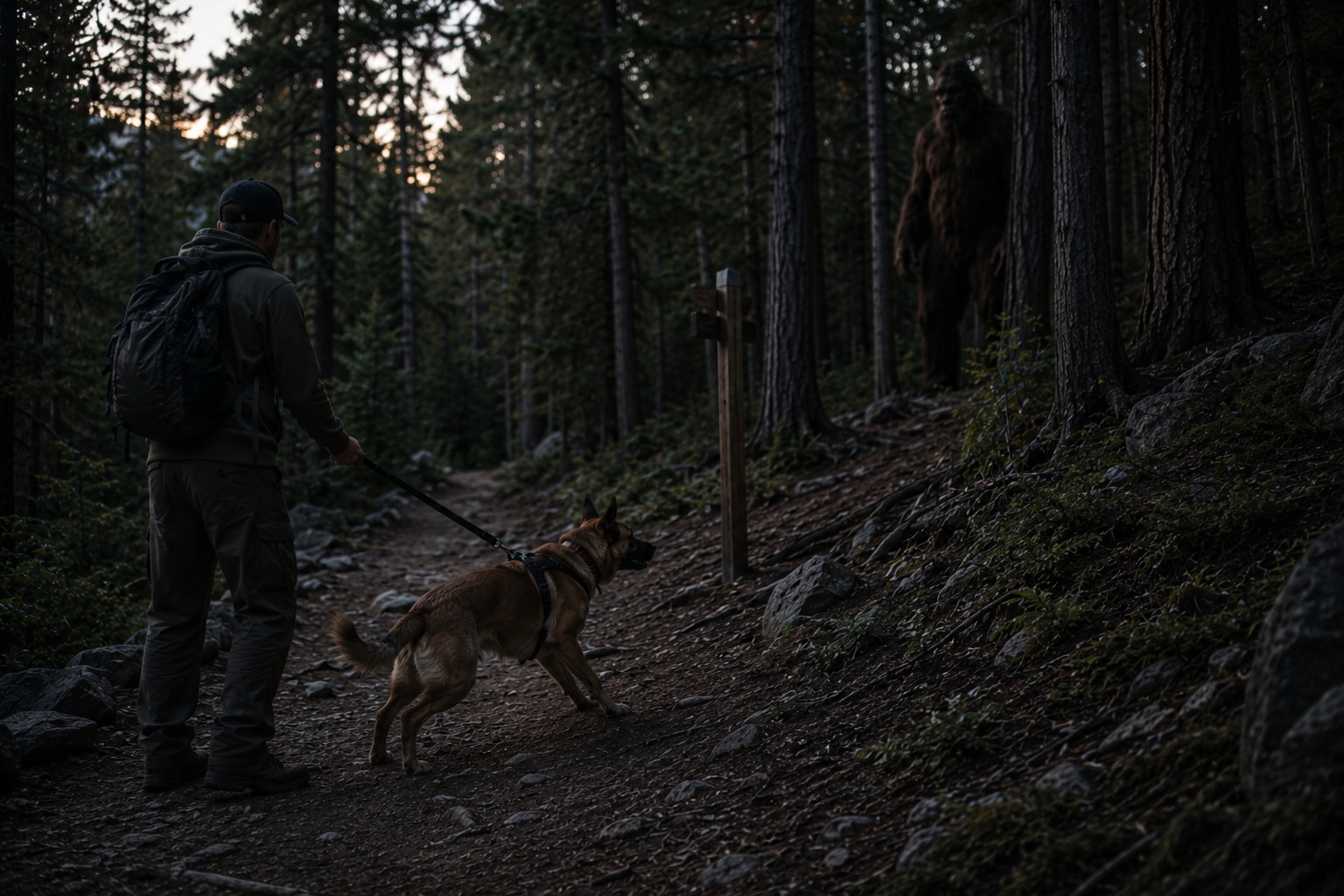
Instead, they focus on everything leading up to that possibility. The forest becoming strangely quiet. Birds suddenly stopping. A dog refusing to continue down the trail.
One heavy knock somewhere beyond the trees. Another from farther away. Then perhaps, only for a second, a massive dark figure standing beside a trail marker before disappearing behind thick trunks. Those details create a sequence that feels believable to many readers because each step is ordinary by itself.
Forests become quiet. Dogs hesitate. Branches break. Large animals move through heavy cover.
Why People Avoided That Spot Later
But when those moments happen together, people naturally start connecting them into a story. That is how folklore grows. Not through one impossible event, but through several ordinary moments that seem linked. The knocks become the opening chapter.
The sighting, if one happens at all, becomes the ending.
Why Tree Knocks Remain One Of The Biggest Bigfoot Mysteries Tree knocks continue appearing in Bigfoot stories because they are simple. Anyone walking through the woods can imagine hearing one.
Unlike blurry photographs or complicated stories, a single loud crack is easy to picture. It is also impossible to replay once it has faded into the forest. The witness is left wondering. Was it a branch?
Why This Pattern Keeps Coming Back
Another hiker? A bird? Or something much larger staying just out of sight? That uncertainty keeps the idea alive.
Even people who are skeptical often admit that unexplained sounds deep in the woods feel different from the same sounds in a neighborhood park. The setting changes how the experience feels. Miles from the nearest road, surrounded by tall trees and fading daylight, every unexpected noise seems more important.
That is why tree knocks remain one of the most repeated details in Bigfoot stories. Not because they answer the mystery, but because they begin it. Many people who report them never claim to know exactly what made the sound. They simply remember walking into an ordinary forest and leaving with one question they could never quite shake.
If stories about tree knocks interest you, you may also enjoy exploring why so many Bigfoot witnesses mention unusual silence before a sighting, why dogs sometimes refuse to continue along empty forest trails, or why nearly every description emphasizes just how enormous the figure looked compared with nearby trees, signs, or people.
Whether those stories come from misunderstanding ordinary forest sounds or from something that remains unexplained, the pattern is remarkably consistent. It almost always starts with one loud knock echoing through otherwise quiet woods. And after hearing it once, many people say they spend the rest of the hike listening for the next one.