A man hiking alone reached the highest part of an old logging trail just before sunset. The forest had been noisy all afternoon with birds, insects, and wind moving through the pines. Then everything became strangely quiet.
He stopped because he heard a crack somewhere ahead. It did not sound like a branch falling. It sounded like a thick young tree breaking in half. A few seconds later another snap echoed from farther to the left. He looked between the trunks, expecting to see another hiker gathering firewood or a deer pushing through brush. There was nothing.
Then a third crack came from uphill, louder than the others.
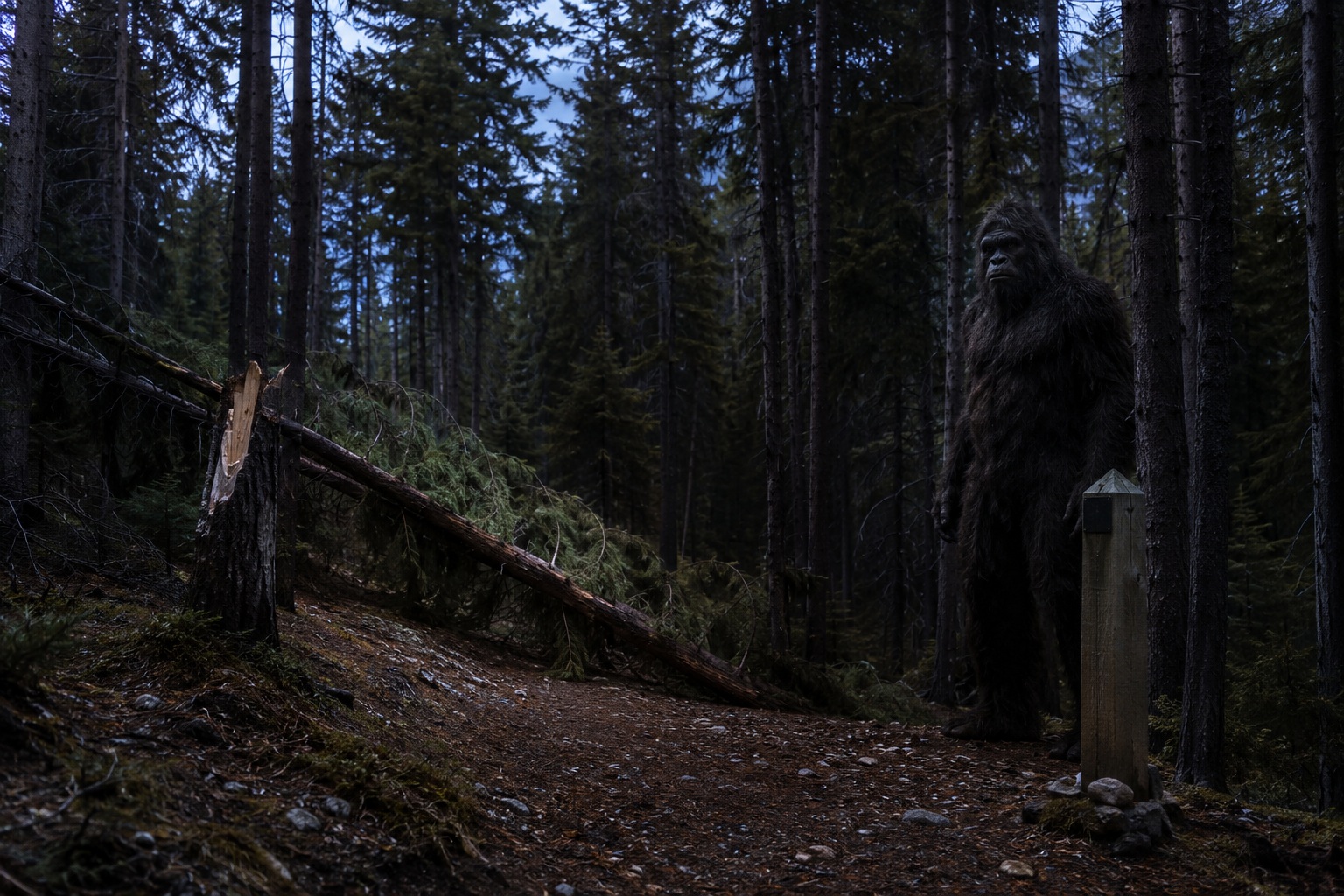
This time he noticed fresh pine needles drifting down through a gap in the trees. Something very large had disturbed the branches. As he stepped closer, he saw movement beside an old trail marker. A huge dark hairy figure stood completely still, almost level with the top of the sign. It watched him for only a moment before turning and walking deeper into the forest. More trees shook as it disappeared, followed by one final heavy snap that echoed through the valley.
The First Time It Happened
Stories like this appear again and again whenever people talk about Bigfoot. Long before anyone says they saw a huge figure, many describe hearing trees breaking somewhere nearby. It raises a question that people continue asking: why do so many Bigfoot stories begin with the sound of snapping wood before anyone sees anything at all?
Why the sound stands out so much Forests are full of noise. Branches rub together. Dead limbs fall. Animals move through undergrowth. Wind bends young trees until they creak. Most hikers become used to these sounds after only a short time outdoors.
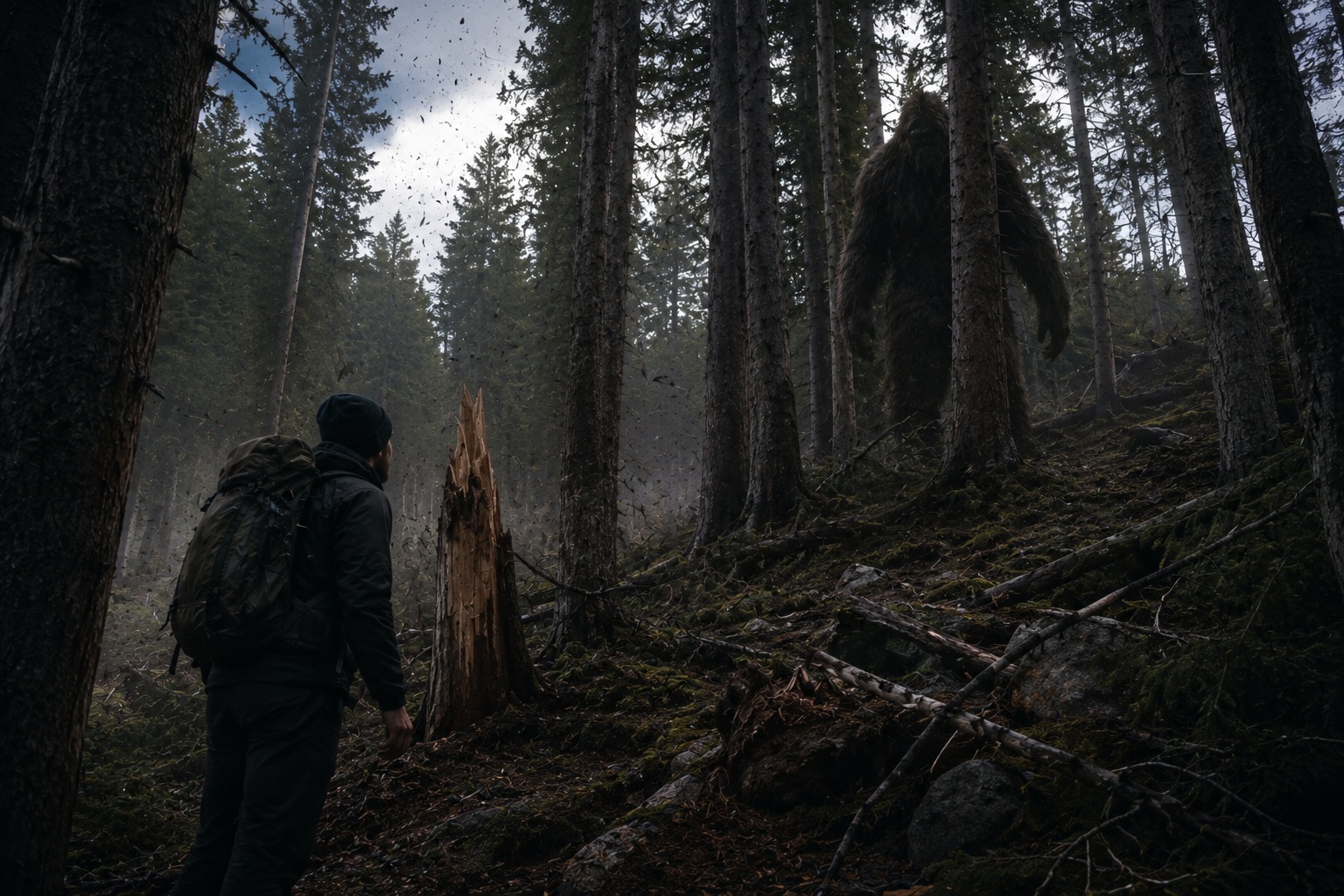
That is why witnesses often remember the tree snap so clearly. They describe it as sounding different from normal forest noise. Instead of a slow creak or the crash of a dead branch, they often describe one sharp explosive crack followed by silence. Some compare it to someone breaking a thick baseball bat.
Others say it sounds like green wood splitting under tremendous force. Because the sound is so unusual, it becomes the moment that stays in memory. Even people who never claim to have seen anything unusual sometimes remember hearing one powerful crack somewhere beyond the trail before deciding to leave.
Why The Place Felt Wrong
Whether someone believes these stories or not, the repeated description is surprisingly consistent. The snapping sound becomes the warning that something large may be nearby. Why witnesses connect the noise to a huge creature One reason these stories continue is that people naturally imagine size from sound.
A squirrel cannot snap a young tree. Neither can most birds. When people hear something breaking wood that seems much thicker than ordinary branches, their minds immediately imagine something heavy enough to do it. Many Bigfoot stories describe finding freshly broken saplings after the sound. Others mention bent trees, disturbed brush, or branches hanging at unusual heights.
None of these things automatically point to a mysterious creature. Storms, heavy snow, falling trees, bears, and natural forest damage can all leave similar signs. Still, witnesses often remember that the breaking happened only seconds before seeing what they believed was a massive hairy figure moving away through the trees.
That sequence matters. The sound comes first. The sighting comes second. Because both happen so close together, people naturally connect them into one event.
The Detail Nobody Could Explain
Even years later, many describe the snap before they describe the figure itself. What people usually check after hearing it One interesting part of these stories is what happens immediately afterward. Instead of running instantly, many people stop.
They listen. They look for movement. Some search for falling branches. Others scan the ground for deer.
Many expect another hiker. This brief pause is important because it changes how people experience the next few seconds. Instead of walking normally, they become focused on every sound around them. If another branch moves or leaves shake unexpectedly, their attention immediately jumps toward it.
In many reported stories, the witness notices one more strange detail. The birds have stopped calling. The wind suddenly feels quiet. Fresh needles continue falling from above after the snapping has already ended.
What They Checked Afterward
Sometimes they notice a strong smell they cannot identify. Sometimes they notice that the sound came from much higher than expected, as if whatever moved was disturbing branches well above normal head height. Then comes the claimed sighting. Usually it is brief.
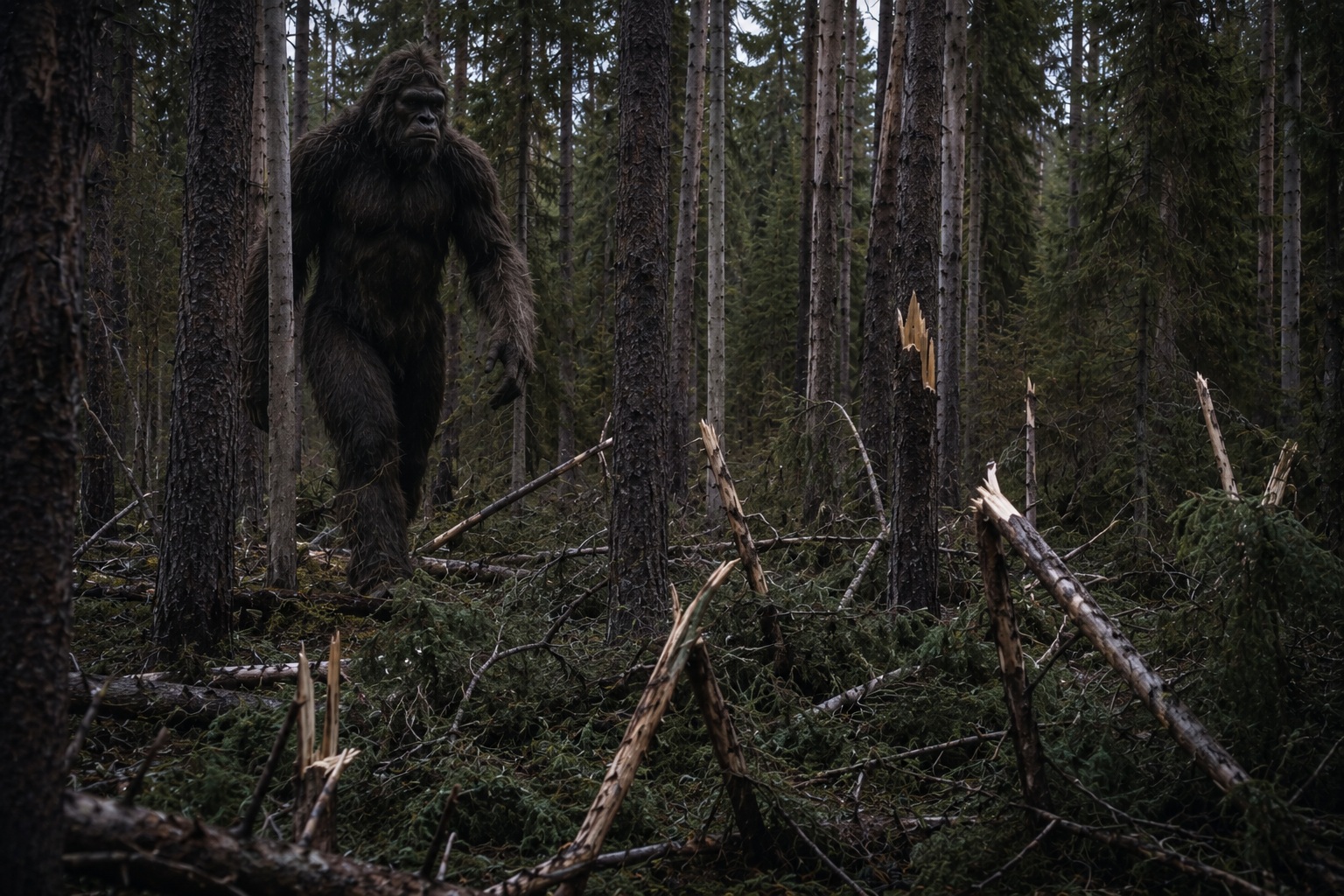
The figure is rarely standing in the middle of an open field. Instead, witnesses often describe seeing a huge hairy shape crossing between trees, standing beside a trail sign, or stepping over fallen logs with surprising ease. The snapping sound becomes the moment that prepared them to look in exactly the right direction.
Could ordinary forest sounds explain some reports? Not every snapping tree has a mysterious explanation. Healthy trees can split during changing temperatures. Wind places enormous pressure on trunks and branches.
Dead wood breaks without warning. Large animals can create surprisingly loud sounds while moving through dense vegetation. Hunters, hikers, and forestry workers all report hearing sudden cracks that seem much closer or farther away than they really are. Forests also make it difficult to judge direction.
A sound may bounce between hillsides, making it appear to move from one place to another. That can make several separate noises seem connected. These ordinary explanations account for many situations. Yet they do not completely explain why so many witness stories follow the same sequence.
The Moment It Became Harder To Ignore
A loud snap. Silence. Movement. A glimpse of something unusually large.
Whether coincidence, mistaken identification, or something unknown, that pattern continues appearing in reports from different places and different decades. It is the combination that people remember. Not simply hearing a tree. Not simply seeing a dark shape.
Both happening together within moments. Why the sound creates so much fear Humans react strongly to unexpected sounds that suggest something bigger than ourselves. Long before modern life, hearing large branches breaking nearby could signal danger.
A falling tree. A large animal. Something approaching through thick woods. That instinct has never completely disappeared.
Why People Avoided That Spot Later
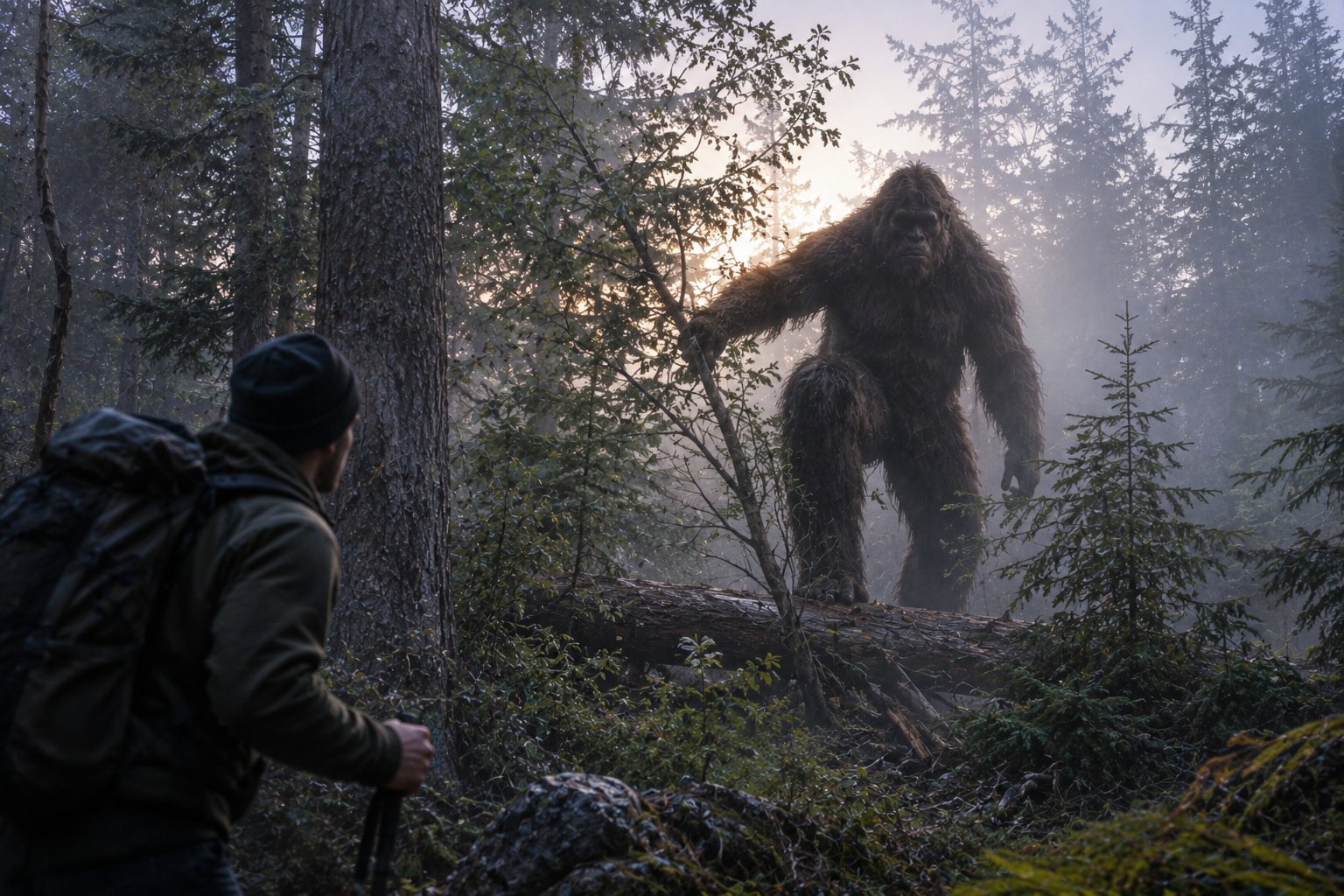
Even experienced hikers often describe freezing when they hear a powerful crack nearby because their brains immediately begin asking what could have caused it. If nothing appears, the imagination fills the empty space. If a huge figure appears only seconds later, the sound becomes even more frightening in memory.
People often retell these experiences beginning with the snap because that was the moment they realized something was wrong. Everything afterward feels connected. That is one reason stories about snapping trees spread so easily. Almost everyone who spends time in the woods has heard an unexplained crack somewhere beyond the next line of trees.
Most discover nothing unusual. But after hearing enough Bigfoot stories, the sound becomes difficult to ignore. The next time it happens, people remember every strange story they have ever heard. Other patterns that appear alongside snapping trees
The snapping tree is rarely the only detail in these reports. Many stories include several repeating patterns. Witnesses often describe unusual silence before the sighting. Others mention hearing heavy footsteps that seem too slow and heavy for deer.
Why The Story Still Gets Shared
Some describe rocks striking trees from unseen locations. Others mention a strong unpleasant smell arriving moments before they notice movement. Many say the figure itself appears larger than expected because it stands beside something familiar like a trail sign, vehicle, fence, or tree that clearly shows its height.
These repeated details help explain why the snapping tree remains such a popular part of Bigfoot stories. It is not treated as detail of anything. Instead, it acts like the opening chapter. It is the first sign that something unusual may be happening.
Whether someone believes the figure was misidentified wildlife, another person in the woods, or something far stranger, the memory often begins with that sharp crack echoing through the trees. The forest feels ordinary. Then comes one impossible-sounding snap. The birds stop.
Everyone starts looking uphill. And somewhere between the trunks, something very large may already be watching.