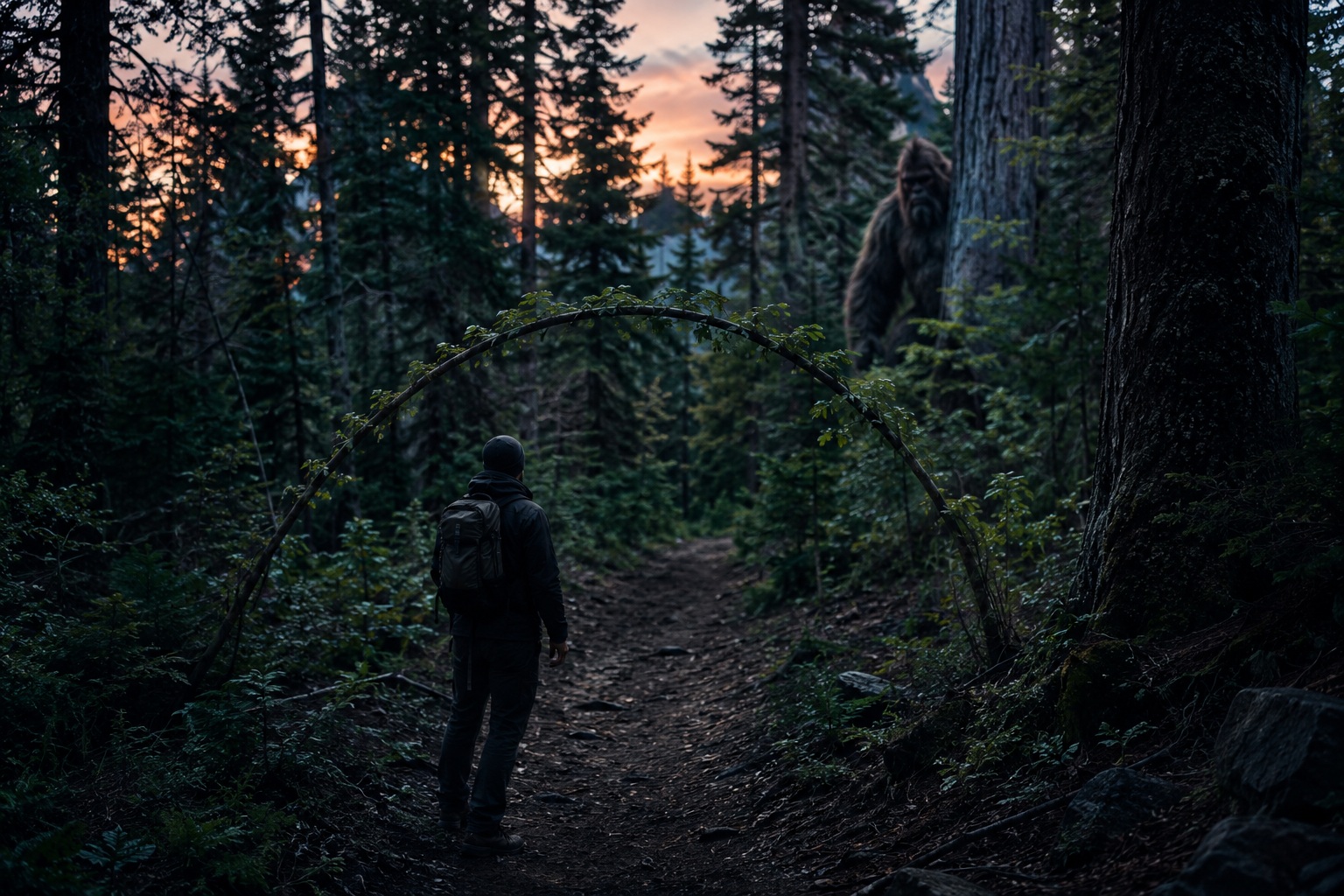
The first thing she noticed was that the bent tree hadn't been there on the hike in. It wasn't just a branch hanging low. A young sapling had been folded into a smooth arch across the trail, its leaves still green and fresh. The trunk wasn't snapped completely in half. It looked as though something incredibly strong had pushed it down until it stayed that way.
She stepped underneath it anyway. A few hundred yards later she found another one. This time the arch pointed toward a narrow opening between enormous pines where no marked trail existed. The forest had gone strangely quiet. Even the insects seemed to have stopped. She turned around.
The second arch was still visible behind her. Then she realized something that made her stomach tighten. A third bent tree now stood between the first two. She couldn't remember passing beneath it.
Nothing chased her. Nothing screamed. She simply walked back to the trailhead much faster than she had arrived, unable to shake the feeling that the arches had not been random damage at all, but something placed along a route she had never intended to follow.
Stories like this appear again and again wherever people discuss Bigfoot encounters. Long before anyone claims to hear heavy footsteps or glimpse a huge figure between trees, someone notices strangely bent saplings, broken branch arches, or carefully twisted trees that seem too deliberate to ignore.
So why do so many Bigfoot witnesses talk about broken branch arches? Are they simply natural forest damage that people misunderstand, or is there something about these unusual shapes that makes them unforgettable?
The First Time It Happened
Forests are full of broken wood.
Snow loads, wind, ice, disease, lightning, and falling trees constantly reshape the landscape. Anyone who hikes regularly has walked past snapped trunks and tangled branches without thinking twice. Branch arches feel different because they often appear organized. Witnesses describe young trees bent into smooth curves rather than shattered. Sometimes two nearby saplings lean toward each other to create what looks like a doorway. Other times a thick branch blocks a trail at chest height while surrounding vegetation remains untouched.
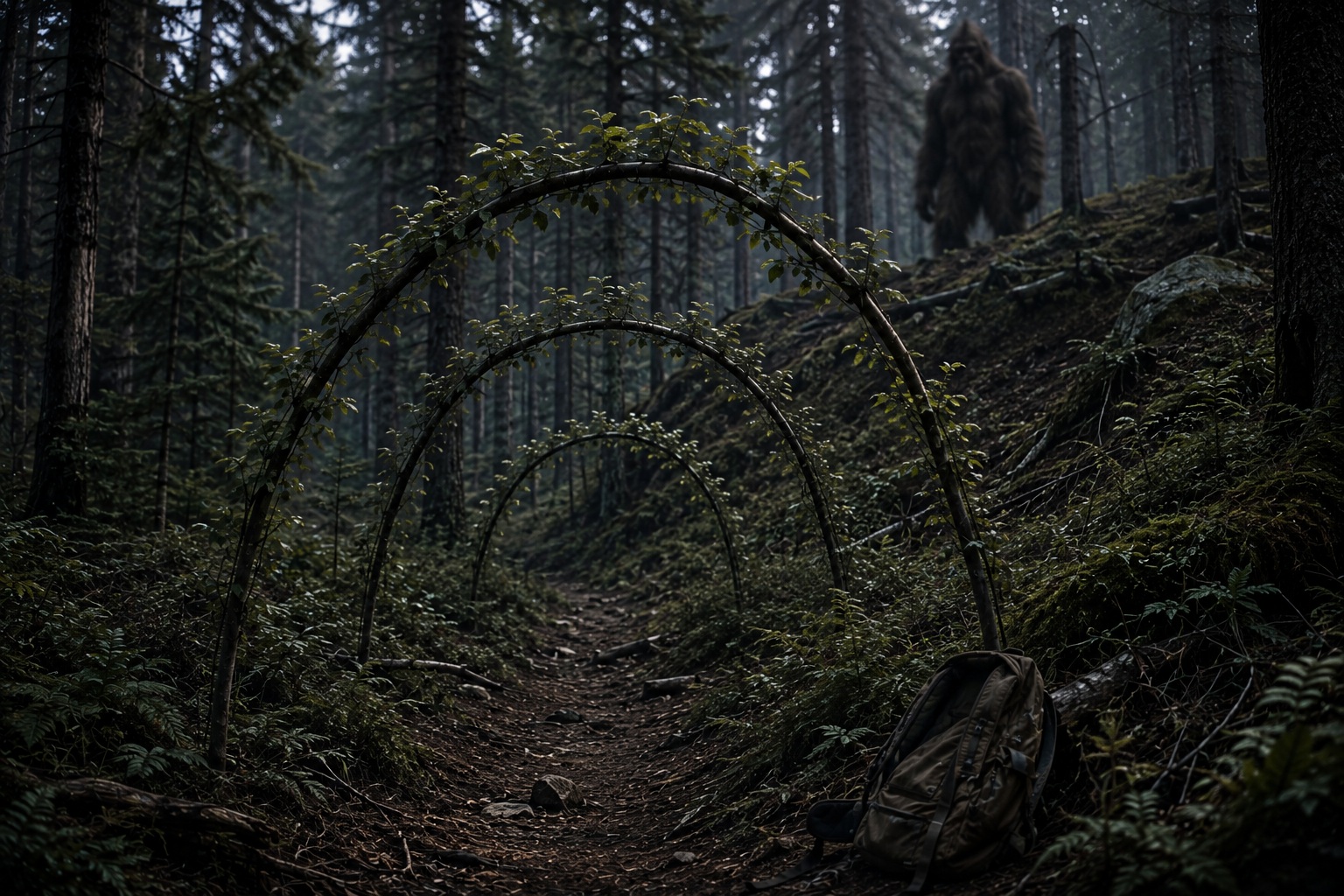
The pattern catches attention because our brains immediately ask a simple question: "Who did this?" People naturally search for intention whenever they see shapes that resemble something built rather than something broken. That question becomes much harder to ignore after a frightening experience deeper in the woods.
Reports rarely describe arches beside busy visitor centers or picnic grounds. Instead, witnesses usually mention older hiking trails, logging roads that receive little traffic, remote hunting areas, or deep forest paths where maintenance is infrequent. Many accounts also place them near natural landmarks.
Creeks. Game trails. Rock outcrops. Ridges.
Why The Place Felt Wrong
Small clearings. These are exactly the kinds of places where hikers already slow down to look around, making unusual tree formations more noticeable. Some people also claim the arches appear in loose groups rather than individually. One bent sapling might seem like coincidence.
Finding several within a short distance makes people wonder whether they're looking at a repeating pattern instead of isolated damage. That repeated pattern is often what stays in memory long after the hike ends.
Interestingly, many Bigfoot stories don't begin with a sighting.
They begin with the forest feeling subtly wrong. Someone notices an arch. Then another. Then snapped branches several feet above head height.
Large fresh breaks appear where no machinery could easily reach. Only afterward do people describe hearing knocks, heavy movement, or distant crashing through brush. Whether these events are connected is impossible to know, but the sequence appears repeatedly in witness stories. The unusual trees become the first sign that makes hikers start paying closer attention.
Once someone feels uneasy, every sound seems louder. Every shadow between trunks appears larger. Every movement catches the eye. Even if nothing extraordinary happens afterward, the bent trees become linked forever with that uncomfortable feeling.
The Detail Nobody Could Explain
Absolutely. In many forests, heavy snow slowly bends young trees until they remain curved for years. Ice storms can pull flexible saplings downward without completely breaking them.
Falling trees often trap younger growth underneath, forcing trunks into unusual shapes as they continue growing. Animals also contribute. Deer rub antlers against small trees. Bears climb or break branches.
Large mammals can push through dense vegetation repeatedly until certain paths begin looking intentional. Human activity explains many examples as well. Children build shelters. Campers bend saplings.
Trail workers move obstacles. Hunters create temporary blinds. Photographers sometimes rearrange branches for a better viewpoint. Once people begin noticing strange tree shapes online, confirmation bias can also play a role.
Someone already expecting mysterious signs may interpret ordinary forest damage very differently than someone taking a casual afternoon walk. These explanations account for countless bent trees. But they don't explain why some stories continue to stand out.
What They Checked Afterward
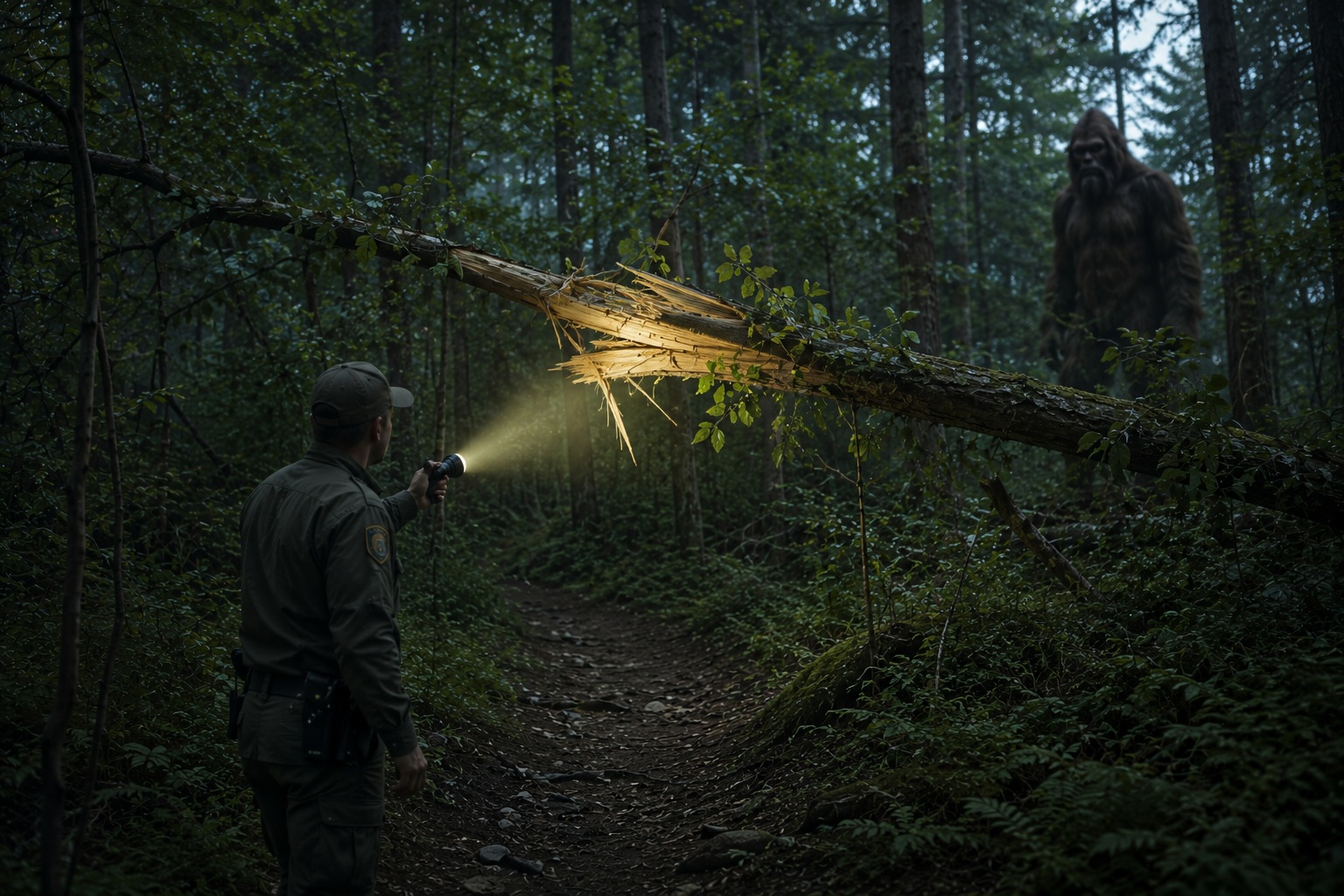
The reports people remember most usually include details that make witnesses hesitate before accepting an easy answer. Some describe healthy saplings bent into nearly perfect arches without cracked bark. Others mention thick branches broken several feet above the ground where no nearby fallen tree could have struck them.
Sometimes hikers report finding fresh green wood twisted together in ways that seem difficult without considerable strength. Again, none of these details automatically suggest anything mysterious. Forests are unpredictable places. Hidden forces like snow weight, previous storm damage, gradual bending over months, or multiple fallen trees can create surprisingly strange shapes.
Still, witnesses often say it wasn't a single broken branch that unsettled them. It was the combination. Multiple arches. Repeated bends.
Unusual silence. The feeling of being watched. Perhaps distant knocking. Eventually, a fleeting glimpse of an enormous dark figure disappearing between trees.
The Moment It Became Harder To Ignore
Taken individually, every detail has an ordinary possibility. Together, they become much harder for the witness to dismiss emotionally.
Over the past several decades, broken trees have become one of the most discussed parts of Bigfoot culture.
Some researchers believe they might serve as trail markers. Others think they could represent territorial signs. Many reject both ideas entirely and argue that nearly every example has a natural explanation. Regardless of which opinion someone holds, the image itself is powerful.
Unlike footprints, arches remain standing for weeks or months. Unlike sounds, they stay visible after the moment has passed. They become landmarks attached to memory. A hiker may completely forget where they heard an unexplained knock.
They rarely forget the strange doorway of living wood they stepped beneath just beforehand. That memorable image spreads easily through stories because readers can immediately picture it. Almost everyone has walked through woods. Almost everyone has seen broken trees.
A branch arch sits just close enough to normal life that it feels believable while remaining unusual enough to spark curiosity.
Why People Avoided That Spot Later
Psychologists often describe how attention changes perception. When your brain labels something as potentially important, it begins searching constantly for related information.
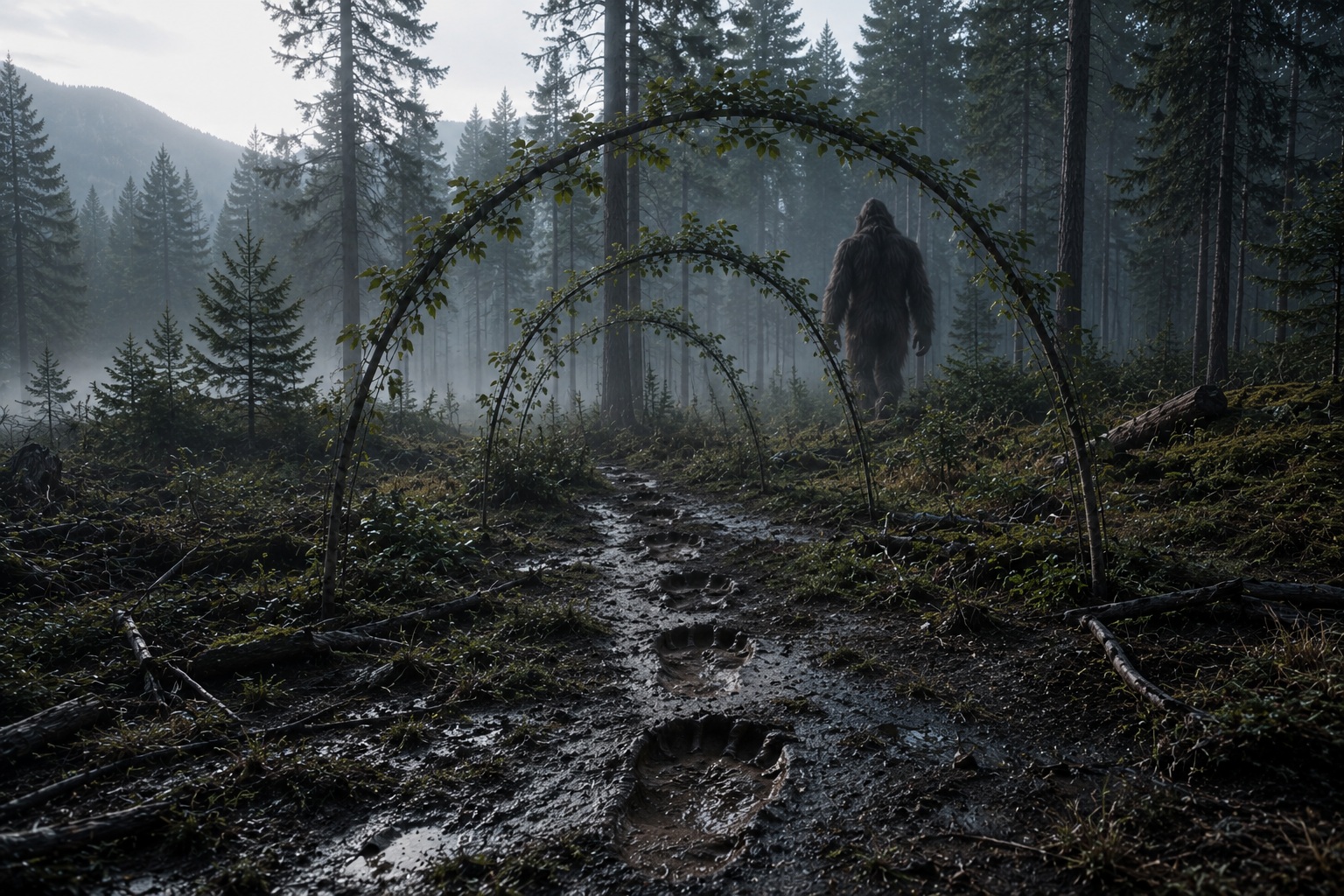
In a forest, that shift happens quickly. After noticing one odd tree, hikers may start spotting dozens of unusual shapes they would normally ignore. Every snapped limb feels meaningful. Every heavy footprint seems larger.
Every distant crack echoes longer. This doesn't necessarily mean the danger has changed. The observer has changed. At the same time, remote forests naturally create uncertainty.
Visibility is limited. Distances are difficult to judge. Large animals move quietly. Wind carries sounds unpredictably.
Our brains evolved to notice anything unusual in environments where hidden threats could exist. A strangely bent tree fits perfectly into that ancient survival system. Whether the cause is ordinary or mysterious, the mind immediately starts asking questions.
Why The Story Still Gets Shared
Very few Bigfoot stories convince everyone. Most remain impossible to verify one way or another. Yet broken branch arches continue appearing in discussions because they occupy an interesting middle ground. Unlike glowing lights or impossible creatures, bent trees unquestionably exist.
Anyone can find them. The mystery comes from deciding why they formed. For one hiker, the answer is obvious. Storm damage.
For another, especially someone who experienced an unsettling encounter nearby, the same arch becomes something impossible to forget. Perhaps that difference explains why these stories survive. The arch itself isn't frightening. It's what comes after.
The silence. The feeling that the trail has subtly changed. The sense that someone larger than any person could be standing somewhere beyond the next line of trees, watching without making a sound. Most hikers eventually reach the parking lot without seeing anything unusual.
Others leave with only a memory of oddly bent trees. A few insist they saw something enormous disappear into the forest moments after walking beneath one final arch. Whether those stories point toward an undiscovered creature or simply show how deeply forests affect human imagination remains unanswered.
But if you ever find yourself hiking beneath a freshly bent green sapling that seems almost carefully placed across an empty trail, chances are you'll slow down for just a moment—and start looking much more carefully at the woods around you than you were only a minute before.