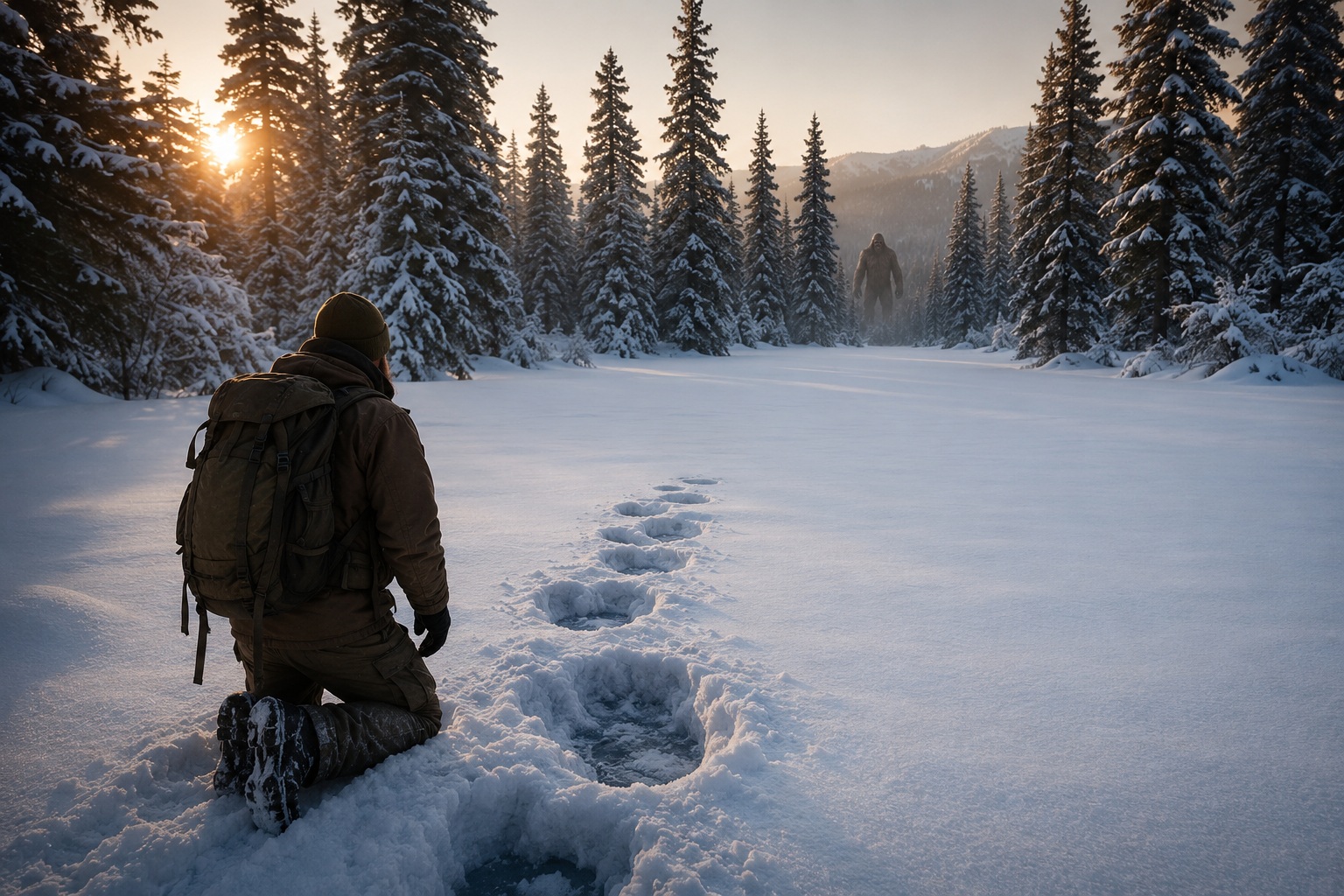
The trail had been easy to follow for almost half a mile. A father and his grown son walked slowly through fresh mountain snow, placing each boot beside a line of footprints that looked far too large to belong to any person they knew. Every print was deep, wide, and evenly spaced. Whatever had made them had been heavy. The stride was longer than either of them could comfortably manage.
They expected the tracks to lead over the next ridge. Instead, they ended. There was no turn. No jump to another trail. No rocks nearby. No fallen tree. The last print sat alone in untouched snow, perfectly clear, with nothing beyond it except smooth white ground stretching between dark pine trunks.
The father walked in widening circles, searching for another mark. His son climbed onto a nearby log to get a better view. They looked uphill, downhill, and back toward their own path. Nothing. Hours later they still talked less about the size of the footprints than the way they simply stopped, as though something huge had taken one final step and vanished into empty air.
Stories like this appear again and again in Bigfoot discussions. Whether someone believes the stories or not, the same strange detail keeps returning: long trails of giant footprints that suddenly end without an obvious reason. Why do witnesses describe this pattern so often, and why does it stay in people's minds long after the rest of the story fades?
The First Time It Happened
Why
Stopping Footprints Feel So Unsettling A trail usually tells a simple story. An animal walks from one place to another. A person crosses a field. A deer climbs a hill. Even if you never see the traveler, the tracks explain where they came from and where they went.
That expectation is deeply familiar. When footprints stop without an easy explanation, the story feels unfinished. Our minds automatically expect another step. Instead, there is empty ground. That gap creates the feeling that something important is missing.
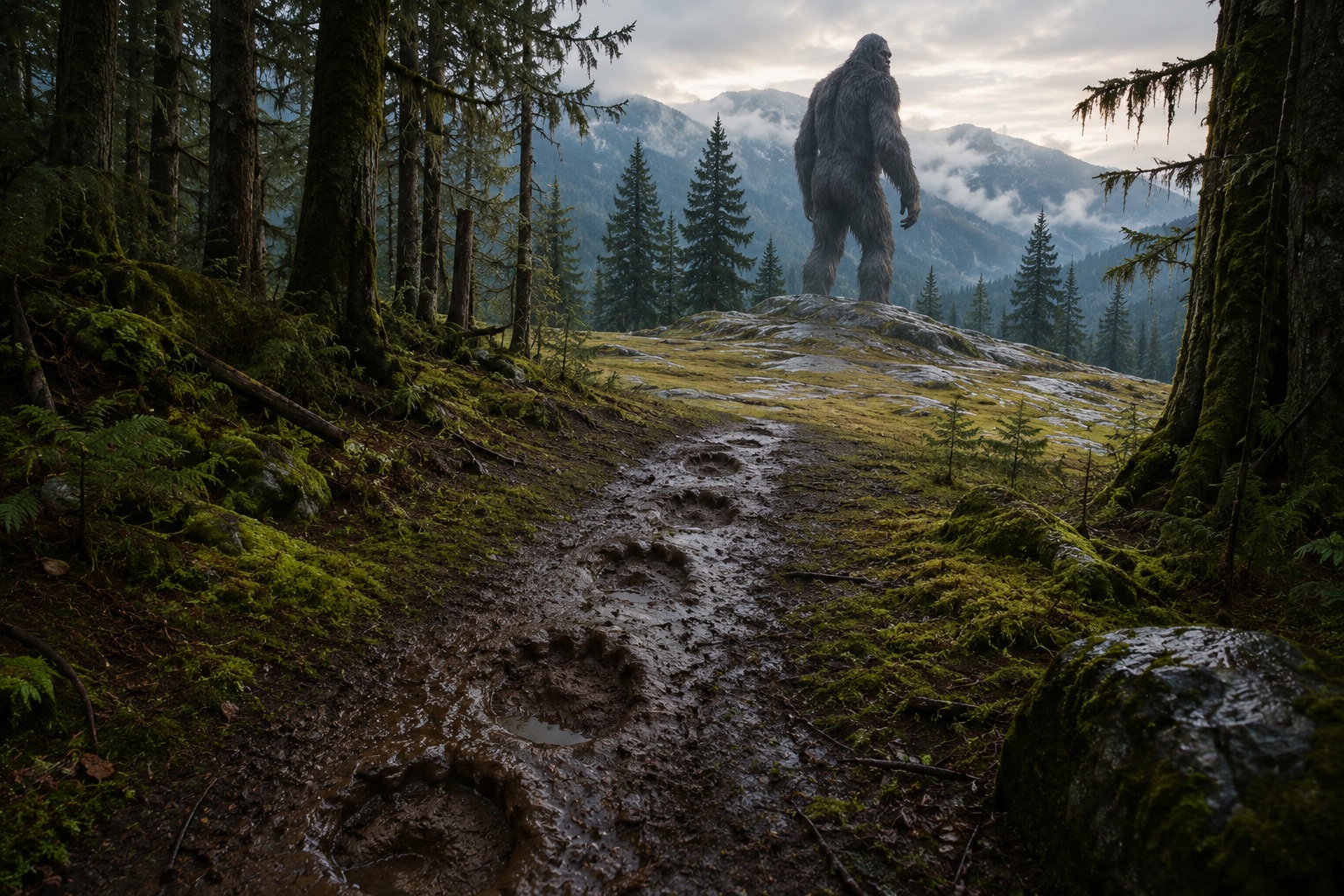
Bigfoot witnesses often describe this as the moment when excitement turns into unease. Before then, they are following tracks. After that, they are standing in silence, wondering what they failed to notice. Many say the forest itself suddenly feels different. The sounds seem quieter. Every tree begins to look like a possible hiding place.
Whether or not anything unusual happened, the missing continuation changes the mood completely.
Why The Place Felt Wrong
What Witnesses Usually Check First Most people do not immediately assume anything mysterious happened. The first reaction is usually practical.
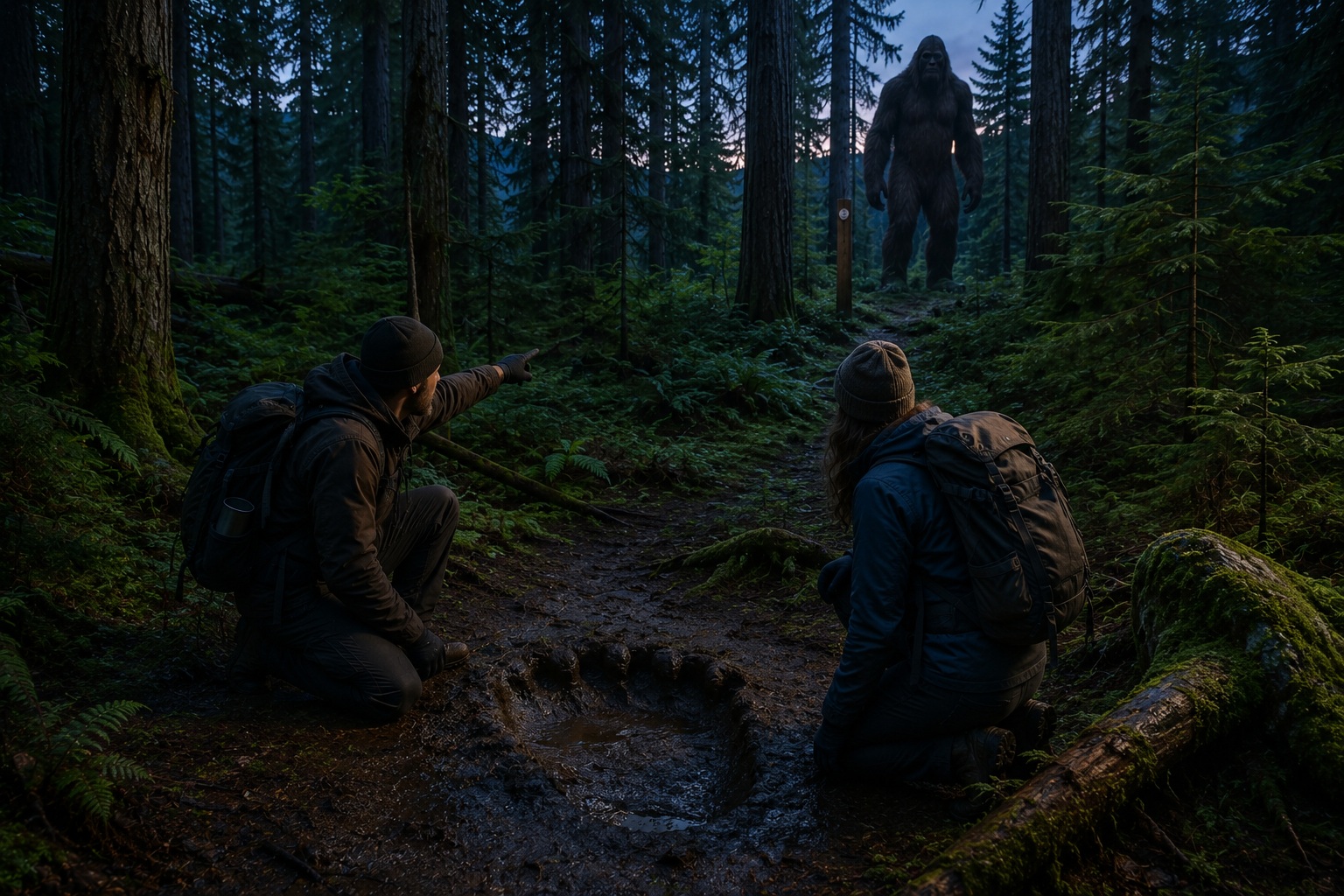
They search nearby for another line of tracks. They check whether wind covered the next prints. They look for exposed rocks where tracks would disappear. They search fallen logs, streams, patches of leaves, or frozen ground where marks would be harder to see.
Some even backtrack to make sure they did not accidentally lose the trail themselves. These are ordinary things to check. In many stories, witnesses eventually find a normal explanation. Fresh snow may drift over part of the trail.
Hard ground may not hold clear prints. A steep slope can hide the next few steps. Animals sometimes change direction more sharply than expected. But many witness stories continue because the people involved say none of those explanations seemed to fit what they were seeing.
The footprints remained clear. The weather stayed calm. The ground ahead looked soft enough to leave more marks. Yet the trail still appeared to stop.
The Detail Nobody Could Explain
That unanswered question becomes the center of the story.
The Different Ways People Explain The Pattern There is no single explanation that covers every report. Some people think witnesses simply lose the trail without realizing it.
Forests are full of uneven ground, roots, rocks, brush, and changing light. It is surprisingly easy to miss a single print that turns slightly to one side. Others suggest melting snow can erase only part of a trail. Sunlight reaches different areas at different times.
Wind carries snow unevenly. Moisture changes how clearly prints remain visible. A trail that looked perfect ten minutes earlier may already be changing. Some Bigfoot believers suggest something very different.
What They Checked Afterward
They imagine a huge creature stepping onto rocks, climbing fallen trees, or moving in ways that leave fewer marks than expected. Others connect the stories with stranger ideas, suggesting the creature somehow disappears entirely. Those ideas are part of Bigfoot folklore, but they remain stories rather than established facts.
That uncertainty is one reason the subject continues to attract so much discussion. Everyone can picture the final footprint. Nobody agrees on what happened after it.
Why The Last Footprint Becomes The Part Everyone Remembers
Interestingly, people rarely describe every footprint in detail. Instead, they remember the ending. The final print often becomes frozen in memory because it represents an unanswered question. Many witness stories include surprisingly similar details.
The Moment It Became Harder To Ignore
The last footprint looks just as deep as the others. It faces forward naturally. Nothing appears disturbed around it. There are no signs of running or struggling.
No drag marks. No obvious place where something large hid. The scene looks ordinary except for one impossible feeling. The trail should continue.
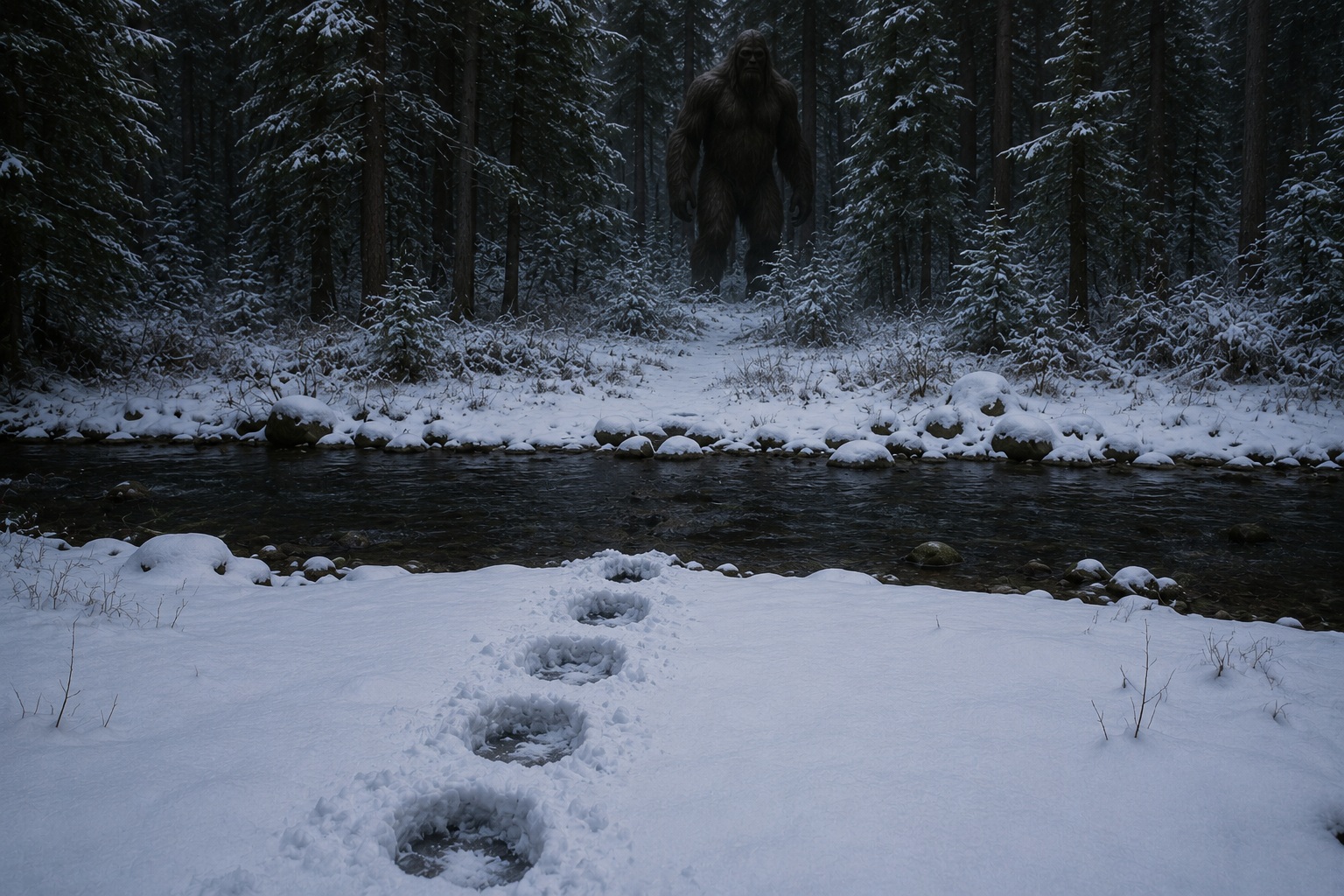
Because it does not, people often spend more time staring at the empty ground beyond the last print than they spend looking at the print itself. Some say they begin noticing how quiet the woods have become. Others remember feeling watched. A few describe looking toward nearby trees and briefly thinking they saw a huge dark figure standing perfectly still between the trunks.
Usually, when they look again, nothing is there. Whether that feeling comes from imagination, tension, or something else, it becomes attached to the memory of the stopped footprints. Years later, many people cannot remember every detail of the hike. They remember standing beside one final print that seemed to lead nowhere.
Other
Why People Avoided That Spot Later
Patterns That Often Appear In Bigfoot Stories Stopping footprints are rarely the only strange detail people describe. Many reports include other patterns that appear again and again. Large broken branches high above normal reach are commonly mentioned.
Witnesses sometimes describe hearing heavy footsteps without seeing anyone. Others report a sudden silence where birds and insects seemed to stop all at once. Some people notice a strong unusual smell. Others describe finding unusually large handprints on dusty vehicles, cabins, or old wooden sheds.
Occasionally, someone reports catching a brief glimpse of an enormous hairy figure crossing an opening before disappearing behind trees. In those stories, the witness often returns to where they thought the figure went. Instead of finding more tracks, they find very little at all. That combination strengthens the mystery in their memory.
One unusual detail might be forgotten. Several unusual details happening together become much harder to ignore, even if none of them answers the bigger question. This is one reason stories about Bigfoot often spread through hiking groups and campfire conversations. People compare not only what they saw but what they failed to find afterward.
Why
Why The Story Still Gets Shared
This Question Keeps Returning The mystery of footprints that stop continues because it sits between ordinary tracking and unexplained storytelling. There are many everyday reasons why tracks can become difficult to follow. Anyone who spends time outdoors knows snow changes, light shifts, and uneven ground can confuse even experienced hikers.
At the same time, witness stories often describe situations where those simple explanations did not seem to satisfy the people standing there. The final footprint becomes a symbol of that uncertainty. It represents the moment when a straightforward trail turns into a question with no clear ending.
That is why the image appears so often in books, witness statements, podcasts, and conversations around campfires. It is not simply about finding a giant footprint. It is about reaching the place where every expectation says there should be one more step—and finding only quiet woods waiting ahead.
Whether someone sees the pattern as a tracking mistake, an outdoor mystery, or part of Bigfoot folklore, the emotional reaction is remarkably similar. People stop walking. They stare at the empty ground. And for a few moments, the forest feels much larger than it did before they found that final footprint.