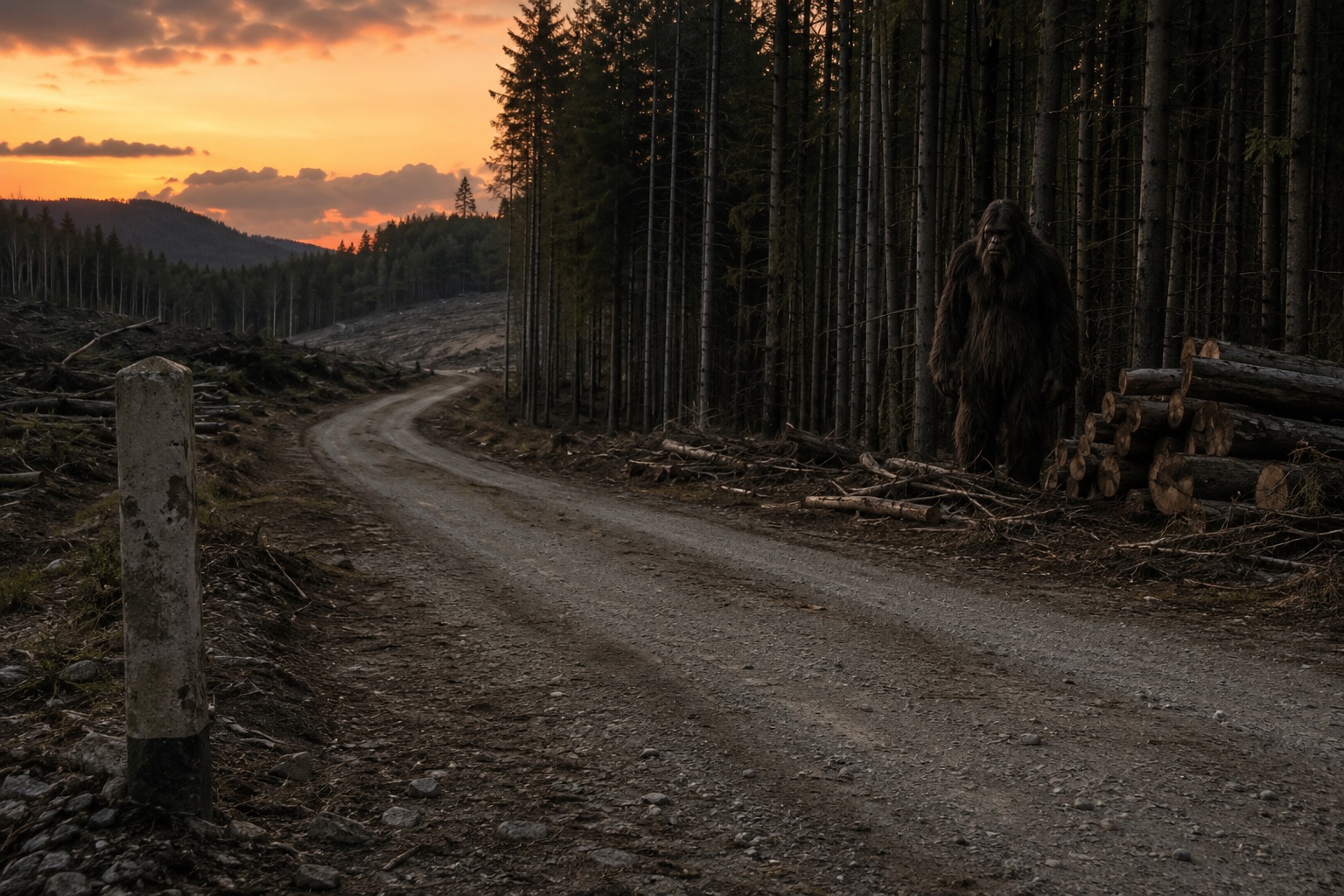
A forestry contractor finished checking a gravel logging road just before sunset. The trucks had already left, leaving the forest strangely quiet. Fresh tire tracks cut through damp mud, and the smell of pine still hung in the air. He climbed back into his pickup, reached for the door, and heard a loud crack somewhere beyond the trees.
It sounded like someone hitting a thick tree trunk with another heavy piece of wood. He waited. About fifteen seconds later, another knock answered from farther up the hillside. He stepped out, expecting another worker had stayed behind. The road was empty in both directions. No engines. No voices. No chainsaws.
The third knock came from the opposite side of the road. This time it was closer. As he slowly turned toward the sound, something massive stood between two pines overlooking the cut line. It was taller than the nearby survey marker, covered in dark hair, and completely still. For a second it looked almost like a man, until he realized the shoulders were far too wide and the arms hung much lower than they should.
Then another sharp knock echoed through the trees. The huge shape simply stepped backward into the timber without making another sound. Stories like this appear again and again whenever people discuss Bigfoot encounters. Whether someone believes those stories or not, one detail comes up surprisingly often: strange knocking sounds near logging roads, clear-cut forests, and old timber trails. Why do so many witnesses mention them, and why do those sounds leave such a lasting impression?
The First Time It Happened
Why logging roads appear so often in Bigfoot stories Logging roads create an unusual meeting point between people and deep wilderness. Many roads cut through forests that otherwise receive very little traffic. During the day they may carry heavy equipment, but after work crews leave, they become long empty corridors stretching for miles into thick woods.
People hunting, camping, fishing, hiking, or working often travel these roads alone. Unlike popular hiking trails, logging roads also provide long sight lines. Someone can see hundreds of feet ahead while the surrounding forest remains dense enough to hide almost anything standing just beyond the edge.
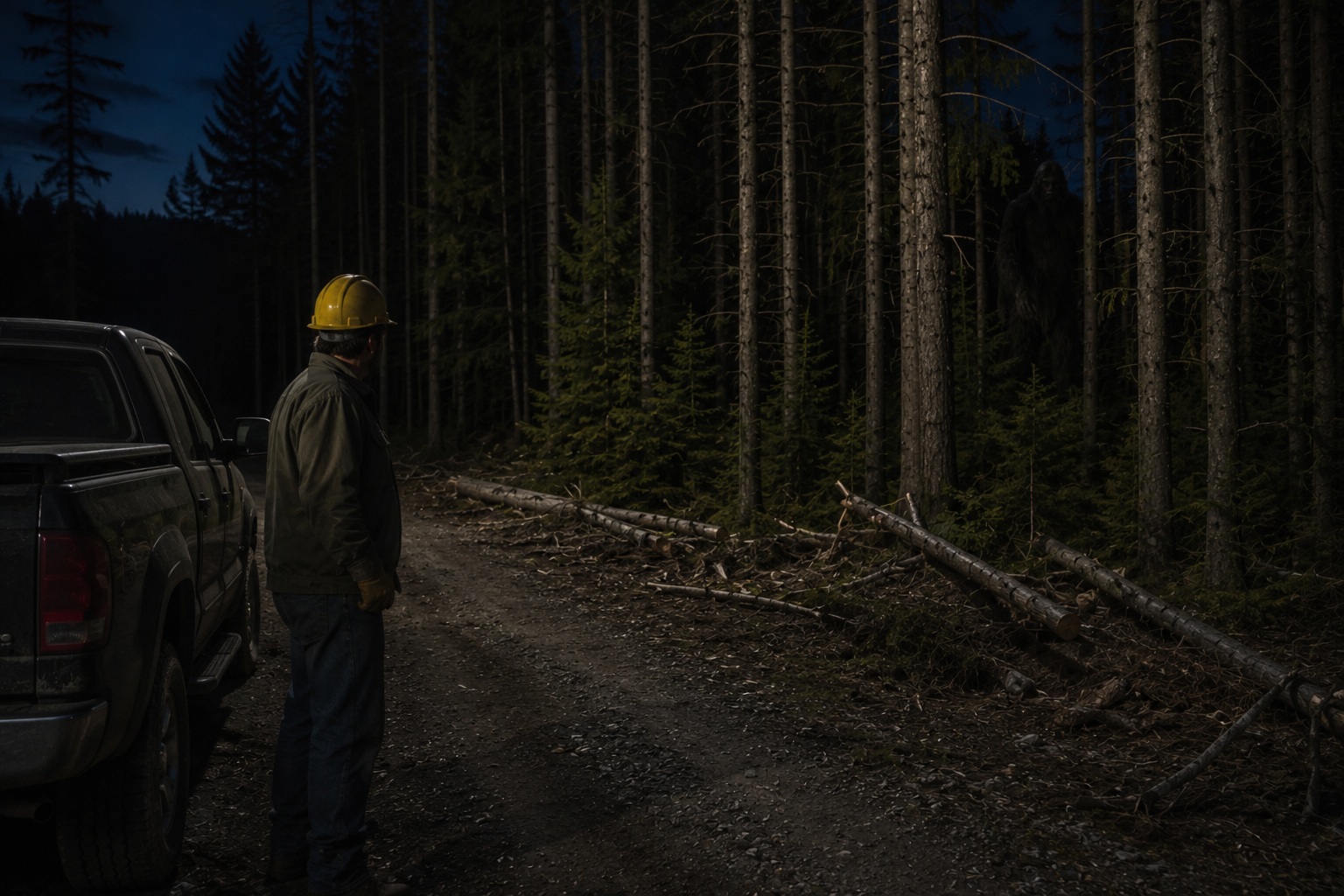
That contrast makes people feel exposed. Many witnesses describe hearing something move just beyond the trees while the road itself stays completely empty. Tree knocks often become the first strange event. What people mean by a tree knock
Witnesses usually describe the sound as much louder than ordinary branches snapping. Instead, it resembles someone striking one solid tree with another heavy piece of wood. The sound has a hard, clean quality. Some people compare it to a baseball bat hitting a telephone pole.
Why The Place Felt Wrong
Others say it echoes through valleys in a way that ordinary falling branches do not. The detail that stands out is timing. Rather than random noises from wind, witnesses often report one loud knock followed by another several seconds later from a different location. Sometimes the knocks seem to answer each other.
Sometimes they appear to move alongside the road while the witness continues driving or walking. That pattern makes people stop and listen instead of dismissing the sound immediately. Why the knocks feel personal Forests constantly produce unexpected sounds.
Trees shift. Branches fall. Animals move through brush. Most experienced outdoors people know this.
Yet witnesses who remember tree knocks years later usually say something different happened. Instead of feeling like part of the forest, the sounds seemed directed toward them. Some describe stopping after the first knock, only to hear another after they moved again. Others say every time they restarted their vehicle or continued walking, another loud crack answered from somewhere ahead.
The Detail Nobody Could Explain
Several stories even describe two separate knocks arriving from opposite sides of the road. Whether those events have ordinary explanations or not, people often remember the feeling that something unseen was tracking their position. That feeling is far more frightening than the sound itself. A single unexplained noise is easy to forget.
Repeated sounds that appear to respond to movement are much harder to ignore. What witnesses usually check first When people hear loud knocks in the forest, they rarely jump straight to a supernatural explanation. Most begin looking for practical answers.
They scan for other workers. They listen for chainsaws or truck engines. They check whether another hunter is nearby. They watch for falling trees or heavy branches.
Many remain convinced someone else must be making the sounds. Only after finding no obvious source do they begin paying closer attention to the woods themselves. That often changes what they notice. People describe long periods of complete silence.
What They Checked Afterward
Birds stop calling. Wind seems absent even though treetops continue moving. Sometimes they notice an unusually strong earthy smell. Others suddenly realize they no longer hear insects near the roadside.
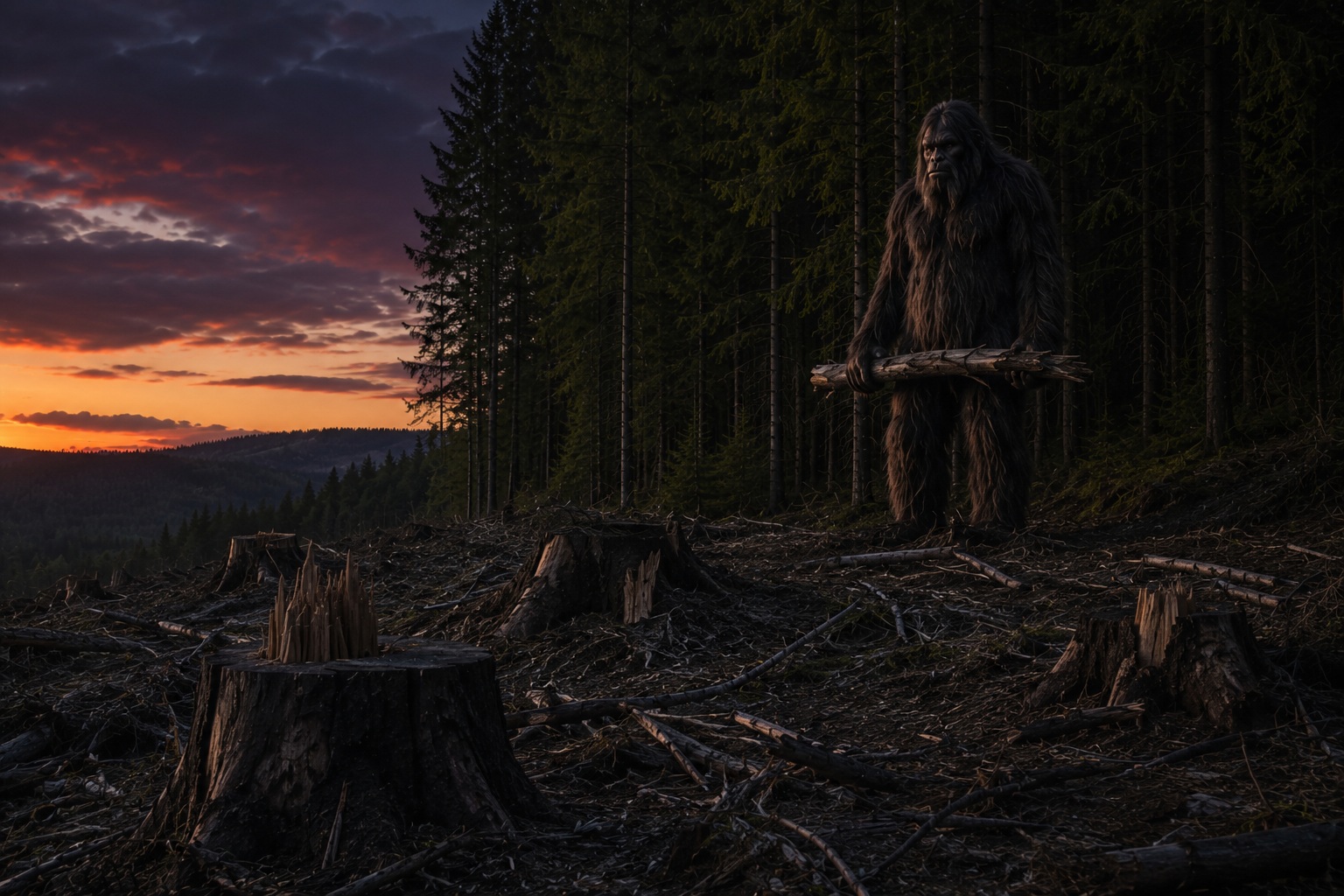
Whether these details are connected or simply become more noticeable under stress, they appear repeatedly in witness stories. Some people also describe catching a brief glimpse of a large hairy figure standing beside old stumps, fresh logging slash, or stacks of cut timber. Unlike dramatic chase stories, these sightings are usually surprisingly short.
The figure is already watching. Then it quietly disappears back into the trees. Why clear-cut forests create unsettling encounters Logging changes how forests look and sound.
The Moment It Became Harder To Ignore
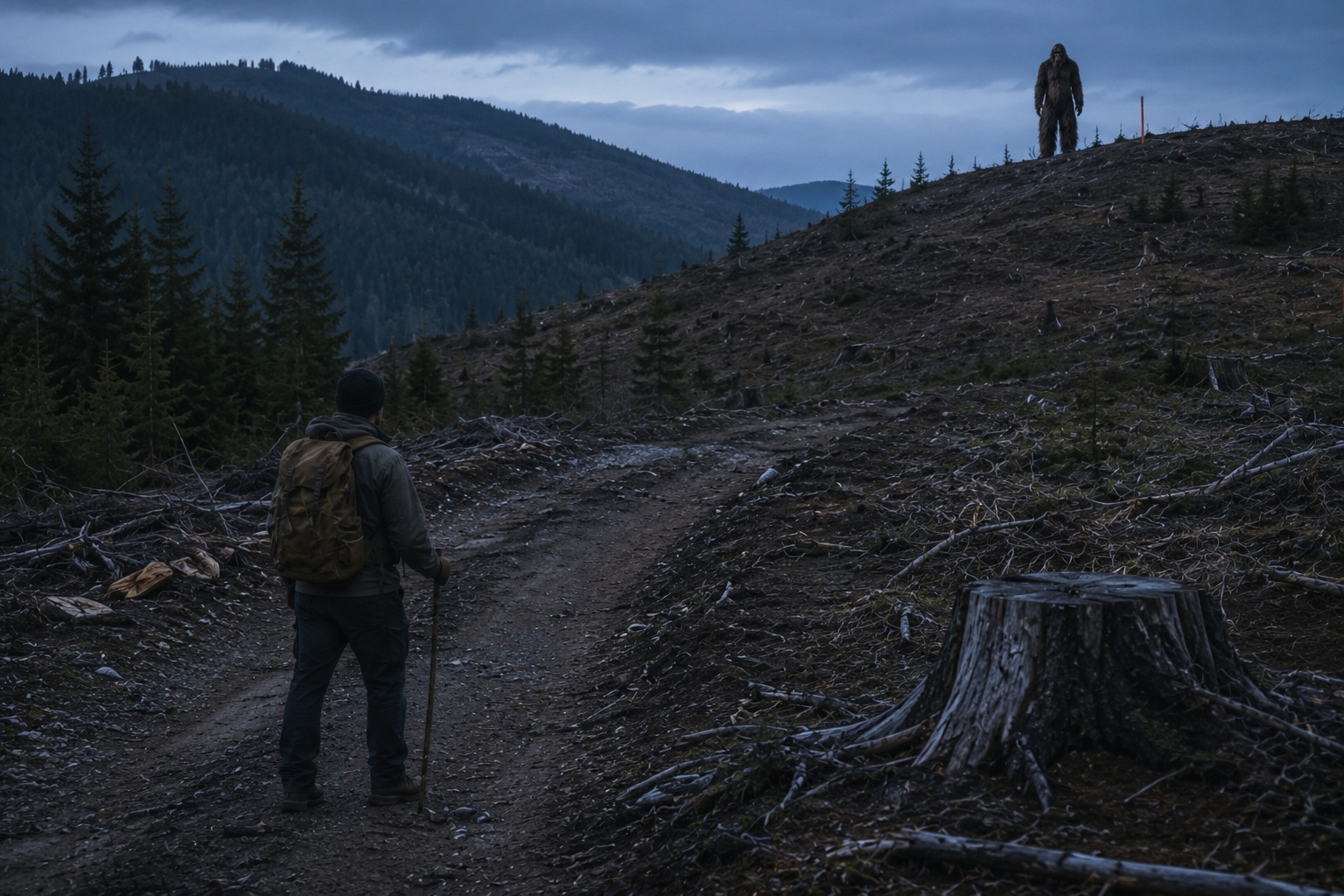
Fresh clear-cut areas produce long open views surrounded by walls of standing trees. The edges become places where anything large can remain hidden while still observing activity below. Many witness stories happen exactly along these boundaries. Someone drives through an open section.
A knock comes from the timber. They stop. Nothing appears. Then another knock echoes from farther ahead near the next stand of trees.
Even people who never report seeing anything often remember how impossible it felt to judge distance. Sound travels differently across hillsides, fresh cut areas, and dense forest. Echoes bounce in unexpected directions. This uncertainty allows ordinary sounds to feel strangely deliberate.
At the same time, if someone believes something large could be moving through the woods, every pause becomes more uncomfortable. Many stories combine both experiences. The witness never feels certain where the sound came from. Yet they remain convinced it was following them.
Why People Avoided That Spot Later
Why these stories stay popular Tree knocks occupy an interesting place in Bigfoot folklore because they are simple. Anyone walking through remote woods could hear one. Unlike dramatic monsters or impossible events, the experience begins with something ordinary.
A loud sound. A pause. Another loud sound. Only later does the story become frightening.
The witness notices the timing. The silence. The feeling of being watched. Perhaps a huge figure appears beside a weathered mile marker or between freshly cut logs for only a second before stepping away.
Even people who remain skeptical understand why these moments linger in memory. Our brains naturally search for patterns. When repeated sounds seem organized, we begin looking for whoever—or whatever—might be making them. That instinct probably explains why tree-knock stories spread so easily.
Why The Story Still Gets Shared
Readers can imagine themselves on the same empty road. They know exactly how they would react after hearing one loud crack. Then another. Then another from somewhere that should have been impossible.
Related Bigfoot stories often mention other details alongside tree knocks. Witnesses describe oversized footprints that suddenly stop, strong unfamiliar smells before a sighting, broken saplings high above eye level, rocks landing near campsites without anyone visible, and huge hairy figures standing silently beside survey posts, logging equipment, or roadside markers that reveal just how enormous they appear.
No single story settles the mystery. But together they create one of the most recognizable patterns in modern wilderness folklore. Whether someone sees the knocks as natural forest sounds, human activity, or part of a larger mystery, one thing rarely changes. The next time they hear that sharp wooden crack echo through an empty logging road, they usually stop walking.
And they listen for the answer.