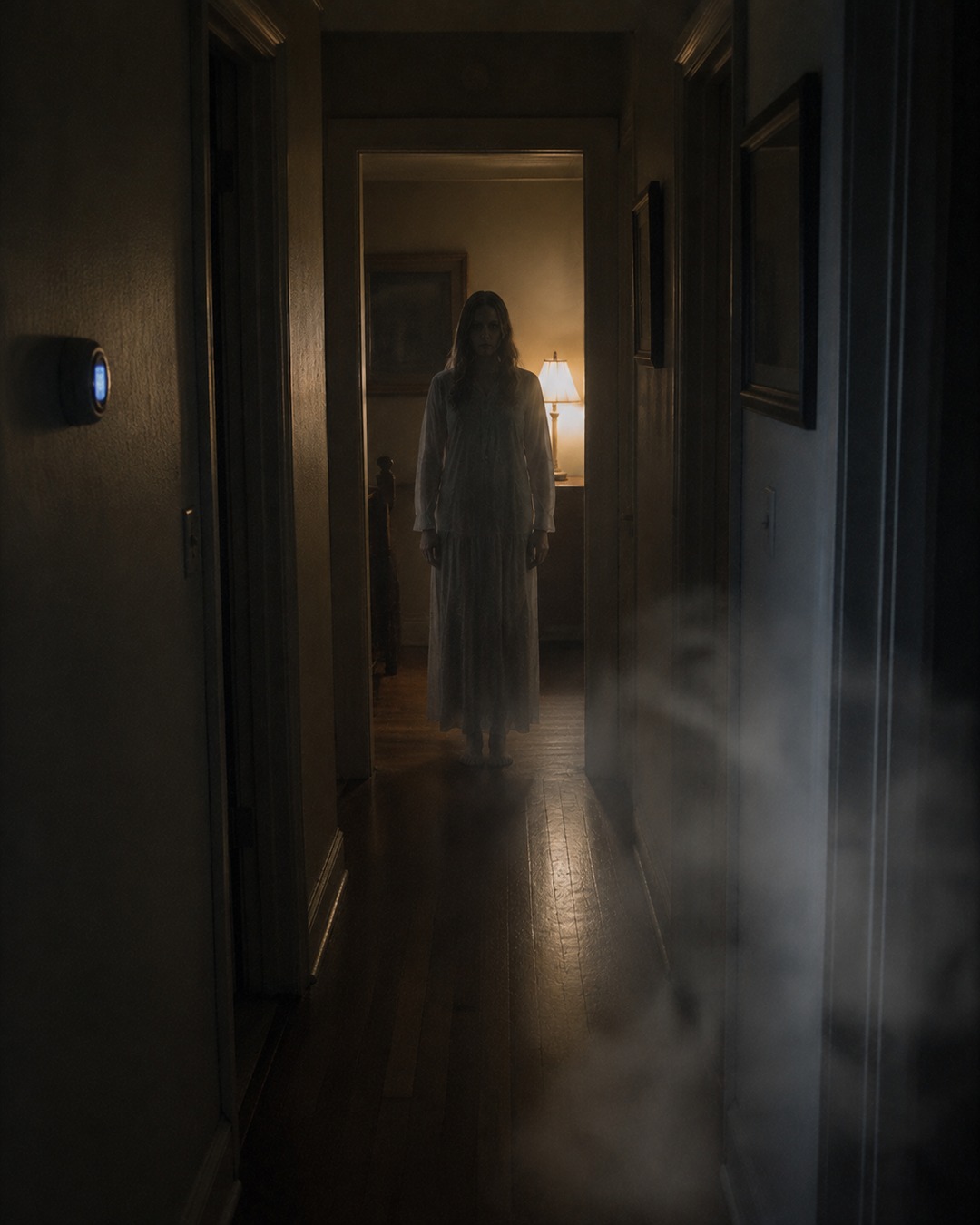
Illustrative reconstruction
Imagine walking into a pantry at night and feeling one patch of air turn cold near the back shelf. The rest of the kitchen is normal. The windows are closed. The heater is running. The cold place is small enough to point at, and that makes it feel less like weather and more like a presence.
This is an illustrative reconstruction, not evidence of a specific haunting. It shows why “cold spots” have become such a memorable detail in ghost stories: they are physical, immediate and easy for multiple people to compare.
Short answer
Cold spots become associated with ghosts because a sudden temperature difference feels like something entered the room. But many ordinary causes can produce localized cold: drafts, insulation gaps, exterior walls, floor cavities, HVAC airflow, open chimneys, moisture, basement air, and the body’s fear response.
The paranormal connection is cultural. Cold air has long been linked with fear, death, empty rooms and ghostly presence. A researched article should explain both the building conditions and the folklore without treating either one as the whole story.
What people actually report
Cold-spot reports often describe:
- one area colder than the rest of the room;
- sudden chills or goosebumps;
- temperature drops near doorways, stairs, beds, closets or pantries;
- cold sensations during an emotionally charged moment;
- paranormal investigators using thermometers or thermal cameras;
- uncertainty about whether the cold was measured or only felt.
The last distinction matters. “I felt cold” and “a calibrated instrument recorded a repeatable temperature drop” are different claims.
Ordinary explanations
Drafts and air leakage
ENERGY STAR’s air-sealing guidance is useful because hidden gaps around attics, basements, wiring penetrations, pipes, windows and doors can move air through a home. A narrow draft can feel like a focused cold patch rather than a whole-room temperature change.
Insulation and exterior surfaces
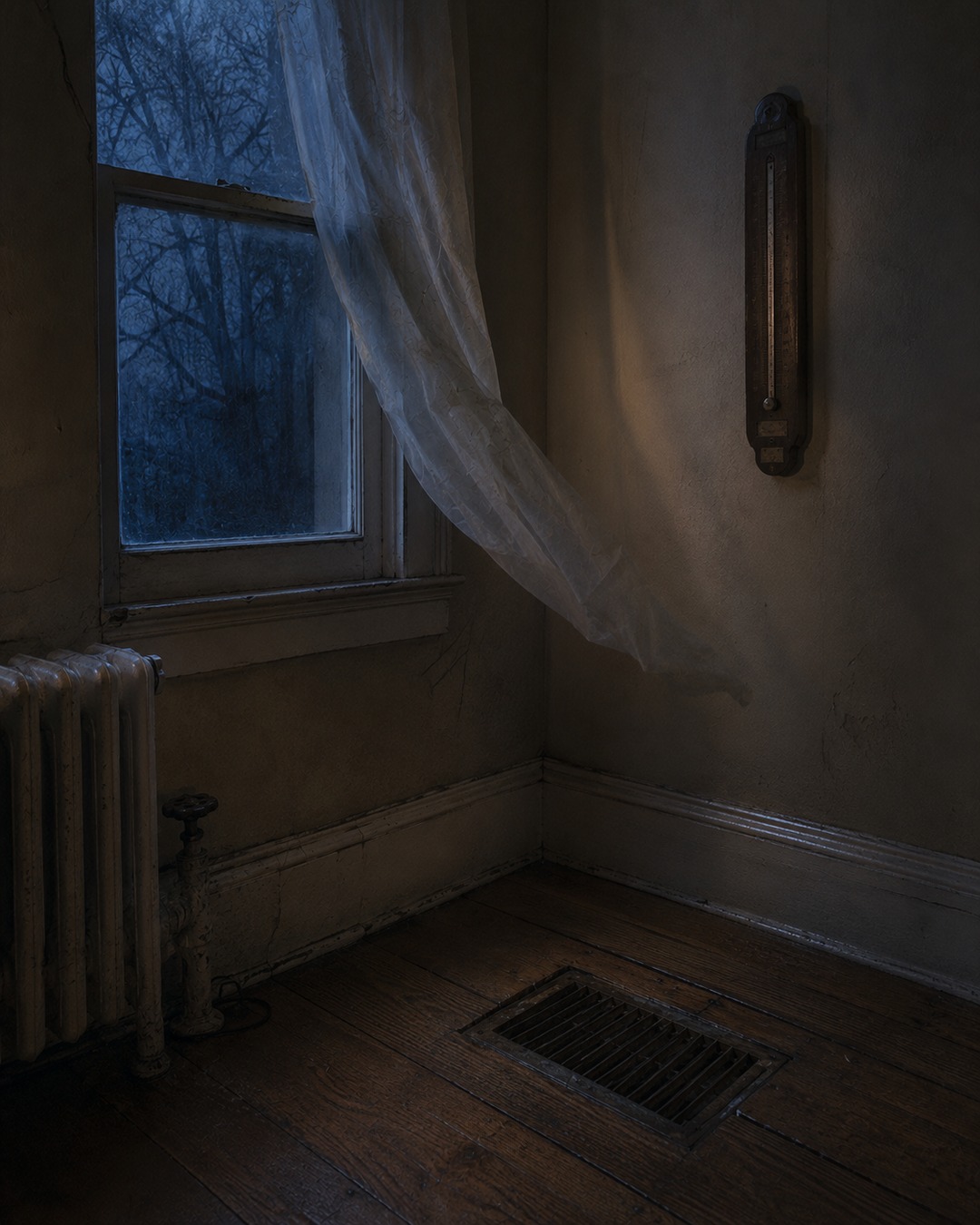
An exterior wall, uninsulated corner, floor above a crawlspace, or cabinet against a cold surface can create a microclimate. The room may feel generally warm while one shelf, floorboard or corner stays cold.
HVAC and pressure differences
Heating and cooling systems move air unevenly. A vent, return, closed interior door, leaky duct or pressure imbalance can create a localized temperature difference.
Moisture and evaporation
Damp surfaces and moving air can change how cold a place feels on skin. A basement, bathroom, old pantry or exterior wall may feel “wrong” because humidity and temperature differ from the rest of the room.
Human physiology and fear
Fear can cause chills, goosebumps and changes in skin sensation. A person who is already uneasy may notice a minor temperature difference more strongly. That does not mean the sensation is fake. It means the body and environment are interacting.
Carbon monoxide and indoor-air safety
Cold spots do not indicate carbon monoxide. Still, any article about strange sensations in a house should remind readers that safety comes first. The EPA describes carbon monoxide as a dangerous indoor air pollutant. If people in a building experience headaches, dizziness, confusion, nausea or symptoms that improve outside, they should check detectors and treat it as a safety issue, not a ghost clue.
Why cold feels paranormal
Cold is one of the few haunting details people can feel directly. A shadow might be dismissed as imagination. A sound might be hard to locate. But cold air touches the body. That gives the experience a kind of authority.
Ghost stories also train readers to expect cold before an apparition. Once that pattern exists, a cold patch becomes narrative evidence: something is about to happen.
What would make a cold spot more interesting?
A case becomes more useful when the temperature change is measured, repeatable, mapped, and compared with outdoor temperature, HVAC cycles, door/window positions and humidity. A single handheld reading is not enough. A better test would log temperature over time in several parts of the room and compare it with building conditions.
Practical cold-spot checklist
| Check | Why it matters |
|---|---|
| Nearby exterior wall or window | Common source of cold surfaces and drafts. |
| HVAC vent or return | Airflow can be uneven and cyclical. |
| Basement/crawlspace below | Cold air can rise through gaps. |
| Attic hatch or chimney | Air leaks can pull air through a house. |
| Weather and wind direction | Drafts often appear only under certain conditions. |
| Moisture/humidity | Damp air changes how cold a surface feels. |
| Repeatability | A one-time sensation is weaker evidence than a recurring pattern. |
How to document a cold spot without exaggerating it
The best cold-spot notes are boring at first. Write down the room, time, weather, nearby vents, nearby exterior walls, heating or cooling cycle, and whether doors or windows were open. If a thermometer is used, record the reading in several places rather than only at the coldest point. A single dramatic number can mislead readers if the rest of the room was never measured.
This kind of documentation does not remove the eerie feeling. It makes the article more useful. A reader can still understand why the moment felt haunted while also seeing what would need to be checked before treating it as unusual.
Basements, Thresholds And Room-Specific Cold
Cold spots often feel most meaningful when they are sharply localized: a doorway-sized patch near a basement wall, a cold line at the entrance to one room, or a corner that stays uncomfortable while the rest of the house feels normal. That sharp boundary can make the air feel intentional, but it can also come from ordinary building behavior.
Basement doors and foundation walls are common places to check first. Exterior walls, uninsulated rim joists, concrete, hidden cavities, stairwells, storage blocking airflow, old paint around a door, gaps behind shelving and pressure differences can all create a cold patch even when the opening appears sealed. A door that looks closed is not proof that air is not moving around it.
Room-specific checks should include fireplaces and chimneys, unused vents, exterior corners, crawl spaces, damp surfaces, floor gaps, closed registers, blocked returns and temperature differences between floors. A cold spot becomes more useful as a report when the observer records where it begins and ends, whether it follows a wall or threshold, what the weather was doing, and whether the temperature changes when doors, fans or HVAC settings change.
What we can and cannot say
We can say that cold spots are common in ghost stories and paranormal investigations, and that ordinary building conditions can create convincing localized cold. We cannot say that a cold spot proves a haunting. The useful question is not “ghost or not?” but “what conditions would produce this exact sensation here?”
What this page adds that a generic result usually does not
A cold-spot report becomes more useful when the room is treated as a physical space: windows, vents, exterior walls, floor gaps, humidity and heating cycles all matter. The mystery is strongest only after the building itself has been checked.
Sources & Further Reading
- ENERGY STAR — Seal and Insulate with ENERGY STAR
- EPA — Improving Indoor Air Quality
- EPA — Carbon Monoxide’s Impact on Indoor Air Quality
Related Weird Witnessed guides