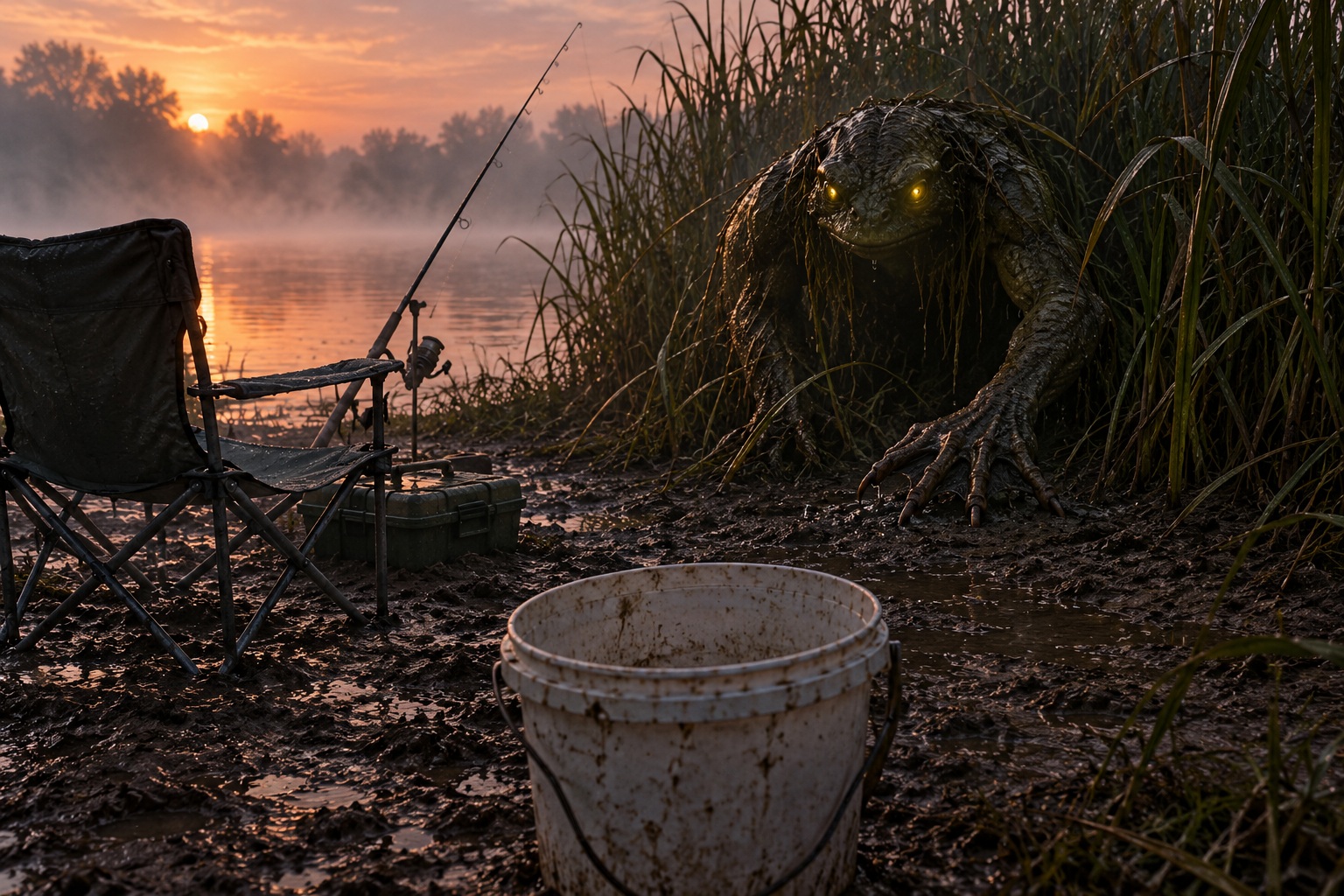
The bait bucket was still standing exactly where the fisherman had left it. Its lid was snapped shut. The rope handle was dry despite the heavy dew covering everything else along the riverbank. His tackle box sat untouched beside the folding chair. Nothing looked disturbed until he lifted the bucket.
It weighed almost nothing. The sealed container that had held two dozen live minnows before midnight was completely empty. No water. No fish. No muddy splash marks around it. No teeth marks on the plastic. The lid had never been forced open. Then he noticed something stranger.
A line of wet hand-sized prints crossed the mud toward the reeds but stopped halfway across an open patch of sand. They did not continue into the water. They did not return toward the chair. They simply ended where the rising sunlight reached them.
He packed his gear without finishing breakfast. Stories like this appear wherever people spend quiet nights near rivers, ponds, marshes, and lakes. The missing bait is rarely the only strange detail. Instead, witnesses often remember the empty bucket because it is the first ordinary thing that feels completely wrong. Whether someone believes these stories point to unusual animals, folklore creatures, or something harder to explain, the same question keeps appearing:
Why do so many creature reports begin with an empty bait bucket at sunrise?
The answer is less about disappearing fish than about how one small detail transforms an ordinary fishing trip into something people remember for decades. Why the Missing Bait Becomes the First Warning
Most overnight anglers expect small losses. A raccoon may steal food. Birds sometimes snatch exposed bait. Cats, foxes, or otters can investigate campsites after dark. Those explanations make sense. The stories become stranger when the missing bait appears alongside details that do not match the normal animal behavior people know.
Witnesses often describe containers that stayed upright. Lids remain attached. Nearby snacks are ignored. Coolers full of food stay closed while only the live bait disappears.
That selective choice is what makes people pause. Instead of looking like random scavenging, the scene feels oddly deliberate. In many creature stories, the bait bucket becomes the first clue simply because anglers know exactly how it looked before darkness fell. They checked it repeatedly during the night. They remember filling it. They remember closing it. That makes its condition easier to recall than dozens of other small details around camp.
Why Creature Legends Keep Returning to Rivers Before
Sunrise Sunrise appears again and again in these stories. That timing probably has practical reasons before it gains supernatural ones. Many people fish through the night.
They sleep for an hour before dawn.
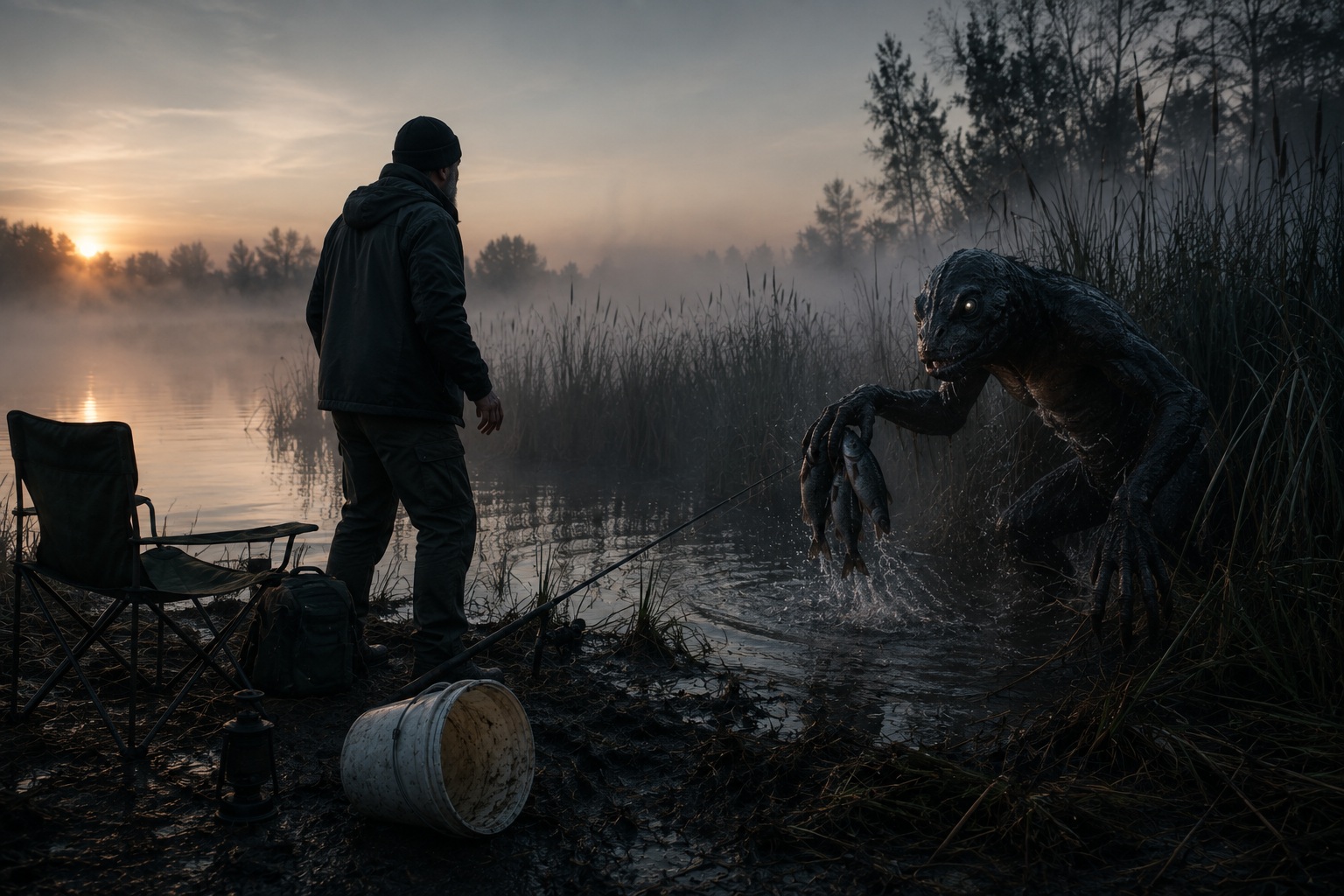
They wake just as birds begin calling. That is when they notice what changed. Creature folklore also places unusual encounters at the boundary between darkness and daylight.
The world is becoming visible again. Mist still hangs over the water. Shapes remain difficult to judge. Ordinary sounds return while the night has not completely disappeared.
An empty bait bucket discovered during that transition feels more unsettling than finding one in full daylight because everything else seems to be waking up normally. The wrong detail arrives at exactly the moment people expect normality to return. That contrast gives the memory unusual strength.
The Details Witnesses Usually Notice Next
Interestingly, the bucket itself rarely stays the center of the story. Once people realize something is missing, they begin looking around. Many reports describe similar follow-up details.
Fresh reeds bent toward the water. Mud disturbed without clear footprints. One unusually long scrape through wet grass. Ripples moving against calm water.
Two yellow eyes watching briefly from reeds before disappearing. A low shape sliding beneath lily pads without making the splashing expected from a large animal. Sometimes witnesses report hearing breathing instead of movement. Others describe one heavy splash that comes several minutes too late, after everything has already gone quiet.
These details do not prove anything unusual happened. They simply explain why the empty bucket becomes part of a much larger memory. The missing bait starts the search. Everything noticed afterward builds the story.
Why Normal Animals Do Not Always Fit Every Story
There are plenty of ordinary explanations. Raccoons are clever. Otters are curious.
Herons steal fish. Snakes occasionally investigate bait containers. People sometimes forget whether they properly closed the lid. Buckets can tip over during the night.
Those possibilities probably explain many reports. Yet storytellers usually focus on the cases where those explanations seem incomplete. A raccoon typically leaves signs. Containers get knocked over.
Mud shows several trips back and forth. Food wrappers are disturbed. Something else gets stolen too. The stories that survive are the ones where only the live bait vanished while everything around it stayed untouched.
Whether memory sharpened the details over time or the event really looked that unusual is impossible to know. But selective, tidy disappearances make stronger stories than messy campsites.
Why Creature Folklore Connects Fish With Strange Visitors
Many traditional legends describe mysterious creatures being drawn toward easy food.
Water spirits. Marsh beings. River monsters. Unknown animals hiding in wetlands.
Different cultures give them different names, yet similar themes appear again and again. Fish represent fresh movement. They create sound inside buckets. Water sloshes.
Lids vibrate slightly. Even if the stories are entirely fictional, live bait naturally becomes a believable object for mysterious creatures to investigate. Unlike packaged food, it is alive. It smells strongly.
It moves. That makes it a natural centerpiece in folklore. The image of an untouched campsite beside one inexplicably empty bait bucket is simple enough for anyone to imagine. Simple images survive longer than complicated ones.
Why the
Stories Often Include One Clear Glimpse
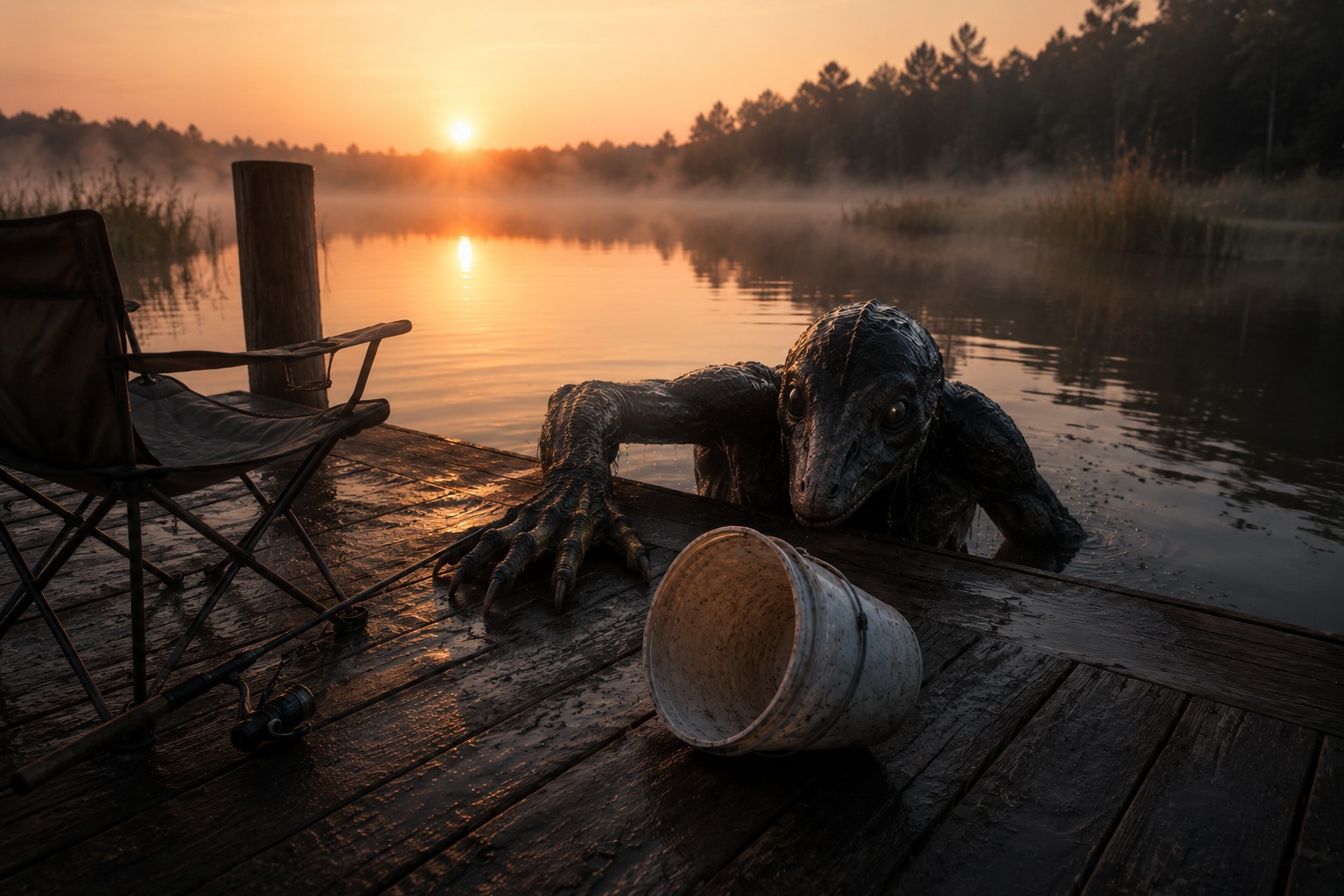
Most creature reports avoid long descriptions. Instead, witnesses remember one unmistakable image. A webbed arm withdrawing beneath a dock.
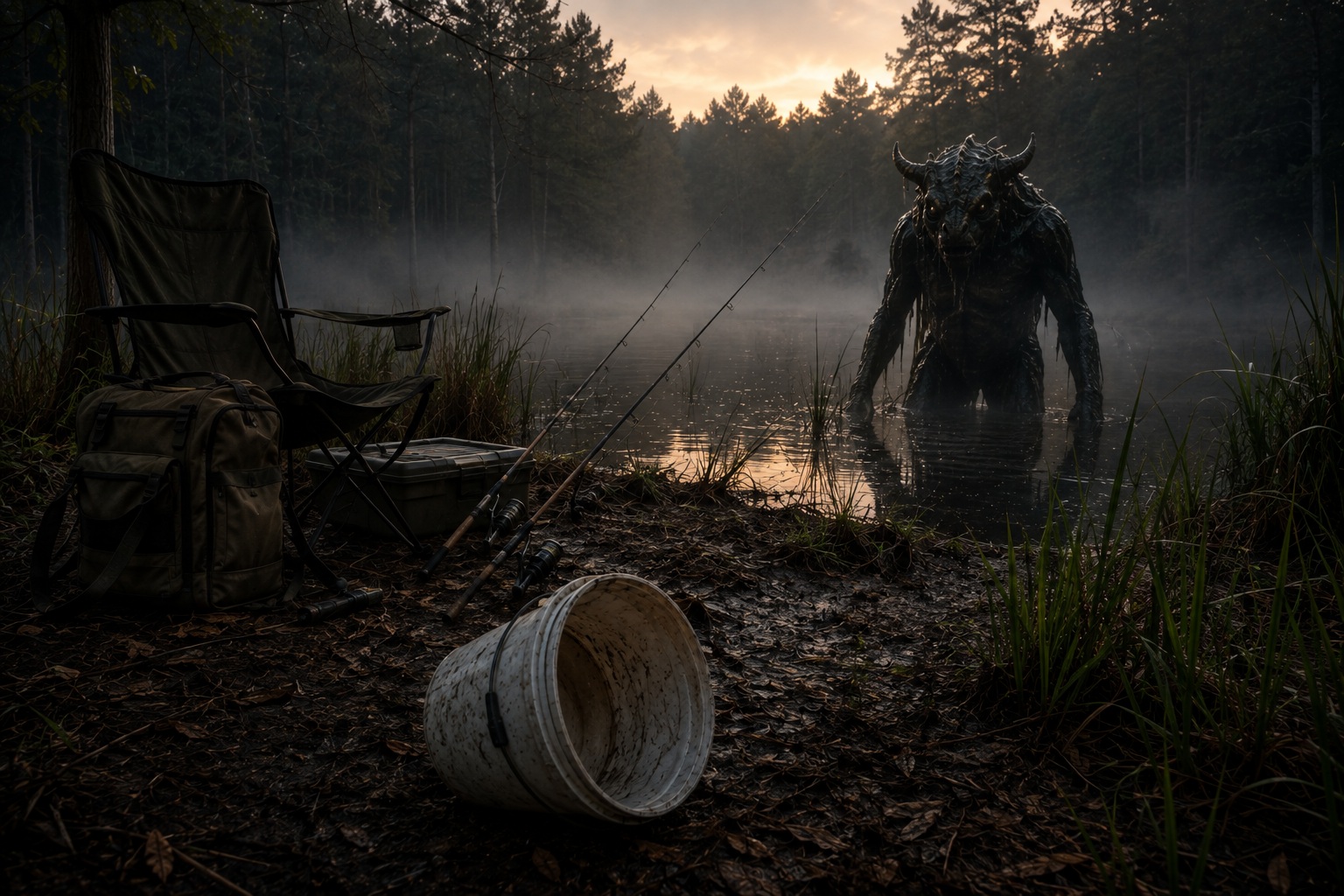
A pale face lifting above cattails. Reflective eyes just above the waterline. A horned silhouette standing waist-deep in morning mist. A long tail disappearing behind reeds.
The glimpse usually lasts only seconds. It happens after the missing bait has already unsettled the witness. That order matters. If someone first notices a strange creature, they may dismiss it as poor visibility.
But if they first discover something impossible about their campsite, they begin searching more carefully. Every movement afterward feels more significant. The empty bucket changes how every later sound is interpreted. Why People Rarely Forget the Empty Bucket
Memory favors objects people interacted with repeatedly. Someone remembers locking the car because they physically did it. Someone remembers placing house keys on the table. Anglers remember filling bait buckets because it is part of the routine.
When that familiar object suddenly contradicts expectation, the brain gives it extra attention. Psychologists sometimes describe this as remembering violations of routine more vividly than routine itself. That does not mean every story is accurate. It explains why one missing bucket remains unforgettable while hundreds of ordinary fishing trips disappear from memory.
The object becomes the anchor holding the entire strange experience together. Years later, witnesses may forget the weather. They may forget the exact date. But they remember lifting a bucket that should have been heavy.
Where the
Ordinary Explanation Starts Becoming Harder
Most reports eventually reach one detail that keeps people talking. Not because it proves anything. Because it resists an easy explanation.
Perhaps the bait disappeared while dogs slept quietly nearby.
Perhaps heavy dew covered everything except the bucket handle. Perhaps muddy prints stopped in open ground. Perhaps someone heard slow breathing from reeds after sunrise but saw nothing moving.
Each individual detail has possible explanations. Combined together, they become harder for witnesses to dismiss emotionally. That does not automatically make the creature story true. It explains why these stories spread.
People enjoy mysteries that begin with one ordinary object behaving in an unexpected way. An empty bait bucket is relatable. Everyone understands why it should still contain something. When it does not, curiosity starts working before fear does.
Why the Question Keeps Returning The empty bait bucket has become one of those recurring details that appears across countless creature stories because it is believable enough to happen naturally yet strange enough to start a mystery. The missing bait is almost never presented as the ending.
It is the opening chapter. After that come unusual tracks, quiet water, impossible glimpses, strange sounds from reeds, or a shape that slips beneath the surface before anyone gets a clear look. Perhaps ordinary wildlife explains most of these mornings. Perhaps memory quietly edits old stories until only the strangest parts remain.
Or perhaps lonely shorelines before sunrise occasionally produce moments people genuinely cannot explain. Whatever someone believes, the pattern remains remarkably consistent. The story rarely starts with seeing the creature. It starts by picking up a familiar plastic bucket that should feel heavy, hearing nothing except birds greeting the sunrise, and realizing something invisible visited the campsite while everyone slept.
That single ordinary object, suddenly and impossibly empty, is often what people remember long after every other detail has faded.