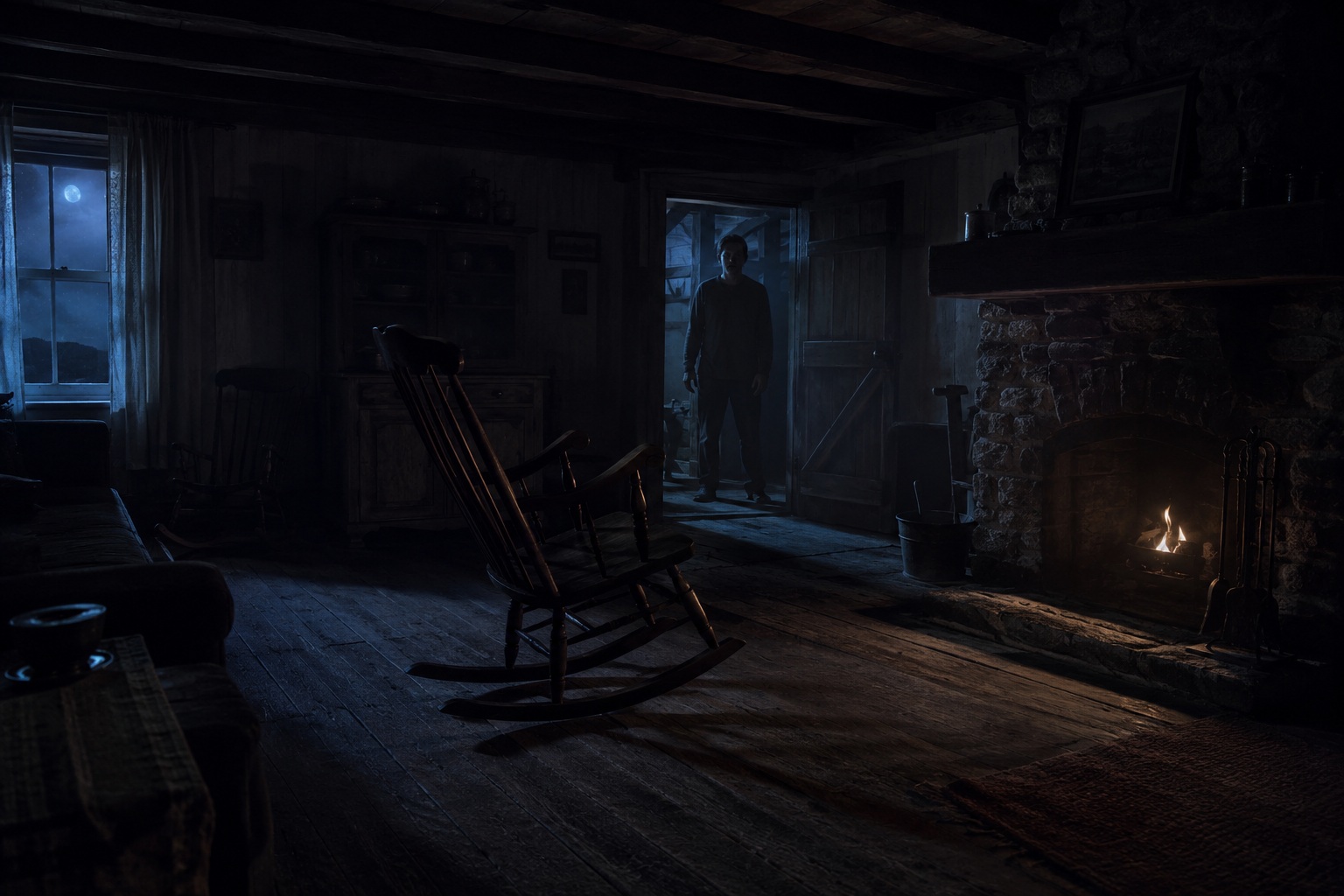
The chair stopped rocking the moment she reached the doorway. It had been moving hard enough that the wooden runners tapped the old pine floor every few seconds. Back and forth. Back and forth. The sound had carried through the quiet farmhouse for almost a minute before she finally left her bedroom to see who was awake.
Nobody was there. The living room lamp had burned itself low, throwing long shadows across the walls. An old rocking chair sat beside the cold fireplace. It was still leaning slightly forward, as though someone had just stood up. The blanket folded across its arm hadn't slipped. The nearby curtains hung perfectly still. Nothing else in the room had moved.
As she stood in the doorway trying to understand what she had heard, she noticed something stranger. A family photograph hanging behind the chair showed the room from years earlier. The same chair appeared in the picture—but facing the opposite direction. For a few seconds she couldn't shake the feeling that someone had been sitting there only moments before she arrived.
Stories like this appear in old houses, nursing homes, cabins, family homes, museums, and quiet apartments all over the world. Whether people believe in ghosts or not, rocking chairs have become one of the most recognizable objects in paranormal stories. Why does a chair designed for gentle movement become so unsettling after midnight? And why do so many witnesses remember not just that it moved, but exactly how it stopped?
Why the Chair Feels Like a Warning
Rocking Chairs Feel Different From Other Furniture Most furniture stays exactly where we leave it. A table never slowly slides across a room by itself. A bookshelf doesn't gently sway. A couch doesn't lean forward as though someone has just stood up.
A rocking chair is different because movement is built into its shape. Even the smallest motion can continue for several seconds. A light push from earlier, a slight shift in an uneven floor, or someone standing up moments before can leave it rocking long after nobody is paying attention.
That perfectly ordinary explanation is exactly why these stories become so effective. People don't usually become frightened the instant they notice a moving chair. Instead they begin asking a question. Who pushed it? If nobody seems to have touched it, the chair immediately feels personal. Unlike a door swinging in the wind, a rocking chair suggests someone was sitting there.
That tiny change turns an ordinary object into something that feels occupied.
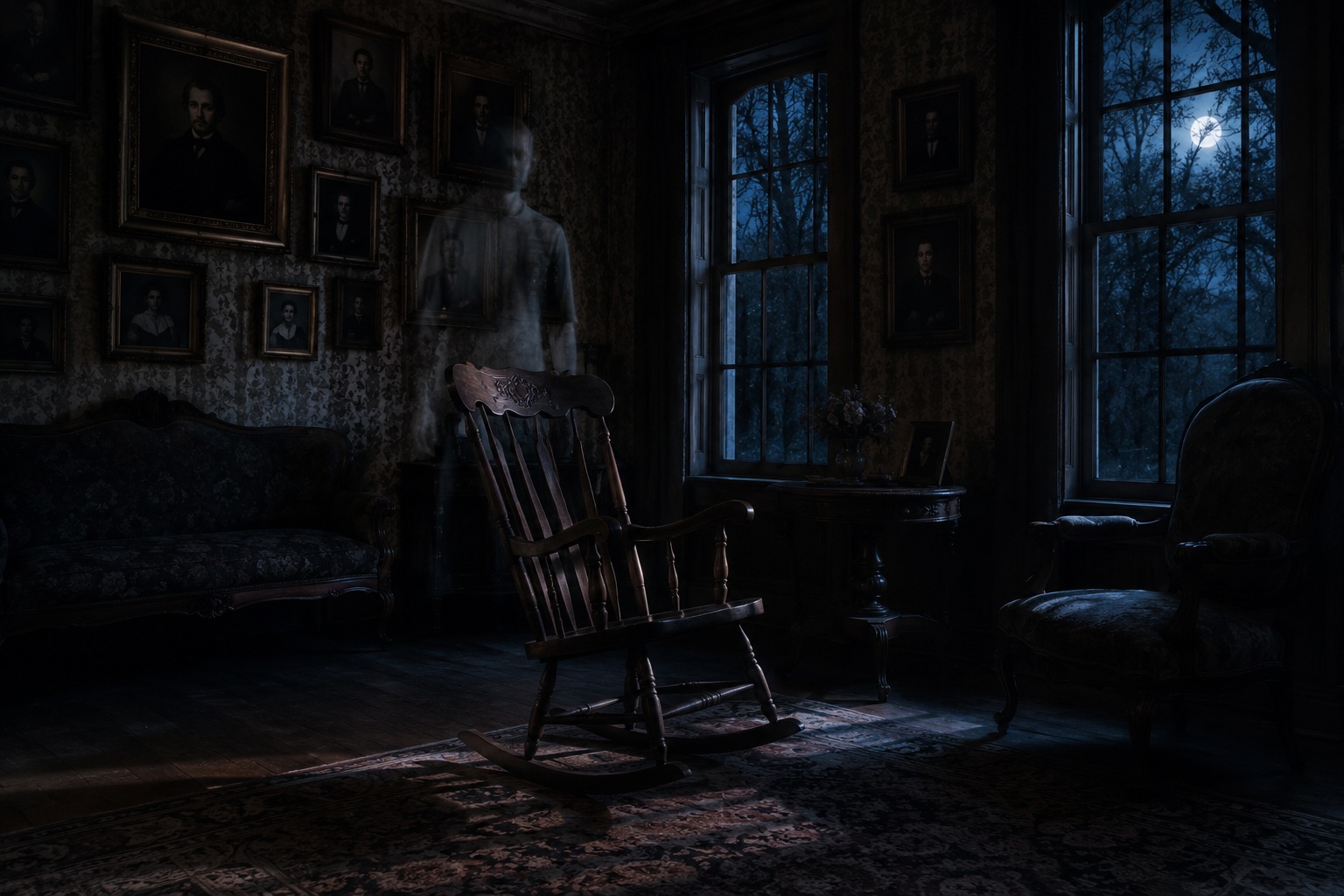
Midnight Changes Everything People rarely tell stories about rocking chairs moving in bright afternoon sunlight. Instead, the setting is almost always late at night.
The Floor Tells a Different Story
The house has gone quiet. Heating systems cycle off. Traffic disappears. Small sounds become much easier to notice.
A gentle wooden creak that would vanish during the day suddenly stands out against complete silence. By midnight, people are also more likely to be tired. The brain becomes better at spotting possible threats when visibility is poor and information is incomplete. That doesn't mean someone is imagining things. It means the mind starts building explanations faster because uncertainty feels uncomfortable.
A rocking chair moving in daylight might seem unusual. The same chair moving at 1:30 in the morning feels like someone else is awake inside the house. That's a very different emotional experience.
When people describe these stories, they often focus less on the movement itself than on one very specific detail. The chair stops. Not gradually. Not after slowing for another minute.
It seems to stop almost exactly when someone walks into the room. That timing is what stays with them. Some describe the chair making one final forward motion before becoming completely still. Others remember hearing the wooden runners scrape the floor only once after opening the door.
Whether the timing is coincidence or simply remembered that way later, it becomes the center of the story. Instead of asking why the chair moved, people begin wondering whether something noticed them approaching. That idea transforms an ordinary sound into something much harder to forget.
What People Check Before Calling It Haunted
Places Where These Stories Keep Appearing Rocking chair stories tend to appear in places that already carry emotional weight. Old family homes are common because the chair often belonged to a grandparent or another relative whose presence still feels connected to the house. Historic buildings appear frequently because antique rocking chairs fit naturally into the setting.
Cabins create another common backdrop. Outside, the wind moves through trees while the inside remains almost silent. A single creak from another room becomes impossible to ignore. Hospices and nursing homes also appear in many stories, probably because rocking chairs are familiar furniture in quiet sitting rooms where people spend long hours reflecting or keeping watch beside loved ones.
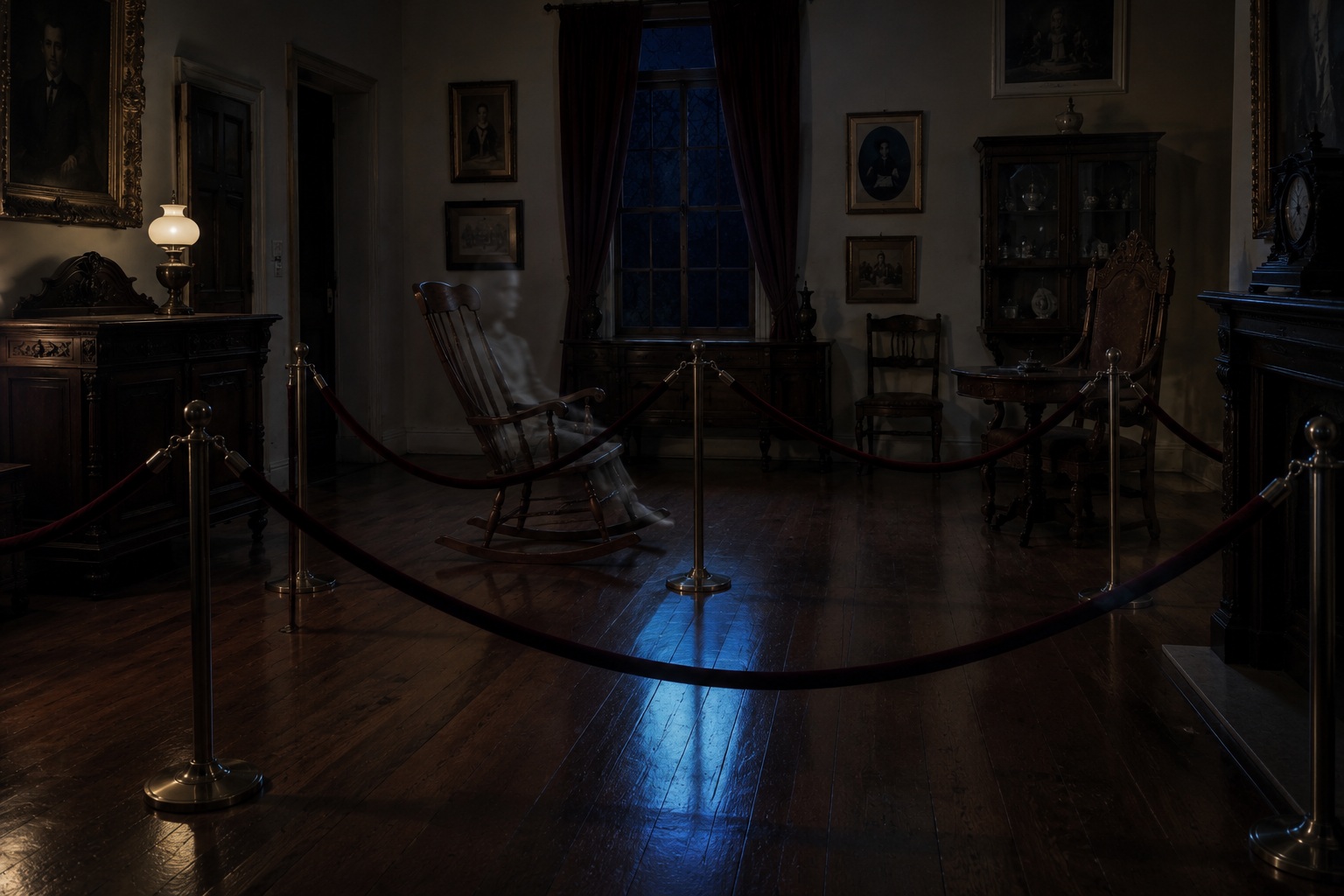
Even museums become part of these stories. Visitors sometimes notice an old chair sitting alone behind a rope barrier. If someone later hears it creak while walking through an empty gallery, the imagination quickly supplies a person who is no longer there. The setting changes.
The pattern rarely does.
Most witnesses don't immediately decide they've experienced something supernatural. They start looking for ordinary answers.
Why Rocking Chairs Stay in Ghost Stories
Is a window open? Did the heating system switch on? Is the floor uneven? Did someone else recently walk through the room?
Was a pet brushing against the chair? These are sensible questions. Older wooden floors can flex slightly as people move through nearby rooms. Air currents can travel surprisingly far through large houses.
Some rocking chairs balance so easily that a small vibration can keep them moving longer than expected. People often test the chair themselves. They give it a gentle push. They watch how long it rocks.
They compare what they saw with what they're seeing now. Sometimes the experiment feels reassuring. Sometimes it creates another question. The chair behaves differently than they expected.
Maybe it stops much sooner. Maybe it cannot rock nearly as hard as they remember hearing. Those moments don't necessarily point toward anything mysterious, but they can leave people feeling less certain than before.
When Ordinary Explanations Start to Feel Thin
Most rocking chair stories probably have simple causes. That shouldn't surprise anyone. But the stories that continue getting shared usually contain one extra detail that refuses to fit neatly. Someone hears the chair before entering the room, yet every curtain is completely still.
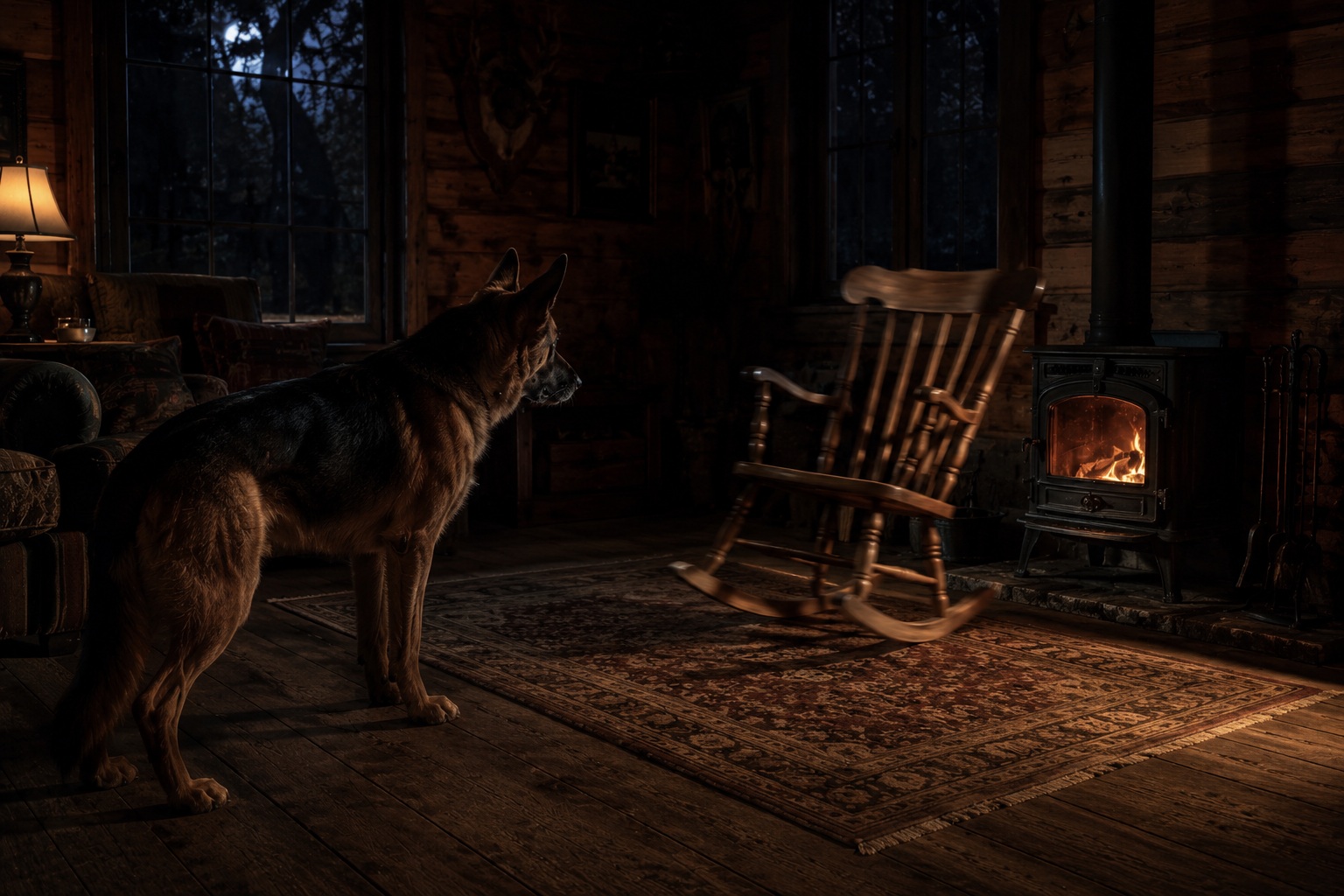
The chair rocks while every other hanging object remains motionless. A dog quietly watches the chair without barking, following its movement across the floor with its eyes. Someone notices the chair moving immediately after hearing their name whispered elsewhere in the house. Or they find the chair gently rocking beneath a family portrait where nobody has sat for years.
None of these details prove anything unusual happened. They simply make the ordinary explanation feel less satisfying. The unsettling part isn't that the chair moved. It's that everything around it seemed perfectly calm.
That contrast is what gives the story its staying power.
Rocking Chairs Became Part of Ghost Stories Long before modern horror films, rocking chairs already carried emotional meaning. They represented grandparents.
Why One Small Movement Sticks in Memory
Parents waiting for children. Long evenings beside fireplaces. People sitting quietly while everyone else slept. Because of those associations, an empty rocking chair naturally suggests an absent person.
When it begins moving by itself, the mind doesn't picture random motion. It pictures someone invisible continuing a familiar habit. Books, movies, and local folklore have reinforced that image for generations. Each new story becomes easier to imagine because readers already know the visual.
An empty chair. A quiet room. Gentle movement. Nobody there.
The image is simple enough that almost everyone can picture it instantly. That shared mental picture helps these stories survive far longer than tales involving stranger or less familiar objects.
People Keep Looking Back at the Chair One curious detail appears again and again.
People rarely run from the room immediately. Instead, they keep watching. They wait for another movement. Another creak.
Why the Question Keeps Working
One more slow motion forward. That hesitation says something important. The rocking chair sits exactly on the line between ordinary and unsettling. Everyone knows it can move naturally.
Everyone also knows it shouldn't appear occupied when nobody is home. That uncertainty is what keeps the story alive. Most people eventually find an explanation they can accept. Others never quite do.
Years later they still remember how quiet the room felt. They remember how the chair leaned forward one last time. And they remember the strange feeling that they had interrupted someone who wasn't supposed to be there. Perhaps that's why empty rocking chairs continue appearing in ghost stories generation after generation.
Not because they are the strongest symbol of the supernatural, but because they begin with something completely believable. A chair rocks. Someone goes to look. The room is empty.
Everything after that depends on the one small detail each witness can never quite explain.