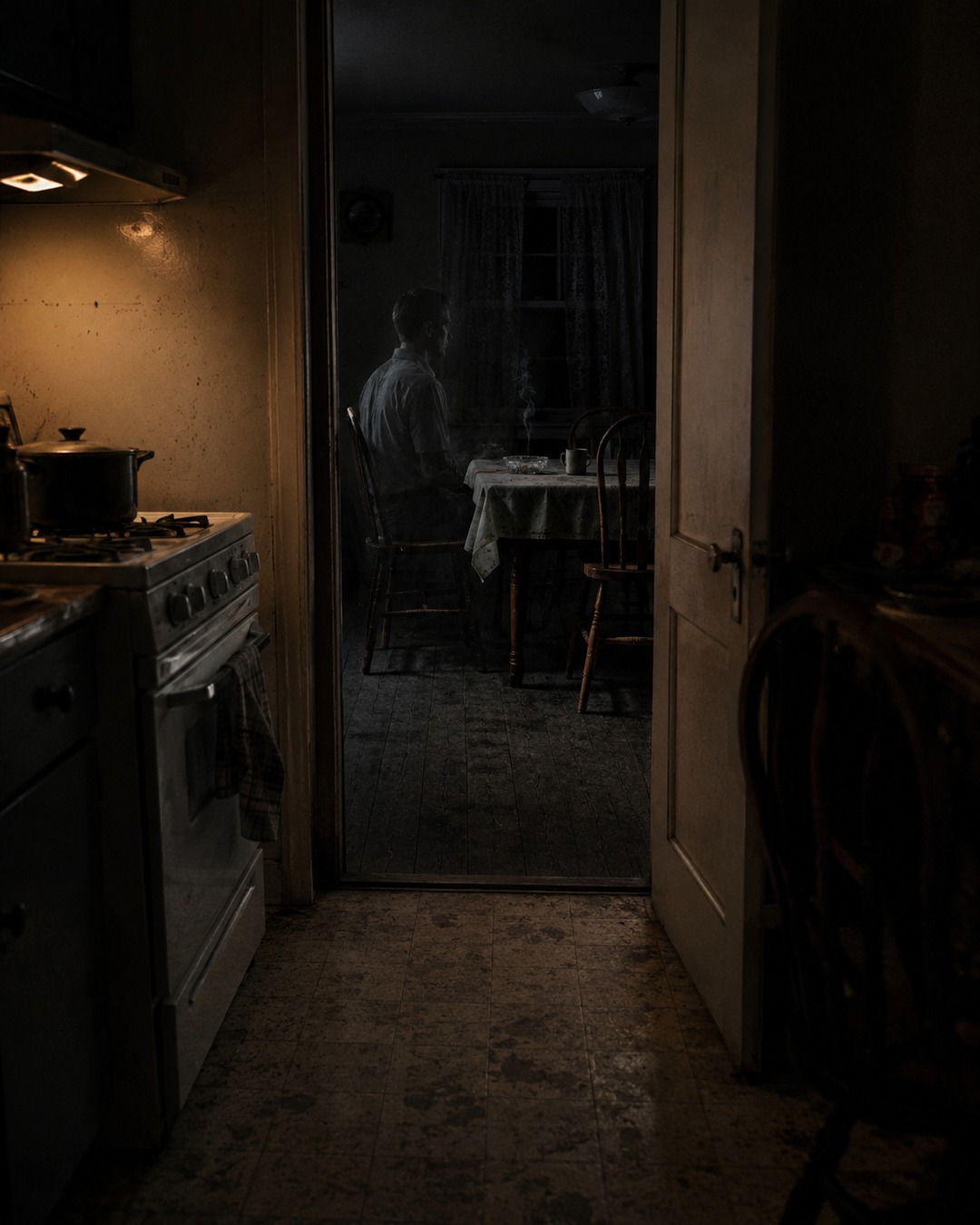
The smell appeared beside the empty chair. A woman staying overnight in her late grandfather’s house had been reading in the living room when she noticed it: stale cigarette smoke, suddenly strong enough to make her look toward the ashtray that used to sit on the side table. Nobody had smoked inside the house for years. The windows were closed. The fireplace was cold.
She stood up and checked the kitchen. Nothing. When she returned, the smell had become stronger around one particular armchair—the same chair her grandfather had used every evening while smoking. Then she noticed something stranger. A faint human shape seemed to be sitting where the chair met the darkness, shoulders visible but the face blurred into the wall behind it.
She switched on the ceiling light. The chair was empty. The smell disappeared almost immediately. Stories like this appear again and again in haunted houses, old hotels, bedrooms, hallways, hospitals, and ordinary family homes. Sometimes there is a visible figure. Sometimes there is only the smell.
And cigarette smoke may be one of the most effective smells a ghost story can contain because it can do something a mysterious noise or moving shadow cannot: identify someone before anyone sees them. A Familiar Smell Can Feel Like Someone Entering The Room Most strange smells are only strange.
Cigarette smoke can be personal. People often associate a particular tobacco smell with a parent, grandparent, former homeowner, coworker, neighbor, or spouse. Someone who smoked heavily could carry that smell on clothing, furniture, hair, and belongings even when they were not actively smoking. That gives cigarette smoke unusual power in a ghost story.
Imagine walking into an empty room and smelling something vaguely unpleasant. You might wonder whether food has spoiled or whether something is overheating. Now imagine smelling the exact stale tobacco odor you remember from your grandfather’s jacket. The second experience immediately feels different. The room has not merely changed. It feels occupied.
The First Time It Happened
This becomes especially unsettling when the person associated with the smell is dead, has not visited the building for years, or was known to smoke in one particular location. The smell can seem almost like a signature. That is why these stories frequently begin with recognition rather than fear. Someone smells smoke and thinks of a person. Only afterward do they realize there should be no source for it.
The sequence matters. First comes familiarity. Then comes the impossible question: why does this room suddenly smell like someone who is not here? Why Cigarette Smoke Works So Well In Haunted-House Stories
Smoke has several qualities that make it unusually creepy. It spreads through space without showing where it came from. You can smell it before you locate the smoker. It can move through cracks, vents, stairwells, hallways, windows, and walls. That means our normal experience already teaches us that cigarette smoke can announce an unseen person.
You may be standing outside a building and smell a cigarette before noticing someone smoking around the corner. You may enter a stairwell and know that somebody was there recently even though it is now empty. A ghost story takes that ordinary experience and removes the expected person.
There is smoke smell, but nobody standing outside. There is tobacco odor in the hallway, but every bedroom is empty. There is the familiar smell beside an old chair, but no cigarette burning in an ashtray. The invisible nature of smell also makes the experience difficult to inspect quickly. If you hear knocking, you can walk toward the door. If you see movement, you can switch on a light.
Why The Place Felt Wrong
A smell has no obvious location. People may walk around trying to determine whether it is stronger beside a window, vent, couch, closet, or doorway. That search itself can become frightening. Especially when the smell seems strongest somewhere that carries a connection to a dead person.
The Location Of The Smell Often Matters More Than Its Strength
One of the most important details in these stories is where the smoke appears. A weak smell in an old building is not particularly mysterious. Old houses can contain decades of trapped odors. A powerful tobacco smell appearing around one chair in an otherwise neutral room is harder to dismiss emotionally.
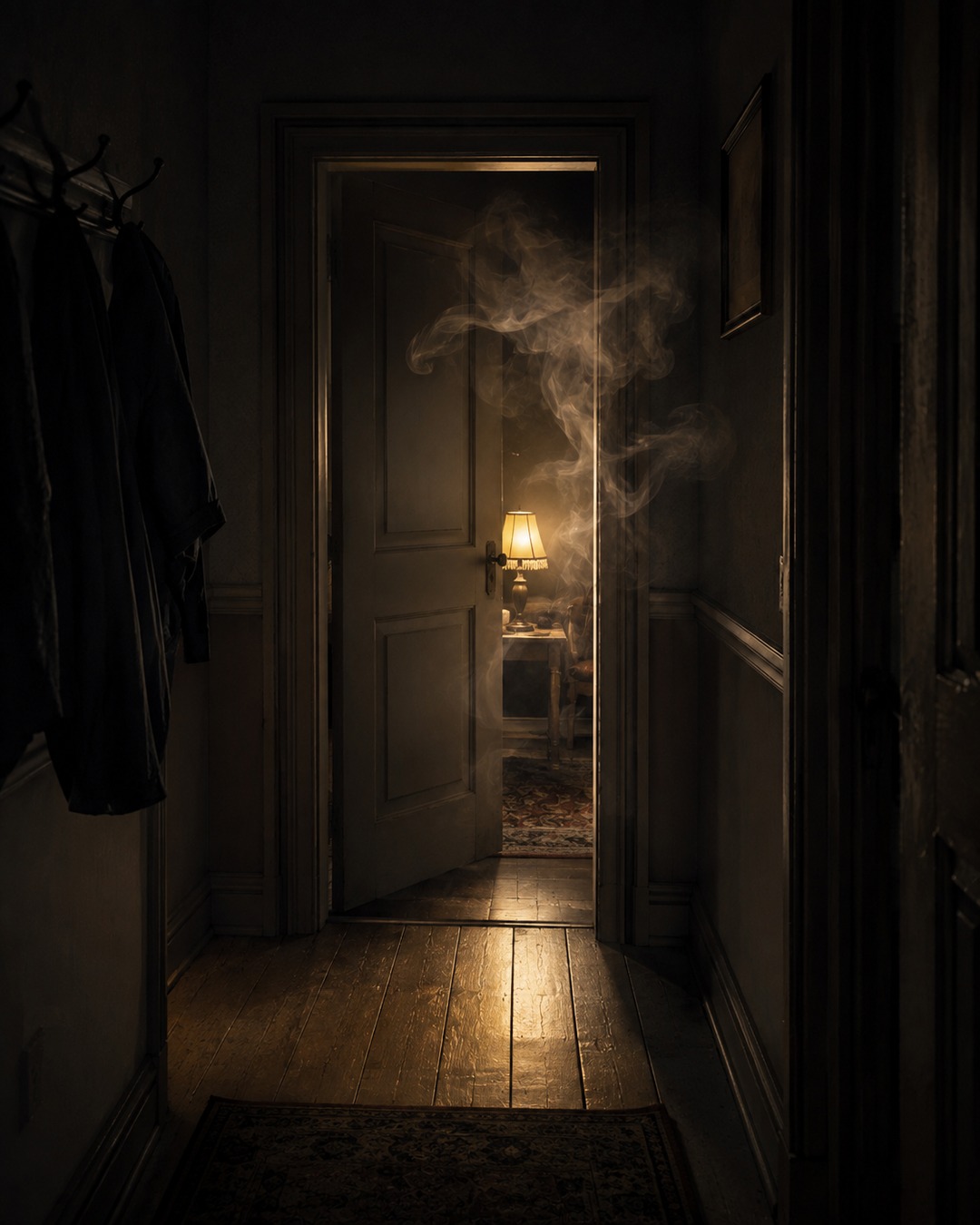
The same is true when the smell seems confined to a particular part of a house. People describe walking through a hallway and crossing what feels like an invisible boundary. On one side, the air smells normal. One step farther and there is cigarette smoke.
Step backward and it becomes weaker. That does not automatically mean anything paranormal is happening. Airflow can create surprisingly sharp pockets of odor. But it explains why the experience becomes memorable. The smell seems to occupy a place.
In more dramatic ghost stories, that location corresponds to where someone once spent time: beside a desk, near a bedroom doorway, at the bottom of a staircase, or around an old porch chair. The strongest versions add one visual detail. A person follows the smell into an apparently empty room and notices a pale, blurred human shape standing near the place where the odor is strongest.
The figure does not need to move. In fact, it can be scarier when it does not. A faceless person-shaped form standing unnaturally still in a doorway while the room smells of cigarettes creates a simple connection the mind understands instantly: someone appears to be there.
What People Usually Check Before Calling It A Ghost
Cigarette smells have plenty of normal sources, and several should be checked before anything stranger is considered. The most obvious possibility is another smoker. Smoke can travel farther than people expect, particularly through open windows, shared ventilation, apartment corridors, balconies, porches, and gaps between rooms.
Someone smoking outside can sometimes make an interior room smell as though the cigarette is burning inside. Old buildings create additional possibilities. Walls, carpets, curtains, wooden furniture, insulation, and upholstered chairs can retain tobacco residue from years of indoor smoking. Changes in temperature and humidity may make old smells noticeable again.
An old piece of furniture can be especially deceptive. A chair from a smoker’s house may release a tobacco odor when it becomes warm or damp. People naturally connect the chair with its former owner, making the returning smell seem far more personal than it really is.
Heating and ventilation systems also deserve attention. Air moving through shared ducts can carry odors between rooms or apartments. A smell that appears to come from an empty bedroom may actually have traveled from somewhere else. And some electrical problems can produce burning smells that people describe as smoky.
That possibility should be taken seriously. If an unexplained burning or smoke odor persists, checking for overheating wiring, appliances, outlets, or other fire risks matters far more than investigating a ghost story. The frightening interpretation should never replace the practical one.
What They Checked Afterward
When the ordinary explanation starts feeling less satisfying, the stranger stories usually contain restrictions that make the easy explanation harder.
The stranger stories usually contain restrictions that make the easy explanation harder. Perhaps the smell appears in the middle of an interior room rather than near a window. Maybe nobody in the building smokes. Perhaps the house has been renovated, with old carpets, curtains, and furniture removed.
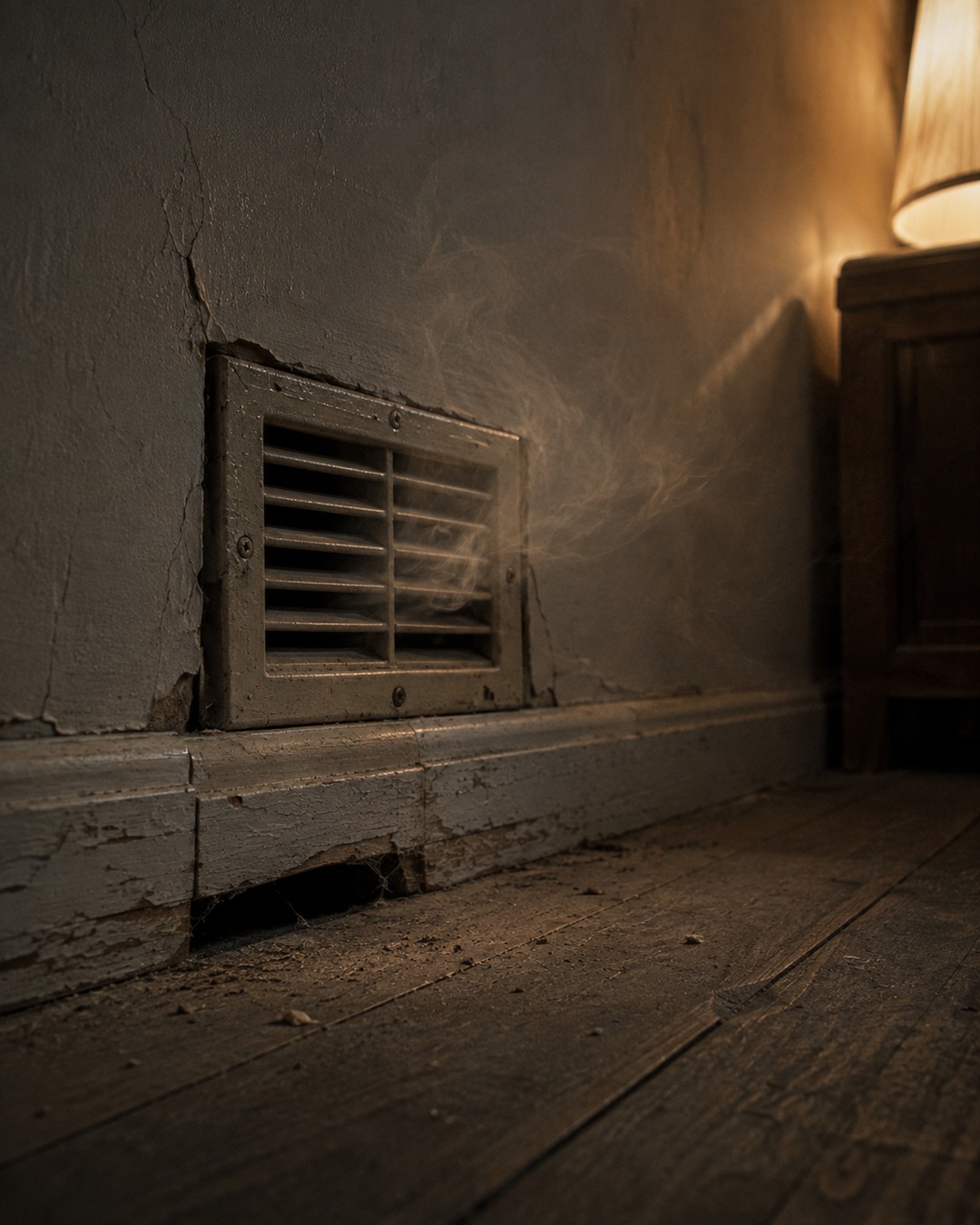
Or the smell arrives suddenly, remains concentrated for less than a minute, and disappears before anyone can find a source. None of those details eliminates ordinary causes. Airflow inside buildings is complicated. Smells can linger in materials. Human perception is imperfect. But combinations of details can make an experience feel increasingly difficult to explain.
Consider an empty guest bedroom in a nonsmoking home. A visitor wakes shortly after midnight because the room suddenly smells as though someone has just lit a cigarette. The odor is strongest beside the closed bedroom door. She assumes somebody is smoking in the hallway.
She opens the door. The hallway smells normal. When she turns back toward the bed, a translucent human-shaped figure appears to be standing beside the dresser, its shoulders and arms visible but its face completely blurred. Then the shape fades.
Moments later, the cigarette smell is gone. The disturbing part is not simply that tobacco was smelled. It is the sequence: sudden odor, strange location, apparently empty surroundings, visible wrong-looking person, disappearance. Ghost stories become powerful through combinations like that.
Each individual detail may have an ordinary possibility. Together, they create the feeling that someone briefly entered the room without using the door.
The Moment It Became Harder To Ignore
Smell is closely tied to memory, which is another reason cigarette smoke appears so often in stories about dead relatives and former residents.
Smell can trigger remarkably vivid memories. A familiar odor can suddenly bring back a room, a person, a piece of clothing, or a moment from years earlier. The reaction can happen before someone consciously understands why the smell feels familiar. Tobacco is particularly useful for this because different smoking habits can produce recognizable combinations of smells.
Pipe tobacco does not smell exactly like cigarettes. Fresh smoke does not smell exactly like an old smoker’s coat. Different rooms can acquire their own mixture of tobacco, wood, fabric, perfume, coffee, or aftershave. So when someone says, “It smelled exactly like him,” they may be describing a genuine memory response.
That does not establish where the smell originated. But it helps explain why the experience can feel more convincing to the person who had it than it sounds to someone hearing the story later. To an outsider, it is simply cigarette smoke. To the person standing in the room, it may be the smell of Sunday afternoons at a grandfather’s house thirty years earlier.
That emotional recognition happens extremely quickly. And once the mind associates the smell with a specific person, every other detail in the room can suddenly feel charged with meaning. An empty chair stops looking empty. A movement near the doorway becomes harder to ignore.
A dark patch beside the curtains begins to resemble shoulders. That does not mean people are deliberately imagining things. It means memory and perception are working together, as they normally do. Ghost stories simply place that ordinary human process in a frightening setting.
Why the smell sometimes appears before the figure is simple: a particularly common storytelling pattern is that the smell arrives first. This makes psychological sense even without assuming anything supernatural. Smell works as an early warning. Your attention changes as soon as an unexpected odor enters a room. You stop reading. You look away from the television. You begin searching the environment.
Why People Avoided That Spot Later
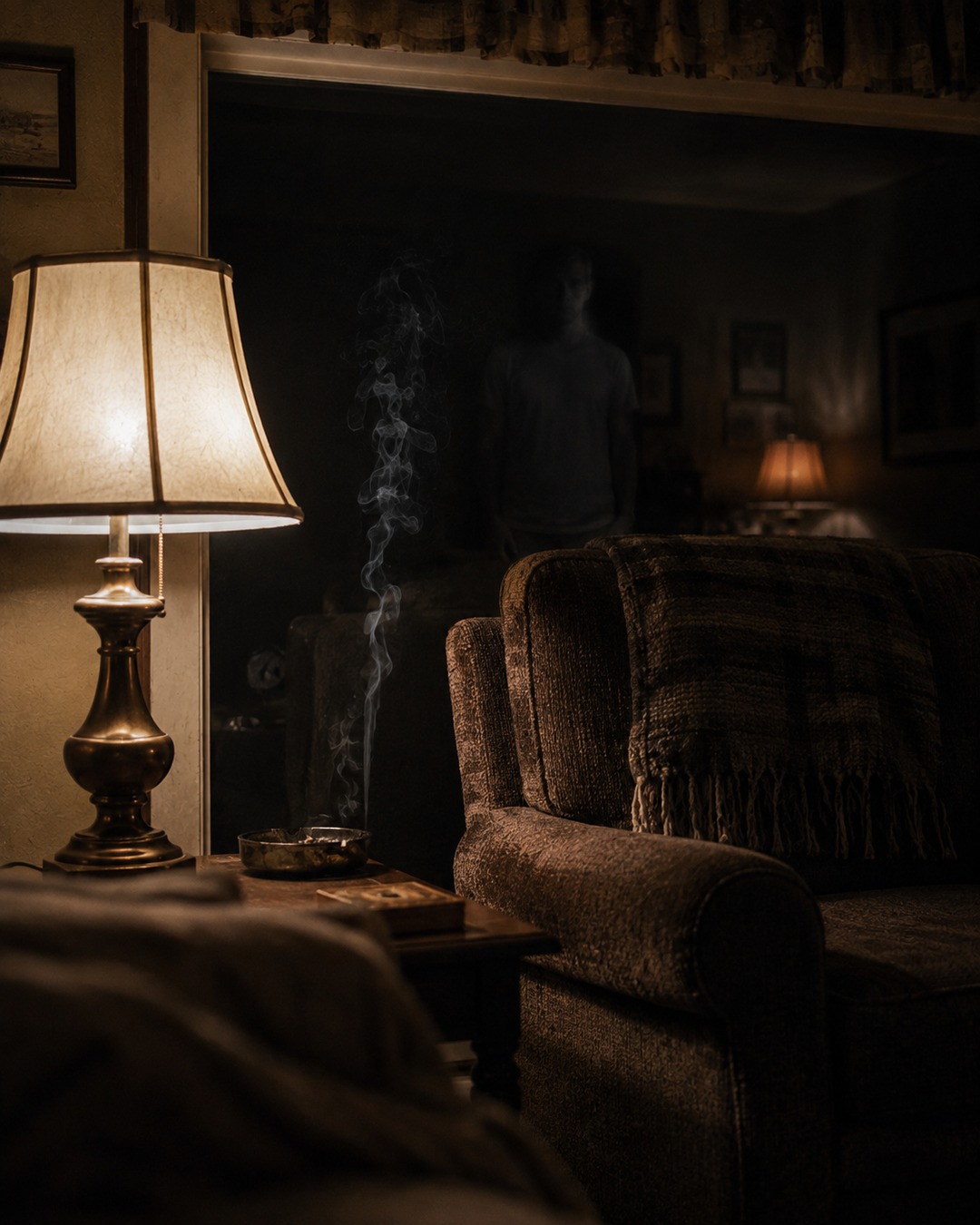
Suddenly you are studying dark doorways, corners, windows, and reflections that you had been ignoring seconds earlier. That increased attention makes subtle shapes more noticeable. A hanging coat may briefly resemble a person. A reflection may look like a face.
A curtain moving in weak airflow may resemble a shoulder turning. In darkness, our brains are constantly making fast guesses from incomplete visual information. Usually those guesses are corrected immediately. But imagine that you have already smelled the distinctive cigarettes of someone who died years ago.
Then you look toward the doorway. There is a human shape there. It is too pale. The face has no readable features.
And when you switch on the light, there is nothing standing there. Whether the cause was memory, darkness, airflow, an overlooked smoke source, or something harder to explain, the order of events makes the experience much more frightening. The smell prepares the room for a person.
Then the witness thinks they see one. Why These Stories Stay With People For Years A strange noise is easy to forget. A familiar smell can be much harder.
Why The Story Still Gets Shared
One reason is that cigarette smoke gives the experience an identity. Instead of saying, “Something weird happened in my bedroom,” a person may say, “My father’s cigarette smell filled the bedroom.” That is a much more specific memory. The smell also creates a strange contradiction between absence and presence.
Nobody is sitting in the chair, yet the chair smells occupied. Nobody is standing in the hallway, yet the air smells as though someone just walked through it. That contradiction is at the heart of many ghost stories. The most unsettling reports are not necessarily the ones containing dramatic screaming figures or objects flying across rooms.
Sometimes they involve something extremely ordinary appearing where it should not. A cigarette smell. A familiar chair. A quiet hallway.
And for several seconds, a blurred human shape standing exactly where the smell is strongest. There are good reasons to check airflow, old materials, neighboring smokers, furniture, heating systems, and electrical sources first. Those explanations probably cover many experiences. Memory can explain another part of the pattern, especially when the smell is associated with someone important.
But that does not make the moment feel less strange to the person standing there. Because cigarette smoke carries an implication built into everyday life. Usually, if you smell it strongly enough, someone is nearby. Ghost stories become frightening when the smell arrives—
and nobody is supposed to be there.