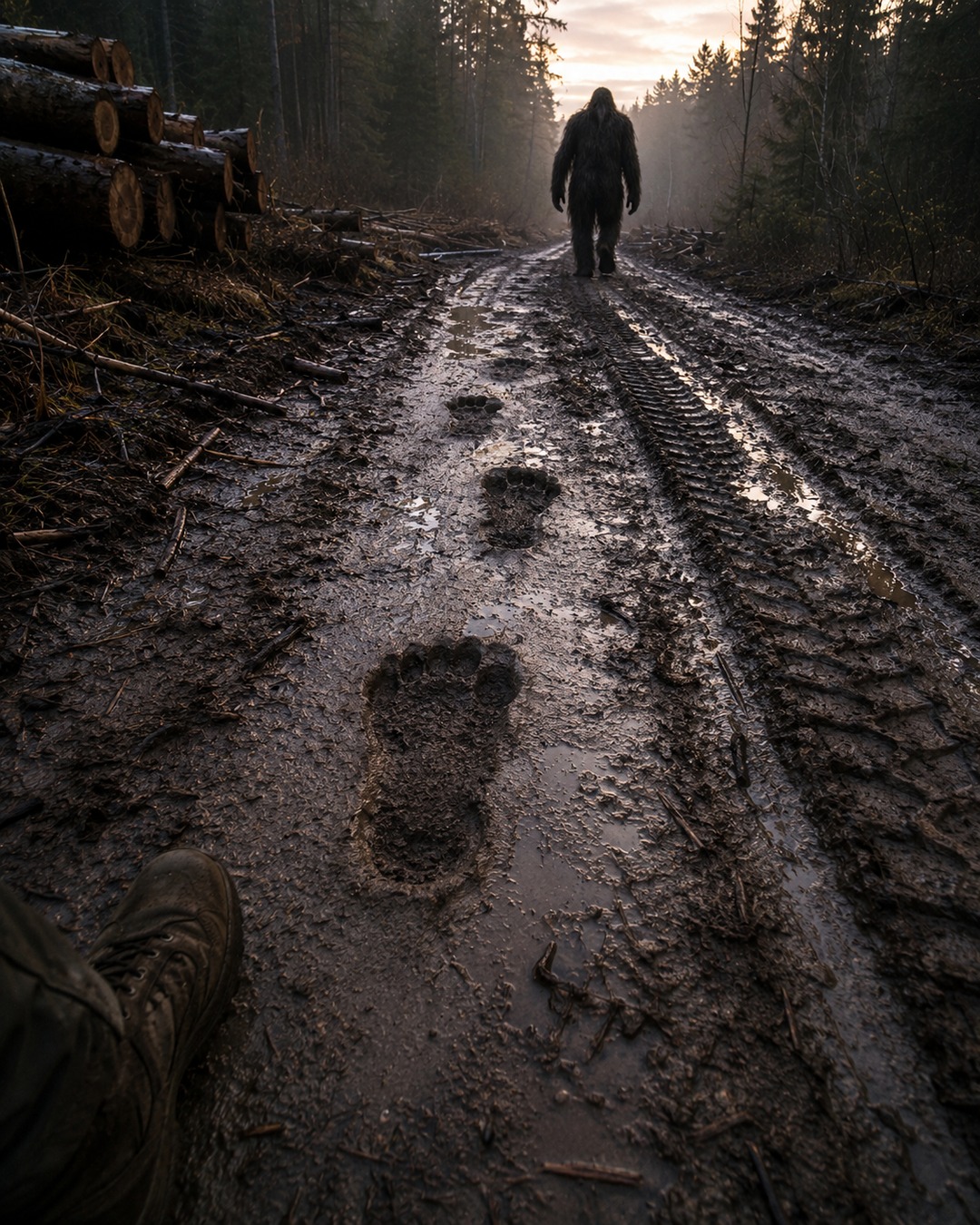
Illustrative reconstruction
The print was not dramatic at first. It was just a dark depression in wet soil beside a logging road, longer than a boot, wider at the front, with five rounded marks where toes might have pressed into the mud. The person who found it did what many people do: took one photograph, placed a boot beside it, and left before the rain came. By morning the track looked less certain.
Short answer
Bigfoot footprint reports are interesting only when they are documented as a trackway, not just a single dramatic print. Investigators look at stride, alignment, substrate, depth, pressure deformation, toe appearance, surrounding disturbance, scale references, weathering, and whether ordinary human or animal explanations fit. None of that establishes Bigfoot as a scientifically documented animal. It only helps separate a weak footprint story from a more carefully recorded trace claim.
Claims versus established evidence
Some Bigfoot investigators argue that reported tracks show unusual foot anatomy, long stride, flexible midfoot pressure, or consistent movement across difficult terrain. Those are claims within the Bigfoot research community. Established zoology has not accepted Bigfoot as a verified North American primate. The right standard is therefore careful documentation, not belief.
Trackways matter more than single prints
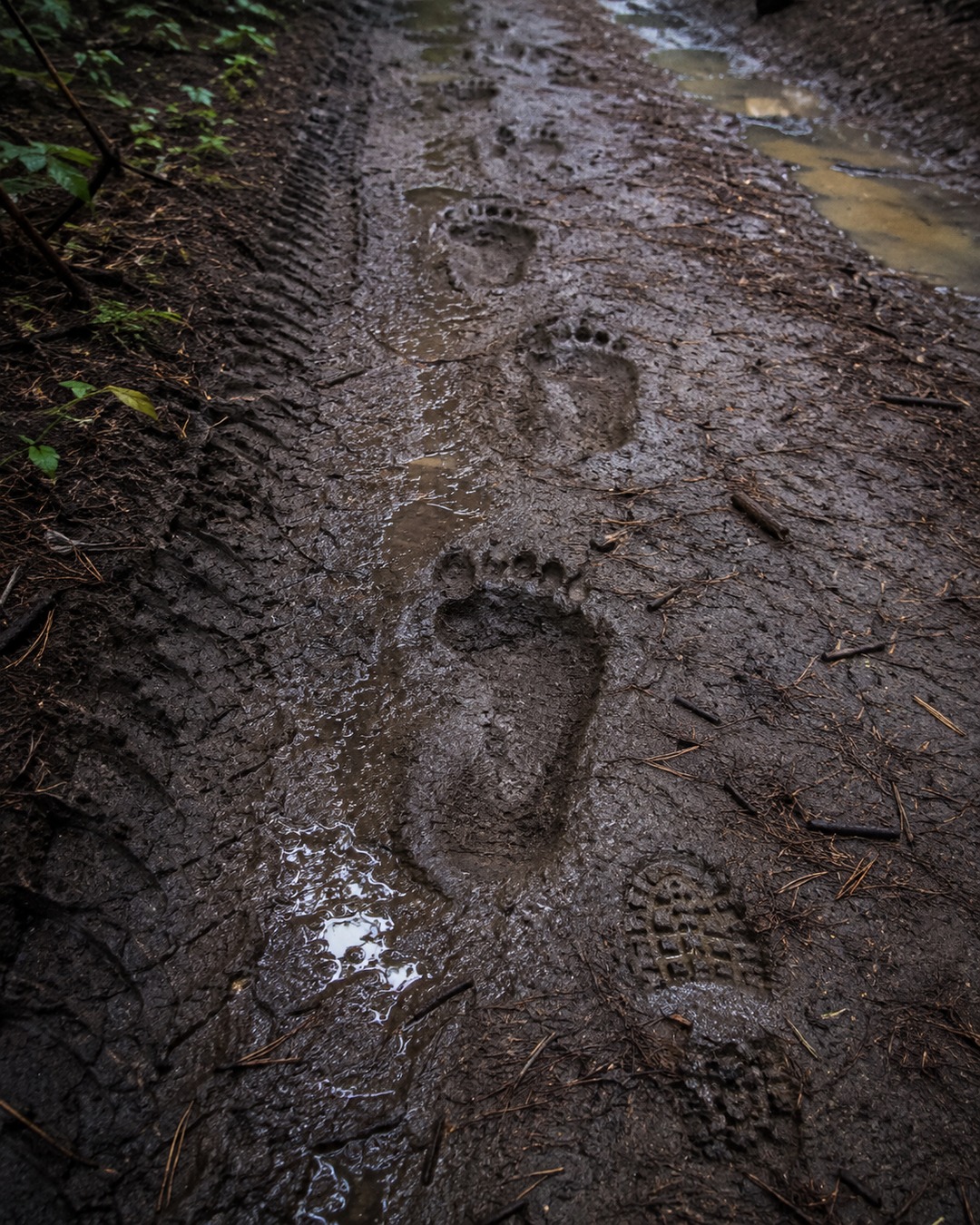
A single footprint can be staged, misread, partly erased, or made by overlapping animal or human tracks. A trackway gives more information: stride length, gait, direction, consistency, turning behavior, depth changes and how the marks respond to the ground. A person faking one print has an easier job than a person faking a long believable sequence through mud, snow or uneven soil.
Substrate, depth and deformation
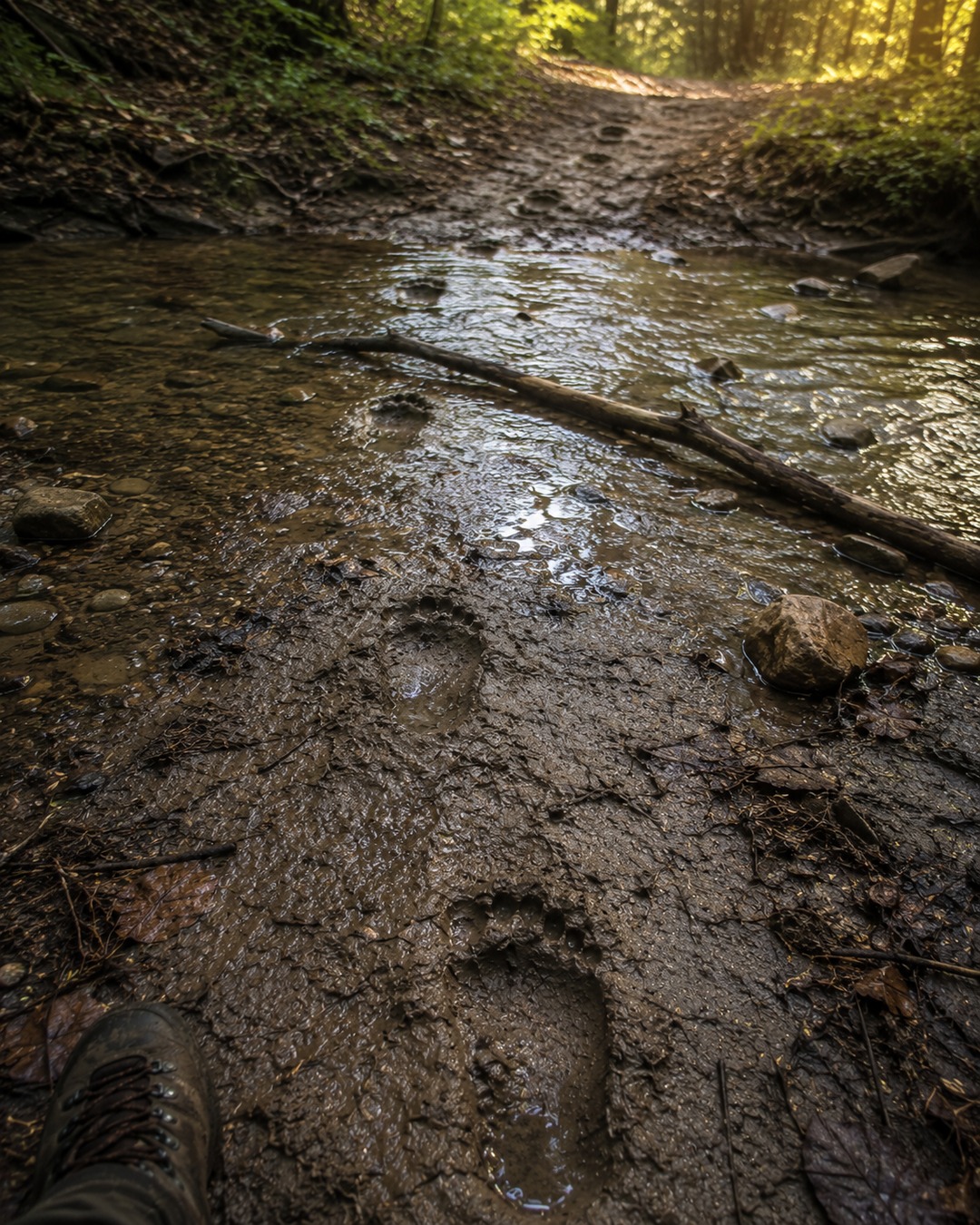
Mud, sand, snow, leaf litter and clay record pressure differently. A deep print does not automatically mean a huge animal; soft ground, water content and the angle of a step matter. Investigators should photograph the wider ground, not only the print. They should note whether nearby boots, tires, deer tracks or bear tracks sink to similar depth.
Toes, bears and human alternatives
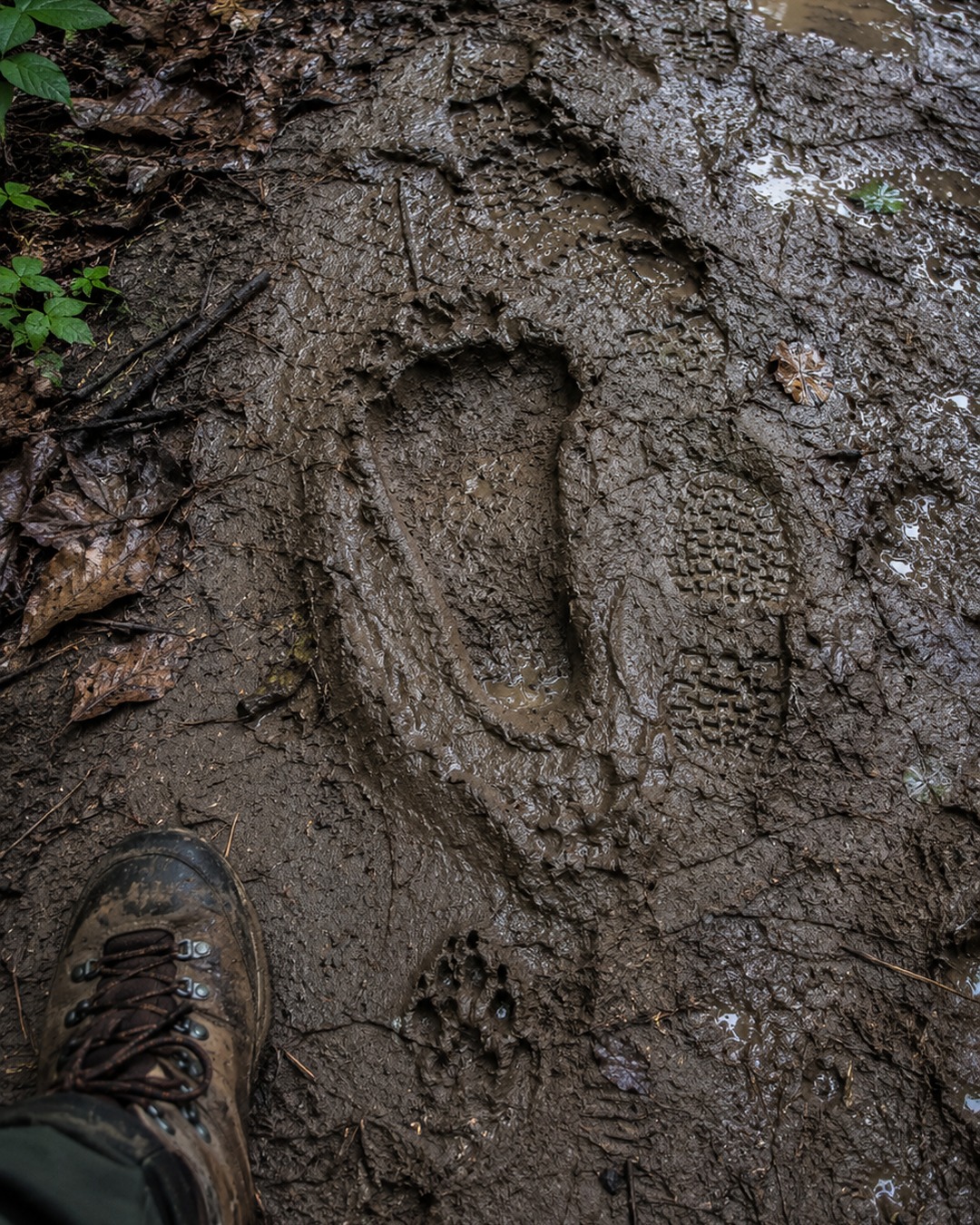
Five rounded toe marks look compelling, but toe-like shapes can appear when mud collapses, when a shoe tread distorts, or when animal tracks overlap. Bears can leave large tracks and sometimes create confusing impressions when front and hind feet overlap. Humans can walk barefoot or use carved feet. The question is not “does this look strange?” but “does the whole pattern resist ordinary alternatives?”
Casts, scale and chain of custody
Casts can preserve shape, but they also preserve errors. A cast without location notes, photos, measurements, date, weather, witnesses and custody history has limited value. Include a rigid scale, photograph from multiple angles, keep the original files, record GPS or precise location notes, and document who handled the cast afterward.
What would make a trackway genuinely unusual?
The strongest scenario would include a long continuous trackway, clear scale, consistent unusual stride, substrate documentation, multiple witnesses, high-resolution original images, careful casts, nearby ordinary comparison tracks, weather records, and independent examination. Even then, the conclusion should be limited: unusual trackway, not proof of Bigfoot.
Ordinary explanations to check first
Human tracks: hikers, hunters, anglers, children, barefoot swimmers and pranksters can leave prints that look strange after weathering. A shoe tread can also collapse into a rounded shape when mud slumps.
Bear and wildlife tracks: bears, especially when front and hind tracks overlap, can create large confusing impressions. Other animals can distort wet ground around a human print and make one mark look like a composite creature track.
Ground conditions: mud expands, dries, cracks and collapses. Snow melts from the edges inward. Sand loses detail. Leaves hide partial impressions. A track found hours after it was made may not preserve the foot that created it.
Footprint morphology is not enough by itself
People often focus on toes, width or length because those are easy to see in a photograph. But morphology without context is weak. A print that looks impressive in a close-up may sit beside obvious boot traffic outside the crop. A toe line may be mud breakage. A deep heel may reflect a slippery step rather than unusual weight.
Track analysis needs the whole ground story: where the print begins, where it goes, how many marks exist, what other tracks are nearby, whether the path crosses obstacles, and whether the same foot shape repeats naturally. The more a case depends on one dramatic image, the less weight it should carry.
How to document a possible trackway
Photograph the area before stepping near it. Take wide shots, mid-range shots and close-ups. Include a rigid scale in the same plane as the print. Record date, time, weather, recent rainfall or snowmelt, soil type, direction of travel and the names of everyone present. If casting is attempted, photograph the print before and after casting and label the cast immediately.
Good documentation also includes comparison. Photograph your own boot print and a normal barefoot or shoe print in similar soil if practical. Note nearby animal sign. If the track crosses a road, ditch or creek bed, document those transitions. A trackway that behaves consistently across changing substrate is more interesting than a single isolated mark.
Hoaxes and sincere mistakes
Bigfoot footprint history includes both sincere reports and hoaxes. That does not mean every footprint is fake; it means a guide should assume neither belief nor dismissal. A carved foot, a stomped print, a staged photo or a misleading crop can fool viewers. So can a real animal track under poor conditions. The method has to be strong enough to handle both dishonesty and honest error.
Physical evidence versus biological evidence
A footprint is a physical trace, but it is not the same as a verified biological specimen. Zoological confirmation would require stronger evidence: tissue, hair with reliable provenance and analysis, clear repeatable observation, or a specimen-level record accepted by qualified experts. A footprint can justify curiosity and further search. By itself, it does not establish a species.
When a print should be left alone
Sometimes the best action is to protect the site until someone experienced can document it. Walking around the track, touching the edges, pouring water nearby, moving sticks for a better photo, or placing a flexible object in the print can damage the information people later want. The first job is preservation, not drama.
The Trackway Checklist
A useful Bigfoot footprint guide should push readers away from isolated close-ups and toward a repeatable checklist. How many prints are present? Do left and right impressions alternate? Is stride consistent? Does depth change with slope? Do toes repeat with the same shape or vary randomly? Are there ordinary tracks nearby for comparison? Did weather change between the event and the photograph? Is there an unbroken route into and out of the site?
This checklist does not prove or disprove Bigfoot. It raises the quality of the conversation. A footprint that fails every documentation test may still be a good campfire story, but it should not be treated as strong evidence. A trackway that passes several tests becomes a better candidate for careful preservation and outside review.
Reported characteristics investigators often discuss
Bigfoot-oriented investigators often talk about length, width, toe splay, heel depth, midfoot flexibility, pressure ridges, dermal ridges, unusually long stride and terrain crossing. Those details should be described as reported or claimed characteristics, not as established proof. A responsible article can explain what investigators look for while still making clear that the broader scientific community has not accepted Bigfoot as a documented species.
Toe splay can be caused by anatomy, but it can also be caused by mud collapse. Long stride can suggest a tall walker, but it can also be exaggerated by slope, running, slipping or selective measurement. Depth can imply weight, but it can also reflect wet substrate. Each feature has to be considered in context.
Why casts impress people and why they still need caution
A plaster cast feels more serious than a photograph because it is physical. It can be held, measured and displayed. But a cast only preserves the condition of the print at the moment casting began. If the print was already distorted, contaminated or misidentified, the cast preserves that problem too. The cast’s value depends on notes, photos, site context and handling history.
The most useful cast is tied to a documented trackway. The weakest cast is a dramatic object with no reliable provenance. Museums and evidence labs care about chain of custody for a reason: an object separated from its history loses much of its explanatory power.
Why a single footprint photograph proves little
A single photograph often hides the most important facts. It may not show whether the print was one of many, whether the ground was churned by people, whether a boot track sat outside the frame, whether the print was made on a slope, or whether rain had enlarged it. The photograph may be real and still be weak evidence.
This is why careful track review emphasizes method over excitement. The important questions are practical: why tracks stop, how mud changes shape, why scale matters, why a cast needs provenance, and why the surrounding ground is part of the evidence.
What we can and cannot say
We can say that footprint reports deserve better documentation than most receive. We can describe how investigators evaluate tracks. We cannot present disputed Bigfoot tracks as scientific proof of an unknown primate. The value of a good guide is to raise the standard of the question.
Muddy Tracks That Stop Suddenly
Some reports focus on footprints that appear to stop in the middle of mud, snow or soft ground. That detail is not strong evidence by itself. Trackways can disappear when the substrate changes, when water fills impressions, when the animal steps onto roots, rocks, leaves or harder soil, or when the observer loses the trail in churned ground.
A useful review records the last clear print, the ground immediately beyond it, stride length, direction, depth, edge detail, weather, nearby vegetation and whether the same trackway can be followed from more than one angle. A single dramatic stopping point is less useful than a continuous sequence that shows consistent anatomy, spacing and interaction with the ground.
Related: For brief sightings without tracks, see Bigfoot Sightings Explained.
Sources & Further Reading
- National Park Service — Bear safety and identification context
- National Wildlife Federation — black bear natural history
- NIST — SI units and measurement reference
- BFRO — public Bigfoot reports database for claim context