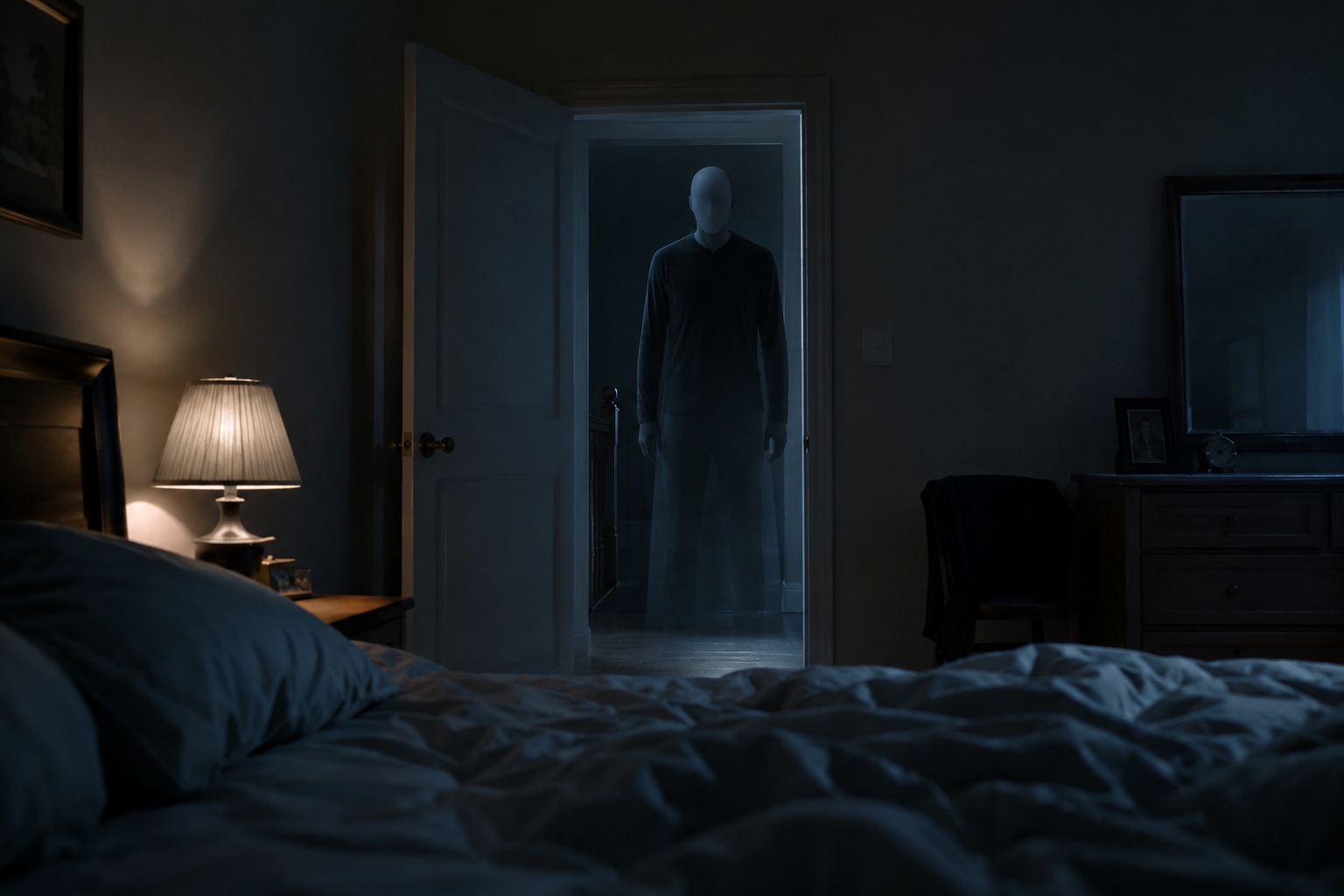
Why Do Ghosts Seem To Stand In Doorways? The figure was not inside the bedroom. That was the detail that made it difficult to dismiss. A woman woke sometime after 2 a.m. and saw someone standing in the open doorway across from her bed. The hall behind it was dark, but enough light came through the bedroom window to give the shape a human outline. It had shoulders. A head. Arms hanging at its sides. It seemed tall enough that its head nearly reached the top of the frame.
Then she noticed what was wrong. There was no face. Not a face hidden by darkness. Not features she could not quite make out. The front of the head looked pale and smooth, as though someone had erased everything that should have been there. She reached for the bedside lamp.
The figure did not run. It seemed to thin out against the doorway until the empty hall became visible through it. The light came on. Nothing stood there. Stories like this appear again and again in ghost folklore: someone wakes, turns toward a hall, enters a room, or looks across a familiar house and finds a human-like shape occupying the doorway.
So why the doorway? Why do so many frightening sightings put the figure exactly on the boundary between one room and another? Doorways Give the Brain a Perfect Human Shape A doorway is almost designed to make a questionable shape look like a person.
It provides two straight vertical edges, a horizontal top, and usually a darker space beyond. Place a coat, hanging towel, narrow piece of furniture, or ordinary shadow within that rectangle and the brain has surprisingly little work left to do. Humans are extremely quick to notice human forms.
We recognize faces in patterns and people in incomplete shapes because noticing another person quickly has always mattered more than carefully studying every line and shadow first. At night, that shortcut becomes much easier to trigger. Imagine looking from a dim bedroom toward an even darker hallway. You may not see details. Instead, you see blocks of brightness and darkness.
The First Time It Happened
A dark area between two lighter doorposts can suddenly appear to have shoulders. The top of the darkness becomes a head. A gap beside it becomes an arm. And once the shape reads as a person, it can become extremely difficult to stop seeing it that way.
That explains plenty of doorway scares. It does not explain why some stories become much stranger. Witnesses sometimes describe a figure that appears clearly separated from the darkness around it. They may see a pale head above darker shoulders, a transparent body crossing the doorframe, or a person-shaped form that seems to move before disappearing.
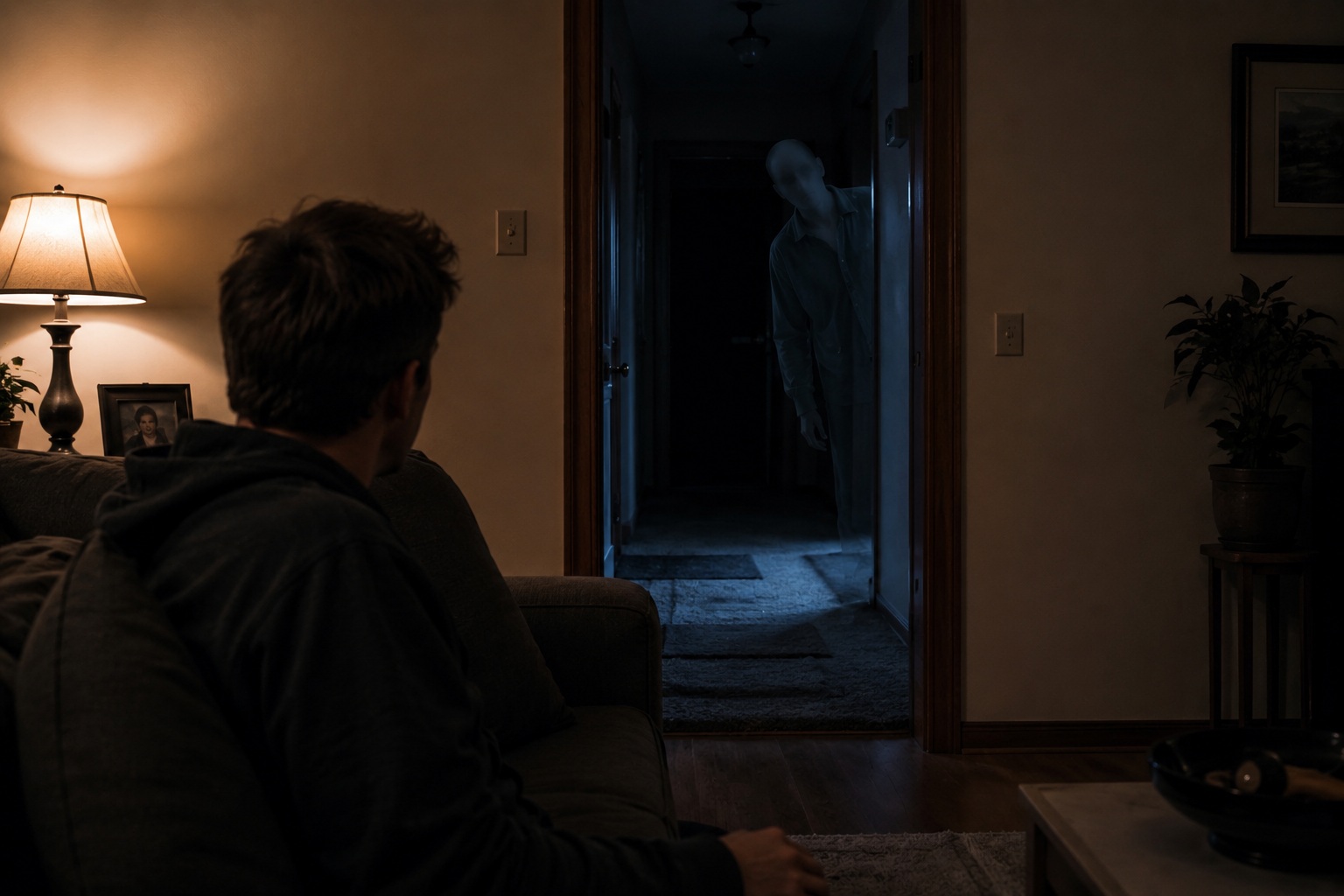
Those are the stories that turn a common visual mistake into one of the oldest creepy images in the house: someone standing silently in the doorway. A Doorway Makes the Figure Feel Like It Is Waiting A shape in the middle of a room can be frightening.
A shape in a doorway feels intentional. That difference matters. When someone stands in a doorway without entering, we naturally wonder what they are doing. Are they watching? Listening? Deciding whether to come closer? The location creates a story before anything happens.
Consider a dark figure standing beside a dresser. It might initially resemble a pile of clothes. Move exactly the same figure into the bedroom doorway and its posture suddenly seems meaningful. It appears to have arrived from somewhere. It may be blocking the exit.
It may be looking into the room. Most unsettling of all, it seems capable of taking one more step. That expectation is part of what makes doorway ghost stories so effective. The frightening moment is not necessarily what the figure does. It is what the witness expects it to do next.
Why The Place Felt Wrong
Many stories specifically mention that the figure remained still. Someone watches it for three seconds. Five seconds. Perhaps longer.
Nothing happens. But because it is standing at the entrance, doing nothing can feel worse than movement. The doorway turns stillness into hesitation. The figure does not simply exist. It appears to be waiting.
Why These Sightings Often Happen From Bed There is another reason doorway figures appear so often in ghost stories: bedrooms provide nearly perfect conditions for seeing them. People frequently wake while the room is dark, their eyes are poorly adjusted, and their brains are still moving between sleep and full awareness.
Sometimes that transition can produce extremely convincing sights. A person may see a human figure, face, animal, or moving shape that disappears once they become fully awake. The experience can feel completely external, as though something genuinely stood in the room. Sleep paralysis can make the situation even more frightening.
During an episode, someone may become aware of the bedroom while temporarily unable to move normally. Some people also sense another presence or see a person-like figure nearby. The bedroom doorway is an obvious place for that figure to appear. It is often one of the darkest and most visually complicated parts of the room. It is also exactly where someone would expect another person to enter.
The Detail Nobody Could Explain
There is an important distinction, though. Not every doorway story happens while someone is waking. People also describe similar experiences while walking through houses, working late, sitting awake on couches, or turning toward a room after hearing something. That does not make the sightings supernatural.
It simply means that "the witness was half asleep" cannot cover every version of the story. The circumstances matter. What People Usually Check After Seeing Someone There Once the immediate fear passes, most people do something remarkably ordinary.
They check the doorway. A robe hanging from a hook is an obvious suspect. So is a coat on a chair, a tall lamp, a stack of boxes, curtains, reflected streetlight, or shadows from furniture. Even a partially open door can create a surprisingly human-looking shape.
Then there is outside light. Passing cars can send moving bands of light through windows. Tree branches can interrupt those beams. A television in another room can brighten and darken a hallway. Motion lights outside can suddenly change the shape of an interior shadow. These explanations become especially convincing when the figure always appears from the same viewing position.
If someone lies on one particular side of the bed and repeatedly sees a "man" near the door, but the man becomes a hanging coat when the lamp switches on, there is not much mystery left. Distance matters too. A figure glimpsed for half a second from twenty feet away is easier to misread than something observed from several feet away.
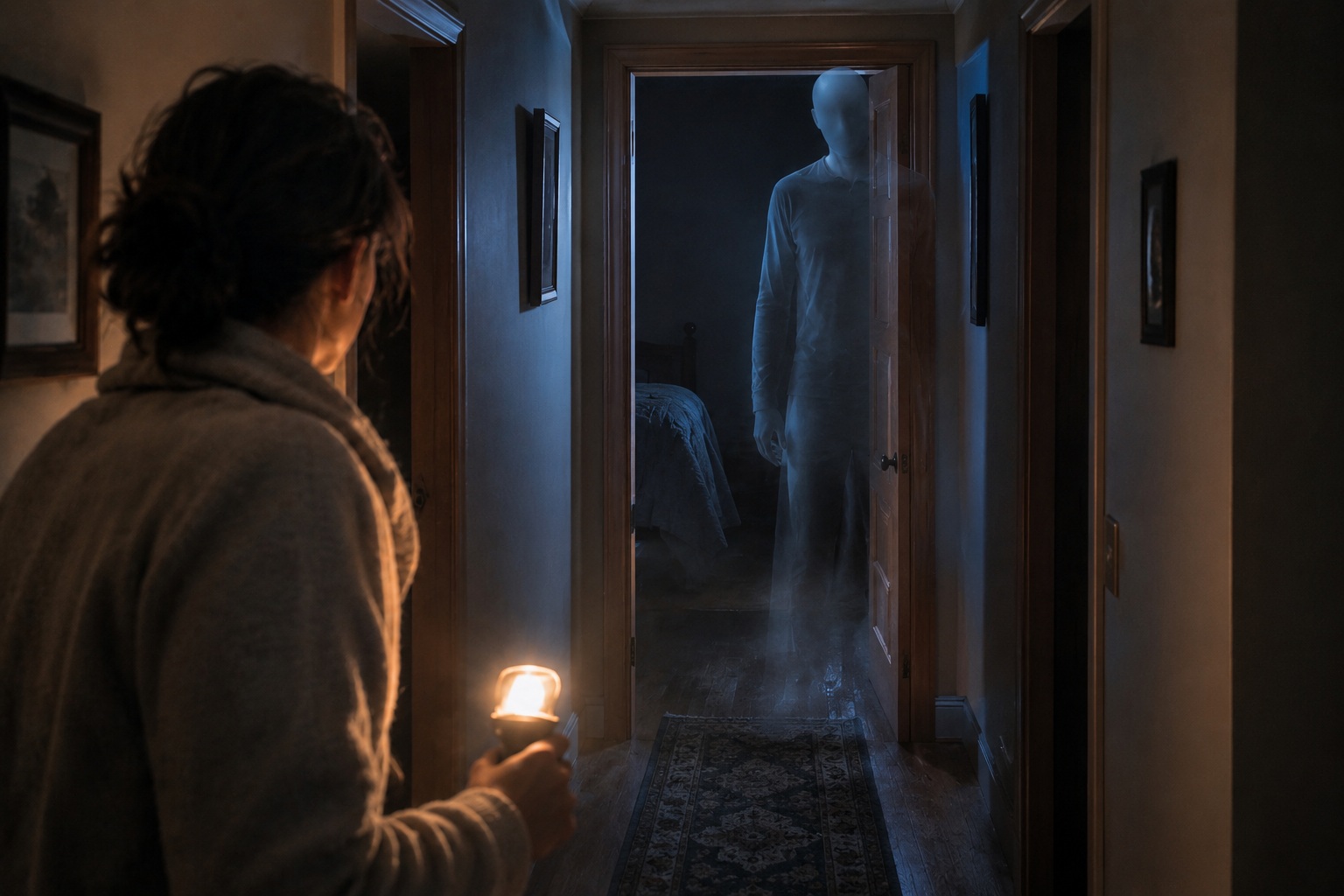
People should also consider whether they had just awakened, whether they were exhausted, and whether the sight disappeared as soon as their eyes focused. The scary interpretation should not be the first interpretation. A dark house can produce extremely convincing people who were never there.
What They Checked Afterward
When the Ordinary Explanation Starts Feeling Less Complete Some doorway stories remain creepy because the easiest explanation does not fit neatly. Suppose someone sees a figure at the kitchen entrance while fully awake. It is not merely a dark column.
They describe a head, shoulders, and torso. The lower body appears strangely faded. The figure leans partly around the frame as though looking into the room. The witness turns directly toward it. Instead of vanishing immediately, the shape pulls backward. They cross the room and look into the hall.
Nobody is there. That still does not establish what happened. Memory can change quickly during frightening moments, and perception is not a perfect recording of the world. But several details can make a simple shadow explanation harder to apply. Movement is one.
If the supposed person appears to move independently of nearby light sources, investigators have more to consider than a stationary coat. Changing position is another. A shadow caused by furniture should generally remain connected to the objects and light creating it. A figure described as leaning from one side of a doorway and then appearing on the other side presents a different puzzle.
Multiple viewing angles matter as well. A human-looking shape that disappears when someone moves two feet to the left was probably dependent on perspective. A distinct figure that remains visible while the observer changes position is more difficult to blame on one perfectly aligned object.
None of these details automatically turn a strange sight into a ghost. They simply determine how well the simplest explanation fits. The Strangest Doorway Figures Look Almost Human The most memorable ghost stories rarely describe elaborate monsters.
The Moment It Became Harder To Ignore
They describe something nearly ordinary with one detail badly wrong. A woman stands in the hall, but her face cannot be seen even though her clothes can. A child-sized figure appears beside the bathroom door, but the body seems faint below the knees. A tall man-shaped form occupies the doorway, except one shoulder appears to pass partly through the wooden frame.
Someone sees what looks like a family member entering a room, then realizes that person is asleep elsewhere in the house. These details matter because ordinary shadows tend to be vague everywhere. If you cannot see the face because the hall is dark, you probably cannot see detailed sleeves either.
That is why descriptions such as "I could see the shirt but there was nothing where the face should have been" become especially unsettling to the people telling them. Doorframes also provide useful visual reference points. Against an open room, judging the exact shape of a faint figure can be difficult.
Against a doorway, its size and position become obvious. You know roughly how tall the door is. You know where the floor begins. You know where the wooden frame should continue.
So when a shape seems too tall, partly transparent, or strangely intersected with the frame, the surrounding architecture makes the wrongness easier to notice. The doorway does not merely frame the ghost. It gives the witness something normal to compare it with. Why Doorways Carry So Much Fear in Ghost Stories
Why People Avoided That Spot Later
Doors already mean transition. Open or closed. Safe or exposed. Inside or outside.
Private or public. Someone is either allowed through or kept away. That makes doorways unusually powerful locations in frightening stories, even before anything supernatural enters the picture. A bedroom can feel protected until something occupies its entrance.
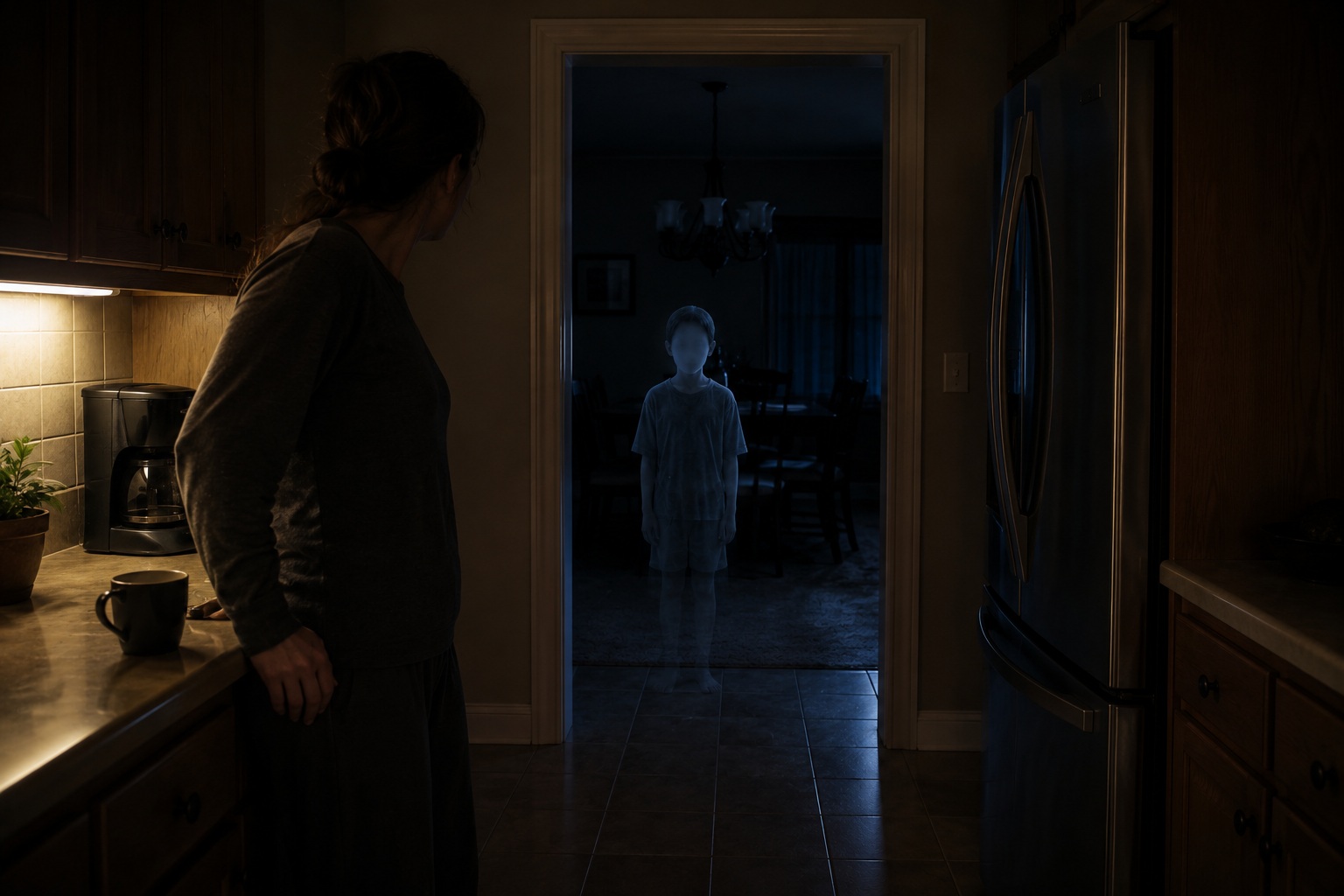
A hallway can feel ordinary until a figure appears at the far doorway. A familiar kitchen can suddenly feel separated from the rest of the house when someone seems to be watching from the threshold. There is also a practical reason the image repeats across cultures and generations.
People spend enormous amounts of time looking through doorways. From a couch, you may see the hall entrance. From bed, you may see the bedroom door. From the kitchen, you may look through an opening toward another room.
Doorways naturally sit at the edges of our attention. That is exactly where uncertain shapes can become disturbing. You are not carefully studying the hall. You notice something standing there.
By the time you look directly at it, it may already be gone. Whether that disappearance came from changing light, a shift in attention, waking perception, or something harder to identify is what determines how the story gets remembered. The Detail That Makes a Doorway Story Hard to Forget
Why The Story Still Gets Shared
Most strange sights inside a house eventually become ordinary again. The jacket becomes a jacket. The reflection changes when the curtain moves. The shadow disappears when a passing car turns the corner.
The frightening interpretation collapses once the cause becomes visible. Doorway stories linger when that moment never arrives. Someone switches on the light and finds nothing that resembles the shape they saw. They return to the same spot the following night and cannot recreate it.
They move the furniture. They check the hall light. They stand where the figure seemed to stand. Nothing produces the same effect.
That still leaves many possibilities. Human perception can make mistakes that are impossible to reproduce afterward, particularly during darkness, exhaustion, stress, or sudden awakening. But it also explains why the doorway remains such a powerful part of ghost folklore. It is a boundary we understand instinctively.
Someone on one side is separated from someone on the other. So when a silent, human-shaped figure appears exactly there, the question feels immediate: is it coming in? Often the answer is mundane. Sometimes there is not enough information to know.
And in the stories people remember for years, the figure never takes that expected step. It simply stands between the rooms, faceless and still, until the doorway is empty again.