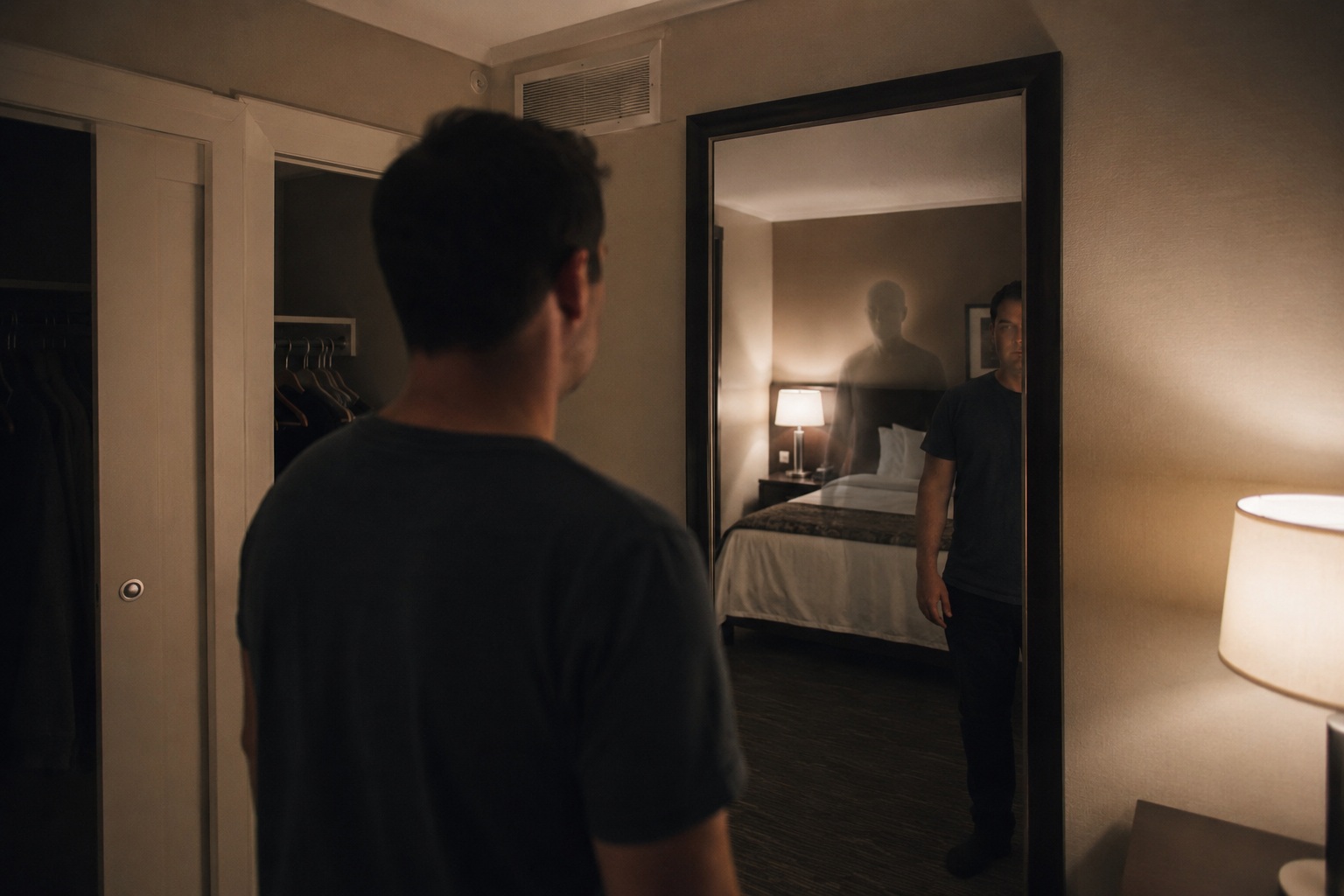
The reflection blinked half a second before she did. She had been staying in the same business hotel for three nights. Nothing unusual had happened. The room looked like every other hotel room she had ever rented: beige walls, a neatly made bed, blackout curtains, a television mounted across from the mattress, and a full-length mirror beside the closet.
She was brushing her teeth when she noticed movement behind her. In the mirror, someone stood near the foot of the bed. Not close enough to touch her. Just standing there. The shape looked almost human, except its face seemed blurred, as if someone had wiped away every feature. Its shoulders leaned at an impossible angle, and one arm faded into the wall beside the headboard instead of hanging naturally.
She spun around. The room was empty. When she looked back into the mirror, nothing was there. She searched every corner. She checked under the bed. She opened the bathroom door even though she had just walked out of it. She looked inside the closet twice. Before sleeping, she pushed a suitcase against the closet door without really knowing why.
The next morning she convinced herself she had imagined everything. Until she noticed fingerprints on the mirror. They were not on the front. They seemed to be inside the glass.
Stories like this appear again and again whenever people talk about strange hotel experiences. The details change, but one part stays remarkably similar: someone looks into a hotel mirror and briefly sees another person standing behind them, only to discover the room is empty. Why do so many reports follow this same unsettling pattern, and why do hotel mirrors seem to appear in ghost stories more than almost anywhere else?
Hotel Rooms Already Feel Slightly Wrong
Hotels are designed to feel familiar while belonging to nobody. Every object has been arranged for comfort, but nothing carries your own memories. The furniture isn't yours. The sounds aren't yours. Even the light switches are usually in places your hands don't expect.
Your brain spends the first night quietly learning the room. That unfamiliar feeling matters because people naturally stay more alert in new sleeping places. Small noises seem louder. Reflections grab attention more easily. Shadows that would go unnoticed at home suddenly become important. Many travelers also arrive exhausted after driving, flying, or working long hours.
Fatigue changes how carefully we process what we see. A reflection caught from the corner of your eye may take an extra moment to make sense. During that brief delay, the brain sometimes creates a complete picture before correcting itself. That explains some experiences. But it doesn't explain why the reports often describe the same strange detail: someone standing behind the witness.
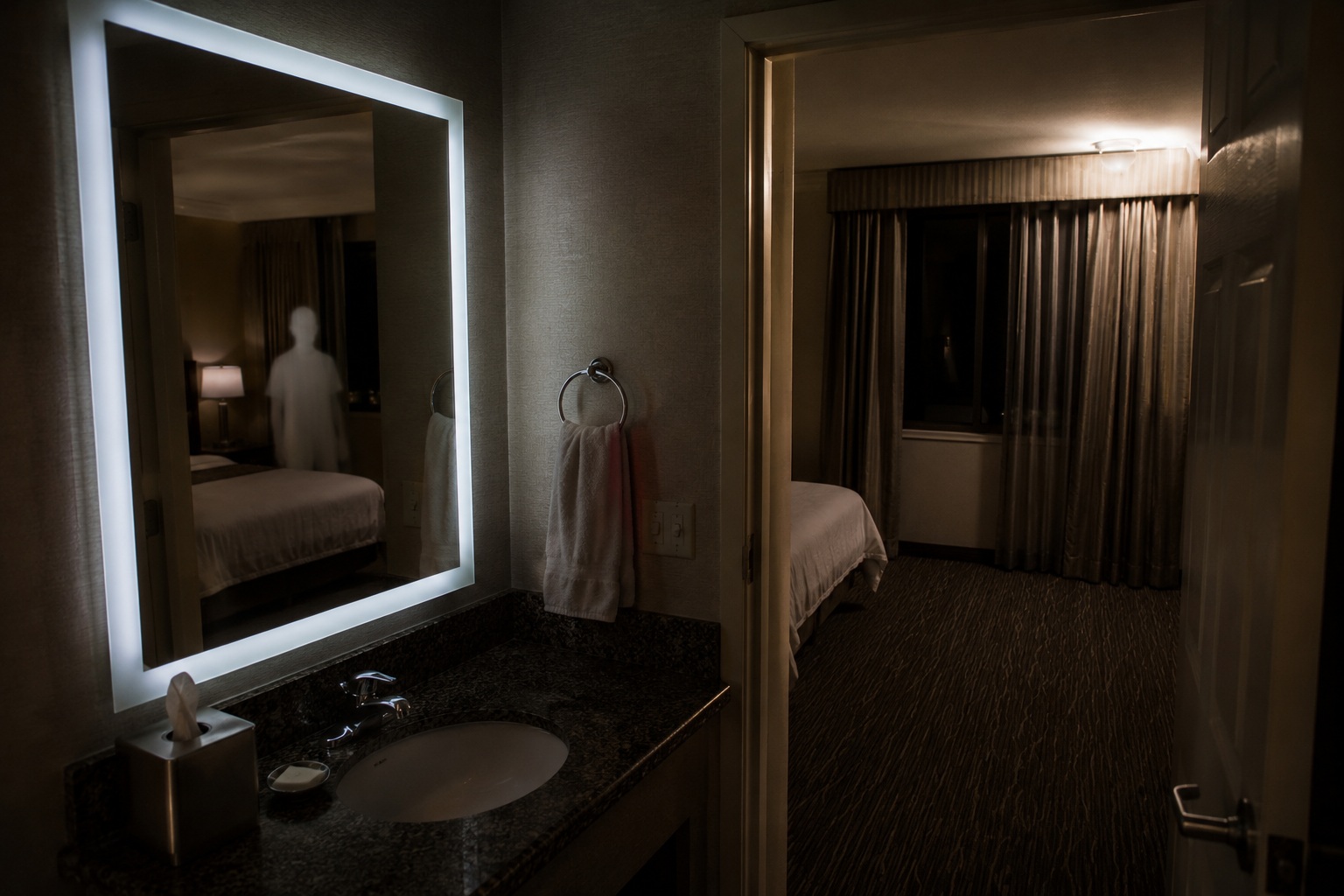
Why Mirrors Become the Center of So Many Ghost Stories
Mirrors are unusual because they ask us to trust two different views of the same room. You know what is behind you because you remember it. The mirror tells you what is behind you because it shows it.
Normally those two pieces of information match perfectly. When they don't—even for a split second—the feeling is overwhelming. People describe seeing a figure that disappears before they can turn around. Others say the reflection lingers just slightly longer than it should.
Some notice a pale face near the doorway even though the doorway is empty. A few report seeing someone standing beside the bed who seems transparent enough that the wallpaper can still be seen through them. The common thread isn't violence. It's contradiction.
The reflection insists someone is present while the room itself insists nobody is there. That single disagreement is enough to create a memory people never forget.
The Detail Witnesses Notice First
Interestingly, people rarely begin these stories by saying they saw a complete ghost.
Most notice one wrong detail before recognizing the whole figure. It might be a shoulder appearing where only empty air should be. A pale hand resting on the headboard. A face that has no eyes.
Someone whose feet disappear into the carpet. Or a person standing partly inside the wall instead of in front of it. Those details feel believable because they don't arrive all at once. The brain notices something slightly out of place.
Only afterward does it build the image into "someone standing behind me." That gradual realization makes the experience feel more convincing to the person who lived through it. Instead of a dramatic jump scare, it unfolds over several seconds. Many witnesses remember that they kept staring because they couldn't immediately understand what looked wrong.
Only later did they realize they had been looking at what appeared to be another person.
The Ordinary Things People Check First
After the initial shock, almost everyone follows the same routine. They turn around.
They check the bathroom. They open the closet. They pull back the shower curtain. They look beneath the bed.
Many switch every light on. Some cover the mirror with a towel before trying to sleep. Others photograph the room from several angles, hoping to reassure themselves that everything looks normal. Hotel staff occasionally receive calls asking whether another room connects through a hidden door or whether someone could somehow be inside the walls.
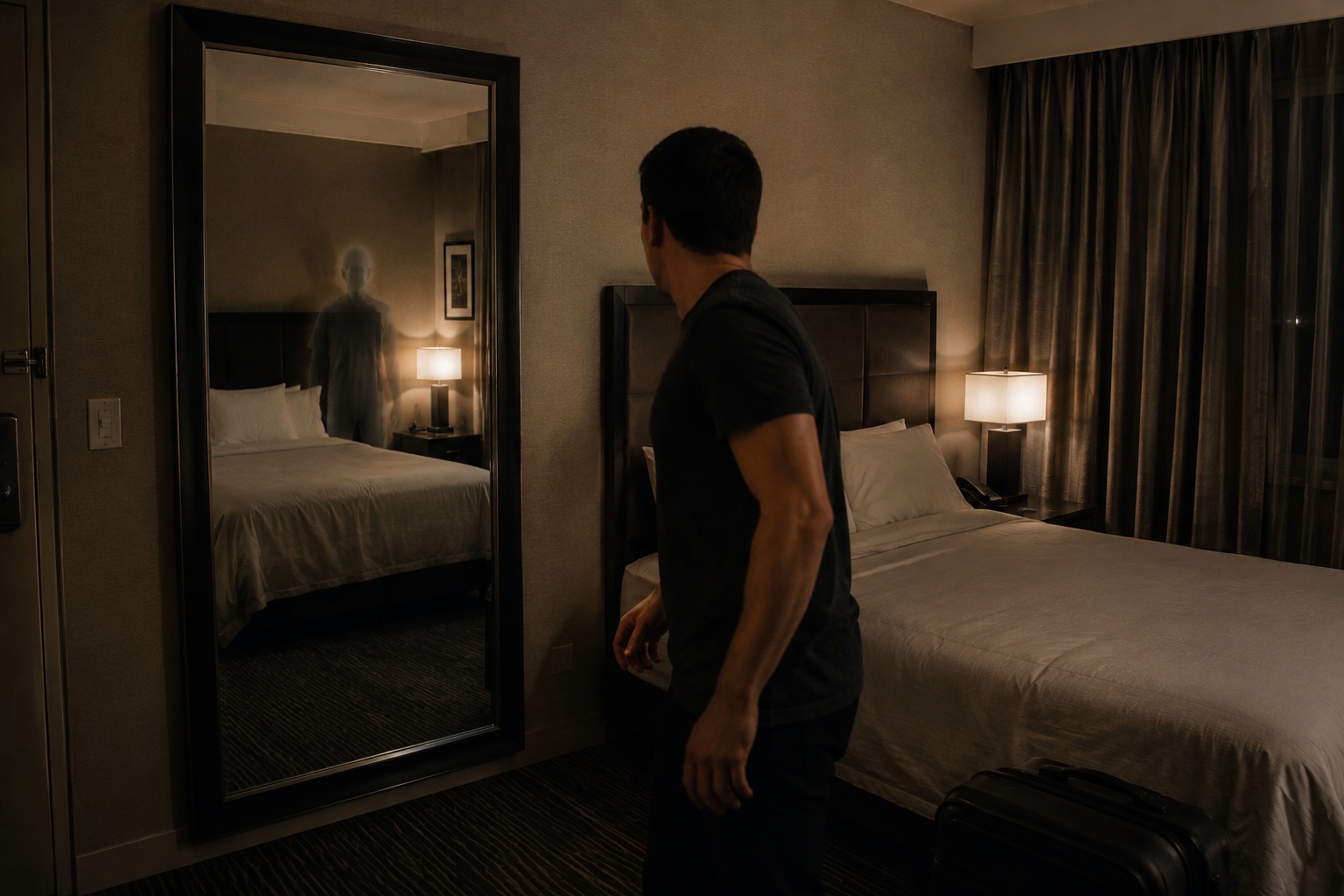
Most of the time, nothing unusual is found. Reflections from hallway lights, televisions, passing cars, or partially open bathroom doors can sometimes create brief illusions that disappear when viewed from another angle. Large mirrors facing other reflective surfaces can also produce surprising visual effects, especially late at night.
These explanations solve many reports. But not every witness feels they solve theirs. The stories that continue to spread usually include one extra detail that seems harder to dismiss. When the Reflection Doesn't Behave Like Glass Should
The reports people remember most aren't simply about seeing another figure. They're about the reflection behaving differently from everything else in the room. Someone says the figure stayed still while they moved. Another says it vanished before they turned around.
Some claim the person in the mirror appeared farther inside the room than any real person could stand. Others remember the figure slowly fading into the wallpaper instead of walking away. One of the most repeated details involves timing. Witnesses describe turning toward the room while the reflected figure disappears before their body finishes moving.
That tiny mismatch creates the impression that whatever appeared existed only in the reflection. Whether that impression comes from perception, fatigue, lighting, or something harder to explain depends on who is telling the story. But the pattern itself remains remarkably consistent. The figure almost never rushes forward.
It rarely speaks. It simply waits behind the witness.
Why Hotels Inspire So Many Reflection Stories
Hotels have quietly become one of the most common settings for mirror ghost stories.
Part of the reason is simple numbers. Millions of people sleep in hotel rooms every night. Even rare experiences will naturally be reported more often there. But hotels also create a unique emotional atmosphere.
You arrive carrying stress from travel. You sleep somewhere unfamiliar. You wake during the night unsure where you are for a few seconds. Long hallways, identical rooms, heavy curtains, and dim bathroom lights all contribute to an environment where ordinary reflections become easier to question.
Many hotels also use large decorative mirrors opposite beds or near entrances. That placement means people constantly catch reflections while moving through the room. Instead of deliberately looking into a mirror, they notice movement unexpectedly. Unexpected reflections are far more startling than expected ones.
The surprise itself becomes part of the memory.
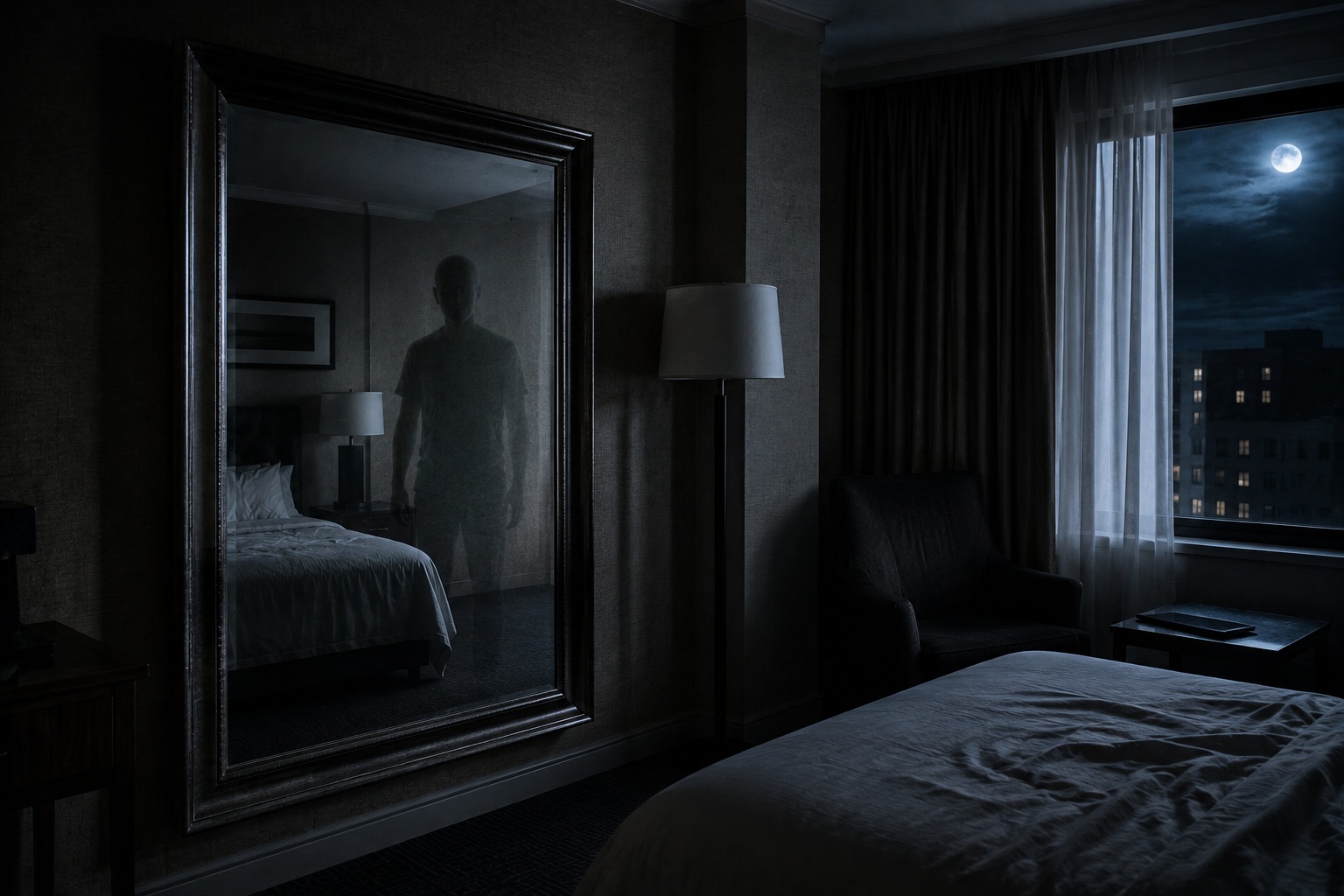
Why These Stories Stay With People
A strange sound fades. A nightmare disappears after breakfast.
But seeing someone standing behind you—even for only a moment—is different. It challenges one of the simplest assumptions we make about everyday life. When you look into a mirror, you expect it to agree with reality. If it appears to disagree, even briefly, your mind keeps returning to that moment, searching for an explanation that feels complete.
People often replay the exact sequence again and again. Did they really see a shoulder? Was the face missing? Could the bathroom light have reflected differently?
Did exhaustion create the image? Or did the reflection briefly show something the room itself did not? Those unanswered questions become the story. Years later, travelers frequently remember the hotel itself only vaguely.
They forget the city. They forget the room number. But they remember exactly where the figure stood. Usually beside the bed.
Sometimes near the window. Almost always behind them.
The Reflection That Makes People Look Twice
No single explanation fits every report.
Many mirror experiences almost certainly begin with ordinary lighting, unfamiliar surroundings, tired eyes, or reflections that briefly confuse the brain. Those are sensible reasons, and they account for countless unsettling moments. Yet the stories people continue sharing usually include one extra detail that keeps them alive.
The figure wasn't simply reflected. It looked wrong. The face had no features. The body leaned at an impossible angle.
Part of it disappeared into the wall. Or it remained visible for one impossible heartbeat after the witness had already turned away. Whether those moments come from perception or from something nobody fully understands is impossible to answer with certainty. But perhaps that uncertainty is exactly why hotel mirror stories continue to spread.
Most people leave a hotel remembering the breakfast, the uncomfortable pillows, or the long drive home. A few leave remembering something else. They remember checking the mirror one last time before switching off the light. Just to make sure nobody was standing behind them.